Garden Blog - Top Tropicals

Date: 15 Jun 2021

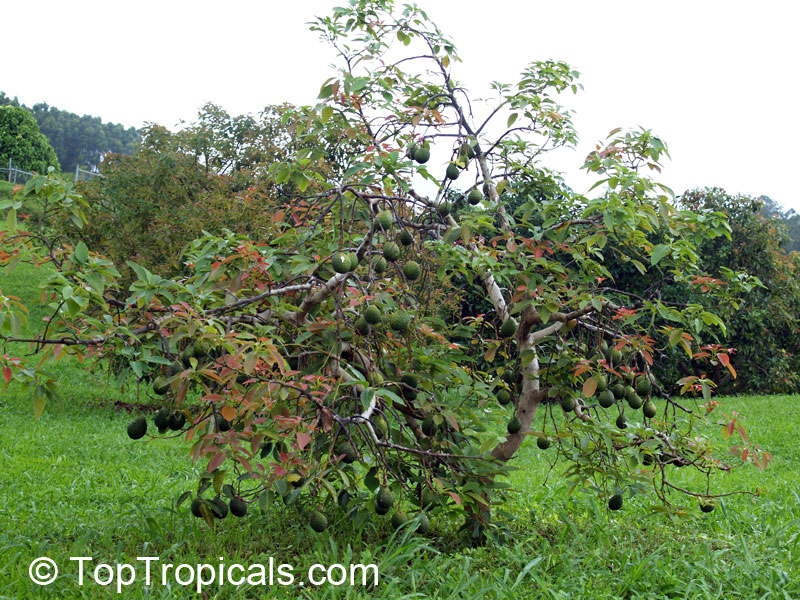
Establishing Avocado tree after shipping
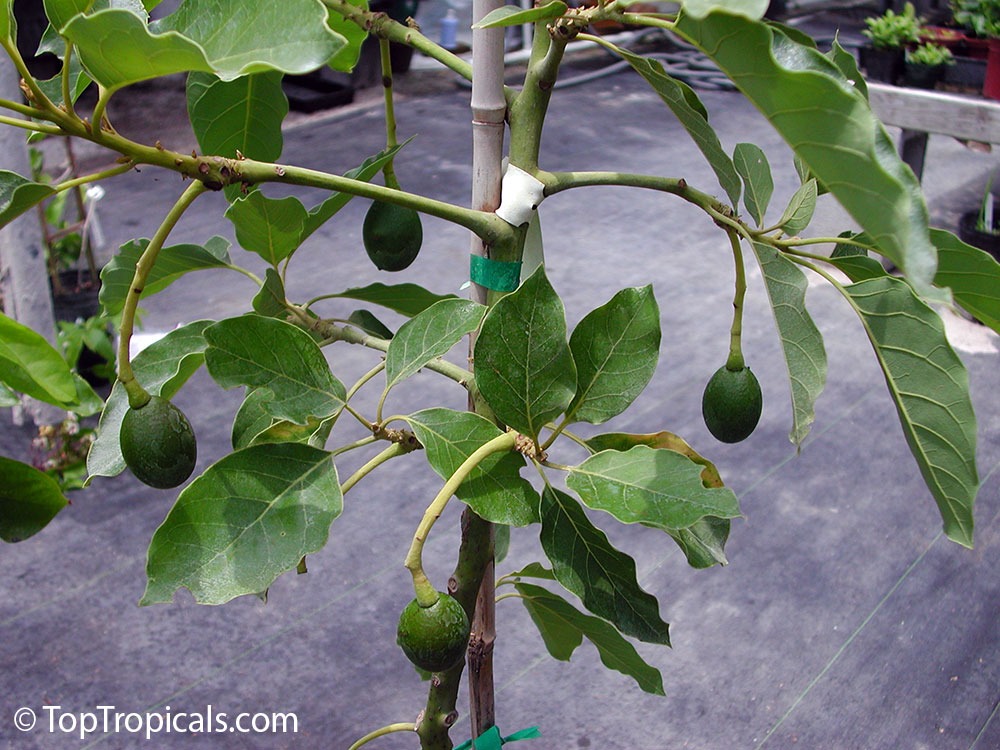
Q: Received my Avocado tree last week and I'm a bit concerned. Is this wilting normal with a new plant? No yellowing, or dropping of leaves. We moved it out of the sun but not sure how to handle?

A: This is normal for after-shipping stress. You did right, position the tree away from direct sun, in shade, preferably under roof (patio?) so it doesn't get over-watered with too much rain and you can control water amount. We recommend to spray the leaves with pure water and put a large clear plastic bag just over the crown (leave the soil to breath). Keep in shade. Within couple days the leaves should perk up. Do not overwater. Water only when the top of soil gets slightly dry. In a week or so, once the plant recovers, you may start moving it gradually into full sun, then to its permanent spot where you want to plant it.
Avocado is not an easy plant to establish. So be careful. It needs lots of water, however, it doesn't like wet feet - so must be planted in a well-drained spot, with at least 4-6"elevation (on a little"hill") so it never gets water-logged. It needs daily water to establish and may need more than just a sprinkler system, use additional hose water when establishing in the ground.

Date: 11 Mar 2026

📅 Do Not Miss: March 21 - Spring Equinox Plant Market

🍩 Saturday, March 21, 2026: 9 am - 4 pm

Smokey  the  tuxedo  cat  in  work  clothes  studies  the  Spring  Equinox  Plant 
 Market  poster  at  the  Top  Tropicals  nursery  entrance  while  Sunshine  the 
 ginger  tabby  cat  rides  a  bicycle  balancing  coffee  and 
 donuts.
Sunshine: Smokey, look at me! See what I can do on my bike? I'm practicing to give people what they like: coffee and donuts.

Smokey: You'd be perfect for a Gulf beach cafe. But gardeners don't come here for donuts.

Sunshine: Really? Then why do they come?

Smokey: Some gardeners lost plants to the freeze. Others want trees that will handle winter better. Cold-hardy avocados. Macadamia. Grumichama. And some just come for fun - to see the PeopleCats.


Sunshine: And my charm... and my donuts will make it more fun.

Read more about Smokey & Sunshine

Ft Myers Garden Center: 13890 Orange River, Ft Myers, FL
Sebring B-Farm : 9100 McRoy Rd, Sebring, FL

More Spring Equinox Plant Market details

🌞 Welcome to our Spring Equinox Plant Market, proudly hosted by the PeopleCats of Top Tropicals.

This one feels different.

After Florida’s record freeze, many gardens are brown, trimmed back, or missing a few old friends. We felt it too. And now - we rebuild.

The equinox marks equal day and night. More light ahead. New growth beginning.

And the PeopleCats are ready🐾.

  • 🐱King is back on gate duty - inspecting every vehicle for proper plant-hauling capacity.
  • 😺Paisley is rearranging freeze survivors and new arrivals like a design consultant.
  • 😼Snitch is supervising recovery efforts from a comfortable chair.
  • 😸Persephone is checking under tables for "hidden spring energy."
  • 😻Sushi and Loki are preparing for guided garden tours - recovery edition.

This is not just a plant market. This is the spring reset.

👍 Why You Should Come

It is finally warm in Florida. After several nights of hard freeze, some plants survived - and some didn’t. This event is your chance to see real freeze champions in person.

If you lost plants, you are not alone. If you are ready to plant smarter, this is your moment.

Walk the gardens. See proven winter survivors. Discover cold-hardy fruit trees and resilient ornamentals. Get practical advice about replanting after freeze. This is rebuilding - Florida style.

♥️ What Makes This Event Special

We are featuring:

  • Verified freeze survivors
  • Cold-hardy fruit trees
  • Tough flowering trees and shrubs
  • Replacement plants for damaged landscapes
  • Smart layering ideas for frost-resilient gardens
  • You will see which species handled 25F with wind and multiple nights of freeze - with no protection.

Real-world test. Real results.

Cold hardy fruit favorites include:

Avocado Plant Facts

Botanical name: Persea americana, Persea gratissima
Also known as: Avocado, Alligator Pear, Aguacate, Abacate
USDA Zone: 9 - 11
Highligths Large tree taller than 20 ftSmall tree 10-20 ftFull sunWatering: Regular. Let topsoil dry slightlyEdible plantSubtropical plant. Mature plant cold hardy at least to 30s F for a short time
Get personalized tips for your region

🌸 Cold hardy subtropical flowering trees including:

And many other cold hardy plants

Mexican Bird of Paradise Plant Facts

Botanical name: Caesalpinia mexicana
Also known as: Mexican Bird of Paradise, Dwarf Poinciana
USDA Zone: 9 - 11
Highligths Small tree 10-20 ftSemi-shadeFull sunWatering: Moderate. Water when top soil feels dryYellow, orange flowersIrritating plantFragrant plantSubtropical plant. Mature plant cold hardy at least to 30s F for a short timeSeaside, salt tolerant plant
Get personalized tips for your region

🎉Event Highlights

  • 30% OFF online prices
  • FREE plants with purchase
  • $5-10 specials
  • Exciting raffle prizes

🌳Don't just mow - grow!

Start your food forest, beat rising prices, and plant a future your family will thank you for.

🌿 Friendly Reminder
Just a quick reminder before we go: Sunshine Boosters are still shipping free. If you were thinking about stocking up for the season, now is a great time to do it while the offer is still active.

🛒 Feed your plants

Date: 24 Jun 2018

Our honest advise on Holiday Gift Plants

Q: Any suggestions on gift plants? With Holidays around the corner, I've been thinking of getting a present for my grandma, she lives in FL and is an experienced gardener. I also have a friend that lives in CA, also warm climate, but she doesn't have a green thumb. Any "easy" plants I can try for her?

A: Live plant is a perfect gift, as we all know. However when ordering a plant online as a present, for a happy experience, you should have three things to consider:
1) Gardener's experience. Planting instructions are included with every order, and usually success is there if you follow them. But all plants go through shipping stress (some more, others less) and need time, patience and love to recover. Also, a plant will need a new home after shipping: a pot and a good soil mix. It would be wise if you add potting mix with a gift order; the plant should be planted in a permanent pot as soon as possible, but normally can wait a day in a packing bag until its new owner gets a pot, if it is not ready yet.
2) How easy the plant is? If buying a plant for a beginner, chose something easy, as well as showy. Adeniums - Desert Roses, Jasmines, Clerodendrums, Cordylines are always a good choice. Calatheas, Gingers and Heliconias are always showy, even when not in bloom. Spice trees and herbs are fun, easy to grow and one can enjoy their aroma right away without waiting on them growing bigger. Miracle Fruit is an awesome present, it comes with detailed instructions how to grow the Miracle!
3) How easy the plant ships? Some plants can be easy in cultivation, but they don't take shipping well. After being in a dark box for a few days, most plants usually recover well in experienced hands. When making a present, you want something showy, not just a stick to arrive. Besides Adeniums and Jasmines, many fruit trees usually take shipping without a problem - such as Mango or Sapote trees. You may not want to start with Avocado, Papaya, Carambola, or Cacao - unless they go to an experienced grower - these may take some time and skill to etanblish. Fig trees are super easy in shipping, but figs may drop leaves in Winter - for this same reason, you may think twice about deciduous plants like Sugar Apples, Grapes, Mulberries or Persimmons to be sent as gifts. On the other hand, if you are sending a deciduous tree to a gardener who can appreciate the variety, this may be a good choice - dormant plants take shipping with less stress!

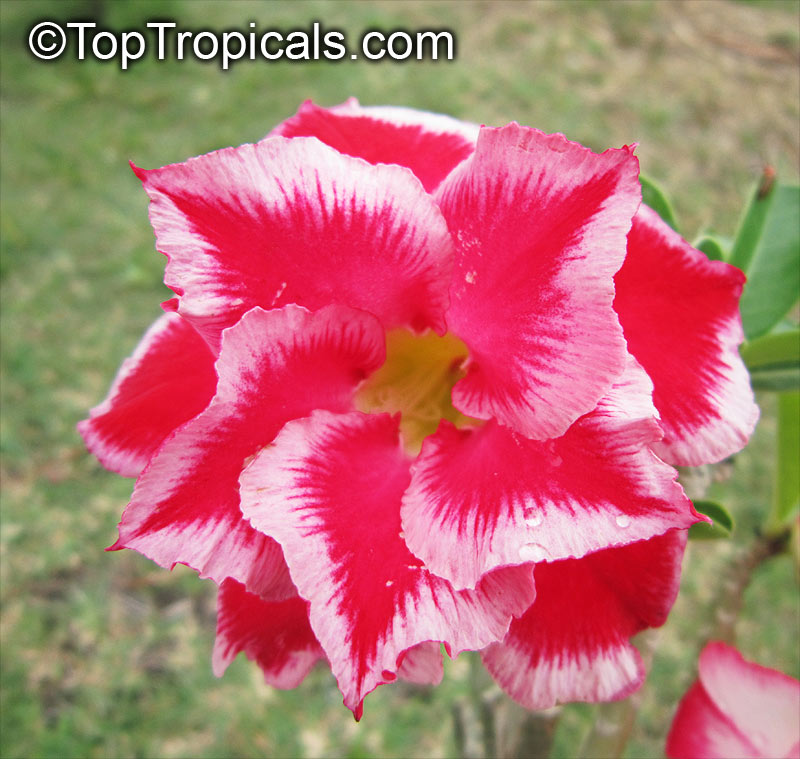
Holiday special: On the picture: Adenium Xmas Santa. A Holiday Special Desert Rose with Christmas-colored flowers - deep-red and white.

Still not sure which plant to choose? You may buy a Top Tropicals Gift Certificate, it ships well and has no expiration date!

Date: 12 Jan 2022

Happy Value Avocados

Avocado Lula

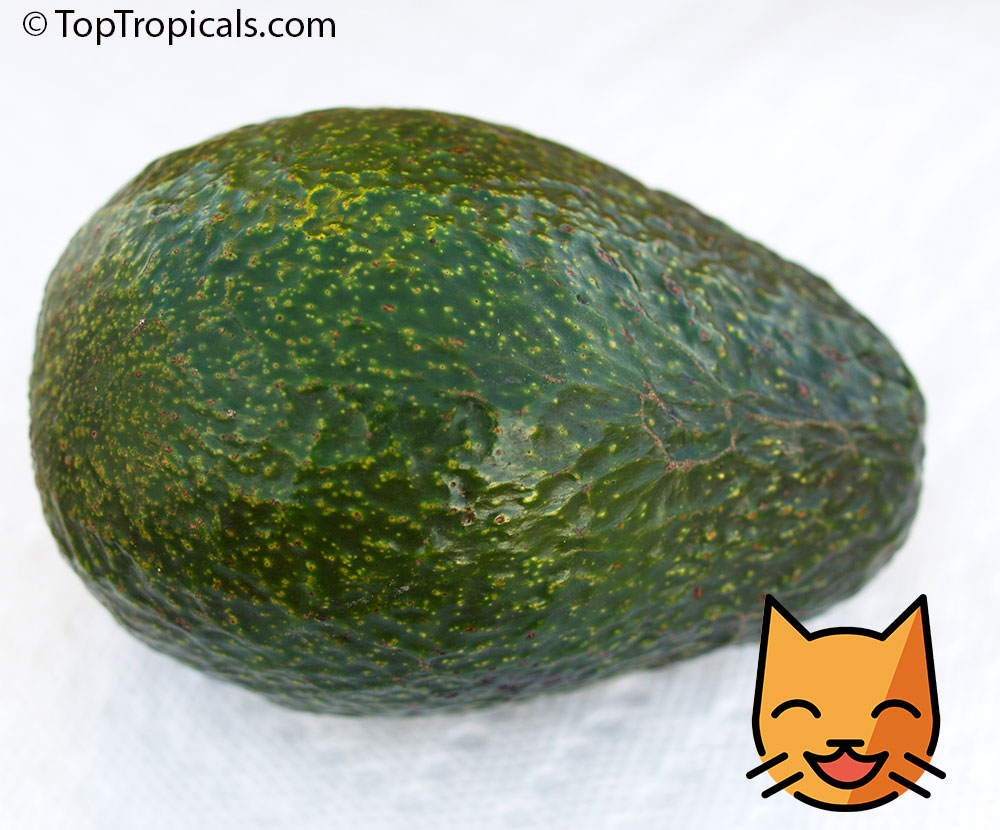
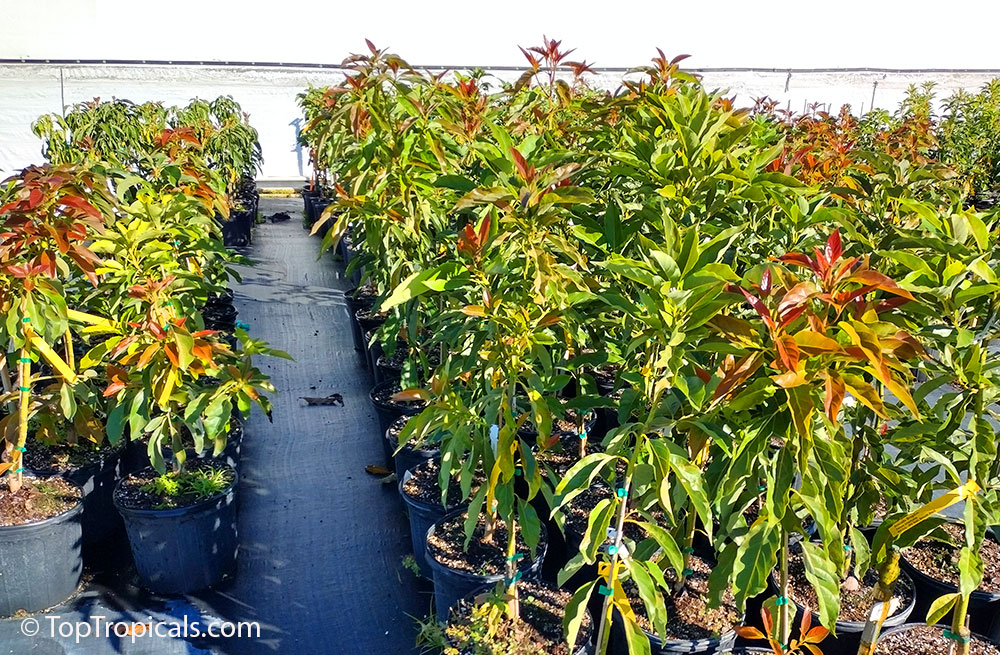
Variety Lula is renowned for its ability to endure harsh winters, and for its exceptionally long harvesting period. More frost resistant than most, successful in Central and South Florida where it is a formerly the leading commercial cultivar. An exceptional choice for homeowners around Orlando and Central Florida. The fruit is pear-shaped, sometimes with a neck, medium-large, the skin almost smooth. Flesh is pale to greenish-yellow. The Oil content 12-16%. Seed is large, tight. Production season is medium-late (November-December). The tree grows tall, bears early and heavily. This variety was originated from seed from a parent tree planted in 1915 by Mrs. Lula Cellon at Miami, Florida.

Avocado Marcus Pumpkin

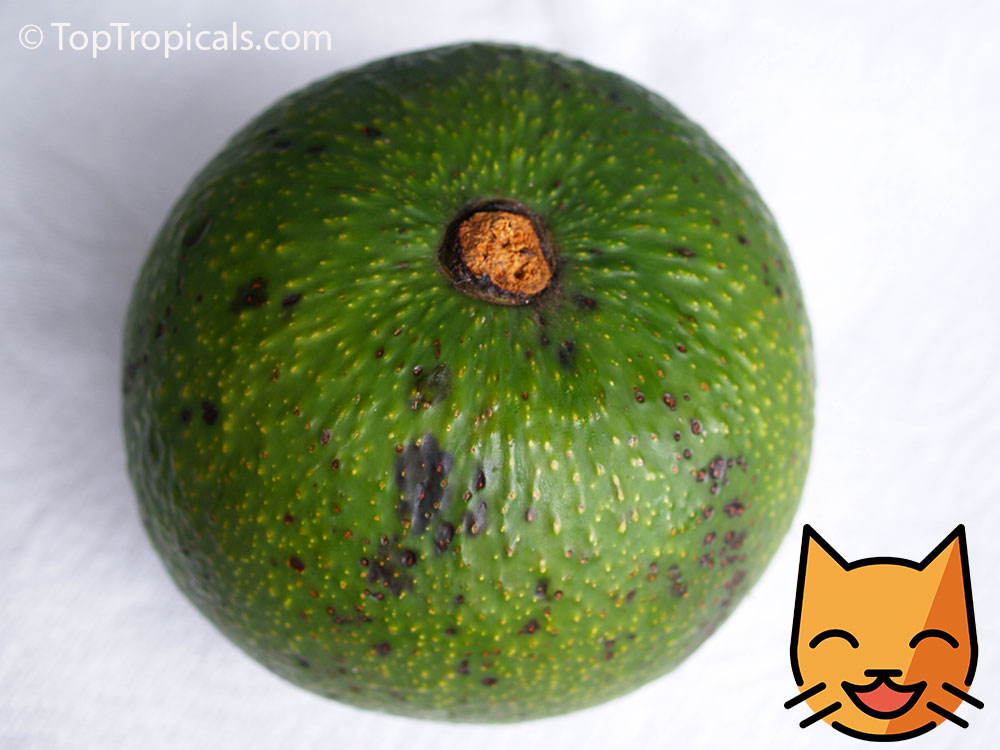
Very rare and hard to find variety! Marcus Pumpkin Avocado - Green, Large, and Round. It is so unique in its shape: it has a pumpkin shaped fruit 30-40 oz, fruiting time October through November. Very good creamy flavor. It is hard to eat the whole one at once because of its size!

Limited 2 trees per customer. Limited time offer, while supply lasts.

Photo above: TopTropicals Avocados 2022

Date: 22 Mar 2017

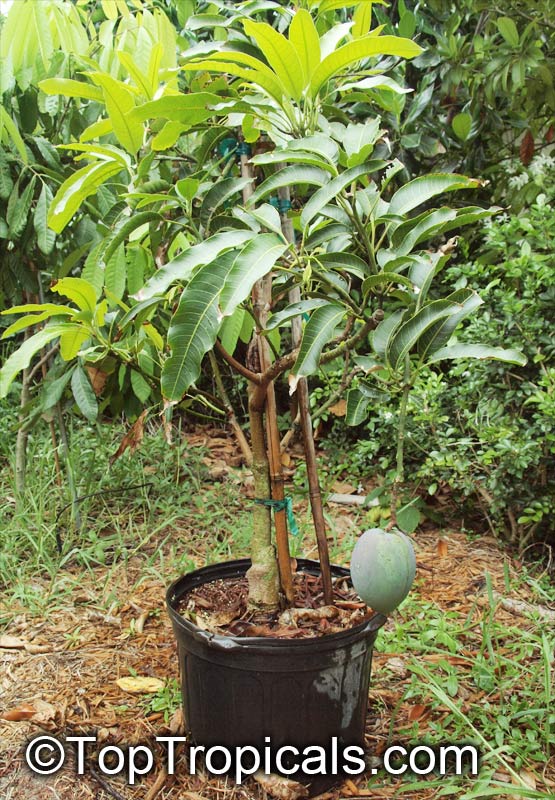
Condo Mango

Q: I was curious about indoor fruiting mango trees. I live in upstate New York and was thinking about trying to grow an indoor tree for fruit. I have a small heated greenhouse. Is there a variety that can be grown from seed that would suit my purposes and if not what is the most economical way I could obtain a cutting or small grafted plant? I keep my greenhouse around 60F in the winter and have no supplemental lighting. Are there any varieties that may work in a sunroom or other well lit indoor location?

A: There are many dwarf varieties of mango suitable for container culture. They are called "condo mangoes".
The most popular condo varieties are: Carrie, Cogshall, Cushman, Fairchild, Graham, Ice Cream, Julie , Mallika, Nam Doc Mai, Pickering. You may read more about them in our online catalog. You may also look into variety Lancetilla which is also a compact tree, and produces one of the biggest size fruit, up to 5 pounds. If you want some rare variety that hardly anyone else has - try Baptiste, an exotic Haitian dessert mango.

Your greenhouse should work for the winter time. Mango trees can take as low as mid 40s during winter and even lower as long as that cold is occasional. If you keep the temperature around 60, this should work well for over wintering. Just make sure to reduce watering to a minimum, because cool temperatures, low light and wet soil - is a bad combination for tropical plants, especially for mango trees which prefer to be kept on a dry side.

Many indoor gardeners have fruiting mango trees in their collection. However, keep in mind that the most important requirement for a mango is full sun. While you may over winter the plant for a few months in a low light conditions, in order for it to flower and produce fruit it needs lots of light. If moving the tree into full sun your yard during the summer is possible, this would be the best solution.

We always recommend SUNSHINE boosters for both over wintering tropical plants in colder climates, and for indoor gardening. SUNSHINE applications will help your tree to cope with cool temperatures and low light conditions. This will also dramatically increase flowering and fruiting performance. Another important factor for keeping your container plant healthy is quality of your potting soil. We offer a special professional mix that contains lots of good stuff: coconut fiber, peat moss, pine bark, and perlite. Fertilizing potted plants is also very important during the warm season, because this is the only way for them to get nutrients (which in the ground can be reached by spreading root system).

As far as seedlings vs. grafting - the only way to have a nicely fruiting mango tree is to plant a grafted variety. Seedlings start producing only after 8-15 years, and the quality of such fruit may be questionable. Only grafted plants can guarantee the desired taste of a variety. Besides, grafted mangoes start producing immediately - you may see fruit forming on plants as small as 3 ft, in 3 gal containers. However, during the first 1-2 years you will need to remove extra fruit and leave only 1-2 fruit so the plant doesn't get exhausted and has enough energy to establish strong root system.

For fun stories about growing mango, check out our Radio Show recording YO Tango Mango!