Garden Blog - Top Tropicals

Date: 19 Dec 2025

13 festive shrubs with bright flowers that bring color to your Winter Garden when everything else is dormant

13 festive shrubs for Winter Garden

13 festive shrubs for Winter Garden

💐 13 festive shrubs with bright flowers that bring color to your Winter Garden when everything else is dormant


Southern Living points to colorful berries as winter garden standbys. Tropical plants take it a step further, filling the cool season with real flowers, not just fruit. From vivid reds to electric blues, these plants prove winter does not have to be dull.
  • 🌈 1. Gloxinia sylvatica - Bolivian Sunset


    This plant waits for cool weather, then suddenly lights up the shade with fire-red blooms. Flowers appear almost overnight and continue through fall and winter. It rests in summer, returns in fall, spreads gently, and makes an easy, festive ground cover that is perfect for sharing.

👉 Learn more
  • 🌈 2. Pereskia aculeata - Barbados gooseberry


    An unusual vine that surprises in cool weather with delicate, star-shaped blooms followed by tasty fruit. It flowers steadily from fall through winter, adding light, airy color to fences and trellises when most vines are quiet.

👉 Learn more
  • 🌈 3. Mansoa alliacea - garlic vine


    Best known for its garlicky scent, this vine really shines in winter. Cooler temperatures bring clusters of lavender-purple flowers that brighten fences and trellises with very little effort.

👉 Learn more
  • 🌈 4. Dombeya wallichii - tropical hydrangea


    Large pink pompom blooms hang from bare branches in winter, creating a true holiday look. Lightly fragrant and impossible to miss, it brings hydrangea-style drama to the cool season.

👉 Learn more
  • 🌈 5. Brunfelsia pauciflora Compacta - dwarf yesterday-today-tomorrow


    Compact and cheerful, this shrub opens purple flowers that fade to lavender and white. The color shift makes it look like several plants blooming at once, perfect for pots or small garden spaces.

👉 Learn more
  • 🌈 6. Clerodendrums


    Long, cascading sprays of white flowers of Clerodendrum minahassae - fountain clerodendrum - spill from the plant during the cooler months. It brightens shaded areas and adds movement when the garden slows down. Most clerodendrums bloom through Winter!

👉 Learn more
  • 🌈 7. Tibouchina multiflora - glory bush


    Soft, fuzzy purple blooms cover this shrub in winter, backed by velvety leaves that look good year-round. It adds strong color and texture during the cool season.

👉 Learn more
  • 🌈 8. Holmskioldia sanguinea - Chinese hat


    Bright red, orange or yellow, hat-shaped bracts surround small flowers and hold their color through the cool months. The shape alone makes this shrub a standout in winter.

👉 Learn more
  • 🌈 9. Barleria cristata - Philippine violet


    This tough shrub blooms heavily in winter with rich purple flowers. It delivers dependable color when many plants take a break. There is a golden variety too!

👉 Learn more
  • 🌈 10. Eranthemum pulchellum - blue sage, lead flower


    Few plants offer true blue in winter. Electric-blue flower spikes appear in cool weather, adding rare color with minimal care.

👉 Learn more
  • 🌈 11. Petrea volubilis - queen's wreath


    In winter, this woody vine erupts into cascading sprays of lavender star-shaped flowers. It creates a wisteria-like effect right when the garden needs it most.

👉 Learn more
  • 🌈 12. Tabebuia varieties - dwarf golden and dwarf pink


    These trees save their show for winter, blooming on bare branches. Golden forms glow yellow, while pink varieties cover themselves in soft trumpet-shaped flowers.

👉 Learn more

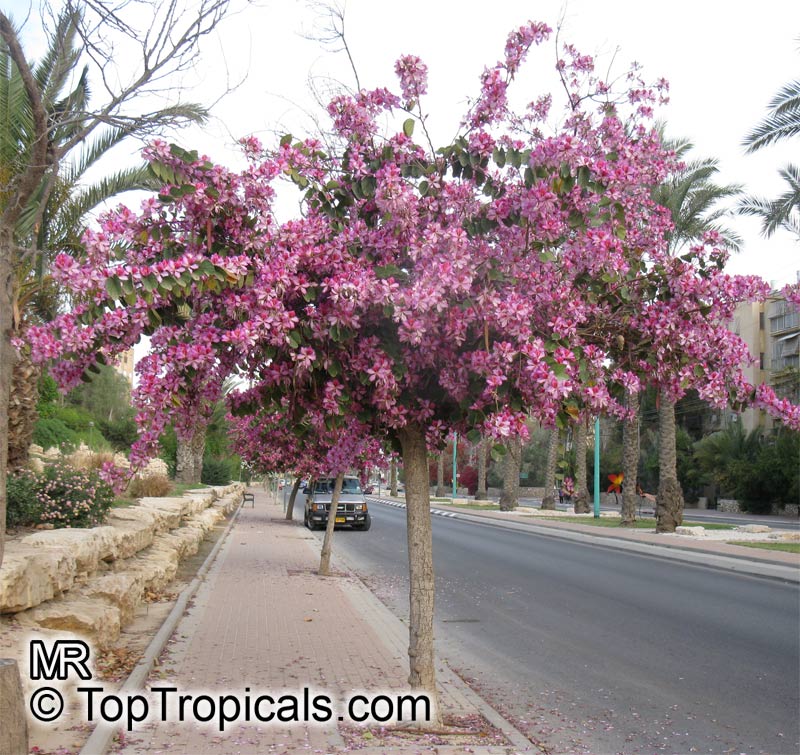
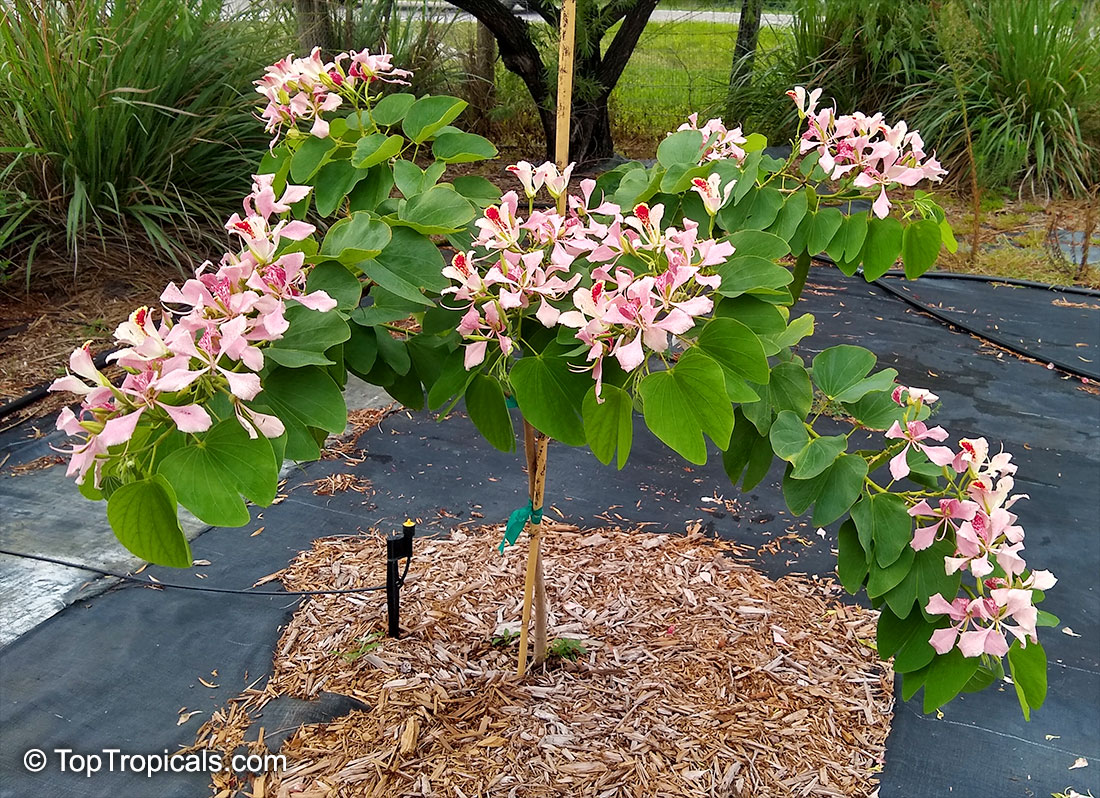
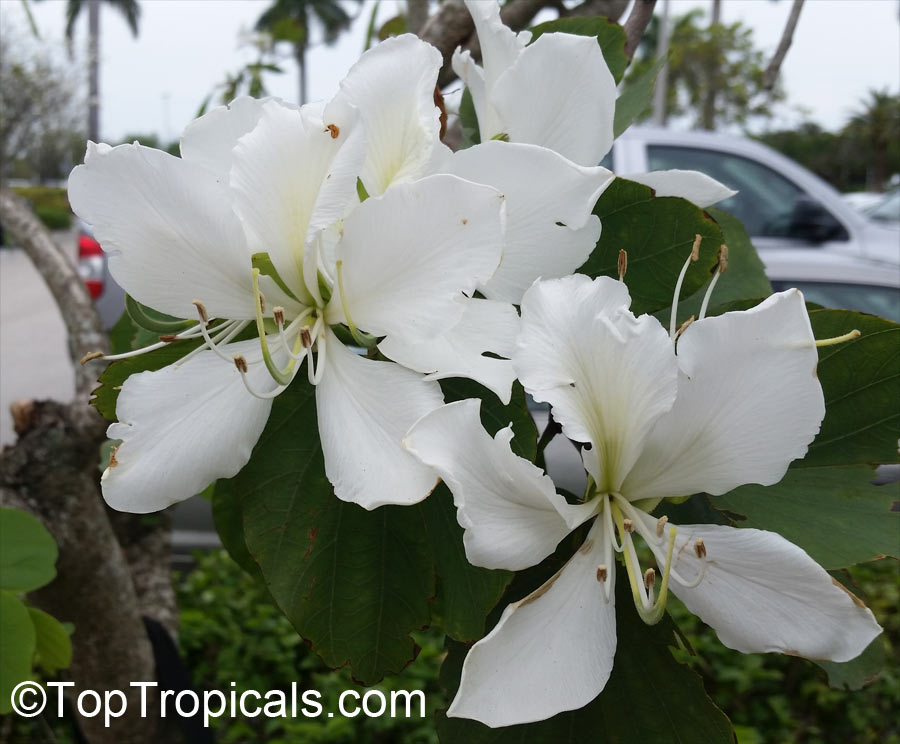
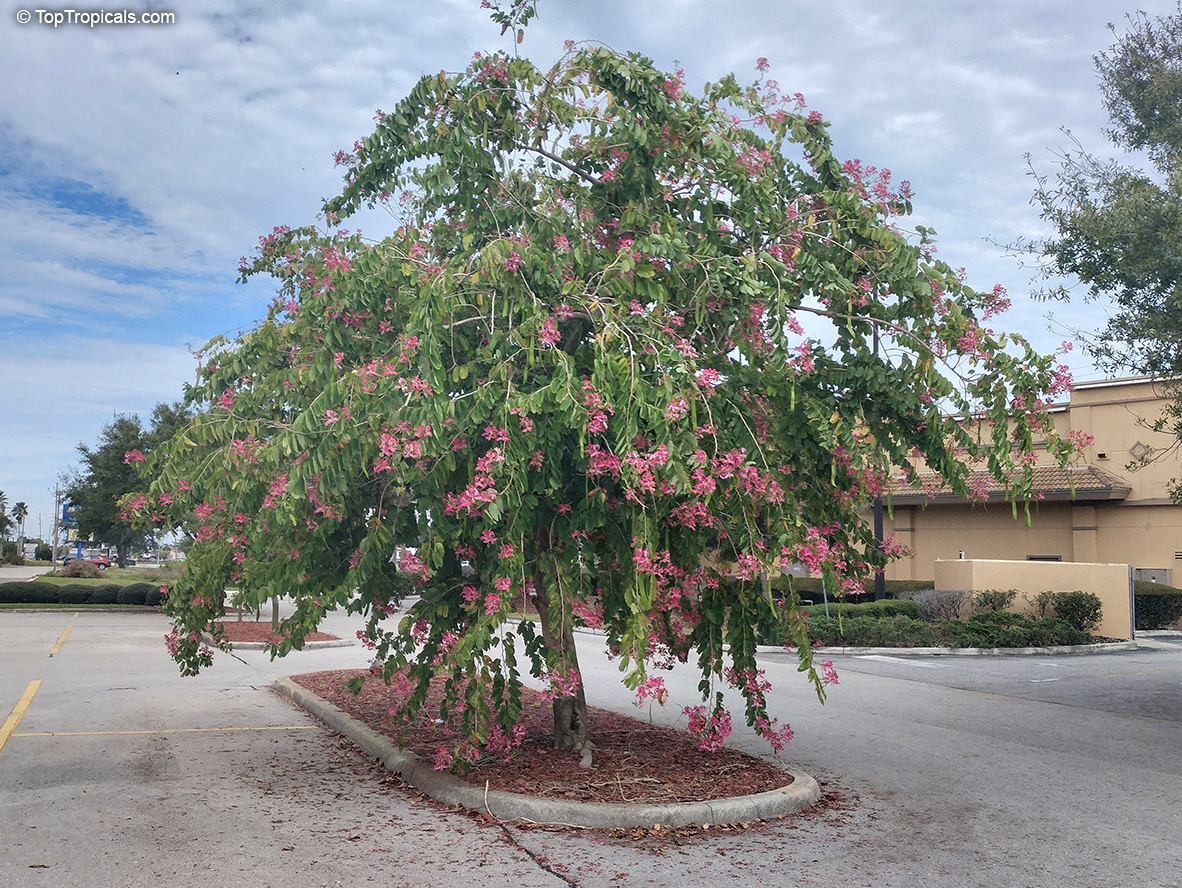
🌈 13. Bauhinia trees - pink butterfly and Hong Kong orchid trees


Butterfly-shaped blooms open on leafless branches, giving bauhinias their signature winter elegance. The Hong Kong orchid tree stands out with especially large, vivid flowers.

🛒 Explore Winter bloomers

📚 Learn more:


#Hedges_with_benefits #Discover

🟢 Join 👉 TopTropicals

Date: 23 Feb 2026

❄️ The Hardiness Report: February 2026 ❄️

🐾 Smokey & Sunshine’s real-world survival data from our Sebring, Florida Research Gardens. Smokey analyzed the data. Sunshine just stayed happy. Here is what they found.

Macadamia  tree  surviving  25F  freeze  as  Smokey  inspects  leaves  and 


Sunshine  holds  steaming  coffee  in  frosty  garden.
Sunshine: Twenty five degrees. Wind chill fourteen. And it is still standing... like nothing happened?
Smokey: This is macadamia strength.
Sunshine: I should put a macadamia nut in my coffee and borrow some of that strength.
Smokey: Do not get too nutty yet. It still needs curing and cracking.

📊 Weather Data – February 1–6, 2026

Sebring, Florida – 132 years of recorded observations
This was not a light frost. It was a prolonged, windy, penetrating hard freeze.

  • 🌡 Minimum temperature: 25F
  • ❄️ Wind chill: 14F
  • ⏳ Duration: 3 nights of 8–10 hour hard freeze
  • ☀️ Daytime temperatures: around 50F for 7 days
  • 🌀 Wind: sustained 20 mph, gusts 40–50 mph

While all our plants in pots were protected in greenhouses, our in-ground plantings faced the freeze outdoors. We covered what we could. Even so, some plants were damaged, some died, and some surprised us by surviving.

In the next few newsletters, we will share the real survivors - the plants that proved themselves in the ground, under real conditions. Smokey and Sunshine have been out in the fields assessing the damage from the February 1–6 freeze. While many plants struggled, the Macadamia proved to be a true standout. This is how we grow them to handle the tough years.

Why does this matter? Because we have gotten used to warm winters, and this freeze was a rude awakening. Not everyone lives in Miami. If you garden in places where a real cold event can happen, you have to be prepared - and you have to plant what can take it.

🌰 Macadamia: Freeze Tested and Standing

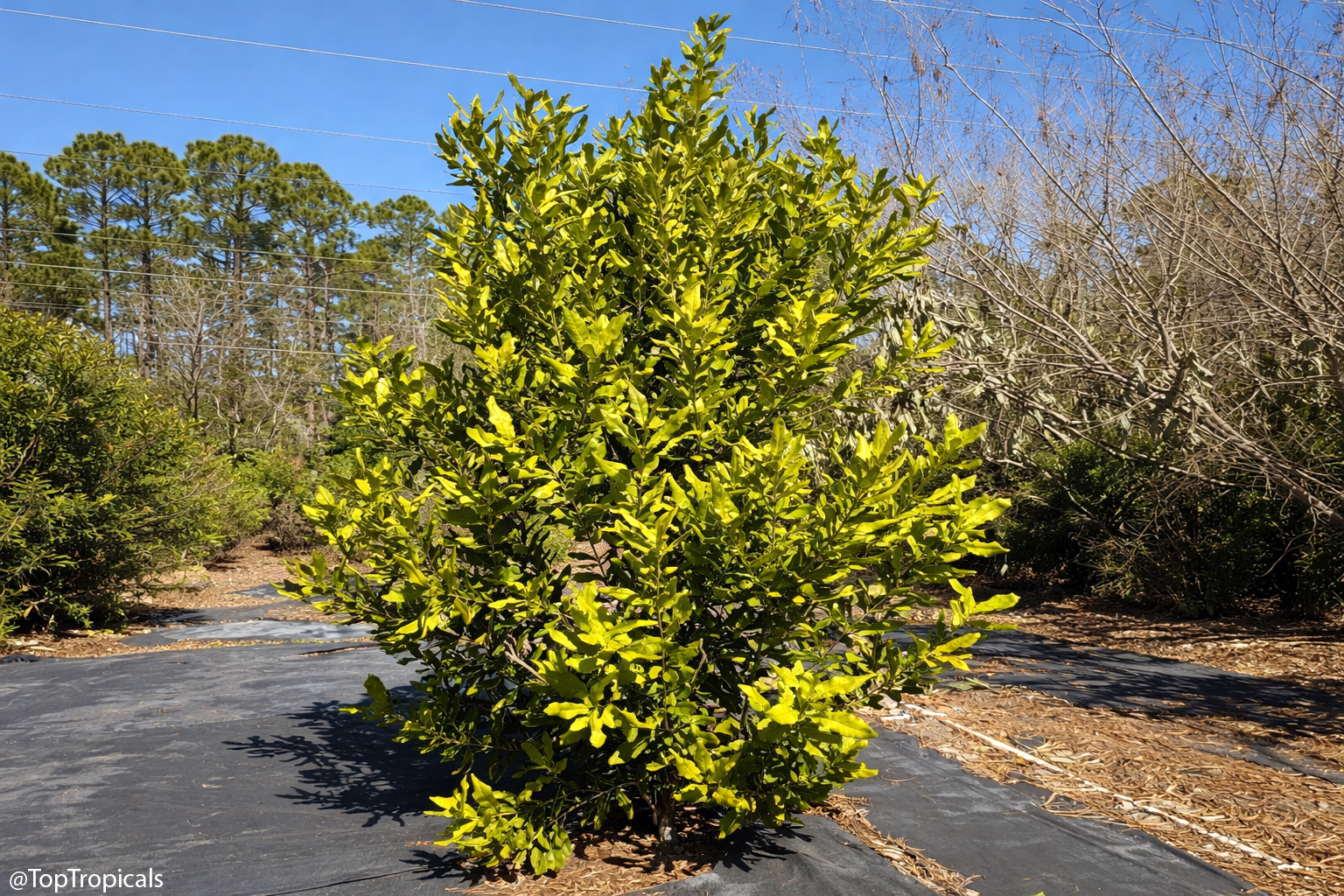
Three  year  old  macadamia  tree  after  three  nights  of  25F  hard  freeze  in 


February  2026,  showing  healthy  foliage.

3 year old macadamia tree after 3 nights of hard freeze in February 2026 - standing strong.

When temperatures dropped to 25F with wind chill near 14F, our established macadamia trees remained upright, green, and structurally intact. Leaves held. Branches stayed firm. No collapse, no panic.

That is not luck. That is macadamia hardiness.

Often considered a "tropical luxury nut," macadamia proved it can handle more than many gardeners expect. In USDA Zones 9b-11, with proper drainage and site selection, it is not just ornamental - it is a long-term food tree with real resilience.

In a winter that reminded us not to take warmth for granted, macadamia earned its place on the survivor list.

The nut itself is famous for its strength. The shell is among the hardest in the nut world, requiring serious pressure to crack. Inside, the kernel is creamy, buttery, rich, and deeply satisfying. High in monounsaturated fats and naturally low in sugar, macadamias have long been valued both for flavor and for nutrition.

The tree is equally impressive. An evergreen with tough leaves and elegant spring flowers, it matures into a productive, manageable canopy. Nuts develop slowly over six to seven months. Production begins in a few years and increases steadily as the tree matures. Plant it once, and it can reward you for decades.

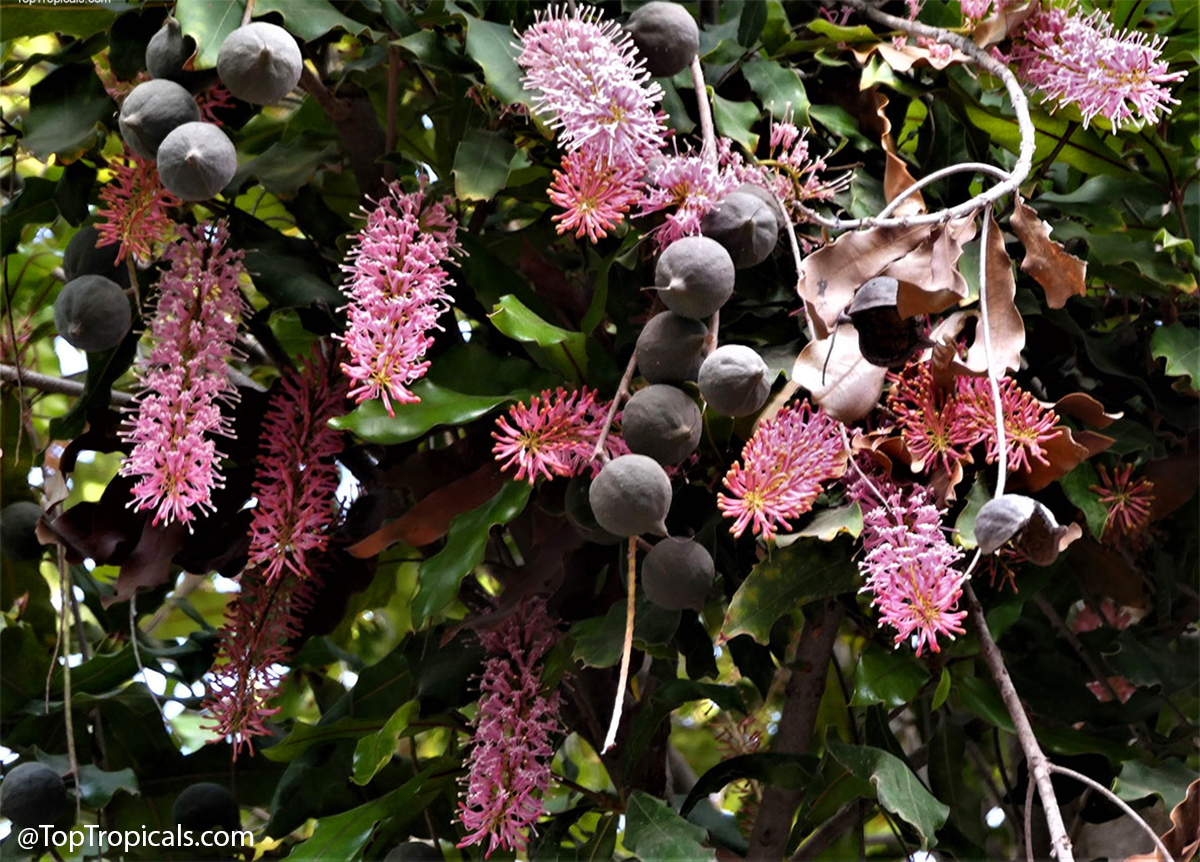
Macadamia  tree  with  pink  flower  racemes  and  developing  round  green  nuts
 
 
  on  branches.

Macadamia flowers and developing nuts on the tree.

Cold will come again. It always does. The question is not whether winter will test your garden. The question is whether your trees are ready. Macadamia proved it is. If you are building a garden that feeds you for decades, this is a tree worth planting.

🛒 Add Macadamia Tree to your garden

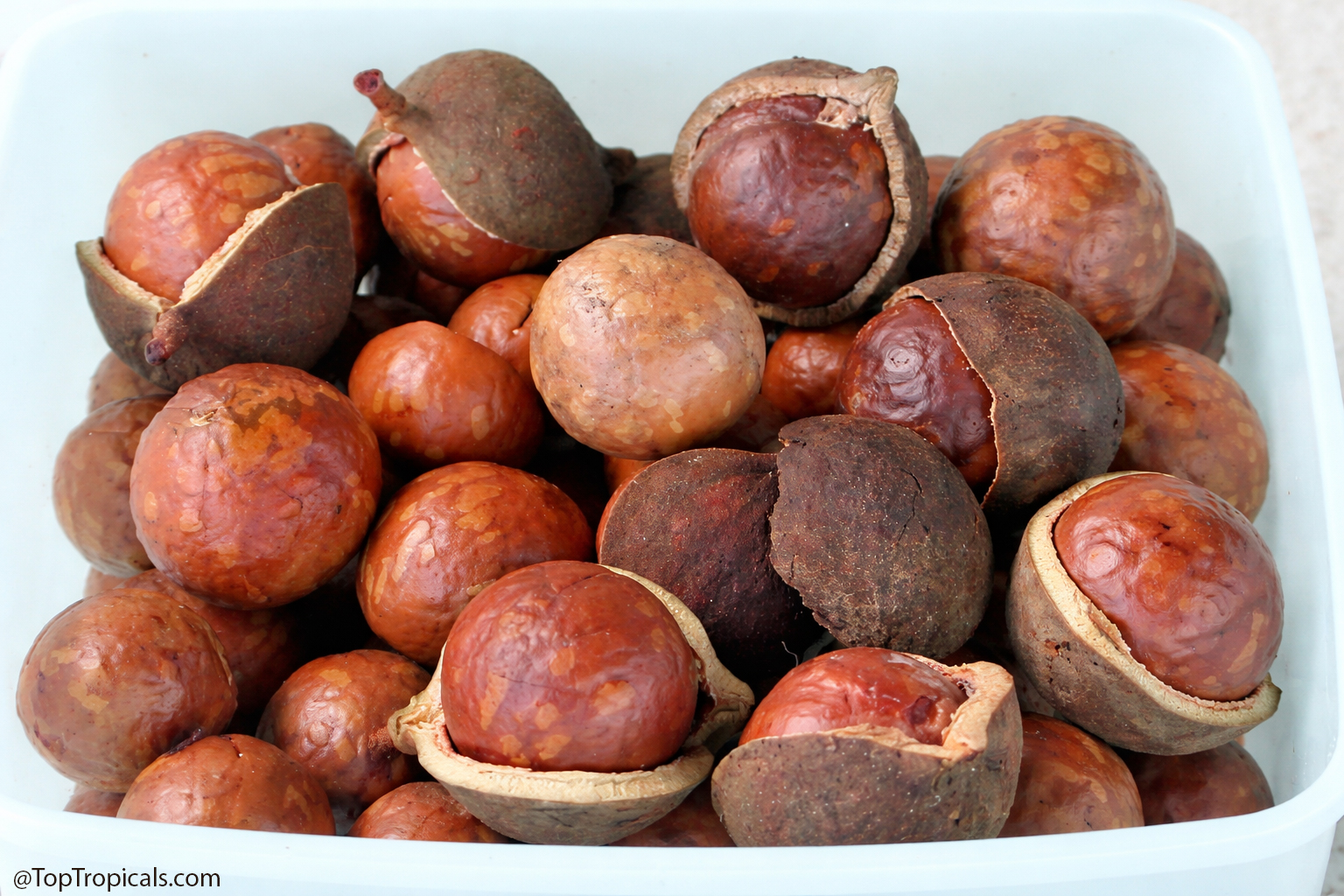
Fresh  macadamia  nuts  with  outer  husks  removed  and  hard  brown  shells 


exposed  in  a  container.

Freshly harvested macadamia nuts with husk removed and hard shells visible.

Date: 7 Mar 2026

SUNSHINE Boosters: The Professional Advantage

By Tatiana Anderson, Horticulture Expert at Top Tropicals with Smokey & Sunshine help

Sunshine  Boosters  plant  fertilizers  lineup  including  Bloom,  Pikake, 


Robusta,  Omnibus,  Ananas,  Mango  Tango,  Citrus,  and  MegaFlor

Sunshine Boosters for different types of plants

Here is why SUNSHINE Boosters are the smart choice for your garden this spring:

  • Amino Acid Stability: Unlike traditional fertilizers that use synthetic EDTA chelators, our formulas are amino-acid based. This means 100% of the nutrients are bioavailable and consumed by the plant, leaving zero toxic residues or salt build-up in your soil.
  • Safe for Every Watering: Because our concentrations are scientifically balanced and mild, they are safe for daily use. This eliminates the "feast or famine" cycle of dry fertilizers and prevents accidental root burn.
  • Pure Taste for Edibles: Our delicate formulas do not contain excess salts, urea, or ammonium salts that can ruin the flavor of your harvest. Your fruit and vegetables will retain their pure, natural taste.
  • Pollinator Friendly: Our boosters are designed to be safe for honeybees and other beneficial insects, making them the responsible choice for an organic-style garden.

🌿For Potted Plants: Breaking the "Foodless" Cycle

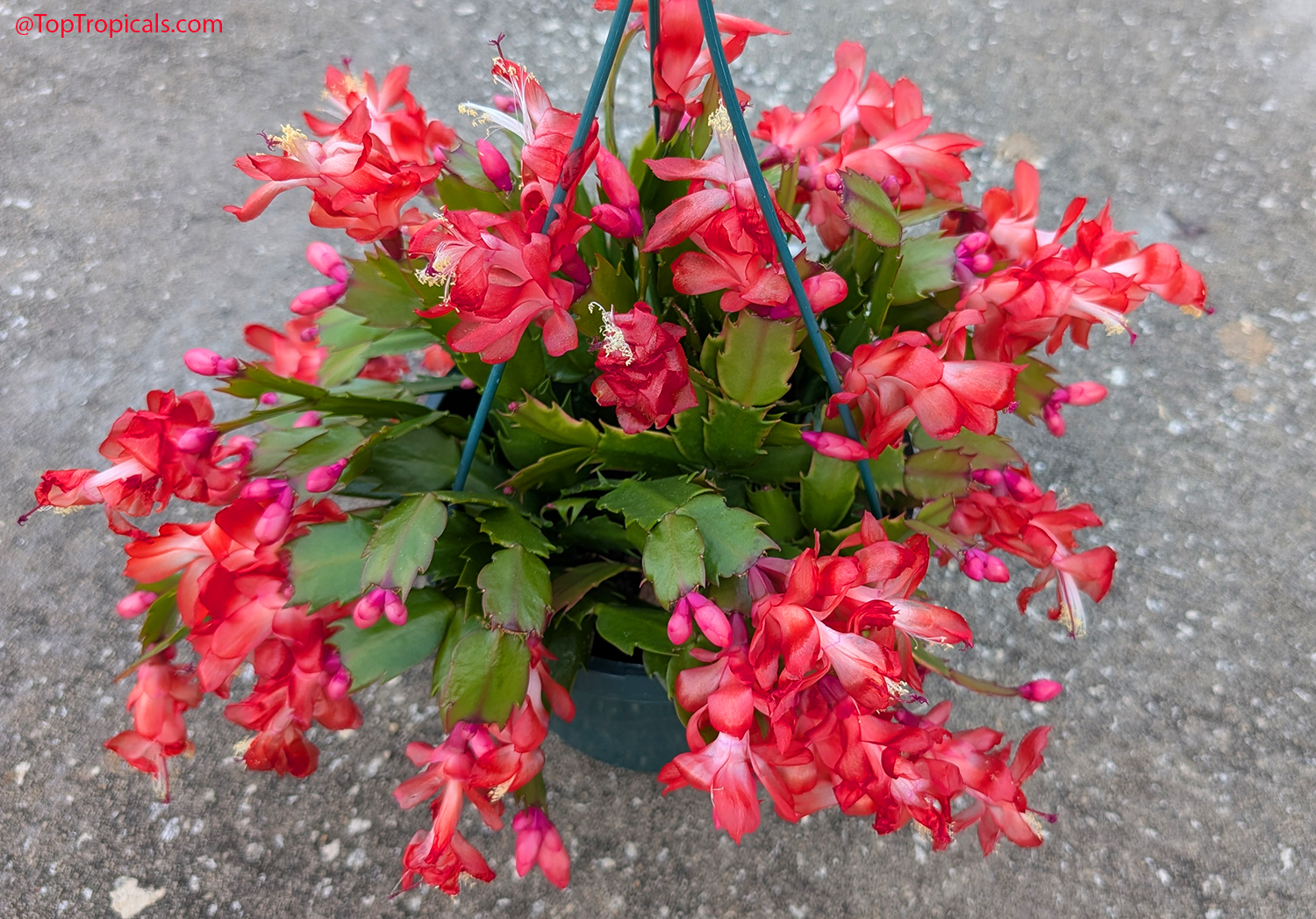
Schlumbergera  Christmas  cactus  with  abundant  red  blooms  after  feeding 


with  Sunshine  Megaflor  fertilizer

Schlumbergera - Christmas cactus - after boosting flowers with Sunshine Megaflor

Container-grown plants are trapped in soilless mixes (peat, bark, perlite) that are structurally great but naturally nutrient-deficient.

  • Total Nutrition: Since pots lack the natural "buffet" of the ground, SUNSHINE Boosters™ provide every essential mineral the plant cannot find on its own.
  • No Salt Build-up: Our amino-acid based formulas are consumed entirely by the plant, leaving zero toxic residue or root-burning salts behind.
  • Daily Safety: Our mild concentrations eliminate the "feast or famine" cycle of dry fertilizers, making them safe for use with every single watering.

For In-Ground Plants: Unlocking the Soil

Mango  tree  blooming  produsely  after  applying  Sunshine  Mango  Tango 


Booster

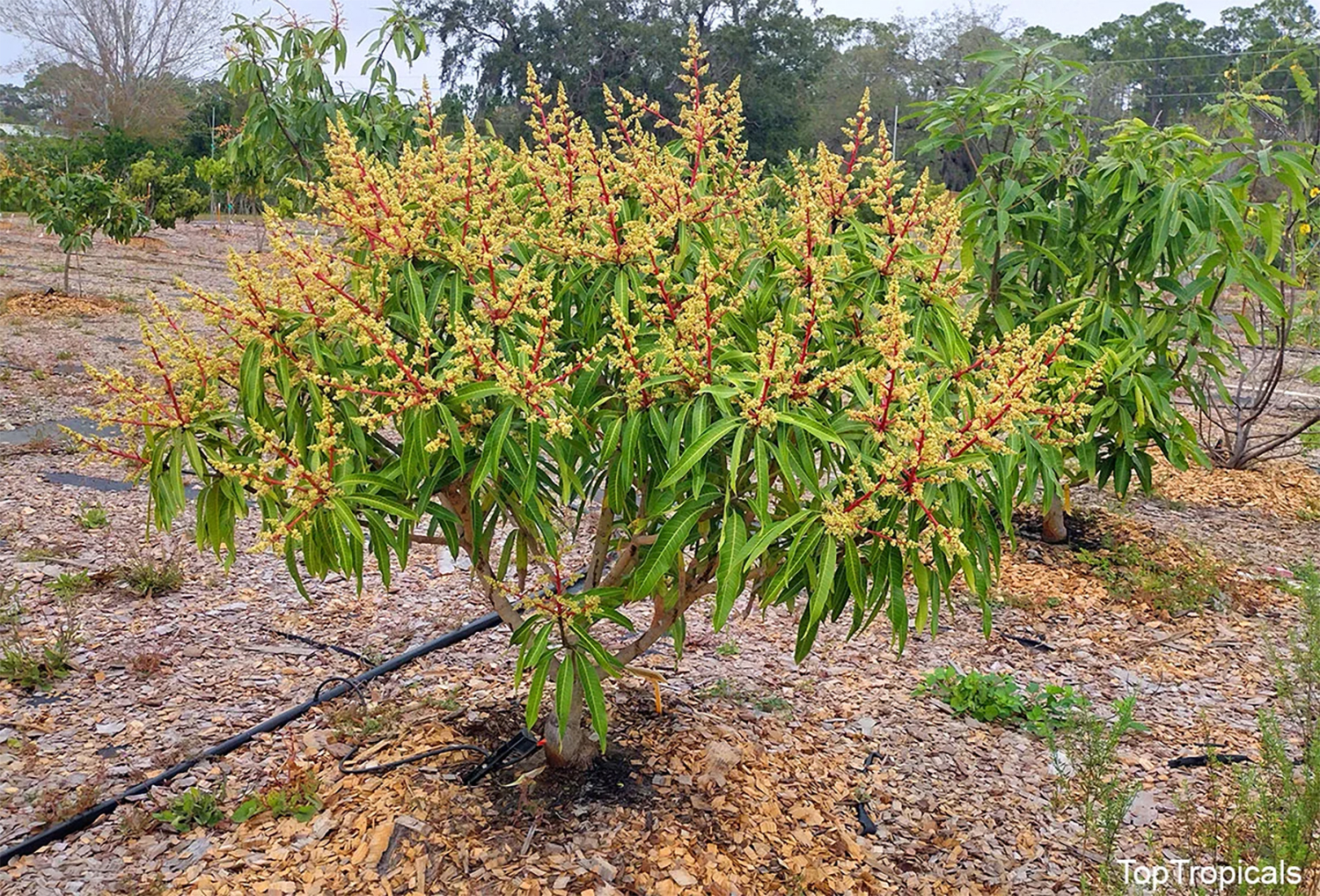
Mango tree blooming produsely after applying Sunshine Mango Tango Booster

Even in the ground, plants often struggle to absorb what they need because soil compounds can "lock up" nutrients.

  • Enhanced Solubility: SUNSHINE Boosters create a slightly acidic environment that helps dissolve stubborn salts in the soil, making them accessible to roots again.
  • Precision Delivery: We provide mobile elements like Nitrogen precisely when the plant needs to push new spring growth.

🌿The Foliar Advantage: Direct-to-Leaf Delivery

Did you know a plant leaf can absorb nutrients even more efficiently than the roots? Foliar feeding is your "emergency button" for instant results.

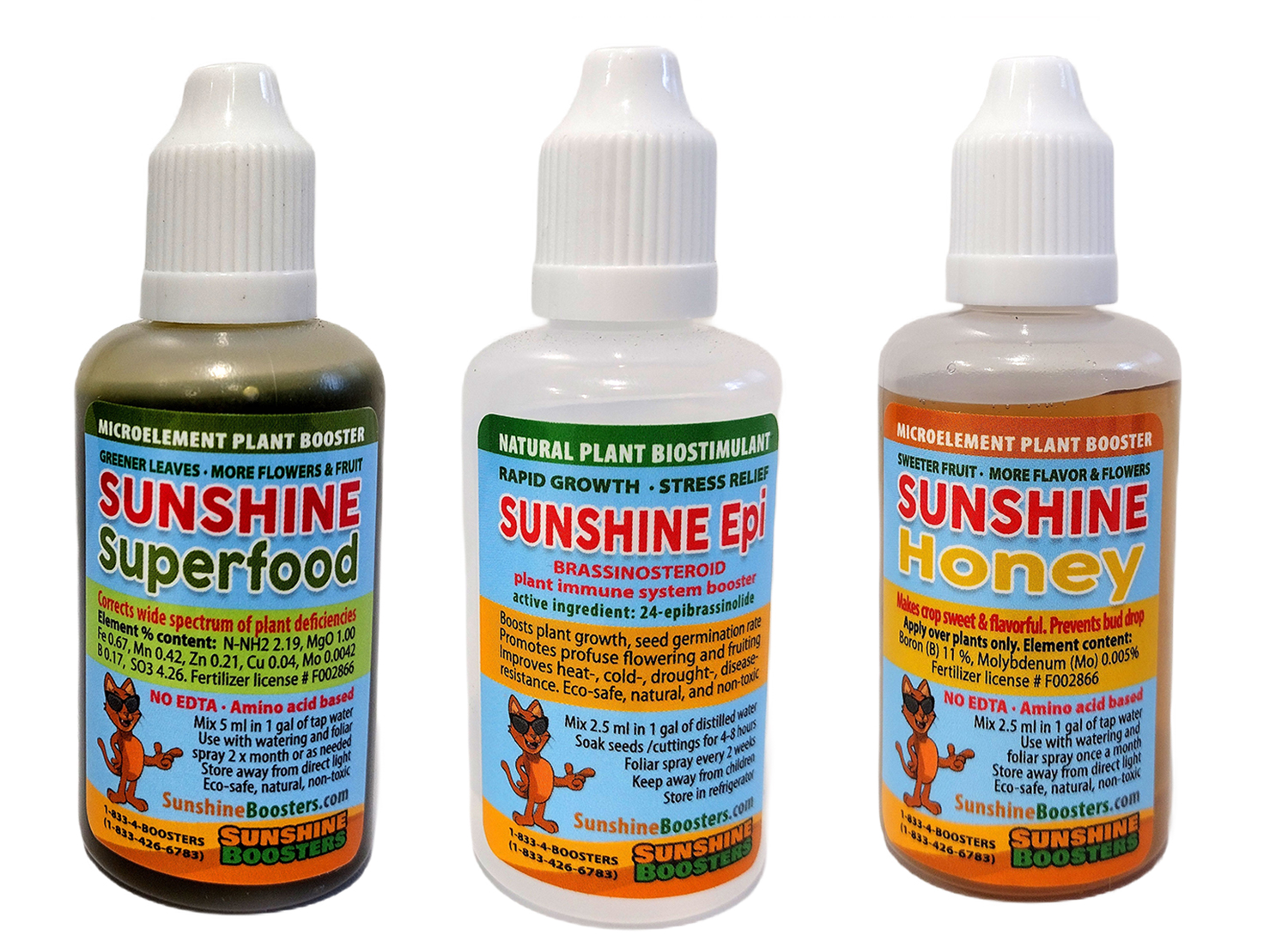
  • Quick Fix: Foliar applications with Sunshine Superfood are the fastest way to correct yellowing leaves or visible deficiencies.
  • Metabolism Boost: Sprays like SUNSHINE-Epi act as a bio-regulator, helping plants recover from the stress of spring temperature swings.
  • Better Fruit: SUNSHINE Honey is applied to leaves to naturally move sugars to the fruit, increasing sweetness and flavor.

🌿The Calcium Problem: Solved

As your plants wake up this Spring, they need structural strength. Think of Calcium as the "cement" that holds plant cells together. Without it, new spring growth is doomed to fail.

Signs Your Plant is Starving for Calcium:

  • Deformed Leaves: New growth looks twisted, hooked, or curled.
  • Blackened Tips: The very edges of young leaves turn white, then quickly blacken and die.

The Industry Secret: The "Missing" Mineral

Most fertilizers, both dry and liquid, completely skip Calcium. Why? Because it’s a chemical nightmare to keep stable in a concentrated solution. Most manufacturers rely on your irrigation water to deliver Calcium, but tap water is inconsistent and often fails to provide what a hungry, growing plant needs.

The SUNSHINE Boosters: Stable Calcium in Every Bottle

We have successfully stabilized Calcium directly into every single Sunshine Booster formula. Whether you are using Bombino, Robusta, or Megaflor, you are delivering a precise, stable dose of Calcium with every watering. No lockout, no sediment, and no relying on the "luck" of your tap water. Just strong, healthy cell walls and perfect spring growth.

🌿SUNSHINE-Epi: The Year-Round Bio-Regulator

Whether it’s the transition of spring, the extreme heat of summer, or the dry air of indoor wintering, SUNSHINE-Epi is your plant’s primary defense. This natural Brassinosteroid acts as a powerful immune booster, helping plants navigate stress wherever it comes from.

  • Universal Stress Shield: Protects against temperature swings (both heat and cold), drought, and transplant shock.
  • Vigorous Development: Dramatically improves root growth and speeds up the metabolism of young seedlings and cuttings.
  • Eco-Safe: 100% non-toxic to humans, pets, and pollinators.

Note: While Epi is highly effective, it is a performance booster, not a substitute for proper care. It works best when paired with the right light, water, and a consistent feeding program. It won't bring a dead plant back to life, but it will help a struggling one find its footing.

🛒 Feed your plants

Don't let your garden wake up to an empty nutrition plate.
Smokey: Save your gas money for donuts. We're shipping the boosters for free.
Sunshine: Agreed. My charm covers the delivery cost.

No coupon code required: The free shipping is automatically applied at checkout.

Complete Nutrition: Stock up on Robusta, Superfood, and Epi for the Spring growth push.
Offer valid through 03/14/2026. Free shipping offer is valid on SUNSHINE Boosters liquid products only. Not valid on previous purchases and cannot be combined with any other offers, coupons, or discounts. Offer subject to change or cancellation without notice.

Sunshine  Boosters  plant  supplements  including  Superfood  micro  element 


complex,  Epi  biostimulant,  and  Honey  fruit  enhancer

Sunshine Boosters micro elements and supplements - Superfood micro-element complex, Sunshine Epi biostimulant and Sunshine Honey supplement for better fruit

❓Frequently Asked Questions: SUNSHINE Boosters™

  • What water should I use for foliar spraying?
    Tap water works perfectly for most. However, if your water is very "hard" (leaving white mineral spots on leaves), switch to distilled water for a cleaner finish and better absorption.
  • How long does a diluted solution last?
    For maximum potency and to avoid nutrient degradation, try to use your diluted mixture within a few hours of preparation. Keep away from direct sun. Fresh is always best!
  • Can I use SUNSHINE Boosters as a daily foliar spray?
    Yes! You can mist your plants daily to maintain high vigor, but you must reduce the dosage (use half the recommended strength) to avoid over-feeding.
  • Can I mix boosters with pesticides or fungicides?
    It is best to apply them separately. Mixing fertilizers with chemical pesticides in one tank can trigger reactions that "lock out" nutrients or reduce the efficacy of the treatment.
  • Will the liquid stain my patio or hands?
    No. Unlike traditional fertilizers with heavy blue or pink dyes, our solutions are clear or very light-colored. If you spill it, simply rinse with water—no stains, no mess.
  • Can I mix different SUNSHINE Boosters together in one sprayer?
    Yes. All SUNSHINE Boosters are chemically compatible. You can combine a "growth" booster like Robusta with a "micro-element" complex like Superfood in the same water to save time.
  • Are these products safe to use around my pets?
    Absolutely. Our formulas are 100% non-toxic and amino-acid based. Just ask Smokey and Sunshine—they are perfectly safe for households with curious cats, dogs, and children.
  • Can I use these boosters on indoor plants?
    Yes. They are ideal for indoor use because they don't produce a "fertilizer smell" and won't cause salt crusting on your decorative pots or furniture.
  • Is it safe to use on fruit and vegetables I plan to eat?
    Yes. Because our formulas contain no urea, nitrates, or harsh salts, they don't leave a "chemical" aftertaste. They actually help improve the natural sugars and flavor profile of your harvest.
  • What is the best temperature for foliar spraying?
    Apply when temperatures are below 85°F. Early morning or late evening is best; this allows the leaves to remain wet longer, giving the plant more time to absorb the nutrients.

What Fertilizer to Use and How?

Green Magic controlled release fertilizer keeps plants green during active growth season - apply only once in 6 months.
Sunshine: Smokey, you saved my coffee tree. But what do I do now so it stays happy?

Smokey: Simple. Spray Sunshine Robusta every five days during active growth.

Sunshine: Five days? Smokey, I barely remember where I left my coffee mug five minutes ago.

Smokey: That is exactly why we use Green Magic.

Sunshine: Fertilizer for forgetful gardeners?

Smokey: Controlled release. Sprinkle once and it feeds the plant for six months.

Sunshine: Six months? I can have a very good nap in that time.

Smokey: Exactly. The plant keeps eating slowly while you keep napping.

Sunshine: Perfect. Remember, I will bring the coffee. You bring the donuts.

Smokey: And next week we will show you exactly how Green Magic works and why plants love it. Stay tuned.

🛒 Feed your plants

✍️ Learn more about fertilizers

Date: 5 May 2025

🎀 Five plant gifts she'll love this Mother's Day

Q: My mother loves gardening and I am thinking to buy her a live plant to make her happy. What plant do you recommend?

A: At Top Tropicals, we have a big selection of wonderful gift plants . Below are a few suggestions for you, these plants are large, developed and ready to bloom or fruit!

1. Joy Perfume Tree

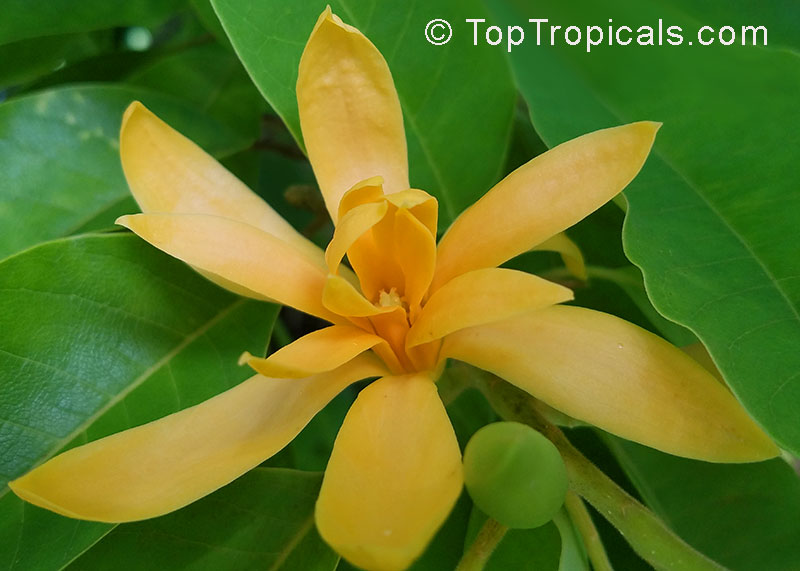
Magnolia  (Michelia)  champaca,  Joy  Perfume  Tree,  Champaka

The Champaka or Joy Perfume Tree (Magnolia champaca) - is a top choice for Southern landscapes, prized for its striking columnar shape and fragrant, fruity bubble gum-scented blooms - you won't be able to stop sticking your nose in this flower! A signature plant at Top Tropicals, it's known for producing the world's most expensive perfume, Joy. The Joy Perfume Tree blooms on and off year-round and is currently in full bloom at our farm in Sebring, FL, filling the air around with fantastic sweet scent. This tree thrives in both pots and the ground, growing bushy and full as it matures. At Top Tropicals, we have beautiful Champaka trees in all sizes, from 3-4 ft tall (ready to bloom in a year) to 6-10 ft tall (already bloomed) for local pick up or delivery.
Learn more, with a short video.

2. Tropical Raspberry Mysore

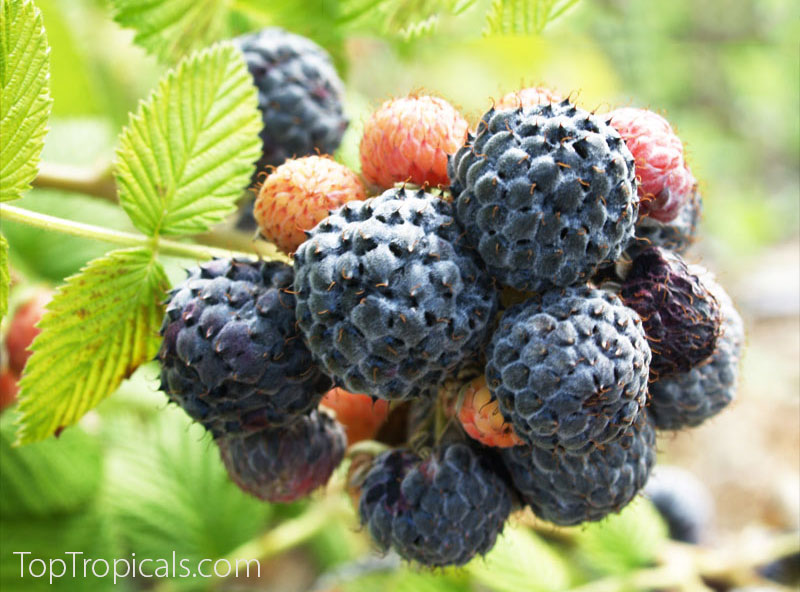
Raspberry  Mysore  Tropical,  Rubus  albescens  (niveus)

Tropical Raspberry Mysore (Rubus albescens) - is the perfect solution for those missing Northern fruit in hot climates. Unlike traditional raspberries that can't handle the heat, this fast-growing Raspberry from India thrives in humid, hot conditions and produces juicy, sweet fruit almost year-round! The clusters of purple-black fruit are packed with flavor, and the plant is perfect for large containers, producing plenty of fruit in no time. Cold-hardy to the upper 20s F, it's an easy-to-grow, fast producer. We have beautiful, fruit-ready 3 gal Raspberry bushes, ready to add a burst of sweetness to your garden!
Learn more, with a short video.

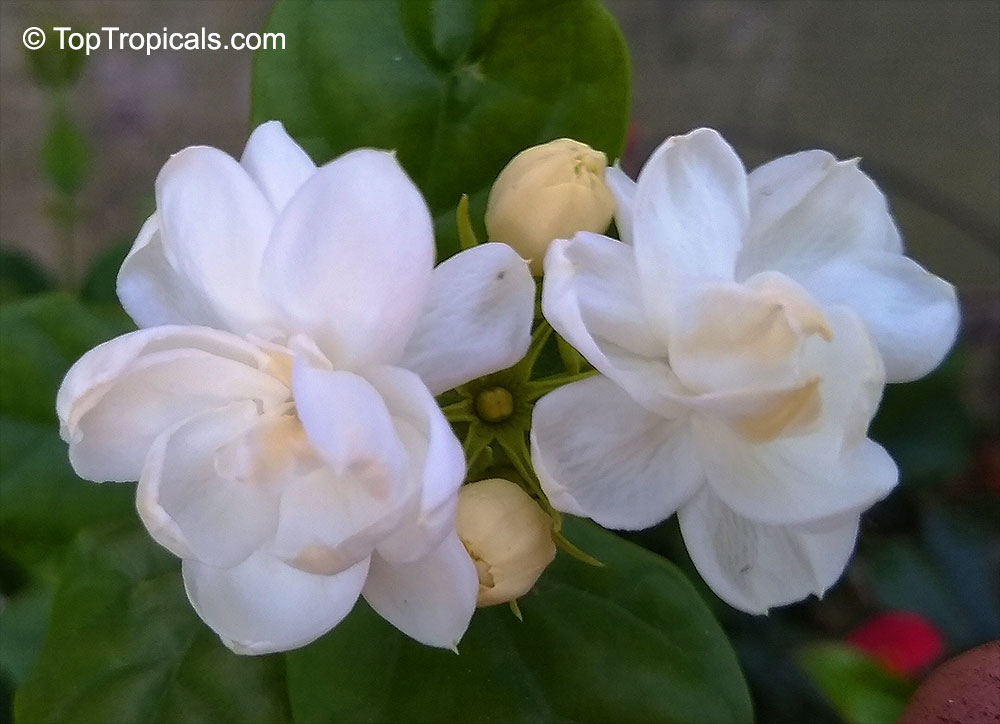
3. Fragrant Jasmine Sambac

Jasminum 


sambac

Jasminum Sambac is widely regarded as the most fragrant jasmine, cherished by tropical gardeners and plant collectors alike. Native to India, this jasmine is the source of jasmine perfume oil and the signature ingredient in jasmine tea. With various varieties offering unique flower sizes, shapes, and growth habits, it’' perfect for both sun and shade, thriving as a container plant or indoor favorite. Its delightful fragrance fills the air, and with the help of Sunshine Pikake plant booster, you can enjoy even more blooms. Jasmine Sambac, along with Champaka, is another signature plant of Top Tropicals. Through the decades, we've collected all the available varieties in cultivation - check them out!
Learn more about Jasmine Sambac varieties, with a short video.

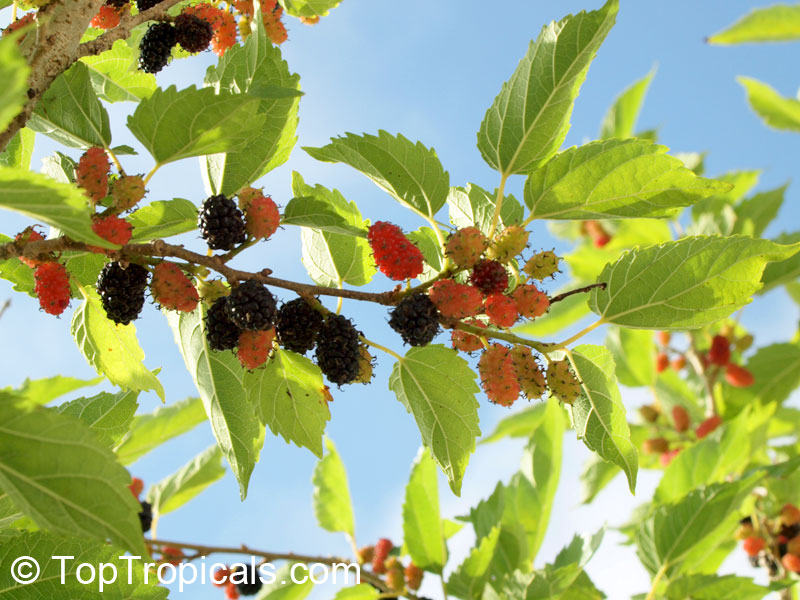
4. Everbearing mulberry

Mulberry  tree  Dwarf  Everbearing  (Morus 


sp.)

The Dwarf Everbearing Mulberry (Morus sp.) - is the perfect way to enjoy fruit year-round! This beautiful, cold hardy bush produces sweet, juicy mulberries starting from the very first year - often the same season you plant it. With its dwarf habit (easily maintained at 4-6 ft), it's perfect for containers and small spaces. Cold-hardy and drought-resistant, this productive plant thrives in various climates, from USDA zones 5 to 10! The fast-growing Mulberry will provide fruit year-round, and with minimal care, it will flourish in almost any soil. Our Everbearing Mulberry bushes produce enough fruit for both birds and breakfast - we pick a handful every day!
Learn more, with a short video.

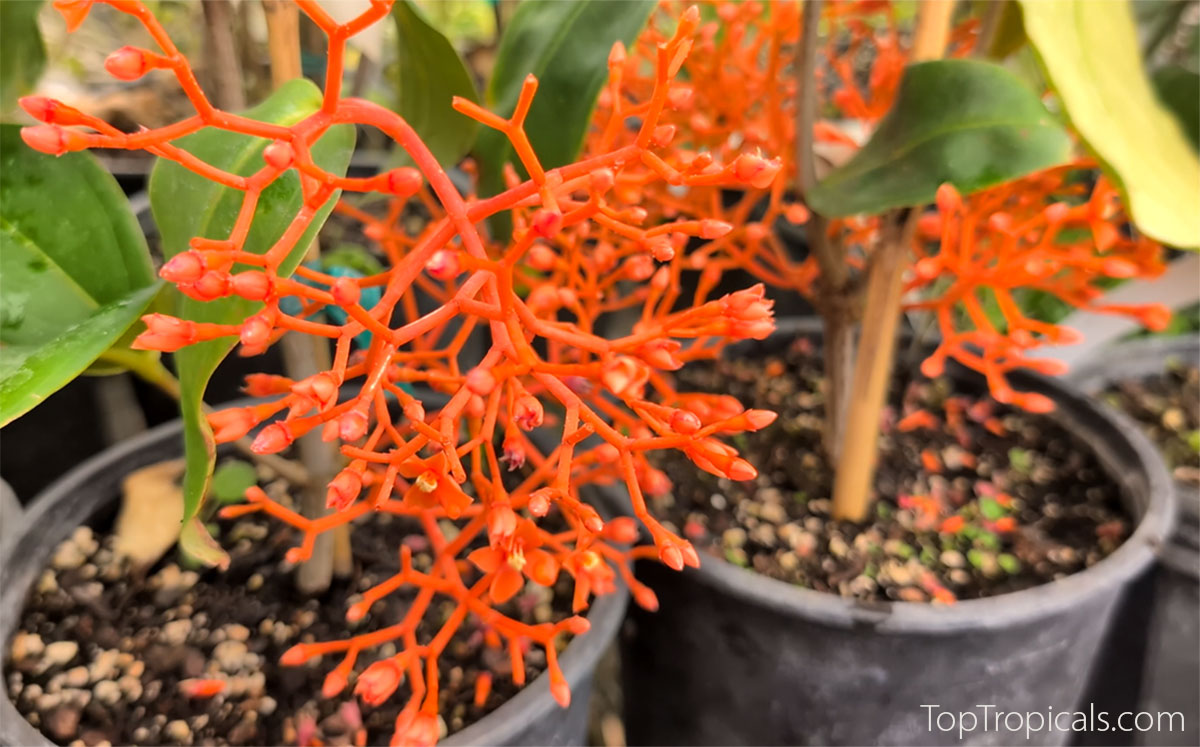
5. Medinilla Coral Spike

Medinilla  scortechinii  -  Orange  Coral  Spike

Rare Medinilla scortechinii - Orange Coral Spike - is a rare gem that brings a touch of the ocean to your garden! With bright orange stems bursting into star-shaped blooms, it looks like something straight from a coral reef. Compact and easy to grow, this plant stays under 2-3 ft tall, making it perfect for pots, hanging baskets, or as an epiphytic accent. The glossy dark leaves contrast beautifully with the vibrant orange panicles, and it thrives in bright shade. A must-have for collectors of unusual tropical plants, this coral spike adds a bold pop of orange wherever it grows - but hurry, it doesn't stay in stock for long!
Learn more, with a short video.

Date: 24 Mar 2024

Bauhinias: trees with Orchid Flowers
and Butterfly Wings...

Bauhinia  variegata  -  Purple  Orchid  Tree

Photo above: Bauhinia variegata - Purple Orchid Tree, one of the most spectacular varieties.

Q: We just moved to Florida and I see these beautiful trees with large purple flowers. I was told these are Orchid trees, do you have them?

A: Bauhinias, commonly known as Orchid trees, are renowned for their captivating flowers and unique foliage. These trees typically grow to a moderate height of 15-25 feet with a spread of 10-15 feet, showcasing a rounded to vase-like shape. Thriving in hardiness zones 9-11, they exhibit resilience to heat and can withstand mild frost. There are over 300 species of Bauhinia, which are distributed in tropical and subtropical areas. These species vary in characteristics such as size, foliage, and flower color, contributing to the diversity and appeal of this genus. You can find them as trees, shrubs, and even vines.

Bauhinias are evergreen (in tropics) to semi-deciduous (in cooler climates), offering year-round beauty with intermittent blooming cycles. The peak bloom time varies depending on the species and location, often occurring in late winter to early spring, bedecking the tree with striking orchid-like flowers in hues ranging from white and pink to purple and red. The flowers boast delicate petals with intricate patterns, resembling the elegance of true orchids.

One of the distinguishing features of Bauhinia leaves is their unique bi-lobed or bilobed structure, which gives them a distinct appearance. The leaves are deeply divided, typically into two lobes or halves, hence the common name "Butterfly tree" due to their resemblance to butterfly wings. This characteristic is often used as an identifying trait for Bauhinia species. The bilobed leaves add to the visual appeal of the tree, contributing to its ornamental value in addition to its beautiful flowers.

Bauhinia  monandra  -  Napoleons  plume

Photo above: Bauhinia monandra - Napoleons Plume, starts flowering in small size. This one is very beautiful but the most cold sensitive and should be grown in pots in areas with winter freeze. It will happily bloom in container!

Low-maintenance by nature, Bauhinias require minimal upkeep. Annual feeding with a balanced fertilizer enhances growth and flowering. Pruning is generally optional but can be done in late winter or spring, after flowering, to maintain shape or remove dead or damaged branches. These trees thrive in full sun, preferring well-drained soil. With their enchanting blooms and easy care requirements, Bauhinia orchid trees are a delightful addition to any landscape, and a colorful specimen for tropical winter gardens.

In addition, Orchid trees grow fast and provide excellent shade. They can make a shady spot in your garden in no time, giving relief from the hot sun. This is really valuable, especially in places where it gets very hot. So, not only are Orchid trees pretty to look at with their lovely flowers, but they're also great for keeping you cool!

Read more about Bauninias:
Bauihnias: Orchid trees with Butterfly flowers... and leaves

Bauhinia  x  alba  (candida)  -  White  orchid  tree

Photo above: Bauhinia x alba (candida) - White orchid tree, the most cold hardy variety that can take light freeze once established.

Bauhinia  purpurea  -  Purple  Orchid  Tree

Photo above: Bauhinia purpurea - Purple Orchid Tree, one of the most popular and easy trees in Southern landscapes.