Garden Blog - Top Tropicals

Date: 27 Nov 2019

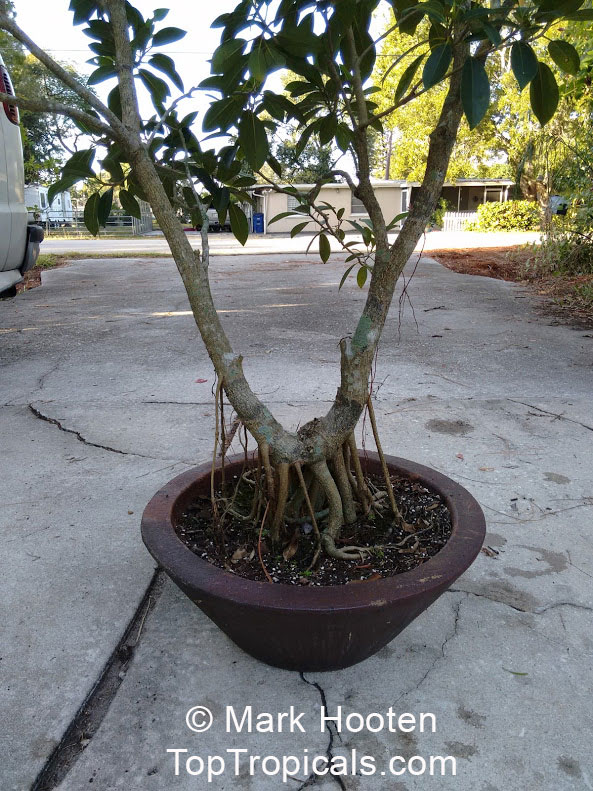
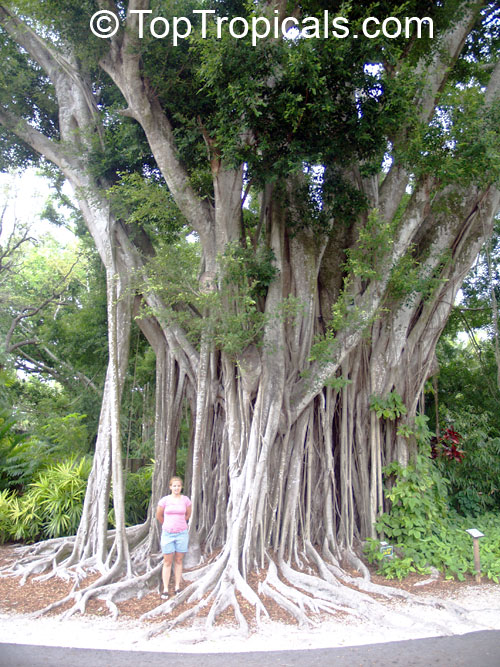
The Florida Native Banyan

by Mark Hooten, the Garden Doc

...The most impressive plant-life for me was a single native tree growing near a parking area along the Bay. It was the largest, oldest, "Shortleaf fig" I have ever seen. It was growing on a mass of bare exposed karst limestone and bore a small plaque describing it as being the largest Ficus citrifolia in the National Park. As it was dropping some of its little fruits at the time, I ended up taking a couple home for cultivation...

CONTINUE READING >>

Date: 5 Sep 2019

Bahamas Dorsett Golden Low Chill Apple

Q: We recently moved to Florida and we miss our Apple trees we had back up North and the Golden Delicious apples. I was told they won't grow in Florida, it is true?

A: There is a solution for apple lovers even in Tropics! Low chill apples bear as far south as South Florida, and may be a unique addition to your tropical garden.
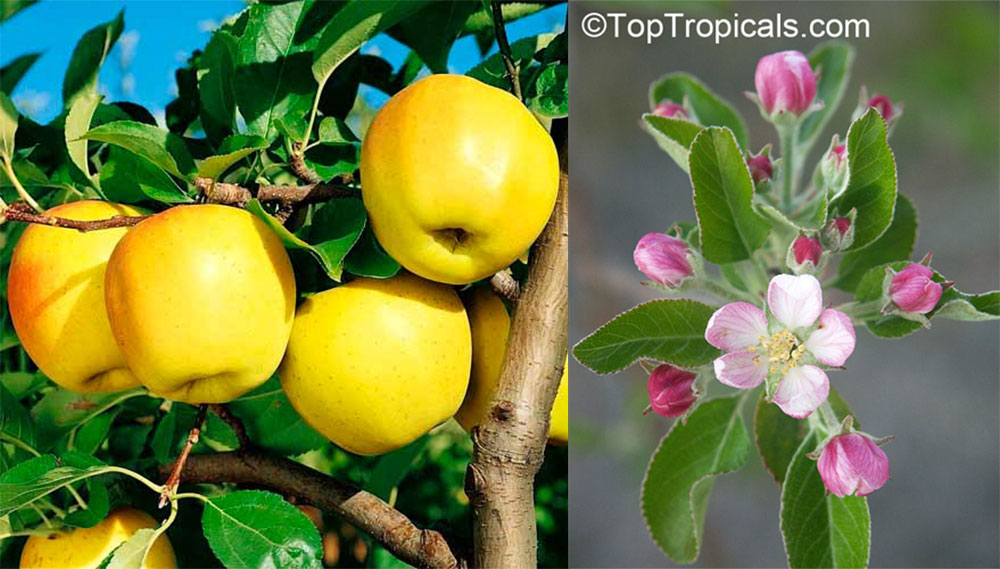
Variety Dorsett Golden looks like Golden Delicious with golden skin and sometimes a red blush. This cultivar was discovered in the Bahamas and is crisp and juicy with excellent flavor.
Attractive and fragrant pinkish-white apple blossoms will appear during Feb-March and give way to fruit (smaller than standard apples) in June. They remain a small tree, growing to about 15 feet.
For best results of cross-pollination and heavy production, we recommend a pair of low chill apples - the perfect couple Dorsett Golden and Anna.

Date: 24 Aug 2019

How to keep iguanas away?
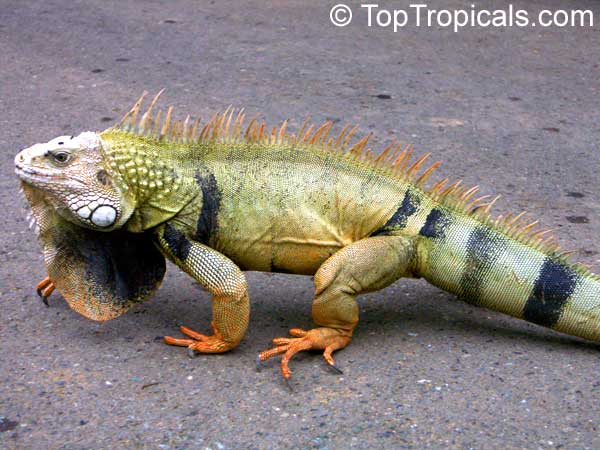
Q: Really enjoy all the plants that I have got from you, but having a hard time keeping iguanas eating everything! We are not on the water, any solution to keep them out?

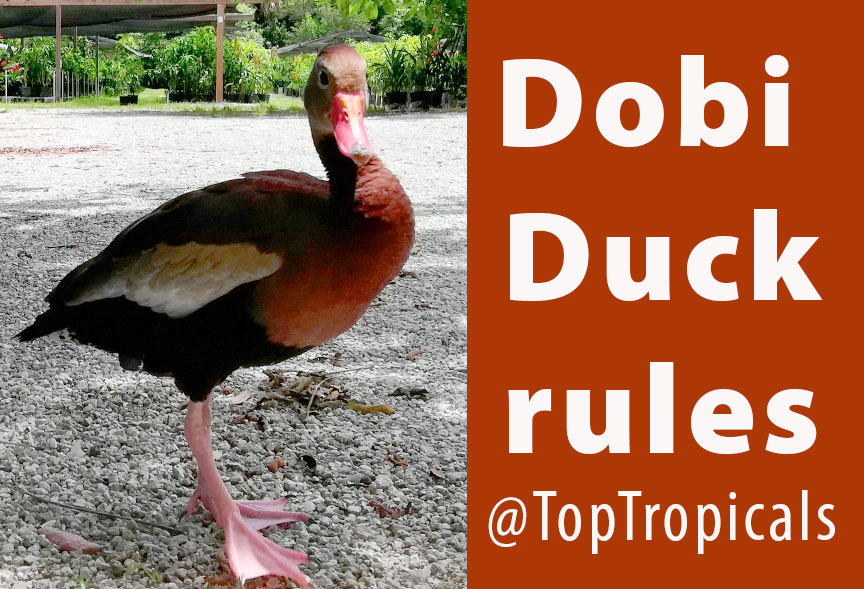
A: Iguanas may become quite a problem in the garden. Our first suggestion would be - get a Duck as we have (Duck Dobi), she is so dominant and keeps any wild animals away from the property, including gators... and cats! They are scared of her! Dobi thinks she owns the place.

Here are a few other ways to control iguana problem in your backyard:

1. Rid your lawn of dropped fruits. Iguanas love fruit. And they love low-hanging fruit or fruit that's easy to get to. If you have fruit trees, take the time to pick up your yard and dispose of any dropped fruit.
2. Keep a lid on a garbage can. Put your garbage cans in a place they can't get to, or put a cinder block on your can lid.
3. Do not leave pet food out. If you're putting a bowl of dog food or a plate of cat food out for your pets, you're inviting iguanas into your yard.
4. Fill iguana holes. Iguanas like to dig. Wherever you see a hole, fill it. Stuff rocks into the hole first, then fill it with dirt and top it with sod. The iguana may return to dig again, but he won't dig through large rocks.
5 Do NOT feed the iguanas. Don't be friendly with them, so they won't come back.
6. Wire netting around plants. You can use wire netting or screens to prevent iguanas from entering plants and shrubs.
7. Spray them with a hose. When you see an iguana in the yard, spray them with the hose. They also hate loud noises. Constant harassment can keep them from returning.
8. Keep your yard clean. Excessive overgrowth or yard storage are great places for iguanas to hide.
9. Do not leave food out, unattended. Iguanas are mainly herbivores but that doesn't mean they won't smell something good and want to eat it. They will TRY anything.

Hopefully these tips help keep your iguana problems to a minimum.
Date: 4 Jul 2019

Planting and mulching during hot summer

Q: I would like to buy some trees and vines for my garden but I am not sure if it is a good time for planting. It's hot now in Florida. Should I wait till it cools off? If I plant now, can I rely on sprinklers?

A: Summer is always a good time for establishing plants because this is the time of the most vigorous growth. For the first 2-4 weeks, plants should be watered daily with a garden hose as you can not rely on sprinkler system yet. Mulch around plants generously - this will help:
- Maintain moisture
- Maintain soil temperature - protect roots from heat
- Reduce weeds and grasses
- Provide nutrients to the soil, and
- Reduce wind erosion from uncovered soils

Date: 15 Mar 2019

Spring mulching

TopTropicals.com

Q: When do I start re-mulching my garden? Should I wait till summer?

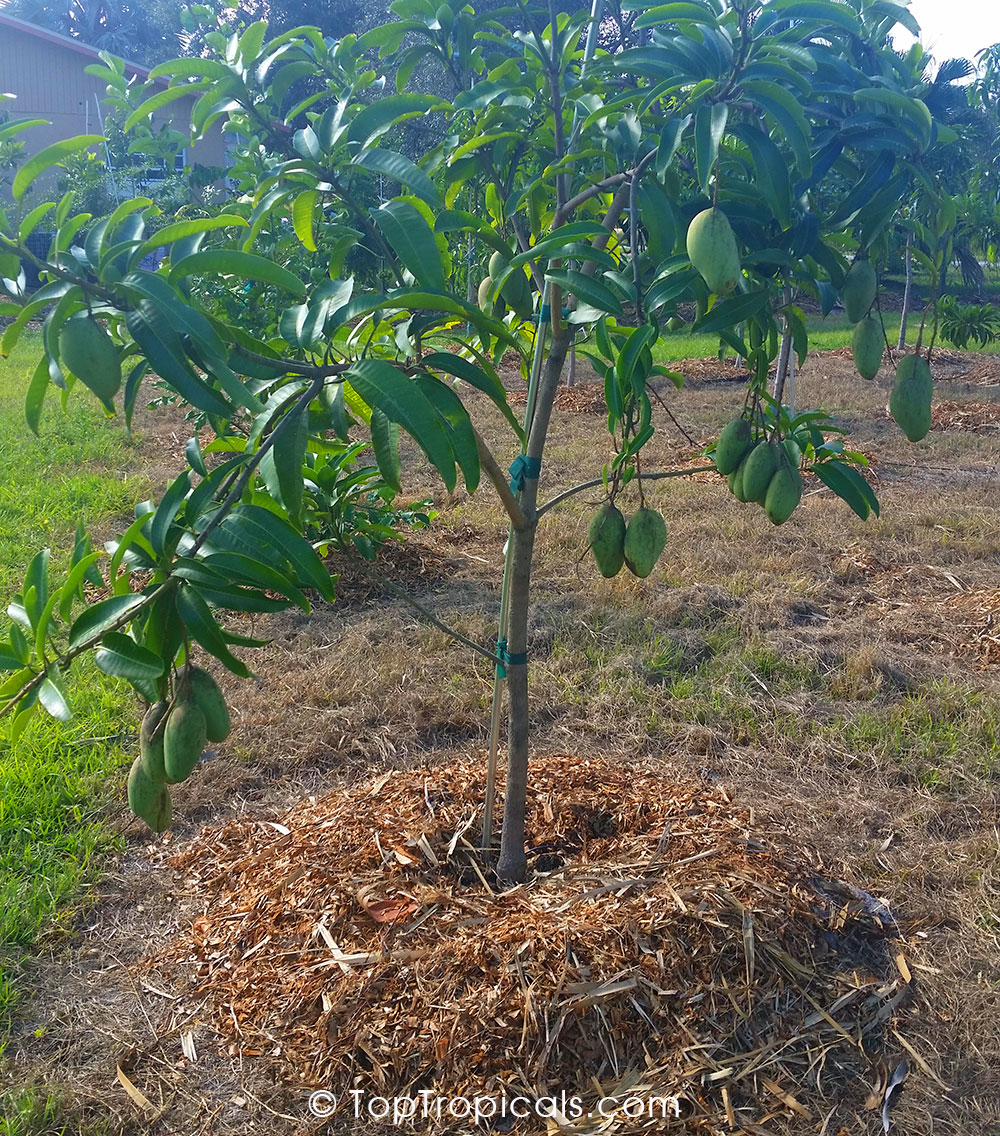
A: It is time now to get ready for the growing season when not only plants start growing, but weeds as well. To protect your garden from unwanted invasives, keep a thick layer of mulch in areas around tree trunks and shrubs.
Heavily mulch your garden at least once a year, at springtime. Add mulch during the year as needed.
After mowing your lawn, use cut grass (hay) as a mulch around trees. Hay is the best natural mulch, it compresses well after the rain or watering and becomes very dense - weeds won't grow through it. You may cover it with some colored mulch of your choice for a more attractive look.
Mulching is also helpful for retaining water for root systems, so plants will require less frequent watering.