Garden Blog - Top Tropicals

Date: 5 Apr 2016

Jungle on Windowsill 101
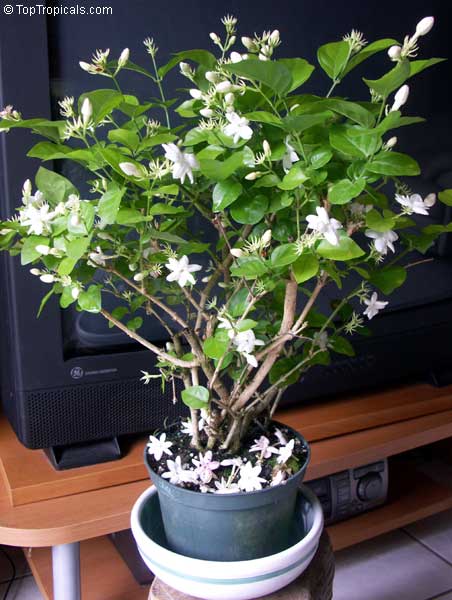
Q: I got a Jasmine Sambac and a Tahitian gardenia as presents, they are very cute plants with flowers and flower buds. I would like to be able to keep them alive and hopefully happy for a long time, but I don't know much about growing tropical plants, and I am not sure if my thumb is green enough to make everything right. What do they need? How much sun? How much water? What kind of soil? Sorry for all these (maybe silly) questions, but I want to keep them alive, please help! I live in Wisconsin and we had some snow again last week.

A: Growing tropicals is not a hard work, it is a lot of fun! These plants are actually a good starters for a beginner who wants to try growing tropical plants, no matter if you live in a mild frost-free climate, or up North where you can have these beauties as houseplants. Below are a few simple steps for you:

1. Read. Follow planting instructions included with your plants. Check plant names on the tags and learn more about them from our online catalog.

2. Soil. Plant in quality potting mix - it must be porous and well-drained, never use heavy soils (top soil or garden soil are no-no), in a pot exactly the size of the root system. You can step up your plants in the next size container once you notice vigorous new growth. Next size means: 4"pot can go into 6" pot, 6"pot into 10" pot, etc. Too big of a pot may create rotting environment, root system must fill the entire container to use all the moisture from the soil. Container must have good hole(s) for excess water to drain through. Put the pot in a saucer and get rid of excess water every time after watering.

3. Light. Most tropical plants require lots of light in order to produce flowers. If you ever visited Florida, remember the bright sun? - these are ideal light conditions for tropicals. Up North, provide as much light as possible: a bright spot on a windowsill of Southern or Western exposure would work the best. If the sun gets too hot in summer afternoon, you may shade the window a little bit with a sheet of white paper to avoid leaf burn.

4. Water. Keep soil slightly moist but not soggy. The best way is to wait until the top of the soil feels dry to touch - this is time to water again. Jasmines prefer to stay on a dry side; gardenias do not like soil to dry out - keep them slightly moist as long as soil is very porous and well-drained. The main reason of most problems with potted indoor plants is over watering. With experience, you will feel the right balance of moisture in the soil: the brighter the light, the more water is consumed by a plant; the less light, the less frequent you should water.

5. Trimming. In low light conditions, plants tend to become leggy. Trim branches as they become too long: the more you trim, the busier the plant gets. New growth promotes more profuse blooming in many species.

6. Fertilizing. Fertilize indoor plants with slow-release granulated fertilizer from march to November.

7. Insects. Check for insects at least once a month, especially underneath the leaf. If notice any problems (deformed leaves, residue, holes, or tiny insects) - clean the leaves/stems with a solution of warm water (1 cup), vegetable oil (2 table spoons), and a few drops of a dish soap.

8. Fresh air and air humidity. As soon as air temperature gets above 65F, bring your tropicals outside in the sun and fresh air: porch, balcony, outside in the yard. Air circulation is essential for your plant health. Bright light and high air humidity will promote vigorous growth, and lots of flowers for you to enjoy!

For more information on growing Tropical Plants 101, see Problem solving with potted plants - how can we help them?.
Date: 23 Nov 2025

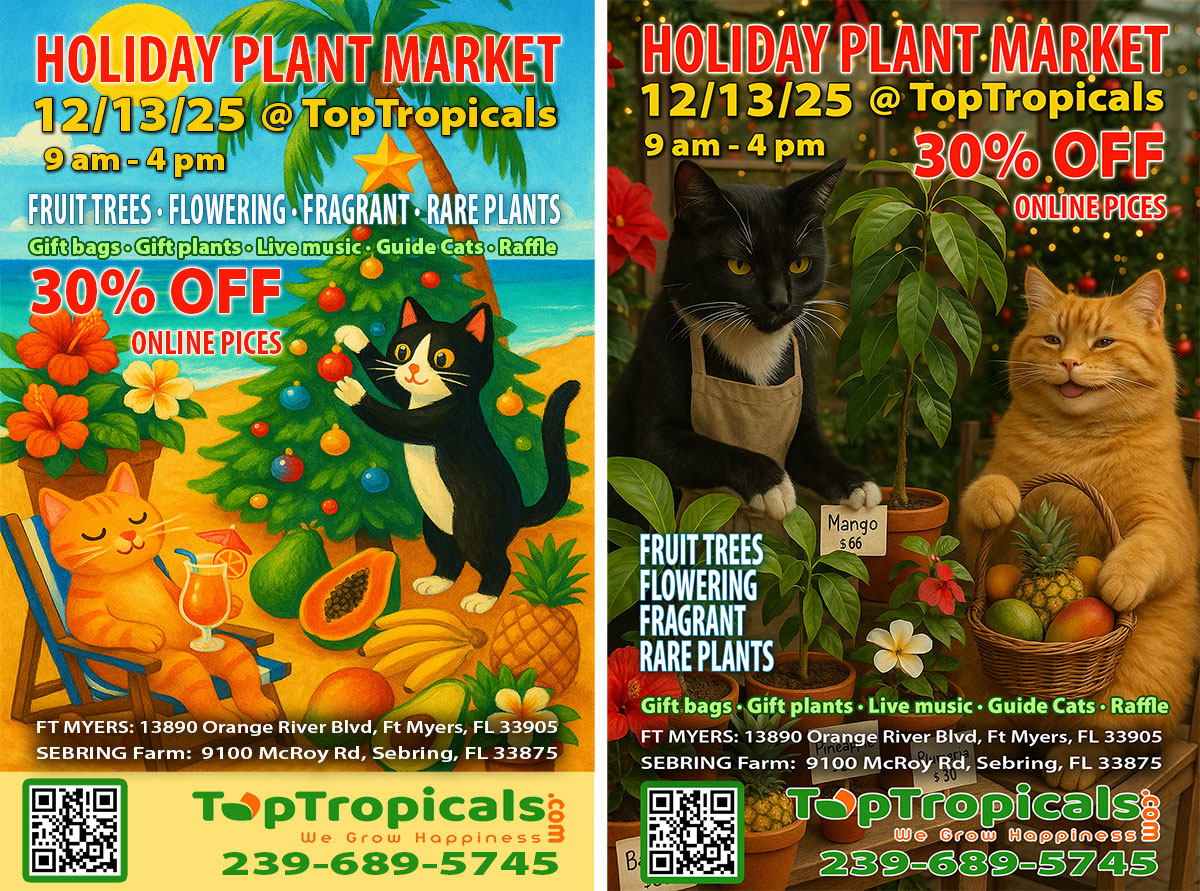
📅 Mark Your Calendar - Holiday Plant Market

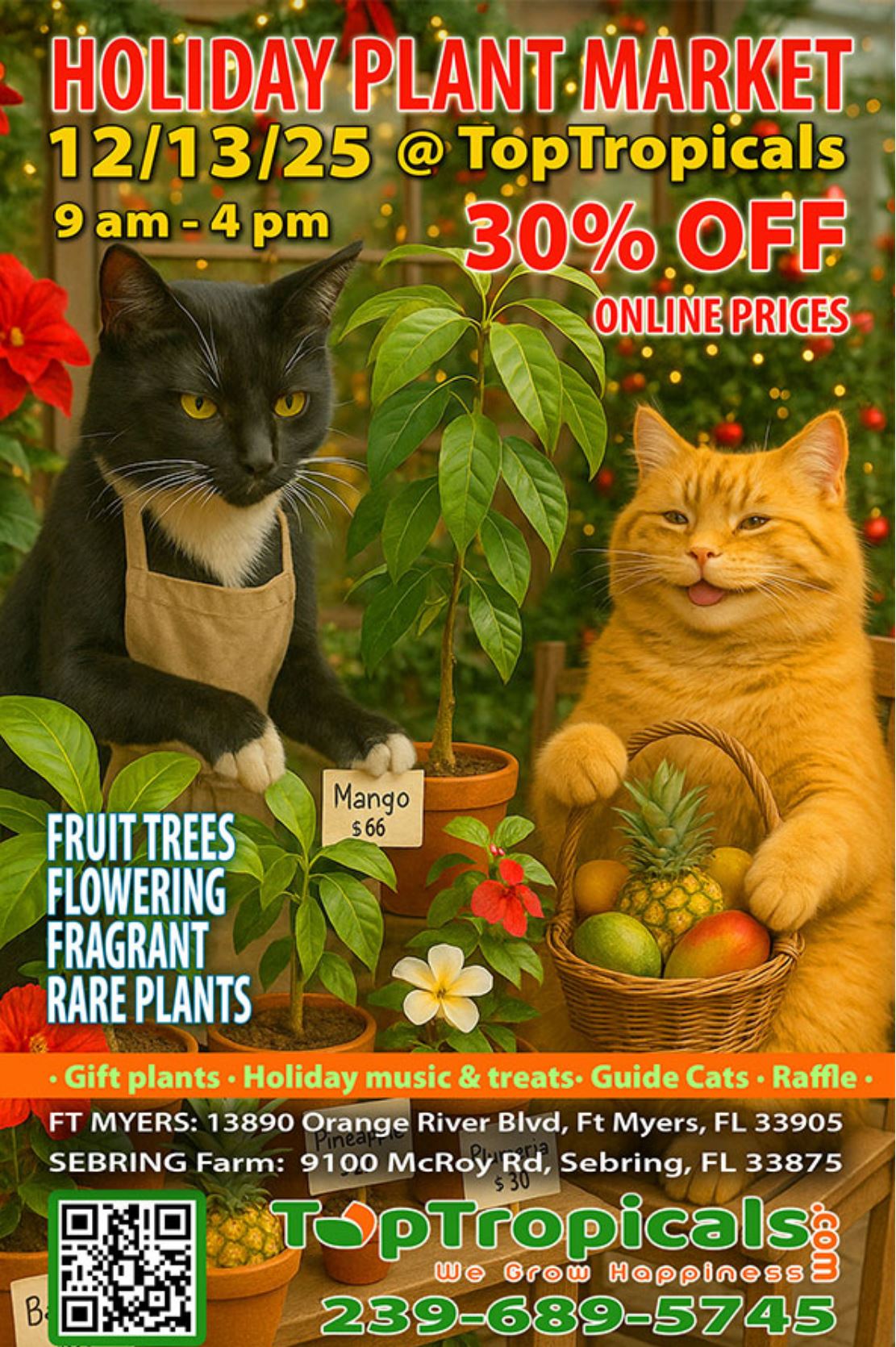
Holiday  Plant  Market  flyer  for  December  13  2025  showing  two  PeopleCats 
 in  a  festive  garden,  one  black  cat  in  an  apron  next  to  a  mango  tree  and  one 
 orange  cat  holding  a  basket  of  tropical  fruit,  with  event  details, 
 discounts,  and  Top  Tropicals 
 locations.

Holiday season in Florida means sunshine, green leaves, and cats on patrol. On Saturday 12/13/25, our PeopleCats are hosting a special Holiday Plant Market at TopTropicals, 9 am to 4 pm. This is not a regular nursery day. This is the one where you grab a donut in one hand, a mango tree in the other, and try not to trip over a cat giving you a tour.

We are bringing out the best plants we grew all year: big fruit trees with real branches, flowering and fragrant beauties, rare collectors plants, and vines that are ready to take off as soon as you get them home. December is perfect planting weather in Florida, so while the rest of the country is scraping frost from windshields, you can be choosing which banana, mango, or jasmine will perfume your yard next summer.

Holiday extras: 30% OFF online prices, free plant with purchase, 5 to 10 dollar specials, mini donuts and holiday treats, iced tea and citrus water, tropical Christmas music, and raffle prizes. If there is enough ripe fruit in the morning, we will set up a tasting table too. Our PeopleCats will be on duty all day, rearranging plants, checking on visitors, and occasionally allowing themselves to be petted between tours.

Event discounts and specials are valid at both locations:

Save the date, tell a friend, and plan your plant hunting route now. Come celebrate the holidays the Florida way: sunshine, rare fruit trees, happy cats, and a car full of tropical plants going home with you.

Facebook event page - Download invitation

to confirm attendance
RSVP on Facebook!

Learn More About The Holiday Plant Market

Date: 4 May 2026

🍲 Where the Garden Becomes the Kitchen

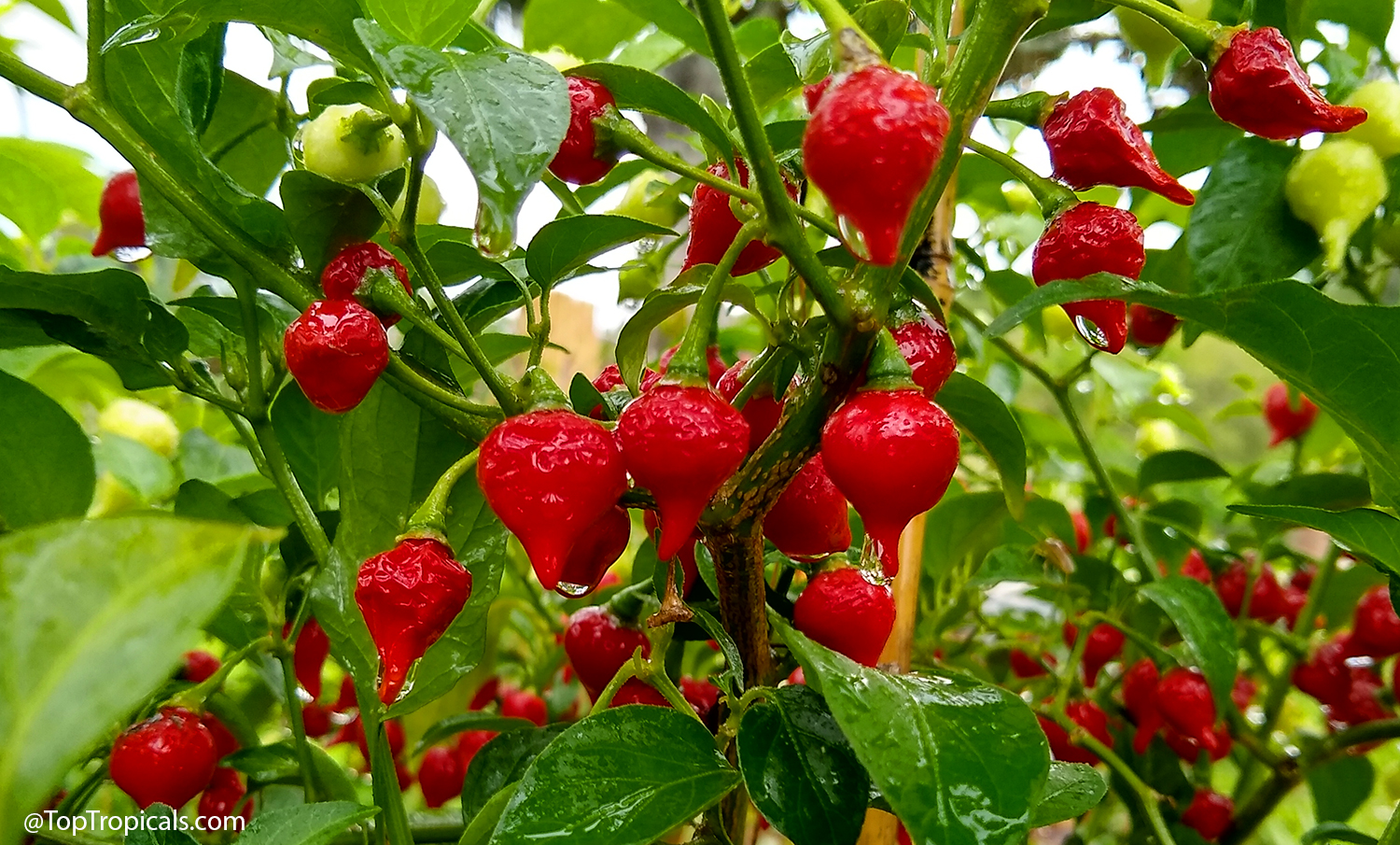
Close-up  of  Capsicum  annuum  x  chinense  Biquinho  pepper  plant  with 
 clusters  of  small,  bright  red,  teardrop-shaped  fruits  hanging  among  glossy 
 green  leaves,  some  still  green,  with  water  droplets  visible  after  rain.

Biquinho pepper loaded with fruit - small, beak-shaped peppers ripen from green to bright red, offering intense fruity habanero flavor with little to no heat on a compact, heavy-producing plant.

A lot of plants that thrive in Florida heat have deep roots in Mexico, and not just as ornamentals. Think coral vine or flame vine climbing a fence in summer, or bird of paradise sitting at the edge of a patio like it owns the place. These are not plants that need coaxing. They grow fast, full, and unapologetically. Then there are the plants you actually eat: peppers, prickly pear , sweetleaf, and fruit trees like avocado, guava, and sapodilla. They do not just decorate the yard. They change how the yard works, and how the kitchen feels all year.

That is the part that sneaks up on you. Gardening stops being about having a pretty yard and starts becoming a way of living. Mango tacos taste different when you picked the mango yourself. Everything does.

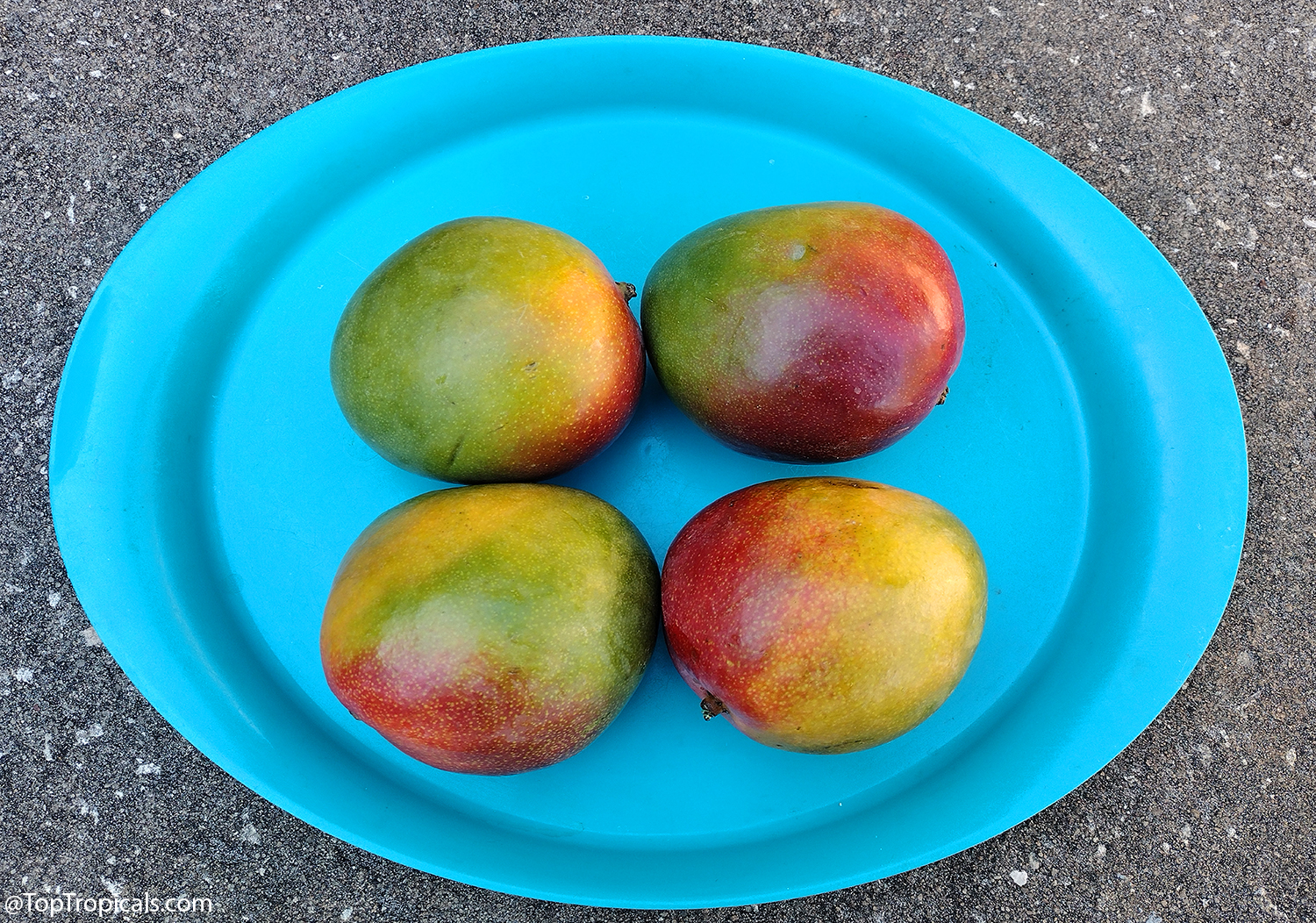
Four  Kent  mangoes  with  red,  green,  and  yellow  blush  arranged  on  a 
 plate.

Kent mango - classic late-season variety with smooth, fiberless flesh and rich, sweet flavor.

🍀Mexican Plants That Thrive With Minimal Effort

by Tatiana Anderson, Top Tropicals Garden Expert

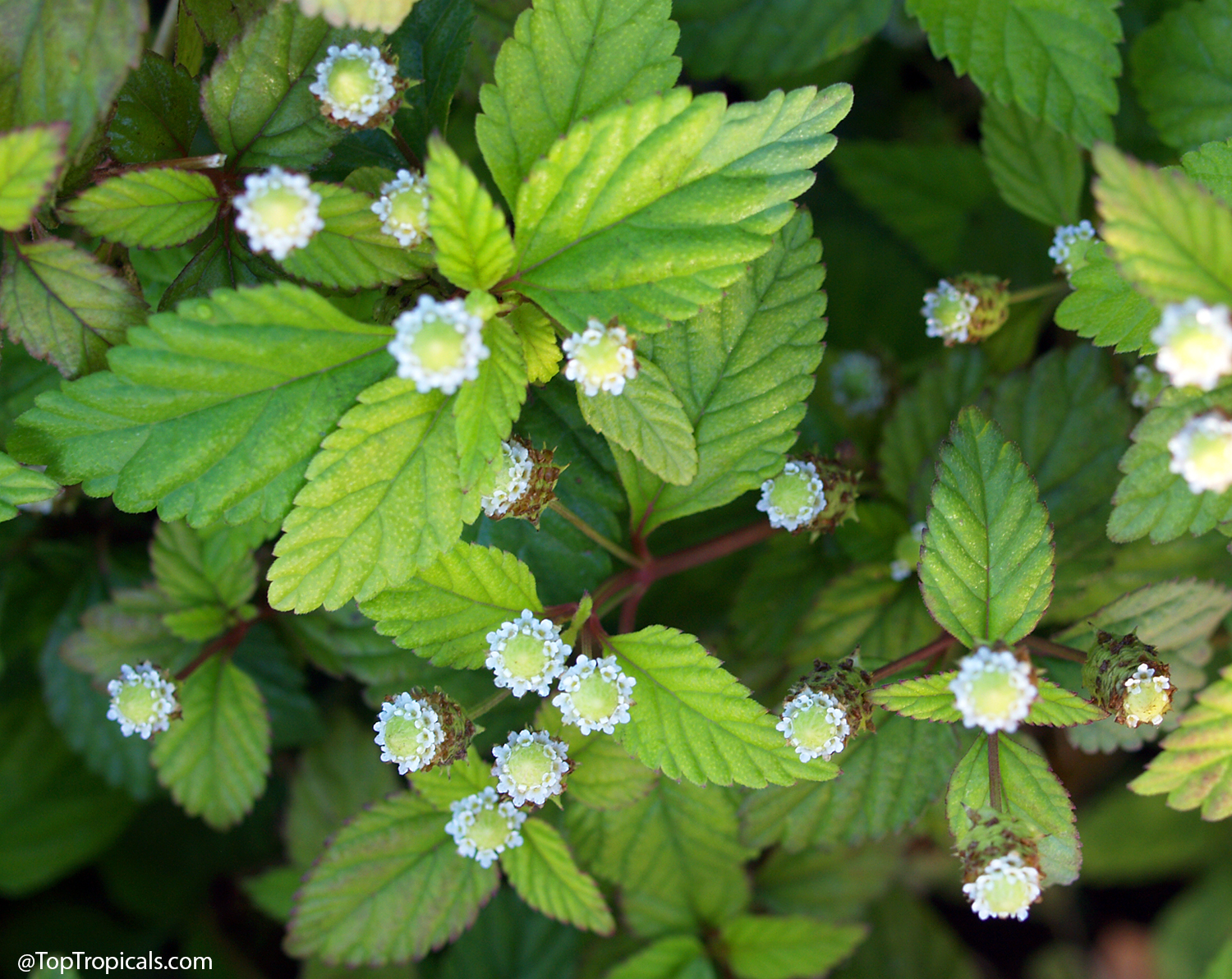
Close-up  of  Lippia  dulcis  (Aztec  Sweet  Herb)  showing  small  white 
 button-like  flowers  with  pale  green  centers  surrounded  by  serrated  bright 
 green  leaves  on  a  low-growing  plant.

Lippia dulcis - Aztec Sweet Herb in bloom - a low-growing Mexican herb with tiny white flowers and remarkably sweet leaves that can be eaten fresh or added to fruit dishes, traditionally used since Aztec times for coughs and colds.

These Mexican plants are surprisingly easy to grow if you give them what they expect: sun, heat, and good drainage. Most of them are built for tough conditions and will grow fast with minimal care once established.

The one rule that matters: fill the planting hole with water. If it does not drain in 5-10 seconds, plant on a mound or use a container.

Flowering vines will take off quickly, edibles like peppers and sweetleaf lippia are very forgiving, and cactus types prefer to be left alone rather than overwatered.

For full, step-by-step growing tips and plant-specific advice, read our blog - we break everything down in practical, real-world terms.

📚 Top Tropicals Garden Blog

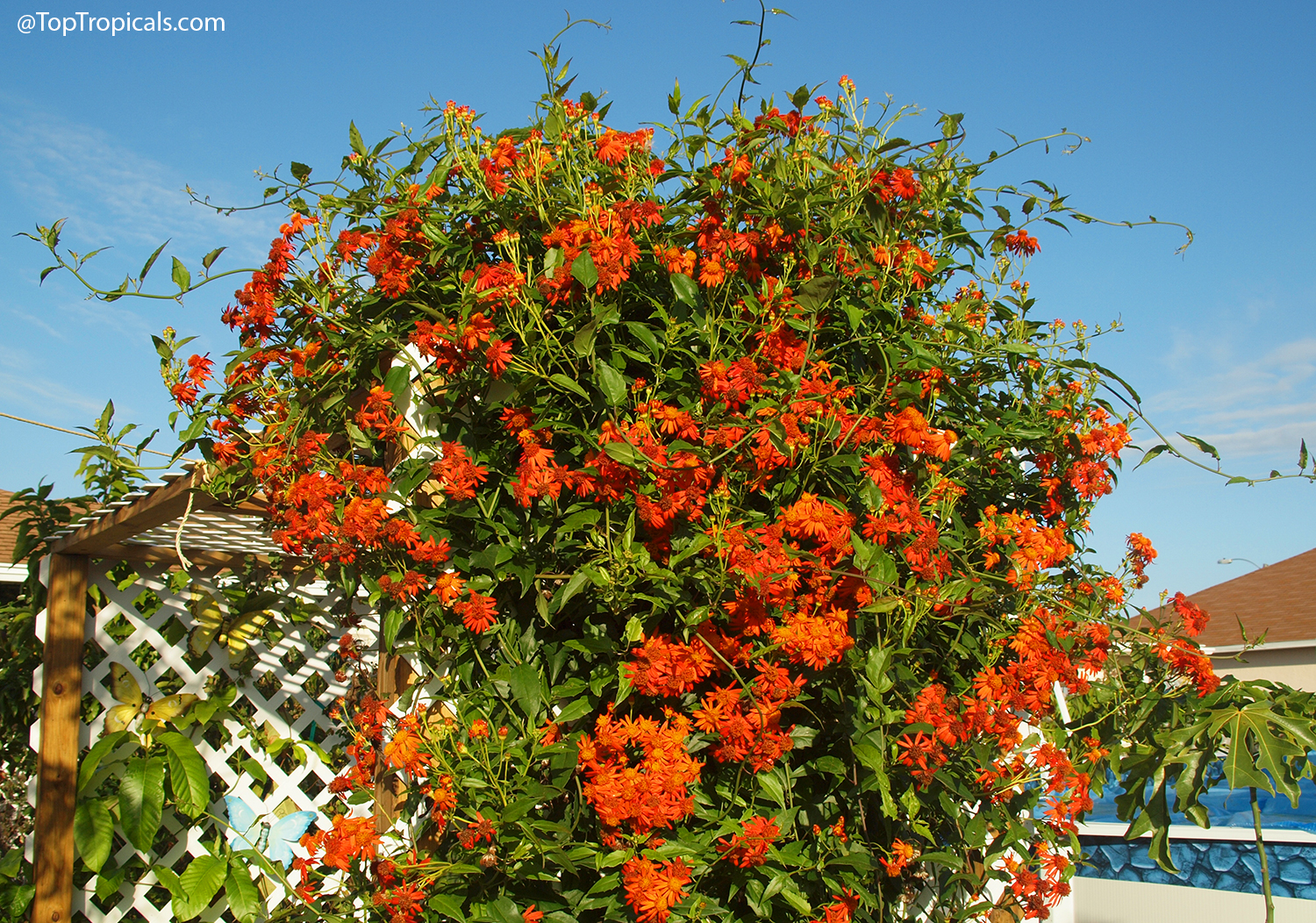
Large,  dense  Senecio  confusus  (Mexican  Flame  Vine)  covered  in  clusters 
 of  bright  red-orange  daisy-like  flowers  climbing  over  a  trellis  against  a 
 blue  sky.

Mexican Flame Vine in full bloom - a fast-growing, drought-tolerant climber that quickly covers fences with vivid red flowers, attracting pollinators and adding bold color with minimal care.

🛒 Shop heat tolerant plants

🌮 Sunshine’s Mango Taco 😺

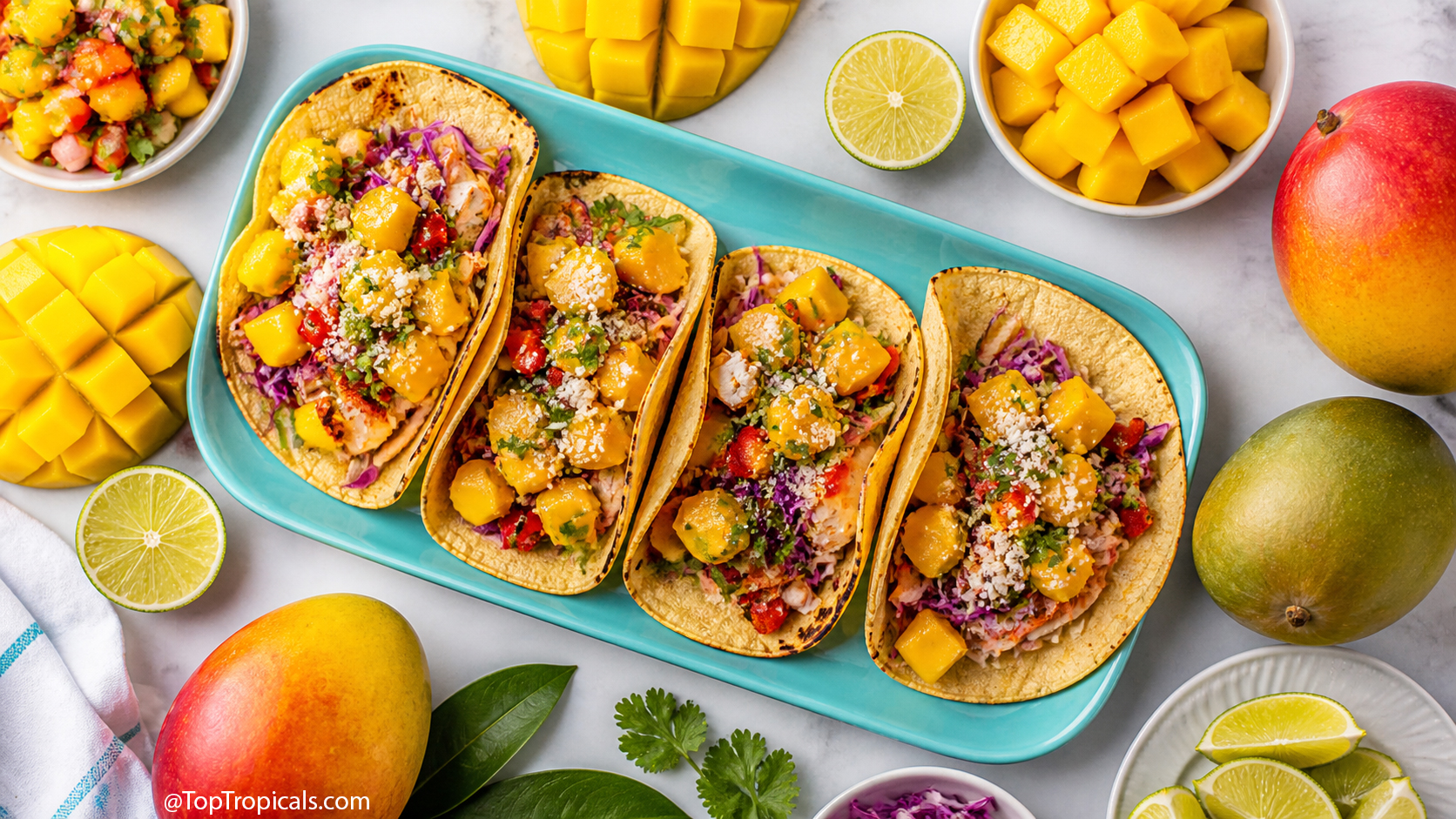
Fresh  mango  tacos  loaded  with  juicy  chunks  and  bright  toppings, 
 surrounded  by  whole  and  sliced  mangoes  for  that  tropical  feel.

Mango Tacos

This is not cooking. This is assembly.

What you need

  • Tortillas
  • 1 ripe mango (diced)
  • Something warm (sweet potato, chicken, or leftovers)
  • A little onion (optional)
  • Lime (or bottled lime juice)
  • Sour cream or yogurt
  • Salt and pepper

How Sunshine does it

  1. Heat whatever you have in a pan
  2. Put mango in a bowl, add lime and a pinch of salt
  3. Mix sour cream with lime (this is your sauce)
  4. Put everything into a tortilla
  5. Enjoy with a margarita

Sunshine's rules

  • No measuring
  • No recipes
  • If it tastes good, it is correct

Want this to be normal?
Start with a mango tree. That is usually how it begins.

🛒 Plant your own mango tree

💌 Mother's Day is one week away

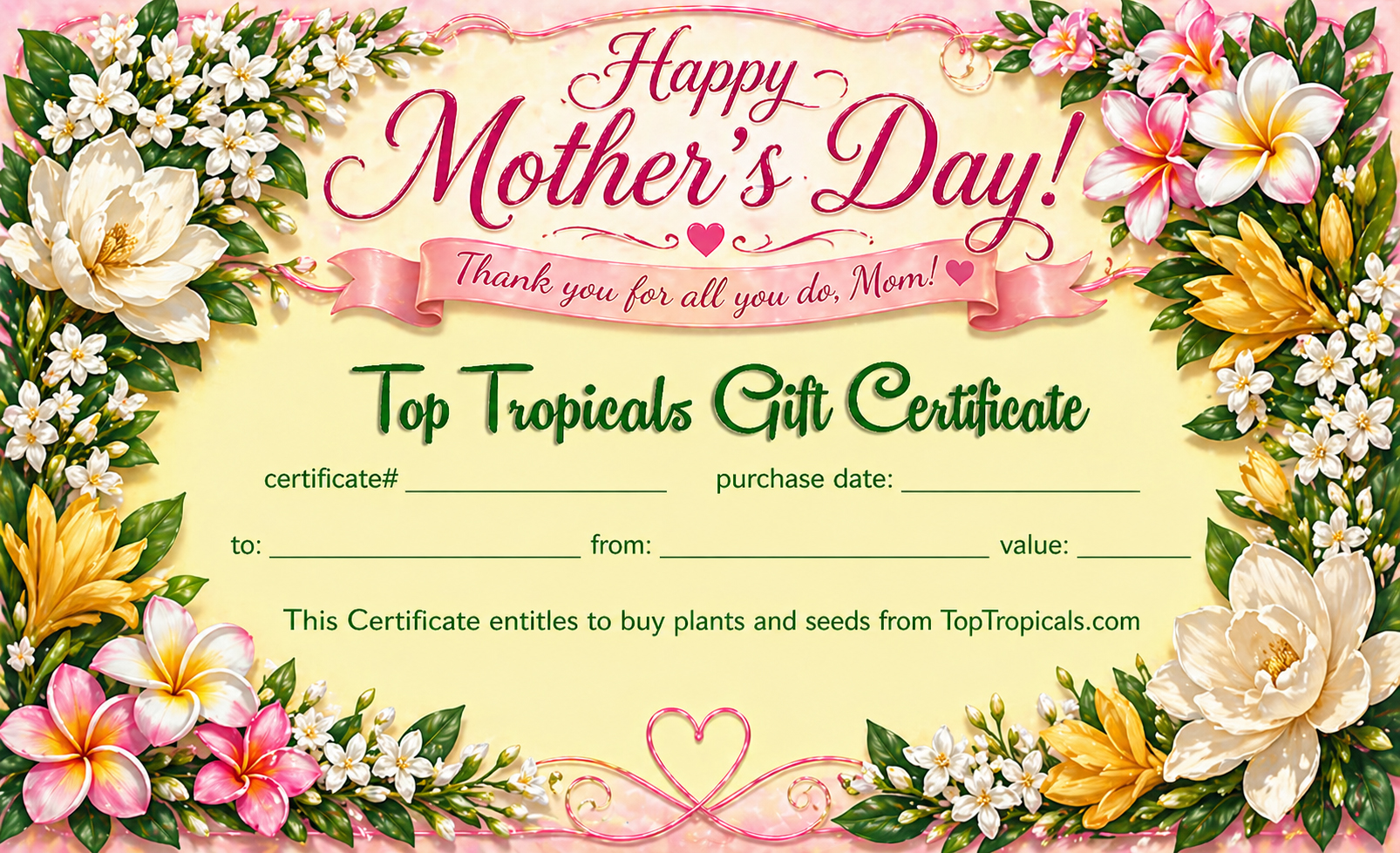
Still deciding? A gift card is the easiest option. With our bonus, it is also the best value.

Mother’s  Day  themed  Top  Tropicals  gift  certificate  with  a  pink 
 decorative  frame  filled  with  jasmine,  plumeria,  magnolia,  and  champaka 
 flowers,  tropical  fruits  across  the  center,  and  a  Happy  Mothers  Day  banner 
 at  the  top,  with  space  for  certificate  details  and  message.

Mother’s Day Top Tropicals gift certificate

🎁 Get a Gift Card