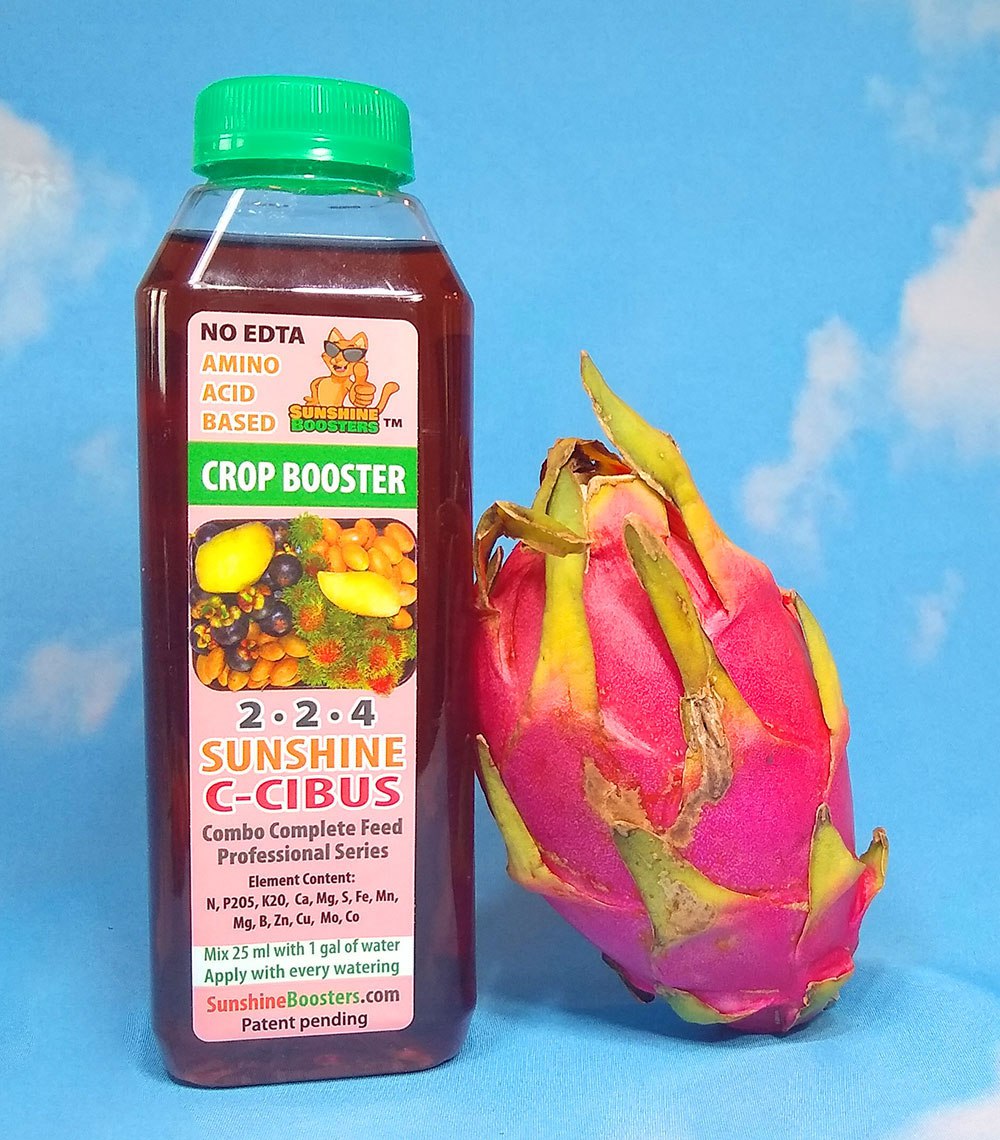
🔴 Dragon fruit (Pitaya) thrives when it's fed regularly. For the best results, use Sunshine C-Cibus, a complete liquid fertilizer made for fruit trees. It is gentle enough to apply with every watering, all year long, and it gives your plants the steady nutrition they need to set more flowers and produce bigger harvests.
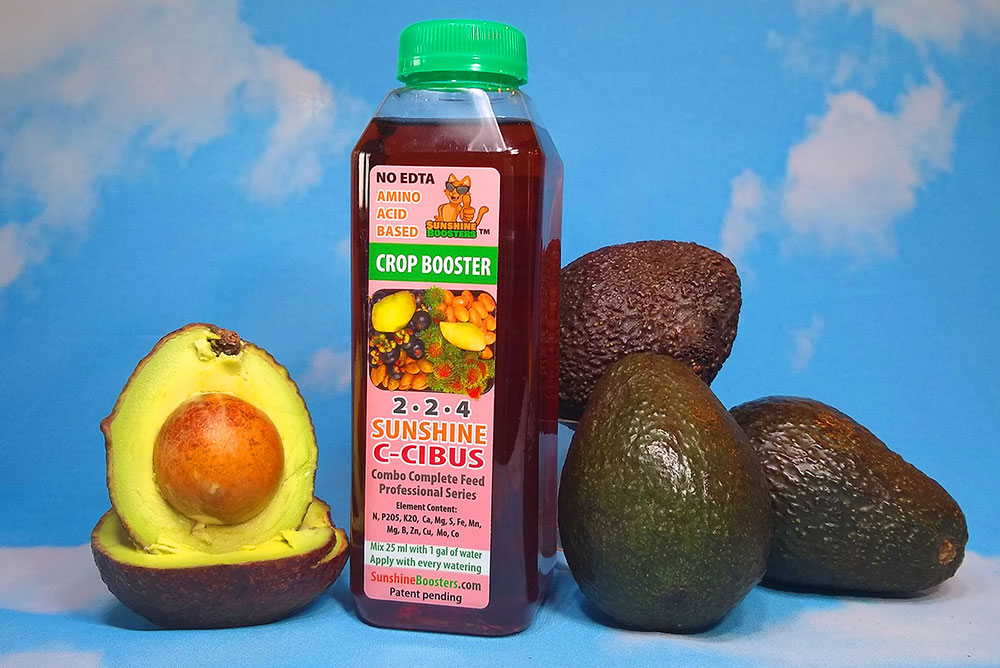
Healthy Plants - Q&A from Mr Booster: Feeding Avocado Tree
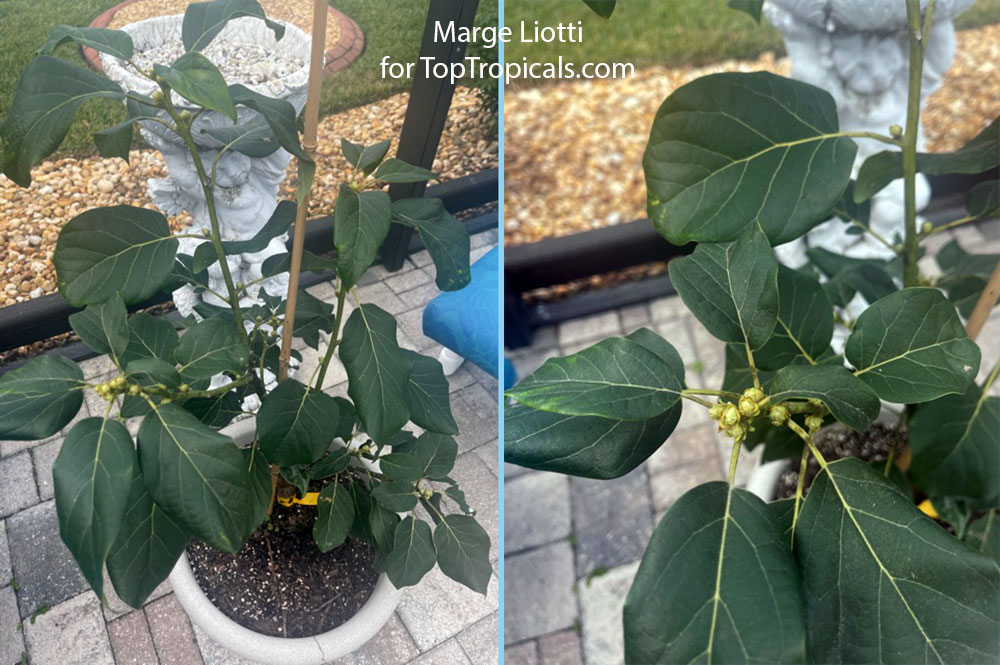
Q:We bought one of your avocado grafts and it's doing great, lots
of buds for fruit. It's still in a pot and fertilizing with the Sunshine Boosters. Should we continue with this product? We'll plant
it in the ground in March. Thought you'd enjoy pictures of our wonderful
tree. No freezing temperatures in Riverview, but when it got down into the 30s,
the plant came in. One good thing about growing in the pot. I'll be buying
some more Sunshine Boosters. This stuff is working great on all our plants.
A: Congratulations with a good job on growing avocado over
winter. Avocado trees are not easy, we are happy to hear that your plant is ready
for production, this is amazing! We've noticed that Sunshine Boosters perform
miracles. Here are some suggestions for you:
1) Continue fertilizing with Sunshine Boosters according to the feeding chart
2) When ready to plant, dig a large hole and fill it with good soil full of
organic matter (compost mixed with existing sandy soil will be good). Make
sure to plant the tree on 3-4"high elevation, like on a little hill. Avocados
need perfect drainage and can't tolerate wet feet. See more info on planting and planting instructions (pdf).
3) Water daily with a hose, do not rely on sprinklers. Avocados like water
(considering perfect drainage)
4) Continue applications of Sunshine Boosters at least until the tree is established and starts
growing new branches with lots of leaves. After that, you can switch to
slow-release fertilizers once a month if it makes it easier, but if you can, continue
Sunshine Boosters at least on weekly basis - they really boost plant growth!
Date: 24 Jul 2019
Perfect small tree for a pool area
Q: I need a tree for a space that is close to a pool and I don't
want a tree that is shedding leaves all year long. I don't want it too big
either. The canary tree caught my attention but I need to know if it is a
tree that is dropping leaves all year. If it does then can you recommend another
tree? I live in Fort Lauderdale.
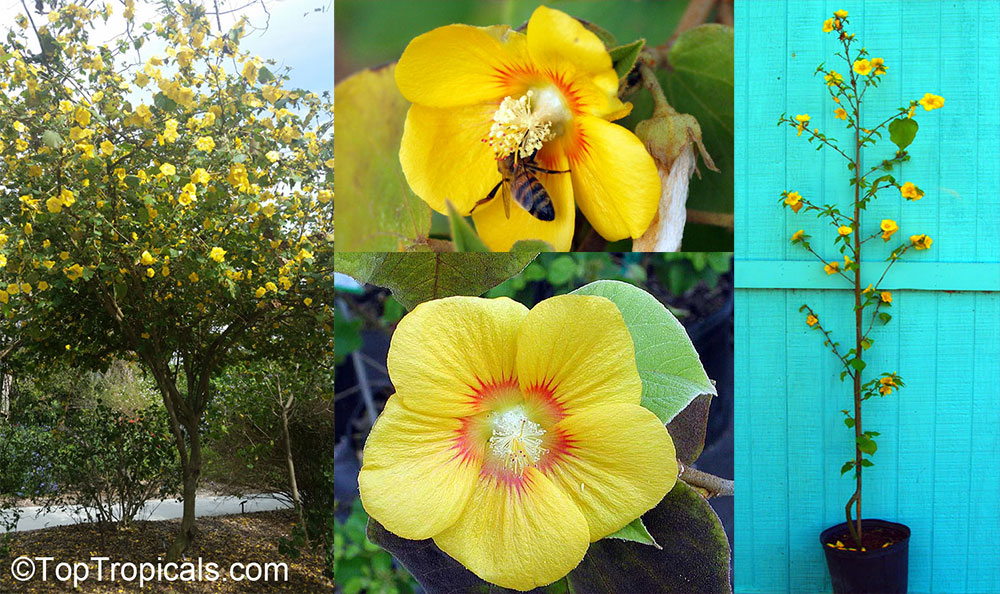
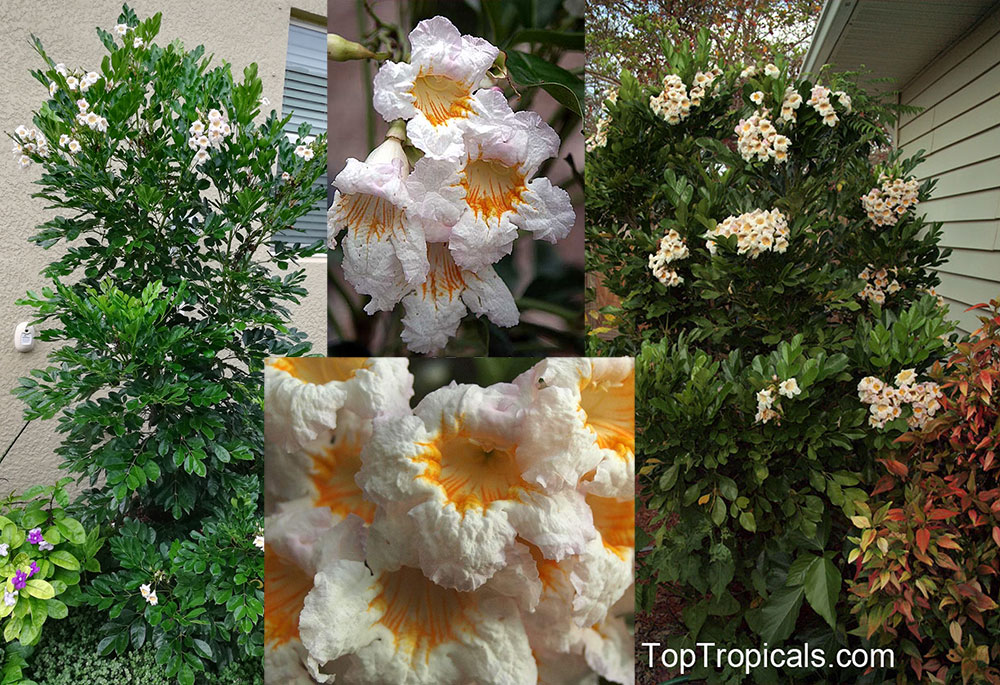
A:Canary tree is a good choice. It is free-flowering pretty little tree.
It is evergreen and doesn't shed leaves too much especially in your area with
mild winter. However, keep in mind that every plant sheds leaves. Even
evergreen trees replace old leaves with new ones. Some trees more than others.
Flowers also have a seasonal drop.
You may check the full list of compact flowering trees suitable for small spaces.
Another great choice is a Dwarf Tree Jasmine, Radermachera - also a free-flowering tree with rose-fragrant flowers
and large, architectural leaves that hardly ever drop. It has very dense yet
compact columnar shape, and is one of the greatest trees for smaller
landscapes.
Q: Can you please tell me which zones are the best for growing
Angel Trumpets? When do they bloom and is there a specific fertilizer to use on
them?
Do you sell any variegated varieties?
A: If you are lucky enough to live in an area that doesn't
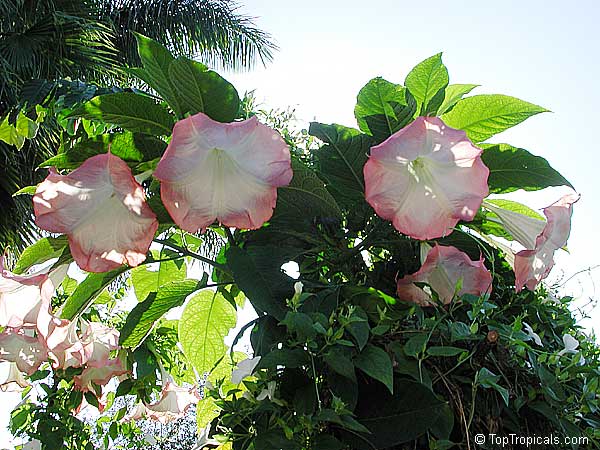
freeze or only has light frosts, you can grow Brugmansia (common name Angel Trumpet) outside all year long. They are
only entirely hardy in USDA zones 9-12, but they remain very popular
throughout the United States. They do really well in coastal settings in the
Southwest. They are simply glorious in the coastal areas of South California. In the
southwestern states, as well as in the tropics, they bloom spectacularly
throughout the spring, summer, and autumn.
Angel Trumpets are very heavy feeders and they need huge amounts of
nitrogen. You can use a standard balanced slow-release fertilizer on Brugmansia,
but then you must apply it very generously. We've created a specialized
fertilizer just for them. Angel Trumpet Delight is a perfect Brugmansia food for frequent monthly
feed. It's a 30-day Smart-Release formula that works wonders for Angel
Trumpets. A a well-balanced combination of macro- and micro- nutrients with a slow
release action, it provides continuous feed, maintains vigor and disease
resistance. It also contains coated nitrogen, early release nutrients and extra
iron (water soluble and chelated) for quick green-up.
Angel Trumpets come in a dazzling array of colors: orange, yellow,
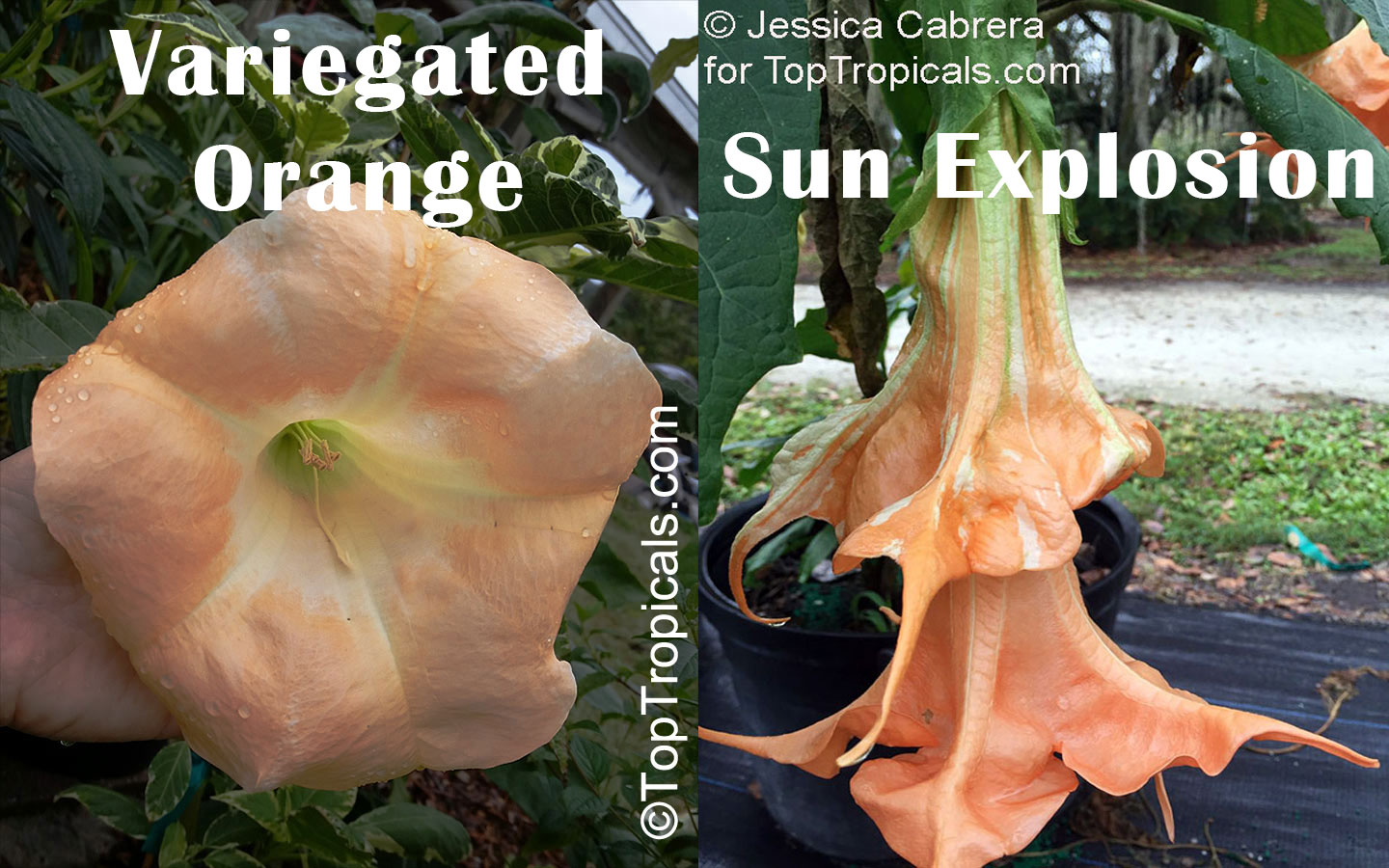
green, white, pink, red, emerald and even purple (closely related Datura). One of our favorites is the beautiful Variegated Orange Angel Trumpet, a new hybrid with variegated leaves
and a large single bloom that starts white and turns orange. Another amazing
variety is "Sun Explosion" - with a variegated orange flower.
Most folks are usually in awe of the enormous trumpet flowers when they
see it for the
very first time. They most definitely need to be planted where they can be
admired… near a deck, terrace, lanai or, entryway. The blossoms are
short-lived, but numerous, continuous, and truly show-stopping! And they smell so
good! This is a must have in any tropical garden. They can be grown either as a
bush or a small tree. They are easy peasy to grow and root extremely easily,
making them great as pass-along gifts for friends. They are sun-loving and
super fast-growing plants. Plenty of water and fertilizers keep them happy and
at their best. Did I mention they smell good too? ;)
Date: 31 Oct 2023
How to
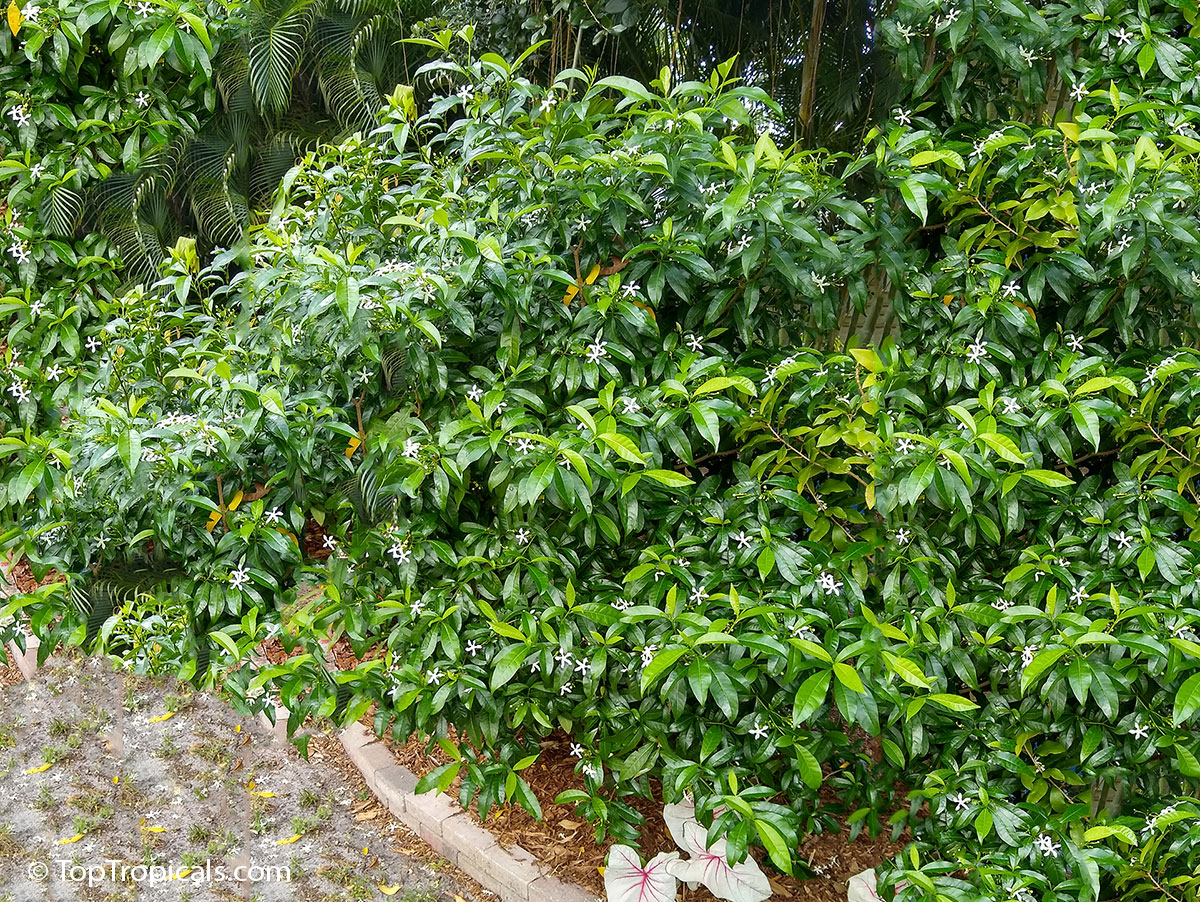
establish Tabernaemontana
and get more fragrant blooms
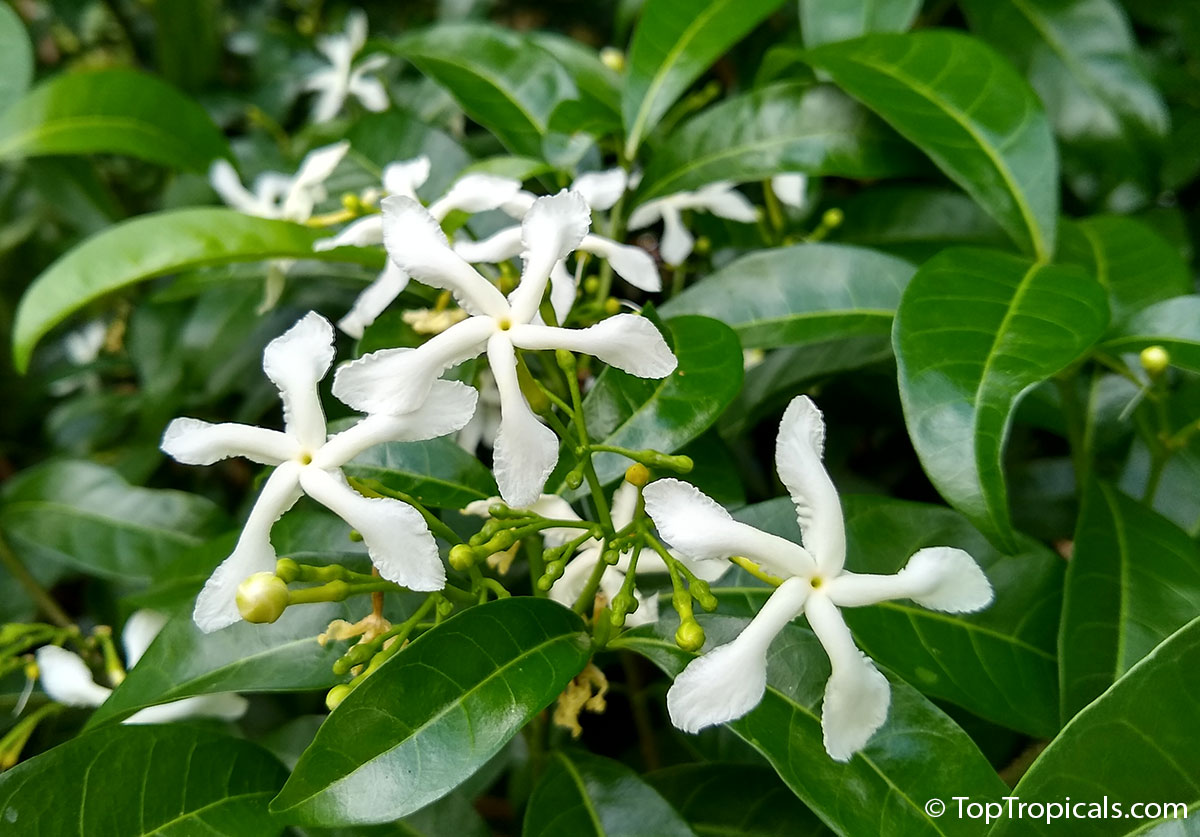
Q: I purchased Tabernaemontana australis from you back in June of this year and it
recovered just fine, but the new growth got some chlorosis. Older leaves still
look normal. The flowers also look normal but lack fragrance. Since I
live up north, I have it in a heated greenhouse for the winter, with a grow
light to compensate for the short days. I have it in a 10 inch clay pot in a
mix of equal parts standard indoor potting soil, peat moss, and perlite. It
gets fed with half strength 10-10-10 about once a month on average. Is there
some specific culture that you would recommend for this plant ? I really
love it and want it to thrive.
A: Tabernaemontana is a plant that may take some
time to establish itself, and leaf chlorosis often becomes a common issue
when the root system is not well-established. This symptom is indicative of Iron
deficiency, and possibly other micro-element deficiencies, such as Boron or
Molybdenum, which become more apparent when the plant receives excessive
water. This problem tends to intensify as temperatures drop, particularly when a
combination of cool and wet conditions prevails. It's worth noting that your
potting mix seems to be appropriate for this plant.
In light of these circumstances, we recommend the following steps:
1) Reduce watering during the cooler season, especially when
daylight hours are shorter. Allow the top layer of the soil to dry before
watering again.
2) Consider supplementing with microelements using a product
like
Sunshine Superfood. You can apply this as a foliar spray and mix it with
your watering can.
3) Maintain your regular fertilizing program throughout the
winter months, but ensure that you use only liquid amino-acid fertilizer, such
as
Sunshine Megaflor. Follow the instructions on the label for the correct
dosage and apply it with each watering, even during the winter. Since you will be
reducing amount of water, the amount of fertilizer also will be adjusted
accordingly. Important: do not use any dry fertilizers during winter months
(Nov-March).
Regarding the fragrance of the flowers, they typically emit a
mild, sweet scent, although it may not be as potent as that of gardenia or
jasmine. The strongest aroma usually becomes more prominent during warm (but not
excessively hot) and humid conditions, particularly in the morning hours. As
the plant grows larger and healthier, the fragrance should become more intense
because the flowers produce more essential oil when the plant is robust. You
may also apply Sunshine Honey supplement to improve flower quality and fragrance
strength.