Date: 22 Apr 2025
Low-Maintenance Bloom for Your Patio
Q: I'm looking for compact, low-maintenance plants for my patio - something colorful, unusual, and not like the boring crotons. I need several for my lanai, preferably flowering, showy, and easy to care for since I often forget to water. Do such plants even exist?
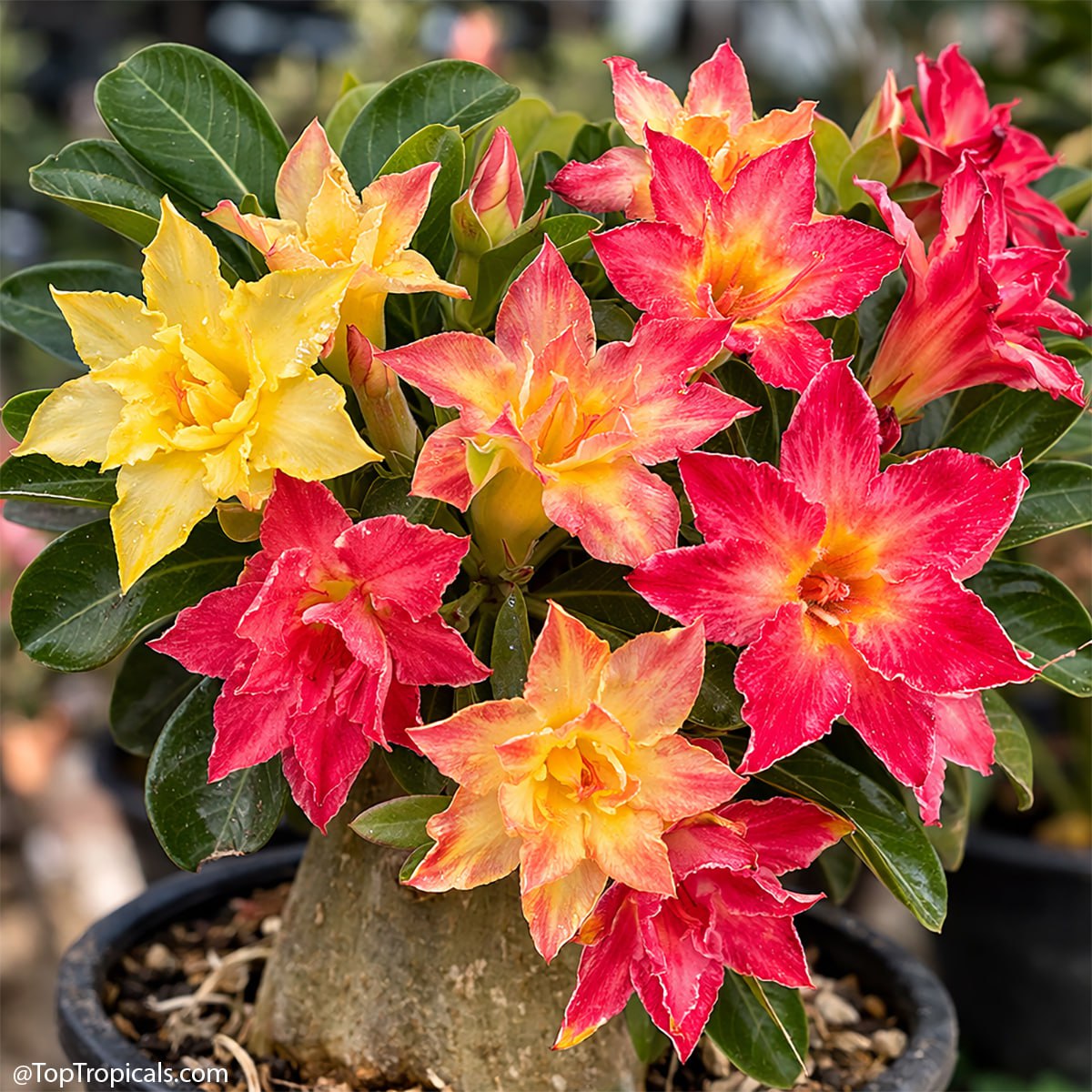
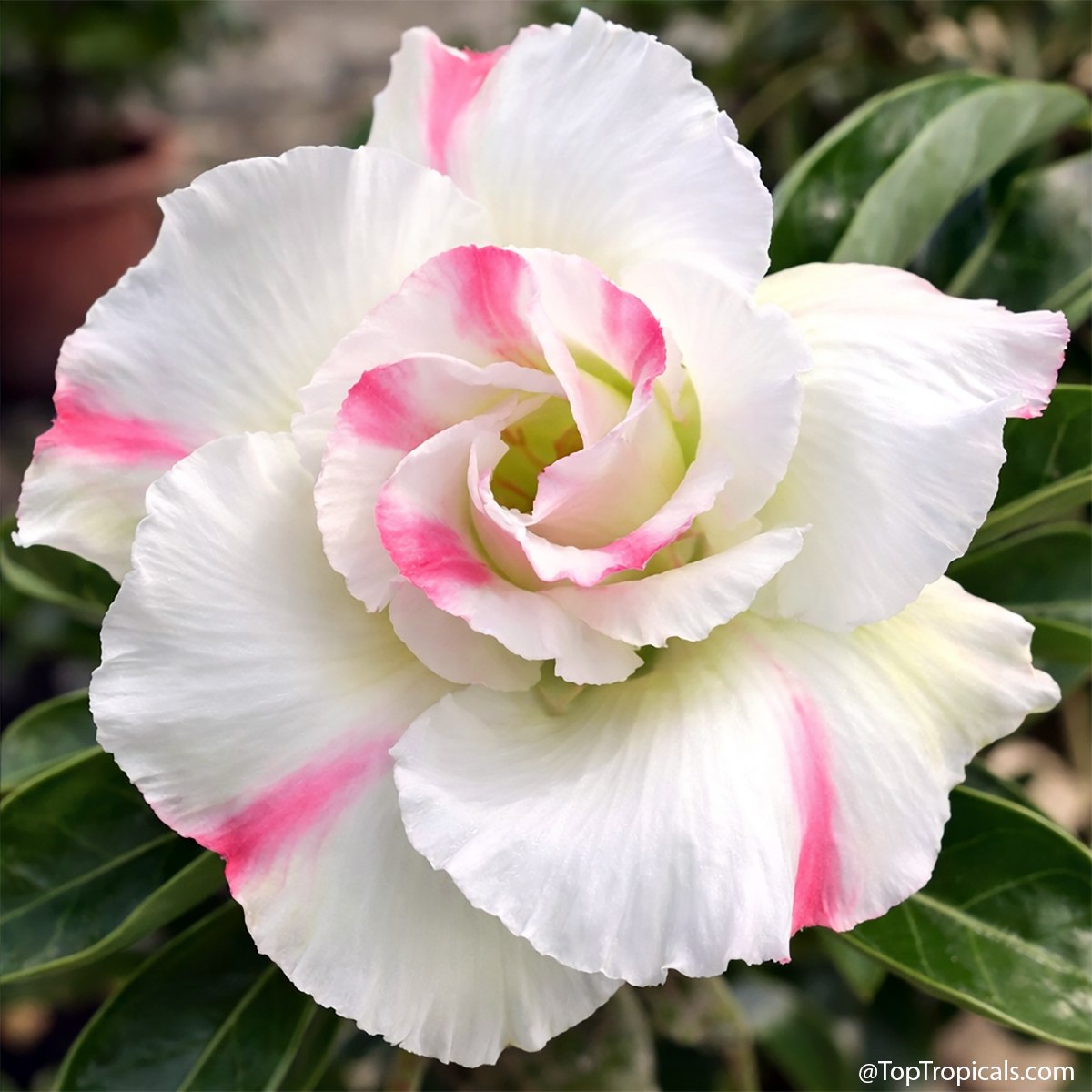
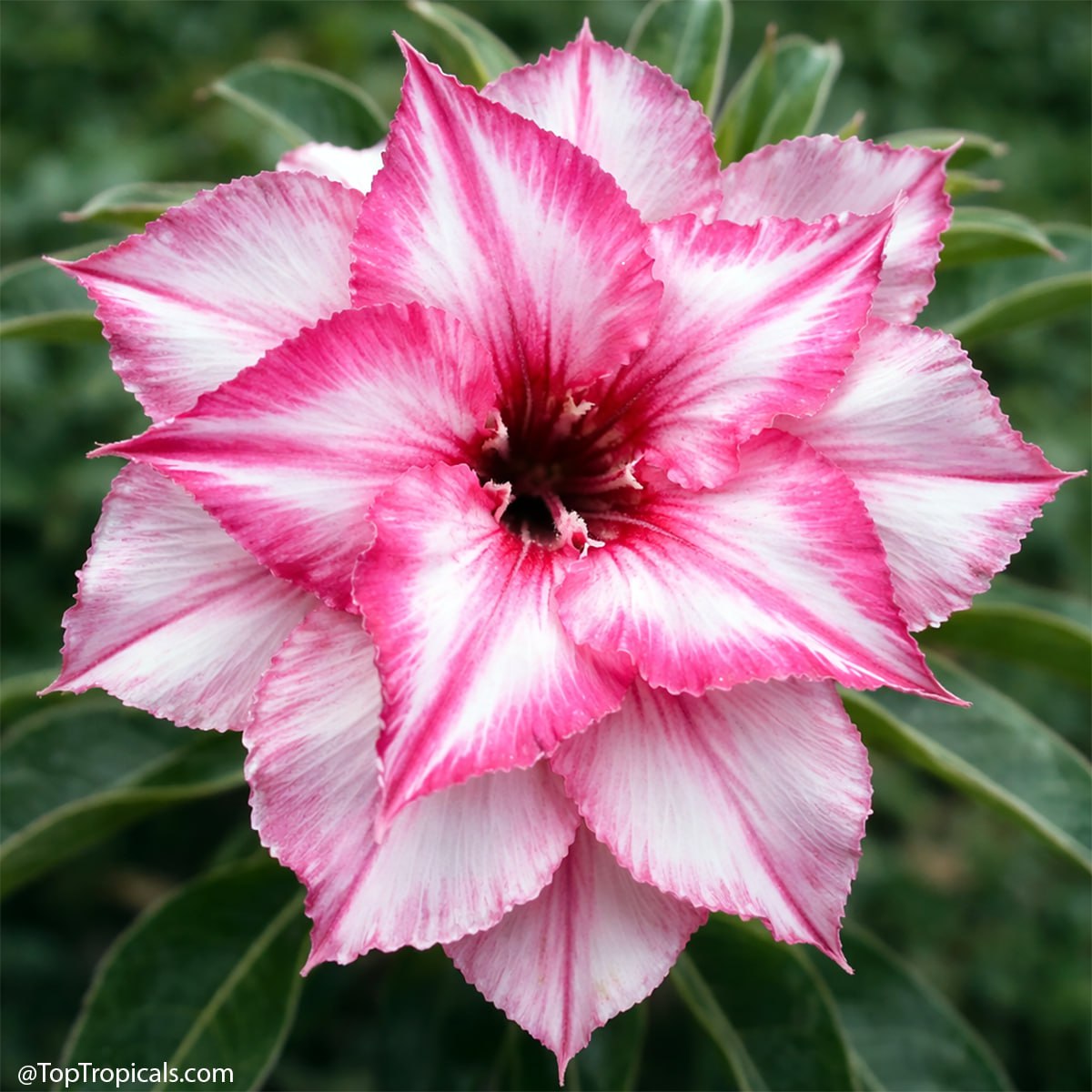
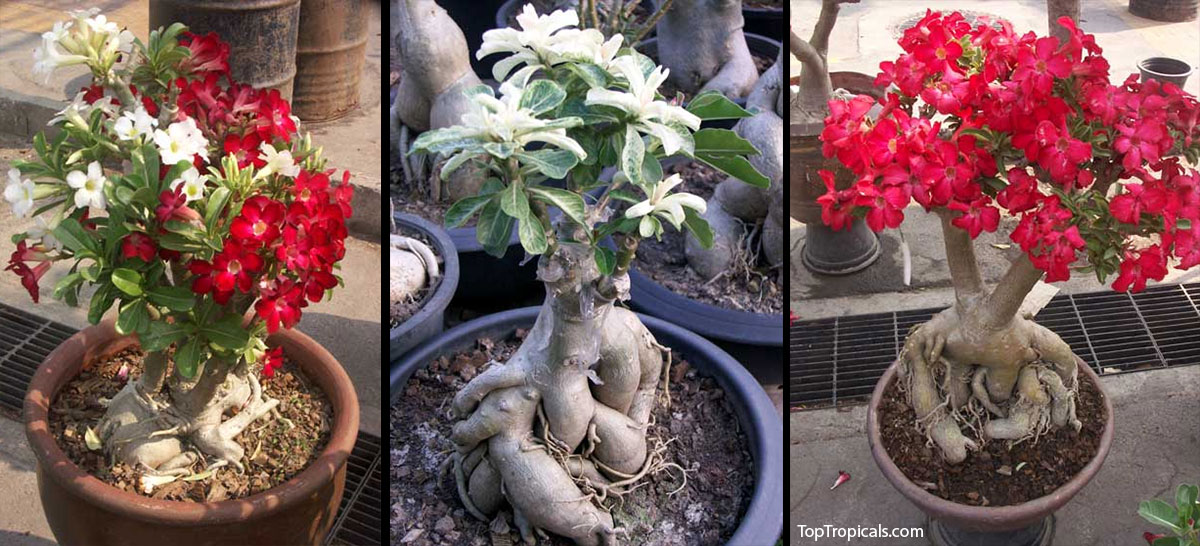
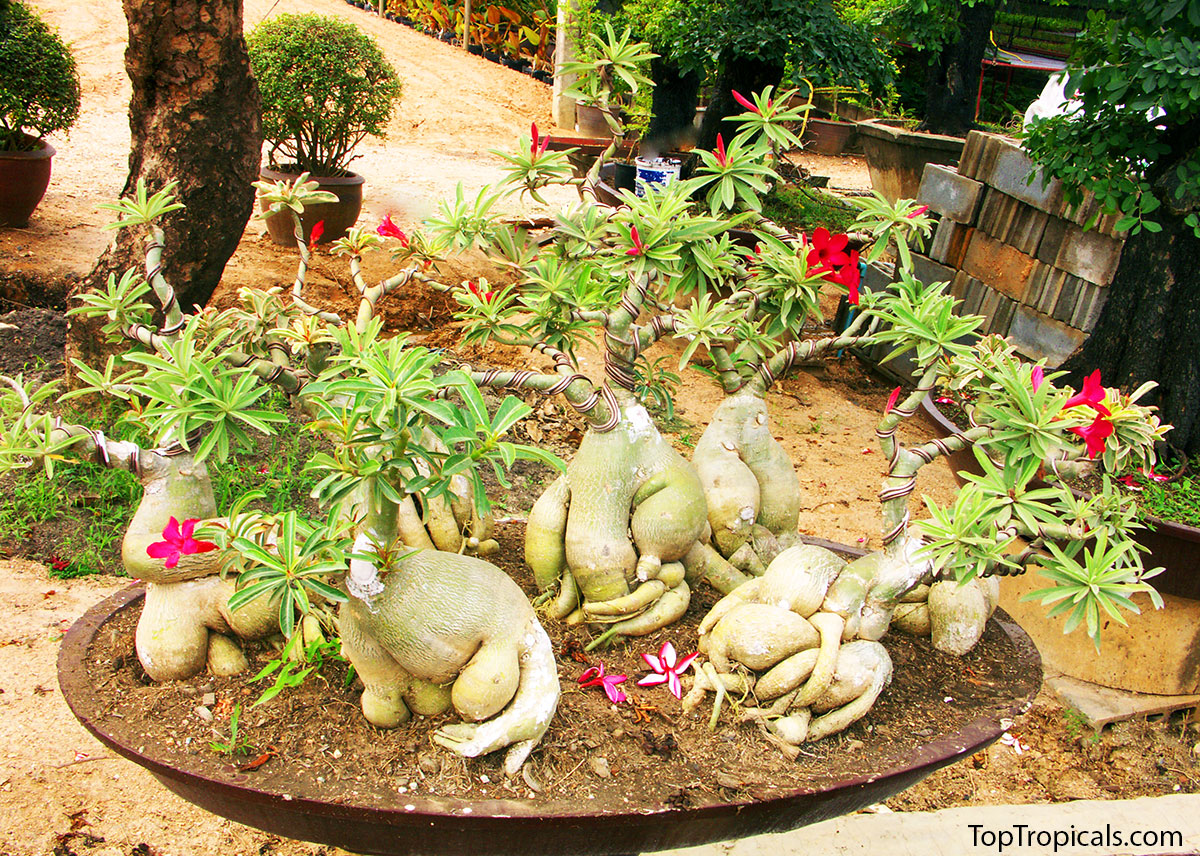
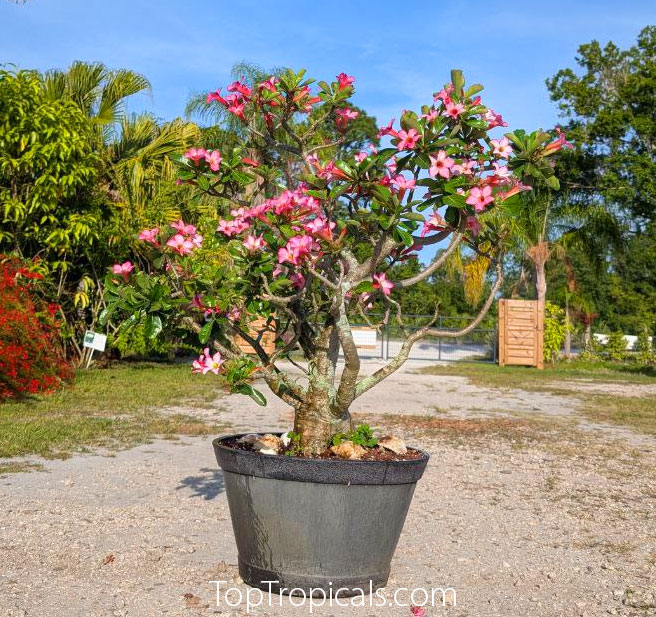
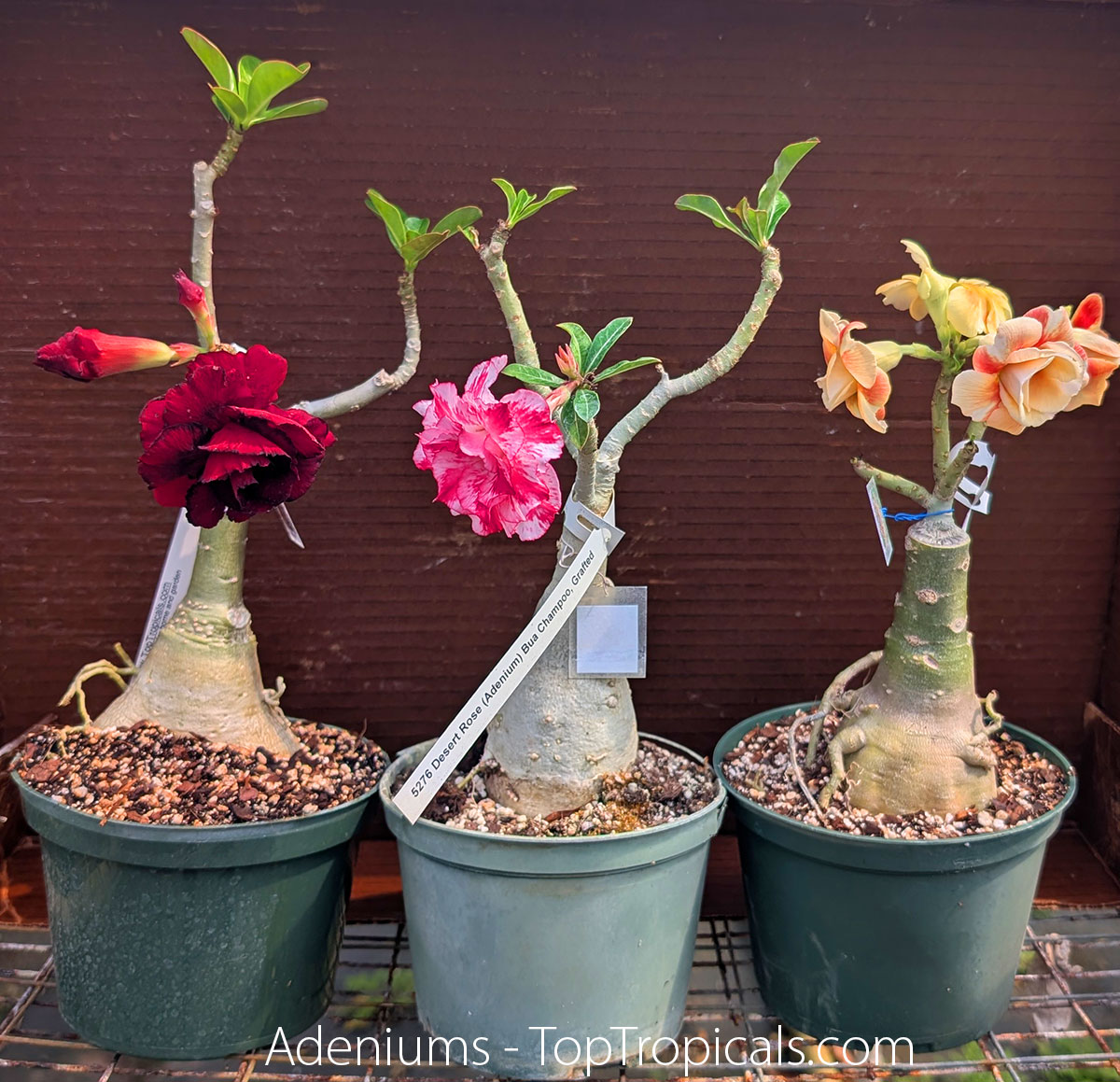
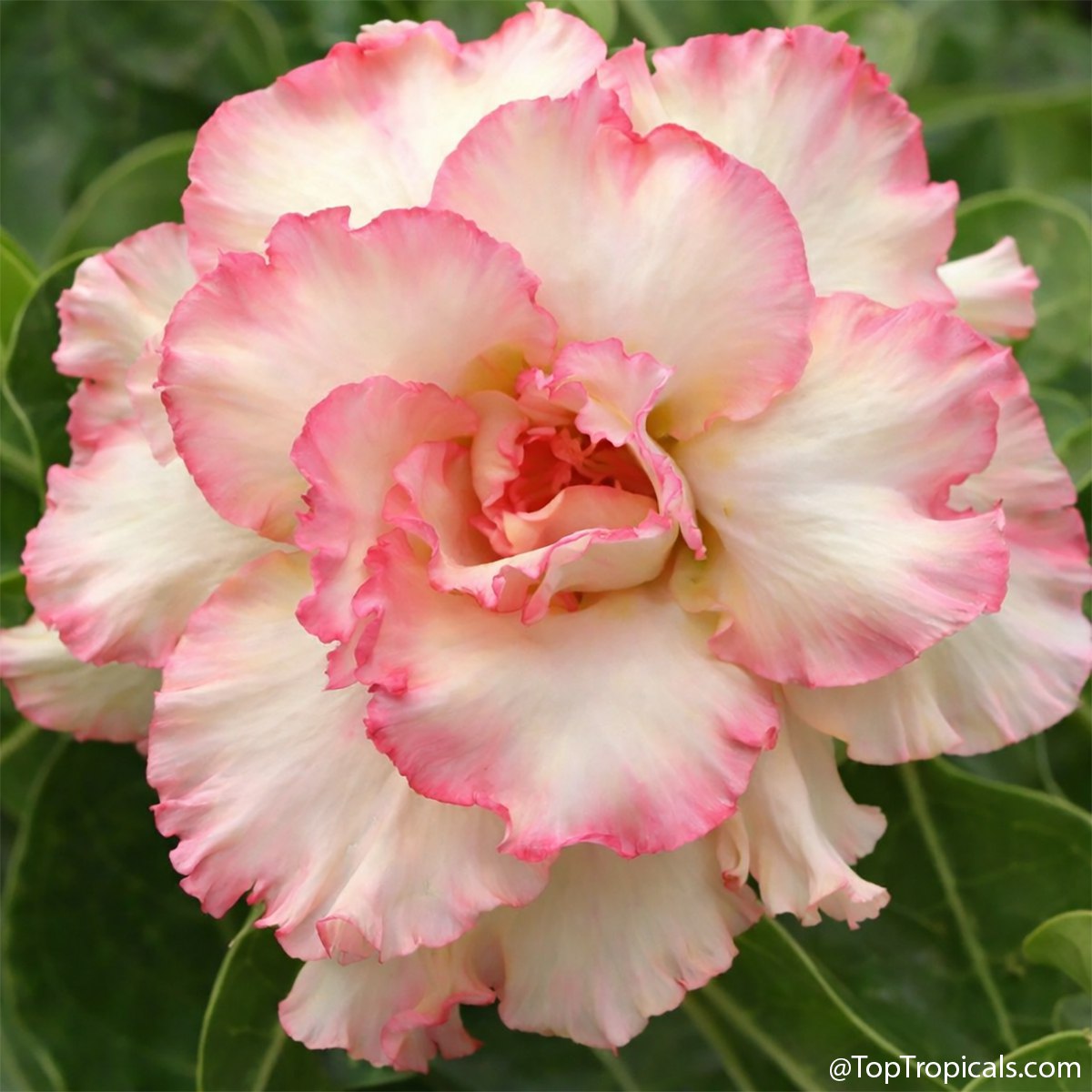
A: Sounds like you need Adeniums - also known as Desert Roses. They're perfect for patios and lanais, and they check every box: compact, low maintenance, drought-tolerant, and bursting with color. You can grow them in sun or shade, and they don't mind if you forget to water now and then. Plus, they're real conversation pieces - people collect them like art! Adeniums look like living sculptures thanks to their thick, swollen caudex.
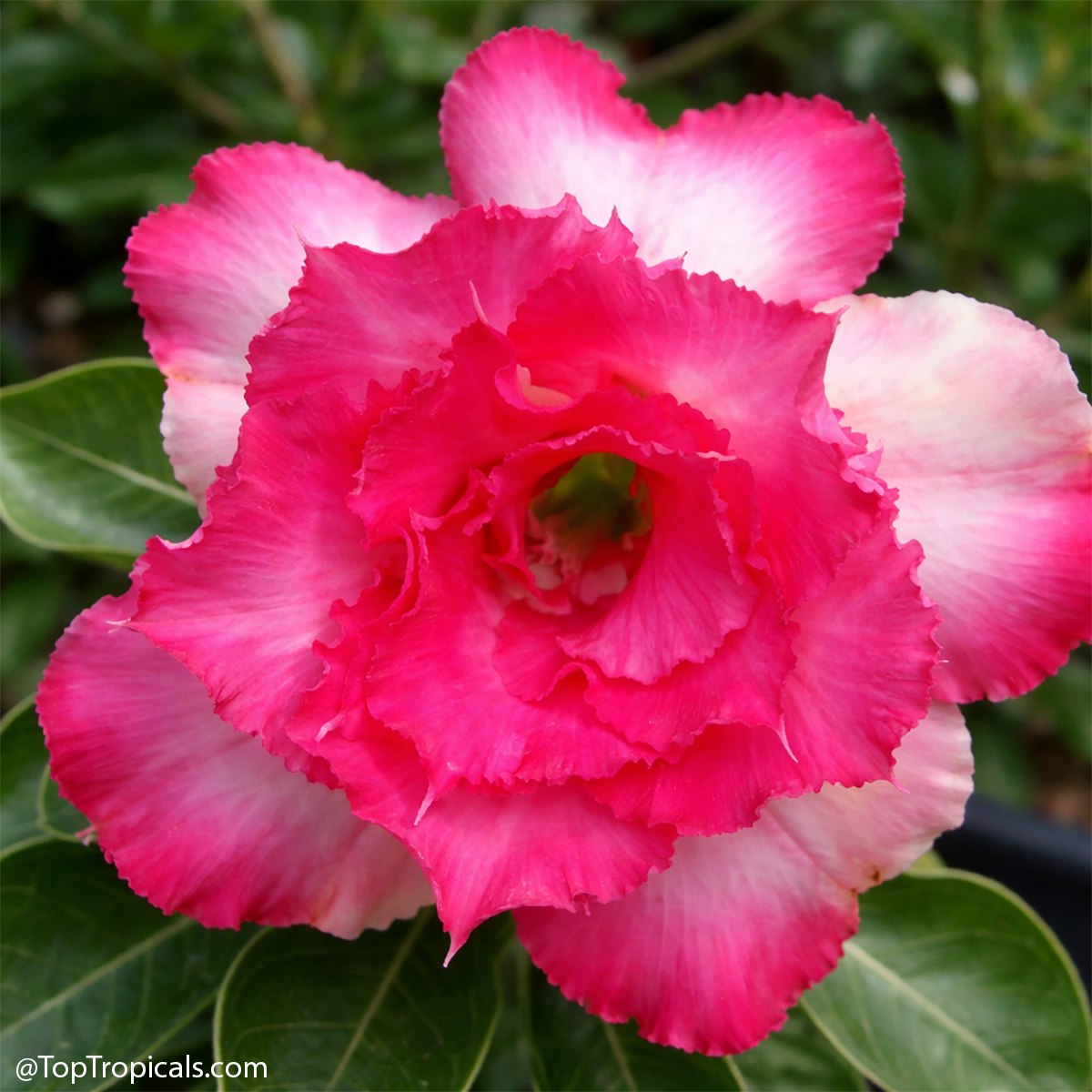
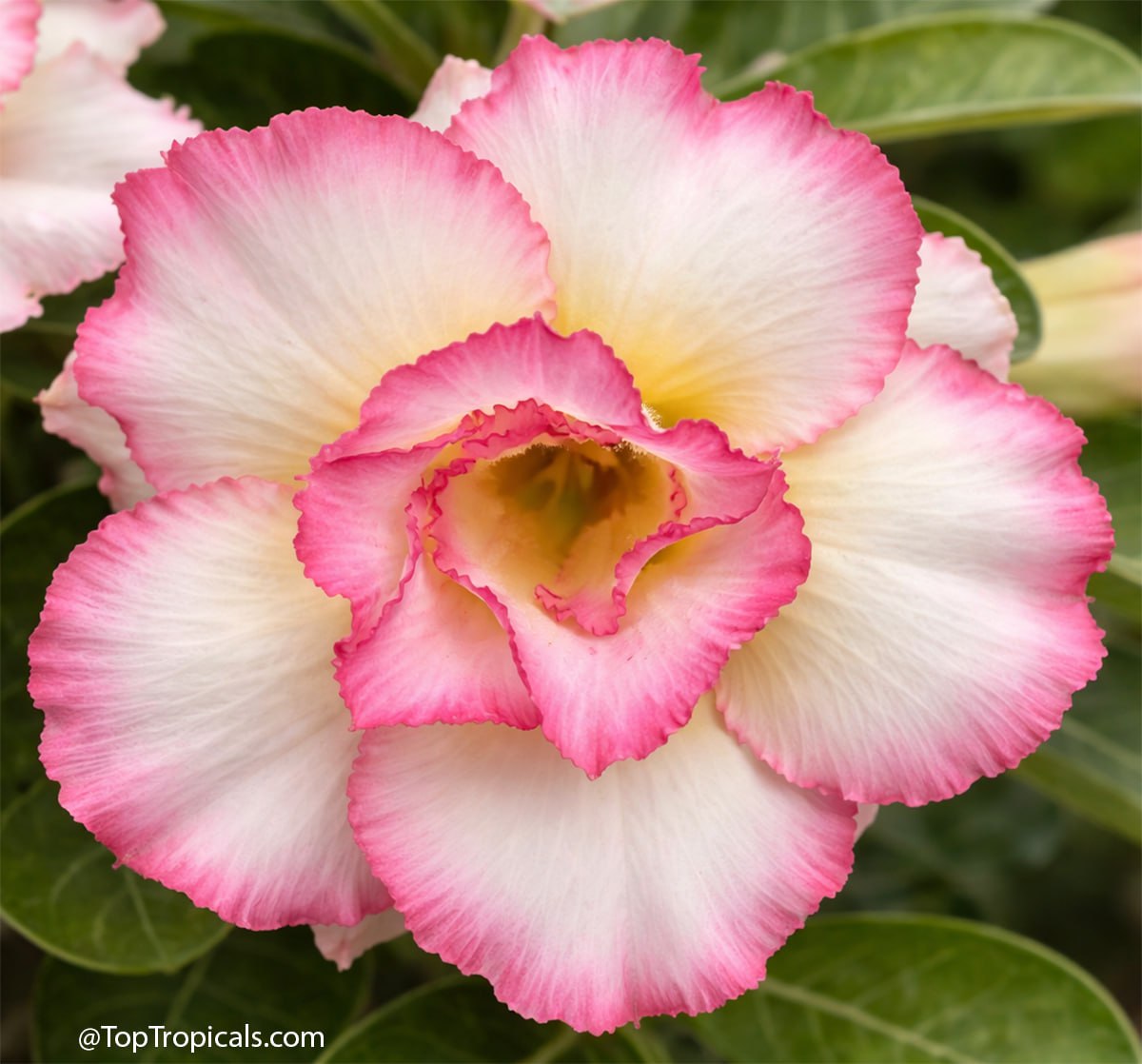
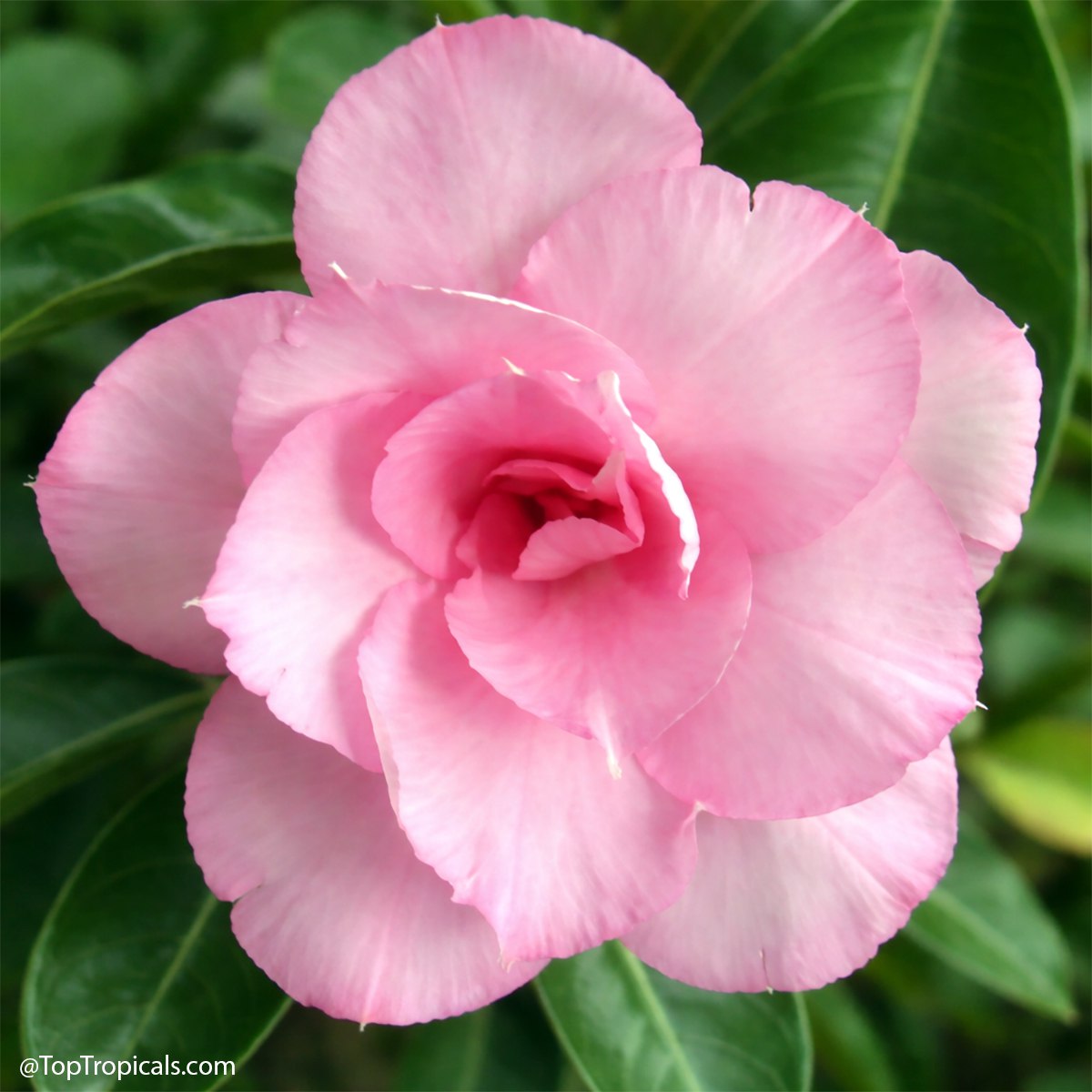
At Top Tropicals, we grow over 200 hybrid varieties of Adeniums, and usually have 100+ in stock. You'll find doubles, reds, purples, yellows, even striped, dotted, rainbow, and black flowers. With so many options, you'll want more than just one!
Want that iconic fat base? Here's the trick:
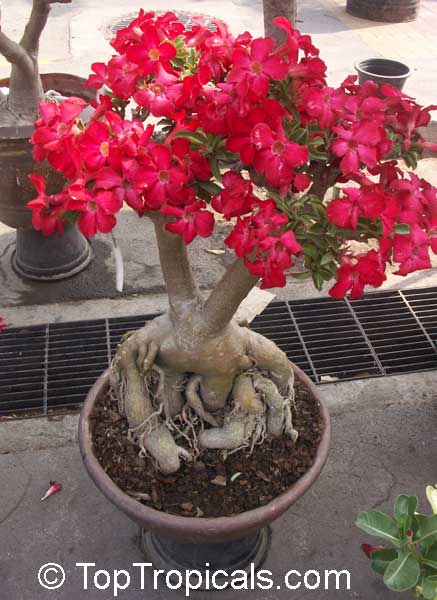
Every time you repot, raise the plant slightly to expose more of the upper roots. This encourages downward root growth and thickens the caudex over time. Just use a well-draining mix, water only when dry, and feed with Sunshine Megaflor Booster to support both blooming and trunk growth.
Adeniums aren't just low-effort - they're living art for your lanai!
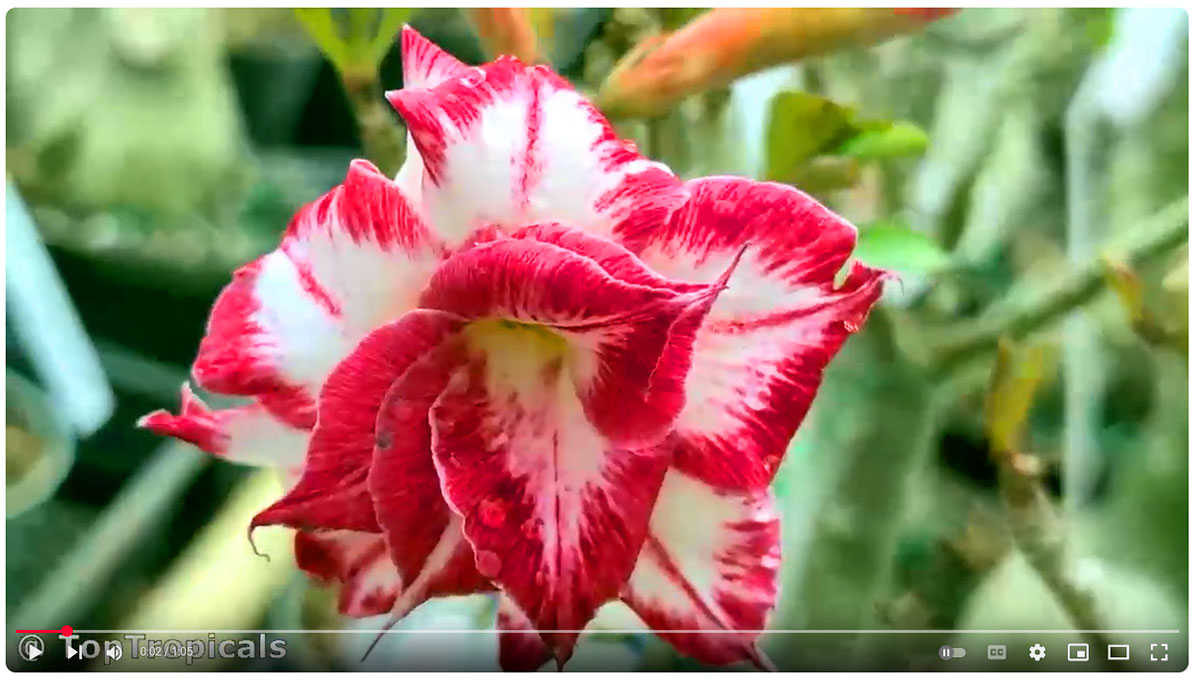
The First Video of Exotic Adenium Hybrids
Our Desert roses - Adeniums - were planted in March - and now, at the end of April, they're in full bloom. Just look at these colors in this !
Date: 26 Mar 2016
Growing Exotic Adeniums
Exotic varieties of Desert Roses. Adeniums have many spectacular hybrids. The basic culture is very similar to orchids. A small pot with excellent drainage is a must. Adeniums do not like both over-watering or drying-out. There is a secret how to create a large swollen caudex: raise the plant a bit every time you re-pot it, so that the upper part of roots will be a little exposed. The plant will form more roots that will go down.
To make your plant develop a large swollen base/trunk, you'll need a good quality fertilizer. Fertilizer requirement for swelling up trunks is also used to increase flowering. It shouldn't be too high in nitrogen, the middle number should be the highest (similar to 10-50-10). Never apply fertilizer directly on roots and do not liquid feed when a plant is thirsty: always water first slightly to avoid root burn and leaf drop. Do not wet leaves. Adeniums need lots of light for heavy flowering.
Most hybrids and species start blooming in the spring when the conditions are warm and days get longer, and continue blooming through the fall and winter in warmer climates. Adeniums like a neutral to hard water. Acidic water tends to sour the soil too fast and may cause root rot. Water plants preferably in the early morning, and allow them to drink up throughout the day. Watering can be done daily to every few days. Never allow your plants to sit in a saucer of water, but don't let them to dry out too often - this causes adeniums to go into early dormancy.
Planting instructions for bare-rooted succulent plants. Position the plant in a pot, size of root system. Use only well-drained soil with high content of Perlite and/or sand (cactus mix can be used), water once and keep in warm (75-80F) place in filtered light. Do not water again until soil dries on surface. Once the plant is established and starts growing new leaves (may take a few weeks), gradually move it into brighter light. Then you can start fertilizing it.
Date: 21 Mar 2026
How to start your dream collection: Adenium rainbow
Adenium Amaryllis
Adenium Win
Adenium Butterfly Yellow
Adenium Black Butterfly
Adenium Good Morning
Adenium Good Night
- 👉 Thinking about adeniums? Read this before you buy one!
If you’ve ever seen a tray of different blooming adeniums, you probably had the same thought: "I want them all." And honestly - we get it.
But with hundreds of varieties out there (and only so much space on your patio), the real trick isn’t collecting everything… it’s choosing the right ones and growing them well so they actually bloom like the photos.
Let’s make it simple.
💡 Before you start your adenium collection
A few basics that make all the difference:
- 🔸 Light. Bright light is key. The more light, the better the blooms.
- 🔸 Water. Water deeply, then let soil dry out. Adeniums hate sitting wet.
- 🔸 Fertilizer. Adeniums prefer liquid food. Light, regular feeding with Sunshine Megaflor Bloom Booster during active growth = stronger growth, bigger caudex, and better flowering.
- 🔸 Trimming. Prune after flowering to shape and encourage branching. More branches = more flowers.
- 🔸 Soil. Fast-draining mix is a must. No heavy, soggy soil. Use Adenium Soilless Mix.
👉 How to grow a happy Adenium
🌸 Today's featured adeniums
A few standout varieties to start (or expand) your collection:
- ✦ Amaryllis: Large, bold blooms with a classic floral shape - one of those that always catches attention.
- ✦ Win: Clean, bright blooms with a balanced form - simple and very satisfying.
- ✦ Butterfly Yellow: Soft yellow tones with a delicate, airy look - light and cheerful.
- ✦ Black Butterfly: Dark, velvety tones with a winged pattern feel - rich and dramatic.
- ✦ Good Morning: Bright, fresh tones that feel clean and uplifting - a nice contrast in any group.
- ✦ Good Night: Dark, moody tones - a completely different vibe from typical bright adeniums.
If you’re just starting, pick a few different styles - light, dark, bold, soft. That contrast is what makes a collection feel alive.
And fair warning… It rarely stops at six! 😀
🛒 Explore Exotic Thai Adeniums
📚 Learn more:
🟢 Join 👉 TopTropicals
Date: 29 Mar 2026
We picked 6 adeniums - youll probably want all 6: Adenium rainbow
Some adeniums go bright. Some go deep.
And some land right in that rich, warm middle.
This set leans into those “dessert” colors - creamy, golden, purple, and everything in between.
And yes, some varieties even come with fruity or “tasty” names!
💡 Soil and watering tip
Adeniums are succulents, so they need excellent drainage and prefer to stay on the dry side.
Water deeply, then let the soil dry out before watering again.
No constant moisture.
The potting mix is just as important. It should be very рыхлый and fast-draining, with plenty of conditioners like perlite, bark, or vermiculite.
We recommend using a Adenium Soilless Mix for best results.
🌸 Today's featured adeniums
✦ Caramel: Warm, rich tones with a smooth, creamy look.- ✦ Bumblebee: Bold contrast with bright yellow and dark patterning - very eye-catching.
- ✦ Purple Plum: Deep purple shades with a deep, velvety feel.
- ✦ Pineapple: Fresh yellow tones that feel light and tropical.
- ✦ Vanilla Gold: Soft golden color with a clean, balanced form.
- ✦ Multi Berry: Blend of pinks and reds that gives it a layered, mixed-fruit look.
This kind of mix makes a collection feel warm and inviting - not just colorful, but full of depth.
And once you dial in soil and watering - everything else gets a lot easier.
🛒 Explore Exotic Thai Adeniums
📚 Learn more:
#Container_Garden #Adeniums #How_to #Discover
🟢 Join 👉 TopTropicals
Date: 4 Jun 2016
Desert rose winter care
Q: I purchased several packets of desert rose seeds last year. I now have 45 very healthy seedlings some of them in bud. Almost all of my seeds grew but I lost most of them when I rook them in during winter. I did not water them for a month , kept them in their pots and set them by the window. they either dried up and died or rotted and died. I noticed when you send me grafted specimens that you bareroot them. Is this a better way to keep them inside in winter, bareroot? I hate to lose these plants come winter time. Pls advise me. I live in Houston, Tx. where we get temps below 40 degrees and sometime a day or more of freezing temps.
A: Thank you for your question. Rot is pretty common problem with Desert Roses. We monitor our Adeniums closely and have a special set up of watering environment and schedule, in dedicated greenhouses just for them. Nevertheless - every now and then we see a rotten caudex and can't help it to say "oops! over-watered!" These plants are very sensitive to environment changes, especially when it comes to a combination of water and temperature. These are a few tips that should help you to reduce risk of plant loss to a minimum:
1) Use only well drained mix with much higher content of perlite than you would use for most tropical plants. For adeniums, we use mix with 30-40% of perlite in it, while regular mix has 10-15%.
2) Adeniums like alkaline soil, unlike most of tropical plants (hard to say what else likes alkaline... Ficus for sure!). This means, regular mix with high content of peat moss may cause root rot. To increase alkalinity, you may add dolomite. Here in Florida where we have natural supply of shell rock handy, it is easy to add some shell to a potting mix (shell sand, rather than quartz sand). We always add a few large shells on top of a pots with a big specimen. Besides increasing soil pH (making it more alkaline), shells look very decorative.
3) Water very carefully during cooler months. When it is hot (85-100F), excessive water usually won't harm adeniums: it will be partially used by a plant, and partially will evaporate. Especially be careful with water when temperatures drop below 65F - then tropical plants simply stop growing process and go dormant. Once adeniums start losing leaves, this is a sign to reduce watering to once a week to once a month, and in very small quantity (couple tablespoons per pot).
4) We do not bareroot adeniums for winter storage. They are not bulbs. Barerooting of this plant is recommended only during shipping. Adeniums can stay without soil for up to a week without hardly any stress, sometimes even longer.
5) We keep our big collection specimens on a roofed porch during winter, where level of light is very low. Last winter we haven't lost a single plant due to low light. They take shade pretty well considering minimum or no water. However bright light is always better - it creates healthier environment for a plant. We all know about space limitations for our large collections, especially in winter. So if you can afford a bright spot for adenium during winter - the plant will be lucky!