Garden Blog - Top Tropicals

Date: 16 Jun 2026

💜 The Tree Everyone Stops to Take Pictures Of

Sunshine,  an  orange  tabby  cat,  takes  a  selfie  beneath  a  blooming  purple
    jacaranda  tree  while  Smokey,  a  tuxedo  cat  wearing  glasses,  watches  nearby 
 at  Top 
 Tropicals.
Sunshine: Every angle looks good.
Smokey: That's because you're photographing a Jacaranda at peak bloom.
Sunshine: I think the purple brings out my orange.
Smokey:The Jacaranda makes everything look better.

There's a moment, if you've never seen a mature Jacaranda in full bloom, that stops you completely.

You're driving down a street, or walking through a neighborhood you've passed through a hundred times, and suddenly there it is — a tree that looks like someone painted it from memory rather than from life. The canopy spreads wide and low, covered so thoroughly in lavender-blue flower clusters that you can barely see the branches beneath. People are already stopped on the sidewalk. Someone has their phone out. A couple is standing beneath it, looking up.

You understand immediately why they stopped. You stop too.

That first encounter with a Jacaranda mimosifolia in bloom is the kind of thing gardeners remember for years. It's also, for many of them, the moment they decided they needed one.

👉Plant Your Purple Jacaranda

💜 The Tree That Turns Cities Purple

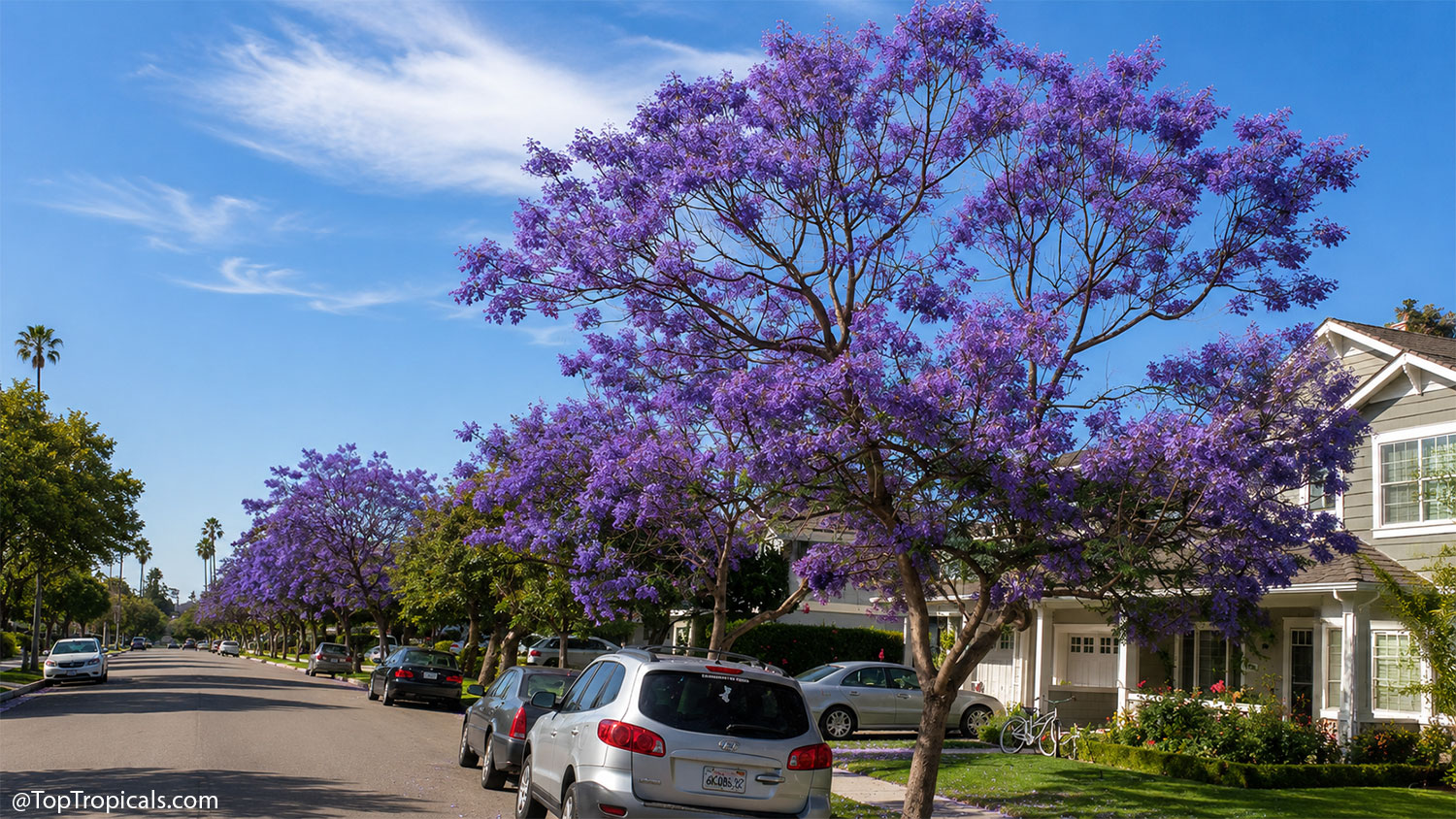
Residential  street  lined  with  blooming  jacaranda  trees  covered  in 
 vibrant  purple  flowers.  A  large  jacaranda  shades  parked  cars  and  front 
 yards,  while  additional  flowering  trees  create  a  stunning  purple  avenue 
 beneath  a  bright  blue 
 sky.

When jacarandas bloom, entire neighborhoods are transformed into rivers of purple. Their spectacular floral display turns ordinary streets into some of the most photographed landscapes of spring and early summer.

Most flowering trees get admired. Jacarandas become events.

Pretoria, South Africa is known worldwide as "Jacaranda City." During bloom season, entire neighborhoods seem to disappear beneath a haze of lavender-blue flowers.

Buenos Aires, Sydney and Brisbane have their own Jacaranda traditions. In Southern California, mature Jacarandas are so anticipated that bloom season regularly fills social media with photos of purple-lined streets and neighborhoods.

People don't merely grow Jacarandas. They wait for Jacaranda season. There's something unusual about a tree that generates that kind of anticipation. Most ornamental trees are appreciated in passing. Jacaranda creates a ritual.

💜 A Tree Surrounded by Legends


Mitu  mitu  bird  (Alagoas  Curassow)  -  adult  male.  Illustration  from 
 Nouveau  recueil  de  planches  coloriées 
 d'oiseaux,  1838

Mitu mitu — the bird of the Tupi-Guarani legend (Wikimedia Commons)

In Tupi-Guarani tradition, Mitu, a great forest bird, carried the Daughter of the Moon from the heavens and placed her in a flowering Jacaranda tree. She descended among the people, bringing wisdom and knowledge before returning to the sky.

Few trees become part of local folklore. Fewer still become part of everyday life across multiple continents.

💜 Beautiful Beyond Bloom
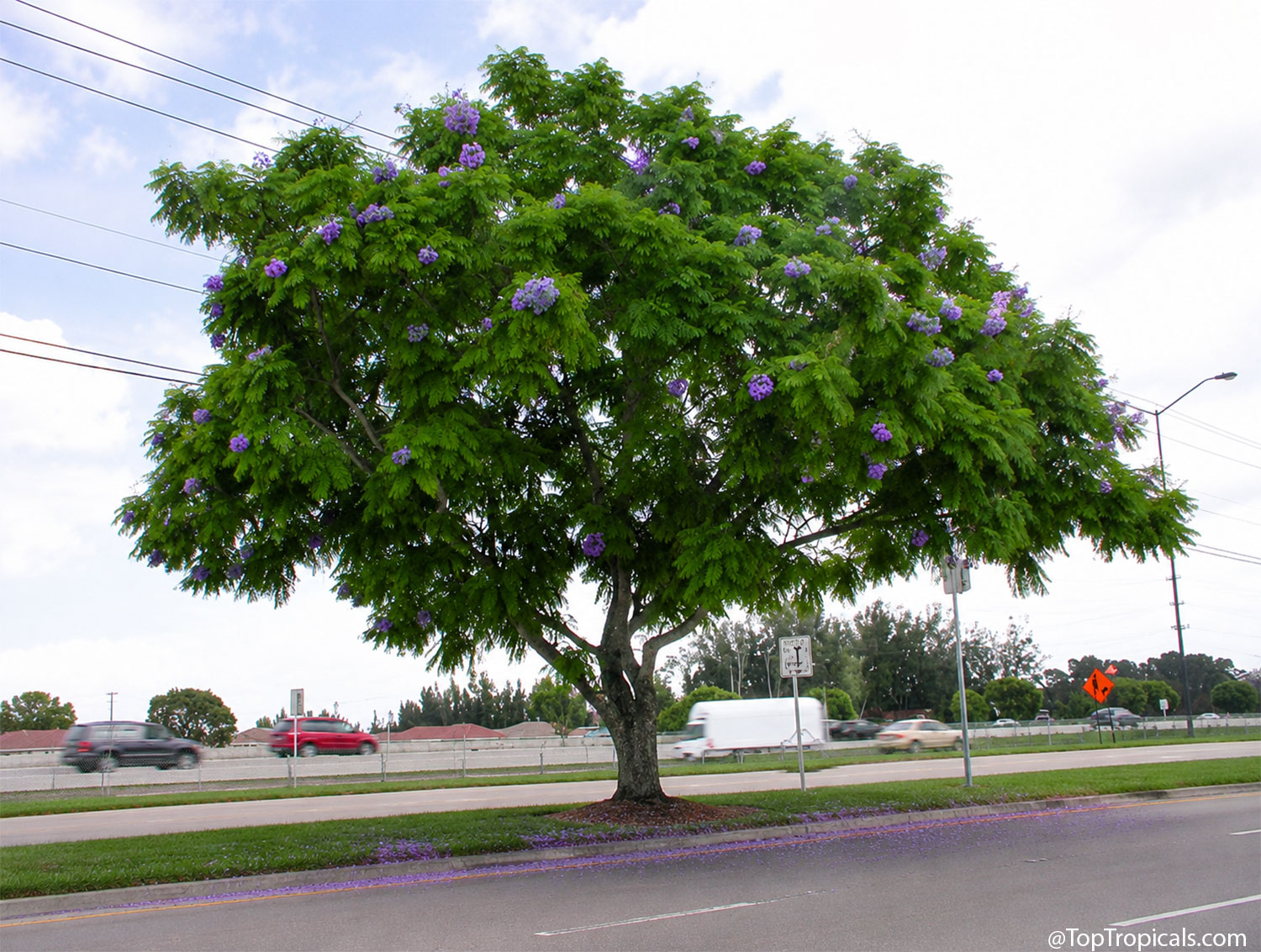
Young  jacaranda  tree  with  lush  fern-like  green  foliage  and  scattered 
 clusters  of  purple  flowers  growing  along  a  roadside.  The  broad  canopy  forms 
 a  graceful  umbrella  shape,  showing  the 
 tree's  attractive  structure  even  when  not  in  peak  bloom.

Jacaranda is beautiful even outside its main flowering season. Its finely divided, fern-like foliage creates a soft tropical canopy, while occasional clusters of purple blooms offer a preview of the spectacular display that transforms the tree into a cloud of lavender each year.

Here's what surprises people who plant their first Jacaranda: they love it even when it isn't flowering.

The foliage is finely divided and fern-like, giving the tree a delicate, airy texture that softens any landscape. The branching structure is naturally graceful, spreading wide with a canopy shape that looks considered rather than accidental. The light that comes through the leaves is gentle and dappled — the kind of shade that doesn't feel heavy, that lets enough brightness in to make the space beneath feel pleasant rather than dim.

💜 Mature Size
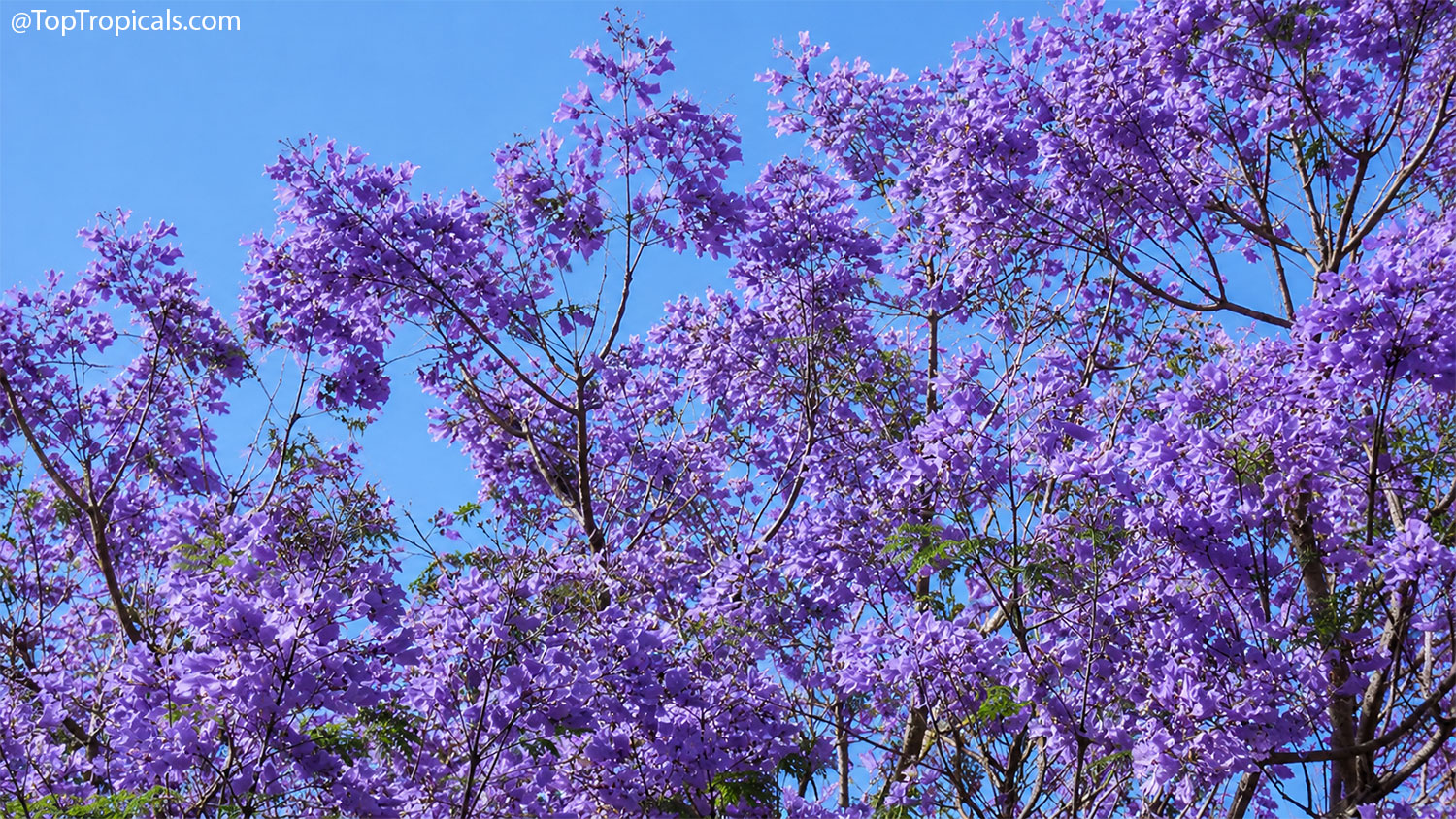
Upper  canopy  of  a  blooming  jacaranda  tree  filled  with  thousands  of 
 lavender-purple  flowers  against  a  clear  blue  sky.  The  delicate 
 trumpet-shaped  blossoms  create  a  soft,  cloud-like  effect  among  the 
 tree's  fine  branches  and  sparse  fern-like  foliage.

At peak bloom, jacaranda trees appear draped in purple clouds. The airy canopy of lavender blossoms creates a breathtaking display that has made this tree famous in gardens, parks, and city streets around the world.

A mature Jacaranda typically reaches 25 to 30 feet tall with a broad, spreading canopy of similar width. Given room to grow, it becomes a true focal point in the landscape.

That size is the point. A Jacaranda works beautifully as a specimen tree where you have room to let it express itself fully. It makes an excellent lawn tree, its canopy casting light shade over a wide area. Planted where it can be seen from a distance, it becomes a focal point in any season and a spectacle during bloom.

If you want a tree that will grow into something people notice — something that will still be there and still be blooming long after you've finished planting the rest of the garden — Jacaranda delivers.

How to Grow Jacaranda

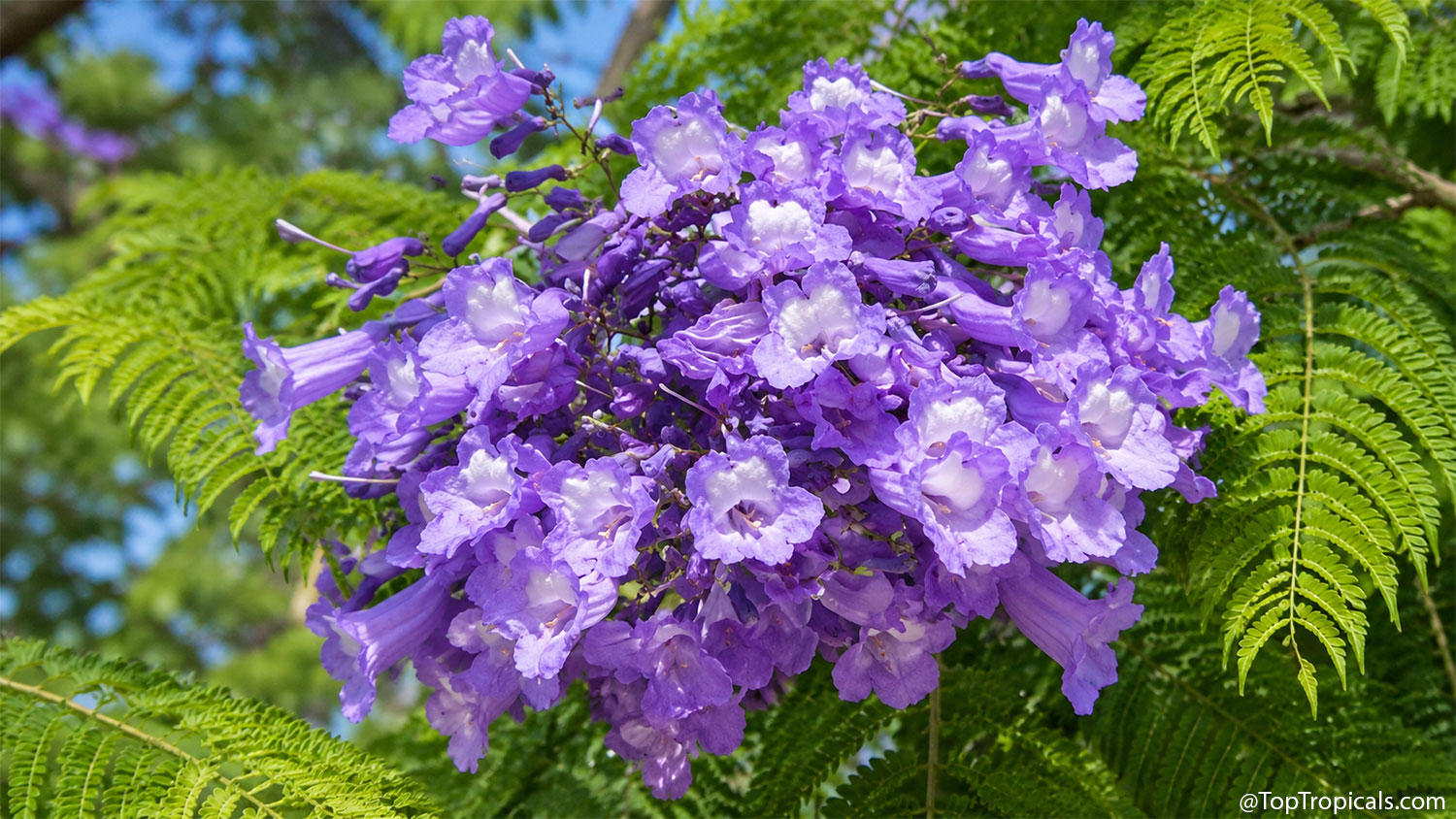
Dense  cluster  of  lavender-purple  jacaranda  flowers  surrounded  by 
 delicate  fern-like  green  foliage.  The  trumpet-shaped  blooms  are  packed 
 tightly  together,  with  pale  white  throats  creating  a  striking  contrast 
 against  the  vibrant  purple 
 petals.

The beauty of jacaranda is not only in its massive floral display but also in the individual flower clusters. Each bouquet combines dozens of delicate trumpet-shaped blooms framed by soft, fern-like foliage, creating a perfect balance of texture and color.

For best results, provide:

  • Full sun
  • Best planted away from sidewalks and driveways
  • Well-drained, sandy loam; highly sensitive to waterlogged or heavy clay soils
  • Regular watering while establishing
  • Moderate watering once mature
  • A balanced fertilizer during the growing season
  • USDA Zones: 9B – 11. Can tolerate brief, light frosts once mature. Protect from cold while young

Bloom season: Late Spring to Early Summer (Main flush), occasional light scattered bloom in Fall. As the flowers fall, they often create a colorful purple carpet beneath the canopy, extending the display from the branches to the ground below.

In warm climates such as South Florida, coastal Southern California, and Hawaii, Jacaranda can become a long-lived landscape tree that provides shade, beauty, and spectacular seasonal blooms for decades.

Top Tropicals Tip:
To help young trees get established quickly, consider using Sunshine Boosters Green Magic when planting or transplanting. During the growing season, regular feeding with Sunshine Boosters Megaflor can help support vigorous growth and a healthy canopy.
To maximize the bloom density for next season, ensure the tree receives consistent micronutrients during the late summer growth surge.

Read Top Tropicals Guide to Sunshine Boosters™

Jacaranda can also be grown in large containers, where its size may be managed through container culture and occasional pruning. This is a useful option for gardeners in colder climates or for those who wish to enjoy the tree on patios and terraces.

📚 More About Jacaranda on the Top Tropicals Garden Blog

💜 Why Gardeners Fall in Love With Jacaranda
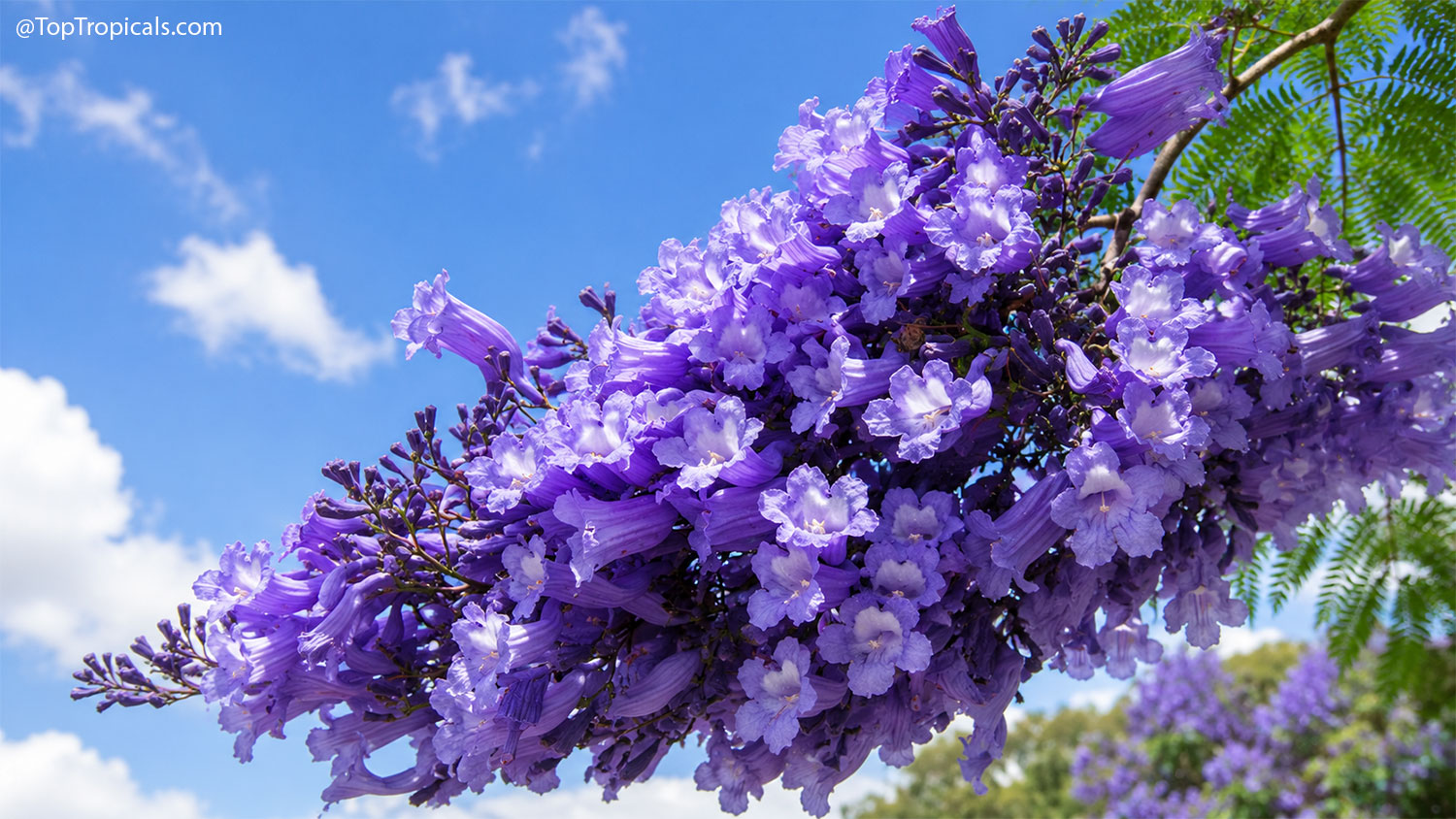
Large  cluster  of  lavender-purple  jacaranda  flowers  hanging  from  a 
 branch  against  a  bright  blue  sky  with  white  clouds.  The  trumpet-shaped 
 blooms  are  packed  tightly  together,  creating  a  spectacular  display  of  color,
    while  delicate  fern-like  foliage  frames  the 
 scene.

Jacaranda flowers bloom in dense clusters of lavender-purple trumpets, creating one of the most spectacular floral displays in the tree world. Against a clear blue sky, the blossoms seem to glow, giving the tree its famous "purple cloud" appearance.

Ask someone with a mature Jacaranda in their yard what it's like when it blooms, and they'll usually smile before they answer.

There's a particular pleasure in seasonal anticipation - in knowing that something beautiful is coming, in watching for the first flower clusters to appear, in the morning you walk outside and realize the tree has finally opened. Jacaranda delivers that pleasure reliably, year after year.

Mature trees become landmarks. "Turn left at the purple tree" is a surprisingly common way to find a house during Jacaranda season. They become the reason people slow down while driving past your house. They become the tree your kids remember.

Few landscape trees combine beauty, shade, elegance, and seasonal drama quite the way a Jacaranda does. Long after the flowers fade, the tree remains a graceful presence in the garden. And when bloom season returns, it reminds you exactly why you planted it.

Some trees provide shade. Others provide flowers. Jacaranda provides both.

That's a rare thing in a garden, and it's worth planting.

Sunshine: What happens when the flowers are gone?
Smokey: Then you enjoy the tree.
Sunshine: And when the flowers come back?
Smokey: Then you remember why you planted it.
👉Shop Jacaranda Trees

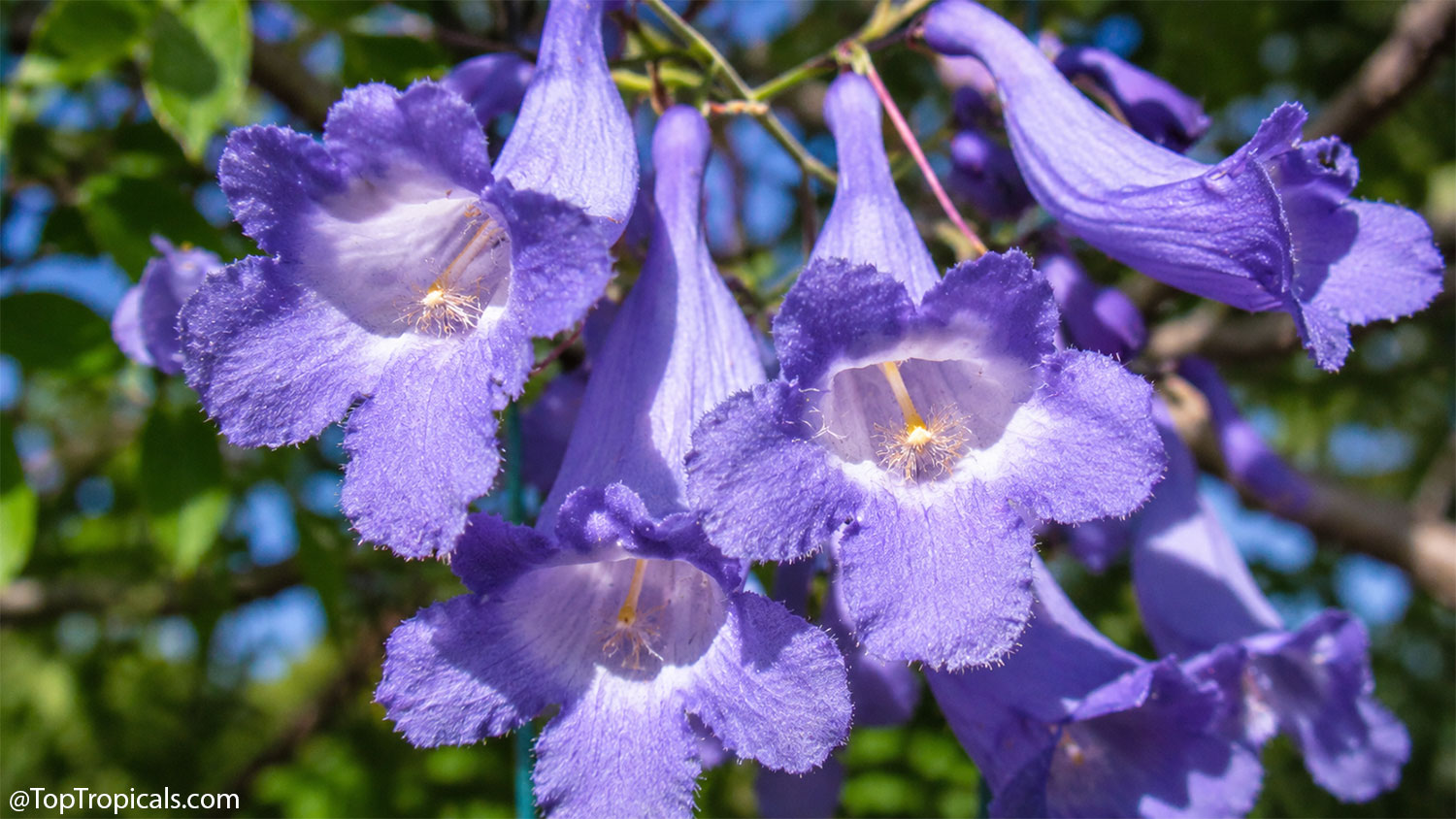
Close-up  of  pale  lavender  jacaranda  flowers  showing  the  distinctive 
 trumpet-shaped  blooms  with  soft,  velvety  petals  and  fuzzy  white  throats. 
 Sunlight  highlights  the  delicate  flower  texture  against  a  softly  blurred 
 background  of  green 
 foliage.

A close-up look at the intricate flowers of the Jacaranda tree (Jacaranda mimosifolia). Each velvety trumpet-shaped bloom combines soft lavender tones with delicate textures that make this tree one of the most recognizable flowering trees in the world.

Date: 17 Nov 2025

❄️Cold Night Survival Guide

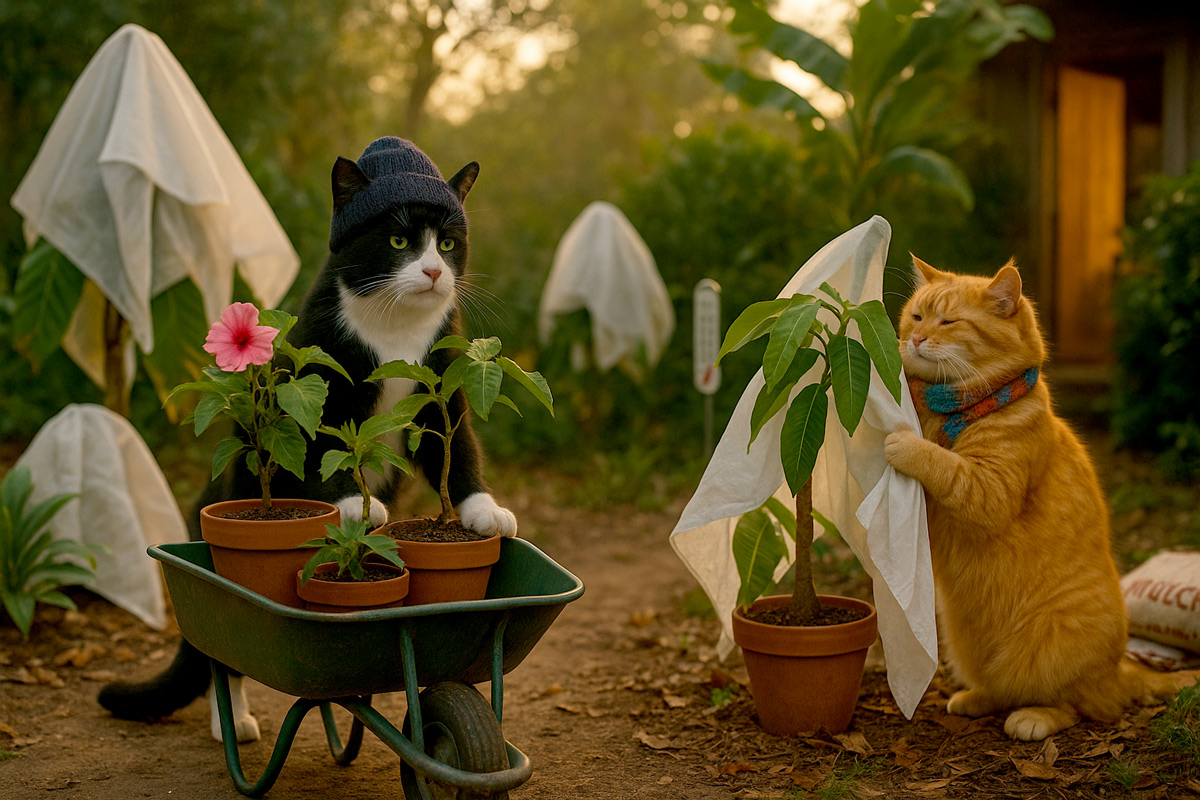
Smokey,  a  black-and-white  tuxedo  cat,  loads  a  wheelbarrow  with  potted 
 tropical  plants  while  Sunshine,  a  fluffy  orange  tabby,  pretends  to  cover  a 
 mango  tree  with  frost  cloth  as  evening  light  warms  the  tropical  garden.

Smokey and Sunshine Prepare Plants for the Cold Night.

Smokey: Come on, Sunshine, help me move these plants inside before it gets dark!
Sunshine: I am helping... see? I’m supervising the mango tree.
Smokey: You call that supervising? The frost cloth’s upside down!

When the forecast drops into the 30s, panic is not a plan. This is your simple, clear checklist to protect every tropical in your garden. Think of it as the quick emergency manual that goes hand in hand with the previous cold-weather newsletter.

"We all love our tropical flowers, mangoes, bananas, and rare fruit trees. A single cold night does not have to be a disaster. The key is knowing what to do, when to do it, and what mistakes to avoid." - Tatiana Anderson, Top Tropicals Plant Expert

🌡️ FROST AND FREEZE

A frost and a freeze are not the same. A frost is when you see ice crystals on leaves or grass, while a freeze is when the air temperature drops below 32 F. The tricky part is that you can get frost even when the air is above freezing, and you can have a freeze with no frost at all. It all depends on humidity and the dew point. If the dew point is below freezing, the ground can cool faster than the air, letting frost form even when your thermometer reads 35 or 36 F. And once the air itself drops below 32 F, even for an hour, tender tropicals can be damaged. For plants, a freeze is far more dangerous, because freezing air pulls heat out of stems, branches, and roots. Frost usually burns leaves, but a true freeze can injure wood, kill buds, and damage the entire plant.

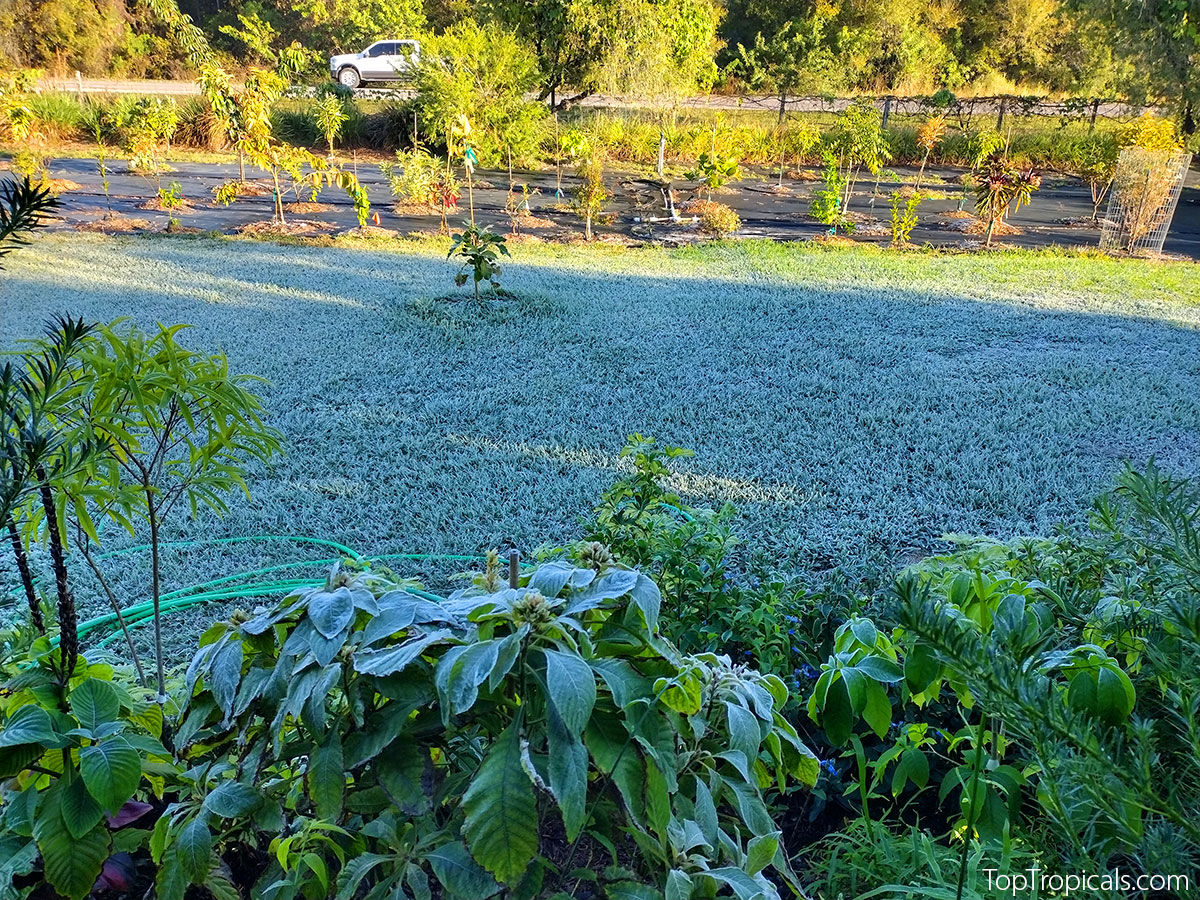
Frost  on  grass  and  leaves

Frost on the grass and leaves on Winter morning in Central Florida

WHAT TO DO AND NOT TO DO BEFORE A COLD SNAP

✔️ 5 THINGS TO DO:

  1. Water well. Hydrated plants tolerate cold better than dry, stressed ones.
  2. Add mulch. A thick layer around the base keeps roots warm.
  3. Block the wind. Move pots to a sheltered corner or patio.
  4. Cover at night, uncover in the morning. Let plants breathe and get light.
  5. Add gentle heat if needed. Non-LED Christmas lights or a small old style 15-20W light can raise temps a few degrees.

❌ 5 THINGS NOT TO DO:

  1. Do not prune or trim. Fresh cuts freeze first.
  2. Do not overwater. Wet, cold soil invites root rot.
  3. Do not let plants dry out either. Wilted plants freeze more easily.
  4. Do not use dry fertilizer. Gentle liquid feeds like Sunshine Boosters are safe to use with every watering: its intake naturally slows down as watering decreases.
  5. Do not look only at the thermometer. A long, windy night can be worse than a short freeze.

TEMPERATURE ACTION GUIDE (40 to 25 F)

  • 40 to 38 F: Move potted plants to shelter, water soil, and cover tender tropicals.
  • 37 to 33 F: Use frost cloth and anchor it down so the wind does not lift it.
  • 32 to 30 F: Add a heat source like non-LED lights.
  • 29 to 25 F: Double-cover sensitive plants, wrap trunks, and protect roots heavily.

COLD TOLERANCE BY PLANT TYPE

Before a cold night, it really helps to know your plant’s exact cold limits. Every species is different, and young plants are always more sensitive than mature ones. Take a few minutes to look up your varieties in our Tropical Plants Encyclopedia — it will tell you the safe temperature range, how much protection each plant needs, and which ones must be covered or moved before the next cold snap hits.

  • Bananas: leaf burn below 37 F
  • Mango, Annona: hurt around 32 F
  • Cold hardy avocados: Mature tree can take about 25 F. Young trees must be protected
  • Olives, Citrus, Guava, Jaboticaba: usually OK outside with mulch

QUICK-ACTION TABLE

Before the cold arrives, make yourself a quick list of every plant and what action each one needs. It saves time when temperatures start dropping and keeps you from scrambling in the dark. Check that you have enough frost cloth, blankets, and supplies on hand so you can cover everything without rushing. Planning ahead makes cold nights much less stressful.

  • Bring Indoors: Cacao, Bilimbi, Coffee. They need warm, bright light.
  • Cover Outdoors: Mango, Jackfruit, Banana, Annona. Use frost cloth, not plastic on leaves.
  • Leave Outside: Eugenias, Peaches, Persimmons, Longan, Lychee, Papaya, Citrus, Loquat, Hardy Avocado. Add mulch and monitor overnight lows.

🛒 Check out cold tolerant tropicals

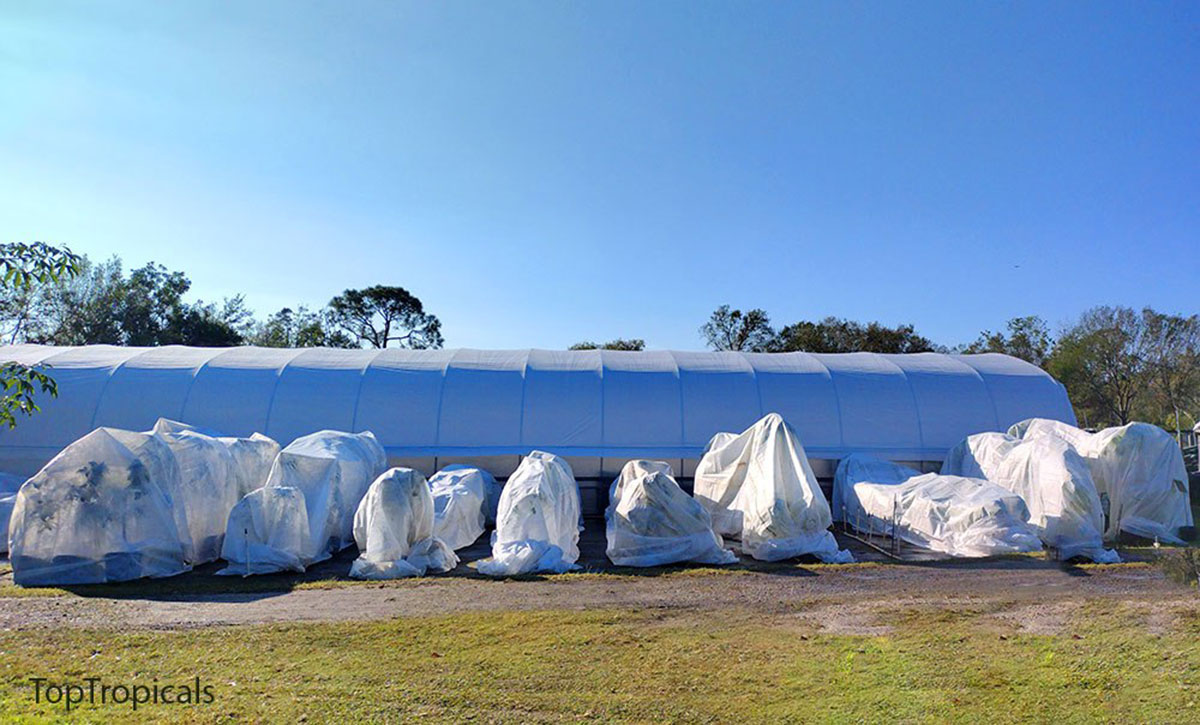
Covering  large  mango  and  avocado  trees  in  pots

Covering large mango and avocado trees in pots at TopTropicals during cold nights

GADGETS AND TOOLS THAT HELP

  • Indoor helpers: LED lights, small heaters, bottom-heat mats, timers.
  • Outdoor helpers: frost cloth rolls, mini greenhouses, non-LED Christmas lights or small incandescent lights, smart thermometers.

Always keep electrical safety in mind, especially if you are using extension cords outdoors. Use only weather-rated cords, keep all connections off the ground, and protect plugs from moisture. Make sure heaters and lights are stable, secured, and never touching fabric covers. A few minutes of safety check can prevent a dangerous situation on a cold, wet night.

And if you want to keep plants strong through winter, add Sunshine Boosters to your watering routine. It is gentle, safe in cold weather, and gives plants an extra edge.

AFTER THE COLD PASSES

In the morning, uncover plants. Leaving covers on during the day can trap heat and cook the tender new growth, especially under the sun. The only exception is true frost cloth designed for all-day use, which allows air, light, and moisture to pass through. Regular blankets, sheets, and plastic must come off as soon as the sun rises.

Do not cut anything yet. A plant can look completely dead after a freeze, but many branches are still alive under the bark. Cutting too soon removes wood that would recover on its own. Wait until new growth begins in spring. That is when you can see exactly which branches are truly dead.

Use the scratch test. Gently scratch the bark with your nail or a small knife. If the layer underneath is green, the branch is alive. If it is brown and dry, it is likely dead. But even then, wait until warm weather to be sure, because sometimes only the tips die back while the lower part of the branch survives.

Once the weather stabilizes, resume light feeding. Plants coming out of cold stress need gentle support, not heavy fertilizer. A mild liquid feed like Sunshine Boosters helps them rebuild roots and push new growth without burning tender tissue.

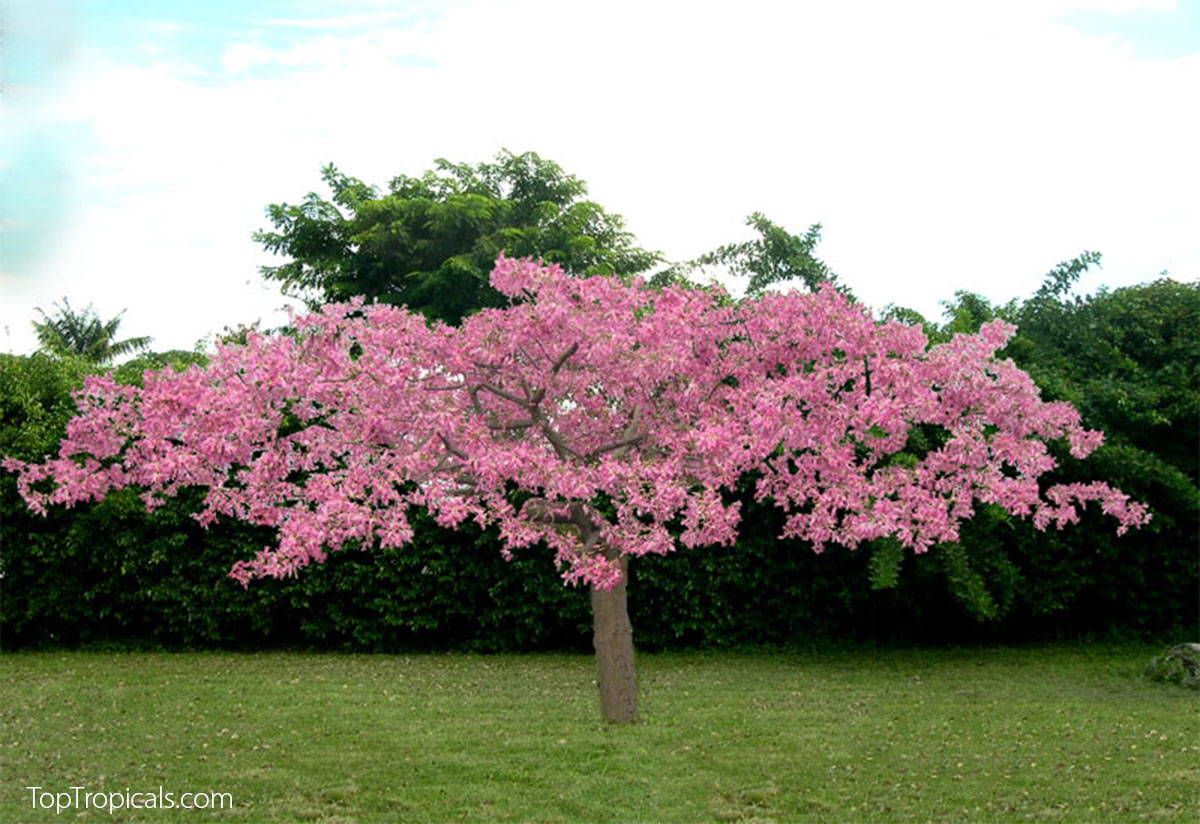
Dwarf  Ceiba  Pink  Princess  in  full  bloom

Dwarf Ceiba Pink Princess (Grafted) - a unique compact cultivar covered with pink flowers in Winter. Watch short video: How this breath-taking flowering tree stays so compact.

WHAT NOT TO DO

  • Do not prune right after a freeze.
  • Do not overwater cold soil.
  • Do not fertilize heavily until spring.
  • Do not leave covers on in full sun.

CLOSING THOUGHT

Your tropical garden can survive any cold night if you prepare right. Cold snaps always feel stressful in the moment, but once you know your plants, have the right supplies, and follow a simple plan, it becomes routine. A few minutes of preparation before dark can save months of growth and keep your collection healthy all winter.

Frost cloth is the true workhorse of cold protection: it keeps heat in, keeps frost off, and will not suffocate plants the way plastic or blankets can. Having a few rolls ready means you never have to scramble at the last minute. Sunshine Boosters give your plants gentle support during the colder months so they stay strong enough to bounce back quickly when warm weather returns.

A little planning now will pay off in spring, when your mango, banana, citrus, and all your favorite tropicals come back happy and ready to grow.

🛒 Shop Garden Supplies

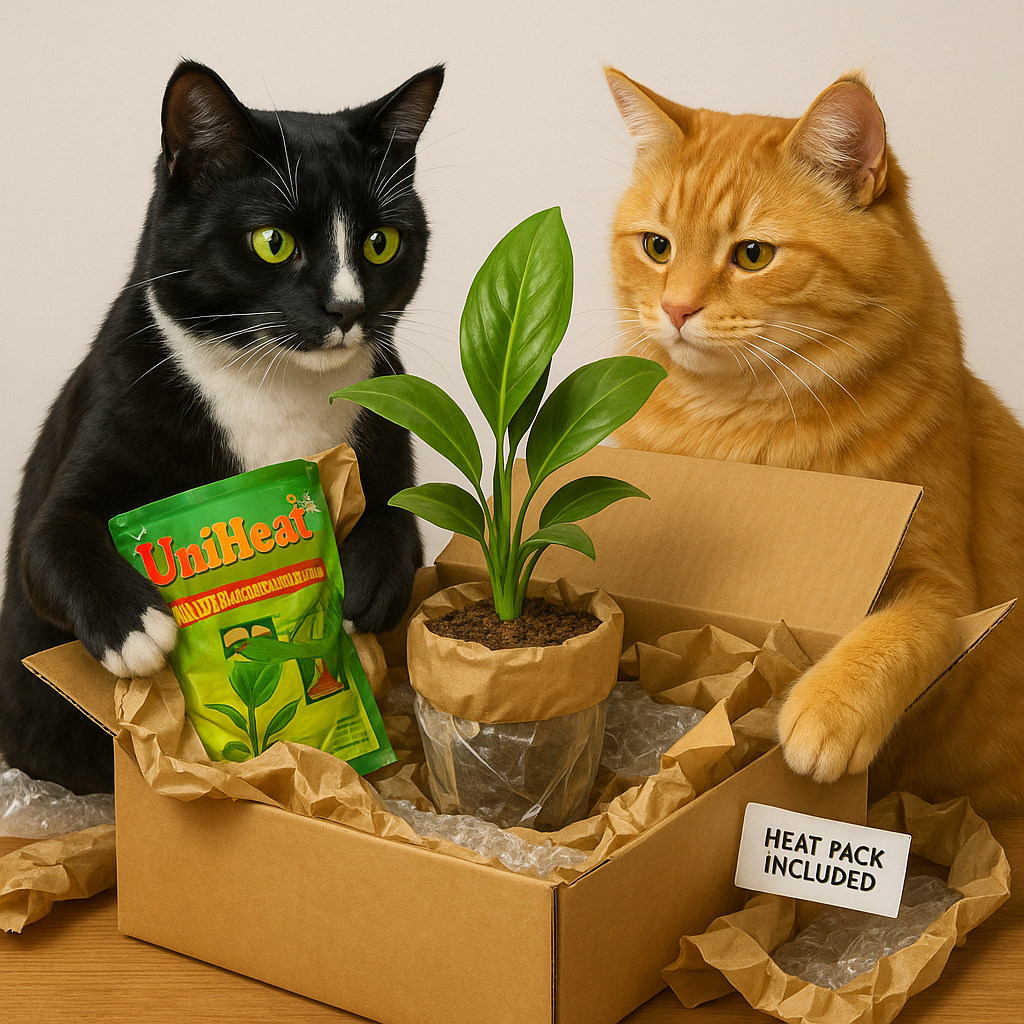
Add Heat Pack to your plant order

Cats  adding  heat  pack  to  plant  shipment

Date: 3 Mar 2025

What Fertilizer to Use Now and How?

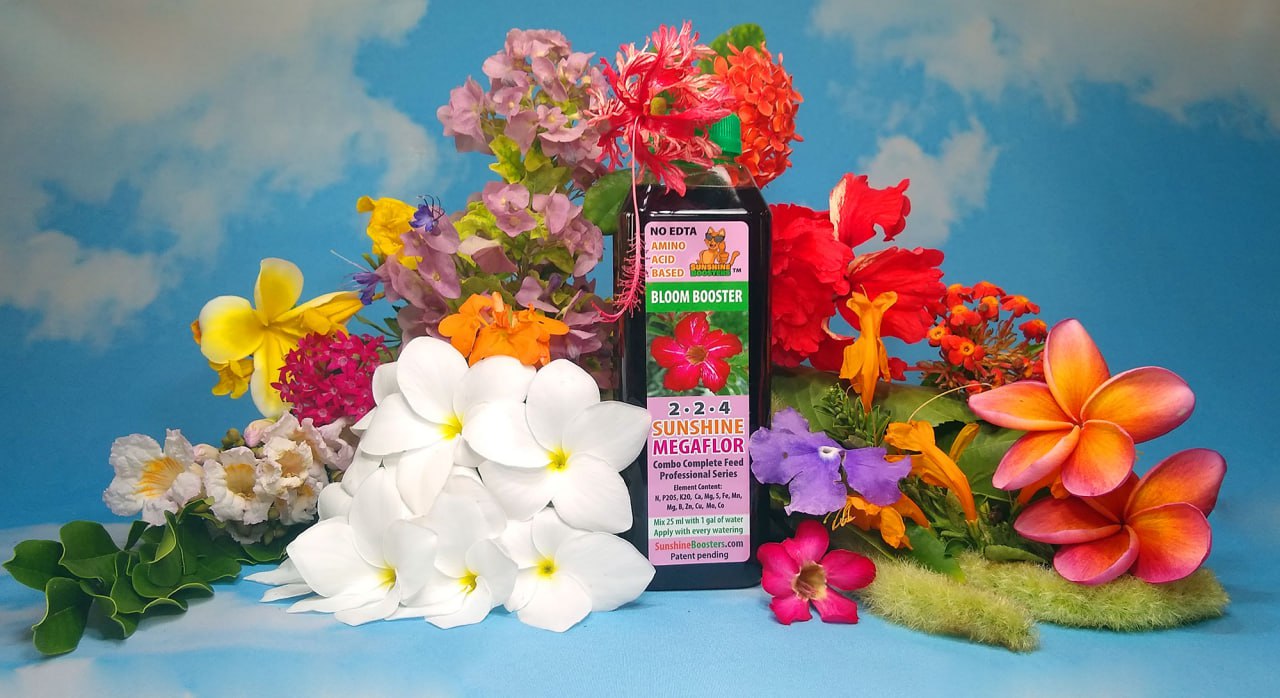
Sunshine Megaflor - Bloom Booster

Sunshine Megaflor - Bloom Booster

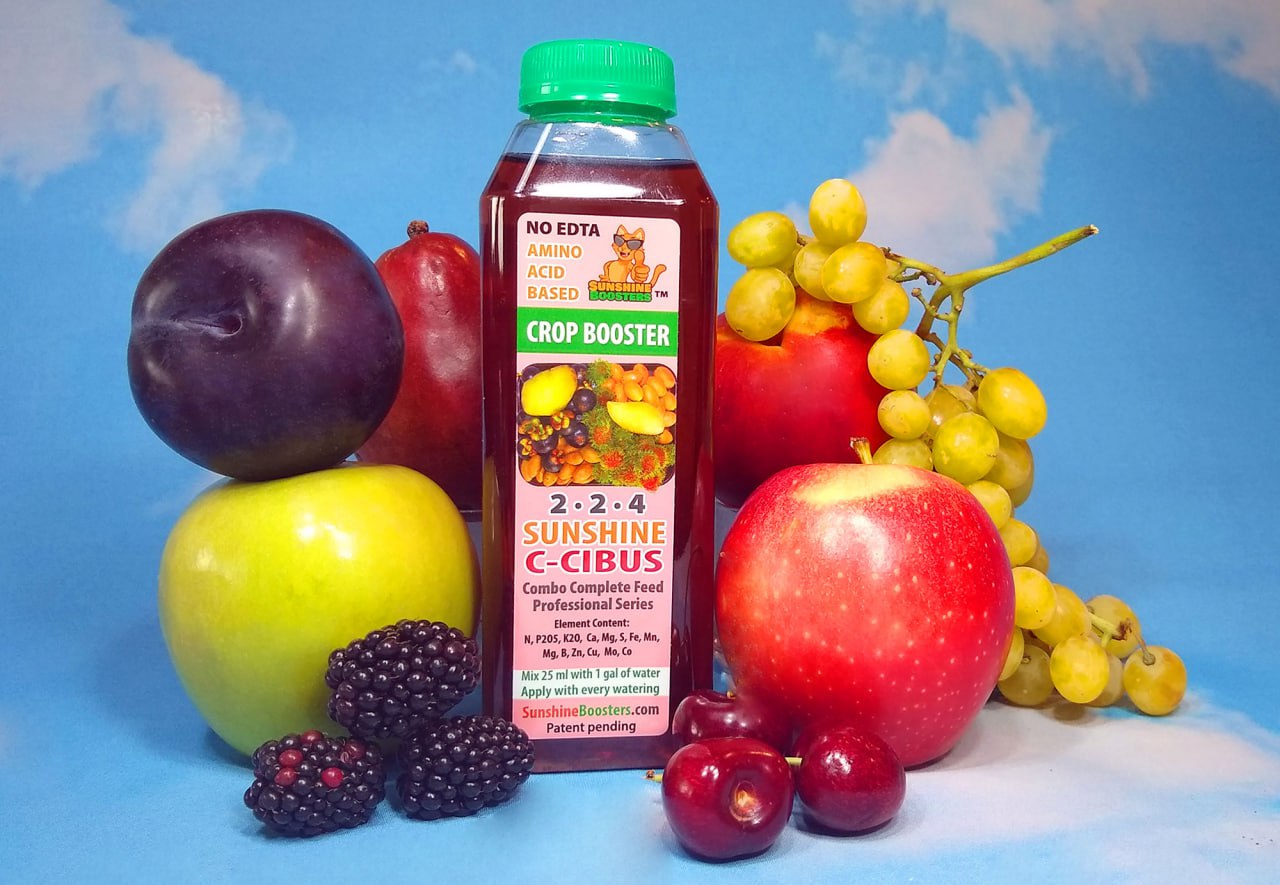
Sunshine C-Cibus - Crop Booster

Sunshine C-Cibus - Crop Booster

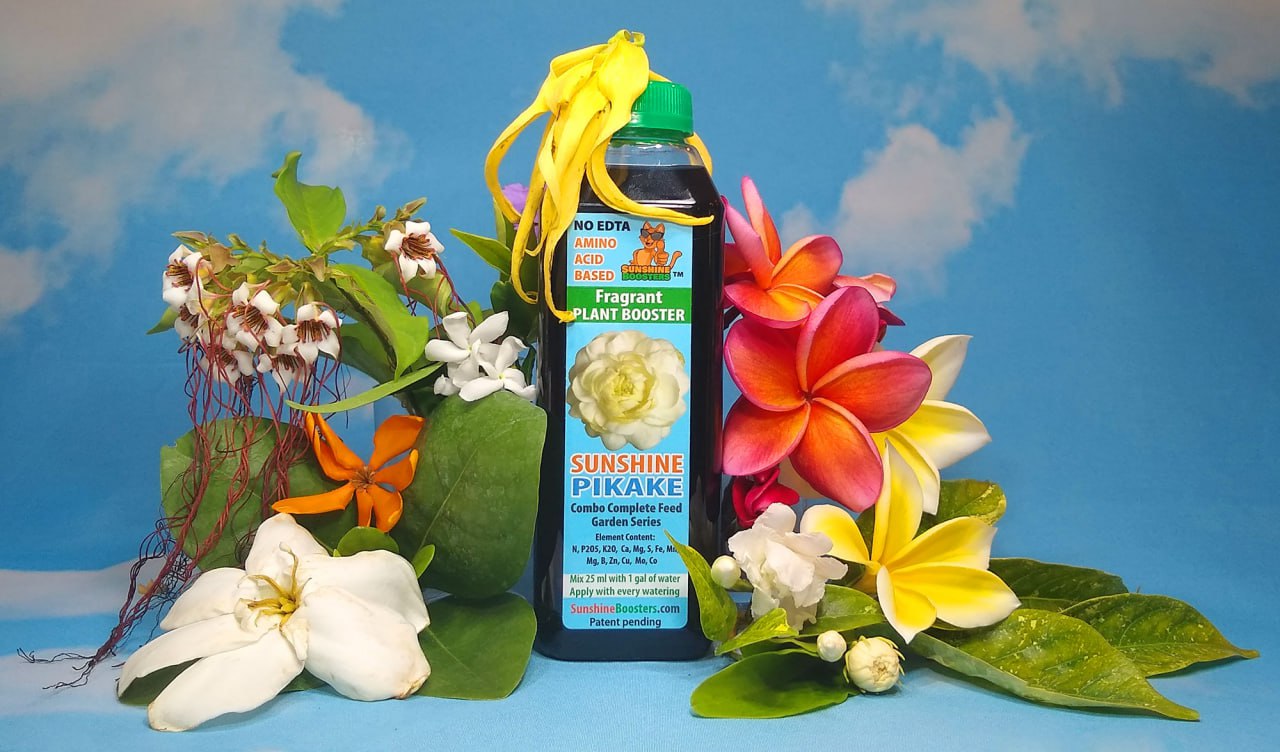
Sunshine Pikake - Fragrant Plant Booster

Sunshine Pikake - Fragrant Plant Booster

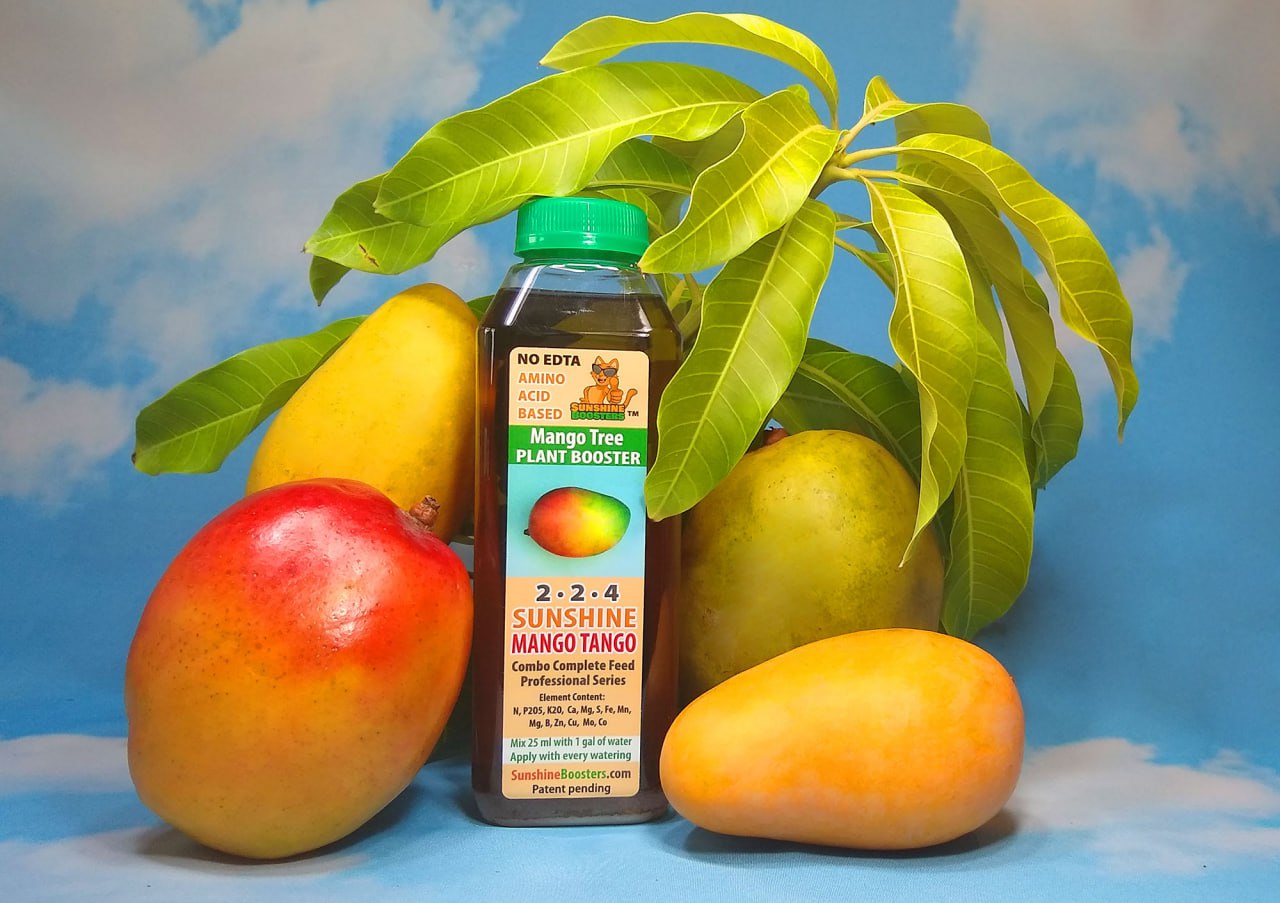
Sunshine Mango Tango for Mango and Avocado trees

Sunshine Mango Tango for Mango and Avocado trees

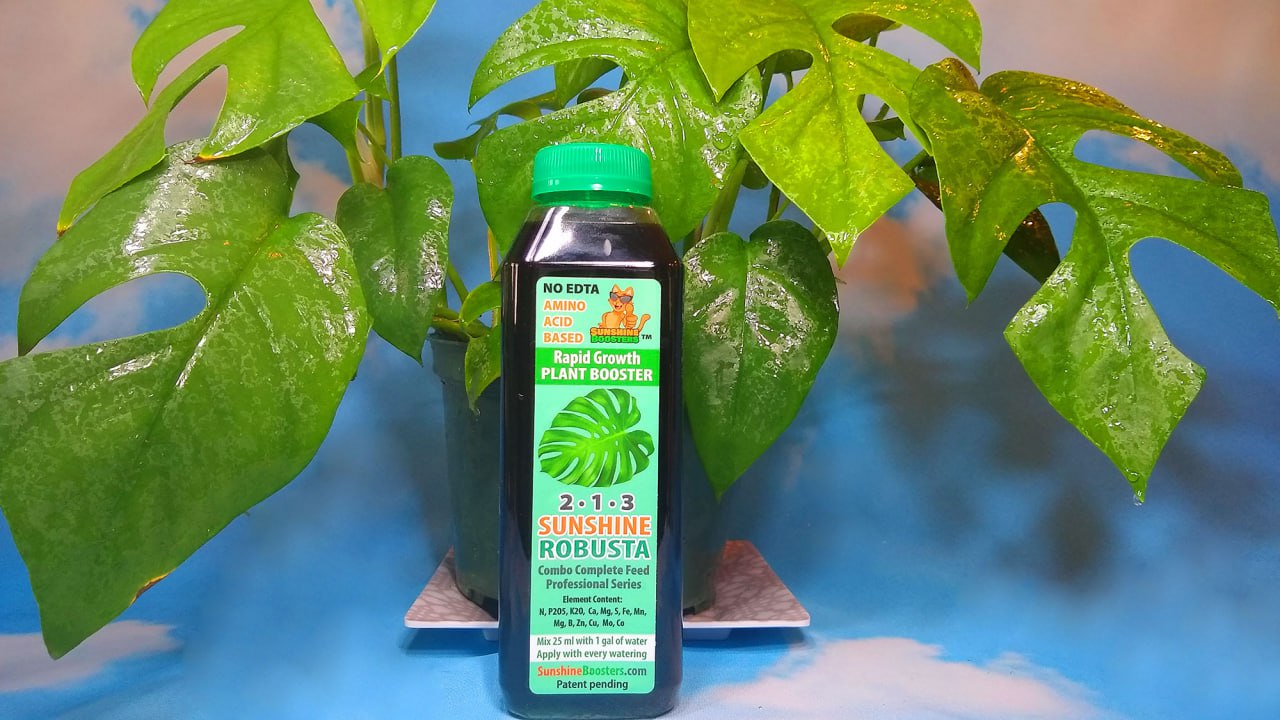
Sunshine Robusta - Rapid Growth Booster

Sunshine Robusta - Rapid Growth Booster

🍲 What Fertilizer to Use Now and How?
Part 2. Macro elements, or everyday plant food


Sunshine Booster for different types of plants can be applied as often as with every watering.

✔️ For Rapid Growth


Sunshine Robusta - Rapid Growth Booster: general fertilizer for both foliage plants and small starters that need an extra boost.

✔️ For Flowers


Sunshine Megaflor - Bloom Booster: boosts flowers on established plants; and Sunshine Pikake - Fragrant Plant Booster: best for fragrant flowers.

✔️ For Fruit Trees


Sunshine C-Cibus - Crop Booster: contains all necessary elements for fruit trees and their production.
Sunshine Mango Tango - specifically formulated for Mango and Avocado trees, and Sunshine Citron - ideal for citrus trees.

✔️ For Tender Perennials


Sunshine Orchidasm - Orchid Total Feed and Sunshine Ananas - Pineapple and Bromeliad Booster: mild formulas for these tender perennials.

✔️ Microelement Supplements Are a Must


Besides macronutrients, plants need additional microelements, just like humans need vitamins. We will explain in details about micro-elements in our next post 🔽

🛍 Shop Sunshine Boosters

#Fertilizers #How_to

🔴 Join 👉 TopTropicals

Date: 15 Jan 2021

Healthy Plants: Q&A from Mr Booster

New Boosters for the New Year!
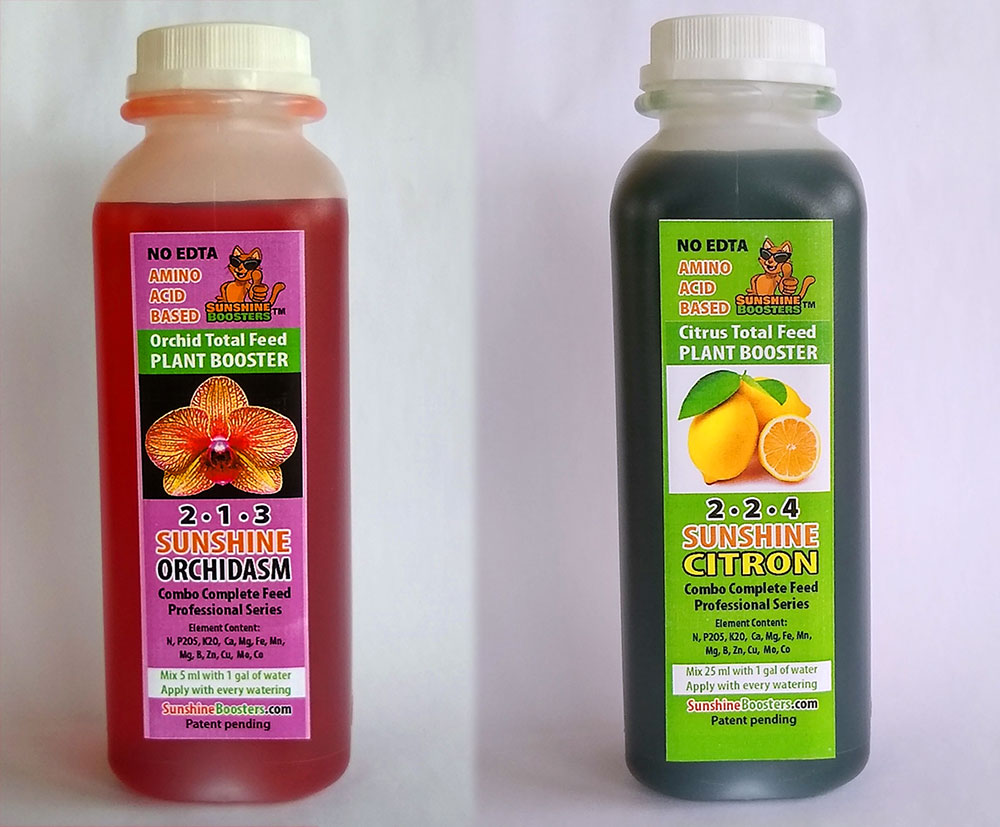
Sunshine Total Feed: Orchidasm and Citron

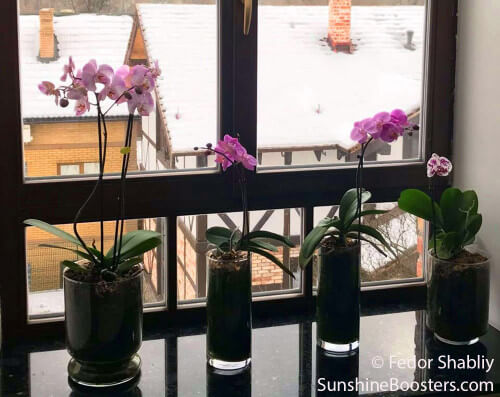
How to grow everblooming orchids?

Q: I ended up with a large collection of orchids that I was given as presents... They grow well but unfortunately after the showy blooms were gone, I don't see any more flowers, just green leaves. What do I need to do to make them bloom again? Should I fertilize them with Azalea bloom booster?

A: Orchids culture is different from garden ornamental plants. First big difference, they are epiphytes, growing in a loose bark medium rather than soil, and benefit from daily mist. Second difference is a type of fertilizer. You can not use a regular garden fertilizer on orchids, because they are very sensitive to salts. Orchids need special, acidic type of fertilizer, very mild in action.
Luckily, Sunshine Boosters formulas are exactly what orchids need! They are amino-acid based, have very mild formulas, and do not create nutrient lock up (building up salts is one of the biggest enemies of tender orchids).
A new Sunshine Boosters Orchidasm TotalFeed is scientifically balanced orchid food that contains all necessary nutrients, including micro-elements, for healthy, happy, vigorous orchids. It can be used as often as daily with every foliage spray. From our testing experience, after using Orchidasm Booster, orchids not only got happy and thriving - they also bloom more often - up to several times a year, shooting new flower spikes one after another! (while normal blooming cycle for most orchids is once a year). It gets even better - the flower display lasts twice longer!
To enjoy these beautiful flowers year around - treat them with Love, give them some Orchidasm!

See more information with pictures in Sunshine Boosters Orchid Blog

Secrets of a healthy Citrus tree

Q: We planted several citrus trees in our yard - Meyer Lemon, Grapefruit and Blood Orange. The trees came from the store full of flowers and even had a few fruit, but a year after planting - no more flowers! The old leaves are green, but new growth doesn't look healthy, leaves are yellowish and have spots, maybe eaten by bugs (?), and how do we get them to fruit?

A: Citrus plants are not the easiest trees to grow; they are susceptible to various diseases, pests, and deficiencies, especially in areas with high humidity/rainfall like Florida. Fungi, viruses, leaf minors, chlorosis - this is not a complete list of citrus common problems. In commercial groves, these conditions are kept under control by using harsh chemicals on solid schedule.
For home gardeners, growing citrus trees may become a challenge. Many people don't want to use harsh chemicals on their edibles; and those who do, may not always have time to apply treatments on a professional schedule. So as much as we all love a fresh juicy orange, growing your own may become quite a pain!
Sunshine Citron TotalFeed is your simple, eco-safe solution to a healthy looking, productive citrus tree with organic fruit! Amino-acid based formula provides all necessary elements to strengthen the tree and make it resistant to possible problems.
Did you know that treatment of leaf chlorosis (yellow leaves with dark green veins), commonly treated with iron supplements, in fact requires a complex combination of nutrients - both balanced NPK and micro-elements?
Use Sunshine Citron in combination with Sunshine GreenLeaf and Sunshine SuperFood and never see yellow chlorotic leaves again!
Apply Sunshine Epi on regular basis (every 2 weeks) and help your tree boost its immune system and stay virus-free.
Add Sunshine Honey, and you will have large, juicy fruit that are much sweeter and more flavorful than those from the store! All these boosters are compatible with each other, and perfectly natural. Eat your fruit safely and enjoy...

Read more about treating citrus tree defficiencies in Sunshine Boosters Citrus Blog.

Date: 2 May 2026

What makes Sunshine Boosters different

What makes Sunshine Boosters different

What makes Sunshine Boosters different

What makes Sunshine Boosters different

If your plants look stressed, slow, or inconsistent, the issue might not be your care - it might be how you're feeding them. Most fertilizers are harder to use than they should be. Once you understand why, everything starts to make sense.

Why fertilizers are so confusing?

If you've ever stood in front of a shelf full of fertilizers thinking "what do I even pick?" - you're not alone.
Most feeding programs are a mess. Different brands, different formulas, different schedules. One for growth, one for bloom, one for micros, one more "just in case".
And somehow it still feels like guesswork.
Easy to overfeed. Easy to underfeed. Easy to waste money.
That's exactly the problem Sunshine Boosters were built to solve.
The formulas are balanced and mild, so you can use them regularly without stressing about mistakes.
Now here's where it gets interesting.

The problem with traditional fertilizers

Most traditional fertilizers weren't made for how we actually grow plants today. Dry fertilizers are built for large field use. They often carry excess salts and don't work well in containers or soilless mixes. Many don't even include enough trace elements.
And over time, they can build up in the soil.
Sunshine Boosters works differently.

Why liquid feeding wins

First - it's liquid.
Plants don't eat nutrients, they drink them. Liquid feeding means nutrients are available right away. Every watering becomes feeding. No waiting, no uneven supply.

Amino-acid chelation - the real difference

Second - the way nutrients are delivered is completely different.
Most fertilizers use synthetic chelators like EDTA. They keep nutrients stable, but plants have to spend energy to use them.
Sunshine Boosters use amino-acid chelation instead.
That means nutrients come in a form plants already recognize and use naturally. Less effort for the plant, more energy for growth, flowers, and fruit.
And there's no salt buildup over time.

Low salt index - better water uptake

Speaking of salts - this is a big one.
High salt levels in fertilizers actually make it harder for plants to absorb water. That's why plants can look stressed even when the soil is wet.
Sunshine Boosters has a low salt index.
Less resistance, better water flow into the roots, better hydration, stronger plants.

Faster growth without the risk

Put it all together and you get faster growth, stronger structure, more flowers and fruit - without the usual risk of burning or overdoing it.
Because the nutrient levels are balanced and not overly concentrated, they do not affect the natural taste of fruits and edibles.
The products are also safe for regular use and friendly to pollinating insects, which is important for fruit production.

Feeding made simple

And the best part?
It's simple.
Mix Sunshine Boosters with water. Use it when you water. That's it.

Stay with us - next we'll break down how different formulas match different plant needs, so you can get even better results. More...

Get your plants real food

"
Learn more:
This changes how you feed your plants
Sunshine Boosters: Complete Plant Nutrition System
Frequently Asked Questions: Plant Nutrition & Fertilizer
Green Magic + SUNSHINE Boosters: A Complete System for Strong Plant Growth
Spring Nutrition Strategy: Is Your Garden Starving?
How to keep your house plants beautiful all year by feeding them right
Why do you need Sunshine Boosters?
Which dry fertilizer to use - slow release or controlled release?
Green Magic effect: before and after
The SECRET growers never tell you: simple trick how to bring plants back to life and keep green
" What are Sunshine Boosters

#Discover #Fertilizers #How_to

Join TopTropicals