Garden Blog - Top Tropicals

Date: 26 May 2026

♊ Gemini Season Starts. We Are Five Days Late. Very Gemini.
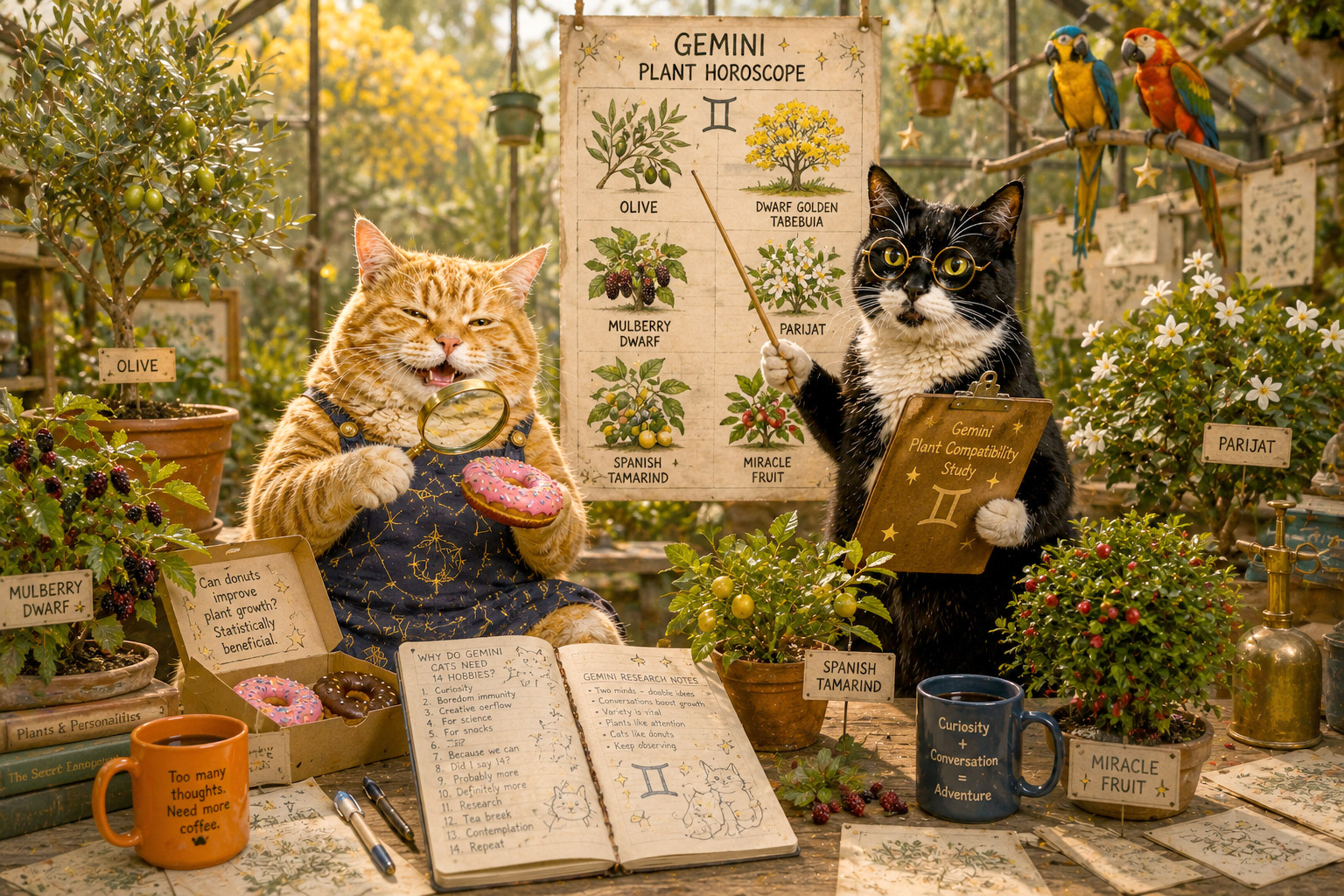
Smokey  and  Sunshine  with  Gemini  tropical  plants  in  a  whimsical 
 greenhouse
Sunshine: I once met a girl and asked what she does. She said she assembles gyroscopes. I told her I don't believe in gyroscopes.
Smokey: You meant horoscopes.
Sunshine: That is what I said.
Smokey: You said gyroscopes.
Sunshine: Same thing.
Smokey: One predicts your future. The other stabilizes aircraft.
Sunshine: I don't believe in aircraft either.
Smokey: She left, didn't she.
Sunshine: She said she had to go assemble something.

♊ Gemini season started on May 21. Today is May 26 But honestly? That is not a problem. That is actually very Gemini. Gemini probably got distracted, opened three browser tabs, started a new hobby, forgot what it was doing, and came back five days later with a notebook full of ideas and zero apologies. So here we are.

Why these plants and not others

No, there is no scientific proof that olive trees belong to Gemini. We checked. The olives refused to comment. But if you are going to assign plants to zodiac signs — and we are — then Gemini deserves plants with intelligence, motion, surprise, fragrance, and a little chaos. Gemini is the sign of curiosity, conversation, and dual natures. It gets bored easily and talks to everyone at the party. These plants were picked because they fit that energy. And also because they are genuinely good plants worth growing, which Smokey insisted we mention.

Olive (Olea europaea)
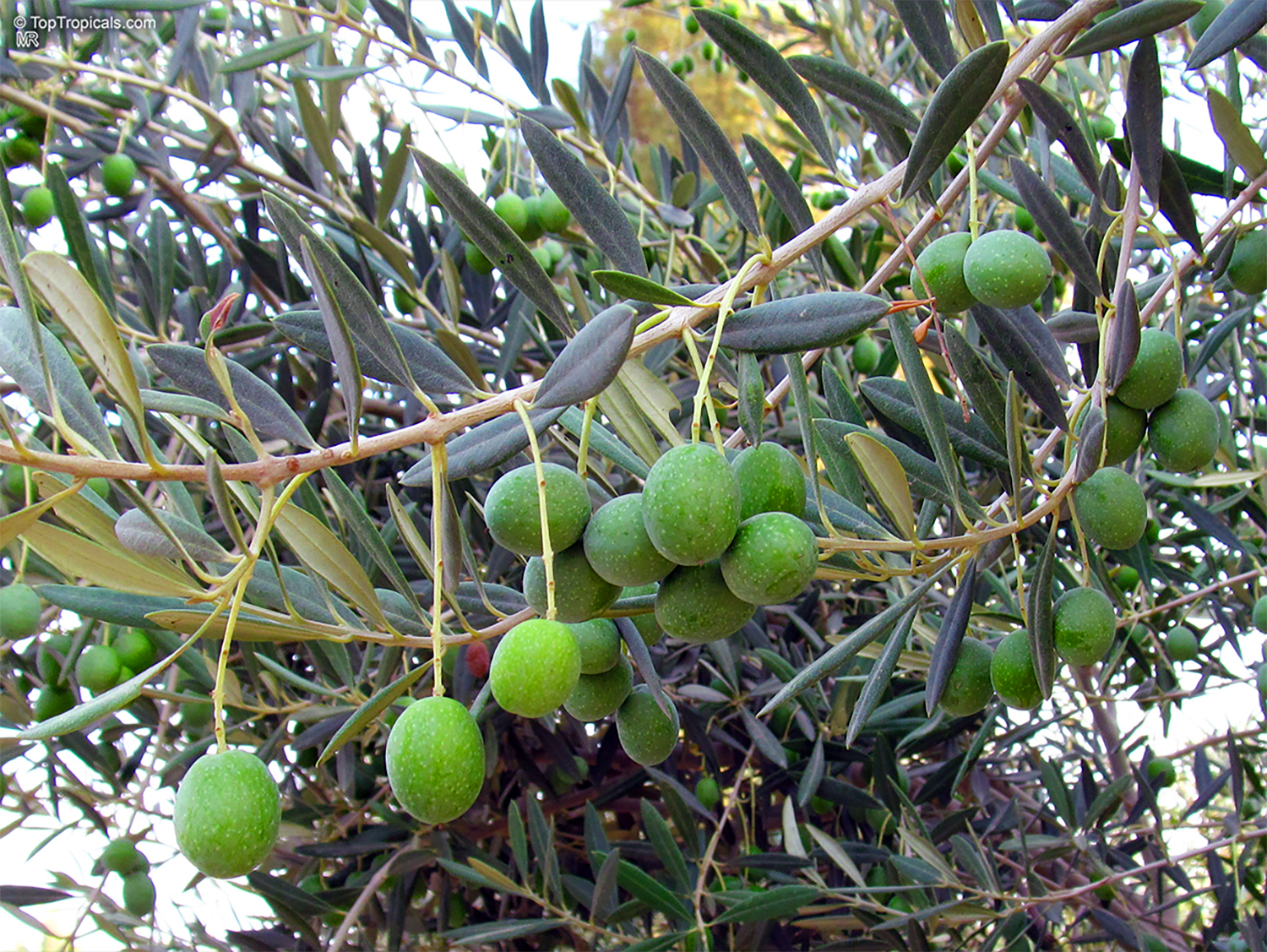
Close-up  of  an  olive  tree  branch  laden  with  clusters  of  green  olives 
 among  narrow  silvery-green  leaves.  The  fruit  is  ripening  on  the  tree  and 
 hanging  from  slender 
 stems.

Clusters of green olives developing on an olive tree branch. Olive trees are evergreen, drought-tolerant, and have been cultivated for thousands of years for both their fruit and the oil produced from it.

Olive is the thinking plant of this group. Ancient, silver-leaved, and quietly dramatic, it belongs to Gemini because Gemini loves history, long conversations, and plants that look like they know something you don't.

If you are growing olive in a container — which works very well — give it full sun, fast-draining soil, and a firm commitment to not overwatering it. Olive does not want wet feet. It wants to think in dry conditions, like a philosopher in a warm courtyard.

Smokey: Olive represents thousands of years of cultivation and human civilization.
Sunshine: And snacks with much better branding than they get credit for.

📚 More from garden blog

🛒 Shop olive trees

Dwarf Mulberry (Morus sp.)

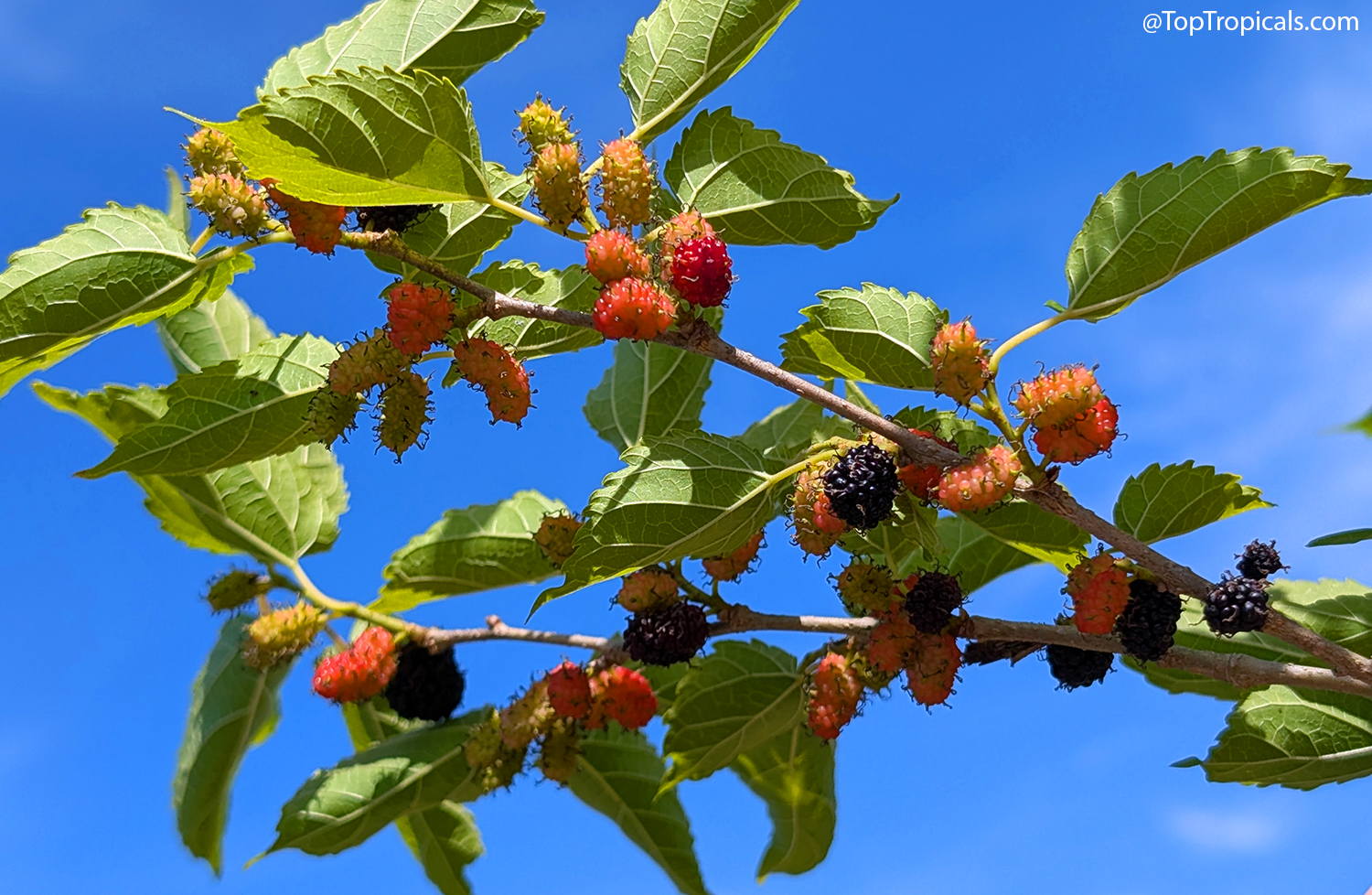
Branch  of  a  Dwarf  Everbearing  Mulberry  tree  displaying  fruit  in  various
    stages  of  ripening,  from  pale  green  and  pink  to  deep  purple-black,  against 
 a  bright  blue 
 sky.

Dwarf Everbearing Mulberry produces fruit over an extended season, often carrying berries in multiple stages of ripeness at the same time. The sweet, blackberry-like fruit is a favorite of both gardeners and wildlife.

Mulberry is Gemini in motion. It grows fast, produces generously, and absolutely refuses to be boring. A standard mulberry will take over your yard before you finish reading this sentence. A dwarf mulberry, however, is patio-friendly, container-happy, and still delivers fruit, birds, and mild garden chaos on schedule.

Prune after fruiting to keep the shape. Full sun. Large pot if you're growing in a container. This is the plant for people who want results and do not enjoy waiting.

Smokey: Efficient growth rate. Edible output. Compact habit. Reasonable choice.
Sunshine: Finally, a tree with a snack schedule.

📚 More from garden blog

🛒 Shop mulberry trees

Parijat (Nyctanthes arbor-tristis)

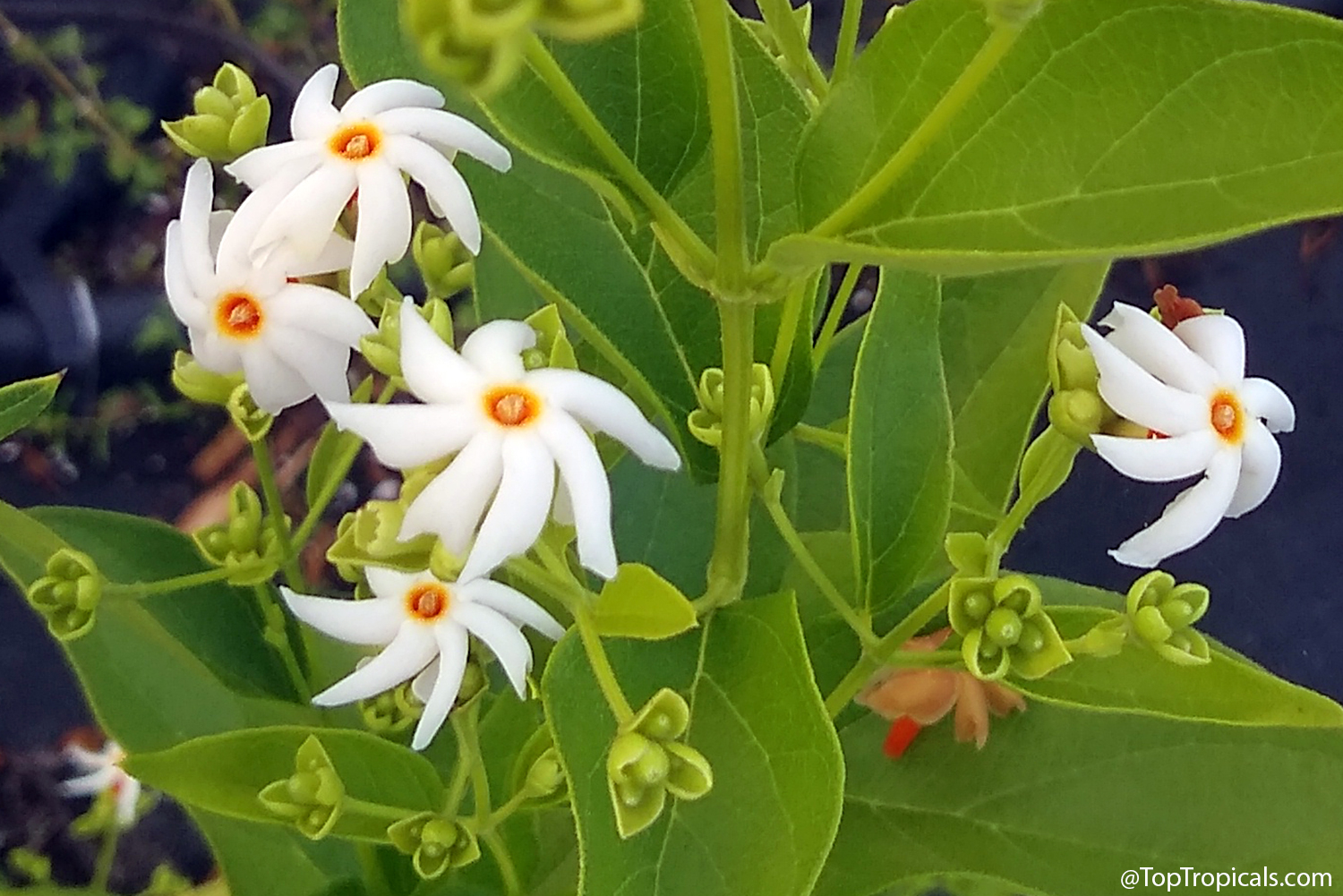
Close-up  of  Parijat  flowers  (Nyctanthes  arbor-tristis)  with  white 
 pinwheel-shaped  petals  and  bright  orange  centers  surrounded  by  fresh  green 
 leaves  and  unopened  flower 
 buds.

Parijat, also known as Night-Flowering Jasmine, produces fragrant white flowers with vivid orange centers that open at night and often carpet the ground beneath the tree by morning.

Parijat belongs to Gemini's quieter, more poetic side. It blooms with small fragrant white flowers — orange centers, delicate petals — often at night. By morning, the flowers have fallen. They drop like little messages from the universe, which Sunshine finds meaningful and Smokey finds botanically interesting.

This one is for the gardener who wants something to actually stop and look at. Good in containers, good on a warm patio, needs decent light and warmth to do its best work.

Smokey: Night-blooming pattern. Fragrant ornamental. Grows well in warm climates.
Sunshine: It's a tree that leaves notes.

📚 More from garden blog

🛒 Shop parijat

Dwarf Golden Tabebuia (Tabebuia chrysotricha)
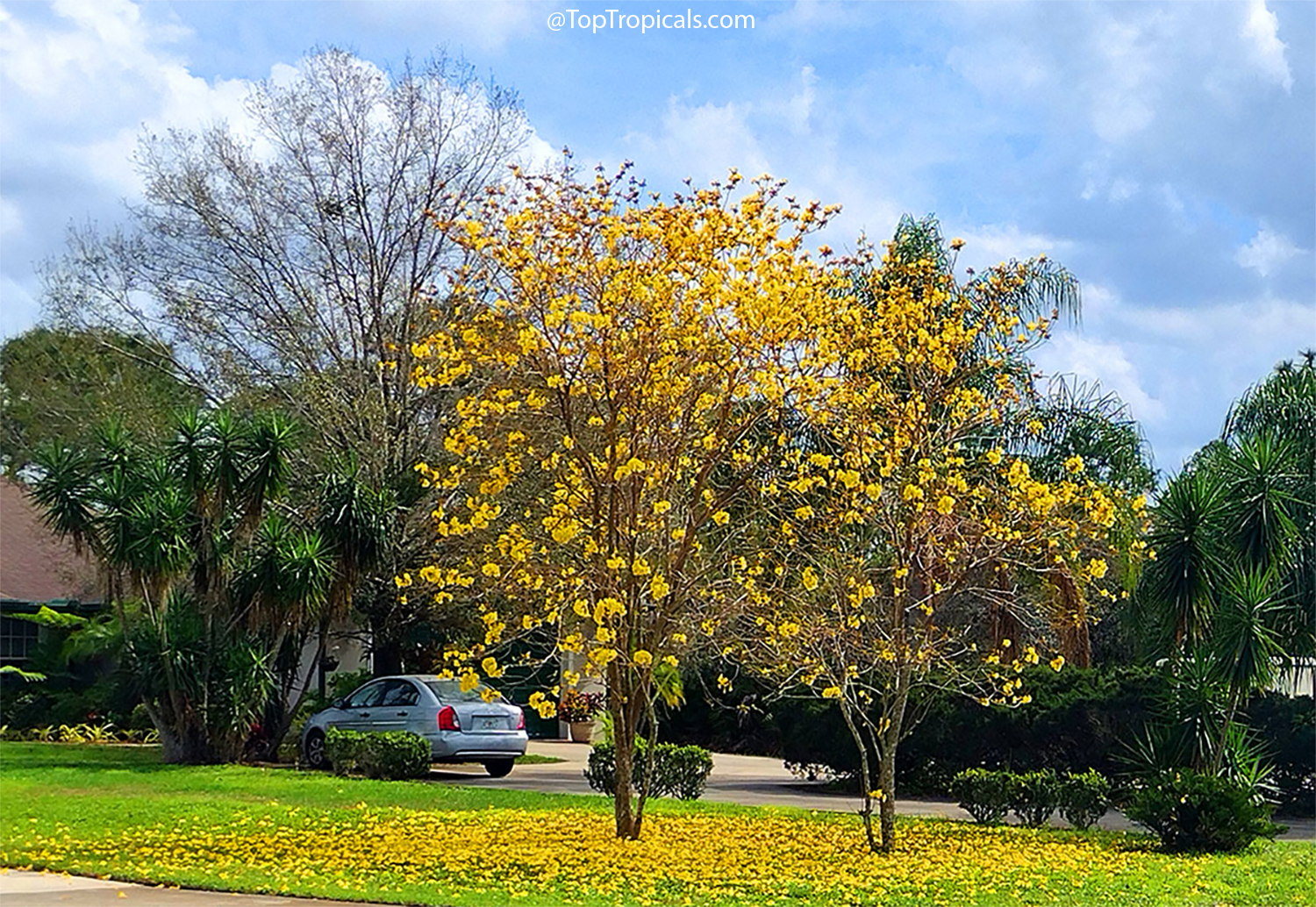
Dwarf  Golden  Tabebuia  tree  covered  in  bright  golden-yellow  flowers, 
 standing  in  a  lawn  beneath  a  blue  sky,  with  a  carpet  of  fallen  blossoms 
 surrounding  the 
 trunk.

Dwarf Golden Tabebuia puts on one of the most spectacular spring displays, covering its branches with brilliant golden flowers before the leaves emerge. The fallen blooms create a striking yellow carpet beneath the tree.

This is the Gemini show-off. Quiet for most of the year, then suddenly covered in golden yellow flowers like it just remembered it has an announcement to make.

Dwarf Golden Tabebuia is compact enough for a large container or a sunny entrance, but it needs strong light to bloom well. Give it sun. Give it room. Then step back and let it perform.

Smokey: Seasonal flowering response triggered by environmental conditions.
Sunshine: Botanical applause.

📚 More from garden blog

🛒 Shop Dwarf Tabebuia

Miracle Fruit (Synsepalum dulcificum)

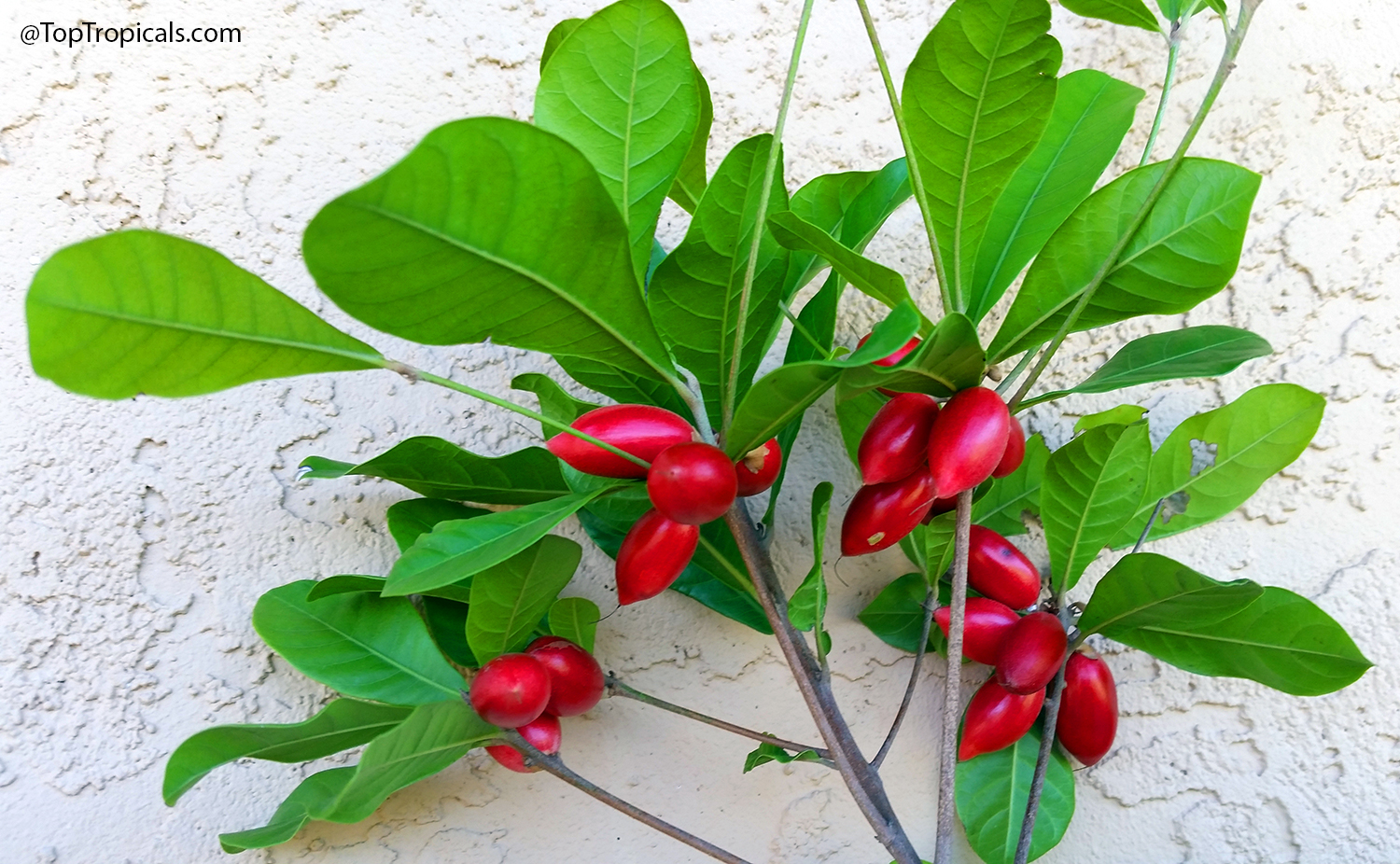
Clusters  of  bright  red  Miracle  Fruit  berries  growing  among  glossy  green
    leaves  on  a  compact  shrub.  The  elongated  fruits  stand  out  against  the  lush 
 foliage.

Miracle Fruit is famous for its unique berries, which contain miraculin - a natural compound that temporarily makes sour foods taste sweet. The attractive evergreen shrub produces bright red fruit and is well suited to containers and small gardens.

Miracle Fruit belongs on this list because it is, without argument, the most Gemini plant in existence. It does not taste like much on its own. But eat one berry and everything sour suddenly tastes sweet. Lemons taste like lemonade. Lime juice tastes like candy. A plain piece of sourdough becomes something you would pay extra for. The fruit literally changes how you experience everything that comes after it.

If that is not Gemini energy — dual nature, transformation, making you see the same thing two completely different ways — nothing is.

Miracle Fruit is a slow grower that likes warmth, humidity, acidic soil, and protection from cold. It does well in containers, which is good news because it genuinely hates frost. Keep it in a pot, bring it in when temperatures drop, and give it filtered light or morning sun rather than harsh afternoon exposure.

Smokey: The active compound is miraculin. It binds to taste receptors and distorts sour perception at low pH. Temporary effect, roughly thirty minutes to an hour.
Sunshine: It's a fruit that lies. Beautifully.

📚 More from garden blog

🛒 Shop Miracle Fruit

Spanish Tamarind (Wild Medlar, Vangueria infausta)
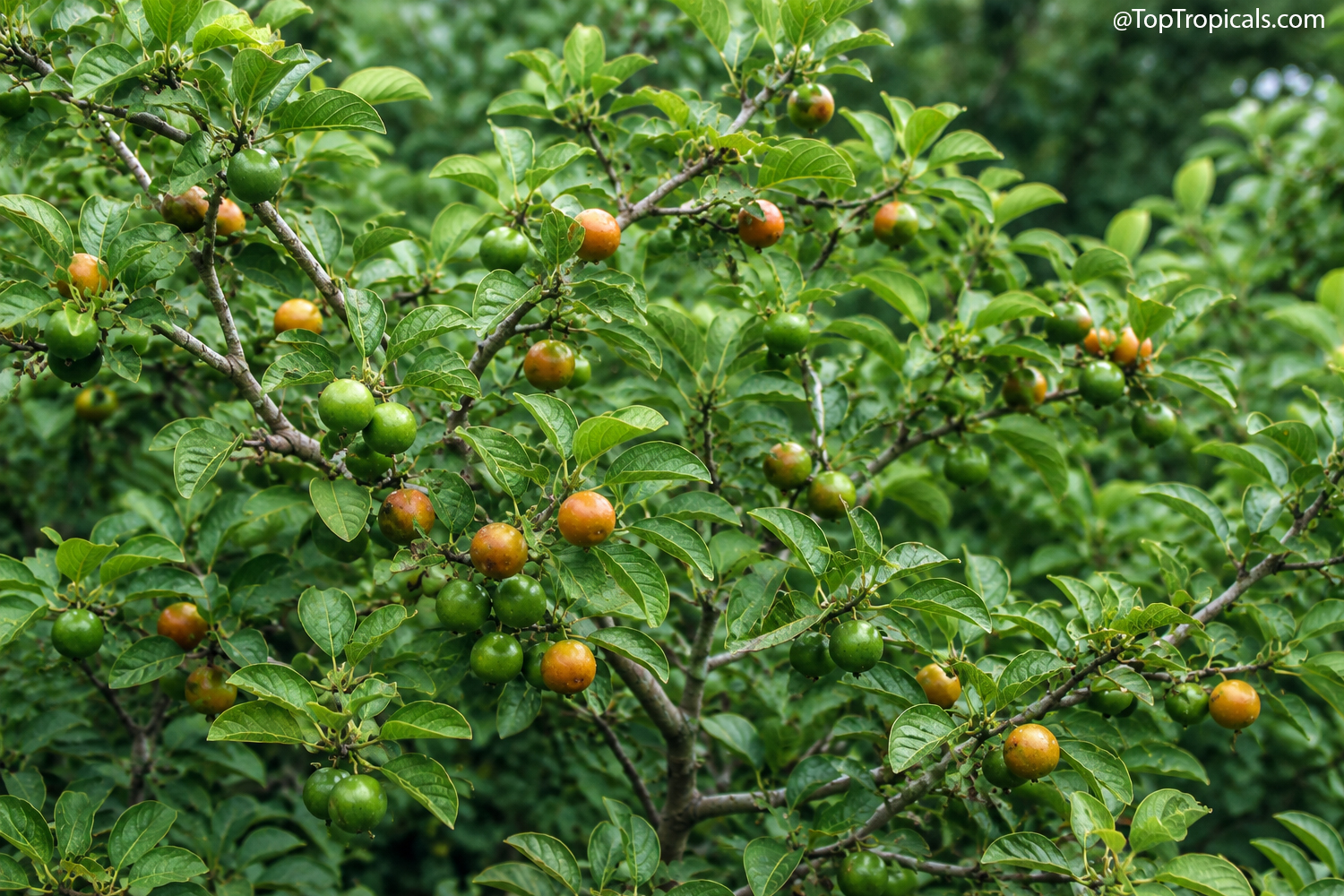
Spanish  Tamarind  (Vangueria  infausta)  tree  with  glossy  green  leaves  and
    clusters  of  round  fruit  in  various  stages  of  ripening,  from  green  to 
 golden-brown,  growing  on  branching  stems  in  a  lush  tropical  garden  setting.

Spanish Tamarind (Vangueria infausta) may be grown for its unusual fruit, but it also brings beauty to the garden with its lush foliage and heavy crops of ripening fruit. Green and golden-brown fruits often appear together on the tree, creating a colorful display.

Spanish Tamarind belongs to Gemini because it is unusual enough to start a conversation before anyone even knows what it is. The name alone does it. People will ask. You will explain. The fruit changes color as it ripens, the plant has collector appeal, and the whole thing feels like something you found in a book about plants that don't get enough attention.

This one needs warmth, sun, good drainage, and patience. It can live in a container with pruning. It rewards the gardener who is genuinely interested in something a little different.

Smokey: Tropical fruiting curiosity. Suitable for collectors.
Sunshine: Sounds like something I would order at a restaurant without reading the description.
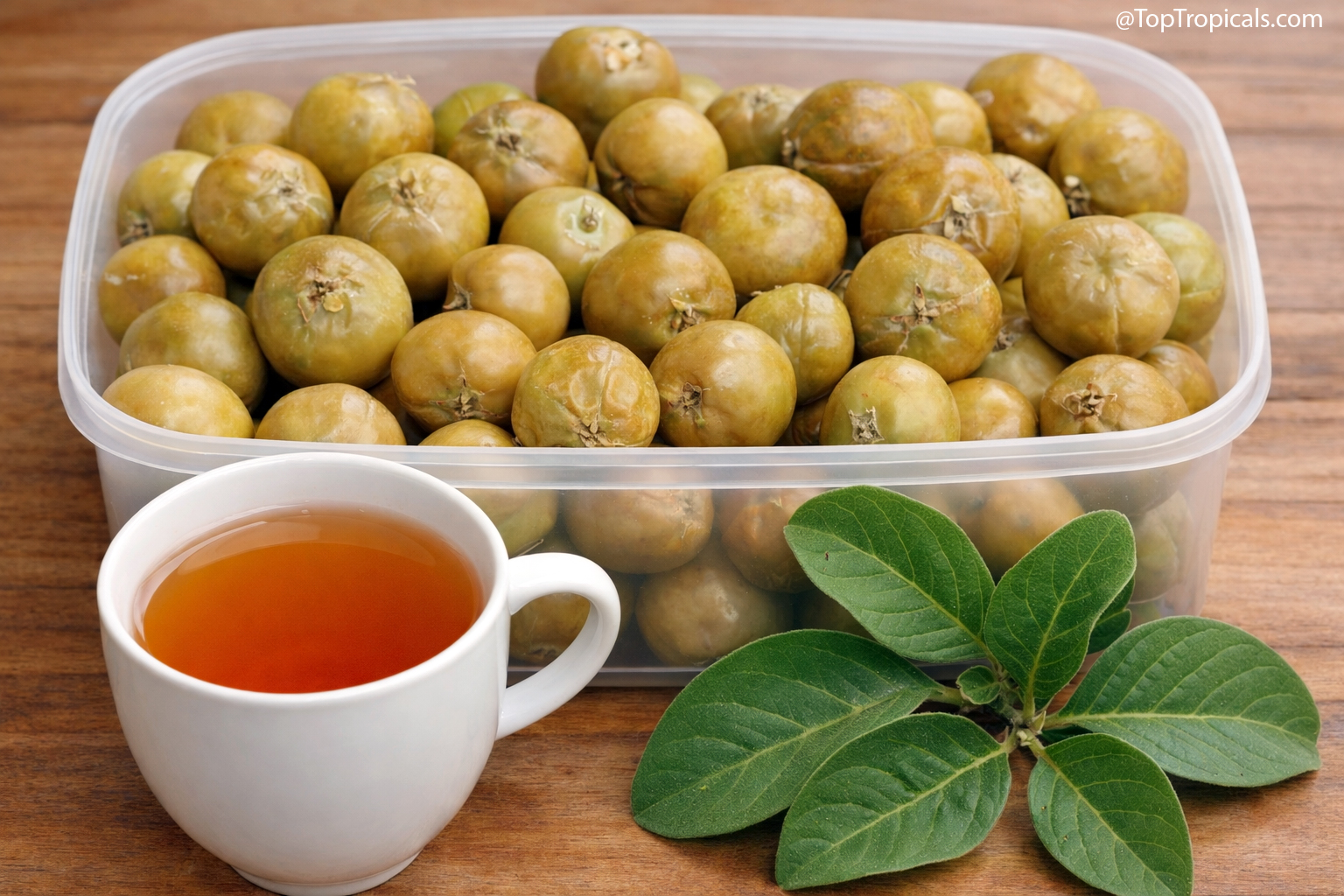
Container  filled  with  ripe  Spanish  Tamarind  (Vangueria  infausta)  fruit 
 on  a  wooden  table  beside  a  white  cup  of  amber-colored  fruit  tea  and  a  sprig 
 of  velvety  green  leaves.

One of the traditional uses of Spanish Tamarind (Vangueria infausta) is fruit tea. The ripe fruit can be dried and steeped to make a mild, refreshing drink rich in natural flavor, while the soft, velvety leaves have long been used in traditional herbal infusions.

📚 More from garden blog

🛒 Shop Spanish Tamarind

Horoscope aside — why these plants are actually worth growing

Even if Gemini energy has nothing to do with your garden, these plants offer real value: fruit, fragrance, flowers, container growing, and something interesting to look at or talk about.

  • Olive — full sun, excellent drainage, don't overwater, thrives in containers. Tropical varieties: USDA Zone: 8-10. Cold hardy to 15-20°F.
  • Dwarf Mulberry — full sun, large pot, prune after fruiting, fast results. USDA Zone: 8-11. Cold hardy to 20-25°F. Most mulberry varieties can be grown in USDA Zone 5-6 to 10 and cold hardy to 5°F.
  • Parijat — warmth, good light, patio or container, fragrant and ornamental. USDA Zone 9-11. Tolerates light freezing to about 30°F for short periods (mature plants). Young plants must be protected.
  • Dwarf Golden Tabebuia — strong sun, large container or sunny ground spot, compact but dramatic when it blooms. USDA Zone 9-11. Protect young plants from frost. Best flowering in full sun.
  • Spanish Tamarind — warmth, sun, drainage, patience, collector interest. USDA Zone 9-11. USDA Zone 10-11, possibly warm Zone 9b in protected microclimates. Protect from frost, especially young plants.
  • Miracle Fruit — warmth, humidity, acidic soil, filtered light, protect from frost. Best in containers. USDA Zone 10-11. Cold hardy only to about 40°F — bring it in well before first frost, not after.

Can you grow them in pots?

Yes. With the standard warning: a pot is not magic. Use a large container, fast-draining soil, full sun where the plant wants it, regular feeding with Green Magic conrolled-release fertilizer every 6 months and Sunshine Boosters - safe to use with every watering. Apply a bit of pruning when things get out of hand.

Smokey: A pot is just a smaller universe.
Sunshine: A pot is a drainage system with ambitions.

📅June gardening reality check

June is a good time to establish tropical and subtropical plants. The soil is warm, the days are long, and actively growing plants will take root faster than they would in cooler months.

👉 A few things to keep in mind:

  • Containers dry out fast even when rain increases. Check them. Don't assume rain did the job.
  • Don't let pots sit in standing water. Root rot is quiet until it isn't.
  • Feed actively growing plants. They are working hard and they need the input. We recommend Green Magic controlled release fertilizer during active growth (twice a year) and Sunshine Boosters for spray and daily watering year around.

    📚 More about fertilizers from our garden Blog

  • Watch new growth for pests. Tender leaves are the first target.
  • Prune lightly to shape if needed, but don't do heavy cutting in peak heat. Save that for after flowering or early in the season.
  • Mulch around in-ground plants to hold moisture, but keep mulch away from the trunk.

🌠 The stars don't care? Grow anyway!

Maybe the stars do not care whether your garden is a Gemini garden. Maybe olive trees are not receiving transmissions from Mercury. But a garden full of fruit, fragrance, flowers, and strange little stories is still a very good idea.

Smokey: That is the first reasonable conclusion in this entire article.
Sunshine: Second. The donut research was also important.

Happy Gemini gardening season from all of us!
🛒 Shop tropical fruit and flowers

🎤 NEW: Interview With Smokey & Sunshine

Date: 3 Mar 2025

What Fertilizer to Use Now and How?

Sunshine Boosters Microelement Supplements

Sunshine Boosters Microelement Supplements

🍲 What Fertilizer to Use Now and How?
Part 3. Micro elements


✔️ Microelement Supplements Are a Must


Besides macronutrients (daily plant food), plants need additional microelements, just like humans need vitamins. Be sure to apply these supplements along with your regular plant food:

✔️ For Green Leaves and Health


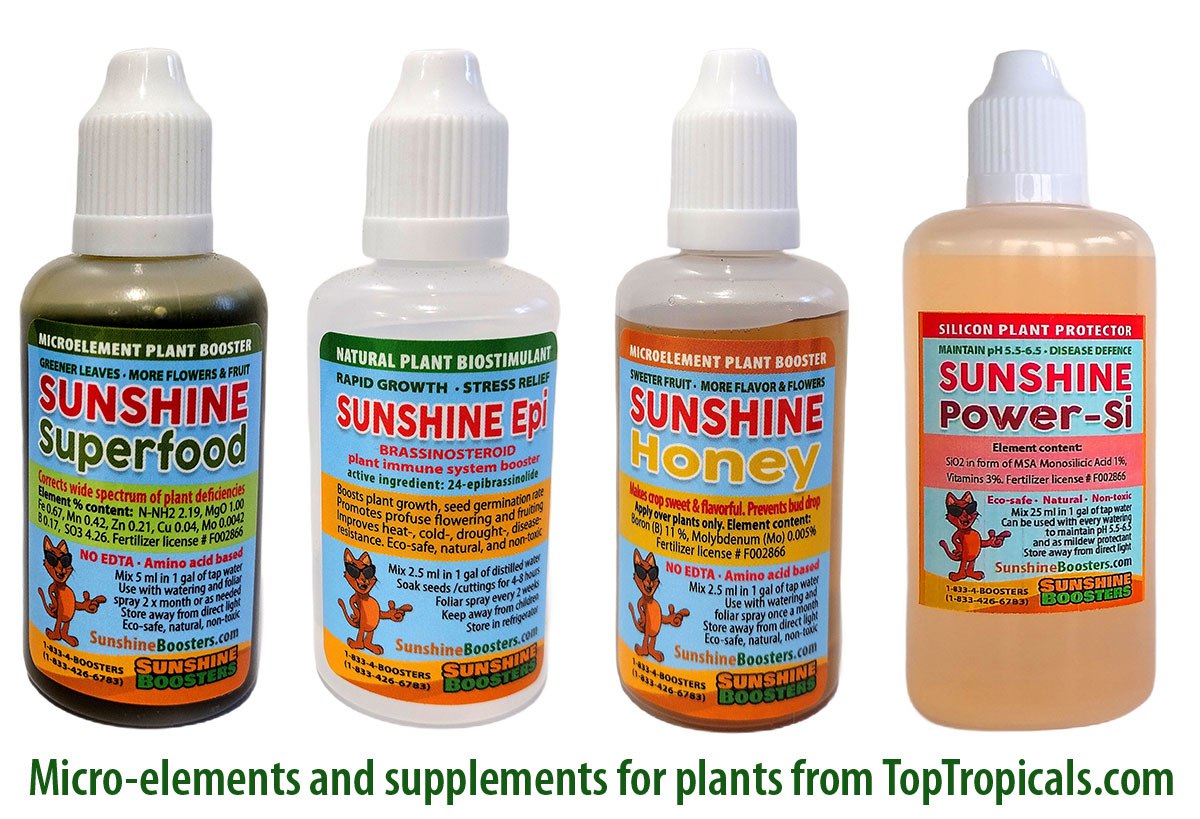
Sunshine SuperFood - Complex Microelement Supplement: a must for healthy plants and beautiful, green leaves. Apply once a month.

✔️ For Stress Relief


Did you know that plants get stressed out too? Too much sun, to wet, too dry, too cold, or simply bugged by insects!
Sunshine-Epi - Brassinosteroid Plant Hormone: essential for plants recovering from stress (shipping, transplanting, drought, insect damage, cold stress, etc.). Apply as needed.

✔️ For Sweeter, Bigger Fruit


Sunshine Honey - Fruit Sugar Booster: application on fruit trees will make fruit bigger and sweeter by directing sugars to the fruit from other plant parts, and helps to prevent bud drop. Apply 4 times a year: at bud setting, flowering, fruit setting, and after harvesting.

✔️ For Better Resistance


Sunshine Power Si - Silicon Protector - enhances resistance to insects, diseases, drought, and frost, while boosting growth. Apply once a month, along with Sunshine SuperFood.

🛍 Shop Sunshine Boosters

#Fertilizers #How_to

🔴 Join 👉 TopTropicals

Date: 9 Dec 2023

Sunshine supplement kit for cold hardiness

Video by Scott Riddle

Discover the cool story of Scott Riddle, a well-known plant enthusiast with a popular YouTube channel dedicated to his tropical plant collection. In this video, Scott shares his firsthand experience with our Sunshine micro-element kit, designed to enhance the cold hardiness of plants.
Living in the unpredictable climate of the California mountains, where he cultivates tropical plants in a zone higher than recommended, Scott faced the challenge of unexpected freezes. The boosters hopefully will be a game-changer for him, reinforcing his plants for the winter season. This insightful and detailed video is a valuable resource for anyone engaged in zone-pushing, aiming to fortify their tropical plants against the rigors of challenging weather conditions.

Here at Top Tropicals, we have already applied two pre-winter treatments of Sunshine Power-Si formula, in combination with the bio-stimulant Sunshine Epi and micro-elements. One in November, the second one in the beginning of December. So far, after a couple of cold nights, the plants still look happy. Stay warm and get prepared!"

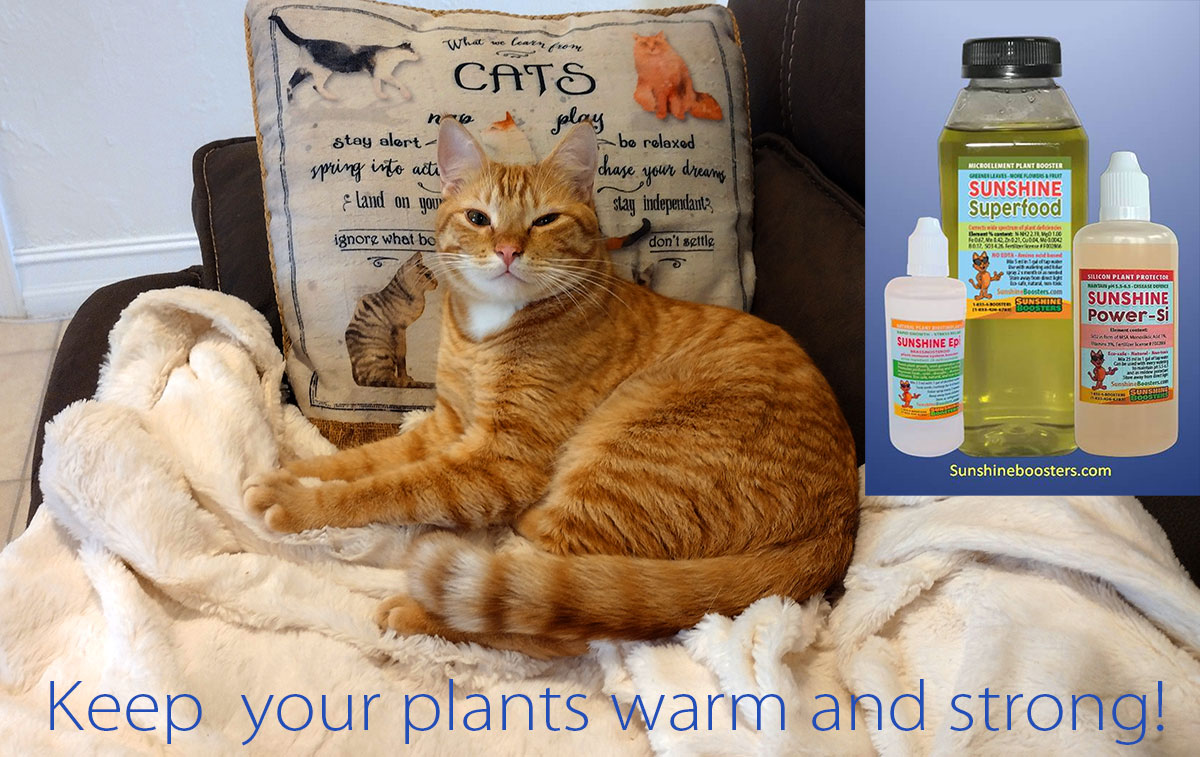
Cozy  cat  with  sunshine  boosters  hardiness  kit

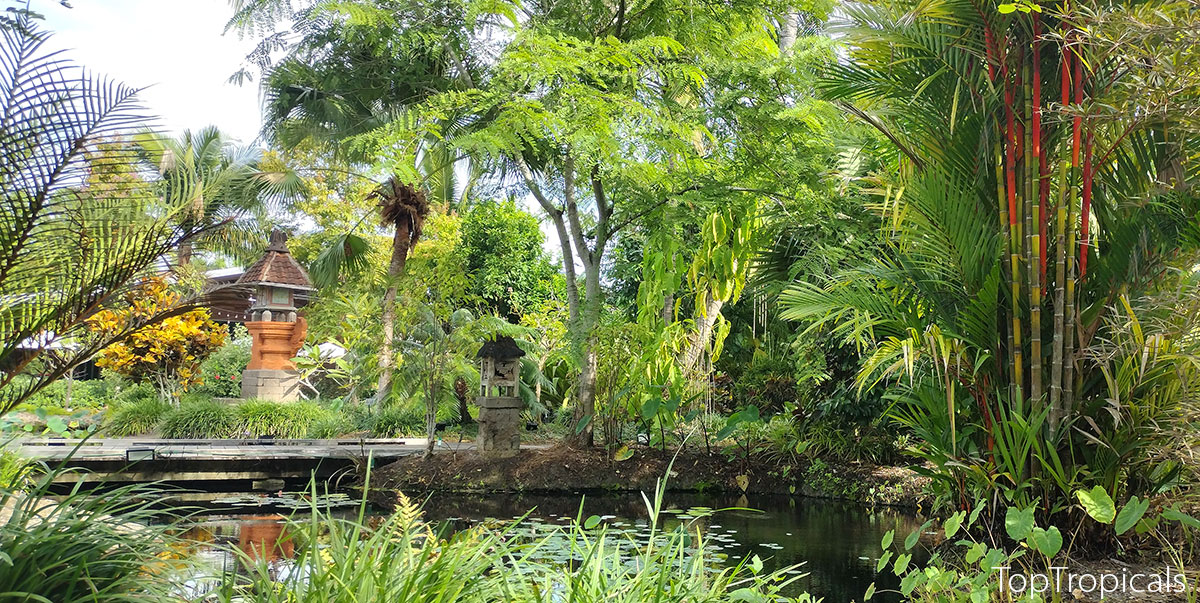
Tropical  landscape  with  Red  Lipstick  Palm

Date: 27 Oct 2022

Add a little Sunshine
to keep your plants looking their best

By Ed Jones, the Booster Guy

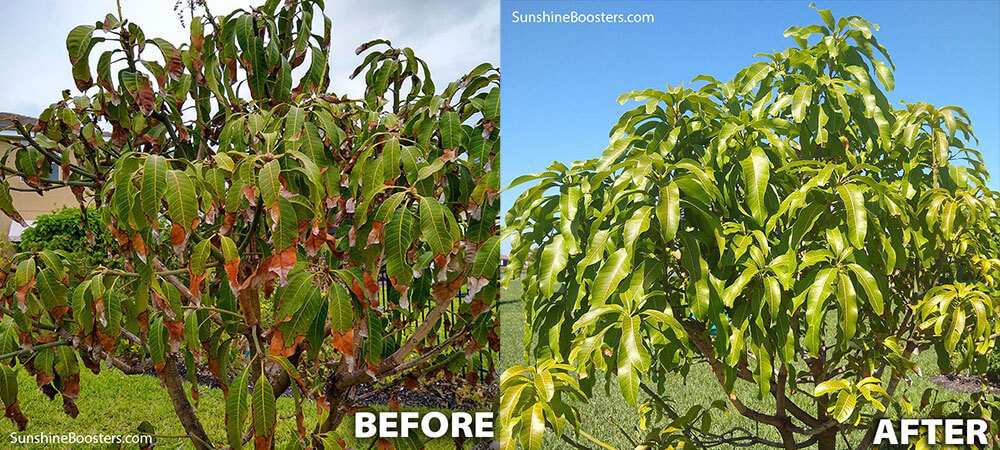
Mango  leaves  before  and  after  Sunshine  Boosters  application

...Just like people, a little sunshine goes a long way in keeping them happy. It is usually easier to keep a plant healthy than it is to fix it when it is not well. Proper plant nutrition is often times the issue. The good news is that it is easy to keep your plants looking good by following proper nutrition practices...
...Feeding your plants with micronutrients that they just don't get in regular fertilizers can prevent deficiencies. Let's get started on a regular program of using foliar sprays to help keep your plants looking their best...
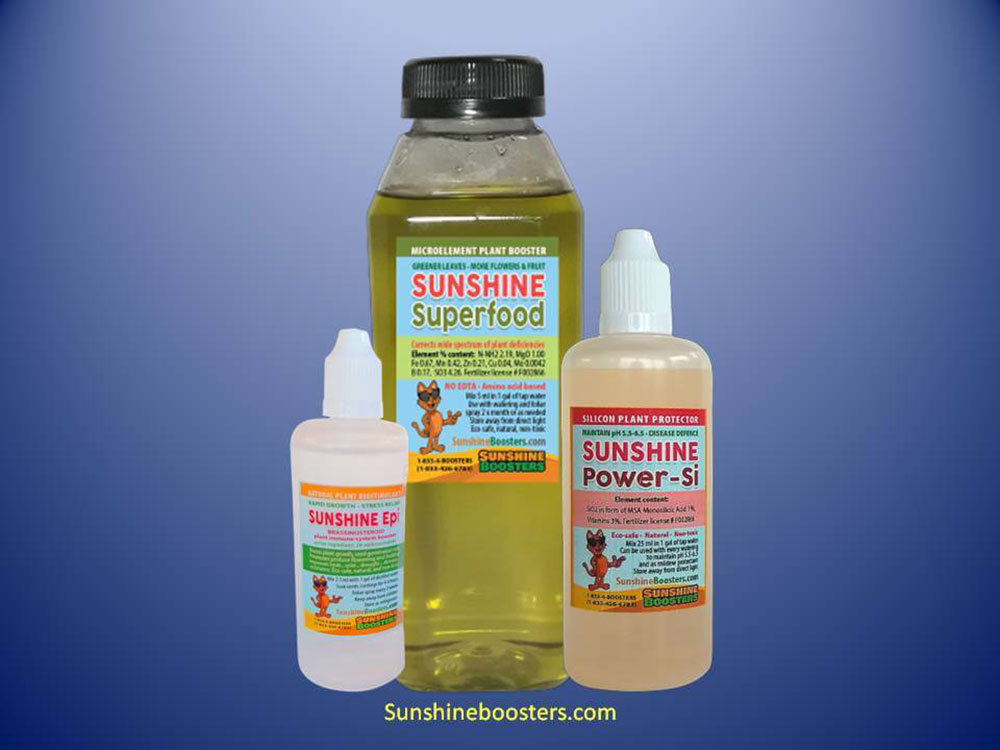
We recommend using three products in combination - the Complete SUNSHINE Microelement Supplement Kit that consists of:

- Sunshine Superfood
- Sunshine Epi
- Sunshine Power-Si

How often do I need to treat my plants?

We are recommending a foliar spray once per week to maintain optimal health conditions. This is based on recent studies done in Ukraine by the scientist who invented Sunshine Boosters products...
Continue reading to see an easy treatment schedule that will provide your plants with:
- Increased photosynthetic activity
- Increased insect and disease resistance
- Reduced mineral toxicity
- Improvement of nutrient imbalance
- Enhanced drought and frost tolerance
- Enhanced plant growth

Read more about these wonderful products and what they do >>

Sunshine  Plant  Supplement  Kit

Sunshine Boosters are developed in Ukraine and manufactured in the USA. We support Ukraine fight for freedom. All profits from these fertilizers will be donated to support our Team in Ukraine.

Date: 17 Nov 2025

❄️Cold Night Survival Guide

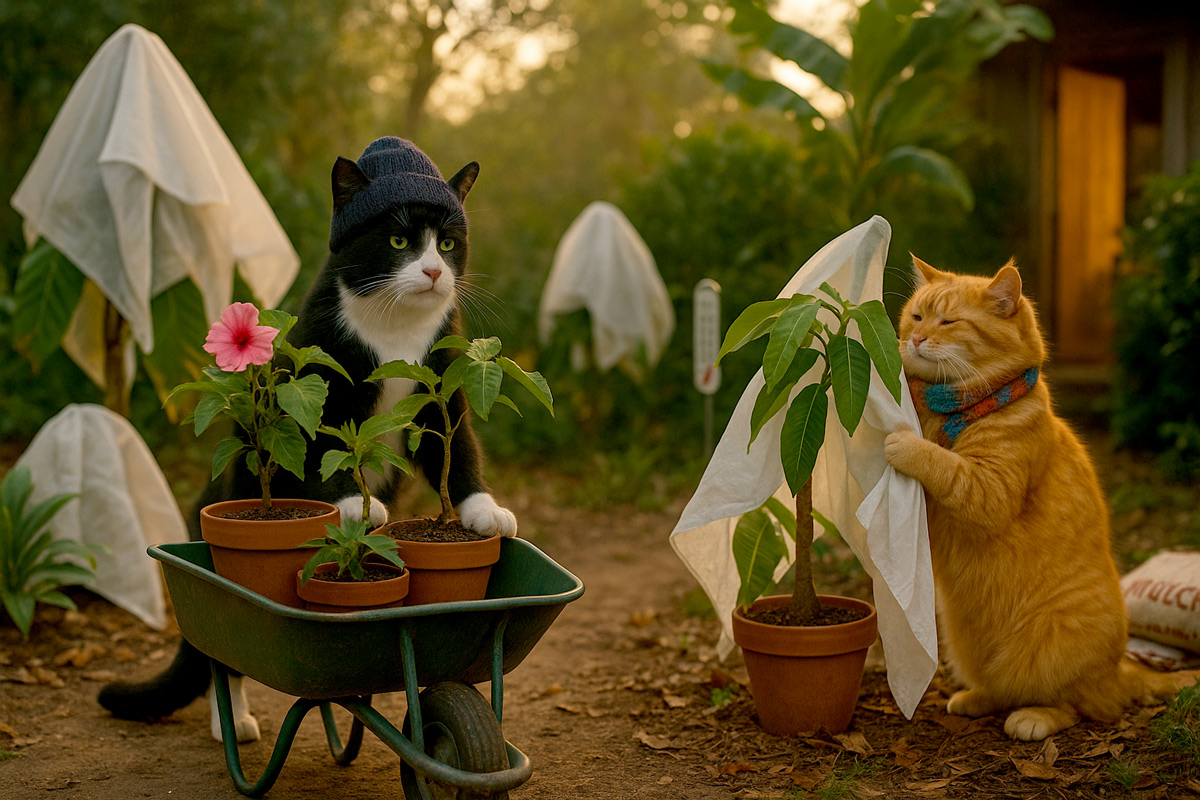
Smokey,  a  black-and-white  tuxedo  cat,  loads  a  wheelbarrow  with  potted 
 tropical  plants  while  Sunshine,  a  fluffy  orange  tabby,  pretends  to  cover  a 
 mango  tree  with  frost  cloth  as  evening  light  warms  the  tropical  garden.

Smokey and Sunshine Prepare Plants for the Cold Night.

Smokey: Come on, Sunshine, help me move these plants inside before it gets dark!
Sunshine: I am helping... see? I’m supervising the mango tree.
Smokey: You call that supervising? The frost cloth’s upside down!

When the forecast drops into the 30s, panic is not a plan. This is your simple, clear checklist to protect every tropical in your garden. Think of it as the quick emergency manual that goes hand in hand with the previous cold-weather newsletter.

"We all love our tropical flowers, mangoes, bananas, and rare fruit trees. A single cold night does not have to be a disaster. The key is knowing what to do, when to do it, and what mistakes to avoid." - Tatiana Anderson, Top Tropicals Plant Expert

🌡️ FROST AND FREEZE

A frost and a freeze are not the same. A frost is when you see ice crystals on leaves or grass, while a freeze is when the air temperature drops below 32 F. The tricky part is that you can get frost even when the air is above freezing, and you can have a freeze with no frost at all. It all depends on humidity and the dew point. If the dew point is below freezing, the ground can cool faster than the air, letting frost form even when your thermometer reads 35 or 36 F. And once the air itself drops below 32 F, even for an hour, tender tropicals can be damaged. For plants, a freeze is far more dangerous, because freezing air pulls heat out of stems, branches, and roots. Frost usually burns leaves, but a true freeze can injure wood, kill buds, and damage the entire plant.

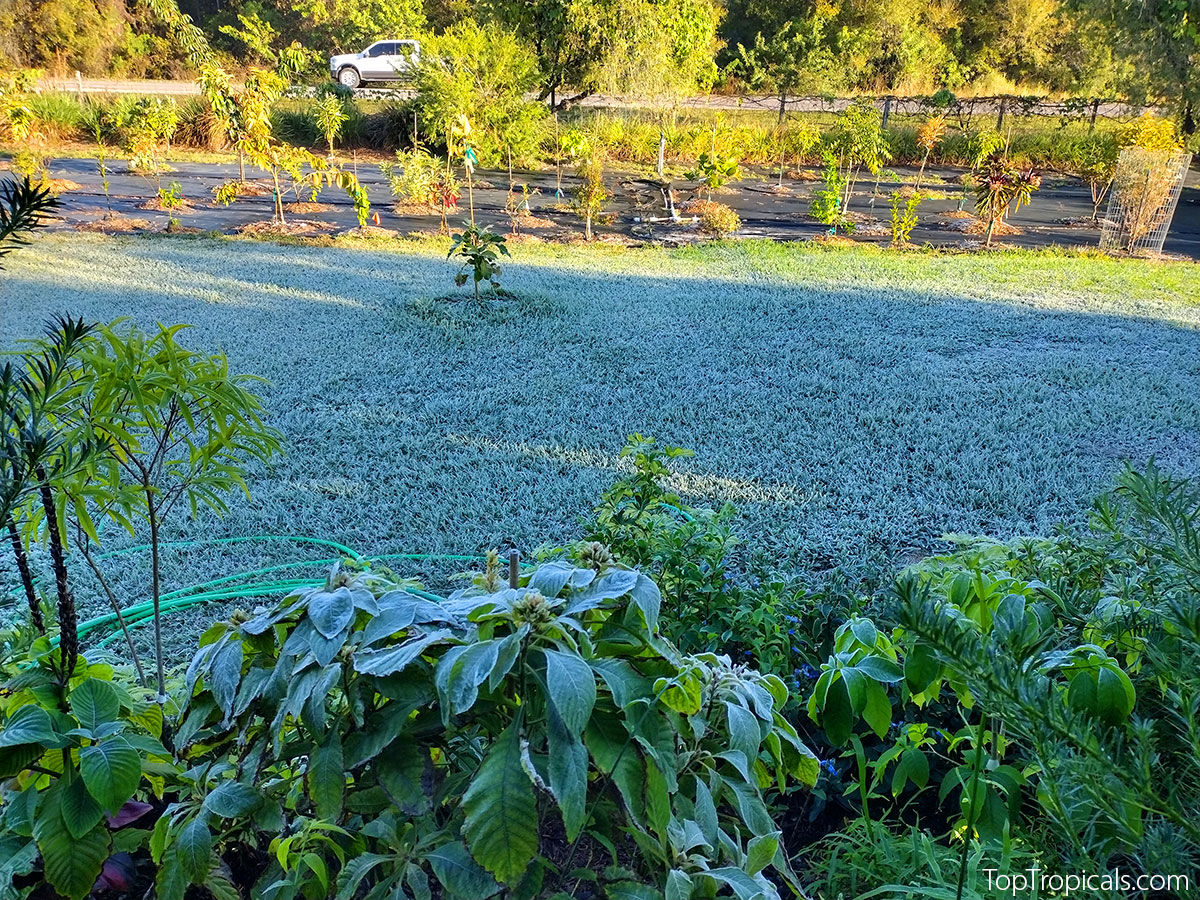
Frost  on  grass  and  leaves

Frost on the grass and leaves on Winter morning in Central Florida

WHAT TO DO AND NOT TO DO BEFORE A COLD SNAP

✔️ 5 THINGS TO DO:

  1. Water well. Hydrated plants tolerate cold better than dry, stressed ones.
  2. Add mulch. A thick layer around the base keeps roots warm.
  3. Block the wind. Move pots to a sheltered corner or patio.
  4. Cover at night, uncover in the morning. Let plants breathe and get light.
  5. Add gentle heat if needed. Non-LED Christmas lights or a small old style 15-20W light can raise temps a few degrees.

❌ 5 THINGS NOT TO DO:

  1. Do not prune or trim. Fresh cuts freeze first.
  2. Do not overwater. Wet, cold soil invites root rot.
  3. Do not let plants dry out either. Wilted plants freeze more easily.
  4. Do not use dry fertilizer. Gentle liquid feeds like Sunshine Boosters are safe to use with every watering: its intake naturally slows down as watering decreases.
  5. Do not look only at the thermometer. A long, windy night can be worse than a short freeze.

TEMPERATURE ACTION GUIDE (40 to 25 F)

  • 40 to 38 F: Move potted plants to shelter, water soil, and cover tender tropicals.
  • 37 to 33 F: Use frost cloth and anchor it down so the wind does not lift it.
  • 32 to 30 F: Add a heat source like non-LED lights.
  • 29 to 25 F: Double-cover sensitive plants, wrap trunks, and protect roots heavily.

COLD TOLERANCE BY PLANT TYPE

Before a cold night, it really helps to know your plant’s exact cold limits. Every species is different, and young plants are always more sensitive than mature ones. Take a few minutes to look up your varieties in our Tropical Plants Encyclopedia — it will tell you the safe temperature range, how much protection each plant needs, and which ones must be covered or moved before the next cold snap hits.

  • Bananas: leaf burn below 37 F
  • Mango, Annona: hurt around 32 F
  • Cold hardy avocados: Mature tree can take about 25 F. Young trees must be protected
  • Olives, Citrus, Guava, Jaboticaba: usually OK outside with mulch

QUICK-ACTION TABLE

Before the cold arrives, make yourself a quick list of every plant and what action each one needs. It saves time when temperatures start dropping and keeps you from scrambling in the dark. Check that you have enough frost cloth, blankets, and supplies on hand so you can cover everything without rushing. Planning ahead makes cold nights much less stressful.

  • Bring Indoors: Cacao, Bilimbi, Coffee. They need warm, bright light.
  • Cover Outdoors: Mango, Jackfruit, Banana, Annona. Use frost cloth, not plastic on leaves.
  • Leave Outside: Eugenias, Peaches, Persimmons, Longan, Lychee, Papaya, Citrus, Loquat, Hardy Avocado. Add mulch and monitor overnight lows.

🛒 Check out cold tolerant tropicals

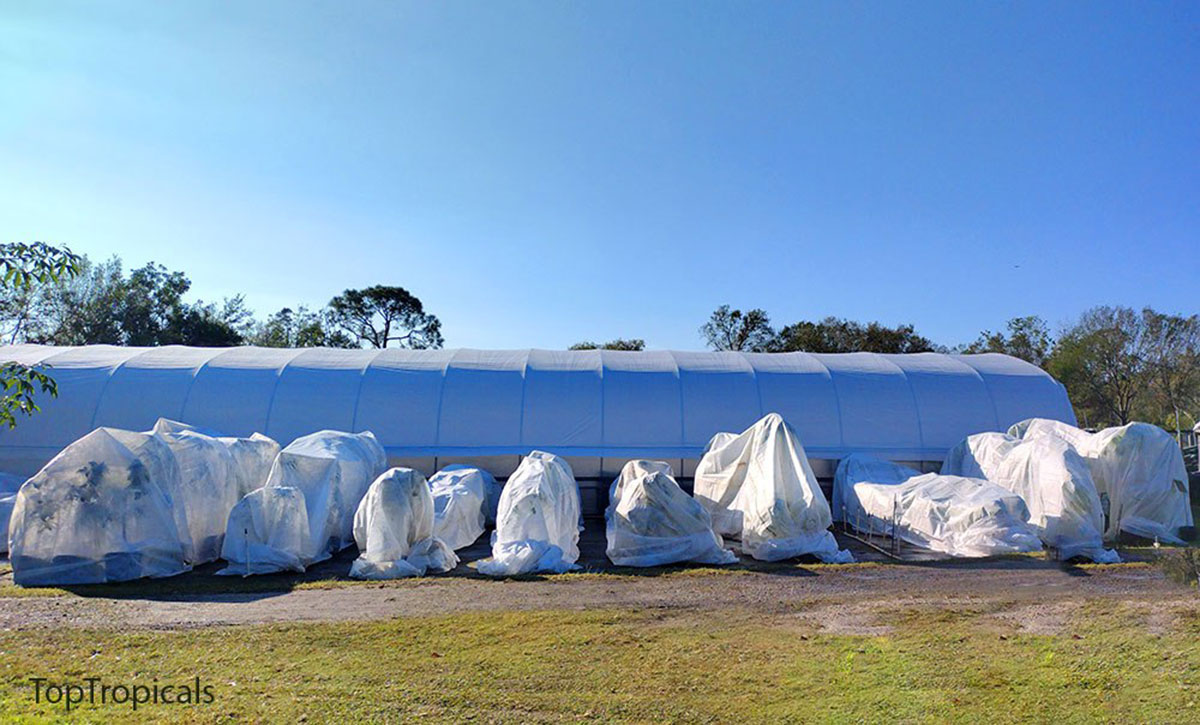
Covering  large  mango  and  avocado  trees  in  pots

Covering large mango and avocado trees in pots at TopTropicals during cold nights

GADGETS AND TOOLS THAT HELP

  • Indoor helpers: LED lights, small heaters, bottom-heat mats, timers.
  • Outdoor helpers: frost cloth rolls, mini greenhouses, non-LED Christmas lights or small incandescent lights, smart thermometers.

Always keep electrical safety in mind, especially if you are using extension cords outdoors. Use only weather-rated cords, keep all connections off the ground, and protect plugs from moisture. Make sure heaters and lights are stable, secured, and never touching fabric covers. A few minutes of safety check can prevent a dangerous situation on a cold, wet night.

And if you want to keep plants strong through winter, add Sunshine Boosters to your watering routine. It is gentle, safe in cold weather, and gives plants an extra edge.

AFTER THE COLD PASSES

In the morning, uncover plants. Leaving covers on during the day can trap heat and cook the tender new growth, especially under the sun. The only exception is true frost cloth designed for all-day use, which allows air, light, and moisture to pass through. Regular blankets, sheets, and plastic must come off as soon as the sun rises.

Do not cut anything yet. A plant can look completely dead after a freeze, but many branches are still alive under the bark. Cutting too soon removes wood that would recover on its own. Wait until new growth begins in spring. That is when you can see exactly which branches are truly dead.

Use the scratch test. Gently scratch the bark with your nail or a small knife. If the layer underneath is green, the branch is alive. If it is brown and dry, it is likely dead. But even then, wait until warm weather to be sure, because sometimes only the tips die back while the lower part of the branch survives.

Once the weather stabilizes, resume light feeding. Plants coming out of cold stress need gentle support, not heavy fertilizer. A mild liquid feed like Sunshine Boosters helps them rebuild roots and push new growth without burning tender tissue.

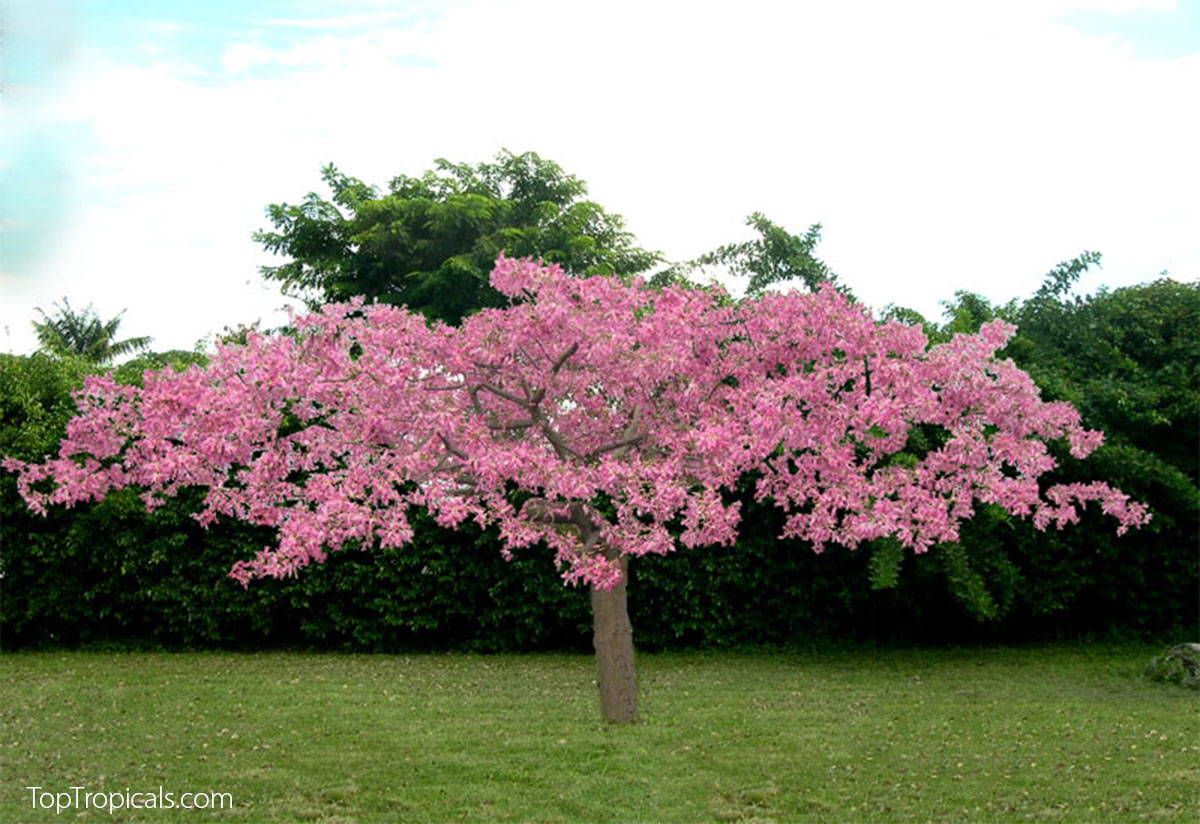
Dwarf  Ceiba  Pink  Princess  in  full  bloom

Dwarf Ceiba Pink Princess (Grafted) - a unique compact cultivar covered with pink flowers in Winter. Watch short video: How this breath-taking flowering tree stays so compact.

WHAT NOT TO DO

  • Do not prune right after a freeze.
  • Do not overwater cold soil.
  • Do not fertilize heavily until spring.
  • Do not leave covers on in full sun.

CLOSING THOUGHT

Your tropical garden can survive any cold night if you prepare right. Cold snaps always feel stressful in the moment, but once you know your plants, have the right supplies, and follow a simple plan, it becomes routine. A few minutes of preparation before dark can save months of growth and keep your collection healthy all winter.

Frost cloth is the true workhorse of cold protection: it keeps heat in, keeps frost off, and will not suffocate plants the way plastic or blankets can. Having a few rolls ready means you never have to scramble at the last minute. Sunshine Boosters give your plants gentle support during the colder months so they stay strong enough to bounce back quickly when warm weather returns.

A little planning now will pay off in spring, when your mango, banana, citrus, and all your favorite tropicals come back happy and ready to grow.

🛒 Shop Garden Supplies

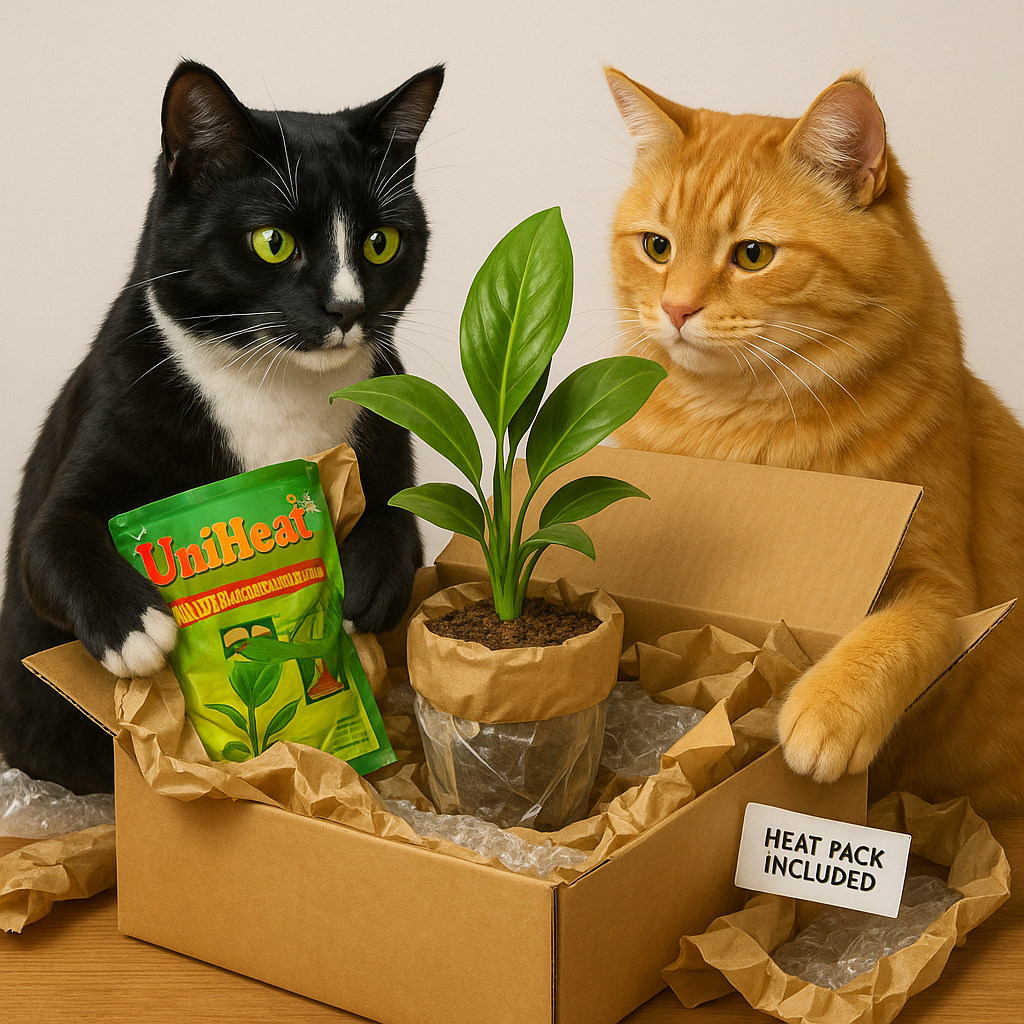
Add Heat Pack to your plant order

Cats  adding  heat  pack  to  plant  shipment