On Groundhog Day Feb 2: Groundhog Punxsutawney Phil saw his shadow on Thursday morning, predicting six more weeks of winter during Groundhog Day festivities at Gobbler's Knob, a small hill just outside Phil's hometown.
According to folklore, if it is cloudy when a groundhog emerges from its burrow on this day, then the spring season will come soon; if it is sunny, the groundhog will supposedly see its shadow and retreat back into its den, and winter weather will persist for six more weeks.
Phil promised long winter, however, we should not cry in despair but starting to get ready for Spring!
Spring Check List: - Make sure min temperatures are above 45F before you start bringing potted plants outside.
- When active new growth appears from buds, after-winter pruning can be done.
- You may start weekly fertilizing as soon as night temperatures raise above 55F.
- Start planting in the ground as soon as there are no more chances of frost, until then keep newly arrived plants in pots so they get better established.
- Low chill cold hardy fruit trees including Peaches, Nectarines, Plums, Apples, Mulberry, Loquats go in the ground first, so you can enjoy their blooms and early fruit set. Plant Pomegranates, blueberries and cranberries, raspberries and blackberries, grapes.
- Water as needed, still keeping on dry side until afternoons get hot and plants start using more water.
- Start seeds indoors. The sooner the better, to give seedlings more time to establish before planting out in the ground.
Overwintering Magnolia (Michelia)
Michelia alba Question: I have a question about Michelia alba. My Michelia alba leaves turning yellow and losing leaves. When I brought it inside for the winter, after the leaves falling off new one grow back not all of them grow back and now the new the branches start to die. I water once a week.
A: Whenever moving a plant in or out of the home it is always best to do it gradually. Moving a plant all in one day will cause stress to the plant due to environmental changes such as, new humidity levels, new light levels and new watering requirements. Michelias usually loose their leaves once in the spring and once before winter but grow them back right away. Now that your plant is inside with less humidity, light and leaves, you only need to water once the soil as almost dried out. You will need to stick your finger in the soil to see if it is still wet as the top layer dries before the under layer. If the branches are starting to die at the tips this usually means too much water. Move the plant to a bright light window, decrease water and you may want to also use a humidifier.
Date: 12 Jan 2025
How to protect tropical plants in Winter
Winter tips and podcast
Photo above: wrapping plants with frost cloth
Winter can be tough on plants, especially on tropical varieties. But with a little preparation, you can protect your garden and keep your plants safe from the cold. Here's how:
Winter Care Tips for Tropical Plants
Cut watering: Reduce watering to prevent root rot. Cold + wet = dead roots.
Water before frost: Thirsty plants are more vulnerable. Water them before a cold night to prevent damage.
Wind protection: Wind is more harmful than temperature drops. Plant near structures like houses or trees for shelter.
Prepare for long cold periods: If cold weather lasts for hours, use all available protection, including Christmas lights and propane heaters.
Don't use dry fertilizer in winter: Heavy fertilizing encourages tender growth, which is more susceptible to cold damage. Sunshine Boosters liquid fertilizers are safe to use year around as their intake is controlled by reduced watering. Use fabric covers, not plastic: Plastic can cook plants in the sun, while fabric allows better ventilation.
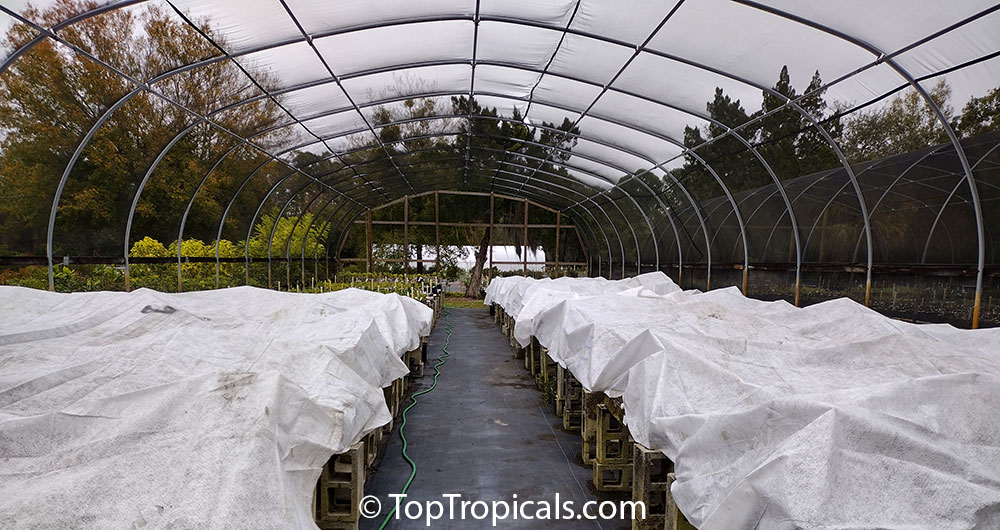
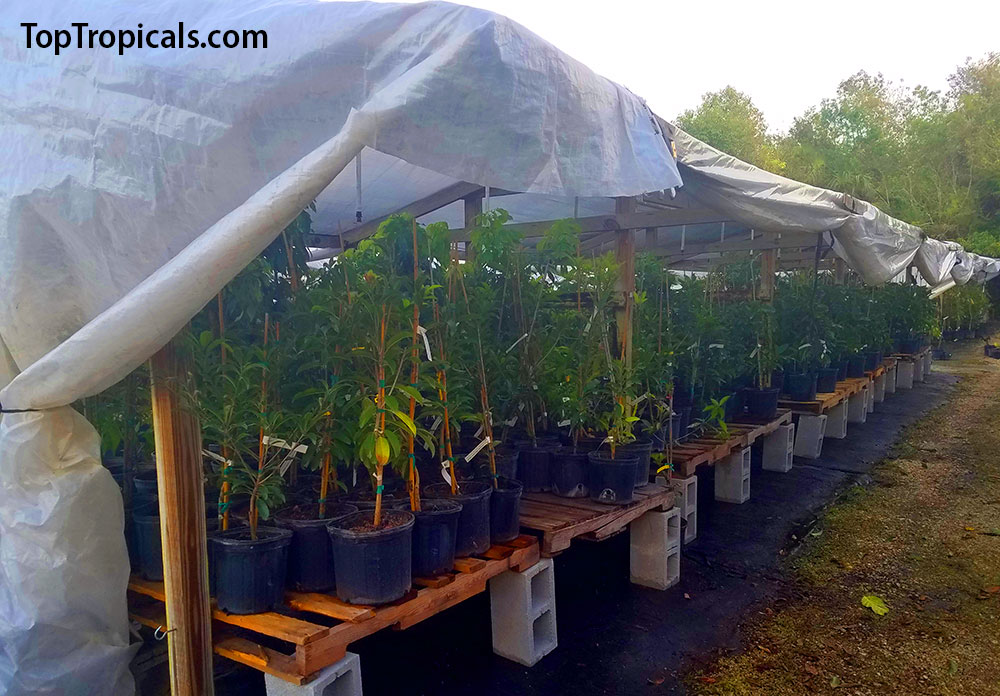
Photo above: we cover our plants in the nursery with a thin synthetic fabric (sintepon) called "frost cloth" or "strawberry cloth". It is light, breathable and allows light and water to go through unlike plastic that creates heavy water pockets.
Prepare for Cold Nights
Wrap plants: On cold nights, cover individual plants or trees with sheets or blankets to shield them from wind chill.
Use Christmas lights: A simple string of lights can add extra warmth, protecting your plants during frosty nights.
Use propane heaters: For added warmth in a larger area, place a propane heater near your plants. Make sure to follow safety guidelines and keep the heater at a safe distance from flammable materials. This can help maintain a few extra degrees of warmth, especially in more open garden spaces or temporary greenhouses. Always ensure proper ventilation to avoid harmful gas buildup.
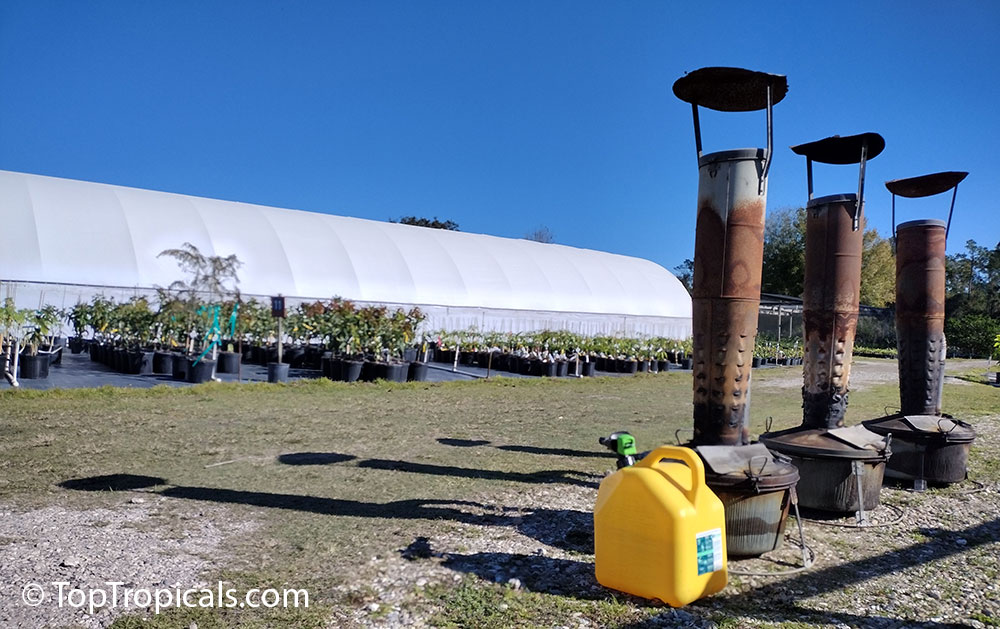
Photo above: we use both propane and kerosene heaters at the nursery
Large Collections? Build a Temporary Greenhouse
Affordable winter greenhouse: For large plant collections, you don't need an expensive greenhouse. A mobile carport with plastic or fabric covering, costing around $200, can house up to 100 plants!
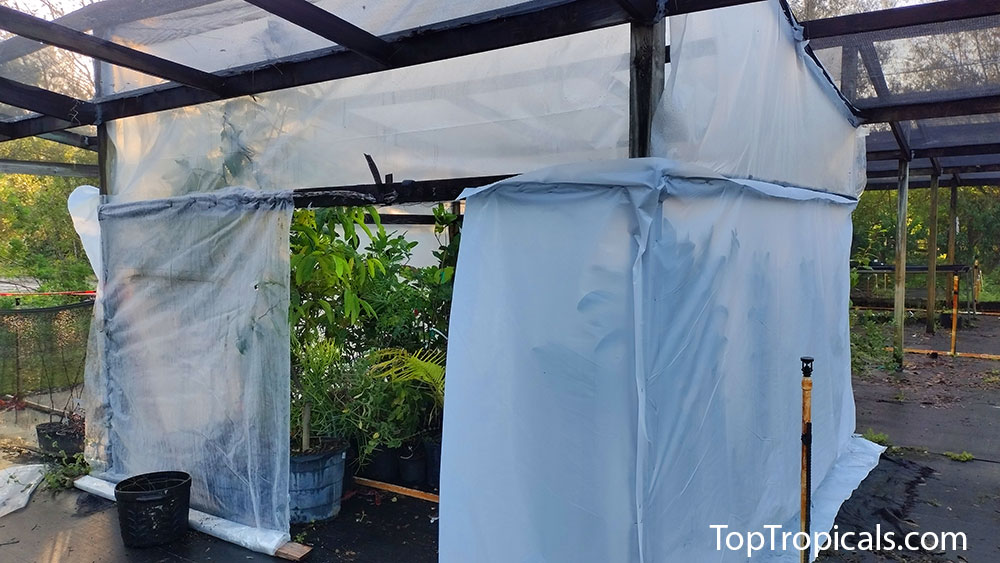
Photo above: Temporary wrapping around plant collection with a plastic or frost cloth protects from a windchill. It may also win you a few degrees even without a heater. In this particular case, according to our temp sensors, with 30F outside, it was 41F inside this "dome", no heaters used.
Southern Exposure and Garage Storage
Southern windowsills: Compact tropicals can thrive on southern-facing windowsills, getting plenty of sunlight during the day.
Move plants inside: If you have larger collections, move them into a well-lit garage for the colder nights or longer periods.
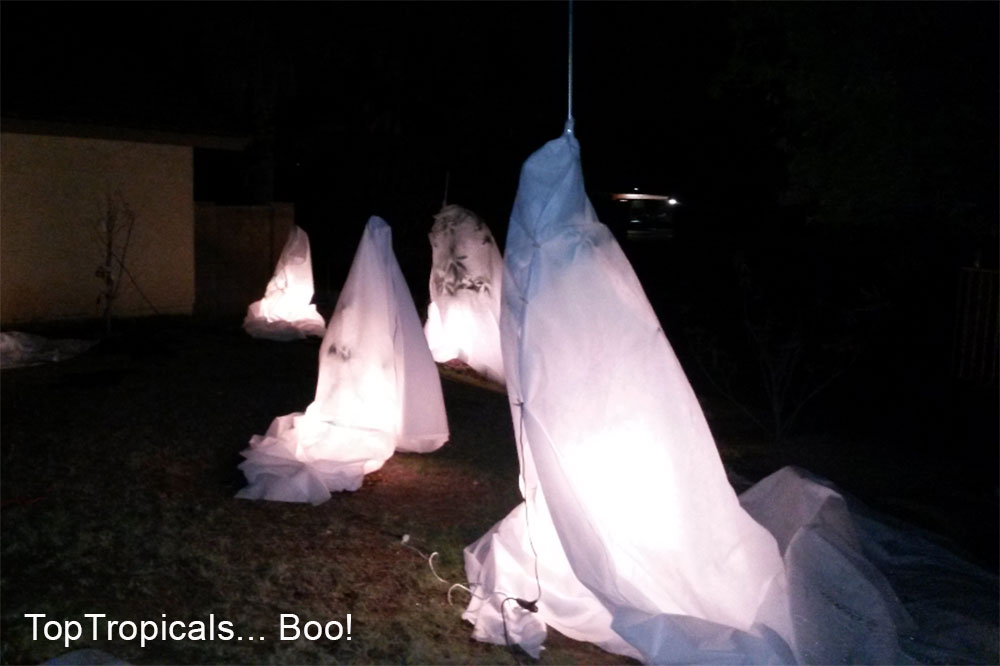
Photo above: using Christmas lights around plants while wrapping with frost cloth.
Key Factors for Survival
Cold duration: Tropical plants can survive brief cold spells but long durations, even above freezing, can be deadly.
Wind-chill: Wind chill can be harsher than the temperature itself.
Exposure: Southern-facing slopes hold heat longer, making them ideal for your plants.
Humidity: Proximity to lakes or oceans can create a milder micro-climate.
Gradual temperature Drops are safer. Plants adjust better to slow temperature changes than sudden cold blasts. Gradual cooling allows plants to prepare, reducing the risk of damage.
Strengthen Plant Hardiness
Health and maturity: Well-established, healthy plants are more cold-hardy. Boost plant immunity: Use products like SUNSHINE-Epi to improve cold resistance. Apply it before and during cold snaps to protect your plants. Healthy plant is hardy. Make sure to fertilize your plants on regular basis - healthier and stronger plants are more cold hardy.
With these steps, you can protect your plants and help them survive the winter months. Stay
warm and keep your garden thriving!
Podcast with Horticulturist Mark Hooten:
How to Protect Tropical Plants in Winter
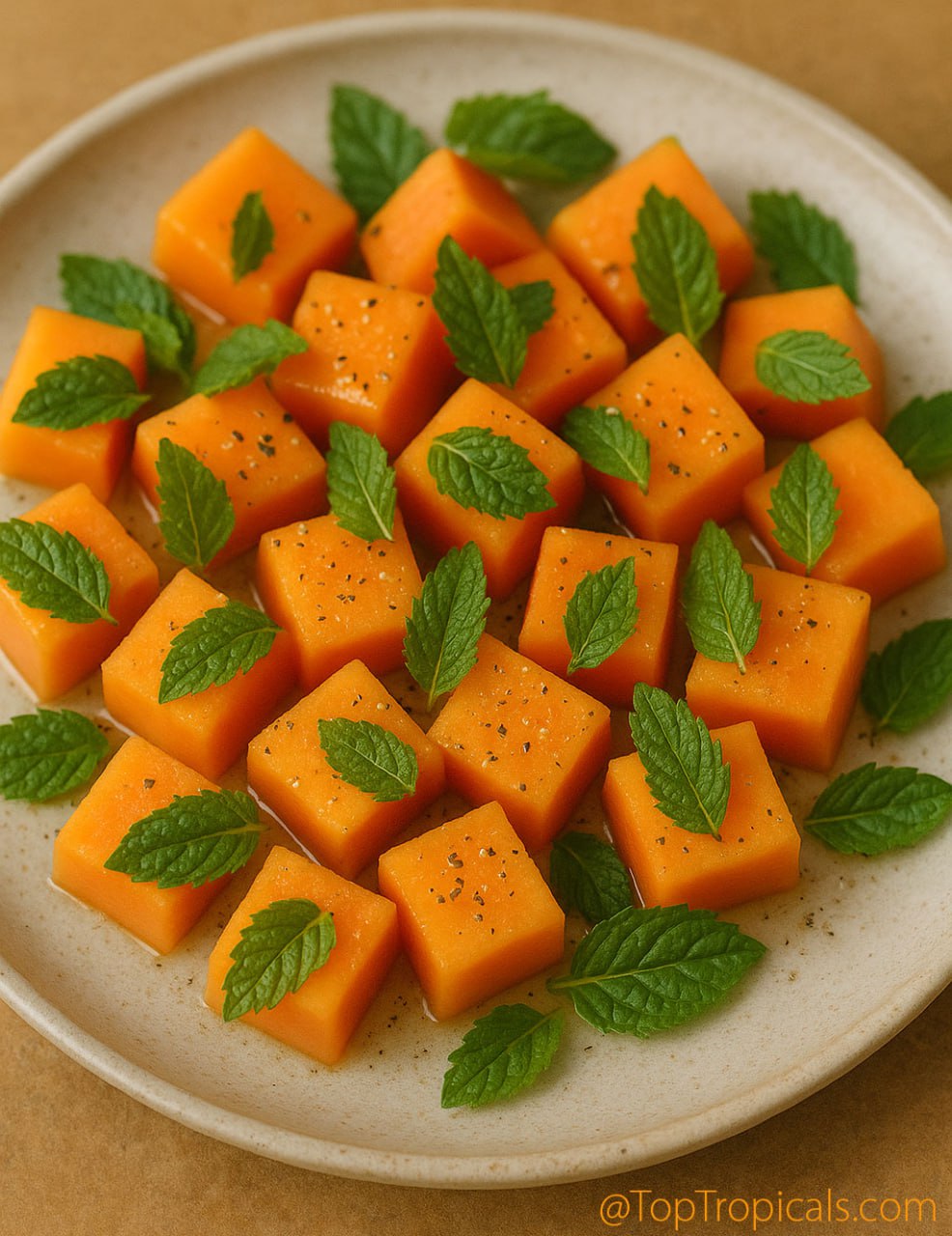
🟢Cube ripe papaya into bite-sized pieces. 🟢Toss gently with fresh mint leaves, a drizzle of lime juice, and a pinch of black pepper. 🟢Chill before serving for a refreshing, lightly spiced tropical snack.
Papaya Mint Salad
Ingredients
1 ripe papaya, peeled and cubed
Fresh mint leaves
1 tsp lime juice
Pinch of black pepper
Instructions
Cube ripe papaya into bite-sized pieces.
Toss gently with fresh mint leaves, a drizzle of lime juice, and a pinch of black pepper.
Chill before serving for a refreshing, lightly spiced tropical snack.
📅 Do Not Miss: March 21
- Spring Equinox Plant Market
🍩 Saturday, March 21, 2026: 9 am - 4 pm
Sunshine: Smokey, look at me! See what I can do on my bike? I'm
practicing to give people what they like: coffee and donuts.
Smokey: You'd be perfect for a Gulf beach cafe. But gardeners don't
come here for donuts.
Sunshine: Really? Then why do they come?
Smokey: Some gardeners lost plants to the freeze. Others want trees
that will handle winter better. Cold-hardy avocados. Macadamia. Grumichama.
And some just come for fun - to see the PeopleCats. Sunshine: And my charm... and my donuts will make it more fun.
🐱King is
back on gate duty - inspecting every vehicle for proper
plant-hauling capacity.
😺Paisley
is rearranging freeze survivors and new arrivals like a design
consultant.
😼Snitch is
supervising recovery efforts from a comfortable chair.
😸Persephone
is checking under tables for "hidden spring energy."
😻Sushi and
Loki are
preparing for guided garden tours - recovery edition.
This is not just a plant market. This is the spring reset.
👍 Why You Should Come
It is finally warm in Florida. After several nights of hard freeze, some
plants survived - and some didn’t. This event is your chance to see
real freeze champions in person.
If you lost plants, you are not alone. If you are ready to plant
smarter, this is your moment.
Walk the gardens.
See proven winter survivors.
Discover cold-hardy fruit trees and resilient ornamentals.
Get practical advice about replanting after freeze. This is rebuilding -
Florida style.
♥️ What Makes This Event Special
We are featuring:
Verified freeze survivors
Cold-hardy fruit trees
Tough flowering trees and shrubs
Replacement plants for damaged landscapes
Smart layering ideas for frost-resilient gardens
You will see which species handled 25F with wind and multiple nights of
freeze - with no protection.
Real-world test. Real results.
Cold hardy fruit favorites include:
Cold-hardy Avocado varieties, including varieties, which are cold hardy
to 15-20°F: Joey, Fantastic, Mexicola, Poncho, Brogdon and more.
Botanical name: Caesalpinia mexicana Also known as: Mexican Bird of Paradise, Dwarf Poinciana
USDA Zone: 9 - 11
Highligths
🎉Event Highlights
30% OFF online prices
FREE plants with purchase
$5-10 specials
Exciting raffle prizes
🌳Don't just mow - grow!
Start your food forest, beat rising prices, and plant a future your
family will thank you for.
🌿 Friendly Reminder
Just a quick reminder before we go: Sunshine Boosters are still
shipping free.
If you were thinking about stocking up for the season, now is a
great time to do it while the offer is still active.