Garden Blog - Top Tropicals

Date: 18 Nov 2025

This giant red stared right back at me

Disocactus ackermanni, Red Orchid Cactus, Jungle Cactus

👹 This giant red stared right back at me

  • 🌺 Disocactus ackermanni, also called the Red Orchid Cactus, or Jungle Cactus - is one of those plants that surprises you even when you already know it well. It grows like a tropical fern, with flat, leaflike stems that hang and drape from a basket. Most of the year it looks calm and green. Then, without much warning, it opens a single huge, bright red flower that can reach up to 6 inches wide. The color is intense, almost glowing, and the bloom only lasts a short time, which makes it even more special.
  • 🌺 Despite being a cactus, it behaves nothing like a desert plant. This species is native to the tropical forests of Mexico, where it grows as an epiphyte in trees. It prefers shade or filtered light, and it enjoys regular watering. No spines, no trouble, just a very unusual growth habit and a spectacular bloom.
  • 🌺 The plant usually flowers from spring through summer, sometimes offering more than one flush. When it does, it always steals attention, and it is one of those plants visitors immediately point at and ask about. This makes it a favorite among collectors of epiphytic cacti and unusual hanging plants.
  • 🌺 If you grow it in a hanging basket and give it bright shade, humidity, and consistent moisture, it rewards you with one of the most striking red flowers you will ever see!


🛒 Add Red Orchid Cactus to your collection

📚 Learn more:


Red Orchid Cactus puts out the biggest bloom show
More epiphytic jungle cacti:
Epiphyllum oxypetalum - Queen of the Night
Pseudorhipsalis (Wittia) amazonica - Blue Flame
Epiphyllum guatemalense Monstrosa - Orchid Cactus, Curly Locks

#Container_Garden #Shade_Garden #Nature_Wonders

🟢 Join 👉 TopTropicals

Date: 10 Dec 2025

The secret New Deal Franklin Roosevelt never told you about

Schlumbergera x New Deal - Thanksgiving-to-Easter blooming Cactus

🌸 The secret New Deal Franklin Roosevelt never told you about

  • 🌸 Schlumbergera x New Deal is not your regular Christmas cactus. Big blooms, long history. This heirloom flowers from Thanksgiving to Easter and descends from a plant first sold on the very day Franklin Delano Roosevelt was elected.
  • This variety actually vanished from the trade for decades. Its first known appearance was at a rare plant sale at the Brooklyn Botanic Garden on November 8, 1932 - the exact day Franklin Roosevelt won the presidency and launched the famous New Deal. The name stuck, and so did the legend!
  • 🌸 What makes New Deal so special? The blooms are huge - about an inch larger than standard holiday cactus flowers - and come in brilliant violet-pink and white. And the timing is even better. It sends up a full flush around Thanksgiving and Christmas, then wakes up again with a second wave closer to Easter. That’s why some people call it a Thanksgiving cactus, others call it a Christmas cactus, and many insist it’s an Easter cactus. The truth? It’s all three.
  • 🌸 Despite its pedigree, New Deal is surprisingly easy to grow. It thrives in normal houseplant conditions, stays compact, and rewards even casual care with heavy, reliable blooming.
  • 🌸 The plants available today come from true descendant cuttings of an original 1932 specimen that is still alive. This makes New Deal one of the rarest, most authentic holiday cactus cultivars you can own - a living slice of history and one of the most generous bloomers of the entire holiday season.


🛒 Get the New Deal: the Thanksgiving-to-Easter bloomer

📚 Learn more:

Plant Facts

Schlumbergera sp.
Orchid Cactus, Thanksgiving Cactus, Christmas Cactus, Easter Cactus, Crab Cactus
USDA Zone: 9-11
Groundcover and low-growing 2ft plantSemi-shadeShadeRegular waterEpiphyte plantYellow, orange flowersRed, crimson, vinous flowersWhite, off-white flowersPink flowersSubtropical plant. Mature plant cold hardy at least to 30s F for a short time
  • More about Schlumbergera from Plant Encyclopedia
  • What is the most popular Christmas plant?
  • An heirloom holiday cactus lost for decades: Thanksgiving-to-Easter bloomer

  • #Container_Garden #Shade_Garden #Nature_Wonders

    🟢 Join 👉 TopTropicals

    Date: 24 Jun 2018

    TopTropicals

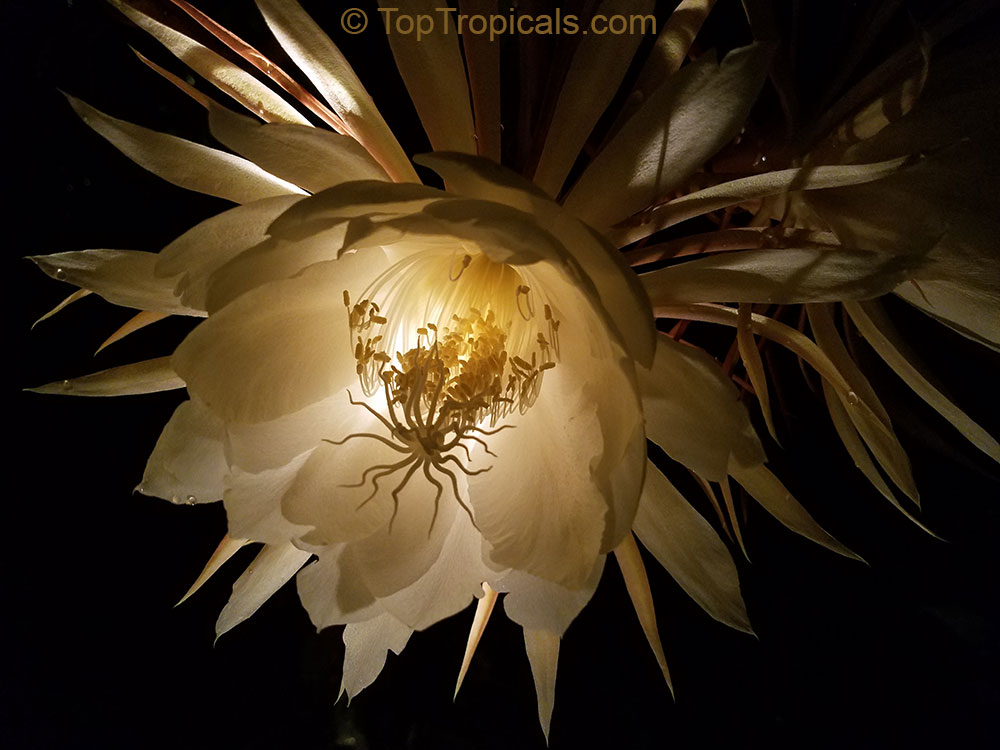
    Mysterious Night Blooming Cactus - Epiphyllum. How to grow it?

    Q: My friend has a huge Queen of the Night Cactus, and the blooms are so gorgeeous! She gave me a cutting but I am not sure how do I plant it? How long will it take till it starts blooming? Is it true that it has only one flower once a year and only at night?

    A: Queen of the Night is a very popular and yet mysterious plant. The flowers open once a year after sunset for one night. However the flowering period can last a month or two during the warm season. So each flower lasts only one night, but there will be more flowers to come! In the Nature, Epiphyllum oxypetalum - Queen of the Night - grows on trees in the jungles of Central and South America. It is actually very easy to grow as an indoor plant in colder climates. Here is South Florida we grow them outside in hanging baskets. This is how to start Queen of the Night from a cutting:
    1) Put the cutting in a dim, dry place for three days, with no soil and its base exposed to the air, so it will form a callus.
    2) Fill a 4-6-inch pot with slightly damp potting soil or succulent mix. Insert the cutting 1 or 2 inches into the soil and tamp the soil around its base.
    3) Place the pot where the cutting will get bright light, but no direct sun. Spritz it occasionally with a spray bottle of water to keep the soil only slightly moist. It should root in couple weeks.
    4) Keep the plant on an east- or west-facing windowsill where it will receive direct sunlight only in early morning or late afternoon. Water the cactus until water runs out of the pot's drainage holes. Dump the excess out of the pot's saucer immediately, and wait until the surface of the soil is dry to the touch before watering your cactus again.
    5) Fertilize once a month from March through October with a balanced plant food, and apply micro-elements once a month for a healthy vigorous growth. Refrain from feeding the plant in December and January.
    6) Position the cactus in partial shade under a porch roof or tree, if you decide to move it outdoors during the summer. This plant likes summer humidity!
    7) Repot the cactus only once every two years or so, to keep it slightly root bound. Wait until after it flowers in summer, and repot it after it blooms. Prune off any damaged growth at that time as well.
    8) Move the plant to a cooler room over the winter months, one that remains dark during the evening hours with temperatures above 45 degrees. Reduce the frequency of watering, waiting until its soil is dry. Resume regular watering in March.

    If grown from cutting, it may take 2-3 years until the plant starts blooming, so if you don't want to wait that long - just get a blooming size plant from our store!

    We only have a few plants... if sold out, add to wish list and we will have more soon!

    Date: 27 Oct 2025

    Weird cactus looks like pasta with Dragon Fruit

    Epiphyllum guatemalense Monstrosa - Curly Locks or Orchid Cactus

    👀 Weird cactus looks like pasta with Dragon Fruit

    • Epiphyllum guatemalense Monstrosa - Curly Locks or Orchid Cactus - is one of the most unusual jungle cacti you can grow. Instead of the usual flat cactus leaves, this one grows curly, looping stems that twist and spiral in every direction. It looks like a green waterfall of botanical noodles, perfect for a hanging basket or a high shelf where its wild shape can really show off.
    • ➰Curly Locks is actually a natural mutation of a Guatemalan jungle cactus that grows high up in jungle trees, using its stems to absorb moisture and light from the air. Like many epiphytic cacti, it produces large, fragrant flowers that open at night and look strikingly similar to orchids. After blooming, it forms small, oval pink fruits that are edible and juicy - like tiny dragon fruits!
    • ➰This plant is self-pollinating, so you don’t need insects or hand pollination to get fruit. It thrives in bright, indirect light and prefers to be a bit root-bound to trigger blooming. Just water moderately, let the soil dry slightly between waterings, and avoid moving it too often once it’s happy in its spot.
    • ➰Epiphyllum Curly Locks is not your typical cactus - it’s a living sculpture, a conversation piece, and a fruiting wonder all in one.


    🛒 Add Curly Locks to your rare plant collection

    📚 Learn more:


    Botanical bedhead: curly, crazy, and full of surprises

    #Fun_Facts #Container_Garden #Shade_Garden #Nature_Wonders

    🟢 Join 👉 TopTropicals

    Date: 27 Nov 2025

    An heirloom holiday cactus lost for decades: Thanksgiving-to-Easter bloomer

    Schlumbergera x New Deal

    Schlumbergera x New Deal

    🌸 An heirloom holiday cactus lost for decades: Thanksgiving-to-Easter bloomer

    • 🌸 Schlumbergera x New Deal is not your regular Christmas cactus. This is a true heirloom, a variety that vanished from the trade for decades and originally appeared at a rare plant sale at the Brooklyn Botanic Garden back on November 8, 1932 - the same day F.D.R. won the presidency and launched the famous New Deal. The name stuck, and so did the plant’s reputation!
    • 🌸 What makes New Deal special? First, the flowers. They are big - about an inch larger than standard holiday cactus blooms – and show up in brilliant violet-pink and white. Second, this variety blooms twice a year, which is why people call it a Thanksgiving-to-Easter cactus. It usually opens a full flush around Thanksgiving and Christmas, then surprises you with a second wave toward spring.
    • 🌸 Despite its pedigree, New Deal is easy to grow. It handles normal houseplant conditions, stays compact, and rewards even casual care with heavy blooming.
    • 🌸 The plants available today come from 3rd-generation cuttings of an original specimen that's still alive, making this one of the rarest and most authentic holiday cactus cultivars you can add to your collection. A living piece of history - and one of the most generous bloomers for the holiday season!


    🛒 Get your own vintage Christmas cactus with a history

    #Container_Garden #Shade_Garden #Nature_Wonders

    🟢 Join 👉 TopTropicals