The secret New Deal Franklin Roosevelt never told you about
Schlumbergera x New Deal - Thanksgiving-to-Easter blooming Cactus
🌸 The secret New Deal Franklin Roosevelt never told you about
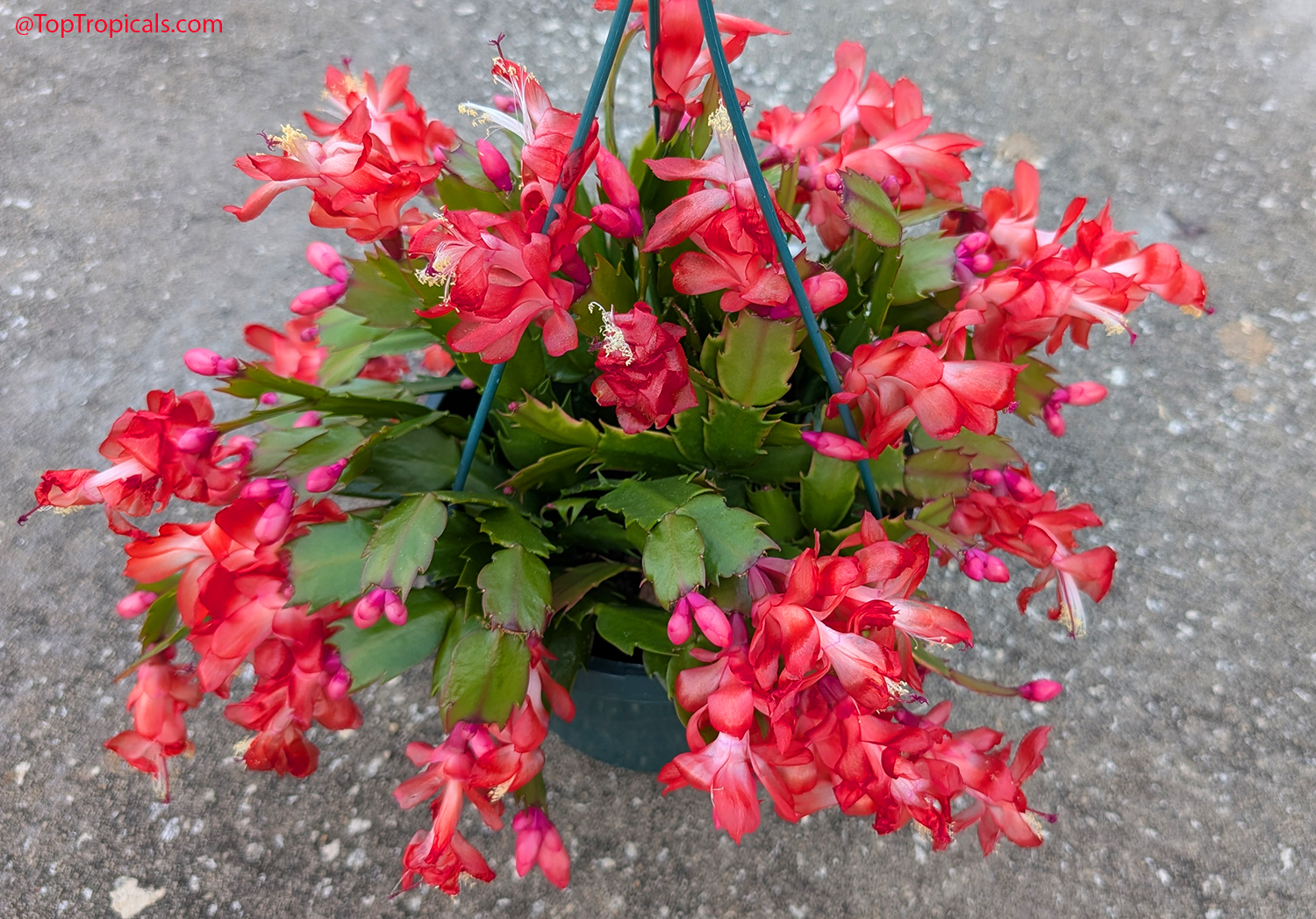
🌸 Schlumbergera x New Deal is not your regular Christmas cactus. Big blooms, long history. This heirloom flowers from Thanksgiving to Easter and descends from a plant first sold on the very day Franklin Delano Roosevelt was elected.
This variety actually vanished from the trade for decades. Its first known appearance was at a rare plant sale at the Brooklyn Botanic Garden on November 8, 1932 - the exact day Franklin Roosevelt won the presidency and launched the famous New Deal. The name stuck, and so did the legend!
🌸 What makes New Deal so special? The blooms are huge - about an inch larger than standard holiday cactus flowers - and come in brilliant violet-pink and white. And the timing is even better. It sends up a full flush around Thanksgiving and Christmas, then wakes up again with a second wave closer to Easter. That’s why some people call it a Thanksgiving cactus, others call it a Christmas cactus, and many insist it’s an Easter cactus. The truth? It’s all three.
🌸 Despite its pedigree, New Deal is surprisingly easy to grow. It thrives in normal houseplant conditions, stays compact, and rewards even casual care with heavy, reliable blooming.
🌸 The plants available today come from true descendant cuttings of an original 1932 specimen that is still alive. This makes New Deal one of the rarest, most authentic holiday cactus cultivars you can own - a living slice of history and one of the most generous bloomers of the entire holiday season.
Dragon Fruit Plant Care – Tips
from the Garden Expert
Dragon fruit is one of those plants that look exotic but are surprisingly
easy once you know the basics. Here is what works best in the garden:
Soil: They hate wet feet. A sandy, fast-draining soilless-mix
is
your friend. If water sits around the roots, rot comes fast.
Watering: Deep watering is better than frequent sips. Let the
soil dry between
waterings. In rainy season they cope well, but in pots you need to be
careful.
Sunlight: Full sun is great, but in very hot places a touch of
afternoon shade keeps them happy.
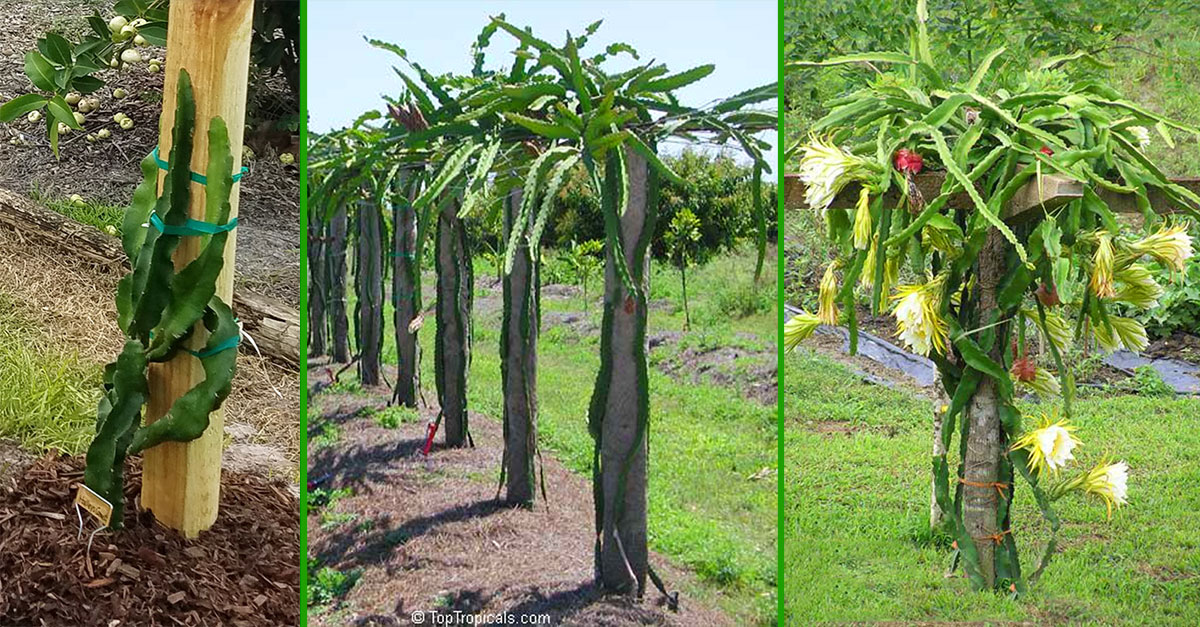
Support: They are natural climbers. A wooden post, concrete pole,
or trellis will give them something to grab and makes harvest easier.
Fertilizer: Feed lightly but often. A gentle liquid like Sunshine
C-Cibus liquid booster with every watering, or Green
Magic controlled release fertilizer
every 5-6 months. It encourages strong roots, lush growth, and lots of
flowers.
Pruning: Trim off tangled or weak stems. This guides energy into
strong branches that will flower and fruit.
Think of it as training a cactus vine into a small tree. Once it settles
in, it almost takes care of itself — and pays back with fruit you
can’t buy in stores.
🌱 Dragon Fruit
Plant Care – Outdoors and Indoors
Outdoors: Dragon fruit thrives in USDA Zones 10–11
year-round. In warm
regions like Florida, Texas, California, and Hawaii, you can grow it outside
in the ground. Give it fast-draining soil, full sun with a little afternoon
shade in the hottest months, and
a sturdy trellis or post to climb. Deep watering with drying periods in
between keeps roots healthy. A yearly pruning shapes the plant and boosts
flowering.
Indoors or Patio Pots: Gardeners in cooler zones can still enjoy
dragon fruit in containers. Use a large pot with sandy, well-draining mix or
soilless-mix
and a pole for support. Place the pot in the brightest
spot — a greenhouse, sunroom, or patio that gets 6+ hours of light
daily.
Move pots inside when temperatures drop below 40F. Even indoors, a healthy
plant can bloom and fruit if it has enough light and warmth.
❓
Dragon Fruit FAQ
How soon will a dragon fruit start producing?
Cuttings can flower and fruit in as little as 2–3
years. Seed-grown plants take longer, often 4–6 years. Large developed
specimens can start flowering and fruiting within a year or even the same
season.
Do I need more than one plant for pollination?
Some varieties are self-fertile, others need a second plant
for cross-pollination. Even self-fertile types usually set more fruit with a
partner nearby.
How big do they get?
In the ground, dragon fruit can climb 15–20 ft if you
let it. With pruning and a trellis, you can keep it shaped like a small
tree, 6–8 ft tall.
Can I grow it in a pot?
Yes. A large container with sandy mix or soilless-mix
and a pole for climbing works well. Indoors it will need
bright light or a grow lamp.
What does a dragon fruit taste like?
Sweet and juicy, like a blend of blackberry and raspberry.
Varieties differ: flesh can be white, pink, deep red, or purple, wrapped in
skins of red, pink, or yellow. White flesh is mild and refreshing, red flesh
is sweeter, and yellow flesh is the sweetest with a honey-pineapple flavor.
What zones can I grow dragon fruit outside?
USDA Zones 10–11 are best for year-round outdoor
planting. In cooler areas, grow it in containers and bring inside for
winter.
How often should I water?
Deep water, then let the soil dry. Too much water causes
root rot. Think “desert cactus with a taste for rain.”
Is dragon fruit easy to grow?
Yes. Pitayas grow like cactus trees on strong supports, but
they are easy to care for — little water, sun or semi-shade, and they
thrive.
How long do they live?
A healthy dragon fruit cactus can produce for 10 years or
more with proper care.
What are the health benefits?
Dragon fruit is high in fiber, supports digestion, and is
low in calories. It is rich in antioxidants and vitamin C, making it good
for immunity and overall wellness. Many gardeners enjoy it as a healthy
snack or in smoothies.
By Tatiana Anderson, Horticulture Expert at Top
Tropicals with
Smokey & Sunshine help
Sunshine Boosters for different types of plants
Here is why SUNSHINE Boosters are the smart choice for your garden this
spring:
Amino Acid Stability: Unlike traditional fertilizers that
use synthetic EDTA chelators, our formulas are amino-acid based. This means
100% of the nutrients are bioavailable and consumed by the plant, leaving
zero
toxic residues or salt build-up in your soil.
Safe for Every Watering: Because our concentrations are
scientifically balanced and mild, they are safe for daily use. This
eliminates the "feast or famine" cycle of dry fertilizers and prevents
accidental root burn.
Pure Taste for Edibles: Our delicate formulas do not
contain excess salts, urea, or ammonium salts that can ruin the flavor of
your harvest. Your fruit and vegetables will retain their pure, natural
taste.
Pollinator Friendly: Our boosters are designed to be safe
for honeybees and other beneficial insects, making them the responsible
choice for an organic-style garden.
🌿For Potted Plants: Breaking the "Foodless" Cycle
Schlumbergera - Christmas cactus - after boosting
flowers with Sunshine
Megaflor
Container-grown plants are trapped in soilless mixes (peat, bark,
perlite) that are structurally great but naturally nutrient-deficient.
Total Nutrition: Since pots lack the natural "buffet"
of the ground, SUNSHINE Boosters™ provide every
essential mineral the plant cannot find on its own.
No Salt Build-up: Our amino-acid based formulas are
consumed entirely by the plant, leaving zero toxic residue or root-burning
salts behind.
Daily Safety: Our mild concentrations eliminate the
"feast
or famine" cycle of dry fertilizers, making them safe for use with every
single watering.
Even in the ground, plants often struggle to absorb what they need
because soil compounds can "lock up" nutrients.
Enhanced Solubility: SUNSHINE Boosters create a
slightly acidic environment that helps dissolve stubborn salts in the soil,
making them accessible to roots again.
Precision Delivery: We provide mobile elements like
Nitrogen precisely when the plant needs to push new spring growth.
🌿The Foliar Advantage: Direct-to-Leaf Delivery
Did you know a plant leaf can absorb nutrients even more efficiently than
the roots? Foliar feeding is your "emergency button" for instant results.
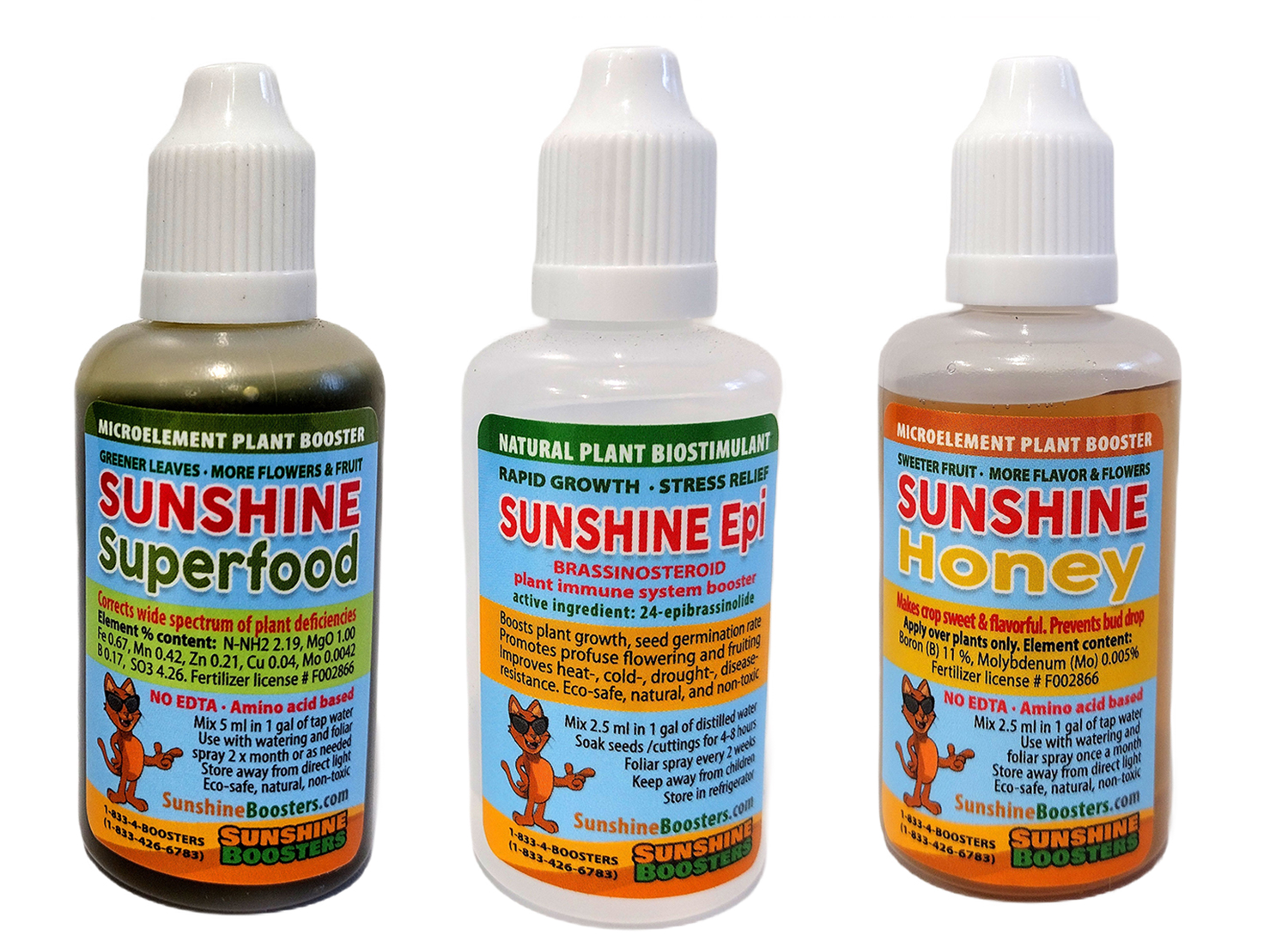
Quick Fix: Foliar applications with Sunshine
Superfood are the fastest way to correct yellowing leaves or visible
deficiencies.
Metabolism Boost: Sprays like SUNSHINE-Epi act
as a bio-regulator, helping plants recover from the stress of spring
temperature swings.
Better Fruit:SUNSHINE Honey is applied to
leaves to naturally move sugars to the fruit, increasing sweetness and
flavor.
🌿The Calcium Problem: Solved
As your plants wake up this Spring, they need structural strength. Think
of Calcium as the "cement" that holds plant cells
together. Without it, new spring growth is doomed to fail.
Signs Your Plant is Starving for Calcium:
Deformed Leaves: New growth looks twisted, hooked, or
curled.
Blackened Tips: The very edges of young leaves turn white,
then quickly blacken and die.
The Industry Secret: The "Missing" Mineral
Most fertilizers, both dry and liquid, completely skip Calcium. Why?
Because it’s a chemical nightmare to keep stable in a concentrated
solution. Most manufacturers rely on your irrigation water to deliver
Calcium, but tap water is inconsistent and often fails to provide what a
hungry, growing plant needs.
The SUNSHINE Boosters: Stable Calcium in Every Bottle
We have successfully stabilized Calcium directly into every single
Sunshine Booster formula.
Whether you are using Bombino, Robusta, or Megaflor, you are delivering a
precise, stable dose of Calcium with every watering. No lockout, no
sediment, and no relying on the "luck" of your tap water. Just strong,
healthy cell walls and perfect spring growth.
🌿SUNSHINE-Epi: The Year-Round Bio-Regulator
Whether it’s the transition of spring, the extreme heat of summer,
or the dry air of indoor wintering, SUNSHINE-Epi is your
plant’s primary defense. This natural Brassinosteroid acts as a
powerful immune booster, helping plants navigate stress wherever it comes
from.
Universal Stress Shield: Protects against temperature
swings (both heat and cold), drought, and transplant shock.
Vigorous Development: Dramatically improves root growth
and speeds up the metabolism of young seedlings and cuttings.
Eco-Safe: 100% non-toxic to humans, pets, and
pollinators.
Note: While Epi is highly effective, it is a
performance booster, not a substitute for proper care. It works best when
paired with the right light, water, and a consistent feeding program. It
won't bring a dead plant back to life, but it will help a struggling one
find its footing.
Don't
let your garden wake up to an empty nutrition plate.
Smokey: Save your gas money for donuts. We're
shipping the boosters for free. Sunshine: Agreed. My charm covers the delivery
cost.
No coupon code required: The free shipping is automatically applied
at checkout.
Complete Nutrition: Stock up on Robusta, Superfood, and Epi for the Spring
growth push.
Offer
valid through 03/14/2026. Free shipping offer is valid on
SUNSHINE Boosters liquid products only. Not valid on previous purchases and
cannot be combined with any other offers, coupons, or discounts. Offer
subject to change or cancellation without notice.
Sunshine Boosters micro
elements and supplements - Superfood micro-element complex, Sunshine Epi
biostimulant and Sunshine Honey supplement for better fruit
❓Frequently Asked Questions: SUNSHINE Boosters™
What water should I use for foliar spraying?
Tap water works perfectly for most. However, if your water is very "hard"
(leaving white mineral spots on leaves), switch to distilled water for a
cleaner finish and better absorption.
How long does a diluted solution last?
For maximum potency and to avoid nutrient degradation, try to use your
diluted mixture
within a few hours of preparation. Keep away from direct sun. Fresh is
always best!
Can I use SUNSHINE Boosters as a daily foliar spray?
Yes! You can mist your plants daily to maintain high vigor, but you must
reduce the dosage (use half the recommended strength) to avoid over-feeding.
Can I mix boosters with pesticides or fungicides?
It is best to apply them separately. Mixing fertilizers with chemical
pesticides in one tank can trigger reactions that "lock out" nutrients or
reduce the efficacy of the treatment.
Will the liquid stain my patio or hands?
No. Unlike traditional fertilizers with heavy blue or pink dyes, our
solutions are clear or very light-colored. If you spill it, simply rinse
with water—no stains, no mess.
Can I mix different SUNSHINE Boosters together in one sprayer?
Yes. All SUNSHINE Boosters are chemically compatible. You can combine a
"growth" booster like Robusta with a "micro-element" complex like Superfood
in the same water to save time.
Are these products safe to use around my pets?
Absolutely. Our formulas are 100% non-toxic and amino-acid based. Just ask
Smokey and Sunshine—they are perfectly safe for households with
curious cats, dogs, and children.
Can I use these boosters on indoor plants?
Yes. They are ideal for indoor use because they don't produce a "fertilizer
smell" and won't cause salt crusting on your decorative pots or furniture.
Is it safe to use on fruit and vegetables I plan to eat?
Yes. Because our formulas contain no urea, nitrates, or harsh salts, they
don't leave a "chemical" aftertaste. They actually help improve the natural
sugars and flavor profile
of your harvest.
What is the best temperature for foliar spraying?
Apply when temperatures are below 85°F. Early morning or late evening
is best; this allows the leaves to remain wet longer, giving the plant more
time to absorb the nutrients.
What Fertilizer to Use and How?
Green
Magic controlled release fertilizer keeps plants green during active
growth season - apply only once in 6 months.
Sunshine: Smokey, you saved my coffee tree. But what do I
do now so it stays happy?
Smokey: Simple. Spray Sunshine Robusta every five days
during active growth.
Sunshine: Five days? Smokey, I barely remember where I left
my coffee
mug five minutes ago.
Smokey: That is exactly why we use Green Magic.
Sunshine: Fertilizer for forgetful gardeners?
Smokey: Controlled release. Sprinkle once and it feeds the
plant for six months.
Sunshine: Six months? I can have a very good nap in that
time.
Smokey: Exactly. The plant keeps eating slowly while you
keep napping.
Sunshine: Perfect. Remember, I will bring the coffee. You
bring the donuts.
Smokey: And next week we will show you exactly how Green
Magic works and why plants love it. Stay tuned.
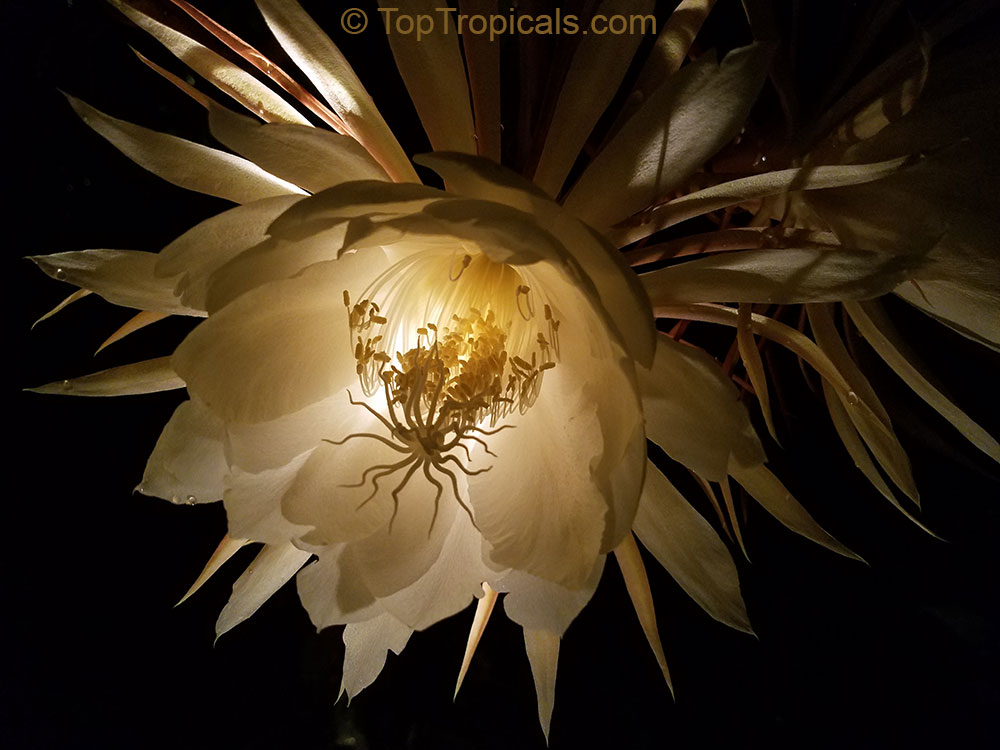
Mysterious Night Blooming Cactus -
Epiphyllum. How to grow it?
Q:
My friend has a huge Queen of the Night Cactus, and the
blooms are so gorgeeous! She gave me a cutting but I am
not sure how do I plant it? How long will it take till it
starts blooming? Is it true that it has only one flower
once a year and only at night?
A:
Queen of the Night is a very popular and yet mysterious
plant. The flowers open once a year after sunset for one
night. However the flowering period can last a month or
two during the warm season. So each flower lasts only one
night, but there will be more flowers to come! In the
Nature, Epiphyllum oxypetalum - Queen of
the Night - grows on trees in the jungles of Central
and South America. It is actually very easy to grow as an
indoor plant in colder climates. Here is South Florida we
grow them outside in hanging baskets. This is how to start
Queen of the Night from a cutting:
1) Put the cutting in a dim, dry place for three days,
with no soil and its base exposed to the air, so it will
form a callus.
2) Fill a 4-6-inch pot with slightly damp potting soil or succulent mix. Insert the
cutting 1 or 2 inches into the soil and tamp the soil
around its base.
3) Place the pot where the cutting will get bright light,
but no direct sun. Spritz it occasionally with a spray
bottle of water to keep the soil only slightly moist. It
should root in couple weeks.
4) Keep the plant on an east- or west-facing windowsill
where it will receive direct sunlight only in early
morning or late afternoon. Water the cactus until water
runs out of the pot's drainage holes. Dump the excess out
of the pot's saucer immediately, and wait until the
surface of the soil is dry to the touch before watering
your cactus again.
5) Fertilize once a month from March through October with
a balanced plant food, and
apply micro-elements once a month
for a healthy vigorous growth. Refrain from feeding the
plant in December and January.
6) Position the cactus in partial shade under a porch roof
or tree, if you decide to move it outdoors during the
summer. This plant likes summer humidity!
7) Repot the cactus only once every two years or so, to
keep it slightly root bound. Wait until after it flowers
in summer, and repot it after it blooms. Prune off any
damaged growth at that time as well.
8) Move the plant to a cooler room over the winter months,
one that remains dark during the evening hours with
temperatures above 45 degrees. Reduce the frequency of
watering, waiting until its soil is dry. Resume regular
watering in March.
If grown from cutting, it may take 2-3 years until the
plant starts blooming, so if you don't want to wait that
long - just get a blooming size plant from our
store!
Epiphyllum guatemalense Monstrosa - Curly Locks or Orchid Cactus
👀 Weird cactus looks like pasta with Dragon Fruit
➰ Epiphyllum guatemalense Monstrosa - Curly Locks or Orchid Cactus - is one of the most unusual jungle cacti you can grow. Instead of the usual flat cactus leaves, this one grows curly, looping stems that twist and spiral in every direction. It looks like a green waterfall of botanical noodles, perfect for a hanging basket or a high shelf where its wild shape can really show off.
➰Curly Locks is actually a natural mutation of a Guatemalan jungle cactus that grows high up in jungle trees, using its stems to absorb moisture and light from the air. Like many epiphytic cacti, it produces large, fragrant flowers that open at night and look strikingly similar to orchids. After blooming, it forms small, oval pink fruits that are edible and juicy - like tiny dragon fruits!
➰This plant is self-pollinating, so you don’t need insects or hand pollination to get fruit. It thrives in bright, indirect light and prefers to be a bit root-bound to trigger blooming. Just water moderately, let the soil dry slightly between waterings, and avoid moving it too often once it’s happy in its spot.
➰Epiphyllum Curly Locks is not your typical cactus - it’s a living sculpture, a conversation piece, and a fruiting wonder all in one.


 Dragon Fruit Plant Care – Tips
from the Garden Expert
Dragon Fruit Plant Care – Tips
from the Garden Expert