Garden Blog - Top Tropicals

Date: 20 Jan 2025

How to Grow Jackfruit: Practical Guide
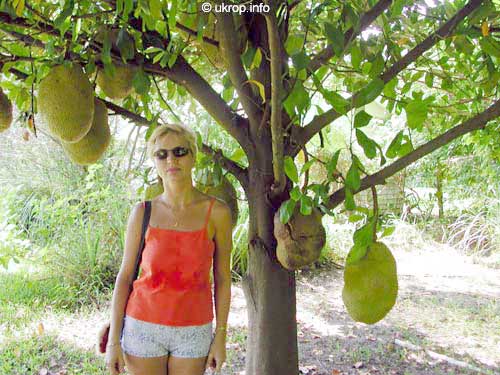
Jackfruit (Artocarpus heterophyllus) tree
Jackfruit (Artocarpus heterophyllus) tree

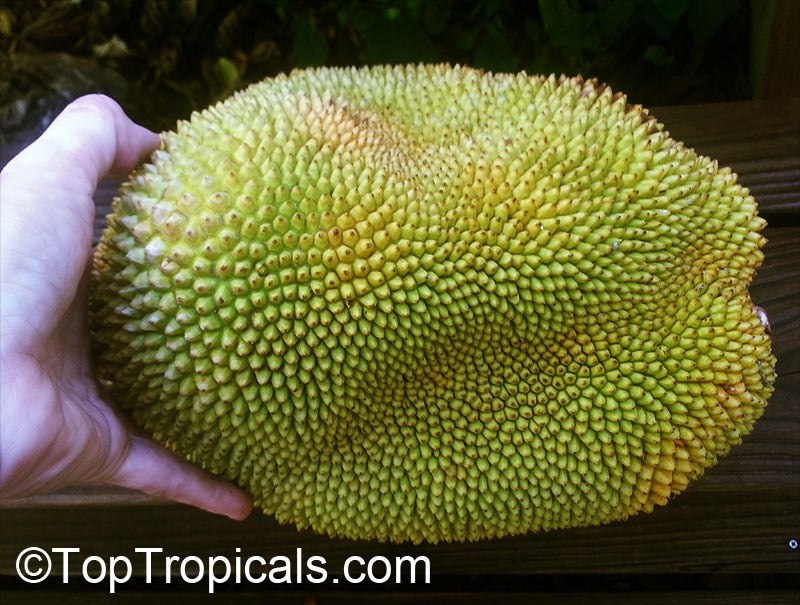
Jackfruit (Artocarpus heterophyllus) fruit
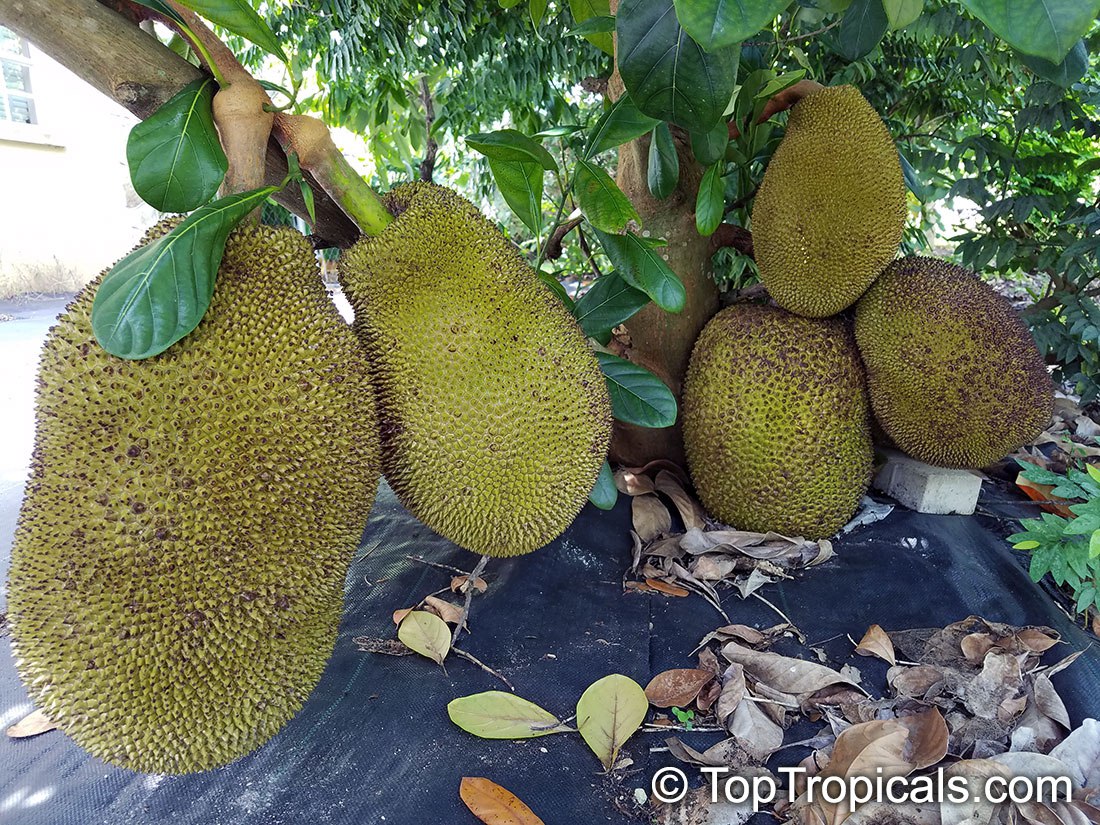
Jackfruit (Artocarpus heterophyllus) fruit

Jackfruit (Artocarpus heterophyllus) fruit at the base of the tree
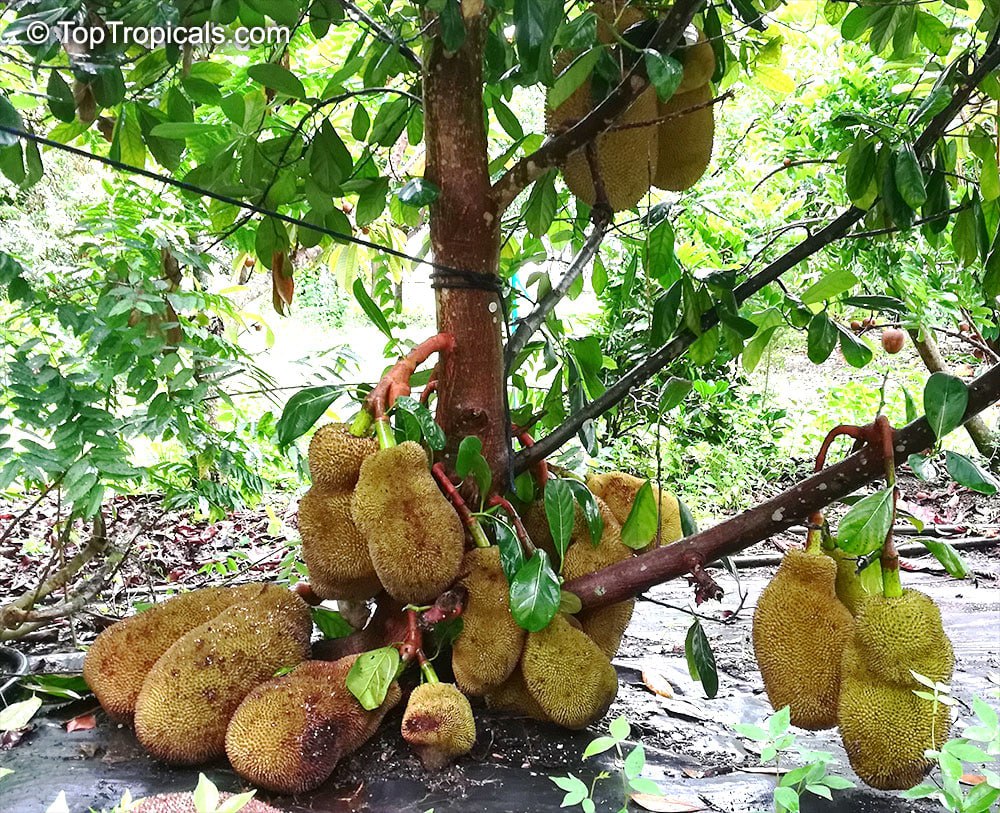
Jackfruit (Artocarpus heterophyllus) fruit at the base of the tree

Jackfruit (Artocarpus heterophyllus) fruit at the base of the tree

Jackfruit (Artocarpus heterophyllus) fruit at the base of the tree

How to Grow Jackfruit: Practical Guide

  • 🍈 Jackfruit (Artocarpus heterophyllus) is a tropical tree that produces the largest fruit in the world, weighing up to 80 pounds and reaching 36 inches in length. The trees thrive in frost-free, humid climates with plenty of sunlight. They require well-draining soil rich in organic matter and regular watering to flourish. Despite their reputation as ultra-tropical, mature Jackfruit trees can tolerate light frost for a few hours without significant damage. Additionally, they can be grown in containers in colder areas with proper care and pruning.
  • 🍈 What Climate is Essential for Growing Jackfruit Trees?


    Jackfruit trees require a tropical or subtropical climate, with temperatures ideally between 60-95°F. While young trees are frost-sensitive, mature trees can withstand light frost for short periods. However, cold winters can reduce fruit production. Frost-free temperatures are crucial for optimal growth and fruiting.
  • 🍈 How Often Do Trees Need Fertilizing, and What is the Best Type of Feed?


    Jackfruit trees are heavy feeders. Fertilizing them regularly is key to their health and productivity. During the active growing season (spring to fall), apply a balanced dry fertilizer once a month. Liquid amino-acid-based fertilizers, such as Sunshine Boosters, can be used year-round with every watering. These fertilizers help maintain healthy growth and encourage abundant fruiting. Supplement with organic matter like compost, manure, or peat moss to enrich the soil.
  • 🍈 How Important is Pruning, and When is the Right Time to Prune?


    Pruning is essential for maintaining a manageable tree size and promoting healthy fruit production. Jackfruit trees produce fruit at the base of the trunk, allowing them to be pruned annually to a height of 7-12 feet. This practice not only makes harvesting easier but also encourages more fruiting. Prune after the fruiting season or in late fall to remove excess growth and shape the tree. Regular pruning also improves air circulation and reduces the risk of disease.
  • 🍈 Key Tips for Successful Jackfruit Production


  • · Climate: Ensure frost-free temperatures and adequate humidity.
  • · Soil: Use well-draining soil enriched with organic matter.
  • · Watering: Maintain consistent soil moisture without waterlogging.
  • · Pruning: Keep the tree under 7-10 feet for easier management and better yield.
  • · Fertilizing: Apply balanced fertilizers and supplements regularly.


🍈 Jackfruit facts

  • · The fruit consists of large, edible bulbs of yellow, sweet, banana-pineapple-flavored aromatic flesh.
  • · Seedlings start fruiting within 3-4 years, with fruit ripening 4-6 months after flowering.
  • · A mature tree can produce up to 200 pounds of fruit annually.
  • · For colder regions, growing Jackfruit in containers is an option, provided the tree is regularly pruned and topped.


👍 Jackfruit trees grow fast and fruit abundantly with proper care, making them an exotic addition to tropical fruit collections.

📚 From previous posts:


The largest tree-borne fruit in the world
How to grow the biggest fruit on Earth

🛒 Plant your own Jackfruit

#Food_Forest #How_to

🔴 Join 👉 TopTropicals
Date: 17 May 2023

NEW VIDEO:
ABC7 Fort Myers News:
Rare Tropical Fruit Trees at Top Tropicals

We received lots of orders from our customers for butterfly attracting plants after our recent . We are glad you liked the story and the plants!

Today's topic is on tropical fruit. Enjoy this quick tour and learn more about different varieties of rare tropical fruit and what can be grown in your yard. We have them all! And we can ship them to your door.

Fruit and plants introduced in the video:

Persimmon
Coffee
Sapodilla
Sapote
Vanilla
Pomegranate
Yellow Dragon fruit
Litchi
Tamarind
Chocolate Tree
Raspberry
Grape

Watch the news segment by Rachel Anderson for ABC-7: Rare fruit trees at Top Tropicals.

Subscribe to our Channel:

Stay updated with TopTropicals Videos by subscribing to our channel at YouTube.com/TopTropicals and get our latest video news of what is fruiting and blooming!

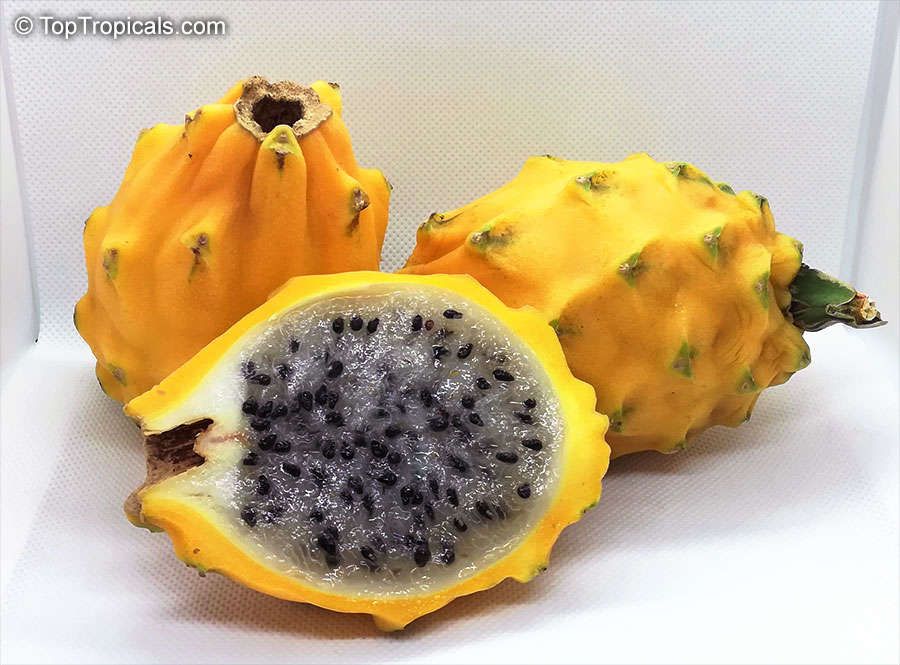
Yellow  Dragon  Fruit,  Selenicereus  megalanthus,  fruit

In the photo: Yellow Dragon Fruit, Selenicereus megalanthus, the sweetest and the most flavorful rare Yellow Pitaya. The taste is said to be superior to most cactus fruits.

Date: 23 Oct 2022

What is Akee fruit?

One of the most bizarre looking, yet useful...

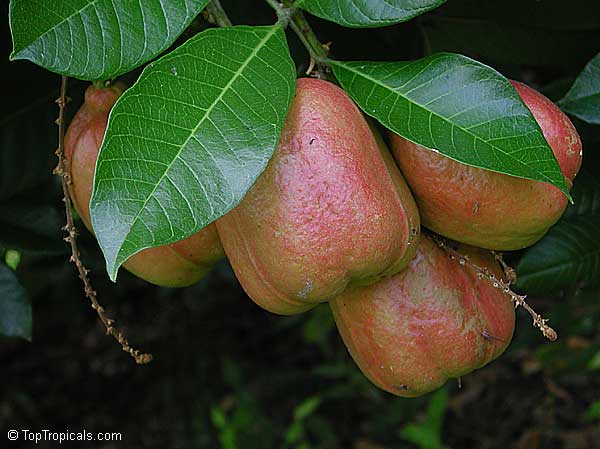
Akee  fruit  on  the  branch  with  leaves

Email from our Florida customer:

I got an Akee tree from you last year for my tropical fruit garden collection and honestly didn't know much about what it was. This year it started growing real fast and branched out. In spring it was flowering like crazy and now I have about 20 bright coral fruit hanging off the tree that look like Christmas decorations. They are extremely showy and can be seen from far away, I have neighbors stopping by asking what kind of tree it is. I finally did more research on it and found a recipe how to cook the fruit. Only a few had ripened and opened so far, but I already had a chance to try the meal. Cooked the arils and fried in a pan with some butter. What a delicious surprise! To my taste, it is like a mix of potatoes and eggs. Just through in some bacon and it will make a complete breakfast! One of the coolest fruit I've tasted. Just wanted to share this with you.

About Akee (Blighia sapida)

This showy fruit, a close relative of Lychee, Longan, and Rambutan, is a National fruit of Jamaica. It is indeed very exciting one, and what is also important, the tree is easy in cultivation, fast growing and can be maintained compact. I it is not bugsy or picky about soil/water conditions, and is relatively cold tolerant for being a tropical tree. You can find delicious akee meals only in Jamaican restaurants. But no need to search for it - grow your own tree, it can't be easier. It will start fruiting for you the next season, you don't have to wait long. Sometimes it fruits twice a year! However, remember, the fruit is used as a vegetable, and is not eaten raw. It must be picked after the fruit has opened naturally so the flesh is fully exposed to light. When the fruit has "yawned", discard the seeds (or better plant them to grow more trees - to share with your friends!). The arils, while still fresh and firm, are best parboiled in salted water or milk and then lightly fried in butter. Then they are really delicious!
Read more about this tree...

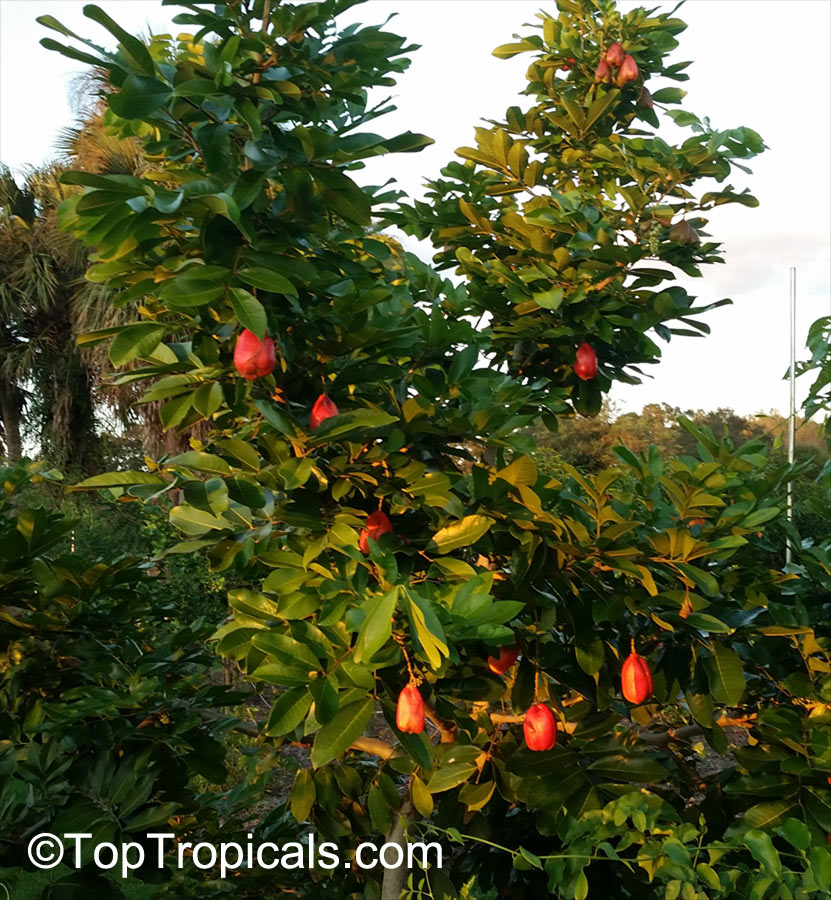
Akee  tree

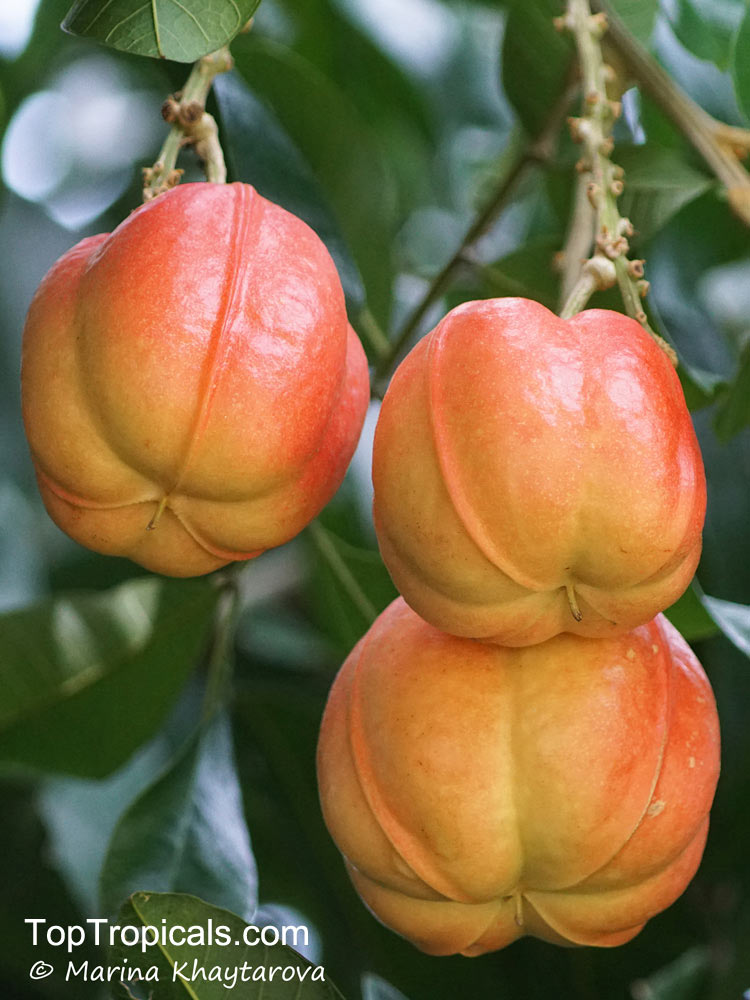
Akee  fruit

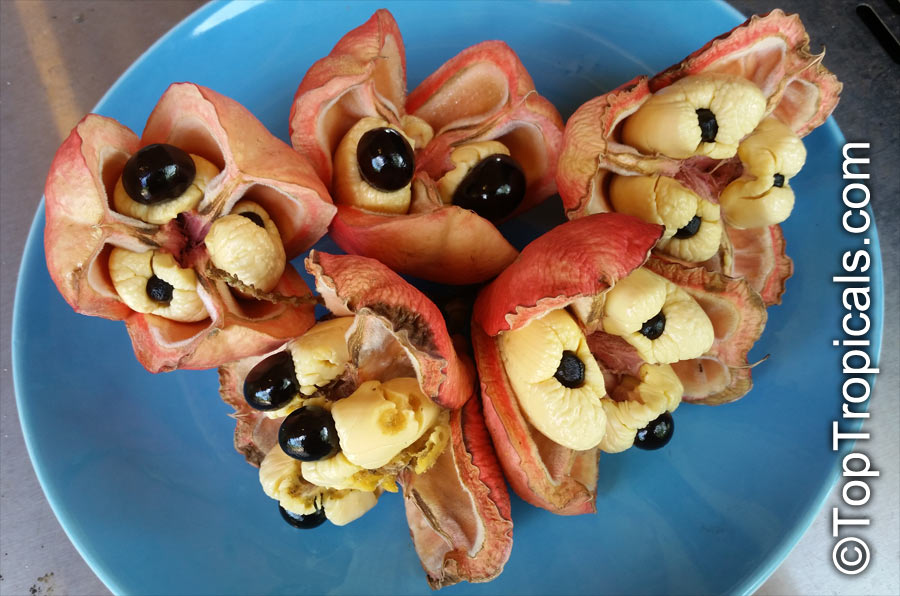
Akee  fruit  with  pulp  and  seeds  on  a  plate

Date: 4 Dec 2021

Sunday Breakfast with Peanut Butter and Blackberry Jam...

It's time for our favorite day and another Easy stroll through Top Tropicals' Garden with savings of 50% and MORE! What a wonderful way to start the day.

Speaking of wonderful, is there any memory as wonderful as a peanut butter and jelly sandwich from back in the day?! PB&J's, a true Classic, easy, savory and delicious and a universal favorite... And for a truly Top Tropicals variation of the Classic sandwich, have we got something special for you...
Bunchosia argentea and Randia Formosa. OK, we admit it may not roll off the tongue quite as easily as PB&J, but your tongue and taste buds will be thankful for the delicious flavors of the Peanut Butter Fruit Tree - Bunchosia argentea, and Blackberry Jam Fruit - Randia formosa.

Combine the rich and creamy delicious Peanut Butter with the not too sweet and fresh pulp of the Blackberry Jam Fruit and you have a unique and tasty combination destined to be a classic of its own while making your garden look even more beautiful!

Saving on your favorite plants is Easy.
Easy like Sunday Morning...

For this Easy Sunday we have priced these at incredible savings:
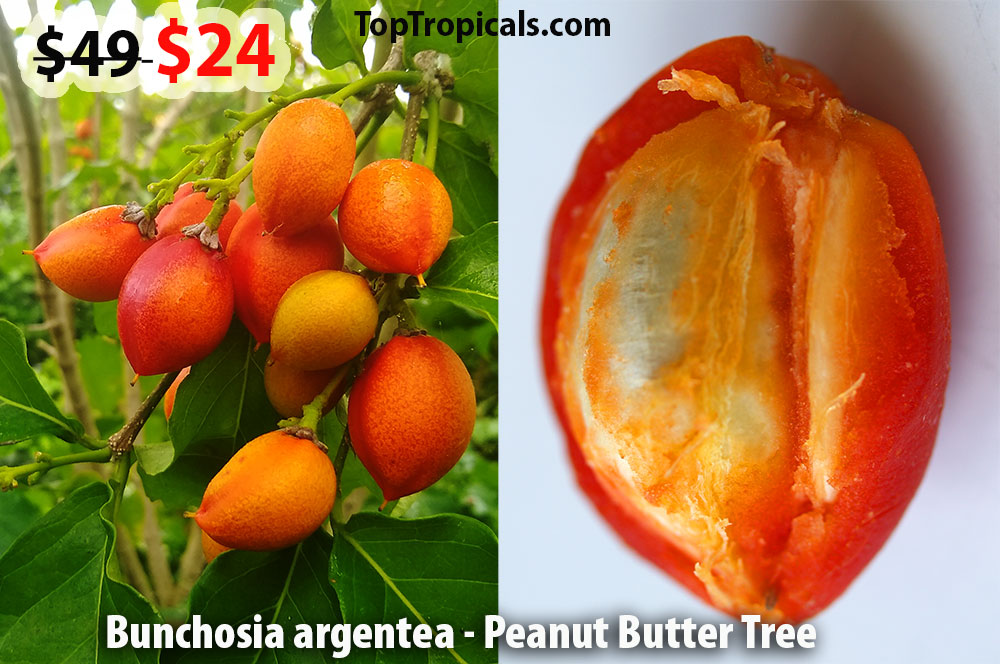
The Peanut Butter Tree, regularly $49, is on Easy Sunday sale for only $24
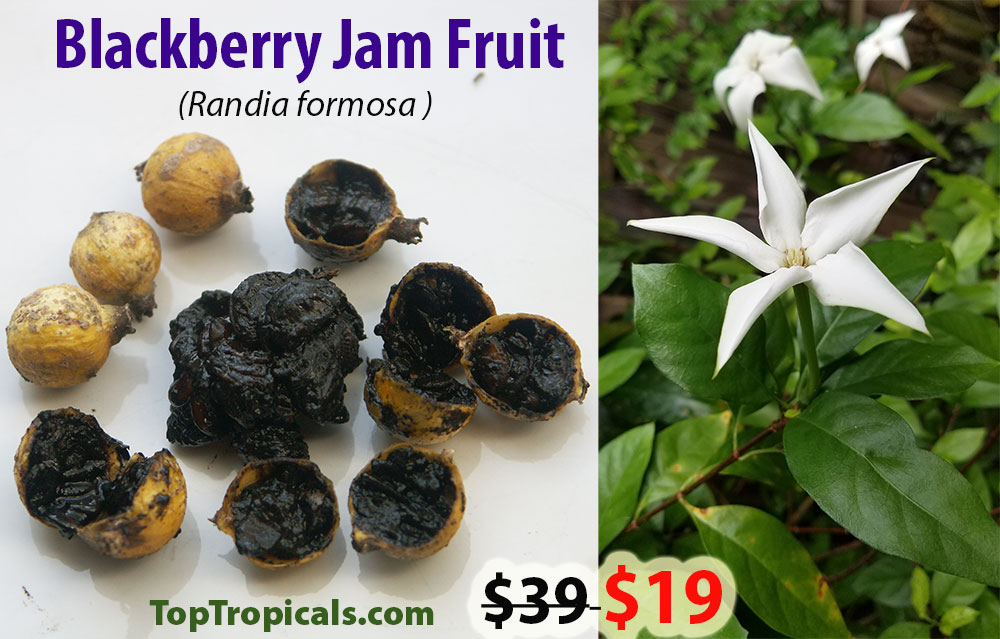
The Blackberry Jam, regularly $39, is on Easy Sunday Sale for only $19

Classic Combination

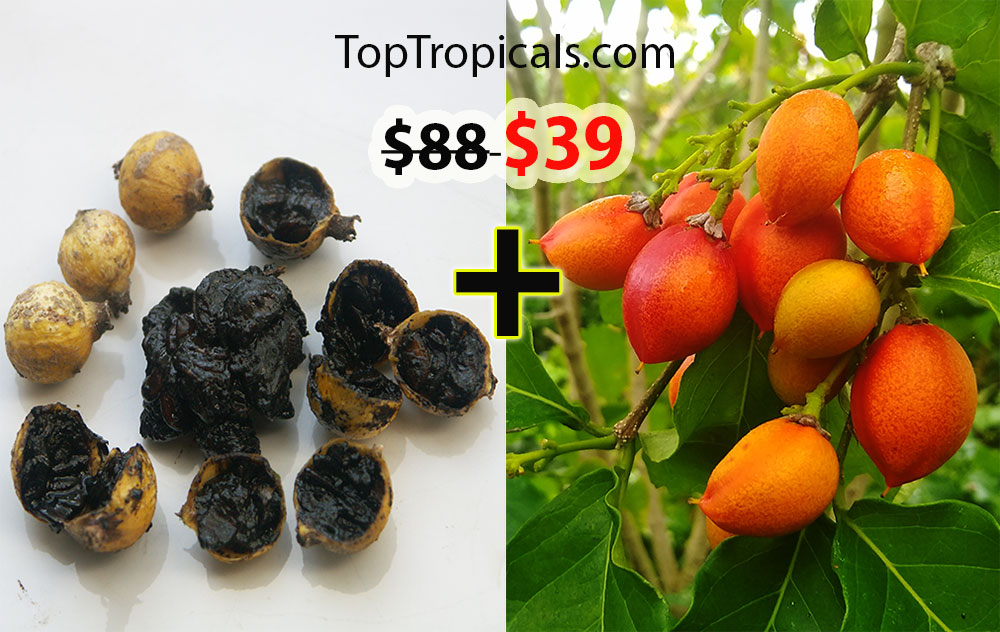
Combine the two for your own Classic Combination and save even more, instead of full price $88, it's only only $39 for the set!

Blackberry Jam Fruit

Randia formosa - Blackberry jam fruit, Jasmin de Rosa - fragrant white flowers of this Gardenia relative and edible fruit that tastes like blackberry jam... Kids love the fruit! Many claim that it's even better than preserves. This exotic shrub will fruit in a container within a year and produces as many as 25 to 30 fruits at a time. It is relatively cold hardy, blooms for a few months in the fall and winter, so fruiting and flowering can be enjoyed when many other plants are dormant.

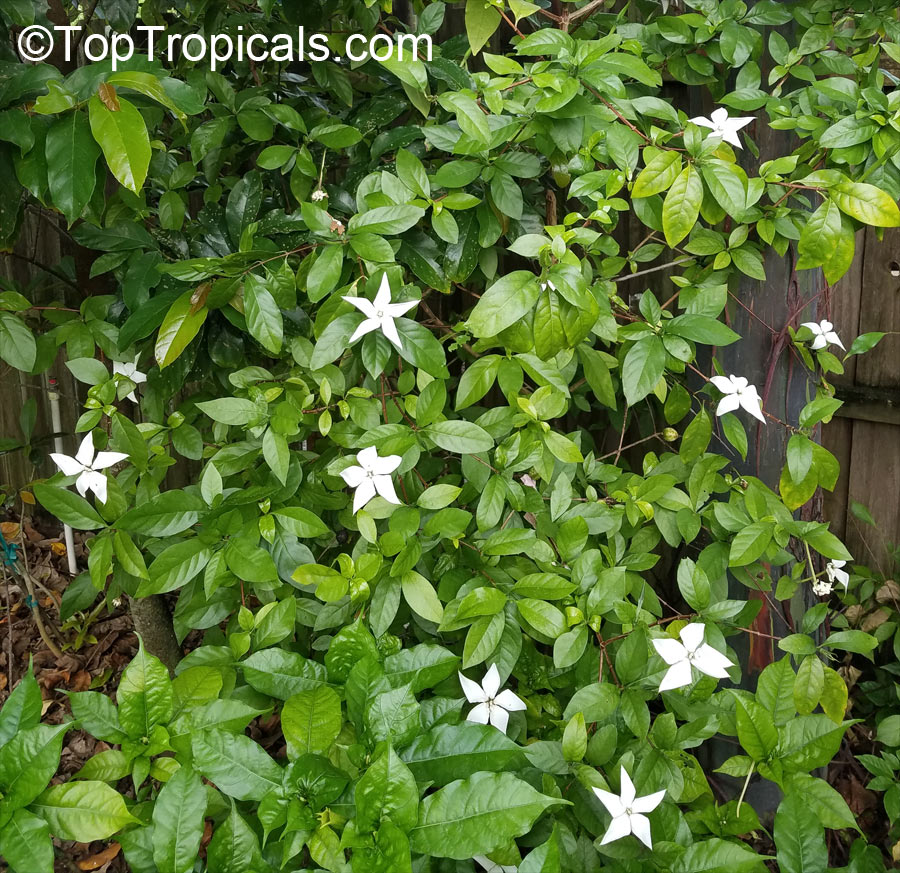
Picture of 2 y.o. plant full of fragrant flowers, ready to set fruit:

Peanut Butter Tree

Bunchosia argentea - Peanut Butter Tree.
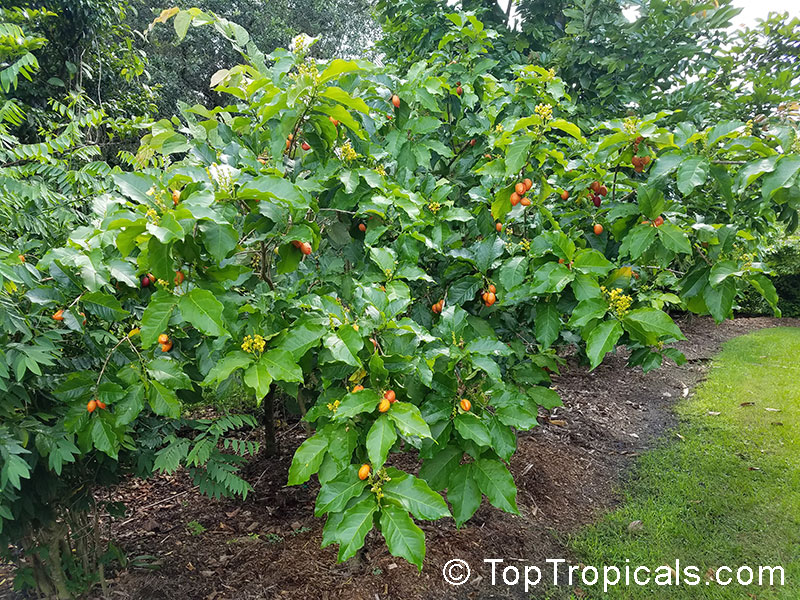
One of the most fascinating exotic fruit, as amazing as Miracle fruit, Peanut Butter Fruit is loved by both kids and adults. Yes, it tastes exactly like peanut butter! Sweet, soft pulp with peanut flavor. The tree is small in size, grows 10-15 ft max, or can be kept as a bush. Starts fruiting within 2-3 years from seed! Keep it in a pot if you have limited space, it can be grown indoors, too. The fruit can be eaten fresh or made into milk shakes. Very rare in cultivation, and relatively cold hardy.

Picture of 2 y.o. tree full of fruit:

Remember, the special prices are good for only 24 hours and expire Monday morning at 7 am EST.
Limited to availability, while supply lasts, hurry up!

Enjoy!

Date: 12 Nov 2025

How to get lots of Star Fruit

Star Fruit- Carambola Tree, Averrhoa carambola

⭐️ How to gets lots of Star Fruit Carambola
  • 🌟 Star Fruit - Carambola Tree (Averrhoa carambola is one of those trees that makes gardening instantly rewarding. Once you plant it, you’ll soon have a tree covered in shiny yellow fruit shaped like little stars.
  • 🌟 Growing tips


🟡 Sun: Loves full sun. The more light, the sweeter the fruit.
  • 🟡Temperature: Keep warm and protect from winds. It thrives in warm, tropical climates but can handle light frost if sheltered from cold winds - wind-free is the key.
  • 🟡Soil: Prefers well-drained soil. Avoid waterlogging.
  • 🟡Water: Regular watering keeps it happy, but don’t let roots sit in soggy soil.
  • 🟡Size: Space saver! This compact tree doesn’t take up much room, perfect for smaller gardens. Dwarf varieties also do well in containers.
  • 🟡Growth and crop: Fast-growing and early to fruit. Seedlings start producing in about three years, while grafted or air-layered trees fruit right away.
  • 🟡Flowers: Beautiful pink blooms appear before the fruit, adding extra charm to the garden.

  • 🌟 With just a bit of care and protection from wind and cold, your Carambola tree will reward you with baskets of bright, starry fruit through the cooler months when most other trees rest.
  • 🌟 Slice one open and you get perfect star-shaped pieces that brighten up salads, desserts, or smoothies. The fruit is crisp, juicy, and beautifully sweet-tart. It’s nature’s candy - refreshing, low in calories, and rich in vitamin C and antioxidants.


📚 Learn more:


🛒 Explore Star Fruit varieties

#Food_Forest

🟢 Join 👉 TopTropicals