Garden Blog - Top Tropicals

Date: 16 Jun 2023

NEW VIDEO:
ABC7 Fort Myers News:
Avocado Varieties at Top Tropicals

We continue the series of ABC-7 News on Top Tropicals selections. Previously, we showed you segments about Butterfly Plants, Rare Fruit Trees, and Mango varieties. Today's video is about growing an Avocado tree in your home garden.

Growing your own avocado tree has many benefits. You can enjoy fresh, delicious avocados right from your garden. Avocado trees are attractive, provide shade, and enhance your landscape. There are many avocado varieties to choose from, offering unique flavors, sizes, and ripening times. You will find Avocado trees for sale online right here at TopTropicals.com. Our trees can be shipped to you!

Watch the news segment by Rachel Anderson for ABC-7:
Avocado Varieties at Top Tropicals.

Subscribe to our Channel:

Stay updated with TopTropicals Videos by subscribing to our channel at YouTube.com/TopTropicals and get our latest video news of what is fruiting and blooming!
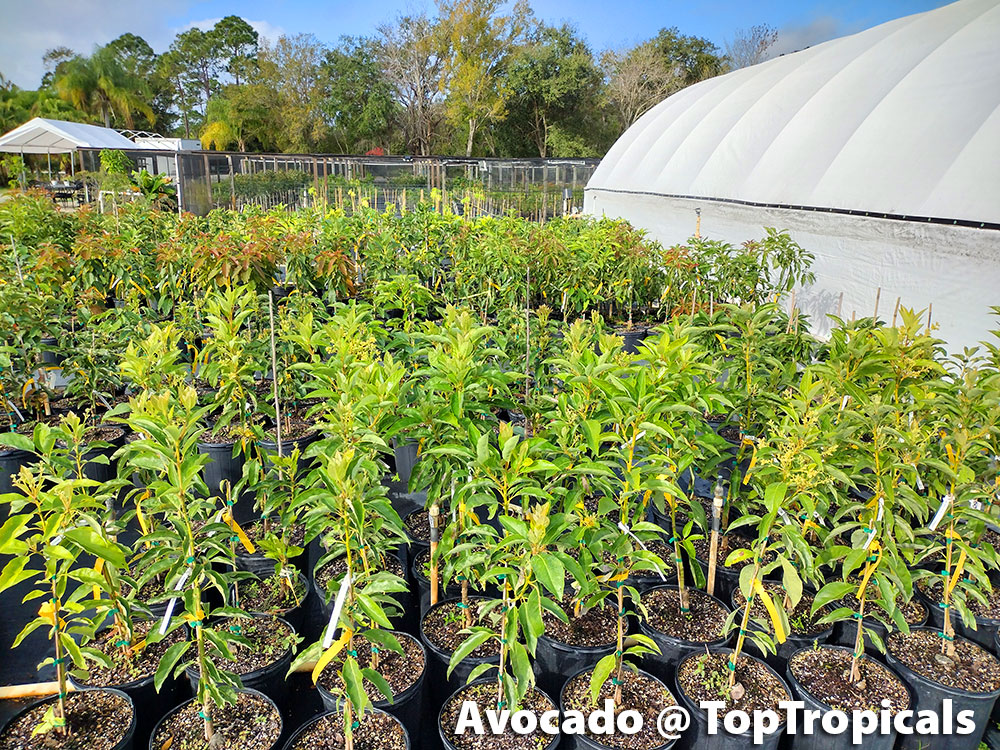
Avocado  trees  in  3  gal  pots

Date: 8 Jun 2023

NEW VIDEO:
ABC7 Fort Myers News:
Mango Varieties at Top Tropicals

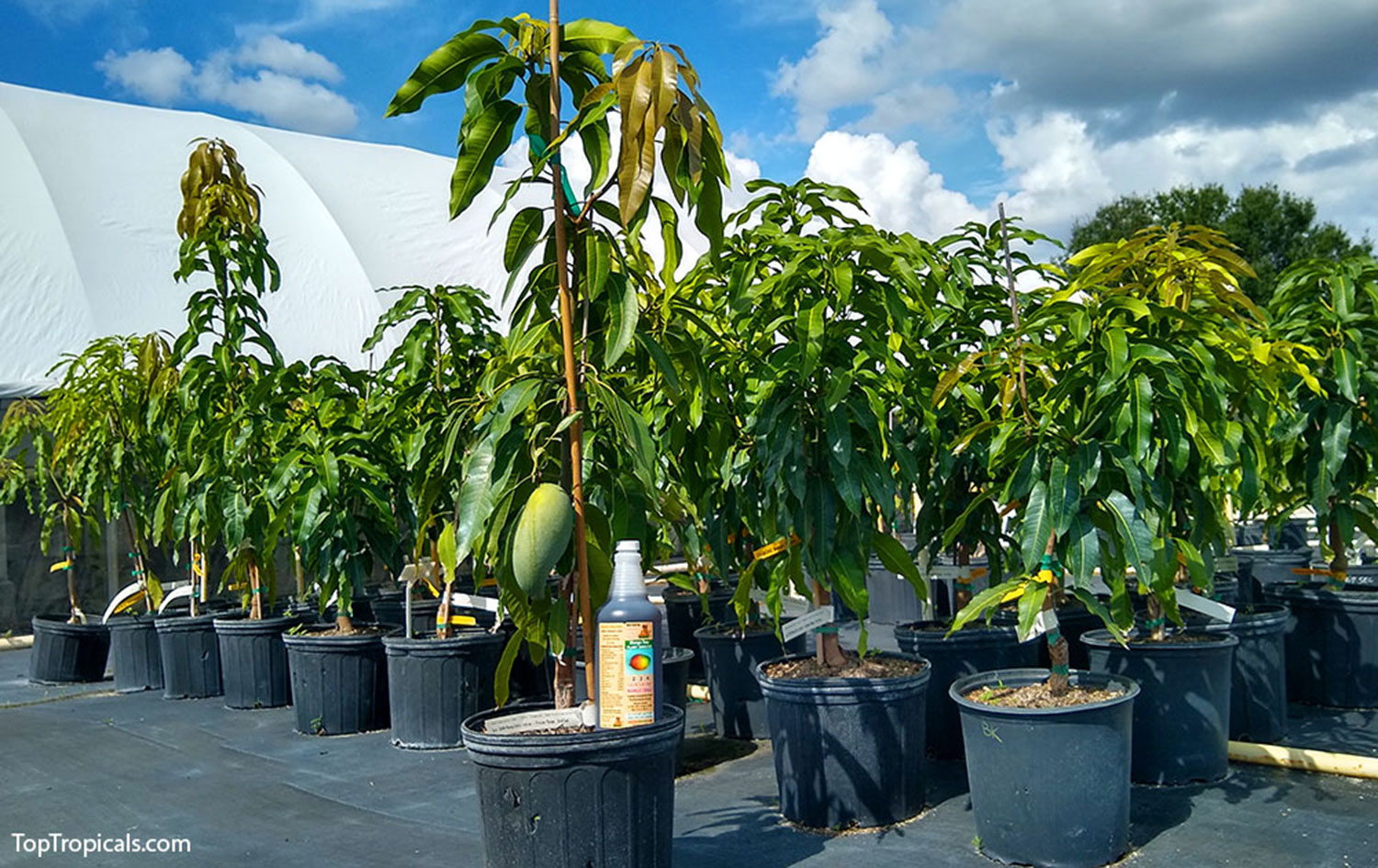
We continue the series of ABC-7 News on Top Tropicals selections. Previously, we showed you segments about Butterfly Plants and Rare Fruit Trees. Today's video will show you how to pick the best mango tree and how to take care of it.

At Top Tropicals, we have over a hundred varieties of mango, from Dwarf "Condo" mangoes to large upright trees, from colorful fruit to green Asian varieties. We have them all! And we can ship them to your door. Top Tropicals is open seven days a week, and their staff can answer all of your questions.

Watch the news segment by Rachel Anderson for ABC-7:
Mango Varieties at Top Tropicals .

Subscribe to our Channel:

Stay updated with TopTropicals Videos by subscribing to our channel at YouTube.com/TopTropicals and get our latest video news of what is fruiting and blooming!
Mango  trees

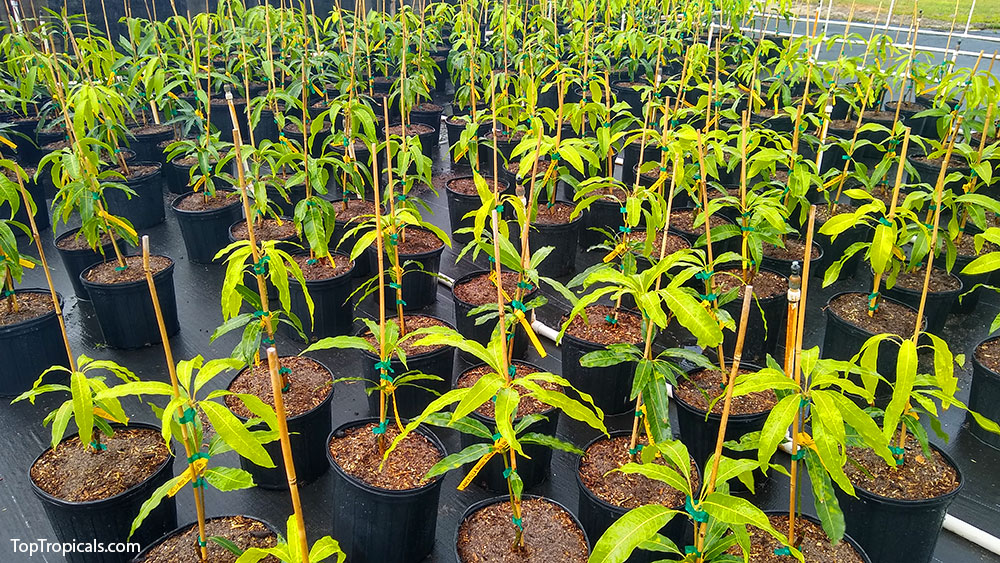
Mango  trees  in  3  gal  pots

Date: 25 Jun 2020

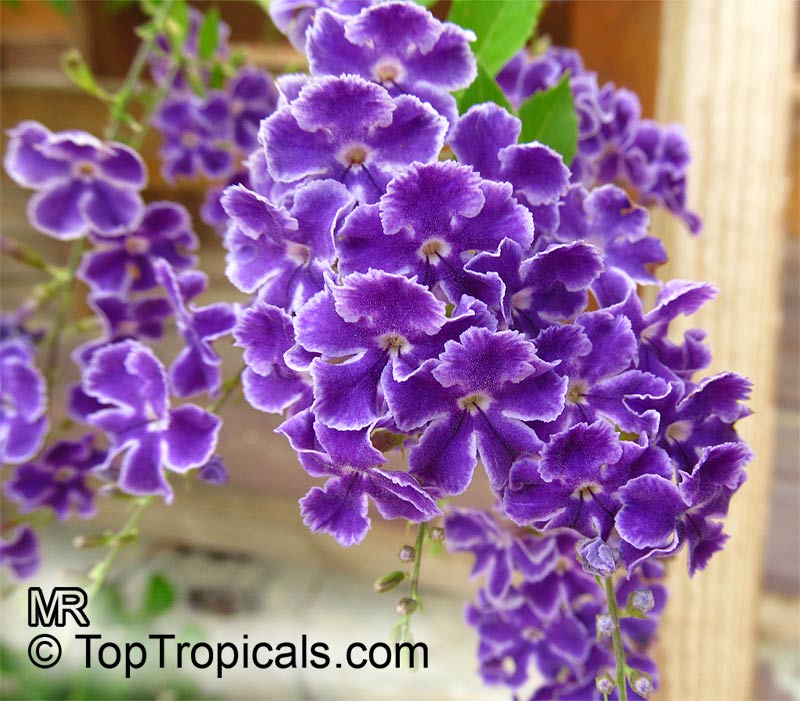
Plant of the Month: Golden Dewdrop - Duranta erecta

Stevie's Pick: what's in bloom?

Our exotic plant grower Steven Gowdy is featuring the most interesting plants he discovers and recommends today while working in TopTropicals greenhouses.

Duranta - Golden Dewdrop - is simply stunning with cascading flowers in abundance. Either it has lavender, blue, or solid white flowers, it is a sight to behold. The popular name Golden Dewdrop is inspired by the clusters of bright orange-yellow berries that follow the flowers, in such quantities that they often cause the slender branches to droop gracefully.
Duranta erecta blooms off and on all year and can be pruned to size as a bush or a standard tree. If let go, it can grow up to 20 feet tall and wide.
Durantas are excellent butterfly and hummingbird attractors. They will complement your tropical garden or a stand alone in your Southern landscape. Great for providing a color contrast in the landscape, they are especially well-suited as a bright-colored background or screening.
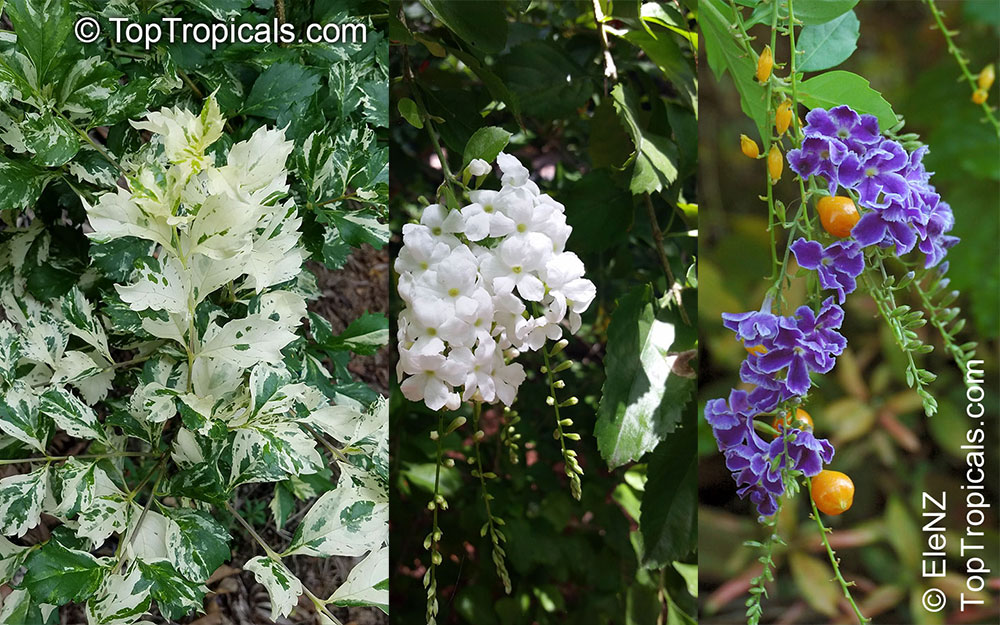
White Golden Dewdrop has pure white flowers that appear in loose clusters, and both berries and blossoms are often seen on a plant. This evergreen fast growing shrub spreads and arches to 10 feet tall and wide and is great for live hedges and covering fences and corners.
Variegated variety, also called Variegated Sky Flower, is grown for its summer flowers, and very showy leaves that are dark green with bright white variegation and creamy-yellow margins around the one inch long serrated leaves.. In the summer, cascading clusters of blue tubular flowers appear followed by wonderfully contrasting orange-yellow berries.
In mild climates, Durantas can be in flower nearly year round with flowers and fruit appearing at the same time. It does best in full sun with frequent deep watering and is pretty hardy, to about 20-25F. It is a good choice for espaliers, as a small tree or large bush; all forms benefit from frequent selective pruning. Prune back in late-winter to encourage a more compact shape and strong flush of fresh spring foliage. Requires moderate watering in a well-drained soil.

Date: 4 Jun 2020

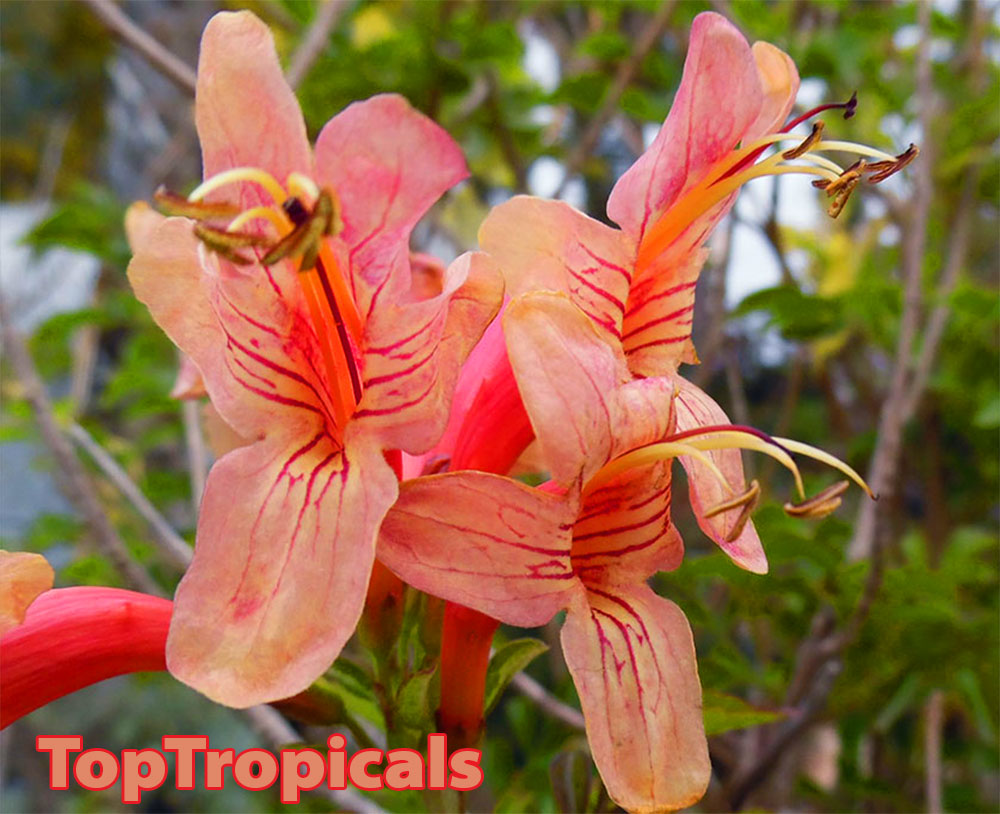
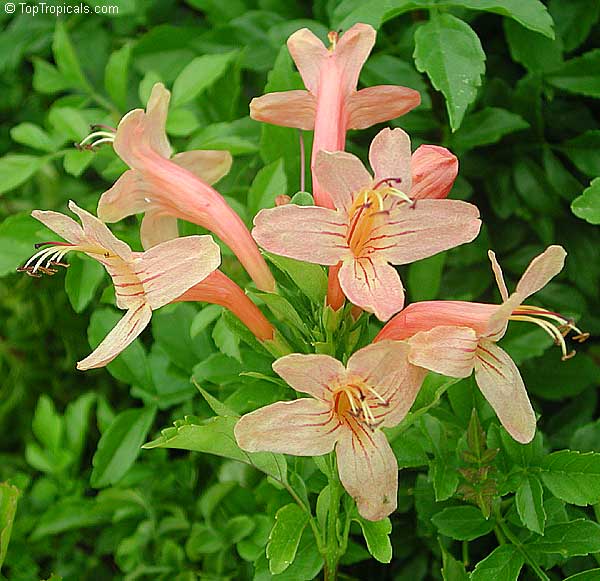
Plant of the Month: Tecomaria capensis Apricot

Stevie's Pick: what's in bloom?

Today we are starting a new column about the most spectacular specials that are in bloom or in fruit today. Our exotic plant grower Steven Gowdy will spotlight the most interesting plants he discovers and recommends today while working in TopTropicals greenhouses.

Summer is in full bloom and everyone is wanting dirt under there nails after being quarantined for two months! Enjoy warm tropical breezes with Apricot flowers of this showy African Tecomaria in your garden.
Tecomas and Tecomarias make a wonderful splash of color in any garden, and apricot is no exception. Tecomaria Apricot has pretty unusual color of flowers, ranging from bright apricot color to light-salmon. Ever blooming in warmer climates, it can grow 3-4 feet high and a whopping 4-5 feet wide. In addition to its beautiful flowers, this plant has many medicinal benefits. An easy fast growing addition to any landscape, it is a great hummingbird and butterfly attractor. It is pretty cold hardy and can tolerate light frost which is a great benefit for gardeners living in subtropical climates with cooler winters.

Date: 20 Oct 2018

Featured Plant. Bilimbi, Cucumber tree, Tree Sorrel

TopTropicals.com

Bilimbi, Cucumber tree, Tree Sorrel

Ethnic names are: Kamias, Belimbing Asam, Belimbing Buloh, Bimbiri. This rare exotic fruit is very popular in Thailand, Malaya and Singapore. In India, where it is usually found in gardens, the bilimbi has gone wild in the warmest regions of the country. Outside native habitat, Bilimbi is hard to find plant, very few growers produce them, although it is not so hard in cultivation.
The bilimbi is closely allied to the carambola but quite different in appearance, manner of fruiting, flavor and uses. The only strictly English names are"cucumber tree"and"tree sorrel"."Bilimbi"is the common name in India and has become widely used. Many people are more familiar with the close ralative - Averrhoa carambola - Star Fruit, which foliage looks very similar to bilimbi. The bilimbi leaves and taste of fruit are quite similar to those of the Phyllanthus acidus - Otaheite Gooseberry), although these plants are not related. Continue reading...

Check out this plant...