🌹Syzygium jambos - Rose Apple - is a fragrant delight fruit! Also known as Malabar Plum or Pomme Rosa, the Rose Apple produces crisp, juicy fruits with a distinct rose scent, highly prized for jellies and confections.
🌹This easy-to-grow plant is moderately cold-hardy and can tolerate poor soils.
🌹 Rose Apple trees are versatile – they make attractive, wide-spreading shade trees and can also thrive as compact, bushy fruiting plants in containers. Watch the video:
Stop watering your Monstera on a schedule - here is what it really wants!
💦 Stop watering your Monstera on a schedule - here is what it really wants!
☘️ Monstera might look like a big diva, but it's actually one of the easiest houseplants to keep happy, according to the gardening experts from Southern Living.
☘️ The trick is not sticking to a strict watering schedule, but checking the soil. Water only when the top couple inches feel dry - usually every week or two in warm months and less in winter. Give it a good soak until water drains out the bottom, then let it dry again.
☘️ Too much water is worse than too little – soggy soil means root rot. Signs of overwatering include yellow or droopy leaves, dark spots, or gnats buzzing around. Underwatering looks similar, but the soil will be bone dry. When in doubt, check the dirt!
☘️ You can water from the top or let the pot sit in a shallow tray to soak from the bottom – just don’t let it sit in water. Bright, indirect light and a well-draining pot are your best friends. Keep that balance, and your Monstera will thrive for decades.
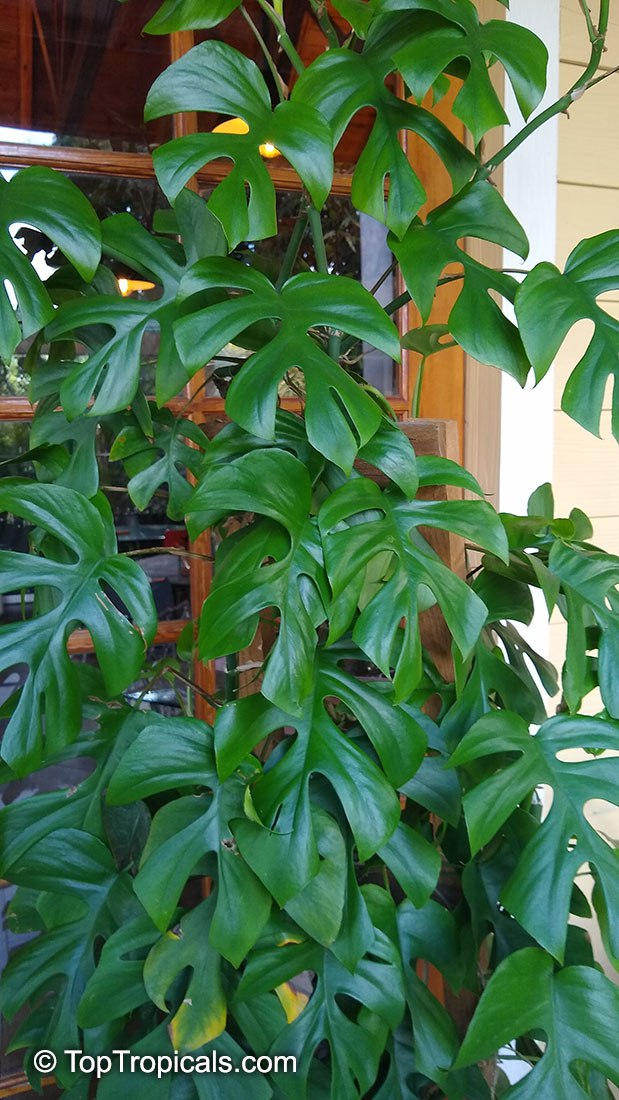
📸 In the photo: Rhaphidophora tetrasperma - Mini Monstera, Dwarf Monstera Ginny, a rare collectible for plant enthusiasts.
Q: Can you please tell me which zones are the best for growing
Angel Trumpets? When do they bloom and is there a specific fertilizer to use on
them?
Do you sell any variegated varieties?
A: If you are lucky enough to live in an area that doesn't
freeze or only has light frosts, you can grow Brugmansia (common name Angel Trumpet) outside all year long. They are
only entirely hardy in USDA zones 9-12, but they remain very popular
throughout the United States. They do really well in coastal settings in the
Southwest. They are simply glorious in the coastal areas of South California. In the
southwestern states, as well as in the tropics, they bloom spectacularly
throughout the spring, summer, and autumn.
Angel Trumpets are very heavy feeders and they need huge amounts of
nitrogen. You can use a standard balanced slow-release fertilizer on Brugmansia,
but then you must apply it very generously. We've created a specialized
fertilizer just for them. Angel Trumpet Delight is a perfect Brugmansia food for frequent monthly
feed. It's a 30-day Smart-Release formula that works wonders for Angel
Trumpets. A a well-balanced combination of macro- and micro- nutrients with a slow
release action, it provides continuous feed, maintains vigor and disease
resistance. It also contains coated nitrogen, early release nutrients and extra
iron (water soluble and chelated) for quick green-up.
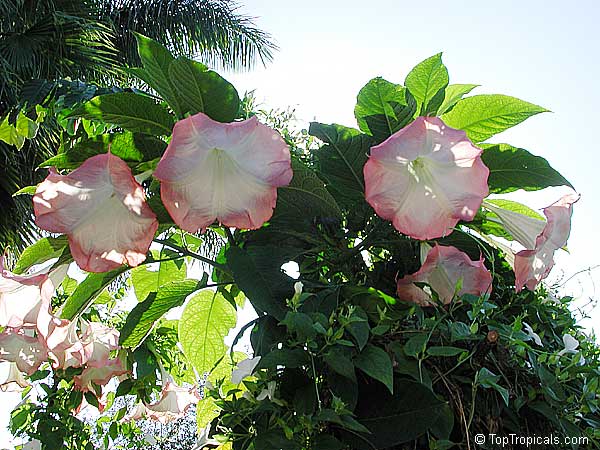
Angel Trumpets come in a dazzling array of colors: orange, yellow,
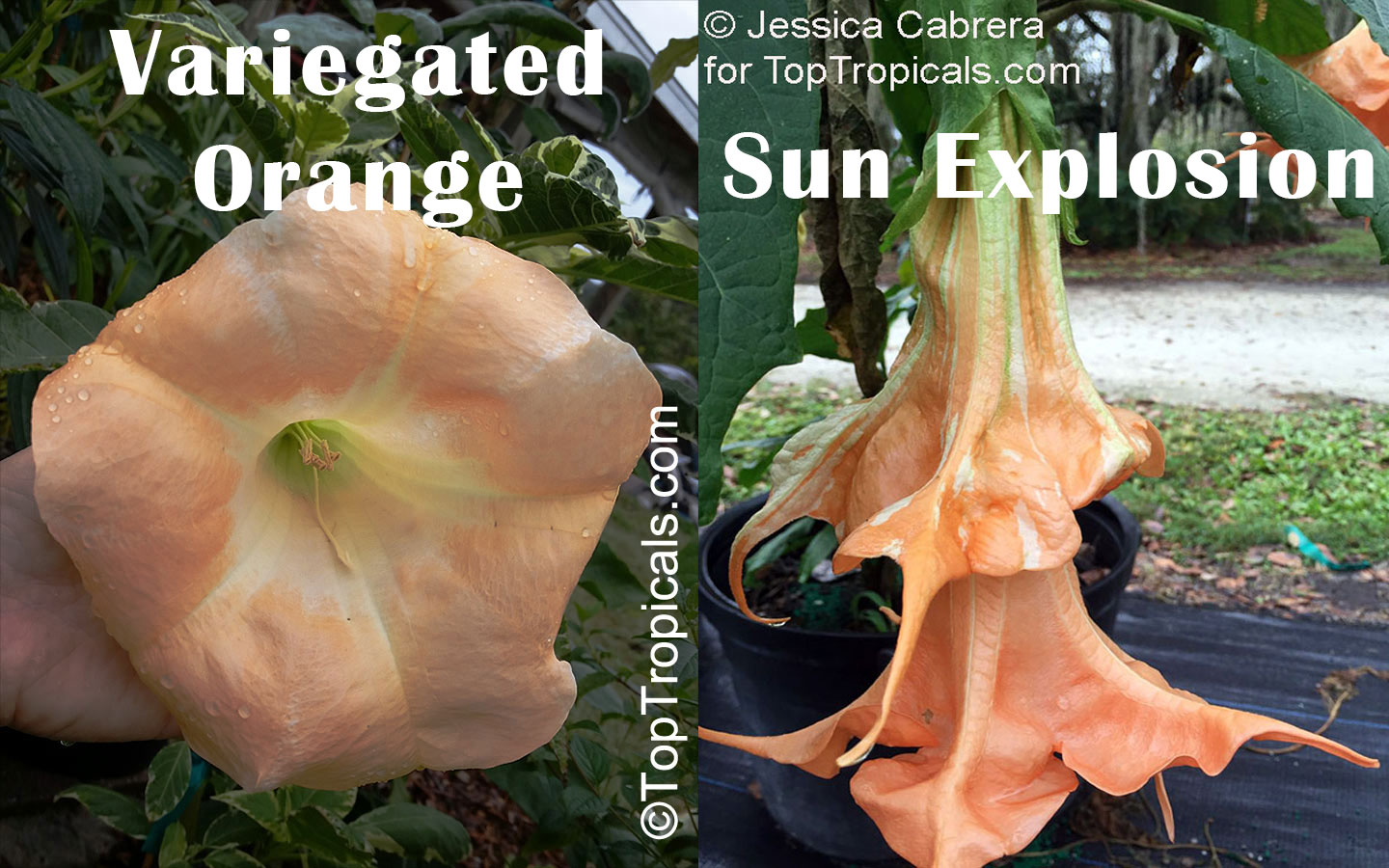
green, white, pink, red, emerald and even purple (closely related Datura). One of our favorites is the beautiful Variegated Orange Angel Trumpet, a new hybrid with variegated leaves
and a large single bloom that starts white and turns orange. Another amazing
variety is "Sun Explosion" - with a variegated orange flower.
Most folks are usually in awe of the enormous trumpet flowers when they
see it for the
very first time. They most definitely need to be planted where they can be
admired… near a deck, terrace, lanai or, entryway. The blossoms are
short-lived, but numerous, continuous, and truly show-stopping! And they smell so
good! This is a must have in any tropical garden. They can be grown either as a
bush or a small tree. They are easy peasy to grow and root extremely easily,
making them great as pass-along gifts for friends. They are sun-loving and
super fast-growing plants. Plenty of water and fertilizers keep them happy and
at their best. Did I mention they smell good too? ;)
Date: 10 Sep 2024
Thank
You for Joining Us!
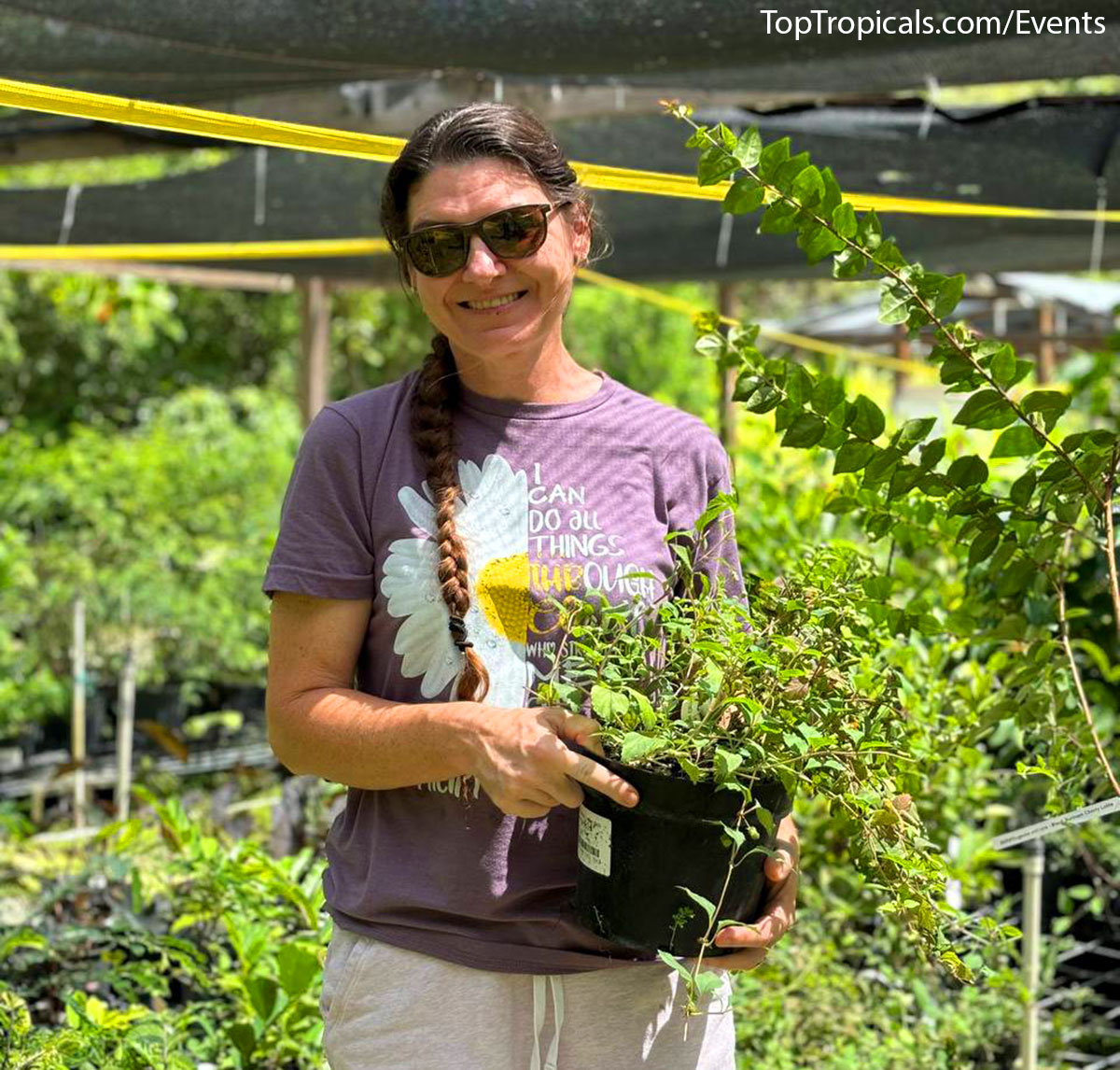
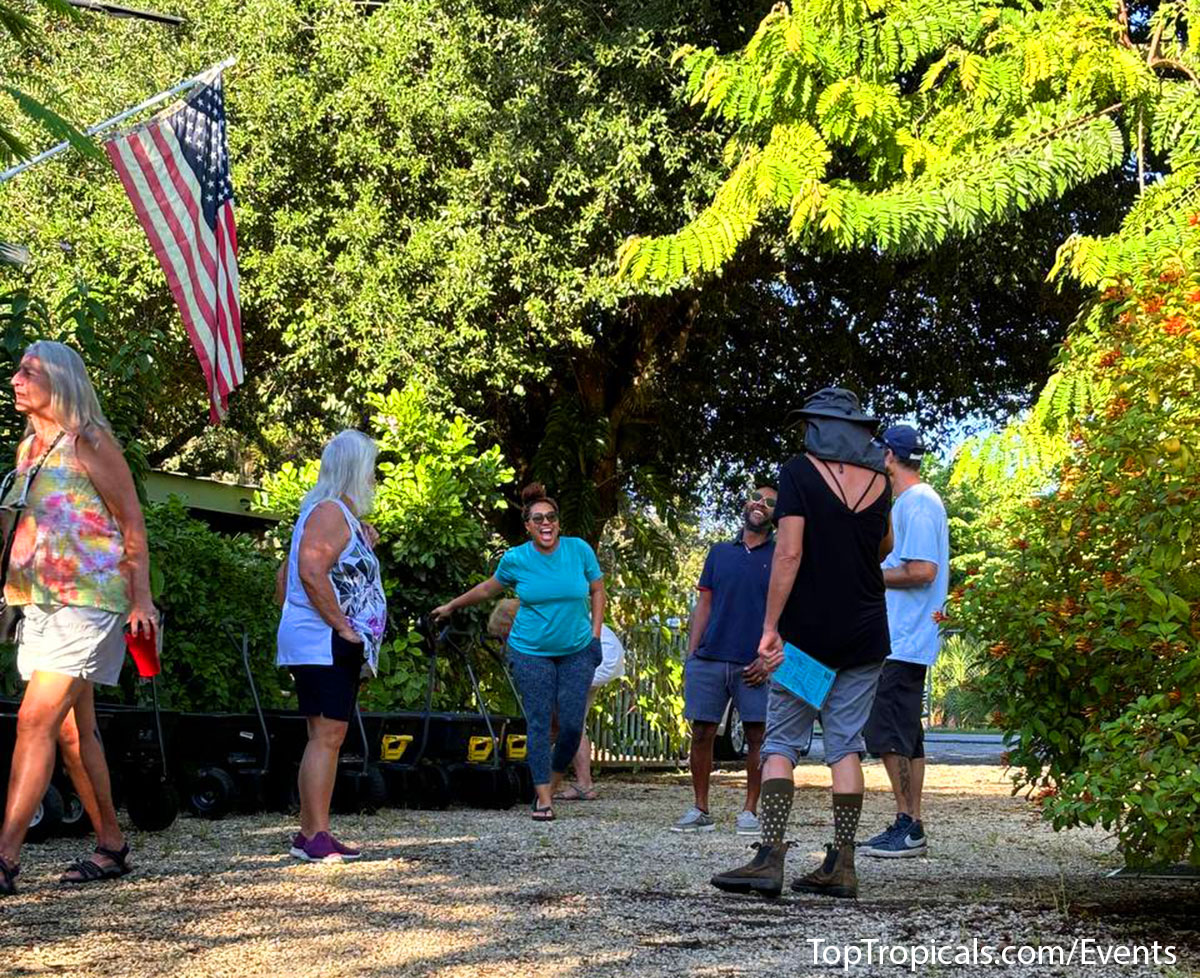
Happy Moments of Our Fall Plant Market
A big thank you to everyone who came to our Fall Plant Market! last Saturday! We had a fantastic time, and we hope
you did too. It was a day filled with fun, plants, and smiles all around.
Check out these happy moments captured during the event! If you spot your friends in
the photos, feel free to share the joy and forward the pics to them.
We can't wait to see you again at our December Holiday Market. Stay
tuned for more details!
The first 25 customers received the most beautiful handcrafted gift
bags, made with love by Kristi and Onika, which added an extra special touch
to the day!
Date: 31 Oct 2023
How to
establish Tabernaemontana
and get more fragrant blooms
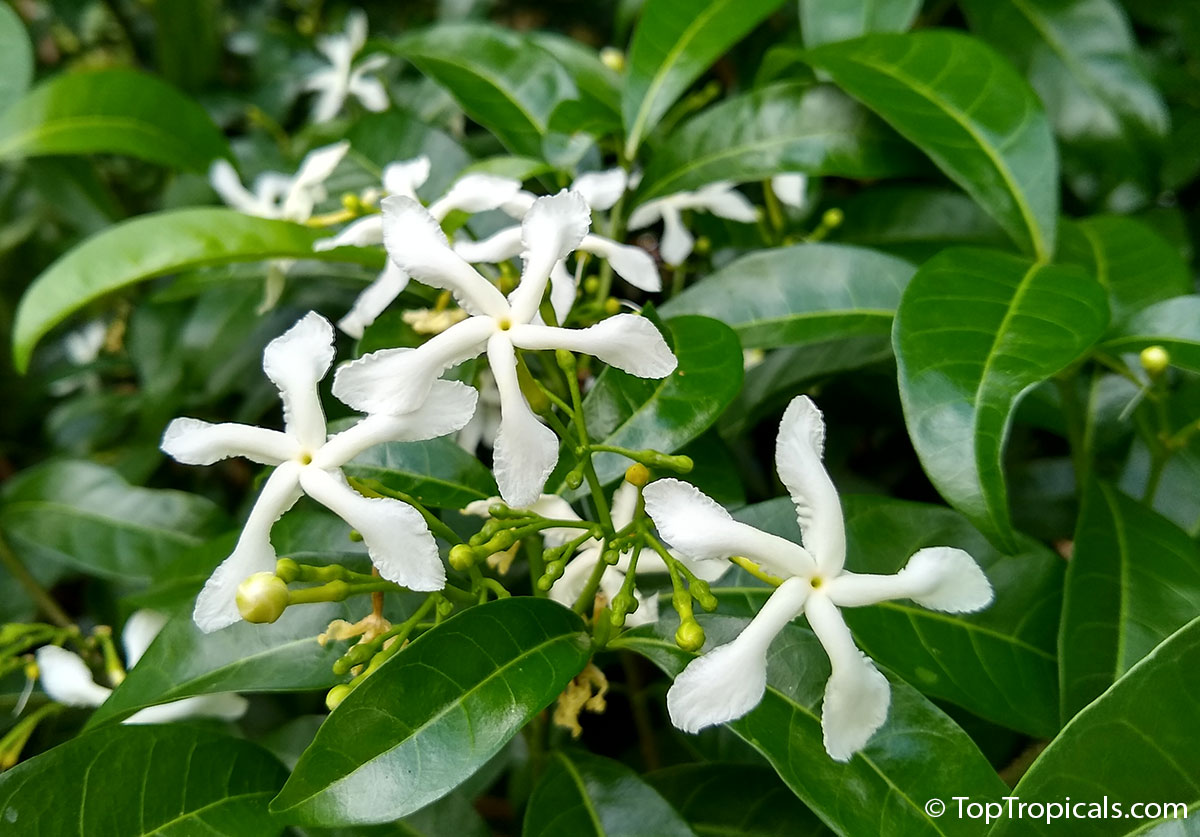
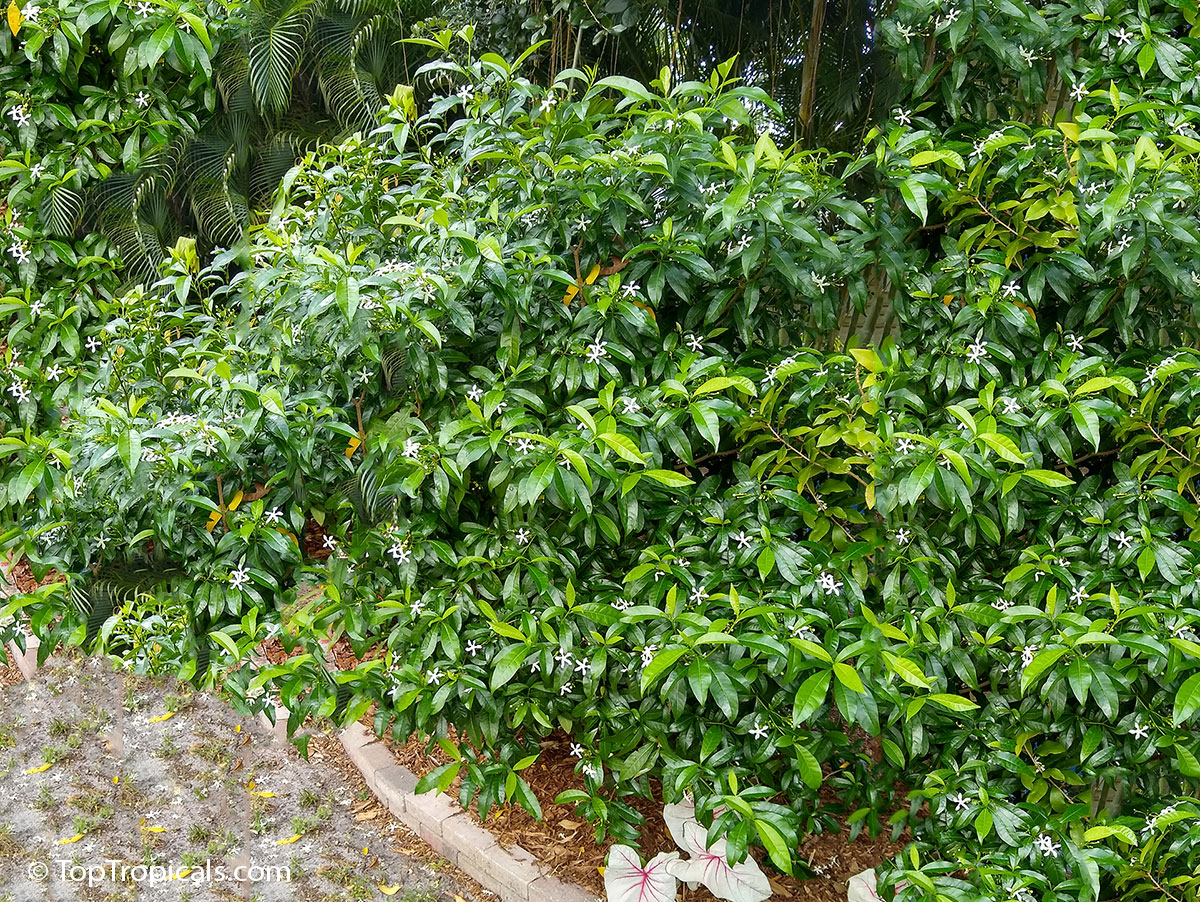
Q: I purchased Tabernaemontana australis from you back in June of this year and it
recovered just fine, but the new growth got some chlorosis. Older leaves still
look normal. The flowers also look normal but lack fragrance. Since I
live up north, I have it in a heated greenhouse for the winter, with a grow
light to compensate for the short days. I have it in a 10 inch clay pot in a
mix of equal parts standard indoor potting soil, peat moss, and perlite. It
gets fed with half strength 10-10-10 about once a month on average. Is there
some specific culture that you would recommend for this plant ? I really
love it and want it to thrive.
A: Tabernaemontana is a plant that may take some
time to establish itself, and leaf chlorosis often becomes a common issue
when the root system is not well-established. This symptom is indicative of Iron
deficiency, and possibly other micro-element deficiencies, such as Boron or
Molybdenum, which become more apparent when the plant receives excessive
water. This problem tends to intensify as temperatures drop, particularly when a
combination of cool and wet conditions prevails. It's worth noting that your
potting mix seems to be appropriate for this plant.
In light of these circumstances, we recommend the following steps:
1) Reduce watering during the cooler season, especially when
daylight hours are shorter. Allow the top layer of the soil to dry before
watering again.
2) Consider supplementing with microelements using a product
like
Sunshine Superfood. You can apply this as a foliar spray and mix it with
your watering can.
3) Maintain your regular fertilizing program throughout the
winter months, but ensure that you use only liquid amino-acid fertilizer, such
as
Sunshine Megaflor. Follow the instructions on the label for the correct
dosage and apply it with each watering, even during the winter. Since you will be
reducing amount of water, the amount of fertilizer also will be adjusted
accordingly. Important: do not use any dry fertilizers during winter months
(Nov-March).
Regarding the fragrance of the flowers, they typically emit a
mild, sweet scent, although it may not be as potent as that of gardenia or
jasmine. The strongest aroma usually becomes more prominent during warm (but not
excessively hot) and humid conditions, particularly in the morning hours. As
the plant grows larger and healthier, the fragrance should become more intense
because the flowers produce more essential oil when the plant is robust. You
may also apply Sunshine Honey supplement to improve flower quality and fragrance
strength.