Garden Blog - Top Tropicals

Date: 9 Oct 2025

Surprising Miniature Gardenia
Gardenia radicans - Dwarf Miniature Creeping Gardenia
Gardenia radicans - Dwarf Miniature Creeping Gardenia
Gardenia radicans - Dwarf Miniature Creeping Gardenia

Gardenia radicans - Dwarf Miniature Creeping Gardenia

Gardenia radicans - Dwarf Miniature Creeping Gardenia

Gardenia radicans - Dwarf Miniature Creeping Gardenia

💮 Surprising Miniature Gardenia

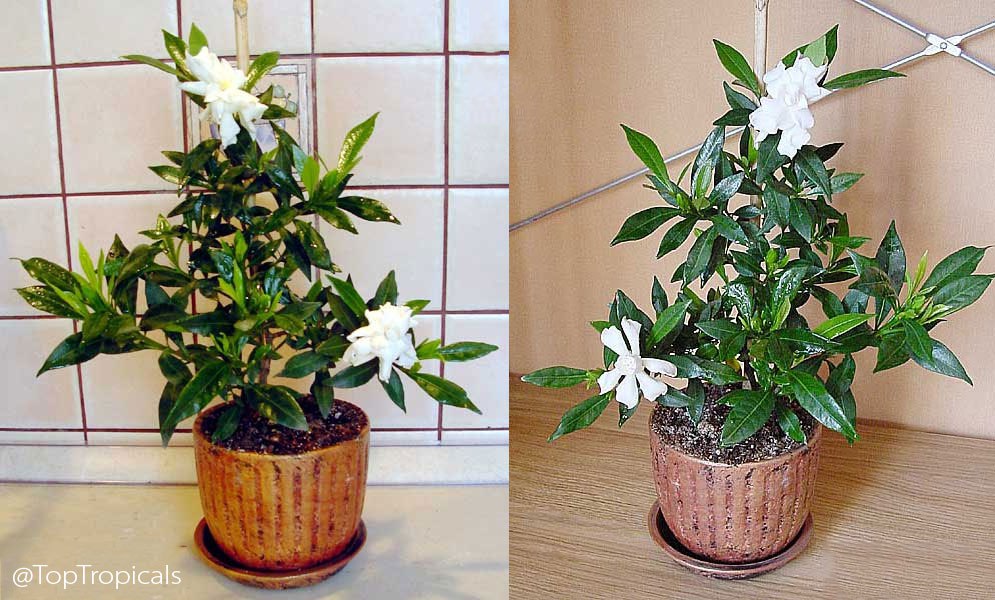
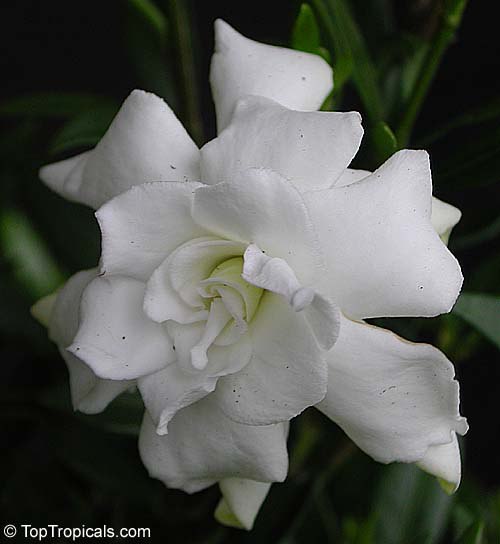
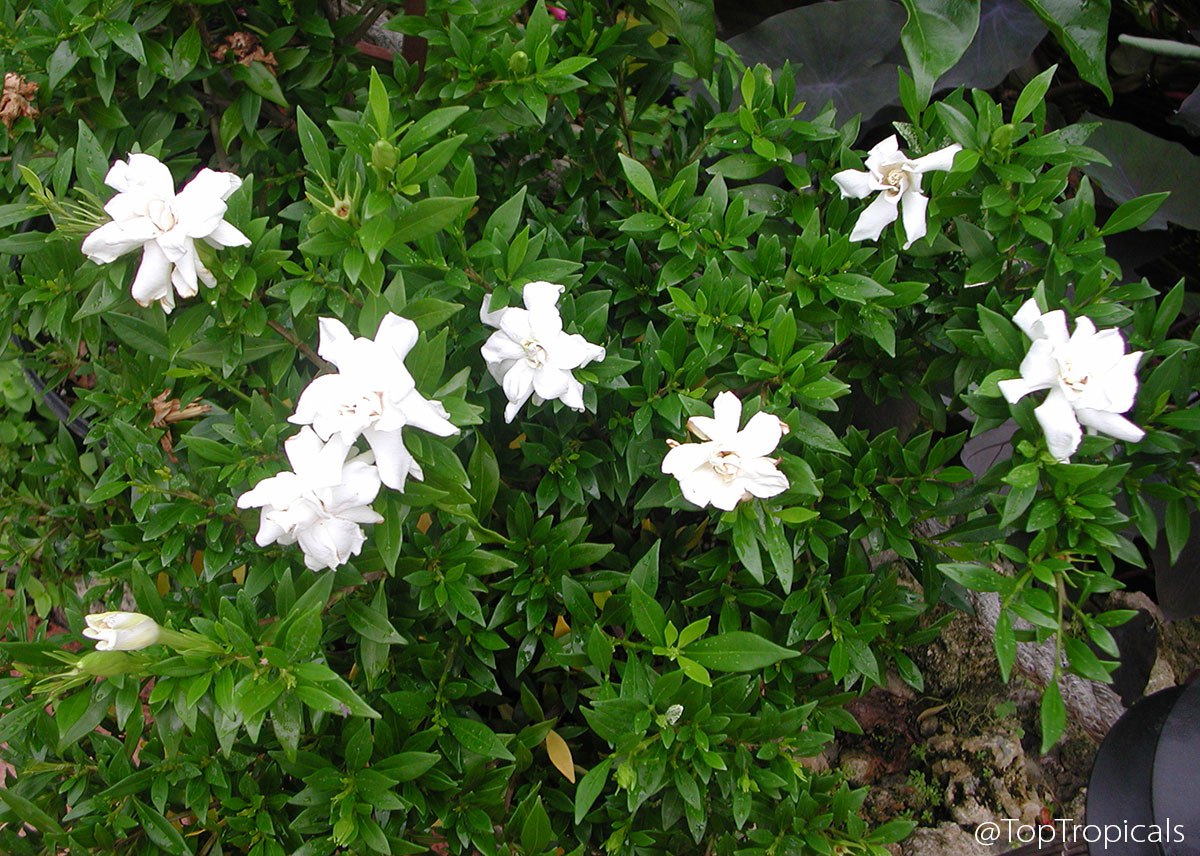
  • Gardenia radicans - Dwarf Miniature Creeping Gardenia - can surprise even longtime gardenia fans. It has all the charm of the classic shrub - glossy green leaves, pure white flowers, and that unforgettable fragrance - but in a smaller, easier form.
  • Natural bonsai. This little plant grows low and wide, staying under 1-2 feet tall and spreading up to 3-4 feet. It forms a dense mound or creeping groundcover that looks great along walkways or spilling from a pot. The leaves are tiny and shiny, giving it a neat, polished look all year.
  • The flowers are about an inch across, double or semi-double, and smell just like the full-size gardenia. They bloom in spring and often return through summer, filling the air with perfume.
  • Easier than other gardenias. Gardenia radicans isn’t as fussy as most gardenias. It can handle clay, sandy, or loamy soil as long as it drains well. Once established, it’s fairly drought-tolerant and can even handle some cold, down to around 15F in protected spots.
  • Where to plant. It's perfect for small gardens, patios, or as a bonsai. You get the luxury fragrance of a gardenia without needing a big space. Use it as a groundcover, edging plant, or container specimen. It's one of those plants that stays tidy, looks refined, and keeps blooming. For anyone who loves gardenias but wants something compact and low-maintenance, Gardenia radicans is a great find.


🛒 Add unique Mini-Gardenia to your collection

#Perfume_Plants #Container_Garden

🟢 Join 👉 TopTropicals
Date: 12 Oct 2025

You wont believe what glows in the shade: the rare blue ginger

Dichorisandra thyrsiflora - Blue Ginger

💎 You won't believe what glows in the shade: the rare blue ginger

  • 💎 If you ever spot a flash of electric blue in the tropical shade, you might think your eyes are playing tricks on you, but that vivid color belongs to a rare Dichorisandra thyrsiflora - Blue Ginger.
  • 💎 Despite its name, this isn’t a true ginger at all. It’s actually related to Tradescantia, the same family as familiar houseplants like the Wandering Jew and Spiderwort. Native to Brazil, Blue Ginger thrives in warm, humid shade, making it a perfect choice for patios, screened porches, garden corners, or indoor collections.
  • 💎 Its glossy leaves and tall stems topped with clusters of sapphire-blue blooms create a tropical jewel effect. The flowers attract hummingbirds and butterflies, adding life and motion to shady areas where few other plants bloom so brightly.
  • 💎 Give it rich, well-drained soil, steady moisture, and partial shade - and enjoy one of the rarest colors in the tropical plant world.


🛒 Get your own exotic Blue Ginger

📚 Learn more:


Is Sapphire Gem really a ginger?

#Container_Garden #Shade_Garden

🟢 Join 👉 TopTropicals

Date: 13 Oct 2025

Sweet and crunchy fruit with a rose fragrance

🌹 Sweet and crunchy fruit with a rose fragrance


  • 🌹Syzygium jambos - Rose Apple - is a fragrant delight fruit! Also known as Malabar Plum or Pomme Rosa, the Rose Apple produces crisp, juicy fruits with a distinct rose scent, highly prized for jellies and confections.

  • 🌹This easy-to-grow plant is moderately cold-hardy and can tolerate poor soils.

  • 🌹 Rose Apple trees are versatile – they make attractive, wide-spreading shade trees and can also thrive as compact, bushy fruiting plants in containers. Watch the video:


📱

🛒 Enjoy rose-smelling fruit in your garden

📚 Learn more:


What fruit smells like roses?

Date: 16 Oct 2025

Stop watering your Monstera on a schedule - here is what it really wants!

Stop watering your Monstera on a schedule - here is what it really wants!

💦 Stop watering your Monstera on a schedule - here is what it really wants!


  • ☘️ Monstera might look like a big diva, but it's actually one of the easiest houseplants to keep happy, according to the gardening experts from Southern Living.

  • ☘️ The trick is not sticking to a strict watering schedule, but checking the soil. Water only when the top couple inches feel dry - usually every week or two in warm months and less in winter. Give it a good soak until water drains out the bottom, then let it dry again.

  • ☘️ Too much water is worse than too little – soggy soil means root rot. Signs of overwatering include yellow or droopy leaves, dark spots, or gnats buzzing around. Underwatering looks similar, but the soil will be bone dry. When in doubt, check the dirt!

  • ☘️ You can water from the top or let the pot sit in a shallow tray to soak from the bottom – just don’t let it sit in water. Bright, indirect light and a well-draining pot are your best friends. Keep that balance, and your Monstera will thrive for decades.


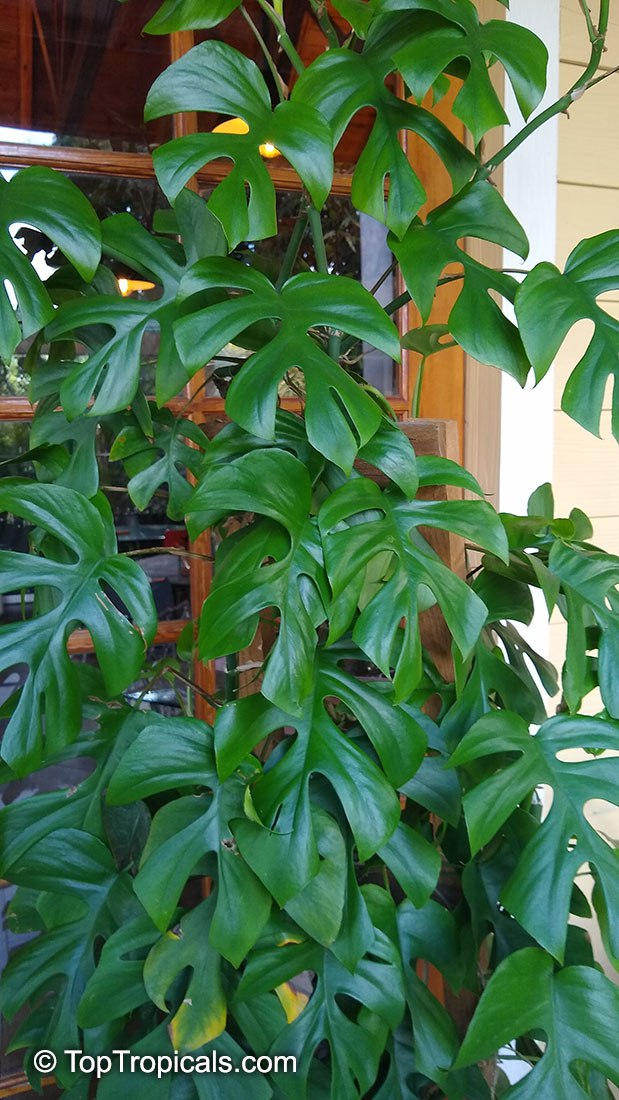
📸 In the photo: Rhaphidophora tetrasperma - Mini Monstera, Dwarf Monstera Ginny, a rare collectible for plant enthusiasts.

🛒 Shop Monstera plants

📚 Learn more:


#Food_Forest #Container_Garden #Shade_Garden #How_to

🟢 Join 👉 TopTropicals

Date: 24 May 2019

Heavenly Angel's Trumpet

TopTropicals.com

By Onika Amell, tropical flower specialist

Q: Can you please tell me which zones are the best for growing Angel Trumpets? When do they bloom and is there a specific fertilizer to use on them? Do you sell any variegated varieties?

A: If you are lucky enough to live in an area that doesn't freeze or only has light frosts, you can grow Brugmansia (common name Angel Trumpet) outside all year long. They are only entirely hardy in USDA zones 9-12, but they remain very popular throughout the United States. They do really well in coastal settings in the Southwest. They are simply glorious in the coastal areas of South California. In the southwestern states, as well as in the tropics, they bloom spectacularly throughout the spring, summer, and autumn.

Angel Trumpets are very heavy feeders and they need huge amounts of nitrogen. You can use a standard balanced slow-release fertilizer on Brugmansia, but then you must apply it very generously. We've created a specialized fertilizer just for them. Angel Trumpet Delight is a perfect Brugmansia food for frequent monthly feed. It's a 30-day Smart-Release formula that works wonders for Angel Trumpets. A a well-balanced combination of macro- and micro- nutrients with a slow release action, it provides continuous feed, maintains vigor and disease resistance. It also contains coated nitrogen, early release nutrients and extra iron (water soluble and chelated) for quick green-up.

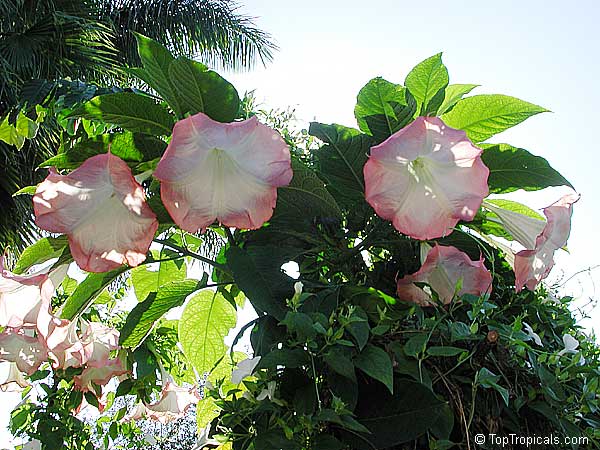
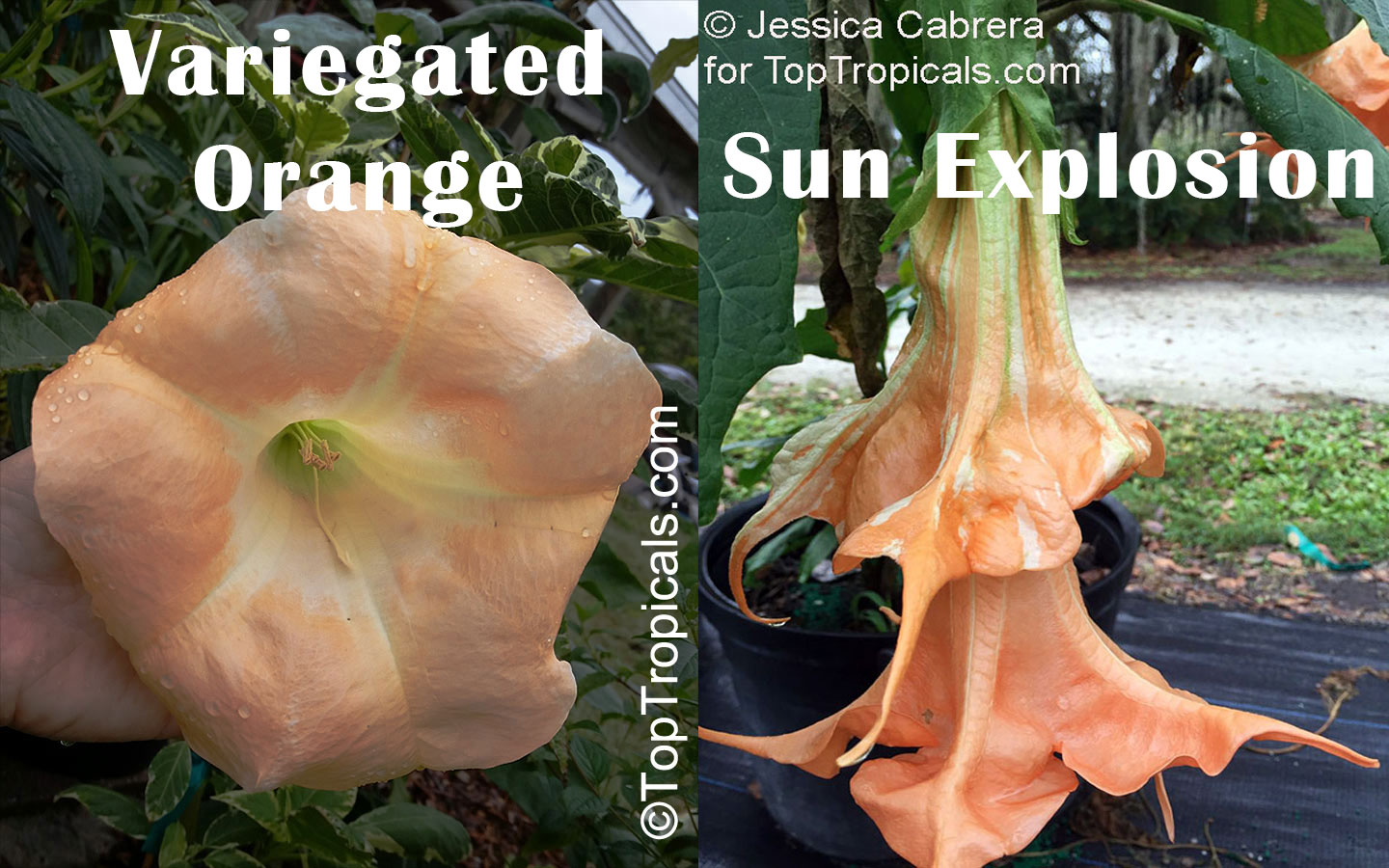
Angel Trumpets come in a dazzling array of colors: orange, yellow, green, white, pink, red, emerald and even purple (closely related Datura). One of our favorites is the beautiful Variegated Orange Angel Trumpet, a new hybrid with variegated leaves and a large single bloom that starts white and turns orange. Another amazing variety is "Sun Explosion" - with a variegated orange flower.

Most folks are usually in awe of the enormous trumpet flowers when they see it for the very first time. They most definitely need to be planted where they can be admired… near a deck, terrace, lanai or, entryway. The blossoms are short-lived, but numerous, continuous, and truly show-stopping! And they smell so good! This is a must have in any tropical garden. They can be grown either as a bush or a small tree. They are easy peasy to grow and root extremely easily, making them great as pass-along gifts for friends. They are sun-loving and super fast-growing plants. Plenty of water and fertilizers keep them happy and at their best. Did I mention they smell good too? ;)

TopTropicals.com