Garden Blog - Top Tropicals

Date: 31 Oct 2025

👻 When plants grow wings...

Smokey  the  black-and-white  tuxedo  cat  stands  upright  holding  a  glowing 
 jack-o'-lantern  filled  with  tropical  fruit,  while  Sunshine  the  fluffy  ginger
    tabby 
 lounges  in  a  hammock  under  string  lights,  sipping  cocoa.  Around  them  are 
 pumpkins,  lanterns,  and  tropical  plants  under  a  warm  twilight  sky.

🌴 Twilight in the garden. Smokey is holding a glowing pumpkin. Sunshine is sipping cocoa.

Sunshine: "Smokey, why does that plant look like it wants to fly away?"
Smokey: "That’s the Bat Lily - Tacca. It’s rare, it’s weird, and it’s in bloom just in time for Halloween."
Sunshine: "Figures. You always find the spooky ones."

Meet the Bat Lily (Tacca)

Tacca is also called the Bat Lily or Devil Flower. This tropical wonder grows bat-shaped wings and foot-long whiskers. The black form (Tacca chantrieri) looks straight out of a gothic dream, while the white one (Tacca nivea) is ghost-like and elegant.

Some of our plants are blooming right now in the nursery — true Halloween magic! Blooms are delicate and may not travel, but the plants are strong and will flower again soon in your care.
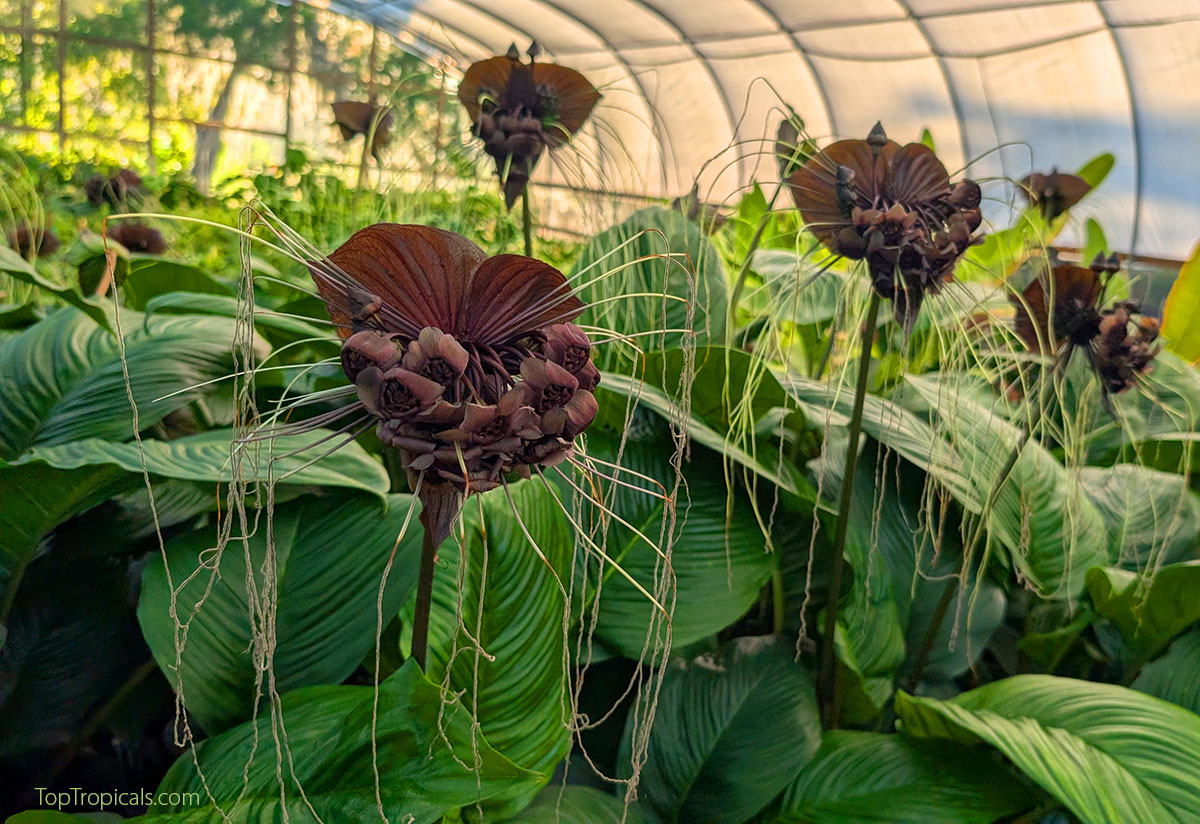
Black  Bat  Lily  (Tacca  chantrieri)  plants  in  bloom  inside  the  Top 
 Tropicals  greenhouse,  showing  dark  maroon  bracts  and  long  pale  whiskers 
 rising  above  large  green 
 leaves.

Black Bat Lily (Tacca chantrieri) with dark maroon wings and long whiskers
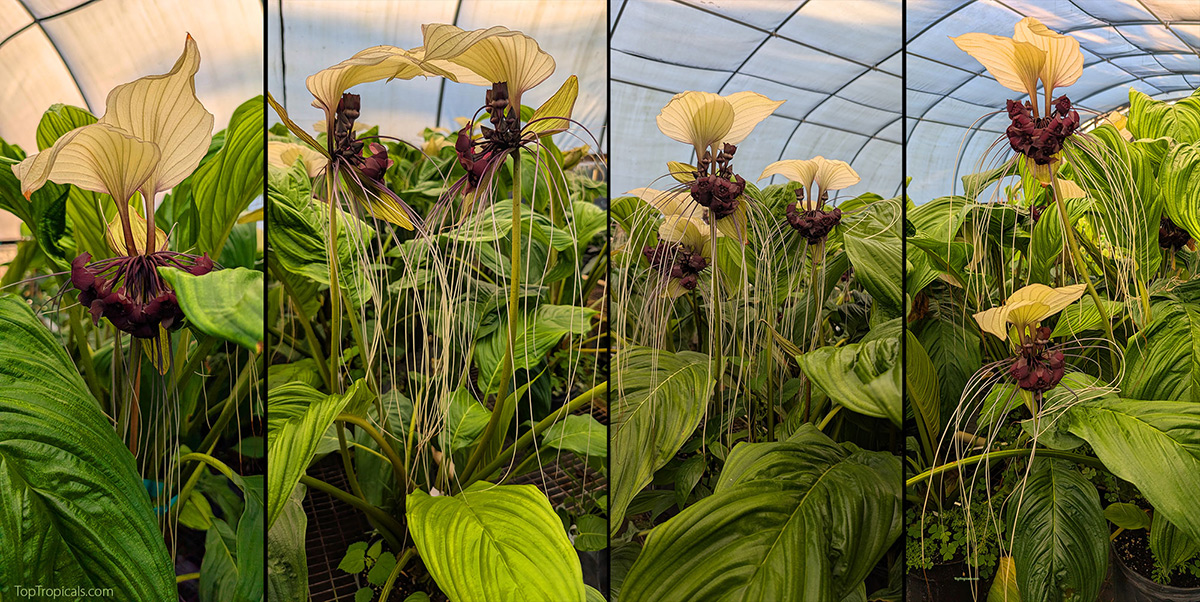
Close-up  of  White  Bat  Lily  (Tacca  nivea)  plants  in  a  greenhouse  at  Top 
 Tropicals,  showing  large  white  bracts  and  long  trailing  whiskers  above 
 glossy  green 
 leaves.

White Bat Lily (Tacca nivea) in bloom with wide ivory wings

"The White Bat Lily (Tacca nivea) is bold and sculptural, with oversized ivory wings that command attention. Its pale bracts stretch wide above clusters of deep maroon flowers, and long, silvery whiskers spill gracefully through the foliage. In filtered light, the plant seems to glow from within — elegant, crisp, and perfectly balanced between the strange and the beautiful. If I could pick, I’d go with the White Tacca. It feels more architectural, more balanced — those oversized wings catch light in a way that shows off every vein and curve. It looks engineered by nature, almost like an alien design prototype that actually works.

The Black Bat Lily (Tacca chantrieri) feels alive with shadow. Its dark maroon wings and wiry whiskers make it look like something that fluttered out of the jungle at dusk. The bloom’s layered structure and near-black sheen give it a quiet power — mysterious, understated, but impossible to ignore. But if I were designing mood lighting for a greenhouse at night, the Black Tacca wins. It’s subtle, mysterious, like a secret only visible up close. Together, they’re perfect opposites — yin and yang of the tropical underworld: white for daylight, black for moonlight." — says Tatiana Anderson, Top Tropicals Plant Expert

Special Offer: Discounts on Rare Tacca Plants

Grow your own Bat Lilies — White or Black — at a special Halloween price!

Get 25% OFF Tacca plants with code

TACCA2025

Min order $25 (excluding S/H), valid online only, cannot be combined with other offers.

Hurry, offer expires November 03, 2025!

🎃 Storewide Halloween Sale – For Everything Beyond Tacca

Not into spooky plants? Enjoy savings on all other tropical plants across the store!

Get 15% OFF tropical plants with code

HALLOWEEN2025

Min order $100 (excluding S/H), valid online only, cannot be combined with other offers.

Hurry, offer expires November 03 2025!

👉 Collect Tacca plants:

Black - Tacca chantrieri

White - Tacca nivea

Green - Tacca leontopetaloides

Date: 18 Feb 2026

🔥 Blazing into the 2026 with hot jasmines

Sunshine  the  orange  tabby  wearing  a  red,  white,  and  blue  wristband  sits
    laughing  on  a  jasmine-covered  horse  topiary  during  the  2026  Year  of  the 
 Horse,  while  Smokey  the  tuxedo  cat  trims  the  greenery  at 
 sunset.
Sunshine: I'm blazing into the 2026 Year of the Horse! Call me Mister Fahrenheit. Don't stop me now! 'Cause I'm having a good time — I'm a shooting star, leaping through the sky like a tiger, defying the laws of gravity!
Smokey: It's jasmine, Tiger. A shrub. Not Wembley. Calm down.

💮 2026 Year of the Horse - and the Plant I Trust Most

By Tatiana Anderson, Horticulture Expert at Top Tropicals

Every new year carries its own energy.

2026 is the Year of the Horse - a year of movement, fire, momentum, and bold decisions. It is not a quiet year. It pushes us forward.

When fellow gardeners ask me what to grow in a year like this, my answer is simple:
Grow something that balances strength with grace.

For me, that plant is Jasmine Sambac.

In many cultures, Sambac represents devotion, purity, and deep affection. In the Philippines it is the national flower - Sampaguita - woven into garlands for weddings and sacred ceremonies. In Hawaii, it becomes leis - a symbol of welcome and connection - Pikake. In India, it perfumes temples and homes.

This is not just a fragrant shrub.
It is a plant tied to love, loyalty, and continuity.

The Horse runs forward.
Jasmine anchors the heart.

In a fiery year like 2026, I believe we need both.

And that is why I always return to Jasminum sambac.

🛒 Explore Jasmine varieties

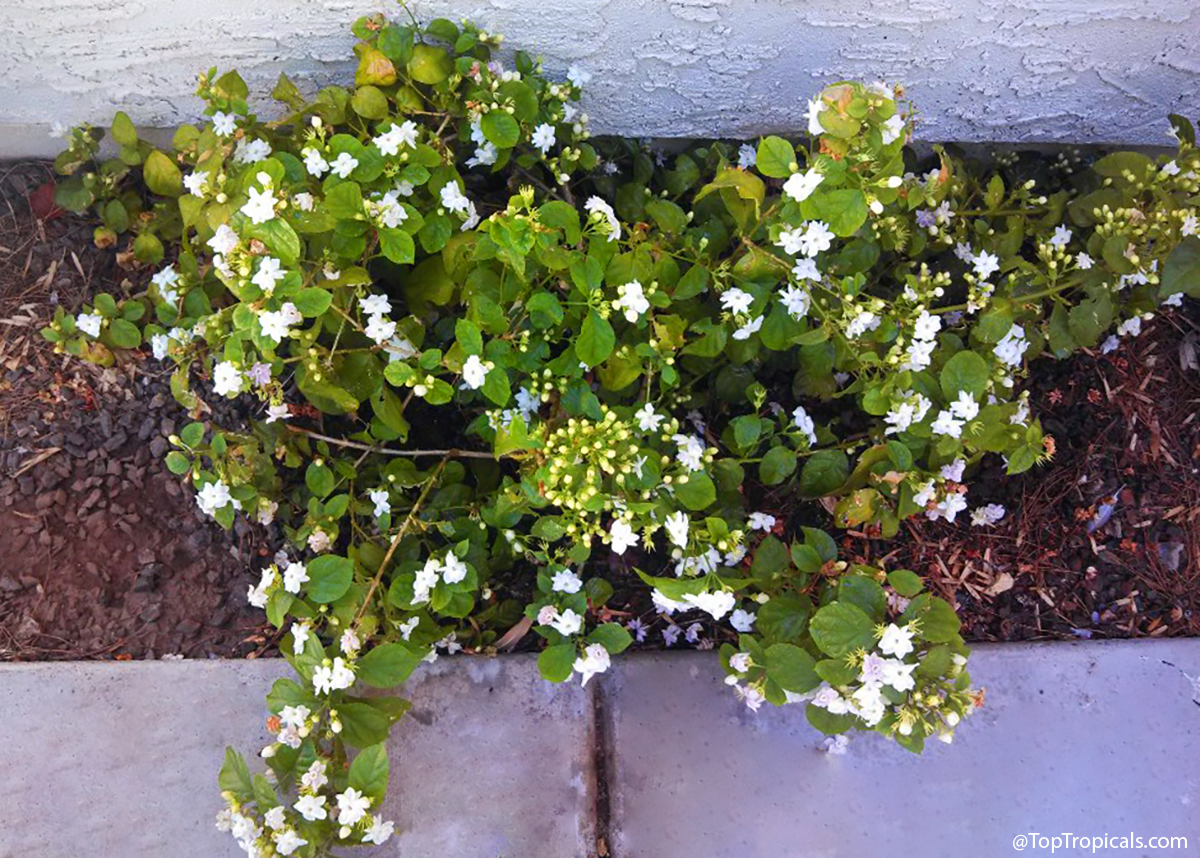
Jasmine  Sambac  Maid  of  Orleans  plant  growing  along  a  wall  with  clusters
    of  white  fragrant  flowers  in  bloom.

Jasmine Sambac thrives in hot, sunny locations

✅ Why Jasmine Sambac?

Over the years I have grown thousands of plants, but very few have the staying power of Jasmine Sambac.

It is not just fragrant. It is intensely, unmistakably fragrant. One open flower can perfume an entire patio. In the evening, the scent becomes deeper and richer.

But what makes Sambac truly special is its adaptability.

It can grow as a compact patio shrub, a flowering hedge, or a climbing vine. It performs beautifully in containers. It tolerates both full sun and partial shade. The more light you give it, the more flowers it rewards you with.

And unlike many tropicals, Sambac does not bloom just once. With proper care, it flowers in cycles throughout the warm season.

For gardeners, that combination is rare: beauty, perfume, flexibility, and repeat bloom.

That is why it has remained one of the most wanted fragrant plants in cultivation.

✍️ More About Jasmines from Blog

🛒 Explore Jasmine plants

Date: 9 Apr 2026

*️⃣ Stop Babysitting Your Trees - Grow Cold Hardy Avocados Instead

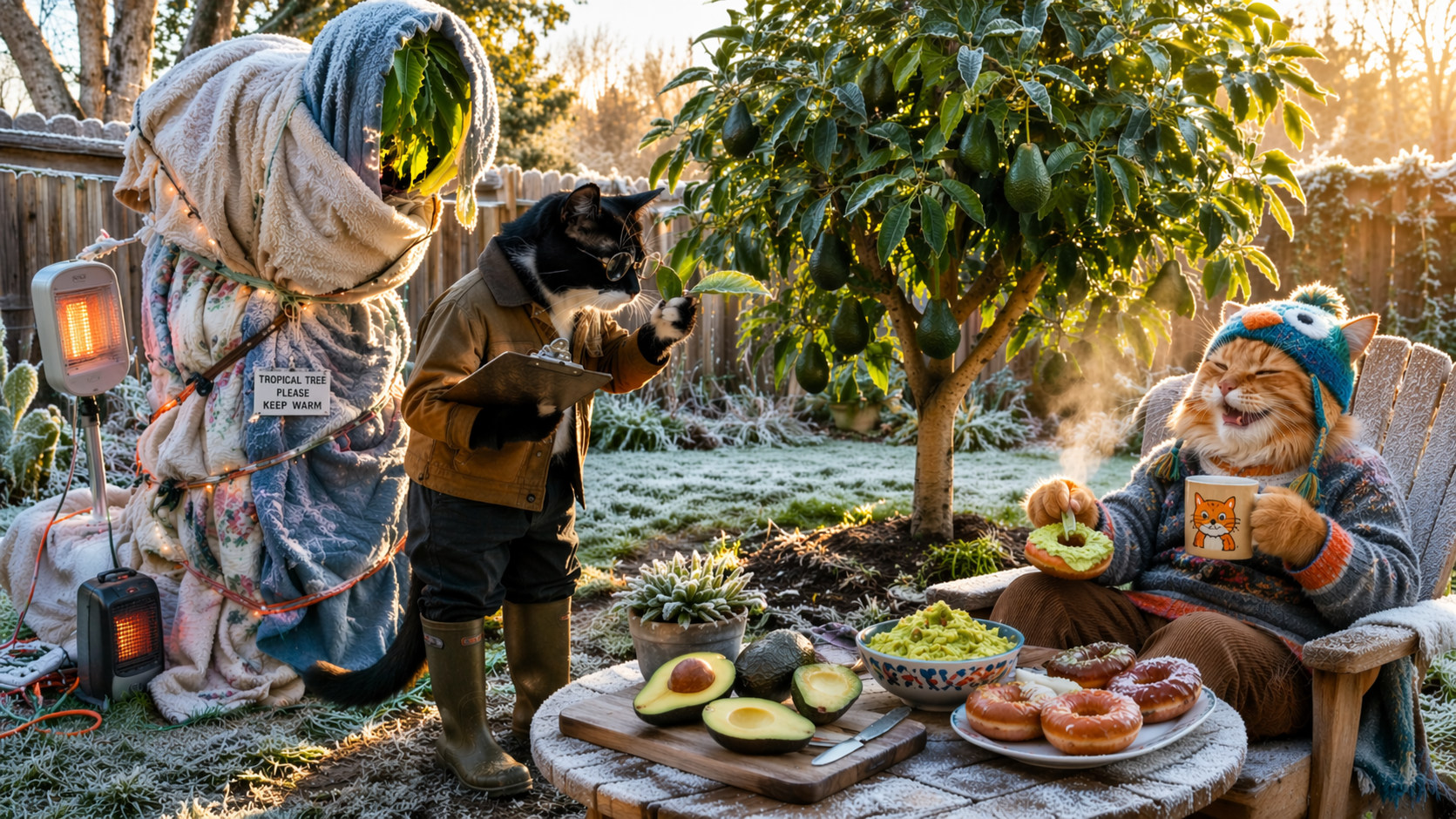
Smokey  the  black-and-white  cat  with  glasses  sits  on  a  patio  taking 
 notes  while  Sunshine,  a  fluffy  orange  cat  wearing  bunny  ears,  holds  a  small 
 potted  mango  tree  with  light  yellow  flowers.
Sunshine: I love these crazy guacamole donuts… but I’m tired babysitting trees during cold.

Smokey: Then stop planting trees that need babysitting. Plant cold hardy avocado.

Read more about Smokey & Sunshine

You always wanted an avocado tree. Not in Miami - right there in Central Florida, in your own yard. You planted one, it grew well for a few years, and it felt like you finally figured it out. Then 2026 hit. A few cold nights, temperatures dropped below what your area usually sees, and the tree was gone.

Here is the part most people miss: USDA zones are based on average minimums, not the worst freezes. One bad night can erase years of growth.

That does not mean avocado will not work. It means you planted the wrong variety. Cold hardy avocados are built for exactly this kind of surprise.

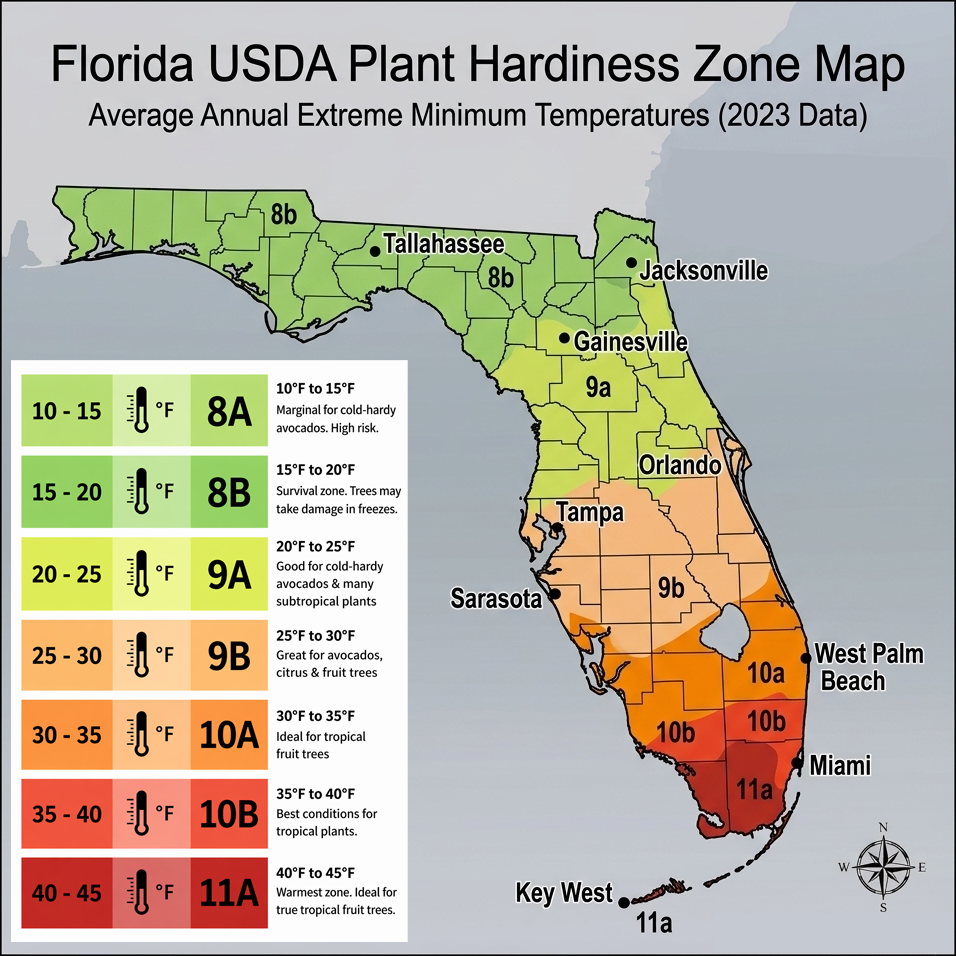
Florida  USDA  plant  hardiness  zone  map  showing  zones  8a  through  11a  with
    temperature  ranges

USDA zone map

This USDA Zone map makes one thing clear: all of Florida can grow avocado. The question is not if - it is which variety. From North Florida (8b) to South Florida (11a), there is always an option that fits your conditions.

If you are outside Florida - in Texas, Louisiana, California, or anywhere else - the same rule applies. Start with your USDA zone, then choose the right type of avocado for it. You can check your local zone here

So what does this mean for your yard? It is not about trying again and hoping for a warmer winter. It is about choosing a tree that actually matches your zone.

Cold Hardy Avocado Varieties for Reliable Harvests

Swipe left/right to see all data <->
🌡️ Threshold 🛡️ Resistance Profile Primary Varieties & Type Culinary Profile 📍 Geographic Best Fit
15°F+ High Resistance: Mexican-type selections. Short freezes near 15°F are survivable with minor leaf burn. Fantastic (A), Joey (B), Lila (A), Poncho (B) High Oil / Nutty USDA Zone 8b / 9a transition regions. Central/North Florida, Texas, Arizona
20°F+ Moderate: Brief freezes usually survivable. Full recovery may take an entire growing season. Bacon (B), Brogdon (B), Day (A), Fuerte (B), Mexicola Grande (A), Ulala "Super Hass" (A), Winter Mexican (B) Medium Oil / Creamy Coastal 9a. Inland Florida and colder microclimates.
25°F+ Light: Visible canopy damage and branch dieback are common. Survival depends on wind protection. Choquette (A), Oro Negro (B), Lula (A) Rich / "Black Gold" Zone 9b/10a. Coastal Central Florida and protected microclimates.
30°F+ Frost Tolerant Only: Even brief freezes cause rapid damage. Best for South Florida. Simmonds (A), Black Prince (A) Mild / Large Slicing USDA Zone 10a / 10b. S. Florida, Miami, Keys, Coast.
  Compact: Move inside during cold Dwarf Wurtz (A&B) and Fuerte (B) Rich / High Oil Patio Growers & Containers

See more varieties in our Master Avocado Varieties table

Microclimate matters more than your zone. The same yard can have warm and cold pockets. Plant near a south-facing wall, under light canopy, or in a spot protected from wind, and you gain a few critical degrees on cold nights.

Young avocado trees need protection during their first winters. They have not built enough wood or root strength yet, so even a short cold snap can damage them. Simple steps like frost cloth, wind protection, or temporary covers can make the difference between a setback and a loss.

You may see avocados labeled as Type A or Type B. This refers to how the flowers open, not cold hardiness. Some people mix both types to improve pollination, and while a single tree can still produce fruit, having two different types is beneficial and can increase your harvest.

Practical Planting Advice
  • Plant on a mound
    Raise the root zone 4-8 inches for fast drainage.
  • Avoid low spots
    Standing water is worse than drought for avocados.
  • Full sun
    Maximum light = stronger growth and better recovery.
  • Use microclimate
    South-facing wall, light canopy, or wind protection adds critical warmth.
  • Do not overwater
    Let the top layer dry slightly between watering.
  • Protect first winter
    Cover young trees during cold nights.

✅ Stop Guessing. Plant What Works.

Cold hardy avocados are not theory - they are proven to handle real conditions. Choose the right variety for your zone, plant it correctly, and you stop replacing trees after every cold snap.

🎥 Watch cold hardy avocado videos

✨ Grow More. Save More.

Get 10% off when you buy 2 or more 3 gal avocado trees. Mix varieties, combine Type A and Type B, and set yourself up for better pollination and bigger harvests.
Offer valid through 04/15/2026. No code needed - discount applied automatically at checkout.
Discount applies to 3 gal avocado plants only. Not valid on previous purchases and cannot be combined with other promotions or discounts. Offer subject to change without notice.
🛒 Shop cold hardy avocado

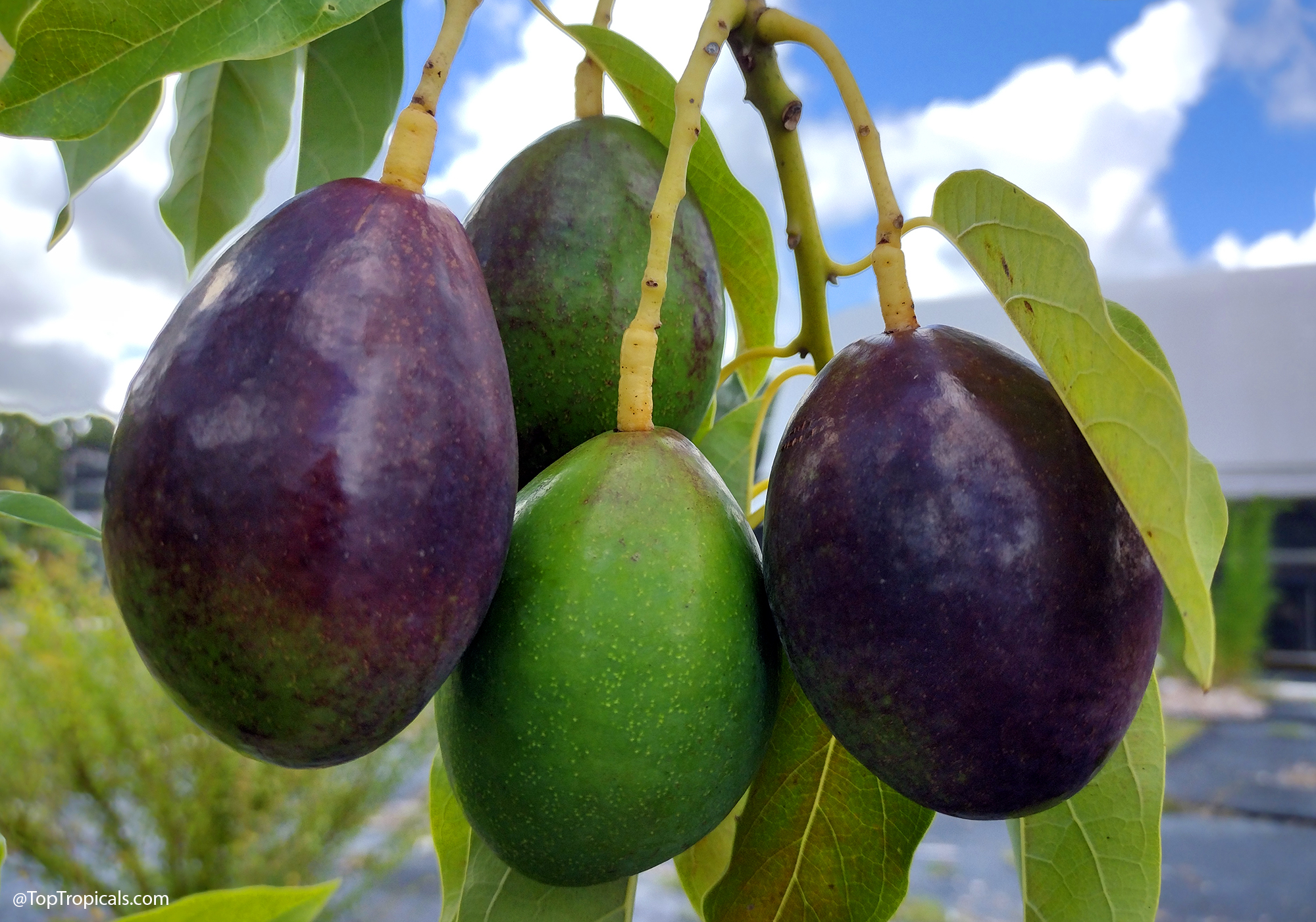
Avocado  tree  Joey,  Semi-Dwarf,  Cold  Hardy  (Persea  americana)  -  purple 
 and  green  fruit  on  a  branch

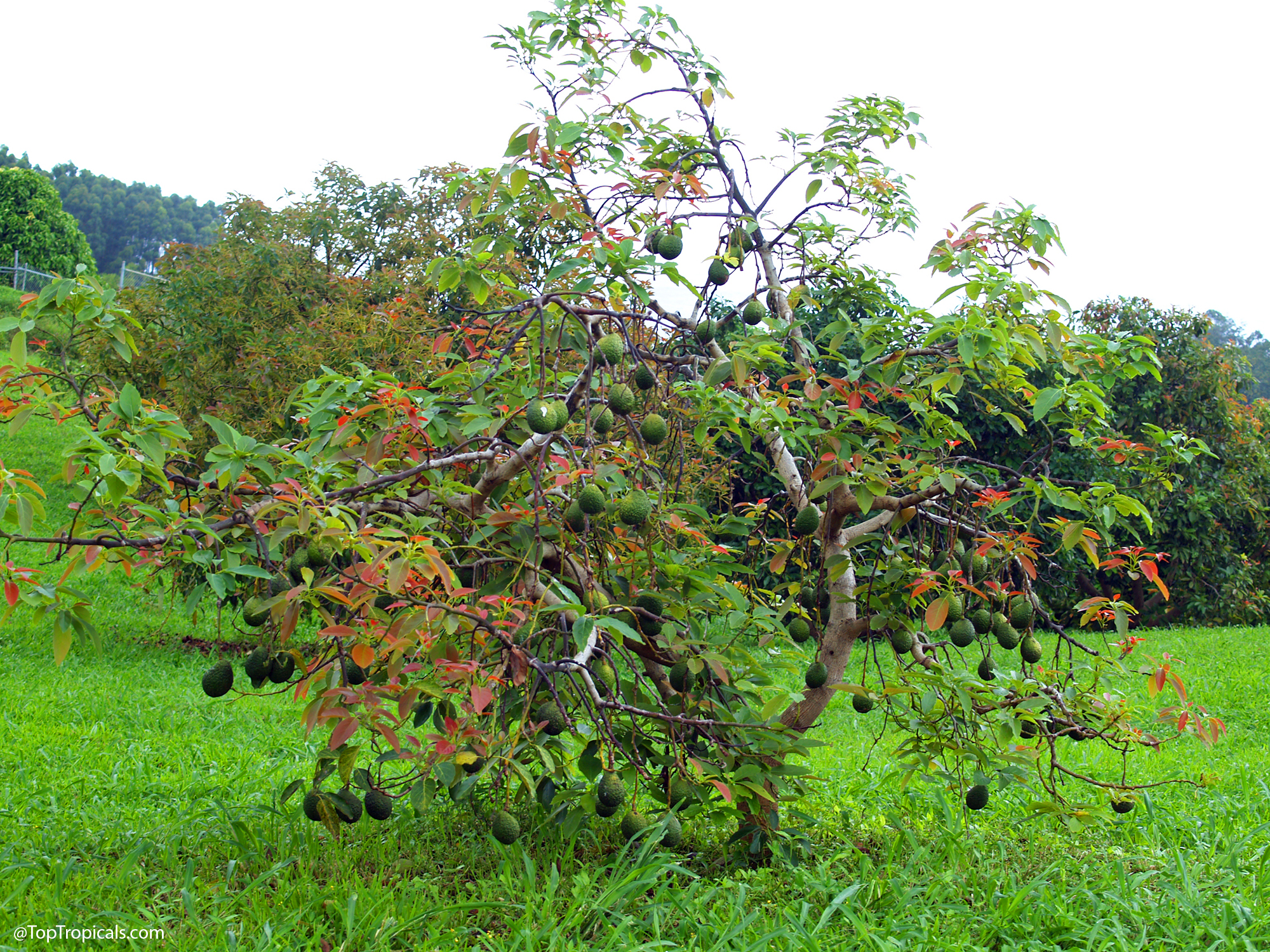
Joey is one of the most cold hardy Avocado trees with a compact habit and very pretty fruit. The flesh is nutty, smooth, and mildly sweet.

📚 Learn from our Blog:
Avocado for cold areas

Fuerte  avocado  tree  compact  dwarf  growth  with  green  fruit  in  garden 
 setting

Fuerte is very productive, cold hardy, and is one of very few dwarf avocado varieties that stay compact in the garden and easy to grow in container.

Date: 29 Apr 2026

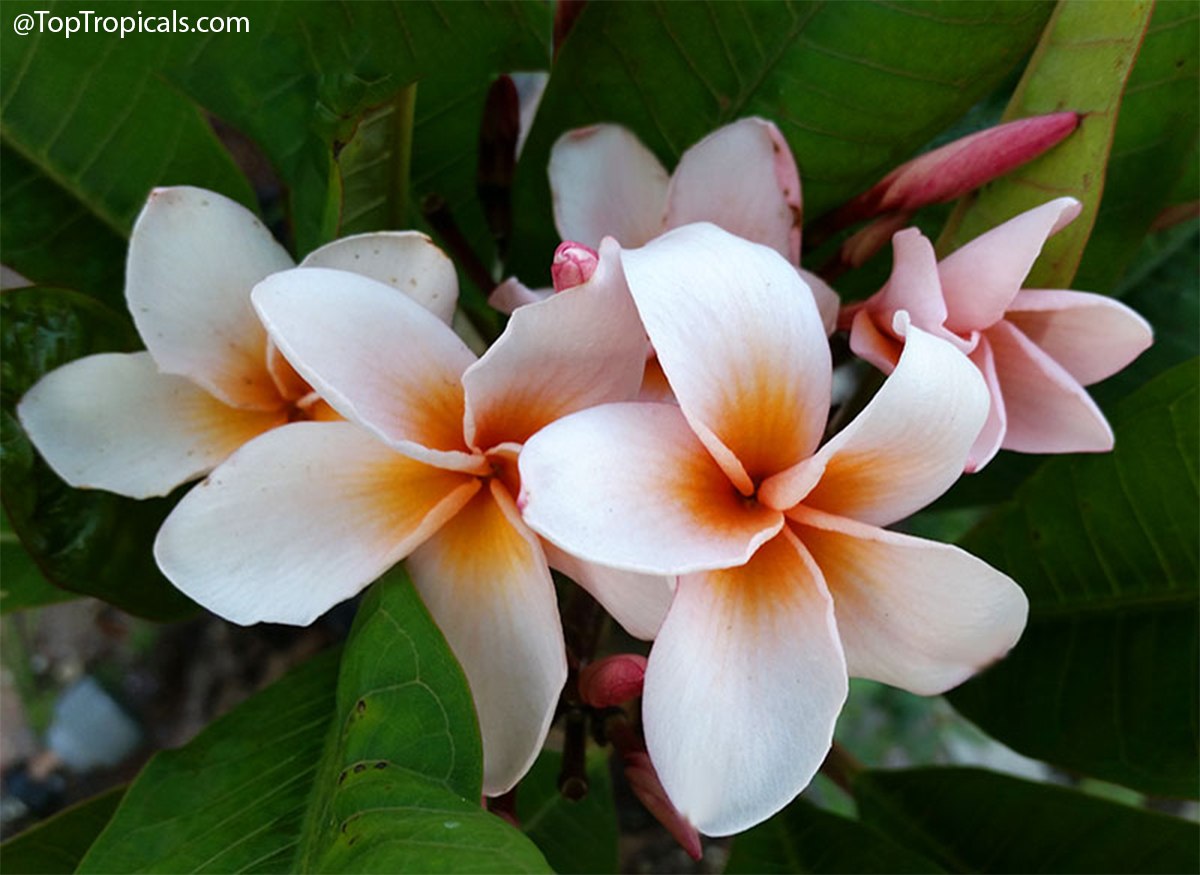
Soft peach tones - calm and glowing plumerias

Plumeria Morland

Plumeria Morland

Plumeria Thong Taweechok

Plumeria Thong Taweechok

Plumeria Gred Gaew

Plumeria Gred Gaew

Plumeria Moung Sangeam

Plumeria Moung Sangeam

Soft peach tones - calm and glowing plumerias. Pruning tip 🌈

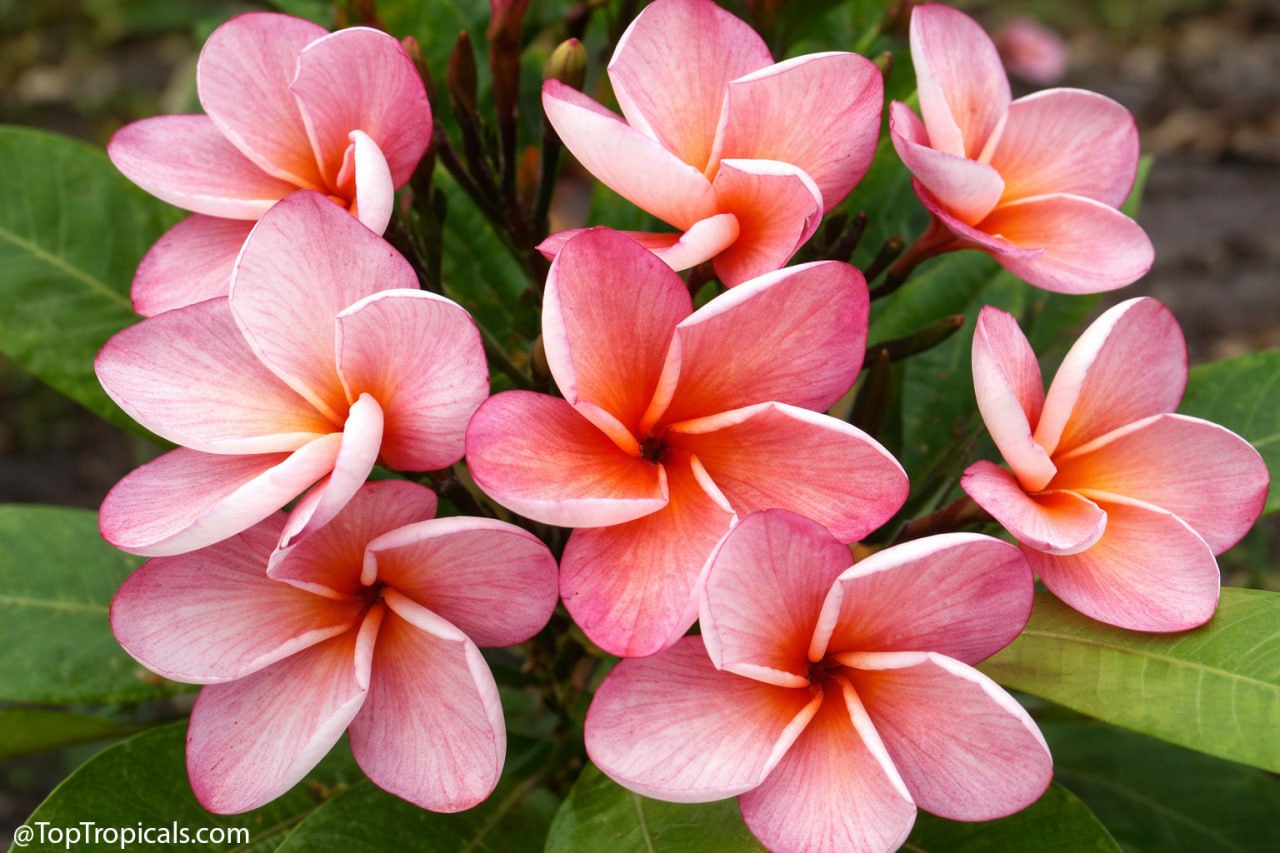
This set is all about warmth without intensity - soft peach, coral, and golden tones that feel calm, balanced, and easy on the eyes. These are the plumerias you enjoy up close, where the subtle color blends really shine.

🌸 Today's featured plumerias:

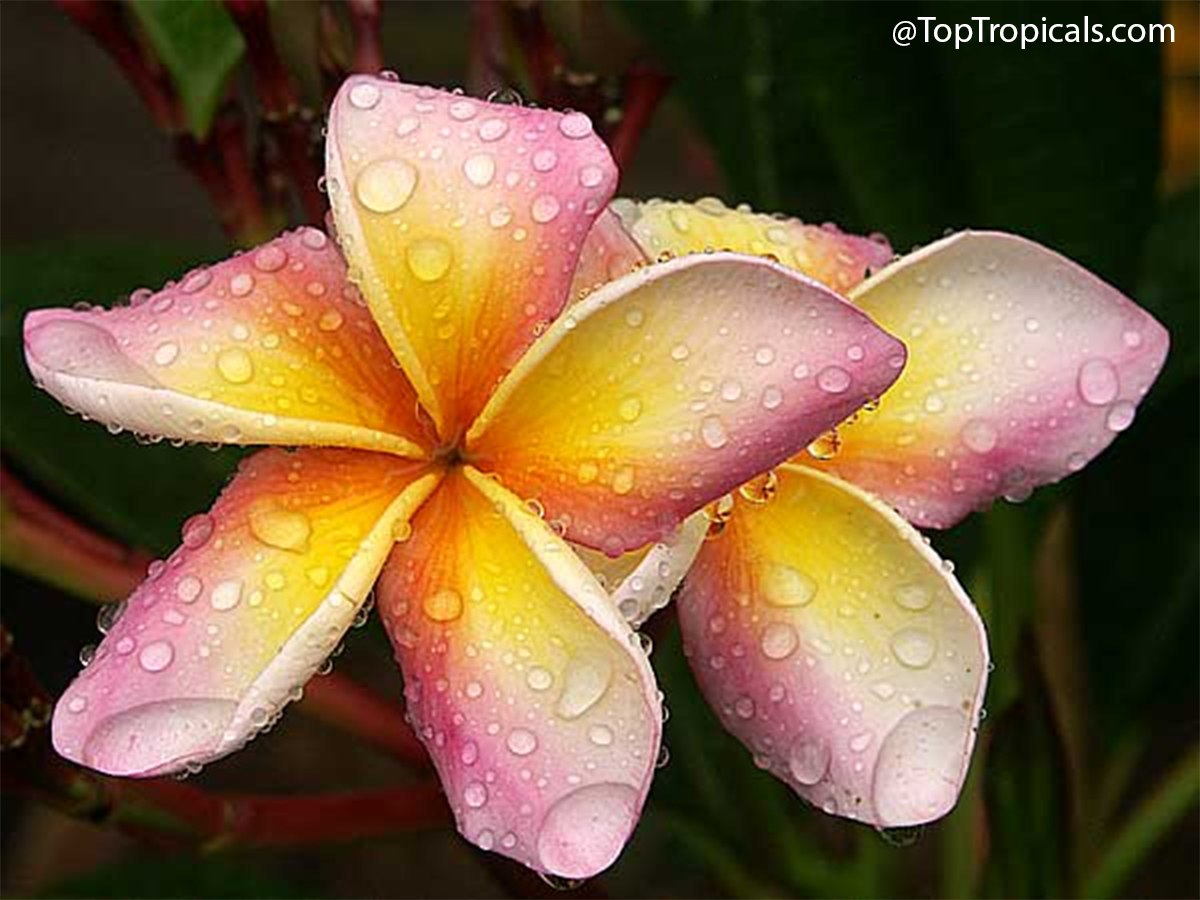
  •  ✦ Plumeria Morland - soft pink petals with a creamy yellow center fading into white edges. Gentle gradient with a fresh, radiant look and light fragrance.
  •  ✦ Plumeria Thong Taweechok - warm golden-yellow petals infused with orange and coral, softening into creamy edges with a light pink blush. Smooth, glowing and well-balanced.
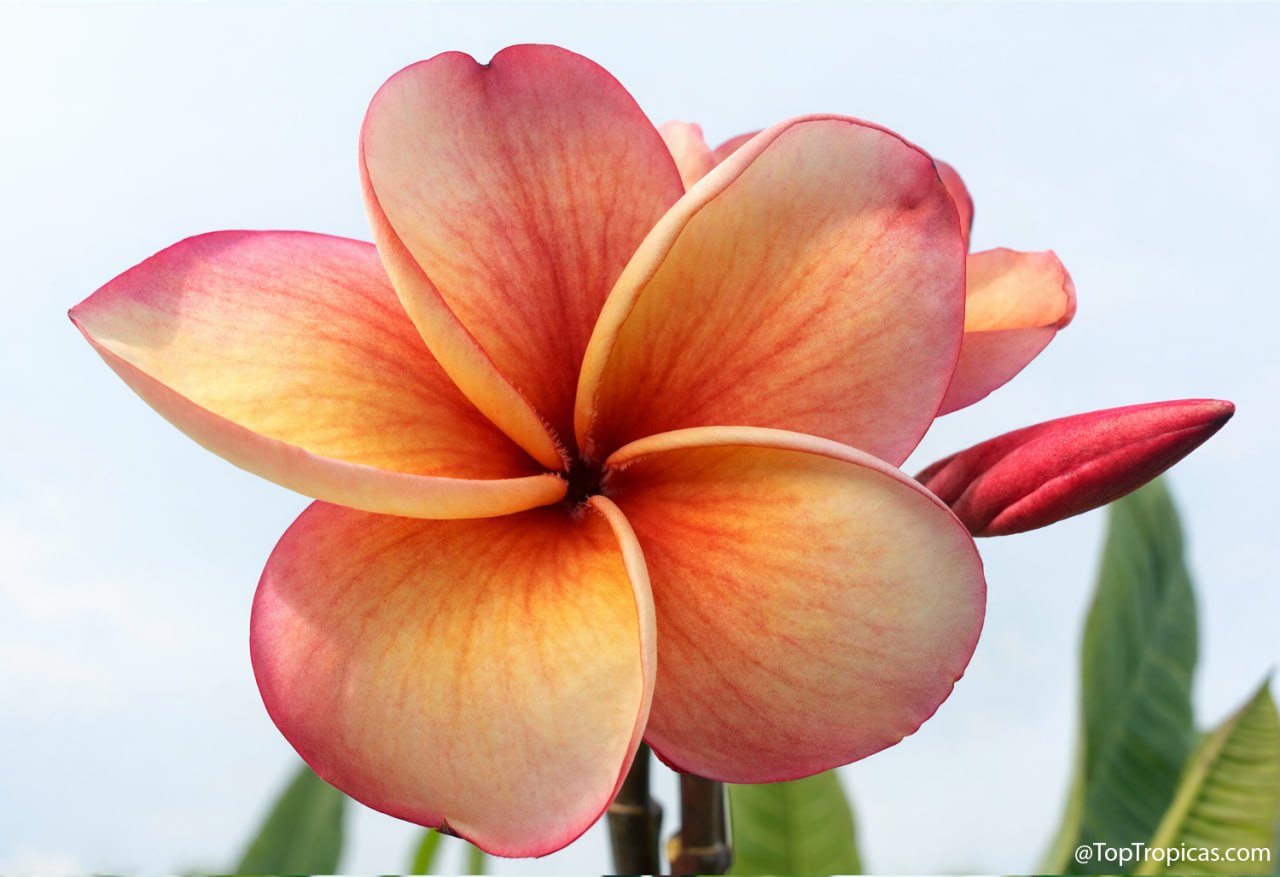
  •  ✦ Plumeria Gred Gaew - soft coral and peach tones with a glowing orange center and a clean white edge. Refined, crisp, and quietly elegant.
  •  ✦ Plumeria Moung Sangeam - creamy white to pale blush petals with a warm golden-orange center and a hint of peach at the edges. Soft, delicate, and naturally graceful.


💡 Plumeria tip: pruning for more blooms


Light pruning encourages branching - and more branches mean more flower tips. Trim after a bloom cycle or in early growing season, and your plumeria will come back fuller, bushier, and ready to produce more flowers.

🛒 Shop Plumeria Collection and Enjoy the fragrant blooms

📚 Learn more:
🎥 How to get endless Plumeria Blooms

#Perfume_Plants #Container_Garden #How_to #Discover #PlumeriaRainbow

Dwarf Plumeria Plant Facts

Plumeria alba
Dwarf Plumeria
USDA Zone: 9-11
Large shrub 5-10 ft tallSmall tree 10-20 ftFull sunModerate waterWhite, off-white flowersFragrant plant
🟢 Join 👉 TopTropicals

Date: 27 Apr 2026

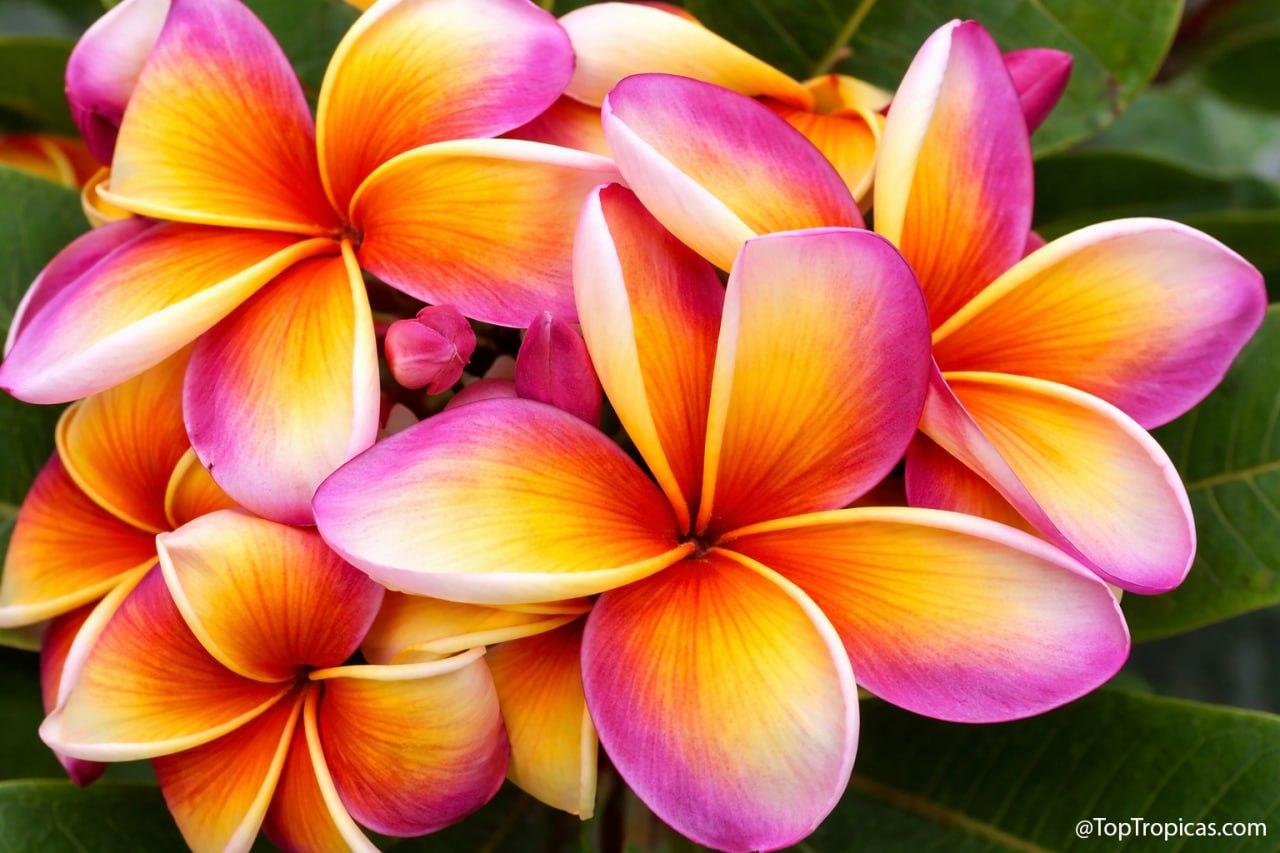
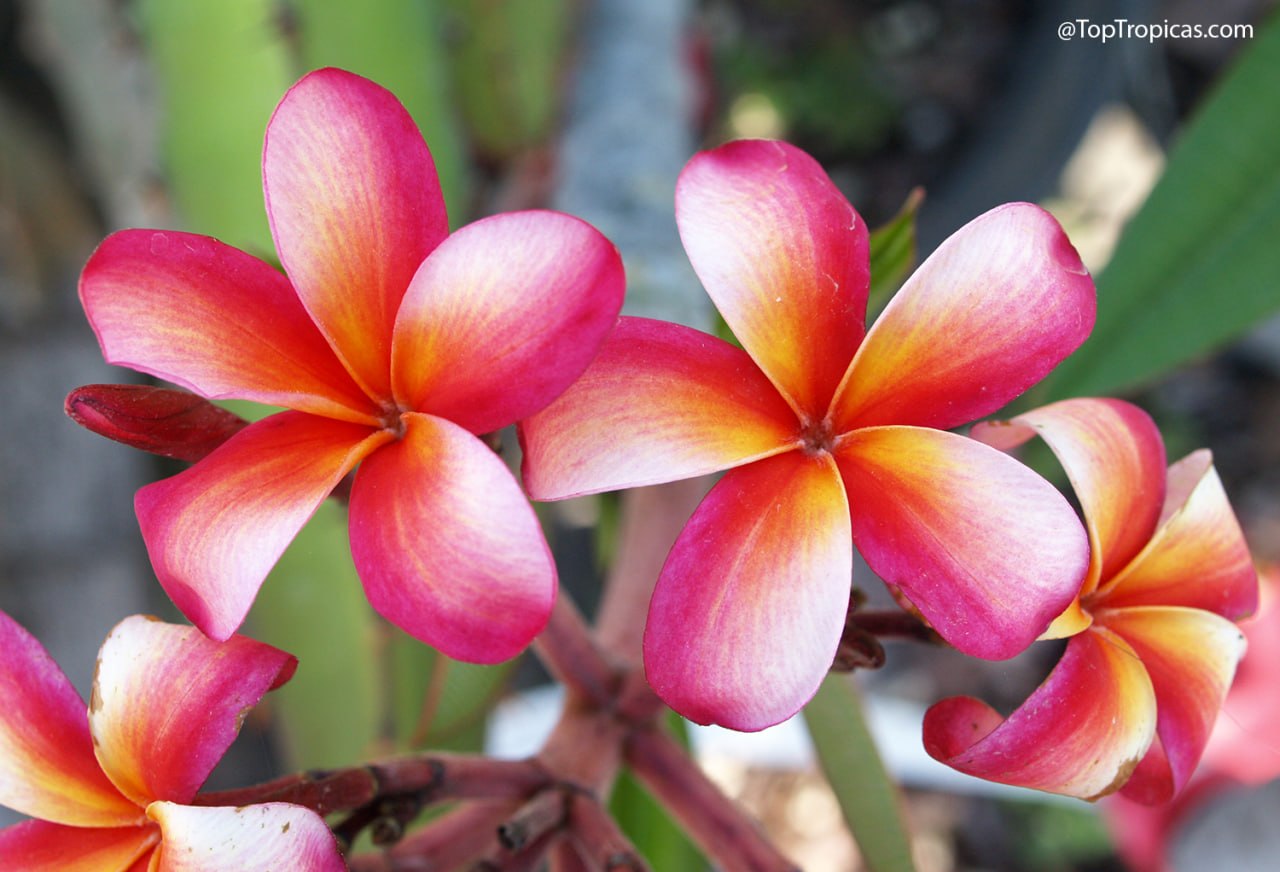
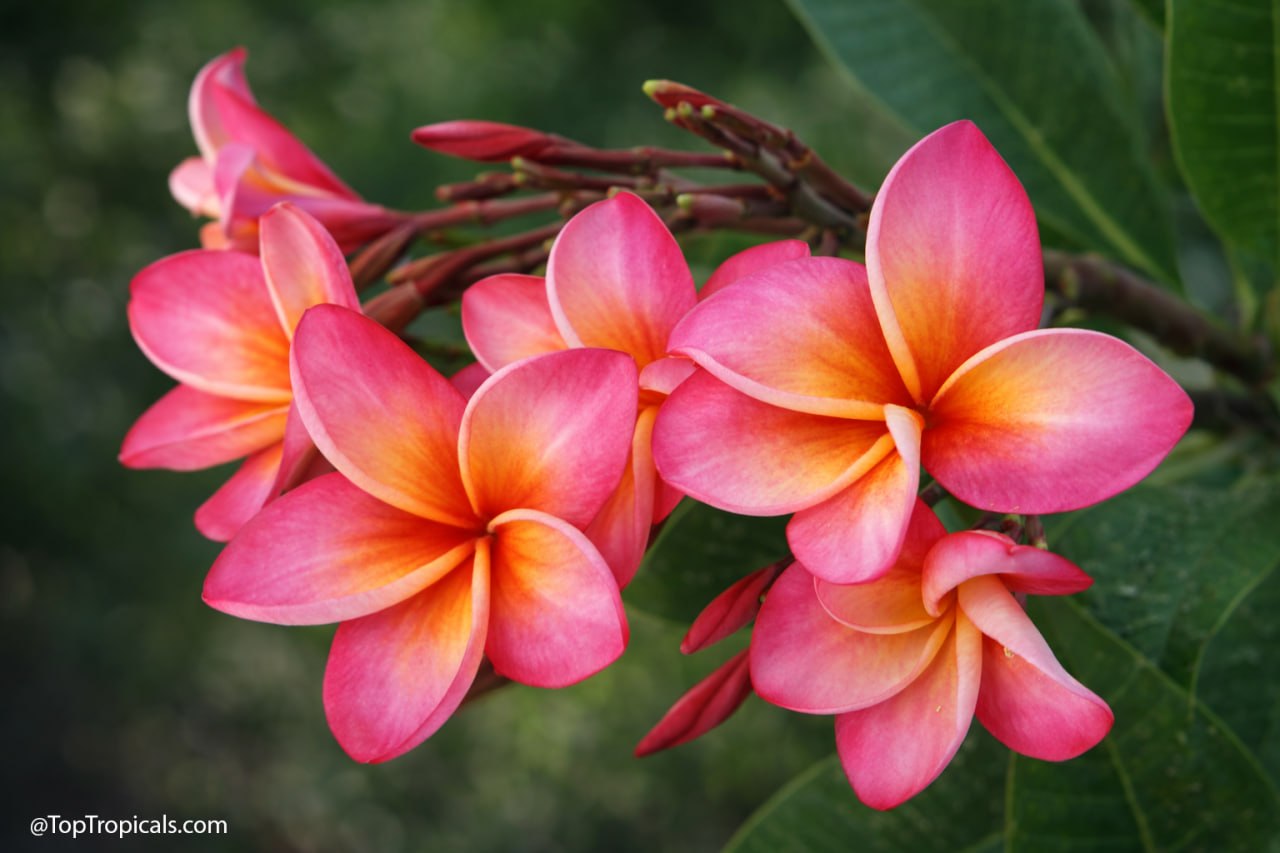
Rainbow plumerias - the wild side of color

Plumeria Mui Rainbow

Plumeria Mui Rainbow

Plumeria Pink Jaopraya

Plumeria Pink Jaopraya

Plumeria Sunset Symphony

Plumeria Sunset Symphony

Plumeria Dook

Plumeria Dook

Rainbow plumerias - the wild side of color. Winter dormancy tip 🌈

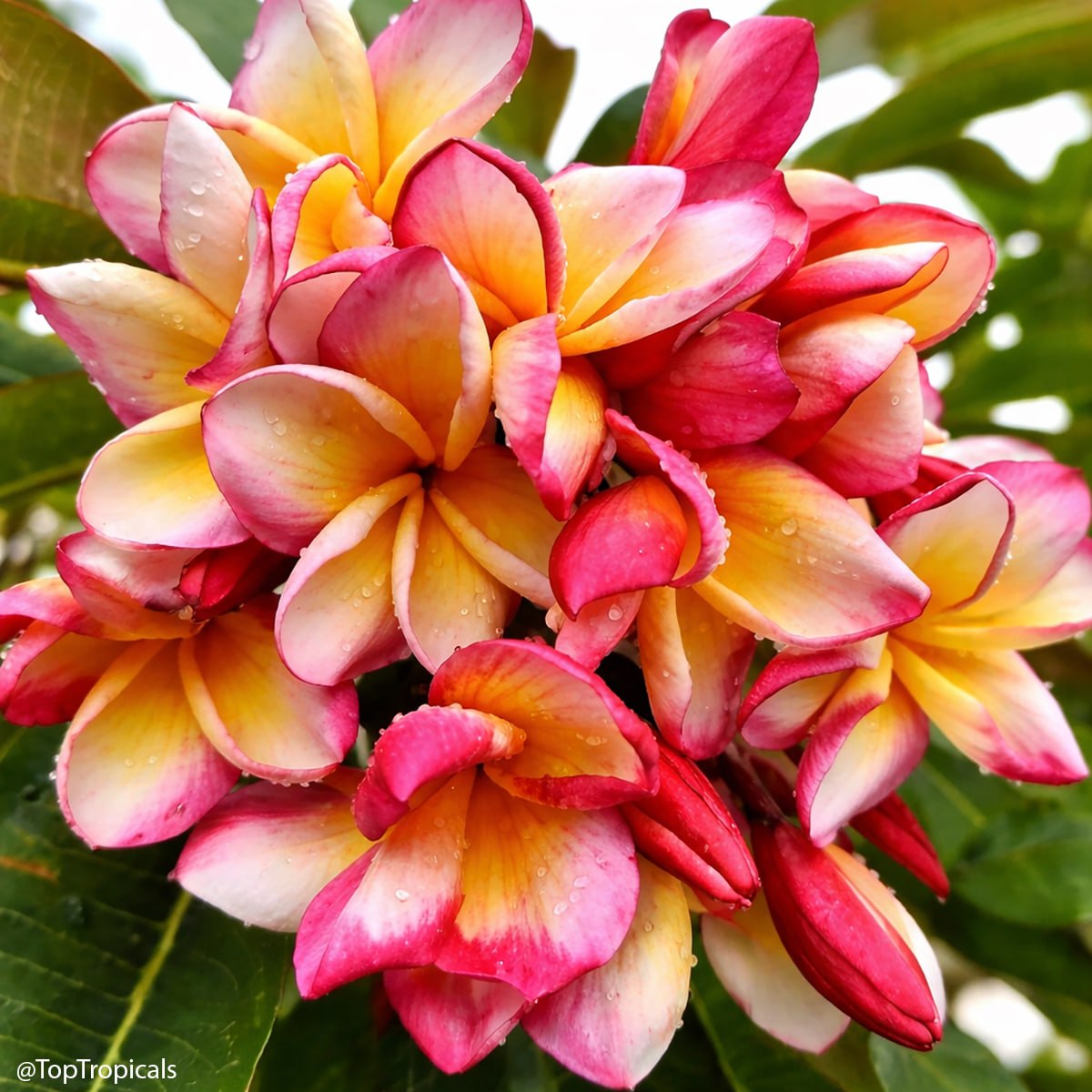
Some plumerias don’t follow rules - they mix, swirl, and splash colors all over the petals like a tropical sunset in motion. These “rainbow” types are the most playful and unpredictable, with every bloom looking a little different from the next.

🌸 Today's featured plumerias:

  •  ✦ Plumeria Mui Rainbow - deep orange-red center blending into golden yellow and finishing with pink to magenta edges. Bright, fiery colors with a smooth, glowing transition.
  •  ✦ Plumeria Pink Jaopraya - a bold swirl of red, white, pink, and yellow all in one flower. Complex, eye-catching, and impossible to ignore.
  •  ✦ Plumeria Sunset Symphony - creamy ivory, golden yellow, and coral-pink tones with deeper rose edges, creating a layered sunset effect that shifts from bloom to bloom.
  •  ✦ Plumeria Dook - rich pink petals melting into a glowing orange and golden center. Bright, warm, and full of tropical energy that stands out from a distance.


💡 Plumeria tip: winter dormancy


In cooler months, plumerias slow down and may drop all leaves. That’s normal.
During this rest period, cut watering way back and let the plant sleep.
Growth will restart when temperatures rise.

🛒 Shop Plumeria Collection and Enjoy the fragrant blooms

📚 Learn more:
🎥 How to get endless Plumeria Blooms

#Perfume_Plants #Container_Garden #How_to #Discover #PlumeriaRainbow

Dwarf Plumeria Plant Facts

Plumeria alba
Dwarf Plumeria
USDA Zone: 9-11
Large shrub 5-10 ft tallSmall tree 10-20 ftFull sunModerate waterWhite, off-white flowersFragrant plant
🟢 Join 👉 TopTropicals