Garden Blog - Top Tropicals

Date: 11 Jun 2025

Why every collector wants the Gothic Black Dragon Anthurium

Black Dragon Anthurium

🐉 Why every collector wants the Gothic Black Dragon Anthurium

  • 🌑 A living shadow
  • Anthurium Black Dragon is one of the most prized centerpieces of the Top Tropicals plant collection. This rare and exotic hybrid is celebrated for its deep, dark foliage that looks as if it were painted with charcoal or ink. It belongs to the coveted "dark foliage" group of anthuriums - a favorite among collectors for its dramatic, gothic elegance.
  • 🌑 It changes color with light
  • This plant changes color like magic! What sets Black Dragon apart is its ability to transform. In bright filtered light, the leaves darken dramatically - almost jet black. But in lower light, they fade to a mysterious greenish-maroon. It's like having two plants in one, depending on how you position it.
  • 🌑 Its spadix and spathe are weapons of style
  • Unlike many anthuriums that flaunt bright reds or whites, Black Dragon keeps it sleek and sinister with a brown spadix and dark-brown spathe - adding a sense of surreal drama when it flowers. But wait to see the real show when is sets fruit - cascades of bright red berries!
  • 🌑 Tropical but tough
  • Though exotic-looking, it's surprisingly resilient. With the right humidity and warmth (typical of most anthuriums), it's a slow but steady grower - ideal for collectors who want something dramatic yet manageable indoors.
  • 🌑 A collector's hybrid, not found in the wild
Black Dragon is likely a man-made hybrid created by crossbreeding dark-leaved species like Anthurium watermaliense or Anthurium forgetii. It doesn’t grow in the wild, which makes it even more of a sought-after trophy in aroids circles.

🛒 Get your own Black Dragon

📚 Learn more:


The most unique plant in your collection

#Container_Garden #Shade_Garden #Nature_Wonders
🟢 Join 👉 TopTropicals
Date: 10 Jun 2025

Big color in a small tree: Maroon jacaranda and why Jacaranda trees are so popular

Maroon jacaranda - Jacaranda jasminoides

👏 Big color in a small tree: Maroon jacaranda and why Jacaranda trees are so popular

  • 💜 Jacaranda jasminoides (Maroon Jacaranda) is a charming, compact tree that brings a touch of drama to small gardens and patios. It grows 10-12 feet tall, with a bushy habit that makes it perfect for tight spaces or even containers.
  • 💜 What really steals the show are its deep maroon to dark purple trumpet-shaped flowers that bloom in clusters from late spring through summer. In warm climates, it may surprise you with blooms at other times too!
  • 💜 The fine, fern-like leaves add a delicate, lacy texture to the overall look.
  • 💜 This jacaranda loves full sun but will tolerate a bit of shade, and it is happiest in fertile, well-drained soil. Water it regularly when it is young or during dry spells, but once established, it is fairly easygoing. It s best suited for USDA zones 9 to 11, and while mature plants can handle brief cold snaps down to 20F, younger ones appreciate a little extra protection when the temps dip.
  • 💜 Whether in the ground or in a pot, the Maroon Jacaranda is a low-maintenance beauty. A little pruning here and there keeps it tidy, and its elegant blooms make it a standout wherever it s planted. In warm places it may keep its foliage year-round, giving you a long-lasting touch of tropical color. A great pick for anyone who wants big color in a small footprint!


📚 Learn more:


🛒 Shop Jacaranda trees

#Trees #Container_Garden

🟢 Join 👉 TopTropicals

Date: 8 Jun 2025

Charming Elephant Ears: Alocasia vs Colocasia

Alocasia and Colocasia

🐘 Charming Elephant Ears: Alocasia vs. Colocasia - which one is better?


Alocasias and Colocasias, or Elephant Ears, are both remarkable and popular plants that can bring a tropical exotic touch to your garden, pond, or pool area. Why are they so popular - and which one should you choose?
  • 🍀 Why gardeners love Elephant Ears


  • ✔️ Tropical appeal: Bold, architectural foliage creates a lush, exotic atmosphere.
  • ✔️ Striking leaves: Huge heart- or arrow-shaped leaves in green, purple, black, or variegated tones.
  • ✔️ Versatile placement: Ideal for containers, garden beds, water features, or borders.
  • ✔️ Low maintenance: Thrive in part shade with moist soil and occasional fertilizer.
  • ✔️ Big impact: Some varieties reach over 6 ft tall, adding strong vertical structure.


🍀 Alocasia vs. Colocasia - what's the difference?

  • 🟢Leaf shape: Alocasia = upright, arrow-shaped; Colocasia = drooping, heart-shaped.
  • 🟢Leaf texture: Alocasia = glossy; Colocasia = more matte.
  • 🟢Stem color: Alocasia = green; Colocasia = often purplish.
  • 🟢Light and soil: Alocasia prefers bright, indirect light and good drainage; Colocasia loves shade and wet soil.
  • 🟢Cold tolerance: Colocasia is generally more cold-hardy and water-tolerant.


📚 Learn more:


🛒 Go big with giant leaves!

#Shade_Garden #Container_Garden

🟢 Join 👉 TopTropicals

Date: 14 Jun 2025

Botanical oddball - an alien ribbon plant with a sense of humor

Homalocladium platycladum - Centipede Fern, Tapeworm Ribbonbush

🐸 Botanical oddball - an alien ribbon plant with a sense of humor

  • 🐍 Homalocladium platycladum - Centipede Fern, Tapeworm Ribbonbush that we mentioned earlier - this leafless wonder grows long, flat, jointed stems that look like green ribbons or, yes, tapeworms. But here's the twist: it also produces charming little flowers that surprise anyone expecting nothing but weird stems!
  • 🐍 Low-maintenance and high-impact, it thrives indoors or out, in bright shade to partial sun.
  • 🐍 The flowers are real! Tiny, greenish-white to pink blooms appear along the joints - subtle but fascinating.
  • 🐍 Conversation piece? 100%. Whether in a pot or in the ground, people will ask what it is - and you’ll love telling them.
  • 🐍 If you like your plants with a sense of humor and mystery, this one is for you.


🛒 Shop Tapeworm Plant now - get ready for double takes!

#Nature_Wonders #Shade_Garden #Container_Garden

🔴 Join 👉 TopTropicals

Date: 16 Jun 2025

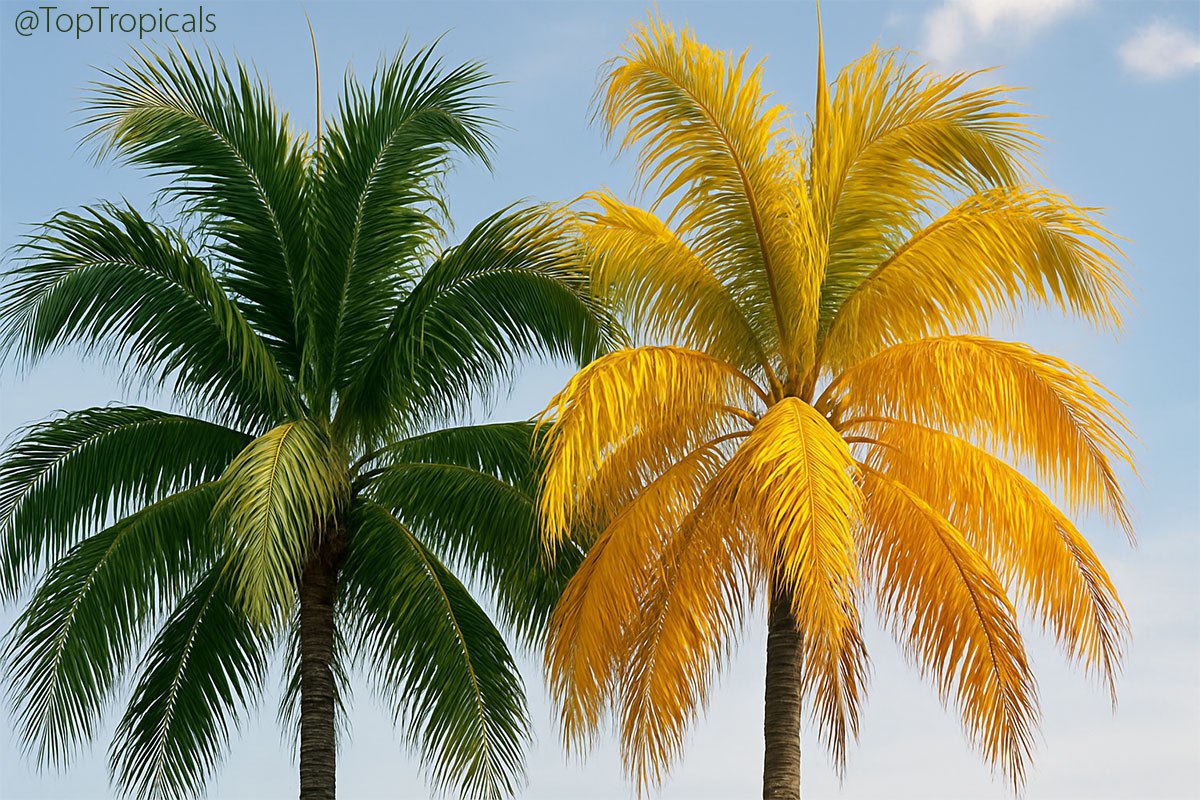
Why is my palm tree turning yellow?

Green and yellow palm

Green and yellow palm

🌴 Why is my palm tree turning yellow?


Yellowing leaves are a common concern with palms and can be a sign of several issues, most commonly: nutrient deficiency and pests or disease. Additionally, leaf yellowing may be a sign off overwatering or poor drainage, underwatering, or cold damage.
  • ✔️ Nutrient deficiency


    Nutrient deficiency is the most frequent cause of palm issues. Palms are heavy feeders, and even a slight imbalance can lead to yellowing. Lack of nitrogen, magnesium, iron, or potassium is the leading cause.
  • ✔️ Signs of nutrient deficiencies:


Magnesium and Iron deficiency is one of the top culprits, especially in sandy soils. It causes older fronds to turn yellow with green veins.
  • Potassium deficiency causes yellow or orange spots on older fronds.
  • Nitrogen deficiency leads to overall pale yellowing, especially in new growth.


✔️ How to fix?


Use a slow-release fertilizer with high Nitrogen content, like Green Magic, that includes all these elements; with 16-6-11 grade and 6 months release, it turns plants green very quickly! You can also use a balanced liquid fertilizer like Sunshine Robusta. Additionally, a supplement of magnesium sulfate (Epsom salt) and micro-element supplement containing chelated Iron can help, like Sunshine Superfood (amino-acid based natural product).
  • ✔️ Pests and Diseases


    Pests and fungal diseases can lead to yellowing. Check for signs of scale, mites, or fungal and bacterial problems, especially if yellowing is uneven or spotted.
  • ✔️ Signs of pests:


Thrips cause silvery-yellow streaks or mottling
  • Spider mites, especially in dry conditions, cause yellow speckling
  • Scale insects can suck sap and weaken fronds
  • Mealybugs often found in leaf bases and crowns


✔️ How to fix?


Inspect your palm regularly and treat pests early with neem oil, insecticidal soap, or horticultural oil.
  • ✔️ Lethal yellowing


    Lethal yellowing is a serious disease caused by a phytoplasma, a type of bacteria-like organism. It affecting mostly Coconut palms and some other species like Phoenix (Date) palms. It causes premature fruit drop, yellowing of fronds starting from the lower ones, and eventual death of the tree.
  • ✔️ How to fix?


    Unfortunately, there's no cure, but early removal of infected trees can slow the spread. Disease-resistant coconut varieties are available.
  • ✔️ Other causes


Overwatering or Poor Drainage: Too much water can suffocate roots and lead to yellowing. Make sure the soil drains well and let it dry slightly between waterings.
  • Underwatering: Dry soil for too long will stress the palm. Water deeply but infrequently.
  • Cold Damage: Exposure to cold temperatures can turn fronds yellow or brown, especially in tropical varieties.


✔️In most cases, leaf yellowing isn't fatal, but it's a sign your palm needs attention. Focus on balanced feeding, proper watering, and pest checks to keep your palm healthy and green. Trim only fully dead fronds - yellow ones still provide nutrients to the palm. With proper care, your palm should green up again.

🛒 Shop garden supplies

#How_to #Fertilizers

🟢 Join 👉 TopTropicals