Date: 7 Aug 2020

Healthy Plant Food
Q&A from Mr Booster
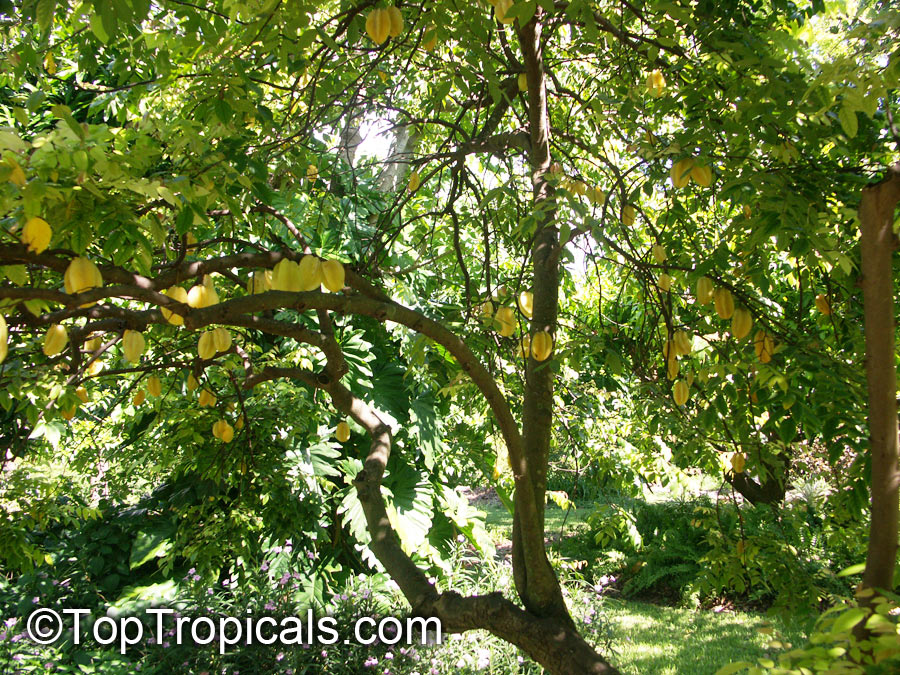
Plant food for a Star Fruit
Q: I have 2 Starfruit plants from you. One on the left is B10 has a lot of flowers but no fruit is developing. On the rite is Kenjeng. This one has no flowers at all. Both plants are growing very well. Plenty of sun and water. I am located in Boynton Beach Florida. So what to do?

A: Your trees on the pictures look very healthy, congratulations
with a great care!
Starfruit, as well as other grafted fruit trees (like mango, avocado, etc)
usually flower/fruit easily and readily while in pots in the nursery.
Sometimes, once planted in the ground, they may reduce flowering or even stop
flowering. What happened?
The answer is simple. In pots, we fertilize them on regular basis. In our
nursery, we have fertilizer injector inline with irrigation system that dozes
plant food with EVERY watering. In other nurseries, they may also use
slow-release fertilizers, but it is still a regular routine to provide plant food to
potted plants.
In the ground, especially in Florida poor soils, fruit trees may stop
flowering or delay fruiting due to lack of nutrients, or dis-balance of elements
in the ground. Without fertilizer, a tree may take extra time to develop
bigger root system to reach out for necessary elements, and eventually will start
fruiting anyway.
But we want it to fruit soon! The only way to fix the problem is to provide
fertilizer on regular basis for a young tree. It is especially important
during hot summer months when plant metabolism is fast due to high temperatures,
plus nutrients may get washed away with frequent summer rains (like we have
in Florida) even if you've added some fertilizer at time of planting.
You can use smart release fertilizer once a month during hot season,
this one or similar:
Mango-Food - Smart Release Fruit Tree Booster.
But the most effective way to get a tropical tree to flowering and
fruiting, is frequent applications of liquid fertilizer. We use Sunshine Boosters
with every watering on our plants. They work great even on hard cases and
weak plants, and you see the difference in a matter of weeks, sometimes even
days.
We recommend the following fertilizer that contains all necessary elements
for young fruit trees:
SUNSHINE C-Cibus - Crop Nutrition Booster
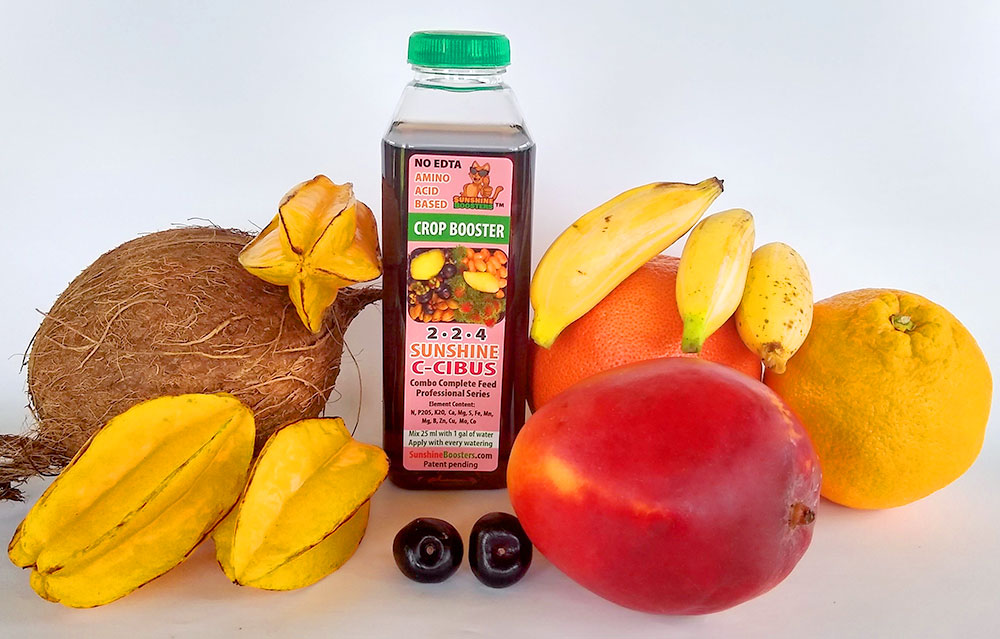
SUNSHINE C-Cibus - Crop Nutrition Booster from Garden Series, or Combo Total Feed Collection - all nutrients in just one bottle, for fruit trees and edibles.

Date: 10 Mar 2021

Healthy Plants: Q&A from Mr Booster
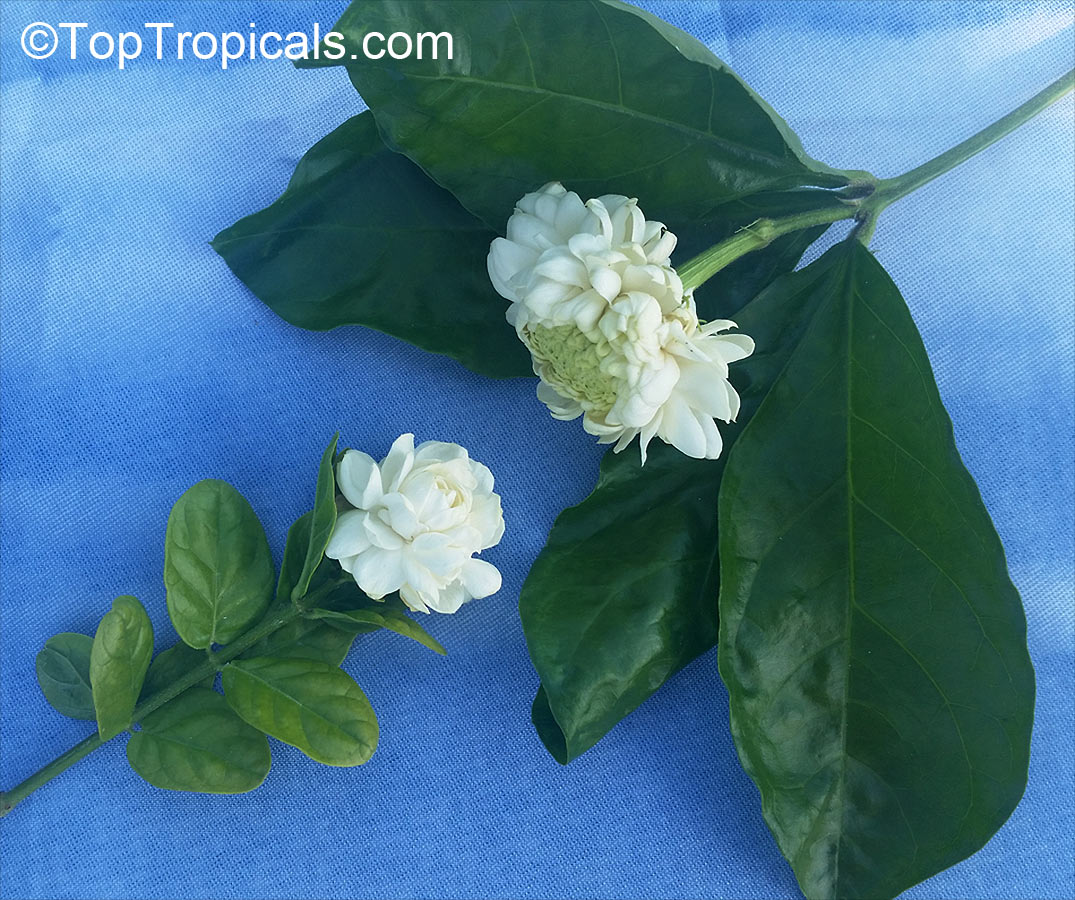
Jasmine Grand Duke flowering
Q: Hey can you help me figure out why my jasmine grand duke supreme is not flowering? Ive had it for almost a year (in NY) and only had 1 flower bloom and that immediately turned brown and died. Since then no flowers have come. The leaves are green and healthy and its growing like crazy but not flowers. Please help me figure this out.
A: For profuse flowering, Jasmine sambac needs 2 things: bright light and special plant food.
We have plenty of both here in Florida. If your grow this plant indoors in
colder climate, get it to flowering can be a bit tricky.
Your plant grows well overall with lots of vegetative growth, this is a
good sign, it means it's healthy, and not being overwatered which is one of the
most common problems with Sambacs. You're doing a great job! This jasmine
just needs more sun and fertilizer.
Make sure to keep it in the brightest spot of your home. The more hours of
light, the better. When night temperatures stay above 65F, it is beneficial
to bring the plant outside on a balcony, patio, or in a garden in full sun as
a potted specimen (move to bright light gradually).
You should give this Jasmine plenty of food with every watering. We
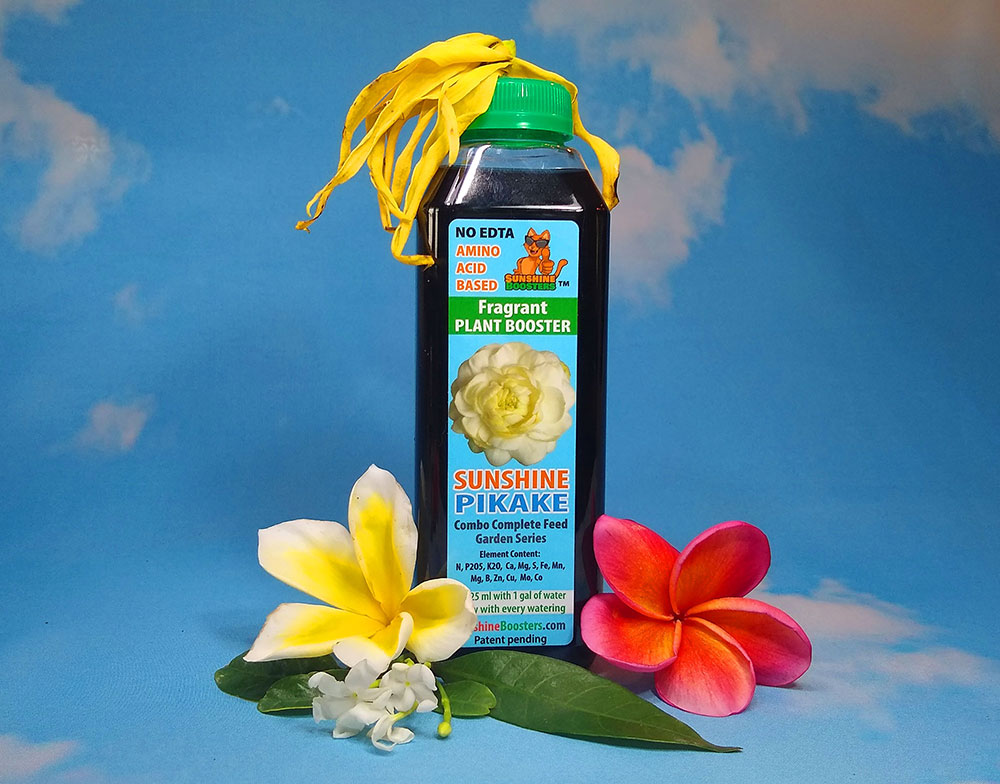
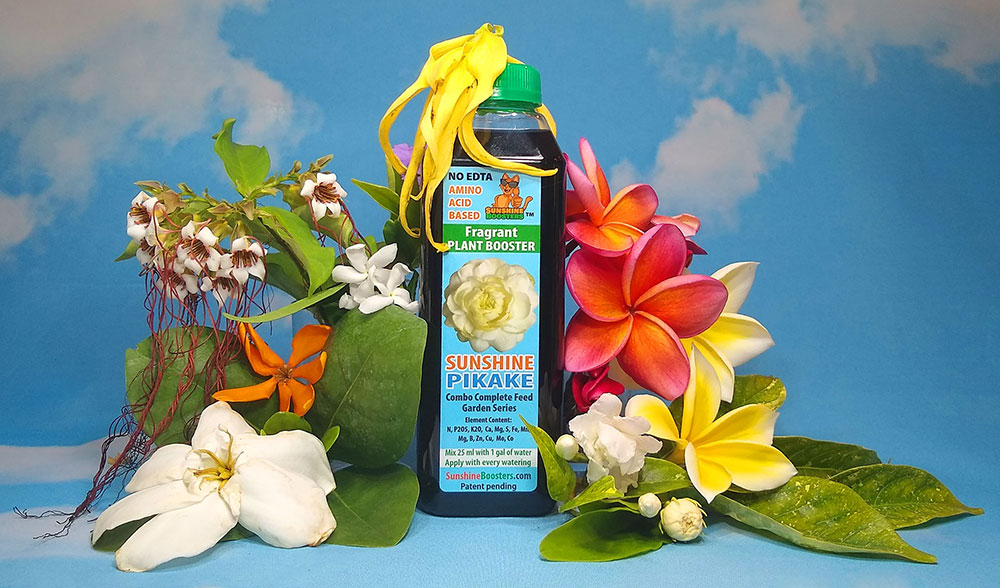
recommend SUNSHINE Pikake - Fragrant Flower Booster. This is a natural fertilizer
that can be applied to plants year round without risk of burning the roots
or nutrient lock up in the soil. It provides all necessary elements for the
flowering cycle - just add a bit into watering can, every time you water.
Date: 8 Jul 2020
Grafted fruit trees for Hawaiian gardens
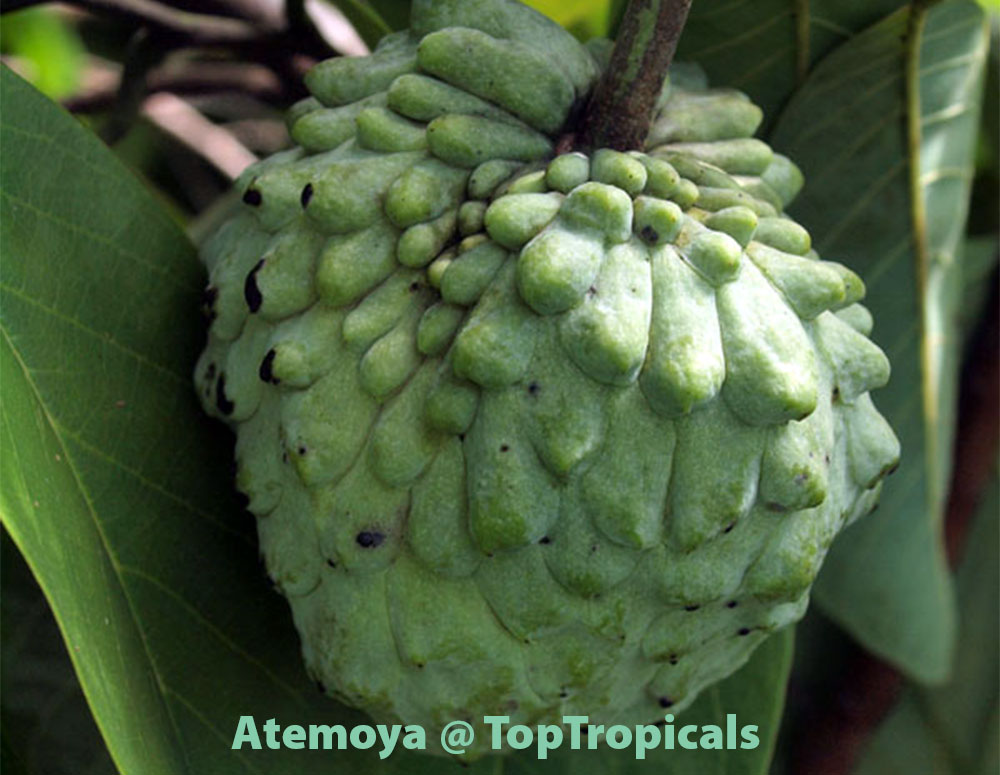
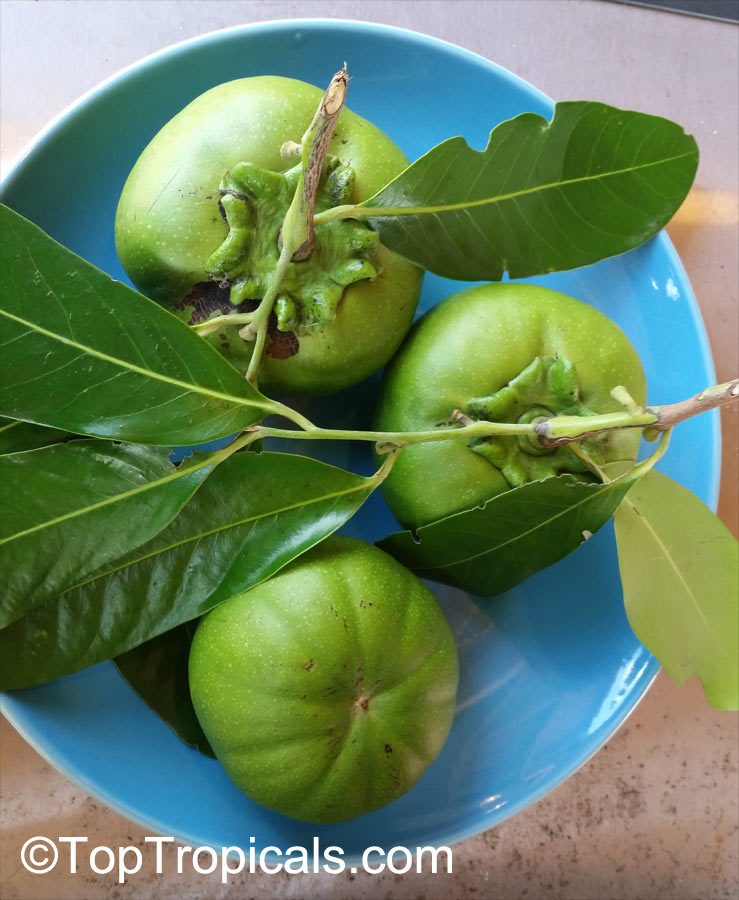
Q: Aloha guys, I purchased a Diospyros digyna - Black Sapote grafted var. Black Beauty from you and am checking to make sure it will fruit by itself and not need both sexes. Also checking to see if the grafted atemoya I bought from you will fruit at sea level (where I'm at) or if I should give it to a friend who is above 1,000 so it will fruit? My grafted Maimi soursop is thriving! Looking at getting a grafted jackfruit from you all next.
A: Black sapote Black Beauty does not need a second plant to produce
fruit. Grafted trees should be flowering and setting fruit right away, or
sometimes on the second year.
Atemoya does not require high elevation for fruiting. It is a hybrid
Annona squamosa x Annona cherimola (A. cherimola species prefers higher
elevation) so Atemoya is usually is happy at sea level.
Congratulations with your Soursop! It should be really happy in your location.
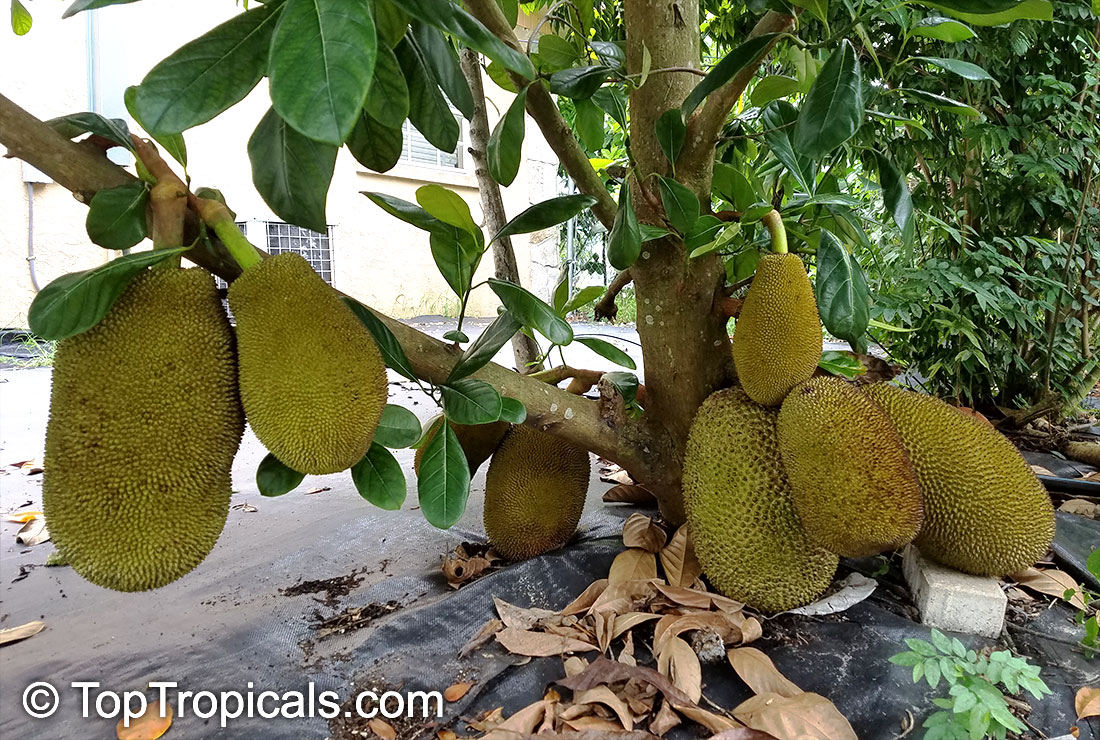
As for grafted Jackfruits, this is the list of varieties we usually carry. Since many of them are very rare, they sell out quickly once we get new arrivals. If you are looking for a specific variety, I strongly recommend to add it to your wishlist (click on "Notify me when available") and you will receive email from us as soon as we have it in stock, so you will be the first one to know about it!
Our favorite Jackfruit varieties (and also hot sellers)
Black Gold
Borneo
Red
Crispy
Dang
Rasimi
We also suggest to get a Kwai Muk (while we still have it!) - the most delicious fruit, and it should do well in Hawaii.
Date: 13 Apr 2021
Healthy Plants: Q&A from Mr Booster
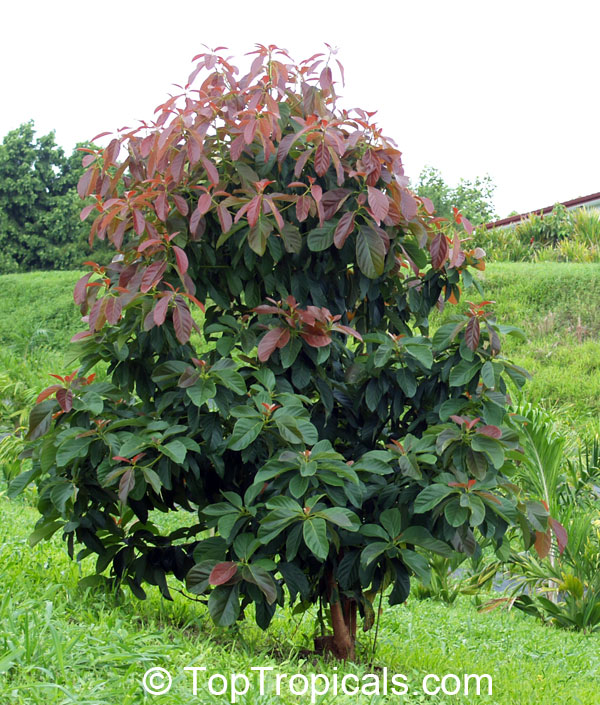
Why my Avocado is not flowering?
Q: I have 5 avocados. Three of your cold hardy varieties and two others that have all flowered and set fruit in the past. The last two years including this year, not a single one of them has put out any flowers. I am getting lots of new growth like one would expect on a tree too young to flower. The last two years have been very mild with out any damaging frost where in previous years they lost all their leaves due to frost yet started putting out flowers once winter was over. I am confused because they have all flowered and set fruit previous years. Any ideas would be appreciated.
A: From information you provided, and considering the trees get
lots of full sun and cold was not an issue, the only explanation is - lack of
nutrients. Here is an example.
Very common situation: you get a small 2-3 ft Avocado or Mango tree in 3
gal pot (or even smaller) from a nursery, full of flowers, and sometimes even a
small fruit. You bring it home, plant it in the ground or a bigger pot, it
looks happy and grows like crazy. Then next year - oops, no fruit, sometimes
not even flowers. What happened?
When the tree lived in a nursery, it was provided with all necessary
nutrients through the injector systems (continuous feed); or some nurseries may use
top dress smart release on regular schedule. Regardless of fertilizer type,
professional grower's set up delivers plant food non-stop, on regular basis, with balanced formulas. Plants are not only growing fast but also ready to produce, since nutrients are always available for a full growth cycle.
When you plant a tree in the ground (or larger pot), conditions change.
They may be beneficial for the plant: lots of room for roots to establish, hence
lots of vegetative growth. Even if you planted it using good quality fertile
soil, this soil may contain mostly nutrients responsible for vegetative
growth (branches and leaves). Chances are, your soil may be rich in Nitrogen
(good for green growth), but poor in other elements responsible for flowering and
fruiting (Phosphorous, Potassium, and many important micro-elements such as
Molybdenum, Boron, Iron, etc.). Besides, existing soil gets exhausted
quickly, and within a year a two, if you don't add fertilizer, flowering and fruiting may be reduced or even stopped.
This is why fertilizing program is very important for fruit trees that are expected to bring a crop soon.
We recommend:
- SUNSHINE C-Cibus - Crop Nutrition Booster - balanced food for fruit
trees
- SUNSHINE-Honey - sugar booster - promotes more efficient blossoming and
pollination, makes flowers bigger and reduces bud drop
- SUNSHINE SuperFood - for improving fruit trees production
Also keep in mind that some fruit trees have a habit of "skipping" a year and may either produce less or not produce at all every other year. In any case, balanced nutrition program can help to fix this "bad habit".
Date: 4 Mar 2021
Healthy Plants: Q&A from Mr Booster
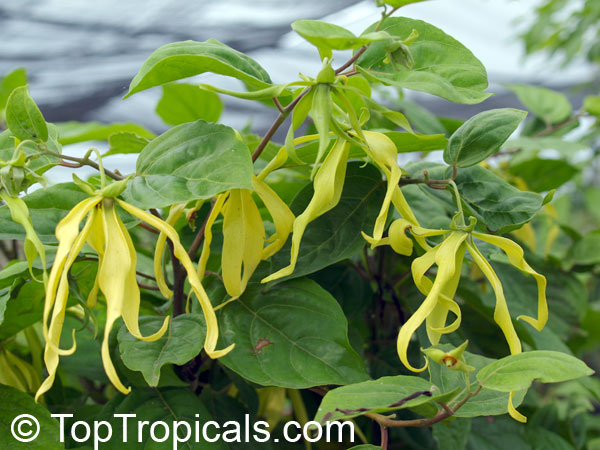
Ylang Ylang leaves after winter
Q: Hi, I purchased ylang ylang tree a couple of years ago. It's grown quite well in my Greenhouse but I'm having some trouble figuring out if I'm watering it too much not enough or if it has an insect. Can you please take a look at my photos and maybe give me a suggestion of what my problem might be?
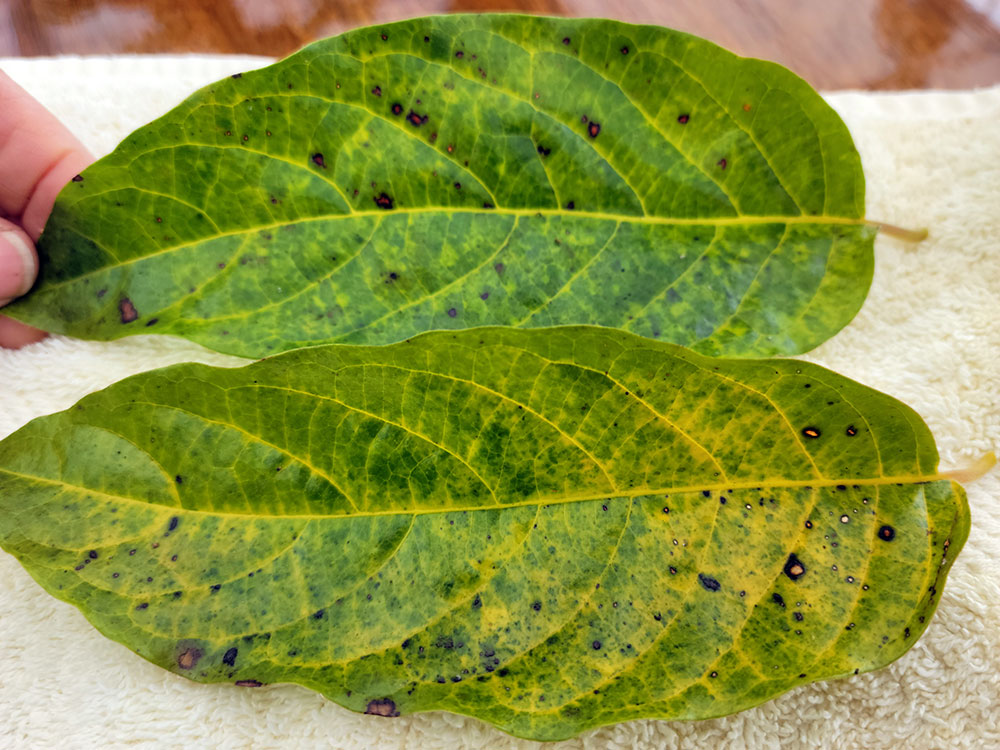
A: It is normal for Ylang Ylang tree to get dark spots during
winter time. Sometimes Cananga gets whole branches darkened (especially dwarf variety fruiticosa), some may even fall off. But they will be replaced
with new growth in Spring-Summer. There is nothing wrong with your plant, it is
just a reaction to cold and short day light when you keep this plant indoors. These leaves eventually will fall
off as the weather warms up, and will be replaced with a new fresh green growth.
Luckily, Cananga is not susceptible to insects and diseases, but its leaves
can look unattractive in winter.
Make sure to keep watering at minimum until temperatures raise to 80's.
Start fertilizing as soon as new growth appears. We recommend SUNSHINE Pikake
- Fragrant Flower Booster, an ultimate fertilizer for fragrant plants.