Garden Blog - Top Tropicals

Date: 23 Jan 2020

Meet PeopleCats of TopTropicals. Cat of the Day: Weasley the Immigrant

Weasley came from the neighborhood cat community (our neighbor takes care of at least a dozen of cats). Whether TopTropicals dry food tastes better than neighbor's, or simply he is such an enthusiast of tropical gardening, he hangs out with us all the time.
When you see him in our Garden Center drinking milk or chilling right on the walkway with other PeopleCats, don't get him confused with other two ginger cats we have: Barcy and Snitch... as well as the Russian Blue cat with a similar name Wesley...
Although Weasley currently has a status of a legal immigrant, he feels pretty confident around our greenhouses and will be happy to give you a tour. He is still a volunteer here but has already applied for a permanent residence and a full time position, so his food needs are being added to our cat payroll.
When visiting TopTropicals nursery, feel free to add your donation to a Cat Jar located in our office by customer's computer. We appreciate everybody's help - every penny goes to PeopleCat's needs.

Check out and more Cat of the Day stories.

Date: 6 Dec 2025

🌿 Bring the Jungle Inside: Winter Survival Guide Part 2.Temperature. ❄️

Smokey  the  tuxedo  cat  checks  thermometers  by  a  cold  window  while  Sunshine  the  ginger  tabby  relaxes  near  a  heater  holding  a  room  thermometer  showing  74  F.

Smokey: Too cold. We need more heaters so the plants feel comfortable.
Sunshine: I feel comfortable.
Smokey: You are not part of my plant collection, but I am glad you are comfortable.

🌡️ TEMPERATURE: THE TROPICAL DORMANCY LINE

In Part 1 (Winter Survival Guide: Temperature) we covered the foundation: light, placement, and acclimation. That is the survival layer.

Most tropicals stop growing below 70 to 75 F. They stay green, but their engine shuts down.

Below 70F:

  • Water intake drops.
  • Roots slow down.
  • Fertilizing becomes risky.
  • Root root becomes easy.

If you WANT your plants to grow in winter, you must take care of everything: Warmth, light, humidity, water. It all works together.

  • Aim for 75 F with bright light. Water lightly. No fertilizer.
  • Watch out for drafts. Cold windows. Door blasts. Garage entryways. Even one gust can trigger leaf drop.
  • Vents are the opposite problem: hot, dry, dusty air. That gives you crispy edges and mites.
  • Root zone temperature matters just as much as room air. Your thermostat may say 72 F, but your pot on a tile floor may be sitting at 55 F. Fix this by elevating pots on boards or stands. Use Styrofoam. Never keep pots directly on cold tile o windowsill
  • Extra winter heat: Space heaters are fine if used smartly. Do not blow hot air directly on plants. Keep heaters away from cords, trays, and water. Oil filled radiators are the safest option for plant rooms.
  • Use a humidifier if you want growth or want to prevent spider mites. But do not blow mist directly onto leaves. Always place the unit lower than the plant canopy.
  • Grouping helps. Put tropical plants close together to share humidity. Do not mix succulents with humidity lovers.
  • Cats and dogs love to knock over lights and stands. Secure your fixtures. Trust us.
  • Airflow: Light airflow is healthy. Direct fan blast is not. Still, dry corners invite mites.
  • A mild night drop is OK. A big one below 55 F will stop growth completely.
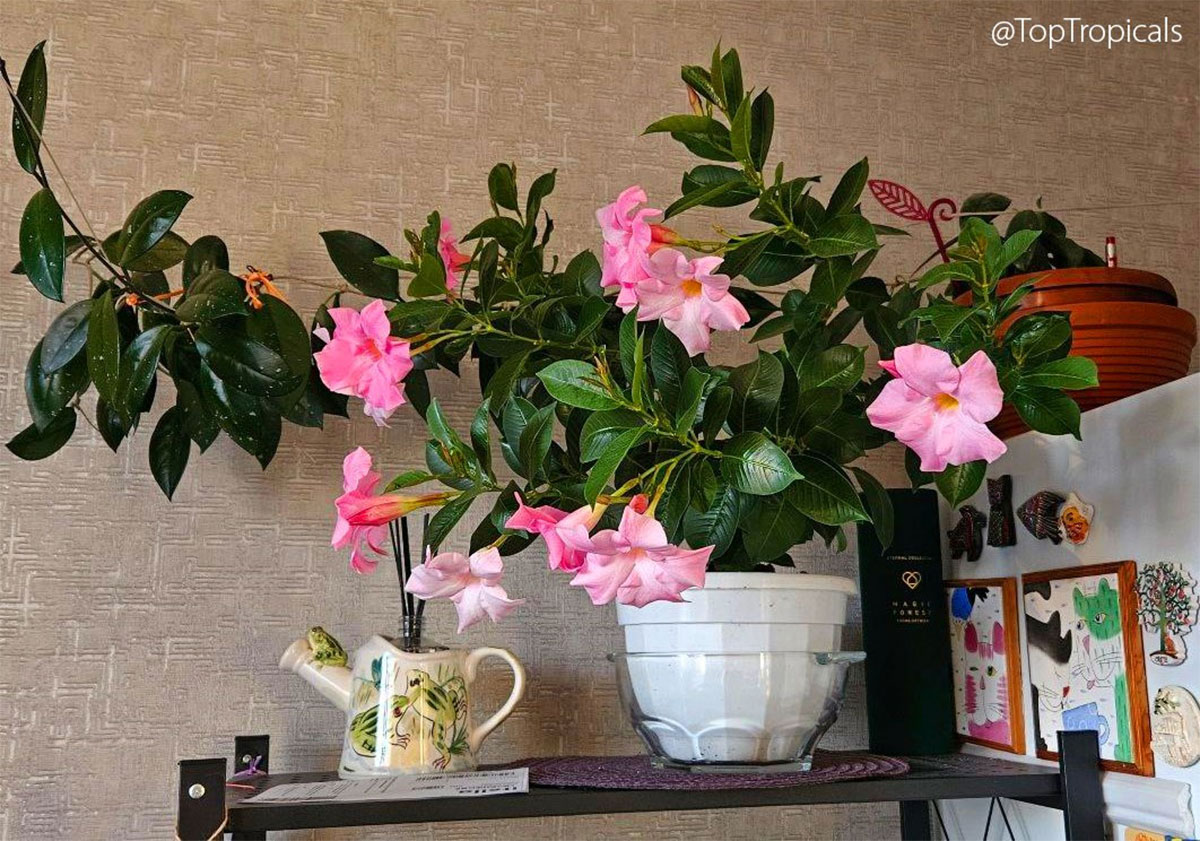
Pink  mandevilla  vine  blooming  indoors  in  a  white  pot  on  a  shelf.

A mandevilla thriving indoors with bright pink blooms and glossy green leaves.

☂️ PLACEMENT: MICROCLIMATES RULE EVERYTHING

Indoors is one big tradeoff: light but cold near windows, warm but dim away from them. The winning combo is a warm room with supplemental light.

Best zones to keep plants in winter:

  • South or east windows with additional light
  • Warm living spaces
  • Bright bathrooms for natural humidity

Worst zones to keep plants in winter:

  • Behind curtains
  • Directly on windowsills
  • Near heaters or vents
  • Against cold exterior walls
  • Dark corners without supplemental lighting
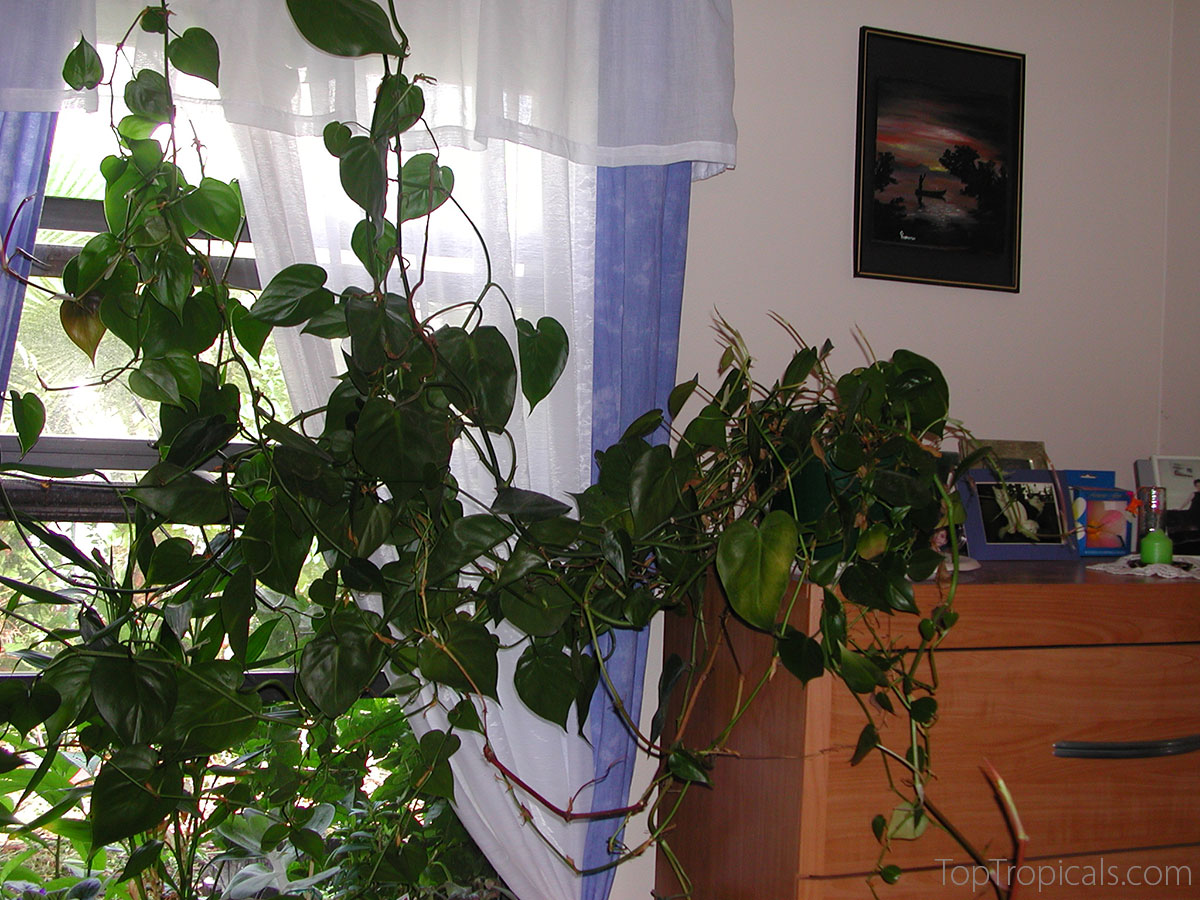
Large  philodendron  vine  growing  indoors  across  a  window  and  dresser.

A vigorous indoor philodendron stretching across the window.

💨 ACCLIMATION

Moving a plant from outdoors to indoors is a shock. Light drops. Humidity drops. Airflow stops. Soil cools. Even healthy plants may drop some leaves for a few weeks. That is normal.

Before you bring them inside:

  • Rinse foliage to remove dust and pests. We recommend Sunshine NoBug - and organic, safe solution.
  • Check for ants.
  • Trim weak branches.
  • Treat soil if fungus gnats are present.

Try to bring plants inside before the first cold front, not after. If you are reading this too late, do the prep now and expect a little leaf drop.

If you nail light and temperature, winter becomes simple. In the next mail-list we will cover watering, fertilizer timing, humidity, and other indoor tricks that keep tropicals happy till spring. Stay tuned.
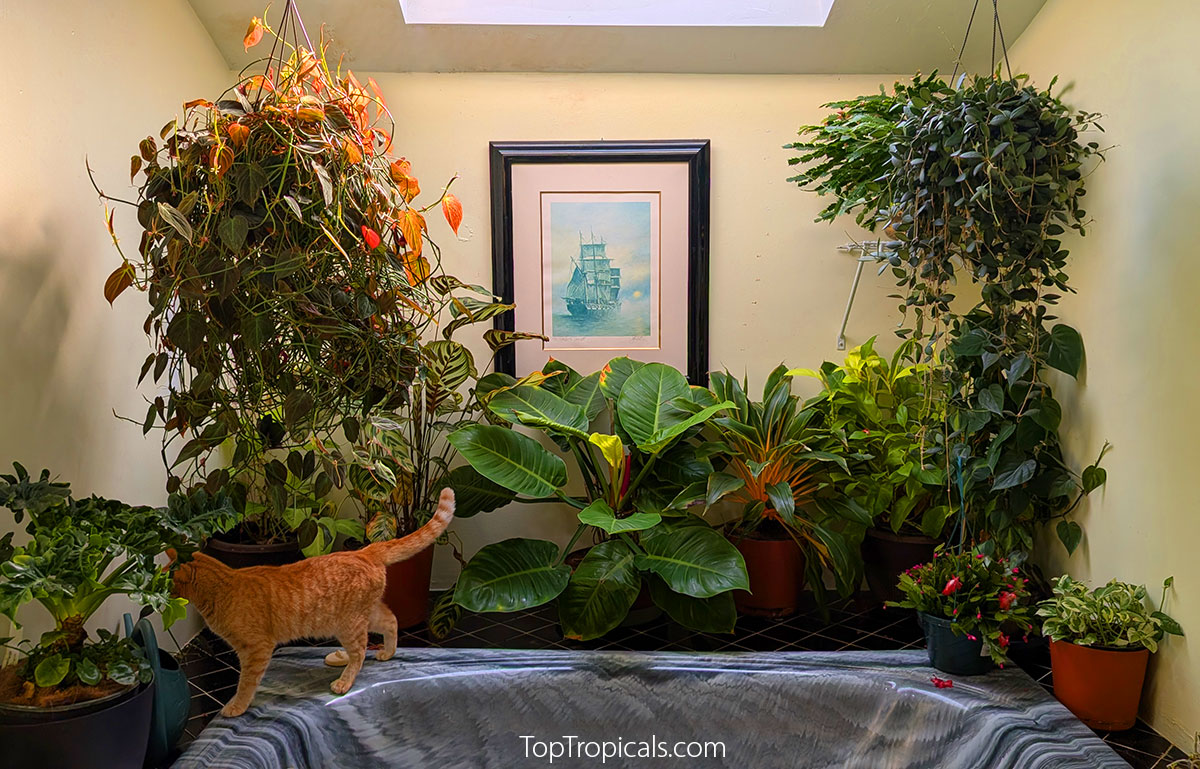
Indoor  bathroom  garden  with  tropical  plants  under  a  skylight  and  an  orange  cat  walking  in  front.

Cat Bob is inspecting his indoor garden around the tub with a bright skylight


✔️ WINTER INDOOR FAQ: TEMPERATURE AND PLACEMENT

Q: Why are leaves dropping only on the window side?
A: Cold glass. The room may be warm, but the glass surface can be much colder.

Q: Is a cold room OK for tropicals?
A: They may survive, but they will not grow below about 65F to 75F. When nights stay below 65F for a week, many plants enter dormancy.

Q: My room feels warm. Why is my plant still not growing?
A: Check the soil temperature. Pots on cold tile can be 10 to 20F colder than the air.

Q: Can plants sit directly on the floor?
A: Not on cold tile. Always elevate them on boards, stands, or trays.

Q: Is it OK to keep plants near a heater or vent?
A: No. Vents and heaters blast hot, dry air and cause crispy leaves and mites.

Q: My plant is dropping leaves after coming indoors. Why?
A: Normal acclimation to reduced light and humidity right after the move.

Q: Can I keep plants in a bright bathroom?
A: Yes. Bathrooms can have good humidity. Just keep pots off cold tile.

Q: Do I need a humidifier?
A: Not for survival. Yes if you want better growth and fewer pests like spider mites.

Q: Do I need a grow tent?
A: No. A bright LED plus a warm room is enough for winter holding.

Q: Should I fertilize in winter?
A: Not now. Winter fertilizer rules will be covered in the next mail-list.

Q: Should I water the same as in summer?
A: No. Indoor plants need much less water in winter. Watering rules also coming soon.

🛒 Shop Indoor Garden
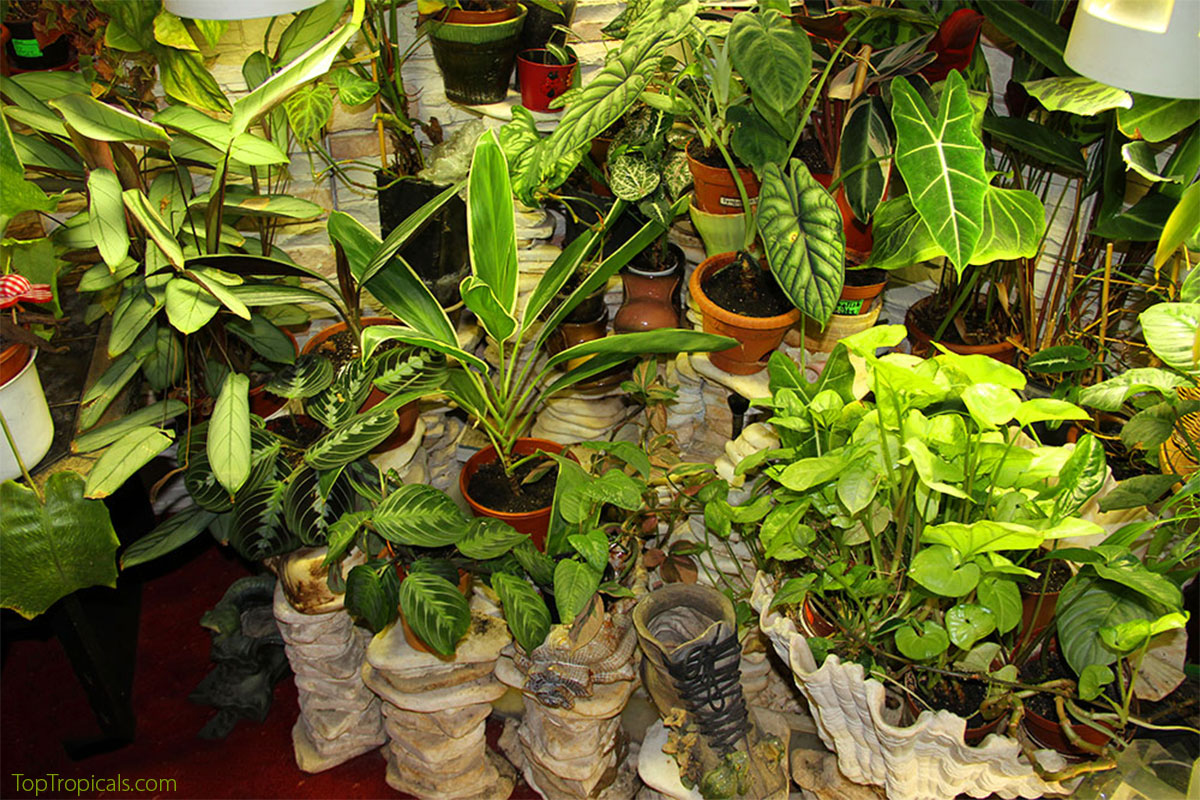

Indoor  plants


📚 Learn more:


Date: 13 Apr 2026

🏖️ Aloha, Backyard Edition 🌈

Sunshine  ginger  tabby  cat  surfing  pool  wave  with  donuts  and  coffee 
 Smokey  tuxedo  cat  relaxing 
 nearby
Sunshine: Look what I can do. It all started with plumerias. Aloha, backyard edition.

Smokey: You are not just planting a tree - you are building a tropical island lifestyle around it. Not bad for staying home.

It usually starts simple. A plumeria in a pot by the patio. The flowers catch your eye first, then the scent follows you, soft but unmistakable. And that scent does something strange - it brings back places you have been, or places you wish you had. Warm evenings, ocean air, tropical vacations that stay with you long after they are over.

That is the part people do not expect. One plant changes how the space feels. But adding a few changes everything. Different colors, slightly different fragrances, layers that build on each other. It stops being a plant and becomes an atmosphere that pulls you outside without thinking.

Plumeria carries that tropical world with it. The same feeling people travel for can live right outside your door. Mix a few varieties, and your backyard starts feeling like a place you never want to leave.

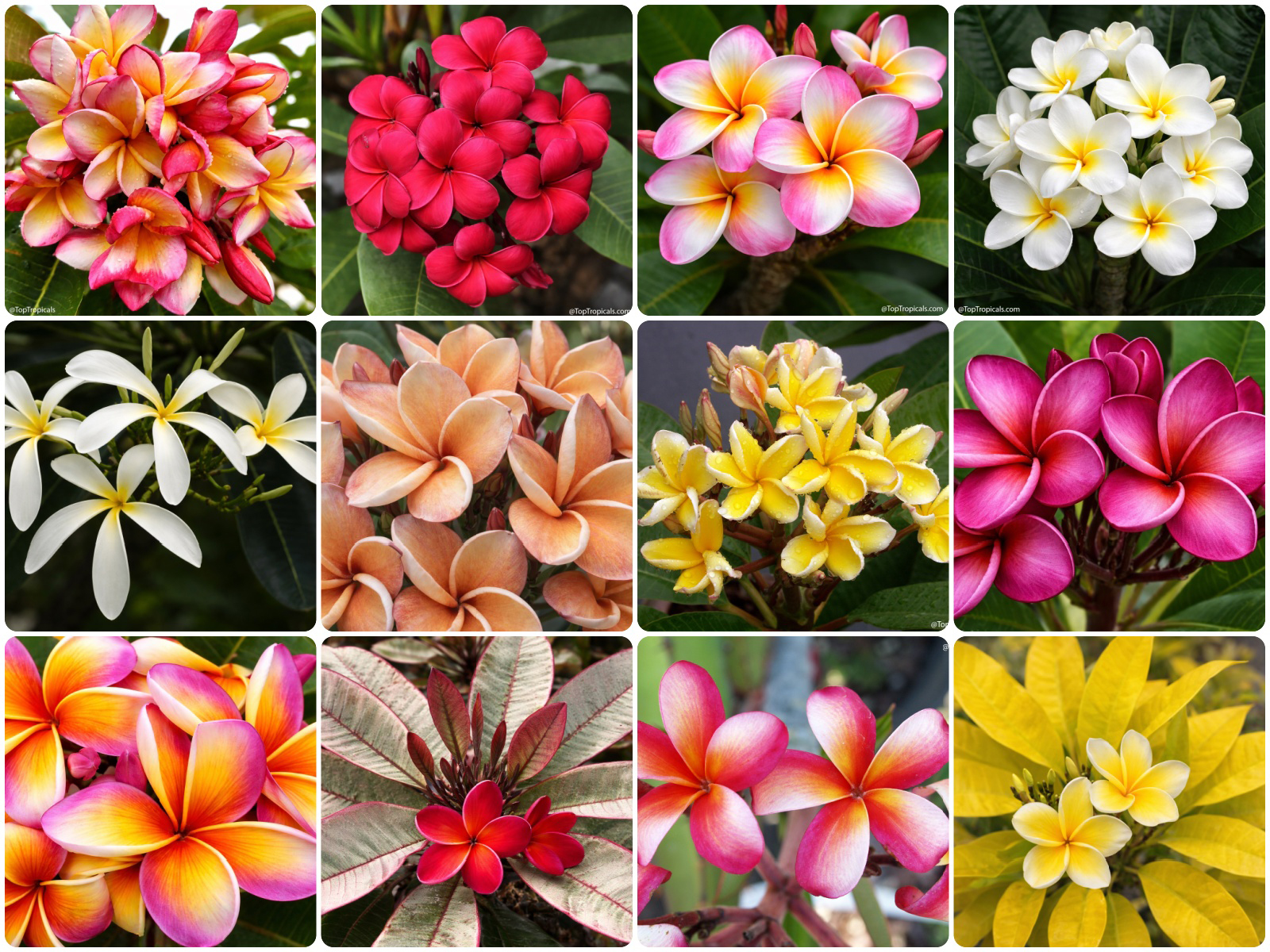
plumeria  flowers  collage  multiple  colors  red  pink  yellow  white 
 frangipani  blooms  close  up

Plumerias are one of those plants you don't just grow - you start collecting. One turns into two, then five, then suddenly you want them all!

🛒 Explore plumeria colors

Date: 22 Apr 2026

When Mango Ripens on the Tree, Everything Changes

Smokey  and  Sunshine  enjoying  fresh  homegrown  mango  harvest  in  garden
Sunshine: Never understood the passion for mango. I tried store mangoes. I really tried. Just disappointment. So this is what real mango is supposed to taste like?

Smokey: Now you know.

There is a moment when a mango is perfectly ripe — soft to the touch, warm from the sun, fragrant before you even cut it open. The skin gives way, and suddenly there is color, juice, and a sweetness that feels almost unreal. Not sugary, but deep and layered, like something that took its time to become what it is. In that moment, it feels less like fruit and more like something truly given, exactly as it should be.

What you find in most supermarkets is something else entirely. Picked early so it can survive shipping, it never gets the chance to finish ripening process. It softens, it turns yellow, but the depth never comes. The flavor stays thin, and the texture often turns fibrous — strings in the flesh that get stuck in your teeth instead of melting away. That fiber is not an accident. It helps the fruit stay firm enough to handle transport without damage. It looks like a mango, but it never becomes one.

The only way to close that gap is simple — let the fruit ripe where it belongs. On the tree. When you grow your own mango, you control that moment. You pick it when it is actually ready, not when it has to survive a truck ride across the country. And that one difference is everything you taste.

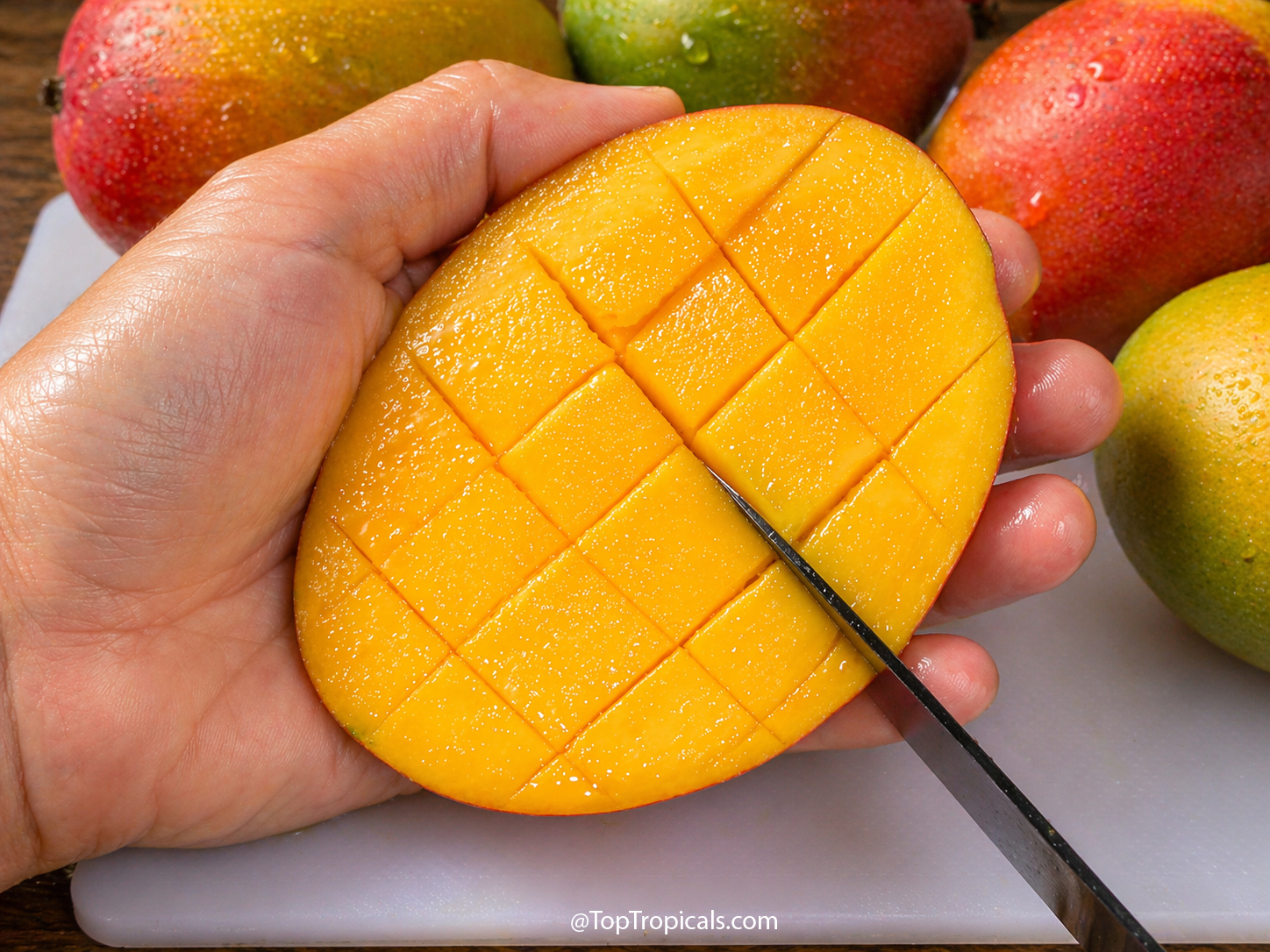
Close-up  of  a  hand  holding  a  mango  cheek  while  scoring  the  bright 
 orange  flesh  into  a  grid  pattern  with  a  knife,  with  whole  mangoes  in  the 
 background.

Scoring a mango cheek into cubes - the easiest way to prepare clean, ready-to-eat pieces.

📚 Learn more about mango varieties

🛒 Shop Mango Trees

Educational  infographic  titled  mango  growing  guide  showing  beginner 
 tips  for  growing  mango  trees,  including  sweet  fiberless  varieties,  dwarf  and
    semi-dwarf  options  for  containers,  planting  tips,  pruning  advice,  watering,
    sunlight,  and  fertilizing  recommendations,  with  illustrated  mango  trees  and
    fruit.

Quick beginner guide to growing mango trees - from choosing the right variety to pruning, watering, and container growing tips.

Date: 17 Sep 2025

Mulberry Care and Growing Tips

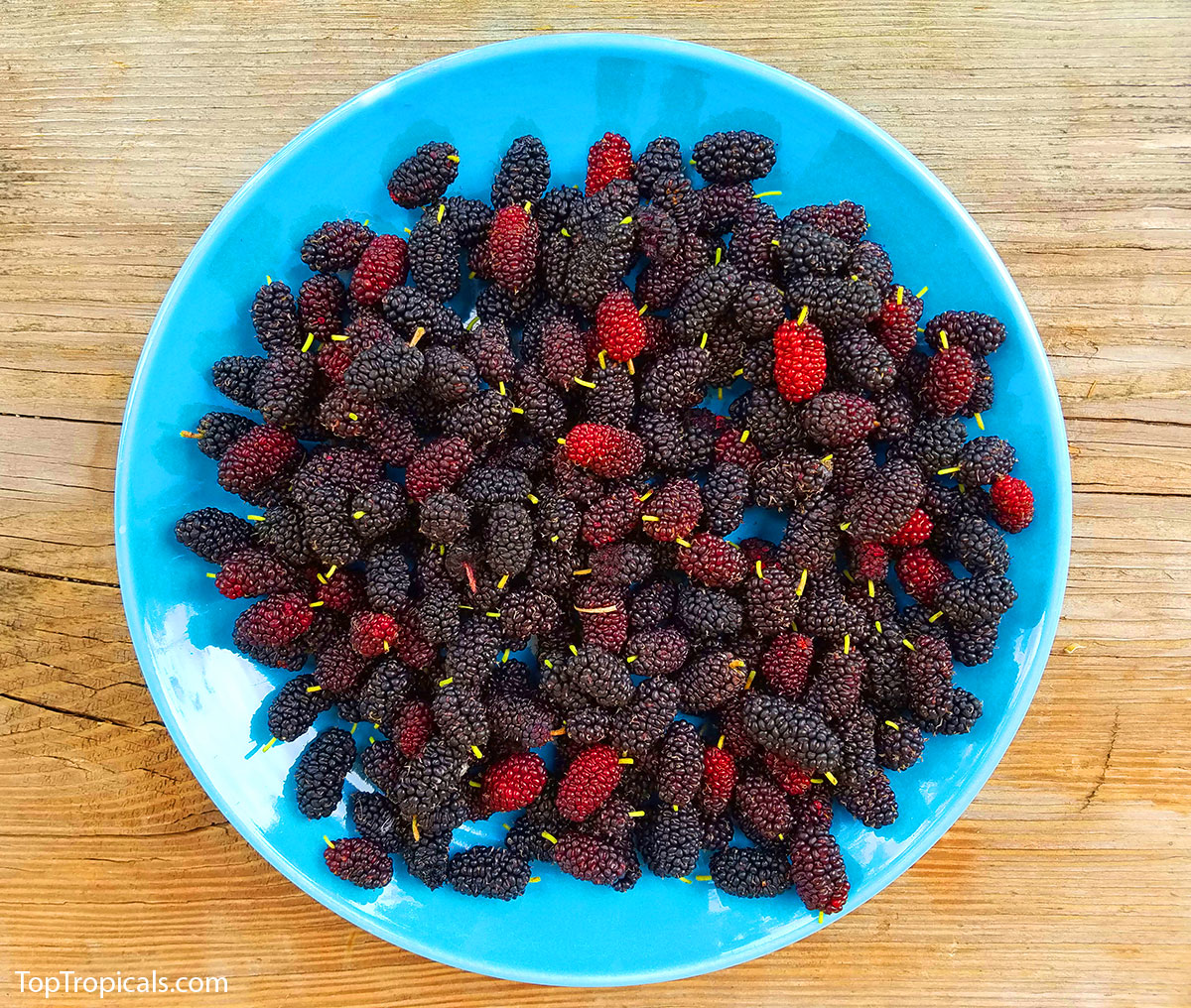
Mulberry  fruit  on  a  plate

Mulberries are tough, low-maintenance fruit trees that adapt to many conditions.

  • Climate: Hardy from USDA zone 5 to 10.
  • Soil: Grow well in almost any soil; prefer good drainage.
  • Watering: Regular watering during dry spells; drought tolerant once etablished.
  • Growth: 3–5 feet per year, producing fruit early.
  • Pruning: Annual pruning controls size and improves branching.
  • Pot culture: Dwarf types thrive in containers, staying 6–7 feet tall. Use a large pot, water consistently, and prune lightly. Use Abundance potting mix for best results.
  • Fertilizer: For reliable production, fertilizer regularly. Apply Sunshine C-Cibus liquid booster with every watering, or Green Magic controlled release fertilizer every 5-6 months.

❓ Mulberry FAQ


How soon will a mulberry fruit?

One to two years, sometimes the very first season.

What climates are suitable?

USDA zones 5–10, from -20F winters to hot summers.

How tall do they get?

Standard trees 20–30 ft; dwarfs 6–10 ft in pots.

Do I need more than one tree?

No, they are self-pollinating.

What do they taste like?

Sweet and juicy, like a blend of blackberry and raspberry.

How long is the harvest?

Everbearing types ripen gradually from summer into fall.

Do birds eat them?

Yes, but trees are so productive there’s plenty to share.

Are they messy?

Dark-fruited varieties can stain; white mulberries do not.

Can I grow them in containers?

Yes, dwarf types (Dwarf Everbearing, Issai) fruit well in pots.

How long do they live?

Many live for decades; Illinois Everbearing can endure for generations.

What are the health benefits?

Mulberries are low-glycemic, support healthy blood sugar, improve heart health, and are rich in antioxidants.

Shop Mulberries