Garden Blog - Top Tropicals

Date: 27 Jul 2025

🍈 Morinda citrifolia - Noni: A Plant with Purpose
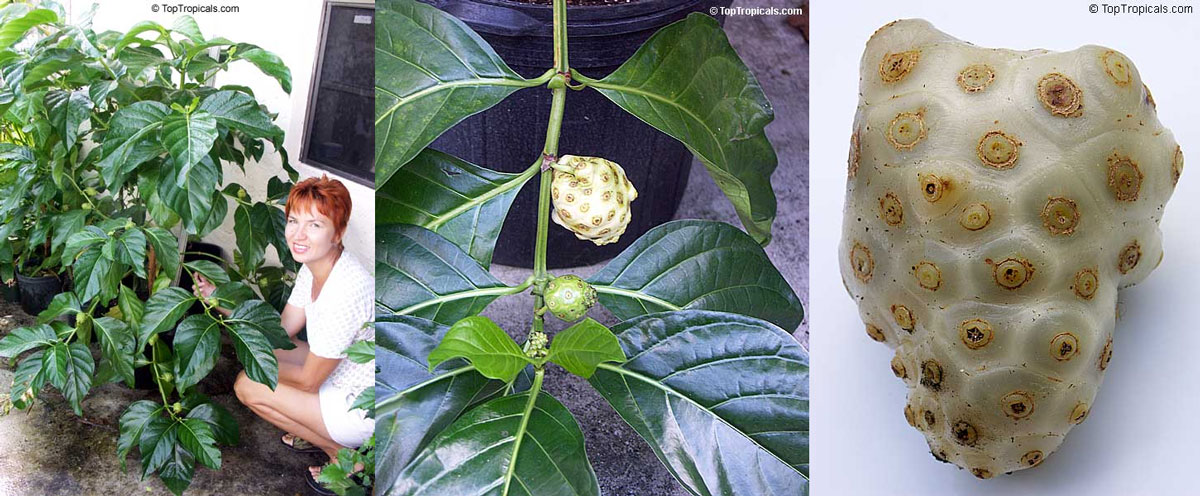
Young  woman  with  a  potted  Noni  tree,  close-up  of  Noni  fruit  growing  on  the  branch,  and  a  ripe  Noni  fruit  with  its  distinct  bumpy 
 skin.

What are the benefits of growing a Noni tree?

Noni isn't just ornamental - it earns its place. This small tropical tree is packed with potential, from fruiting fast to delivering real, time-tested benefits.

  • Begins fruiting within a year
  • Flowers and fruits nearly non-stop if grown in proper conditions
  • Grows well in containers, indoors or out
  • Used to support immunity, joints, digestion, and more
  • Leaves and fruit are both used in traditional remedies
How to Grow Noni Tree

In Zone 10 and warmer, Noni grows beautifully outdoors in full to part sun. It thrives in poor soil, tolerates salt, and bounces back from drought. Just keep it warm and lightly fertilized for year-round flowering and fruiting.

For indoor growers, Noni adapts well to containers. Place it near a bright window or under grow lights. It can tolerate lower light, though fruiting may slow. Keep soil moist but not soggy. Leaves may drop if it gets too cold or too dry - warmth is key. In deep shade, the foliage becomes lush, dark, and ornamental.

Pro tip: Start with a 3 gal or larger plant for faster fruit production.
Shop Noni Trees

How to Make Fresh Noni Juice

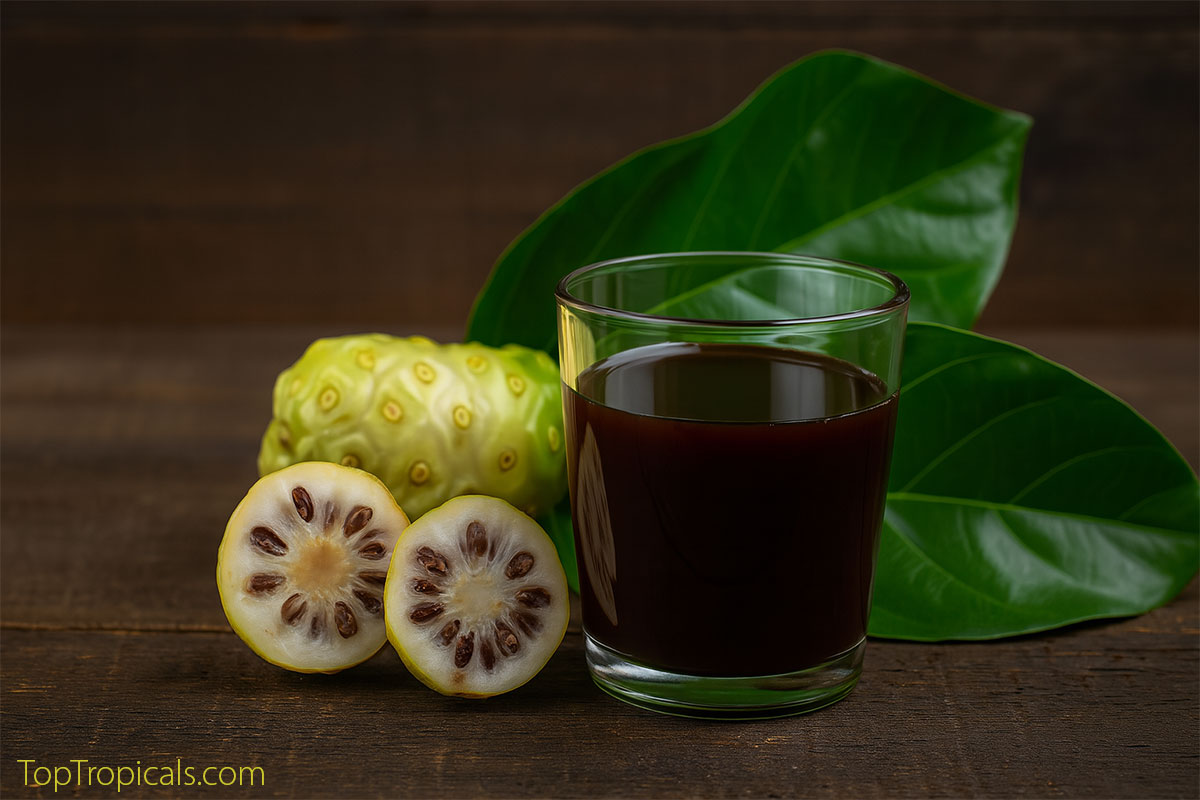
A  glass  with  noni  juice  next  to  a  ripe  Noni  fruit  with  its  distinct  bumpy  skin  and  noni  leaves

Got fruit on your Noni tree? Here's how to turn it into something powerful.

Step-by-Step Guide:

  • Wash the ripe fruit thoroughly
  • Cut into small chunks
  • Blend until smooth
  • Strain (optional) through mesh or cheesecloth
  • Add apple or blueberry juice to soften the flavor
  • Store in clean glass jars and refrigerate
Why bother growing Noni?

Fresh Noni juice supports:

  • Joint and bone strength
  • Energy and endurance
  • Immune balance and metabolism
  • Healthy gums and blood pressure regulation
  • Weight management and nutrient absorption
This isn't just juice. It's tradition in a glass - and it came from your own plant.

Grow your own noni juice

Date: 27 Jul 2025

💖 What if your next houseplant could make medicine?

Meet Noni, Morinda citrifolia, a tropical tree with deep roots in Polynesian healing. For over 2000 years, it's been used to support health from the inside out: pain relief, immune strength, digestion, skin, joints, energy, and more. And now, you can grow it yourself.

This isn't some fussy rainforest diva. Noni is one of the easiest fruit trees to grow, especially in a pot. It flowers and fruits year-round, even in a 3-gallon container. Indoors, it thrives in bright light and tolerates dry air and skipped waterings. Outdoors in Zone 10+, it's practically unstoppable - fast, forgiving, and constantly flowering and fruiting.

It's also a conversation piece. The glossy leaves can grow over a foot long. The fruit looks like something from another planet! And every part of the plant - fruit, leaves, seeds, even roots - has been used in traditional medicine.

Grow it for health. Grow it for curiosity. Grow it because your ficus never made you juice.

Watch the video

Date: 23 Jul 2025

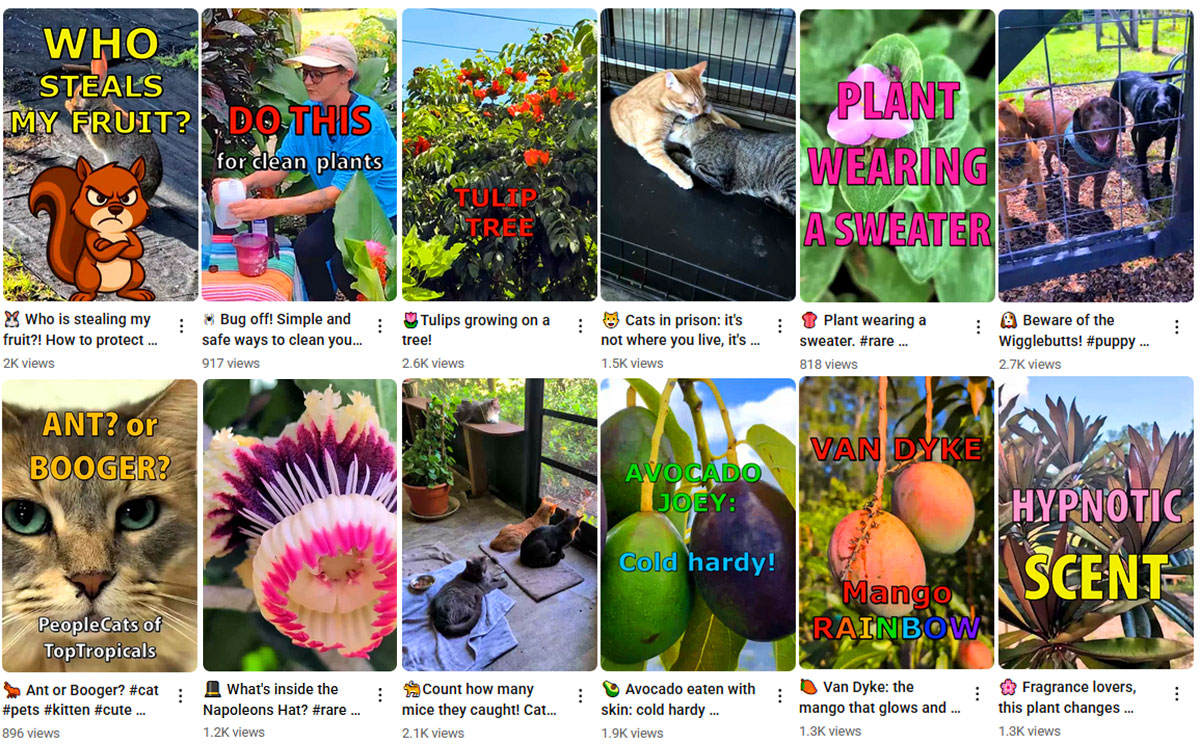
NEW ON YOUTUBE: Top Tropicals Shorts!

Top  Tropicals  shorts  -  short  videos

It's finally here! We've launched a brand-new section of quick, fun, and super useful short videos straight from your favorite garden and nursery. In just 20-30 seconds, you'll get smart tips, rare plant spotlights, and simple growing tricks - all packed into bite-sized bursts.

And of course, plenty of fun moments with your favorite PeopleCats (and dogs too!).

Don't forget to subscribe, like, and leave a comment - your support means the world, and we're here to answer all your questions!

WATCH Top Tropicals Shorts

Date: 23 Jul 2025

NEW VIDEO: How to cut a mango without making a mess

Ever wonder how to cut a mango without getting juice everywhere? We've got a trick that's soooo simple! You'll wish you knew it sooner!

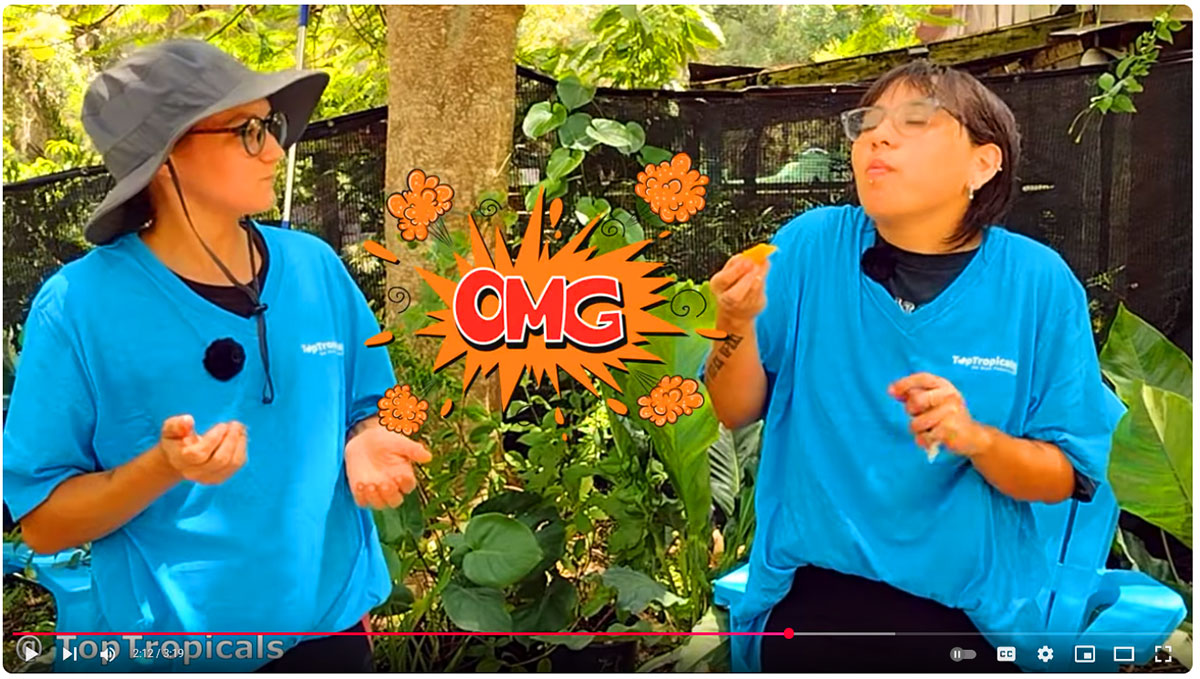
In our newest video, Chiane and Ashley from the Top Tropicals team aren't just slicing mangoes - they are diving into a full-on mango tasting adventure. You'll get a peek at some of the most mind-blowing mango varieties you probably didn't even know existed! From buttery-smooth to crisp and tangy.

Watch now to discover your new favorite mango - and maybe a new way to enjoy it, too 😻

Discover Mango varieties - we have hundreds of them!

WATCH the VIDEO

Mango  tasting  table

Shop mango varieties

Subscribe to our Channel:

Stay updated by subscribing to our channel:
YouTube.com/TopTropicals
and get our latest video news of what is fruiting and blooming!

Subscribe

Date: 19 Jul 2025

☀️ When tropical plant takes a Summer break

Tropical  landscape

Why your plants might stop growing in mid-Summer
and what to do about it

Q: Why some tropical plants stop growing when it gets too hot? Aren't they supposed to like the heat? Should I use more fertilizer during hot Summer?

You've been watching your tropical tree thrive all spring. New leaves, steady growth, maybe even a flower or two. Then July hits, and… nothing. The heat cranks up, and your once-busy plant just sits there. No new shoots, no blooms, not even a twitch. If it feels like your plant ghosted you - but don't worry! It's not dying. It's just hot!

Q: What happens to tropical plants when it gets extremely hot?

When the heat hits, plants hit pause. In the peak of summer, especially with temperatures above 90F, many tropical and subtropical plants go into heat survival mode. Growth above ground may slow down or stop entirely. It's not because you forgot to water or skipped a fertilizer dose - it's just too hot. The plant's energy shifts underground, where roots may still be growing. Think of it like a tropical version of a siesta - less margarita, more mulch. This stage might last a few weeks or longer, depending on how intense the heat gets. But the important thing is: it's normal.

Q: What NOT to do?

  • Don't drown it in extra water. That leads to root rot.
  • Don't dump dry fertilizer on it. That can burn the roots or just get flushed away. Use controlled release or liquid fertilizer dozed proportionaly to the plant's water usage.
  • Don't prune aggressively, hoping to jolt it awake.

None of that helps - in fact, it can make things worse.

Q: What you CAN do?

  • Water deeply in the early morning, and let the soil dry a bit between waterings.
  • Add mulch to help keep the root zone cool and reduce evaporation.
  • Provide temporary shade for potted plants or young trees.
  • Hold off on pruning or heavy feeding until you see new growth.

Just like you wouldn't run a marathon in a heatwave, your plant needs a break too.

Q: Why you shouldn't fertilize stressed plants with dry fertilizer?

Fertilizing seems like the obvious solution when a plant stalls, but in the heat of summer, it can backfire. When temperatures soar, roots slow down, and absorption becomes inefficient. You might pour in nutrients, but your plant can't use them - and what's worse, any tender new growth that does emerge can get scorched or sunburned before it has a chance to harden.

Feeding a plant with strong fertilizers during a heatwave is like telling someone to sprint in a sauna. It's not just unhelpful - it's risky. That's why you need a fertilizer that’s engineered for hot weather - not just any slow-release formula.

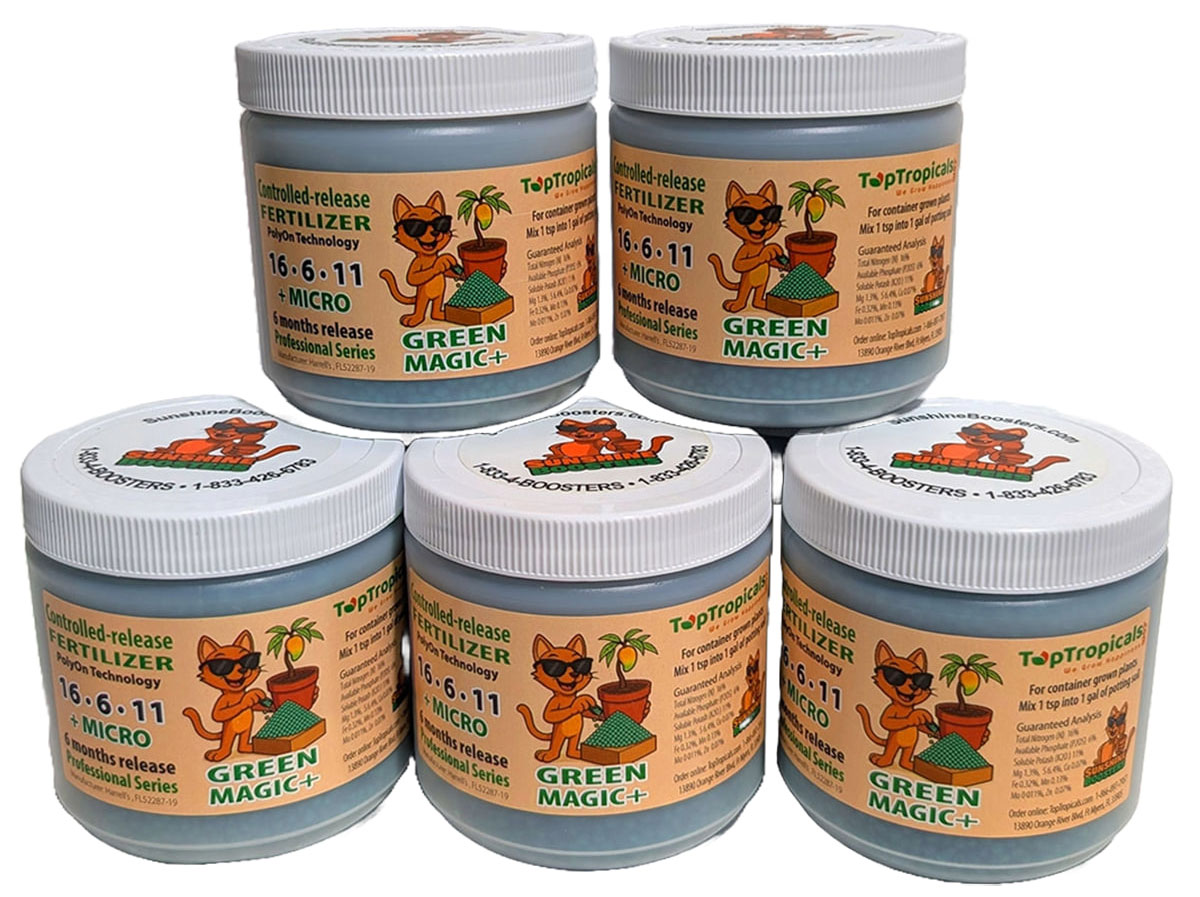
Liquid Sunshine Boosters mild formulas are safe to use year around. Controlled release fertilizer like Green Magic are safe as well, just make sure to follow directions and dosage.


Q: Why Green Magic fertilizer works in heat better that Osmocote?

Green  Magic  controlled  release  fertilizer

Not all slow-release fertilizers are built for hot summer. Some popular brands might seem like a good choice - but they’re optimized for soil temperatures around 70-75F. That's a mild Spring day in the South, but in real-world Florida or Arizona heat? Not even close.

Here's the problem: Osmocote releases nutrients based on moisture, not temperature. When it's hot and humid - or worse, when you water heavily - it can dump too many nutrients at once. That nutrient surge can:

  • Burn your plant's roots
  • Force tender new growth that gets fried in the heat
  • Leach straight out of the pot, wasting both fertilizer and money

It's unpredictable, especially in containers that heat up faster than ground soil. What you think is "slow-release" can behave more like a fertilizer bomb.

Green-Magic, by contrast, uses a temperature-sensitive polyurethane coating that responds gradually and consistently as the soil warms. That means:

  • No sudden nutrient spikes
  • No wasted runoff
  • And no risk of heat-triggered burn

It's designed to feed steadily and predictably - even when temps hit 90F and stay there. For potted tropical plants, that kind of control is the difference between stressed and thriving.

Q: How does Sunshine Boosters help with daily plant recovery in summer?

Once your plant begins to show signs of life again - maybe a new bud, or evening perkiness - it's safe to resume feeding. But skip the salts, and reach for something gentler: Sunshine Boosters.

These amino-acid based liquid fertilizers are designed for daily use, even in containers during the hottest days. They enhance nutrient uptake, even when roots are stressed or sluggish. Unlike synthetic chelators like EDTA, Sunshine Boosters won't bind nutrients or burn root system. They stay gentle, available, and effective. Learn more from this short video.

Use SUNSHINE Robusta for foliage support, or Ca-Support PRO for strong structure and recovery. It's like hydration and nutrition in one - perfect for tropical plants fighting through summer heat.

Q: How can I help my plants during extreme heat?

Don't fight the heat - work with it. If your tree looks stalled this summer, don't panic. It's following a rhythm older than all of us. Support it with smart watering, the right fertilizer combo, and a little patience. Before long, you'll see buds again - and know your plant made it through the heat.


Shop fertilizers and garden supplies


Read more plant care tips in Garden Blog