Garden Blog - Top Tropicals

Date: 28 Jun 2025

Bright, bold, and edible: Variegated Chaya
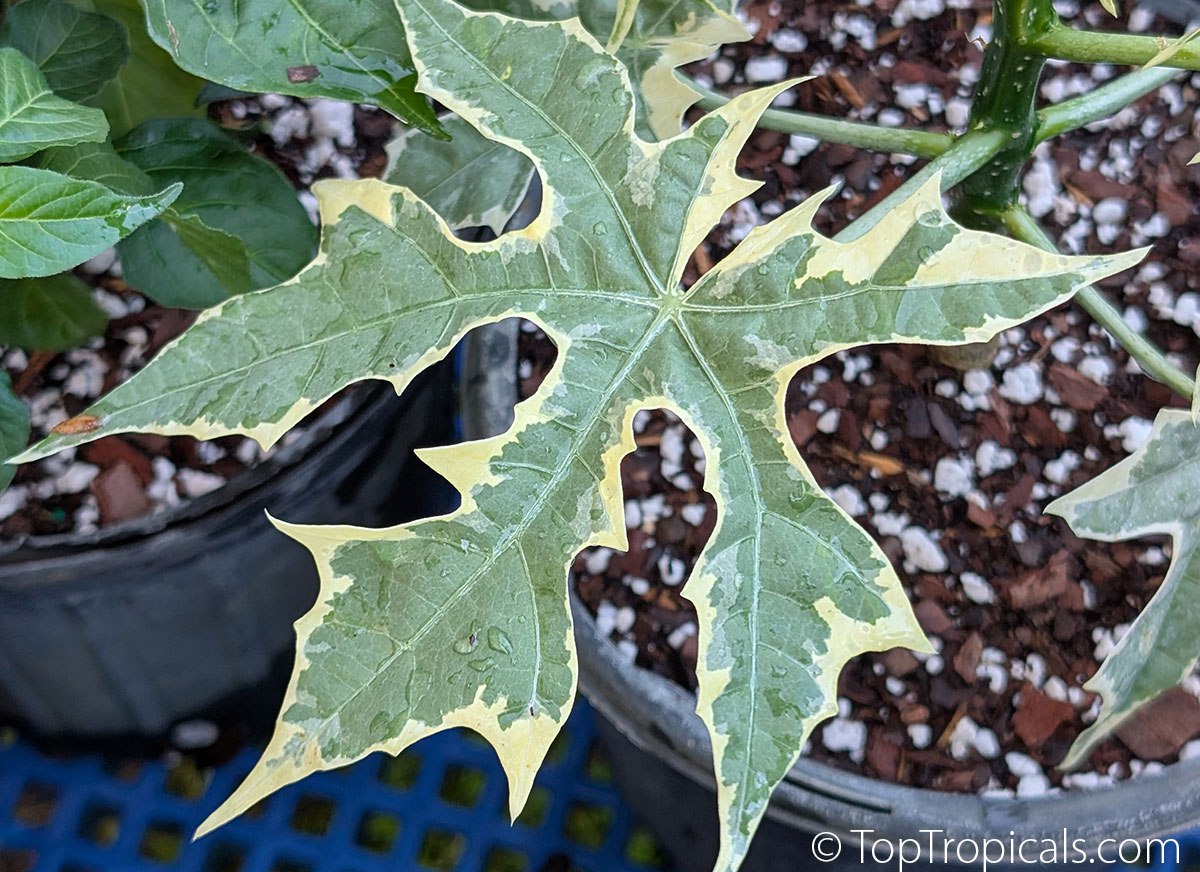
Leaves of Variegated Maya Spinach Tree
Leaves of Variegated Maya Spinach Tree

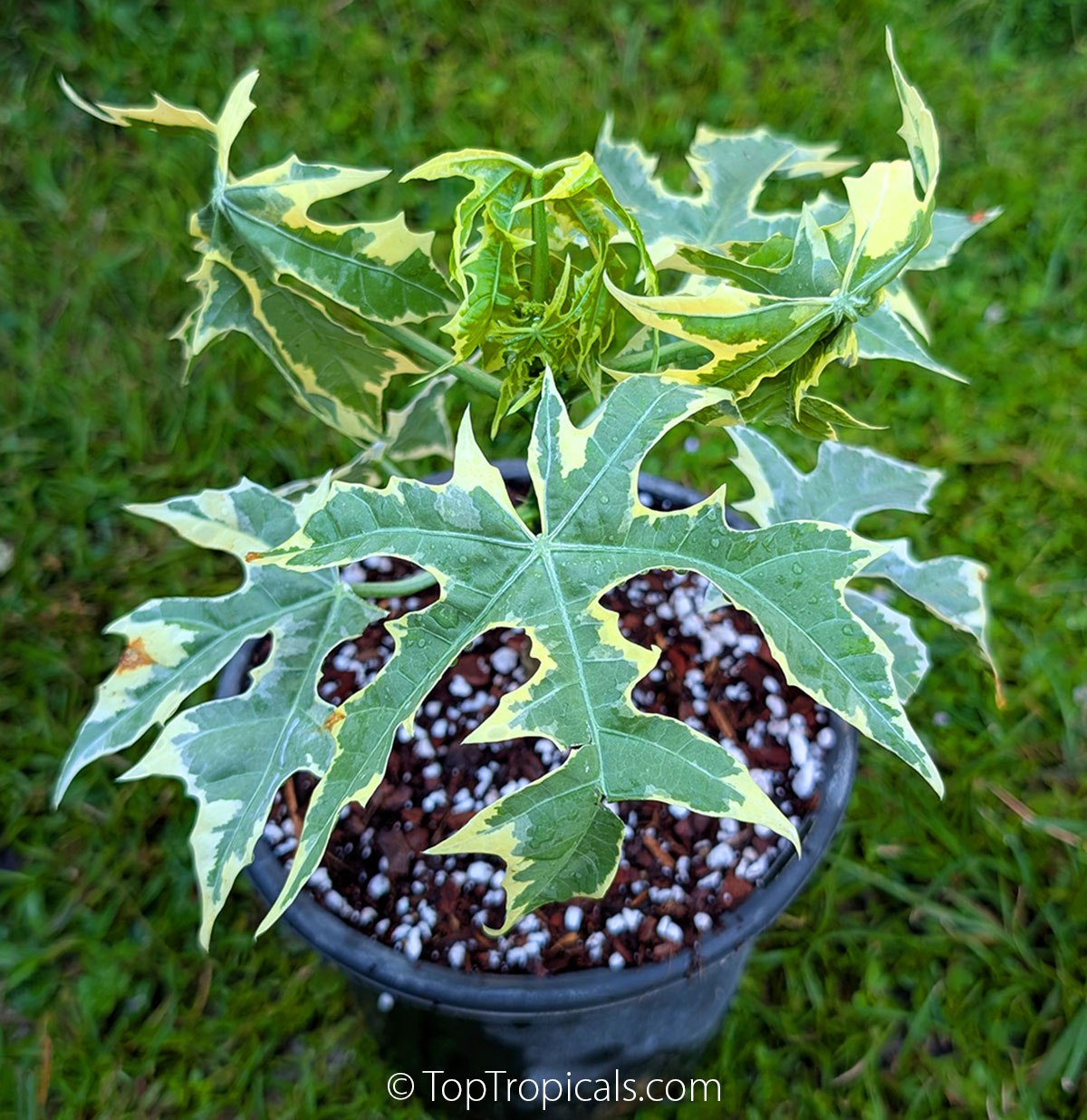
Variegated Maya Spinach Tree growing in pot

Variegated Maya Spinach Tree growing in pot

🌱 Bright, bold, and edible: Variegated Chaya

  • 🌿 Cnidoscolus aconitifolius variegatus, known as Chaya "Jatropha" or Variegated Maya Spinach Tree, is a rare gem for gardeners who crave both beauty and function. On top of health benefits of regular Chaya we mentioned earlier, this one is also a rare spectacular ornamental!
  • 🌿 With its striking, creamy-splashed fan-shaped leaves and sculptural form, this plant brings dramatic texture to sunny landscapes or large containers. And as a bonus, it sends up charming clusters of white flowers!
  • 🌿 More than just a looker, it's a productive perennial too - its leaves, once cooked, are a nutritious green similar to spinach. Just don't eat them raw.
  • 🌿 This drought-tolerant shrub thrives in sun, asks for little more than space to grow, and rewards you with year-round color and character. Whether you grow it for food, flair, or both, the Variegated Chaya is an unforgettable addition to your garden.


🛒 Add rare beauty and purpose to your garden

📚 Learn more:


Chaya's health benefits: a must-have tropical leafy vegetable for sustainable gardening

#Food_Forest #Remedies #Discover

🔴 Join 👉 TopTropicals
Date: 29 Jun 2025

Pineapple Guava: fragrant fruit, beautiful blooms, and real health benefits

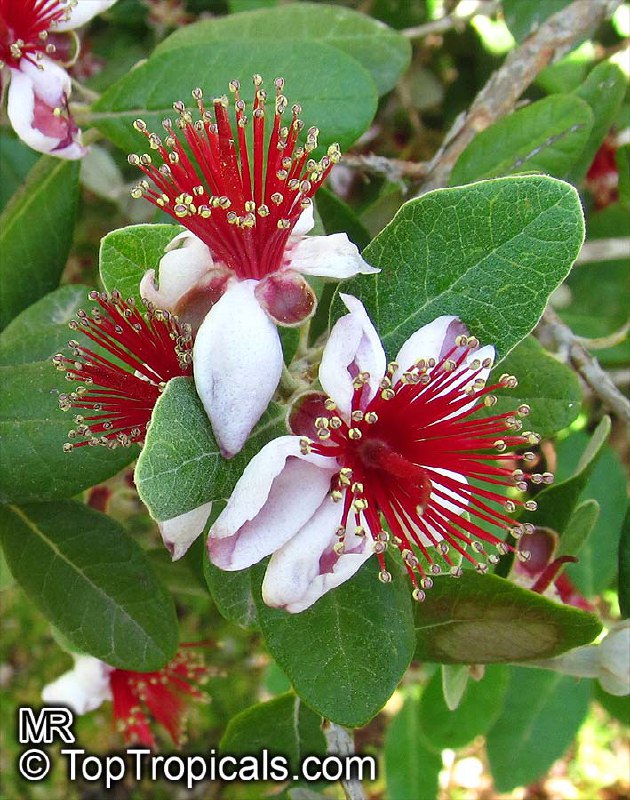
Pineapple Guava blooming

Pineapple Guava blooming

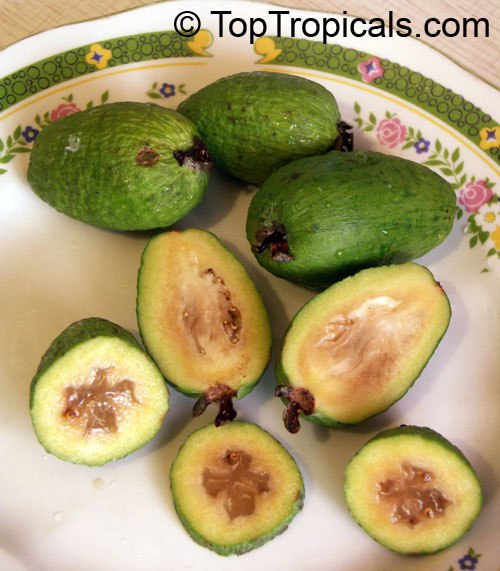
Pineapple guava fruit

Pineapple guava fruit

🍓 Pineapple Guava: fragrant fruit, beautiful blooms, and real health benefits
  • Feijoa sellowiana, also known as Pineapple Guava or Guavasteen, is an evergreen shrub or small tree that brings together beauty, fragrance, and edible rewards.
  • With its soft pink, edible flowers blooming in late spring and strongly scented fruit ripening in late summer to fall, it offers interest across multiple seasons.
  • The fruit is especially unique. When fresh fruit blended with a little sugar, many describe the flavor as forest strawberries with hints of mint or pineapple - some even say it reminds them of Juicy Fruit gum. The texture is smooth and slightly gritty, similar to a pear.
  • Nutritionally, Feijoa fruit is low in calories, high in fiber, and an excellent source of Vitamin C and antioxidants. You don’t need to guess when it's ready - the ripe fruit drops to the ground.
  • Pineapple Guava is easy to grow and adaptable. It tolerates drought, thrives in full sun or partial shade, and withstands heat as well as cold down to 10F. Whether planted in the ground or grown in a large patio container, it needs minimal care - just occasional watering and light feeding.
  • It also serves multiple purposes in the landscape: a dense, evergreen hedge for wind protection, a privacy screen, or a standalone ornamental that attracts birds and butterflies. It can be shaped into a small tree or kept compact depending on your space.
  • A beautiful, edible, and low-maintenance addition to the garden that earns its place year after year.


🛒Taste the fragrant forest-strawberry flavor - grow Pineapple Guava

📚 Learn more:


#Edible_Forest #Guava #Discover

🟢 Join 👉 TopTropicals

Date: 21 Jul 2025

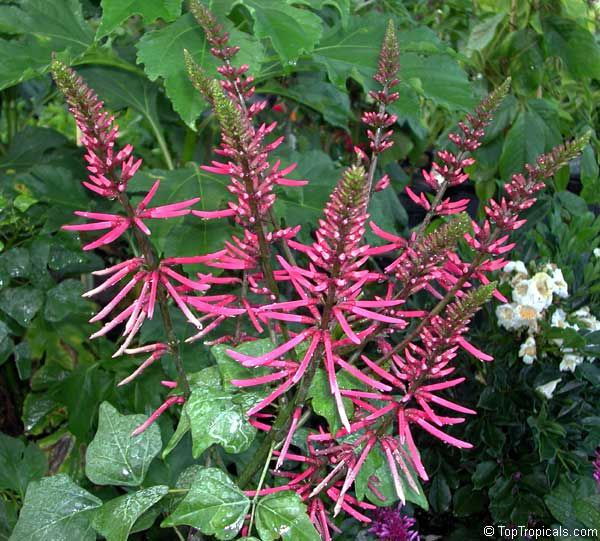
Health benefits of a simple plant: Coral bean

Health benefits of a simple plant: Coral bean

🍒 Health benefits of a simple plant: Coral bean


  • Don't let the tough, thorny branches fool you - this native plant has a long history of traditional use. While the seeds are poisonous, the young leaves and flowers have been safely cooked and eaten in small amounts by various cultures.

  • Traditionally, Erythrina herbacea - Coral Bean has been used in folk remedies for calming the nerves, easing muscle pain, and even promoting better sleep.

  • Modern science hasn’t fully explored these uses yet, but the plant contains alkaloids that may have sedative and muscle-relaxing properties. It's a reminder that even rugged native plants can carry powerful natural potential.

  • As a bonus, Erythrina herbacea is also beautiful and beneficial in the garden, drawing in hummingbirds and butterflies with its vibrant pink flowers - hummingbirds can't resist this wild bloomer! It grows well in poor soil and dry conditions - low effort, high reward!


🛒 Plant once, enjoy for years

#Food_Forest #Remedies #Butterfly_plants #Discover

🟢 Join 👉 TopTropicals

Date: 27 Jul 2025

🍈 Morinda citrifolia - Noni: A Plant with Purpose

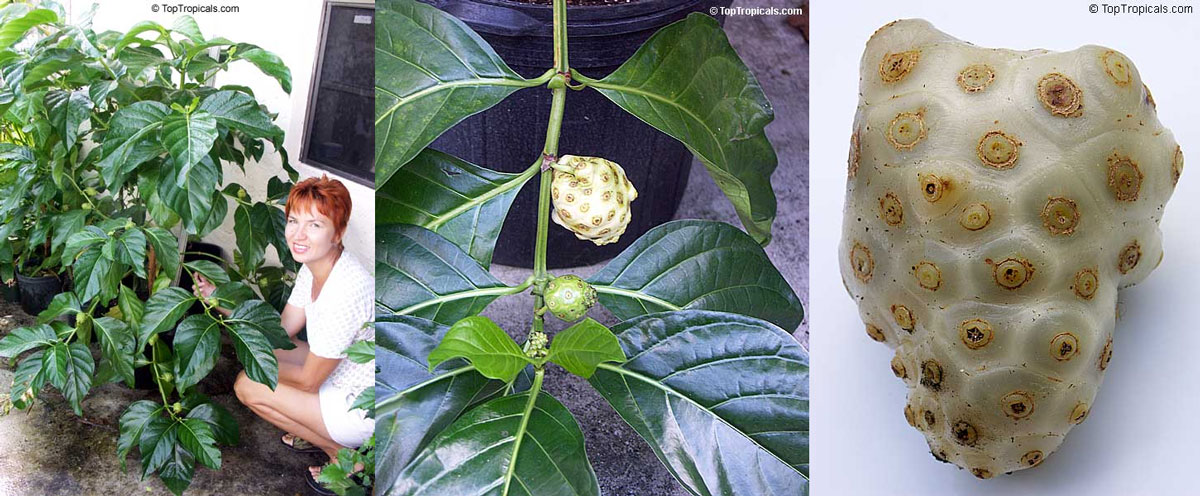
Young  woman  with  a  potted  Noni  tree,  close-up  of  Noni  fruit  growing  on  the  branch,  and  a  ripe  Noni  fruit  with  its  distinct  bumpy 


skin.

What are the benefits of growing a Noni tree?

Noni isn't just ornamental - it earns its place. This small tropical tree is packed with potential, from fruiting fast to delivering real, time-tested benefits.

  • Begins fruiting within a year
  • Flowers and fruits nearly non-stop if grown in proper conditions
  • Grows well in containers, indoors or out
  • Used to support immunity, joints, digestion, and more
  • Leaves and fruit are both used in traditional remedies
How to Grow Noni Tree

In Zone 10 and warmer, Noni grows beautifully outdoors in full to part sun. It thrives in poor soil, tolerates salt, and bounces back from drought. Just keep it warm and lightly fertilized for year-round flowering and fruiting.

For indoor growers, Noni adapts well to containers. Place it near a bright window or under grow lights. It can tolerate lower light, though fruiting may slow. Keep soil moist but not soggy. Leaves may drop if it gets too cold or too dry - warmth is key. In deep shade, the foliage becomes lush, dark, and ornamental.

Pro tip: Start with a 3 gal or larger plant for faster fruit production.

Shop Noni Trees

How to Make Fresh Noni Juice

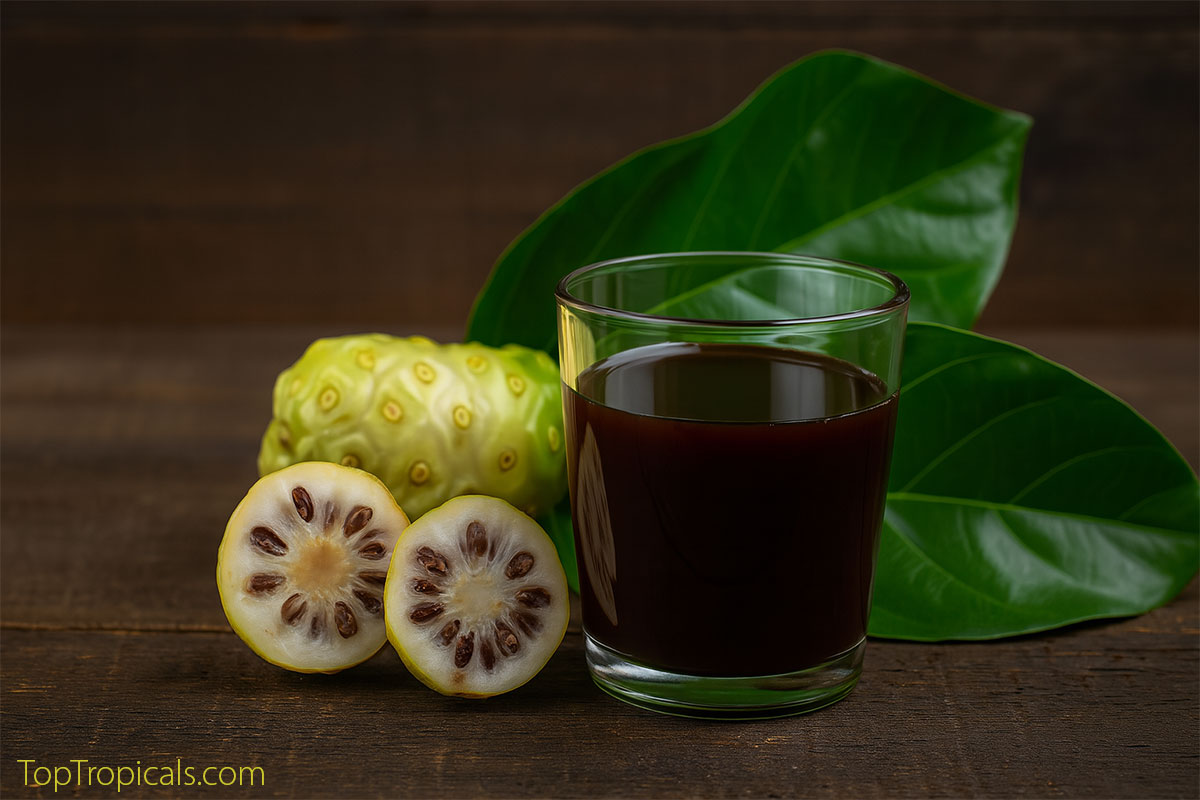
A  glass  with  noni  juice  next  to  a  ripe  Noni  fruit  with  its  distinct  bumpy  skin  and  noni  leaves

Got fruit on your Noni tree? Here's how to turn it into something powerful.

Step-by-Step Guide:

  • Wash the ripe fruit thoroughly
  • Cut into small chunks
  • Blend until smooth
  • Strain (optional) through mesh or cheesecloth
  • Add apple or blueberry juice to soften the flavor
  • Store in clean glass jars and refrigerate
Why bother growing Noni?

Fresh Noni juice supports:

  • Joint and bone strength
  • Energy and endurance
  • Immune balance and metabolism
  • Healthy gums and blood pressure regulation
  • Weight management and nutrient absorption
This isn't just juice. It's tradition in a glass - and it came from your own plant.

Grow your own noni juice

Date: 24 Jun 2025

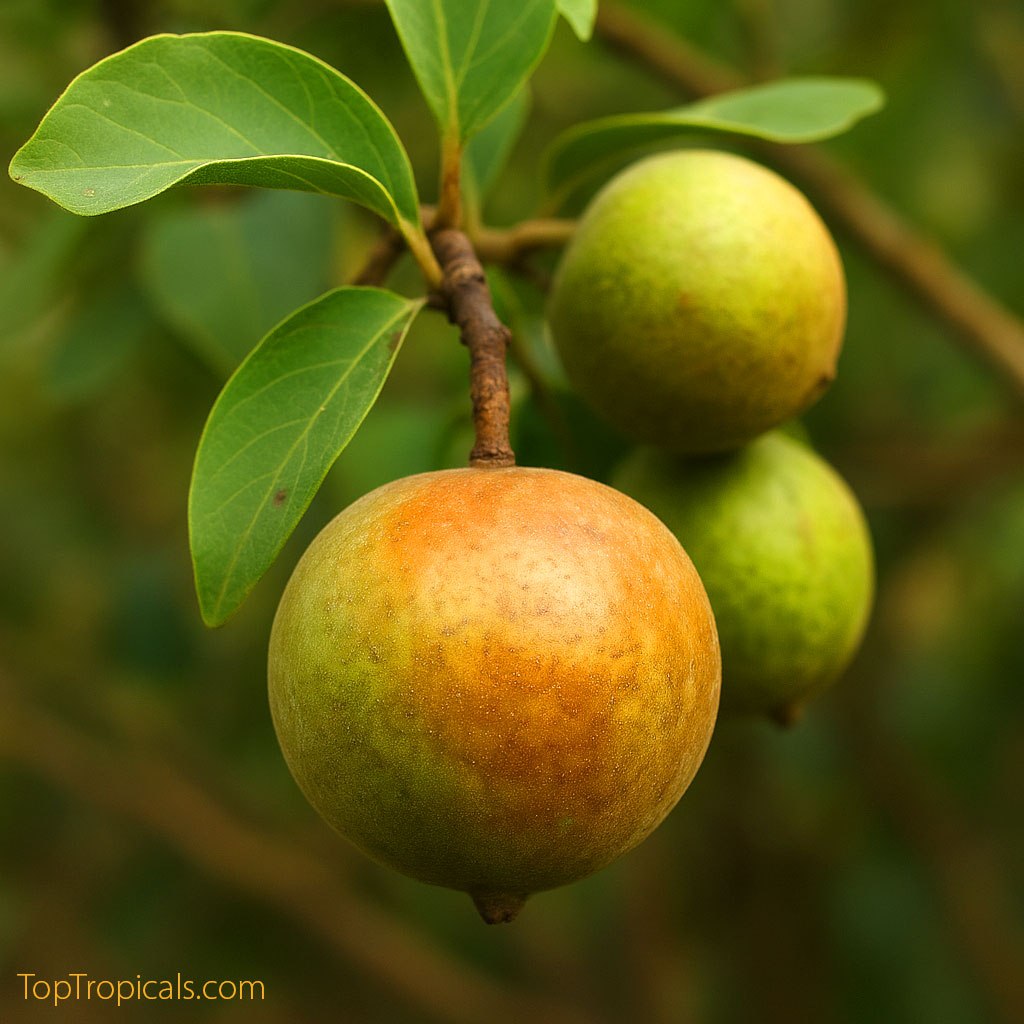
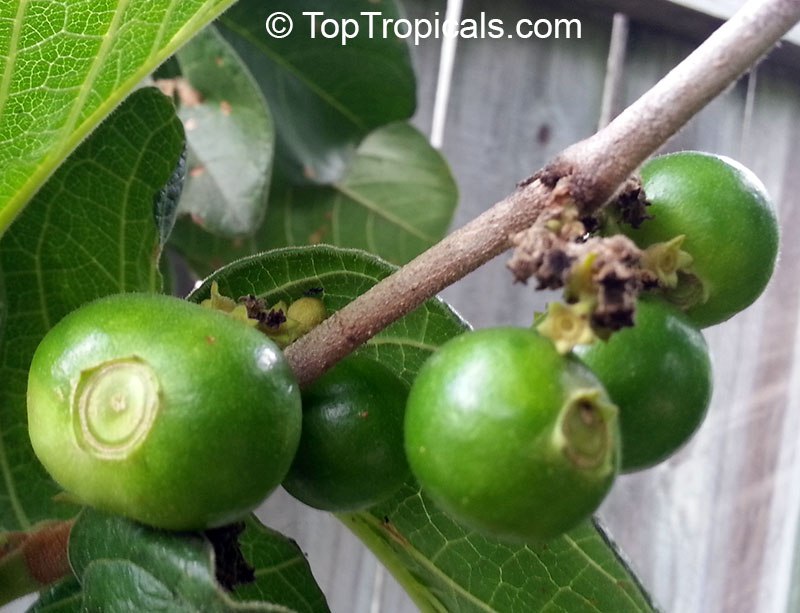
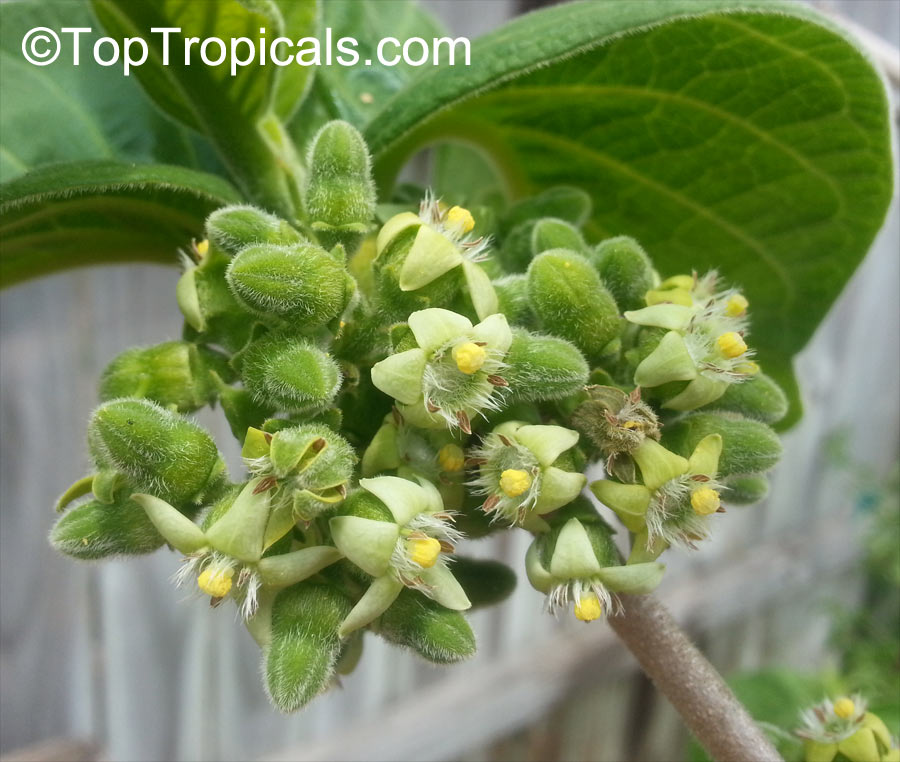
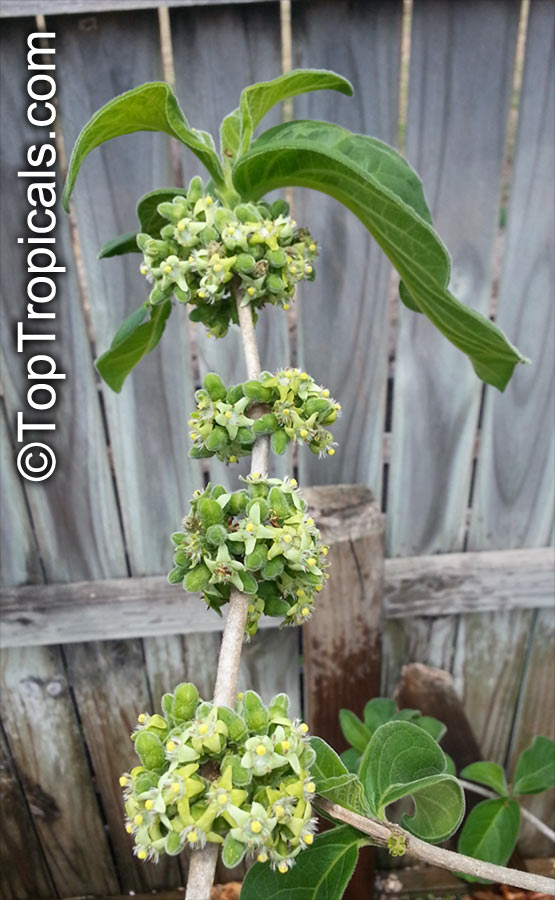
The wild fruit with a secret: health benefits of rare Spanish Tamarind - the exotic fruit youve never heard of

The wild fruit with a secret: health benefits of rare Spanish Tamarind - the exotic fruit youve never heard of The wild fruit with a secret: health benefits of rare Spanish Tamarind - the exotic fruit youve never heard of The wild fruit with a secret: health benefits of rare Spanish Tamarind - the exotic fruit youve never heard of The wild fruit with a secret: health benefits of rare Spanish Tamarind - the exotic fruit youve never heard of The wild fruit with a secret: health benefits of rare Spanish Tamarind - the exotic fruit youve never heard of

🍊 The wild fruit with a secret: health benefits of rare Spanish Tamarind - the exotic fruit you've never heard of


  • Looking for a new exotic fruit to love? Meet Vangueria infausta - Spanish Tamarind, also called Wild Medlar. Native to Southern Africa, this little-known gem grows on a small tree and produces round, golden-brown fruit with a sweet-tart flavor. You can eat them fresh, dried, or even turn them into a tropical jam or homemade fruit beer!

  • But it's not just tasty - it's super healthy. The fruit is packed with vitamin C, fiber, and minerals like iron and magnesium. Locals use it as natural medicine: the leaves and bark are brewed into teas for colds, fevers, and stomachaches. The roots are even used for coughs and snakebites.

  • Secret bonus? Its bark and leaves make natural dyes in yellow, green, and purple!

  • The Wild Medlar is easy to grow in warm climates (Zones 9-11) and can handle poor soil and dry weather. In cooler zones, just grow it in a pot and bring it in for winter. Give it full sun, some water, and it'll reward you with 20-40 fruits per season.


🛒 Grow your own wild superfruit - Spanish Tamarind

#Food_Forest #Remedies #Discover

🟢 Join 👉 TopTropicals