Garden Blog - Top Tropicals

Date: 29 Aug 2019

How to fertilize a Mango Tree

Q: I bought a Mango tree from you last month and planted it soon after it arrived. When is the best time to fertilize it? (I am in Florida)

A: We always recommend to wait on fertilizing until the plant is well established. If you planted your tree a month ago and it is doing well, showing new growth, then this is the time to start giving it some food.
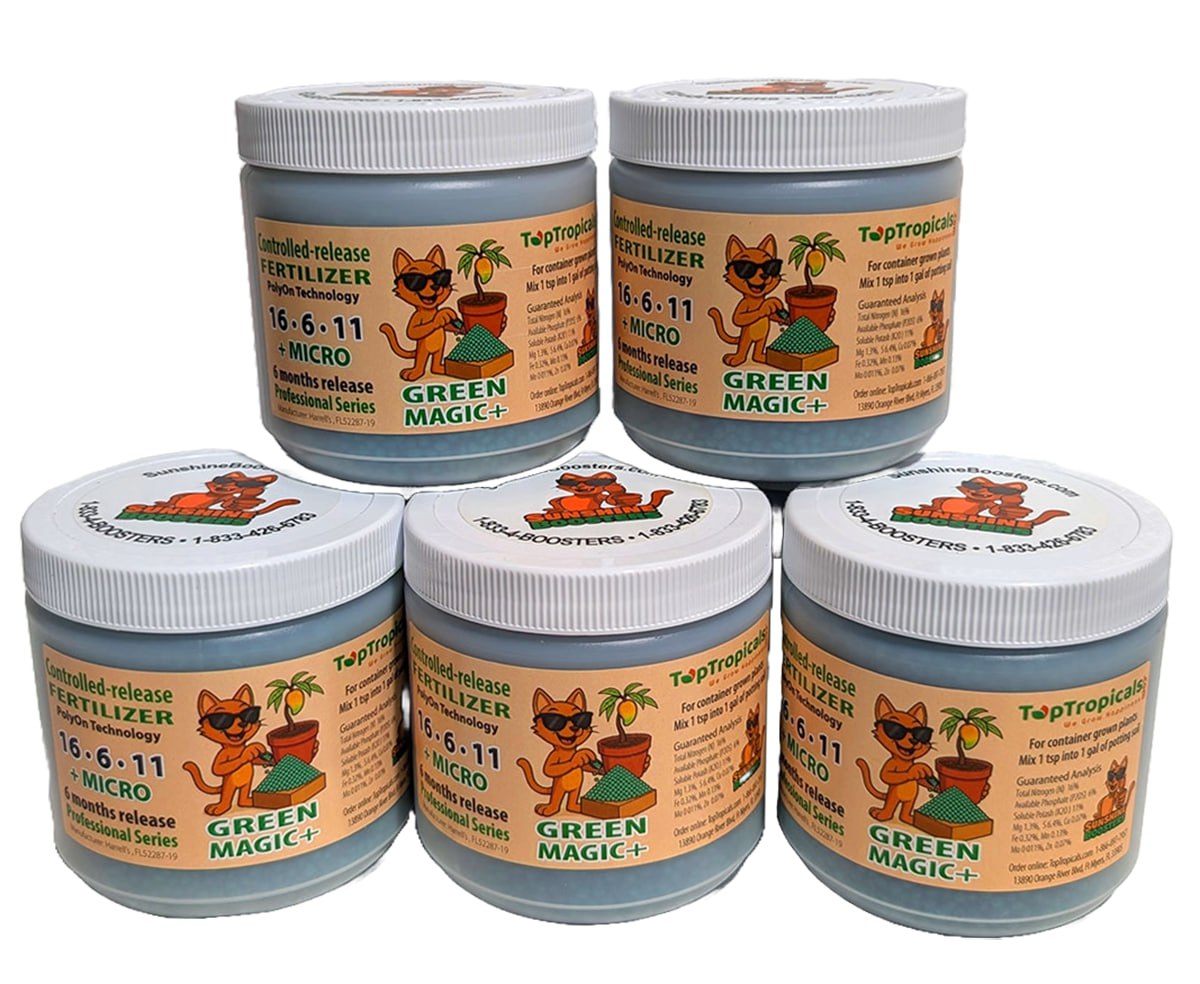
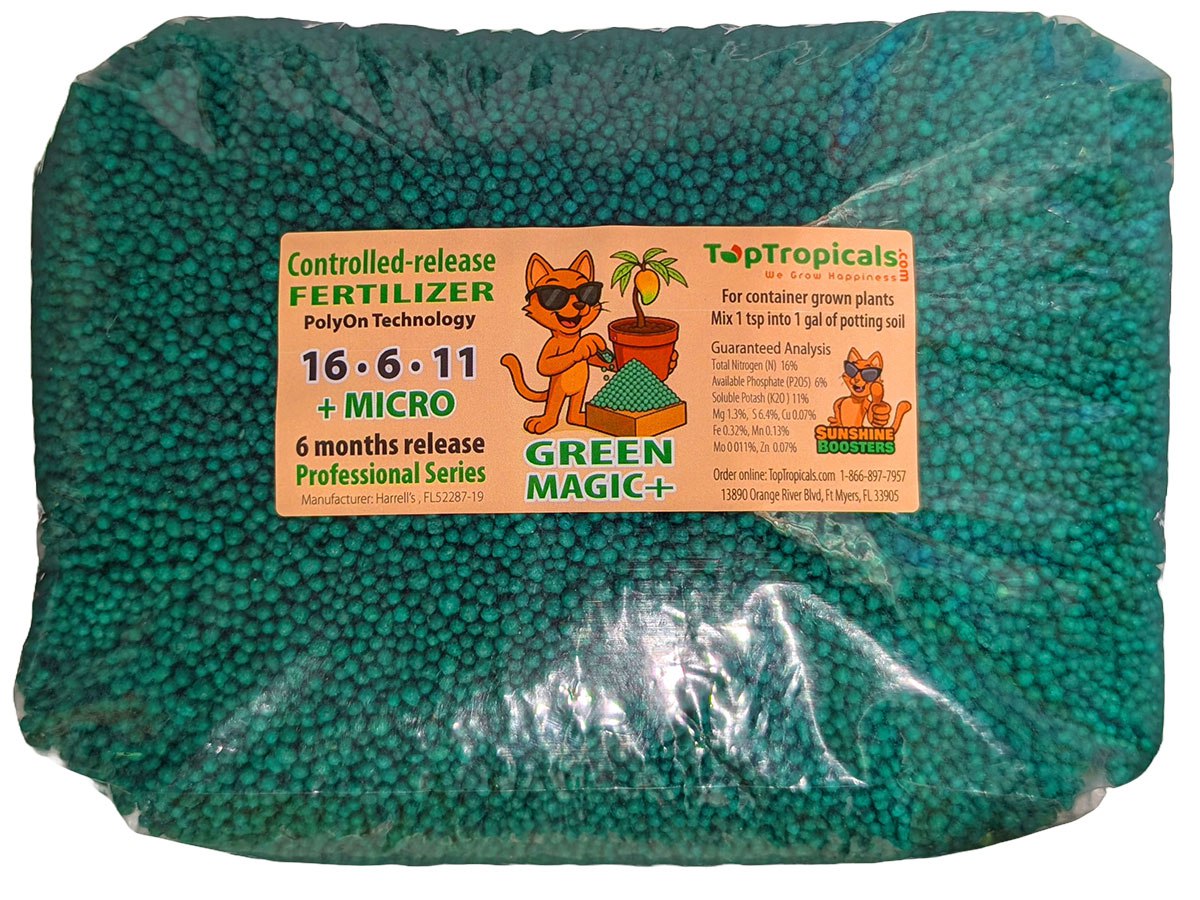
For a mango tree, we recommend using 2 fertilizers - water-soluble and granulated:
Fruit Festival Plant Food
Mango-Food
Remember micro-elements that are essential for healthy and vigorous growth:
SUNSHINE SuperFood - plant booster

In Florida, this is the best time right now for fertilizing - while we still have a few months of nice warm weather - active growth period. This will help you Mango tree to establish well before winter rest.

Date: 16 Jun 2019

Repotting Artocarpus with a taproot in ground

Q: The Chempedak I bought from you almost 3 years ago which I had repotted twice has a thick taproot growing in the ground, which I noticed this past winter. I was going to repot into the largest size pot almost half of a 55-g rain barrel. Can I try to dig/save as much of the taproot before repotting, will it die if I had to shorten/cut what I can't dig out completely? I hate to put it in the ground for fear it may not make it when we have severe cold/long hours of frost. I live in west Cocoa, Central Florida, 9b.

A: Yes, you can repot the tree and keep it in reasonable size container after trimming the roots. Most of the tropical trees (fruit trees not an exception) can be grown in containers even if in Nature they grow into vigorous large trees. The key is, trim the roots every time you transplant it. The process is similar to trimming branches and both don't hurt the plant as long as done right and moderately. You should trim the overgrown and spreading limbs at the same time. You may trim as much as 10% off root system at the time of repotting. This will cause the root system to branch out and become fuller, similar to branches, which is a good thing. If a tree grows a taproot like in your case, it is not necessary to try "saving" and digging out the whole root that may go down for a few feet. You may cut it off without major damage to the tree since the rest of its root system will continue to support the plant metabolism. Just keep in mind that the plant will be stressed for a while - so put it in bright shade and water regularly until signs of stress go away (wilted or dropping leaves may occur). This particular type of tree - Artocarpus - is pretty strong and vigorous so the stress should be minimal.

Date: 4 Jun 2019

Plants for South Texas and other hot states

Q: Pretty much adore last newsletter. Haven't been buying because our weather here in deep south Texas is so bad it is stunting and killing even the Tamaulipan Scrub! Do you have a cure for that? :) I have every expectation the new grafted Plumeria I purchased from you last year will bloom soon. One of my favorite plants. Thanks again and keep up the good works.

A: Yes, there is a "cure" - using biostimulants that improve drought- and heat- resistance (SUNSHINE boosters), plus the right plant selection. In fact, there is a large number of tropical rare plants that can be successfully grown in hot climates like yours. One of our partners lives in hot and dry Arizona area and has an amazing tropical garden that includes many fruit trees (Mango, Persimmons, Pomegranates, Loquats, etc). Here you can see a few pics from his garden.
Your choice is absolutely right about plumerias. Other easy plants would be Desert roses - Adeniums, and Fancy Euphorbia millii - all these come in so many varieties of colors and bloom throughout most of the year. Our special recommendations for you would be also:

Bougainvillea Dwarf Pixie
Jasmine sambac
Calliandra selloi Pink Lilian
Dracaena marginata Tricolor - Colorama, Money Tree
Hamelia patens Lime Sizzler - Variegated Fire Bush
Jatropha berlandieri - Buddah Belly
Pedilanthus tithymaloides - Devils Backbone
Trachelospermum asiaticum Mandaianum - Dwarf Confederate Jasmine

See full list of more plants that are suitable for hot and dry landscapes.

Apply fertilizers, miscroelements, and plant stimulants for improving heat tolerance

Date: 20 Apr 2019

More about Mulberries

TopTropicals.com

Customer comment on our Mulberry column in the previous newsletter:

...I planted a Himalayan mulberry, Morus macroura, about six years ago. For several maddening years, it shot only very long, un-branching tentacles out there, and it resisted my efforts to force some branching by pruning. It would send another long, reaching shoot from the tip of the pruned branch, with NO laterals. Several times, it did this. Finally, two years ago, it broke buds that looked like they meant it all along those long branches, and in one season, it fluffed out. The next season it elaborated on this, acting much more like a proper tree. The fruit is fabulous, three or more inches long, very sweet, with a rich berry flavor that's more raspberry than mulberry. I guess it just needed more time. My understanding is that mulberries don't really like to be pruned, but it needed to happen in this case, along a driveway, so I reigned it in, and now it's a treasure. Be patient.
Cheers, your admirer, C

Check out our Mulberry trees.

Date: 16 Feb 2019

Deciduous plants soon sprouting

TopTropicals.com

Many people believe that living in a warm climate will dissuade a plant from its deciduous nature. However, deciduous plants react to not only temperate but also shortened hours of daylight and changes in precipitation. Additionally, some plants will drop foliage in phases between new growth, and others use abscission to aid in pollination; blooming without wind-blocking leaves and making flowers more visible for insects.

When pruning a deciduous tree or shrub, it's generally best to wait until late winter or early spring, before the plant begins to leaf out. Avoid pruning during periods of new growth; during this time, the plant is weakened by the struggle to reestablish its growth process. Before pruning your deciduous plant, first research the specific plant, as there will always be exceptions to general instruction. For example, many Rubus varieties desire to prune in late fall, as their buds are developed during the dormant winter season. Some trees may have flower or fruit during winter while having no leaves, give them a chance to flower before pruning.

On the photo: Winter flowering Bombax ceiba in full bloom.