Garden Blog - Top Tropicals

Date: 21 Feb 2020

When plants are ready for a meal?
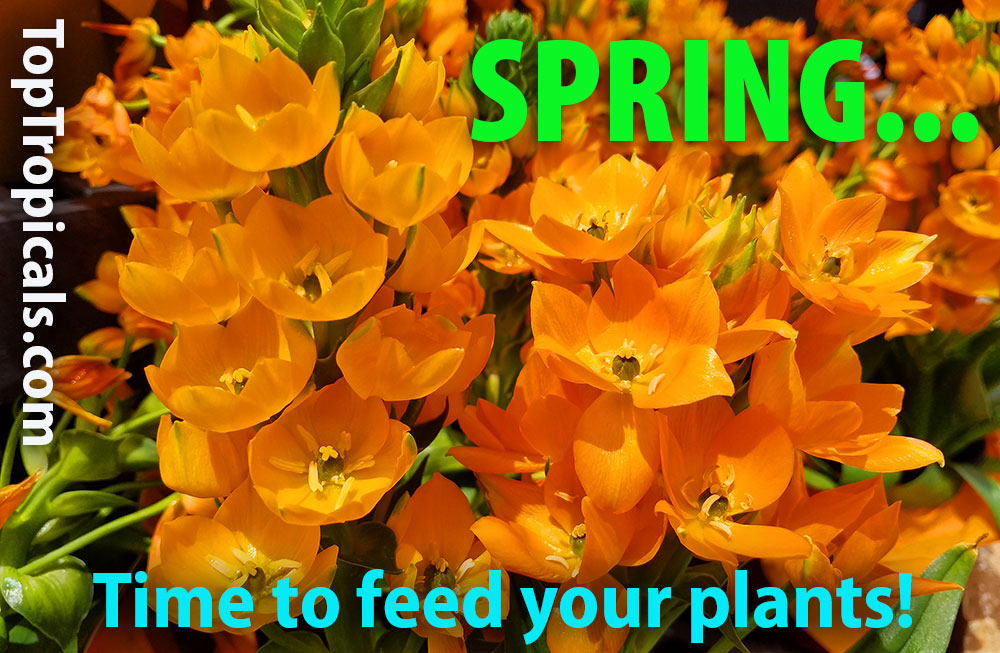
Q: We have an early Spring here in Florida. All plants in my garden flushing out new leaves and buds opening. Can I start fertilizing? I have Mango, Avocado, Peach trees, many medicinal herbs and flowering shrubs: Angel trumpets, plumerias, bromeliads. I prefer mild organic fertilizers; can you suggest something that is safe for edibles and butterflies?

Q: As a rule of thumb, tropical gardeners start regular fertilizing when the minimum temperatures (at night) go above 65F. Keep in mind that Sunshine Boosters fertilizers can be applied year around because they have mild formulas and used with every watering; during cooler period, you water less frequently, so feeding is reduced accordingly. Another advantage of Sunshine Boosters - they are natural (derived from organic amino acids which is the basics of Life). They are safe for edibles as well as pollinating insects.

Here is the feeding plan for your plants:
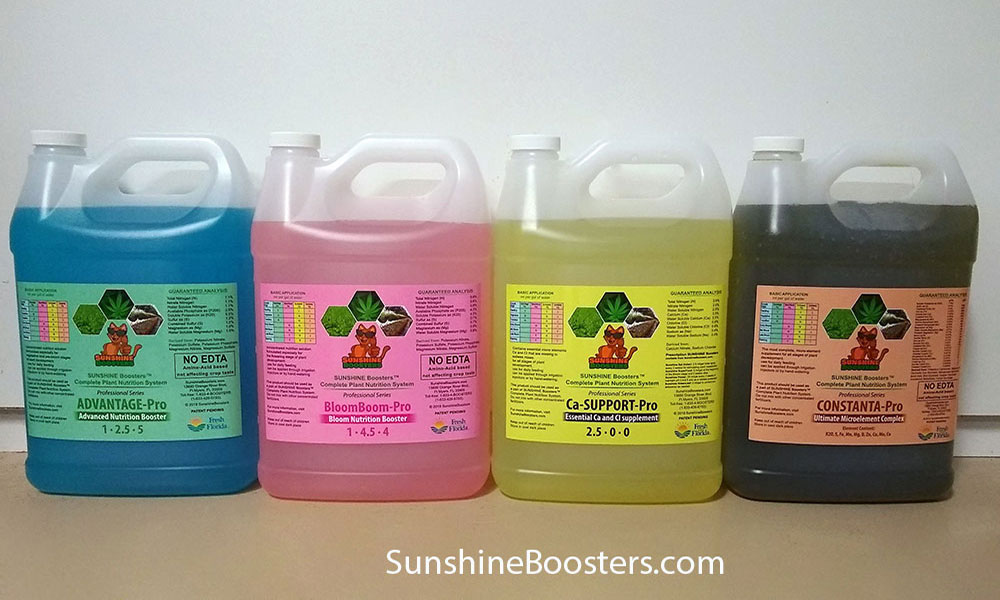
1. The most universal solution for all plants (both potted and in-ground): get a complete set of Sunshine Boosters Pro system: Advantage-Pro for vegetative growth, BloomBoom Pro for flowering stage, and Ca-Support-Pro + Constanta-Pro as necessary daily supplements. You will need all these 4 components for your garden.
2. Start adding these liquid boosters with every watering according to dozing directions and you will notice amazing growth boost within a week.
3. Apply Sunshine Epi plant hormone every 2 weeks as a foliar spray to boost immune system and metabolism of plants and protect them from diseases. Epi makes plants (especially young plants and those "waking up" from dormancy) grow twice faster! It also enhances effect of fertilizers by increasing plant metabolism.
4. After cool winter temperatures, some plants may develop element deficiencies like chlorosis (yellowing leaves). Additional microelement boost can be provided with Sunshine Greenleaf (iron supplement) and Sunshine Superfood (micro-elements).
5. For additional boosting of flowering and setting fruit, use the following individual boosters:
Sunshine Robusta - for foliage plants and when you need rapid vegetative growth
Sunshine TotalFeed - for Plumerias and other fragrant plants
Sunshine Megaflor - for Brugmansias and other flowering heavy feeders
Sunshine C-Cibus - for improving fruit production and quality
Sunshine Honey - for sweeter fruit (must be applied 4-5 times a year)
6. For young/small plants (seedlings, rooted cuttings) as well as tender tropicals like bromeliads, and orchids - Sunshine Bombino is a perfect choice due to its mild formula.
7. To save money, order complete sets rather than individual boosters; you will be able to safe up to 40%! Sunshine Complete Nutrition System Kits: Combo Kit, and Pro Kit.

If you are a fan of organic gardening, do not use dry fertilizers. While water-soluble and granulated (smart-realease) fertilizers are popular choice in plant nurseries due to their convenience, they are not as safe as liquid boosters because they create salt build-up in soil and have a high risk of overdosing/burning plant roots, especially potted plants, plants at breaking dormancy, at establishing, and at early stages of plant development. Besides, dry fertilizers may affect the taste of your fruit and herbs. See advantages of liquid boosters over dry fertilizers.

Learn more about Sunshine Nutrition System - a Natural solution for your garden.

Date: 7 Feb 2020

Jasmine Rex - the hero of all jasmines

Q: I was getting ready to place my order and I saw this plant and it's beautiful. I would love to have it. What does it need to thrive? As far as light, temperature, humidity.

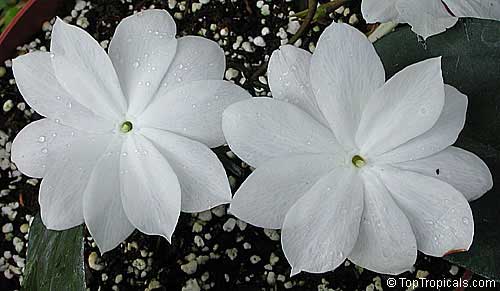
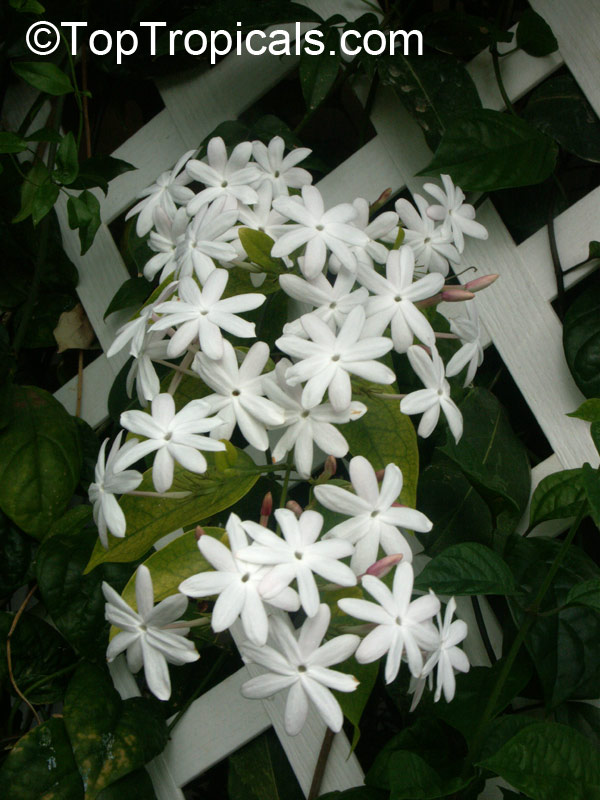
A: Jasminum rex indeed is a very unusual, spectacular jasmine. Unlike other jasmines, this one has almost no fragrance, however the blooms look so amazing that it became one of our favorite plants. Flowers are 2-3 inches across! It blooms profusely, covered with dozens of flowers for many days to a few weeks.
Jasmine Rex is not the easiest jasmine to grow, however it is not difficult either as long as you know its needs. The main critical factor is excellent drainage. It doesn't like soggy soil or wet feet. At the same time it needs regular watering. Full sun is also a must for flowering. Humidity is not a critical factor. Remember it is a tropical plant that needs frost-free environment. It is more cold sensitive than other jasmines although it may survive a few hours of light frost.
Once established, it grows vigorously. Make sure to apply fertilizer during active growth (when temperatures stay above 65F). We recommend Sunshine nutrition system through the whole year. Additionally, you can apply flowering fertilizer Megaflor during summer.
Make sure to plant it in a sunny spot using very good quality soil, and do not overwater.

Check out all Jasmines

Date: 11 Jan 2020

Improve your intellect with Ashoka,
the tree of Happiness
(Saraca indica, the Sorrowless Tree)

By Onika Amell, tropical plant specialist

Q: I have recently visited India and saw the most beautiful Ashoka trees at the entrance to a temple. The flowers were simply show stopping, growing directly on the trunk and branches. I would love to grow one. I have been told it has significant medicinal properties. I am delighted to see you have them in your inventory. And they are on sale too! Are they easy to grow?

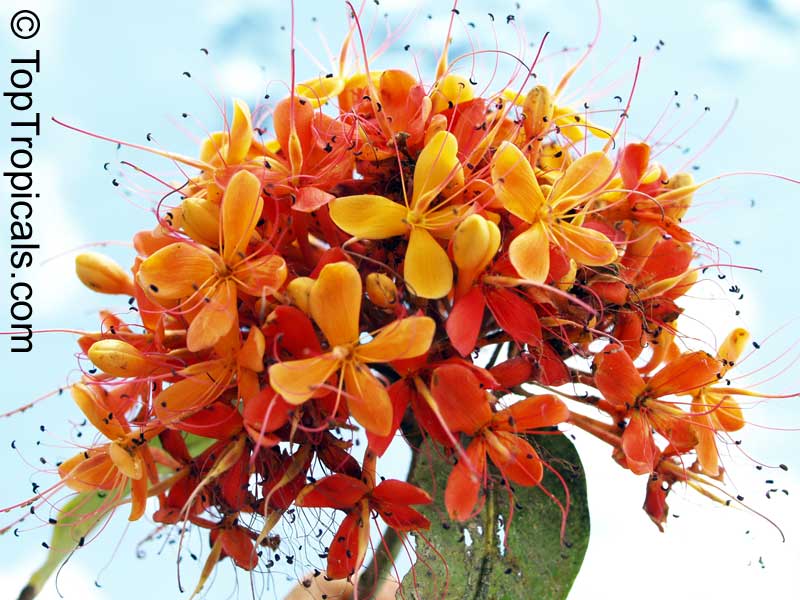
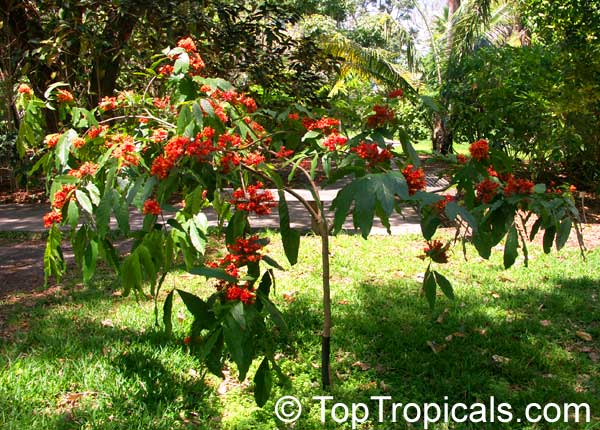
A: Ashoka or Saraca indica is one of the most exotic flowering trees of the Indian subcontinent. Without a doubt it is one of the most stunning Indian flowering trees. Buddhists, Jains and Hindus all hold this tree in extremely high esteem and it is considered a sacred tree. Ashoka is extremely highly valued for nutritional value as well as its beautiful appearance. No surprise then that they are often found in royal palace grounds and gardens as well as around temples throughout India. Young leaves are a stunning deep pink color and emerge at the end of branches like hanging tassels. This tree will typically grow to around 20 feet and is a brilliant bloomer. It will wow you with large, round clusters of fragrant flowers throughout the year. Almost all parts of this tree are widely used for different medicinal purpose. It reportedly even helps to improve intellect! Simply amazing...

CONTINUE READING >>

Date: 29 Dec 2019

Kwai Muk: the Ugly Delicious Fruit

By Onika Amell, tropical plant specialist

Q: I have been hunting for a rare and exotic edible to grow on my property here in South Florida for some time now. I found an interesting tree called Kwai Muk while browsing your website. I do not have a lot of space left to plant but this tree seems to be smaller in size and also somewhat cold and wind tolerant which is a bonus as far as I am concerned. It also sounds like the fruit is exceptional. I would love to grow one. It is similar to Jackfruit?

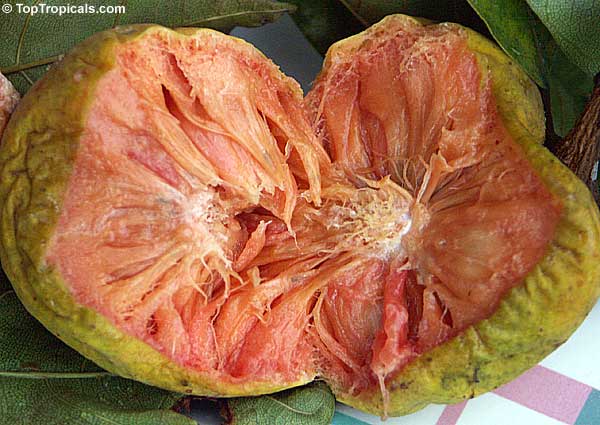
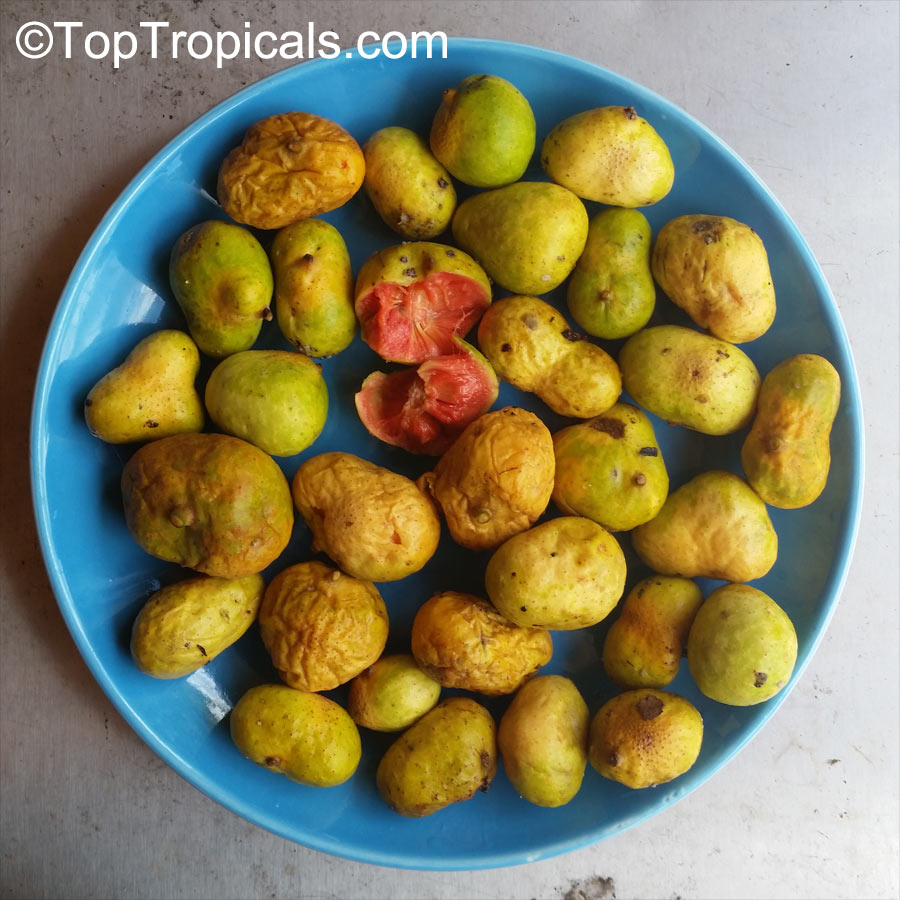
A: ...The piece de resistance of Kwai Muk is the excellent fruit it produces. Some people seem to think it is some of the weirdest looking fruit out there! This may be true, but what it lacks in appearance, it certainly makes up for in taste. It is called sometimes "the ugliest and yet the best tasting fruit". The creamy pulp is absolutely delicious and mostly eaten fresh. I have heard people say the flavor reminds them of mango, apricot, jackfruit, fig, quava and strawberry. Sweet and tangy loveliness with a hint of sherbet. The fruit looks like mini jackfruit on the inside but is about the size of a fig. The flesh inside also closely resembles jackfruit....

CONTINUE READING >>

Date: 6 Dec 2019

Chestnut vine - perfect plant for home and office

by Onika Amell, tropical plant specialist

Q: I was visiting Ford Myers recently and attended the Edison Ford Winter Estate Garden Festival. I could not help but notice two stunningly beautiful Chestnut vines on your stand at the event. I have never seen this plant anywhere before. I was told they make a great indoor plant. I was also told your company ships to all 50 states. I have been looking for something unusual to grow in my office and this may be just the plant! How do I take care of it indoors?

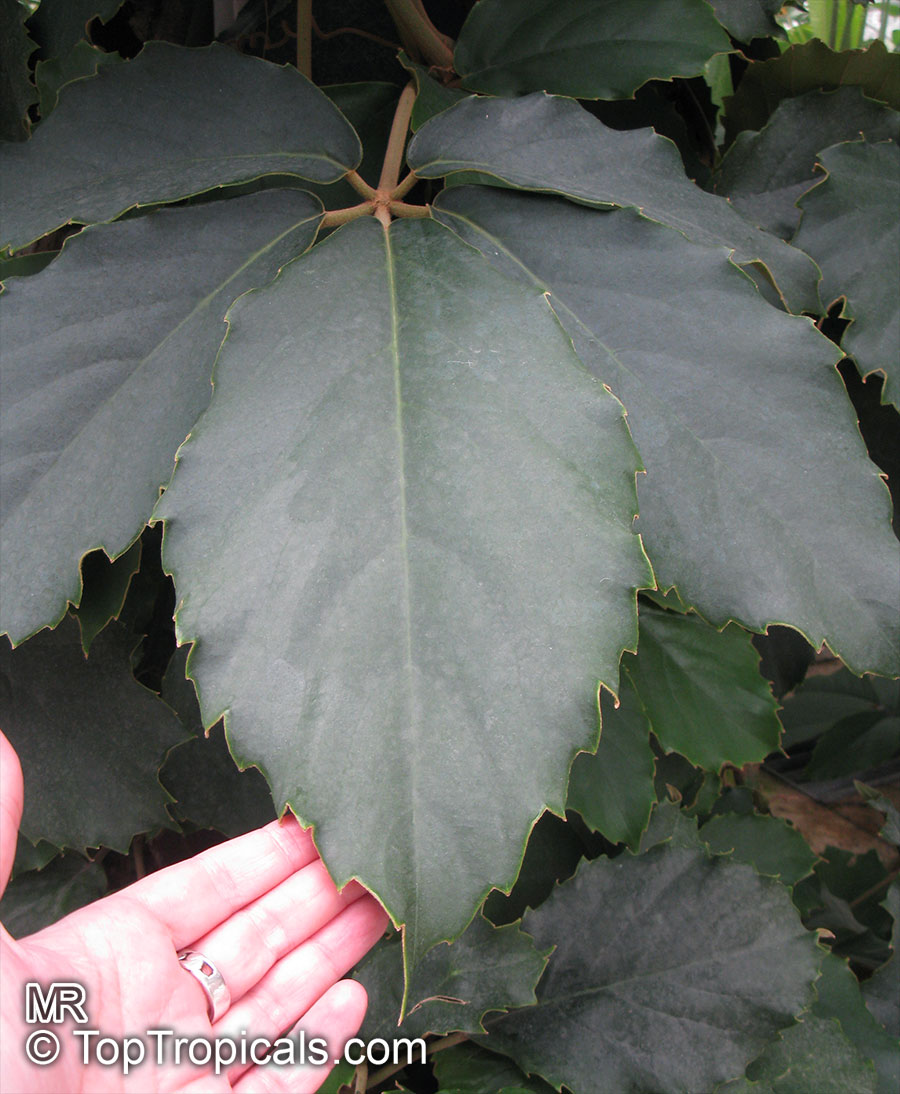
A: If you want to bring a little bit of the tropics into your office, you have chosen the perfect plant. Tetrastigma voinierianum - Chestnut vine - is a long-lived perennial plant that will stay green all year long. It is a native of Laos and a member of the grape (Vitaceae) family. This is a truly striking vine with beautiful lush and large leaves. It is a vigorous climber with 8 inch or longer tendrils for climbing purposes. The underside of the leaves has clear pearl-like bumps, which are actually plant secretions that are used by ant colonies when growing in its wild habitat...

CONTINUE READING >>