✨ If you think you’ve seen every tropical shrub out there, meet Golden Rain - a rare variegated Tabernaemontana that instantly steals the show.
✨ What makes it special:
The leaves are a work of art – green with golden or silvery streaks that shimmer in sunlight. The white, fragrant flowers appear in clusters, adding perfume to its beauty. Compact and rounded, it’s perfect for containers or small gardens. And it’s flexible too – thriving in both full sun and partial shade.
✨ How to grow it:
Give it bright light, well-draining soil, and regular watering with brief drying between. It’s tropical-friendly, so protect it from frost. In zones 9 and up, it’s easy to grow outdoors. Place it somewhere visible – the golden foliage deserves attention.
✨ Why you’ll love it:
Because it’s rare. Because it smells amazing. Because those leaves look like they’ve been brushed with sunlight. Golden Rain is one of those plants that makes everyone stop and ask, "What is THAT?"
Winter can be tough on plants, especially on tropical varieties. But with a little preparation, you can protect your garden and keep your plants safe from the cold. Here's how:
Winter Care Tips for Tropical Plants
Cut watering: Reduce watering to prevent root rot. Cold + wet = dead roots.
Water before frost: Thirsty plants are more vulnerable. Water them before a cold night to prevent damage.
Wind protection: Wind is more harmful than temperature drops. Plant near structures like houses or trees for shelter.
Prepare for long cold periods: If cold weather lasts for hours, use all available protection, including Christmas lights and propane heaters.
Don't use dry fertilizer in winter: Heavy fertilizing encourages tender growth, which is more susceptible to cold damage. Sunshine Boosters liquid fertilizers are safe to use year around as their intake is controlled by reduced watering. Use fabric covers, not plastic: Plastic can cook plants in the sun, while fabric allows better ventilation.
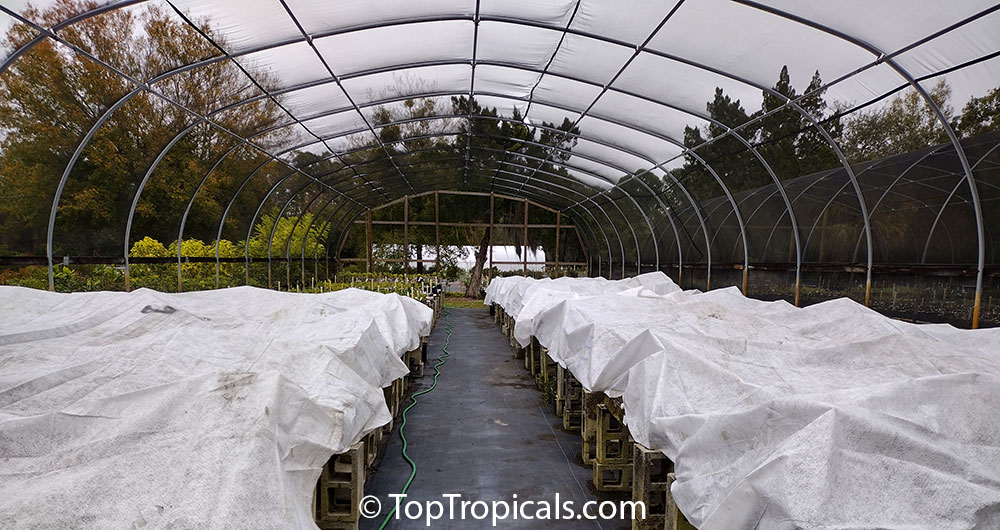
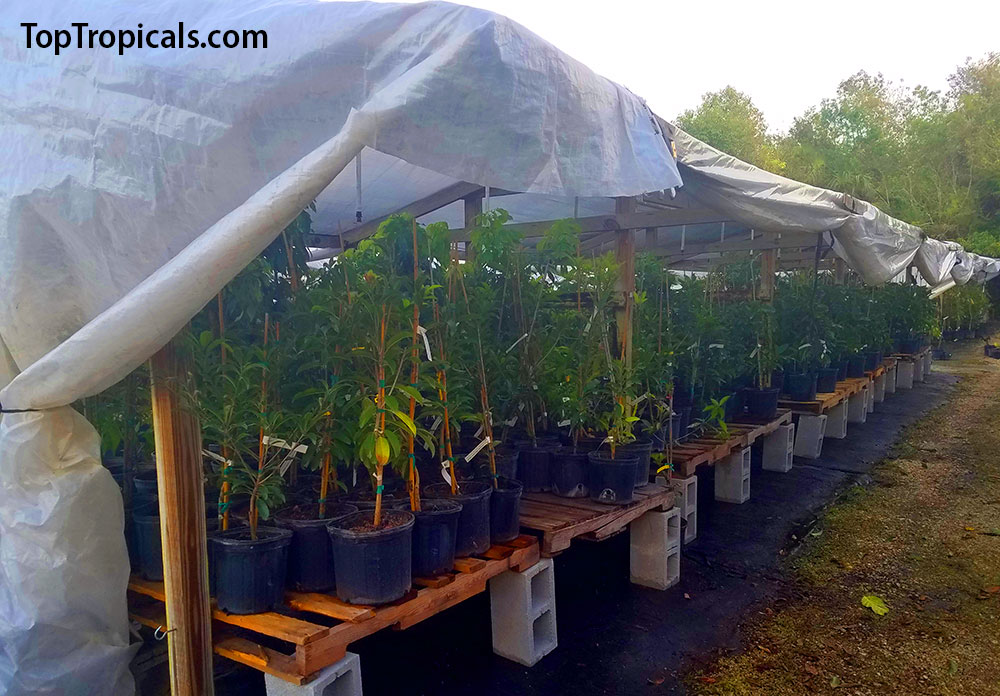
Photo above: we cover our plants in the nursery with a thin synthetic fabric (sintepon) called "frost cloth" or "strawberry cloth". It is light, breathable and allows light and water to go through unlike plastic that creates heavy water pockets.
Prepare for Cold Nights
Wrap plants: On cold nights, cover individual plants or trees with sheets or blankets to shield them from wind chill.
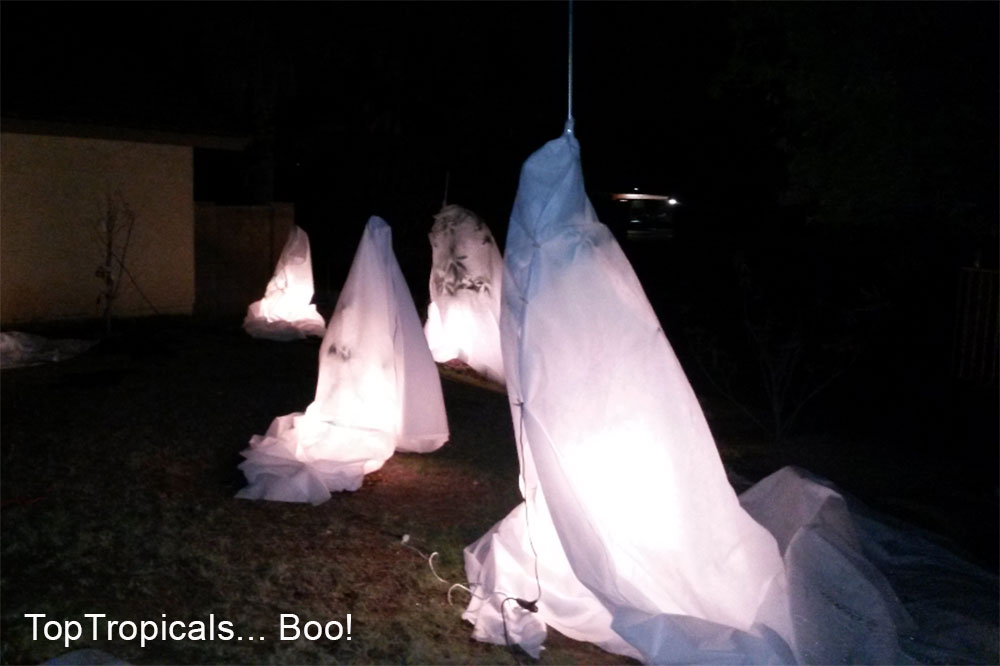
Use Christmas lights: A simple string of lights can add extra warmth, protecting your plants during frosty nights.
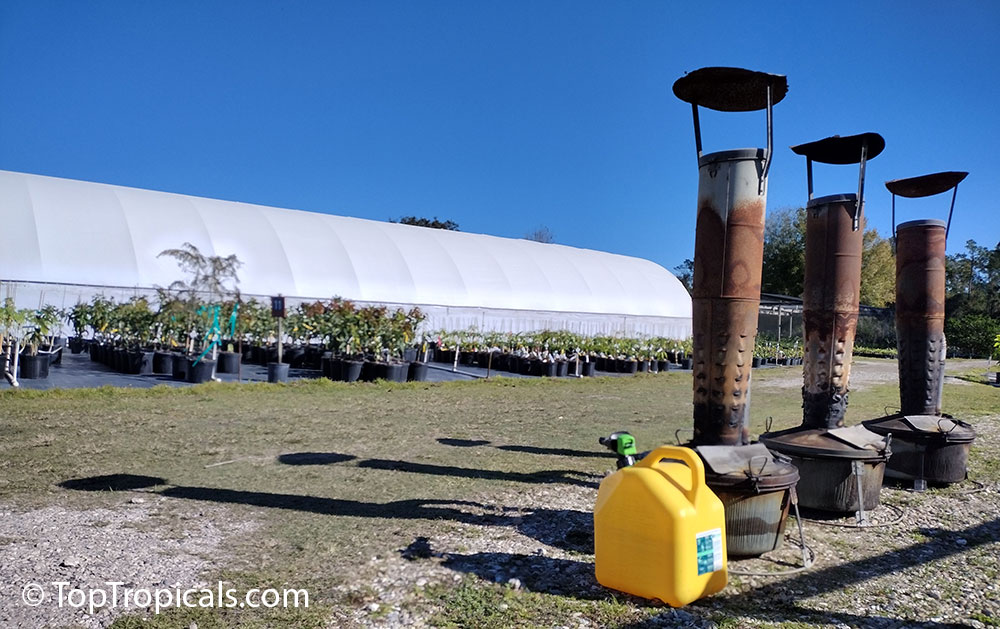
Use propane heaters: For added warmth in a larger area, place a propane heater near your plants. Make sure to follow safety guidelines and keep the heater at a safe distance from flammable materials. This can help maintain a few extra degrees of warmth, especially in more open garden spaces or temporary greenhouses. Always ensure proper ventilation to avoid harmful gas buildup.
Photo above: we use both propane and kerosene heaters at the nursery
Large Collections? Build a Temporary Greenhouse
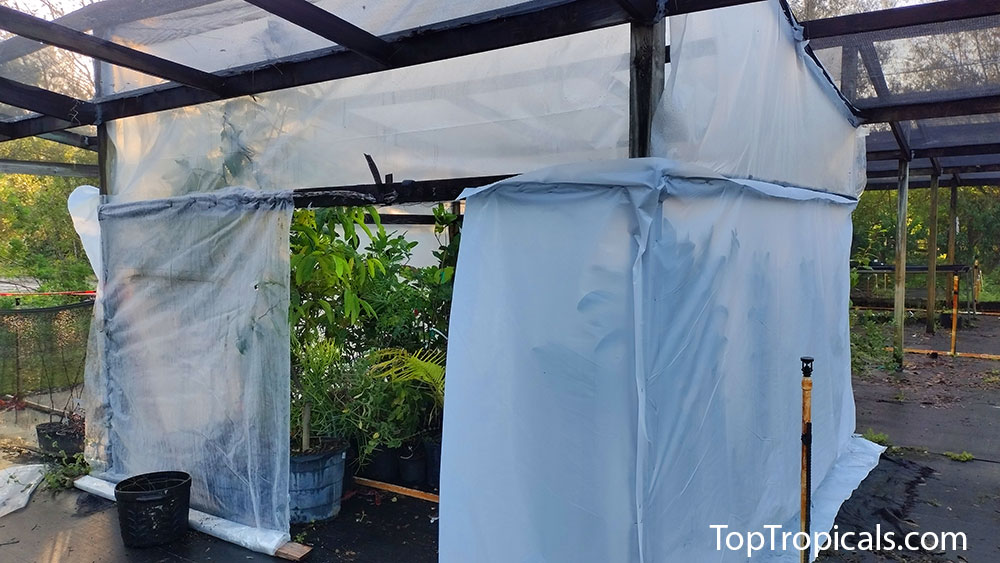
Affordable winter greenhouse: For large plant collections, you don't need an expensive greenhouse. A mobile carport with plastic or fabric covering, costing around $200, can house up to 100 plants!
Photo above: Temporary wrapping around plant collection with a plastic or frost cloth protects from a windchill. It may also win you a few degrees even without a heater. In this particular case, according to our temp sensors, with 30F outside, it was 41F inside this "dome", no heaters used.
Southern Exposure and Garage Storage
Southern windowsills: Compact tropicals can thrive on southern-facing windowsills, getting plenty of sunlight during the day.
Move plants inside: If you have larger collections, move them into a well-lit garage for the colder nights or longer periods.
Photo above: using Christmas lights around plants while wrapping with frost cloth.
Key Factors for Survival
Cold duration: Tropical plants can survive brief cold spells but long durations, even above freezing, can be deadly.
Wind-chill: Wind chill can be harsher than the temperature itself.
Exposure: Southern-facing slopes hold heat longer, making them ideal for your plants.
Humidity: Proximity to lakes or oceans can create a milder micro-climate.
Gradual temperature Drops are safer. Plants adjust better to slow temperature changes than sudden cold blasts. Gradual cooling allows plants to prepare, reducing the risk of damage.
Strengthen Plant Hardiness
Health and maturity: Well-established, healthy plants are more cold-hardy. Boost plant immunity: Use products like SUNSHINE-Epi to improve cold resistance. Apply it before and during cold snaps to protect your plants. Healthy plant is hardy. Make sure to fertilize your plants on regular basis - healthier and stronger plants are more cold hardy.
With these steps, you can protect your plants and help them survive the winter months. Stay
warm and keep your garden thriving!
Podcast with Horticulturist Mark Hooten:
How to Protect Tropical Plants in Winter
Q: Q: How fragrant is the Tree Jasmine (Millingtonia) and how
tall does it grow?
A:Millingtonia hortensis, or Tree Jasmine, is such a beautiful flowering
tree with long, white, slender and trumpet-shaped flowers with a perfume that
wafts through the air. These trees are very sought after because they are so
highly fragrant. They are fast-growing trees that in Nature (Burma) can
easily reach a height of 40-50 feet, however here in SW Florida we have them
growing about 20-25 ft. The tree flowers
at night and then shed the flowers in the morning. The flowers are waxy and
stay fresh for a long time. In India the flowers are picked up and braided
for rituals. It flowers from October until the end of December. The tree is
also known as the Cork Tree, as an inferior cork is processed from the corky
bark. It is a fast growing, tall, straight tree with few branches and its
popularity lies in its ornamental value and not in its shade-giving properties.
Yet, once you've witnessed the profusion of white flowers, you will understand
why. It is a sight to behold! Cork tree is very easy and can grow in a
variety of soils. It requires full sunlight.
Date: 10 Jul 2024
What vine to plant over a big fence
Chonemorpha fragrans - Frangipani vine
❗️ What vine to plant over a big fence.
🔹 Chonemorpha fragrans, or Frangipani vine, that we mentioned before, is a large woody tropical liana with clusters of large, perfume-fragrant flowers and lush green foliage. It is close related to perfumed Plumeria - Frangipani.
🔹 The fragrance is very fresh and pleasant, similar to Plumeria, fills the air around.
🔹 Leaves reaching up to 12 (!) inches - very tropical, majestic look!
🔹 Requires sturdy support - it can grow pretty big and heavy!
🔹 Takes both sun or shade. Full sun and regular fertilizer is essential for profuse blooming.