Garden Blog - Top Tropicals

Date: 10 Nov 2025

❄️ How to Prepare Your Tropical Garden for Winter

Two  cats  in  a  tropical  garden  at  sunset.  Smokey,  a  black-and-white 
 tuxedo  cat  wearing  a  wool  cap,  holds  a  thermometer  while  Sunshine,  a  fluffy 
 orange  tabby,  sits  beside  mulch  and  folded  frost  cloths  surrounded  by  banana
    and  hibiscus  plants.

Smokey and Sunshine Wrap Up the Garden with Frost Cloth Before the Chill.

Smokey: "Thermometer says 45. Time to wrap the bananas!"
Sunshine: "You wrap the bananas. I’ll guard the mulch… from this sunny spot."
Smokey: "Teamwork, Sunshine. Teamwork."

🌡️ Cold nights are coming - but your tropicals do not need to shiver!

Even in sunny Florida and other warm zones, one cold snap can undo months of growth. Preparation is everything. Tropical plants can handle a lot, but they dislike surprises. Let’s make sure your garden stays safe, strong, and happy all winter long.

Tips from Tatiana Anderson, Top Tropicals Plant Expert

👉 Group and Check Your Plants

You already know which plants are in pots and which are in the ground. What matters now is prioritizing by cold sensitivity. Identify the tender tropicals – papaya, banana, plumeria, adenium, heliconia – and decide which ones get covered first when temperatures drop. Keep frost cloths or old sheets near those areas, ready to grab fast. If your garden is large, label protection zones or mark plants that always need extra care. The goal is to have a plan, not a panic, when the cold alert hits.

Once you know your priorities, you can plan the rest of your protection strategy.

👉 Feed and Mulch

Stop using high-nitrogen fertilizers by late fall. They push soft new growth that freezes easily. Add compost around the base of your plants and top with 3 to 4 inches of mulch. Mulch acts like a blanket: it keeps warmth in, protects the roots, and keeps soil moisture steady. Just make sure the soil drains well; cold and soggy soil leads to root rot. In raised beds, check that water flows away easily.

After you feed and mulch, it is time to look at how your local zone changes the game.

👉 Zone-by-Zone Tips
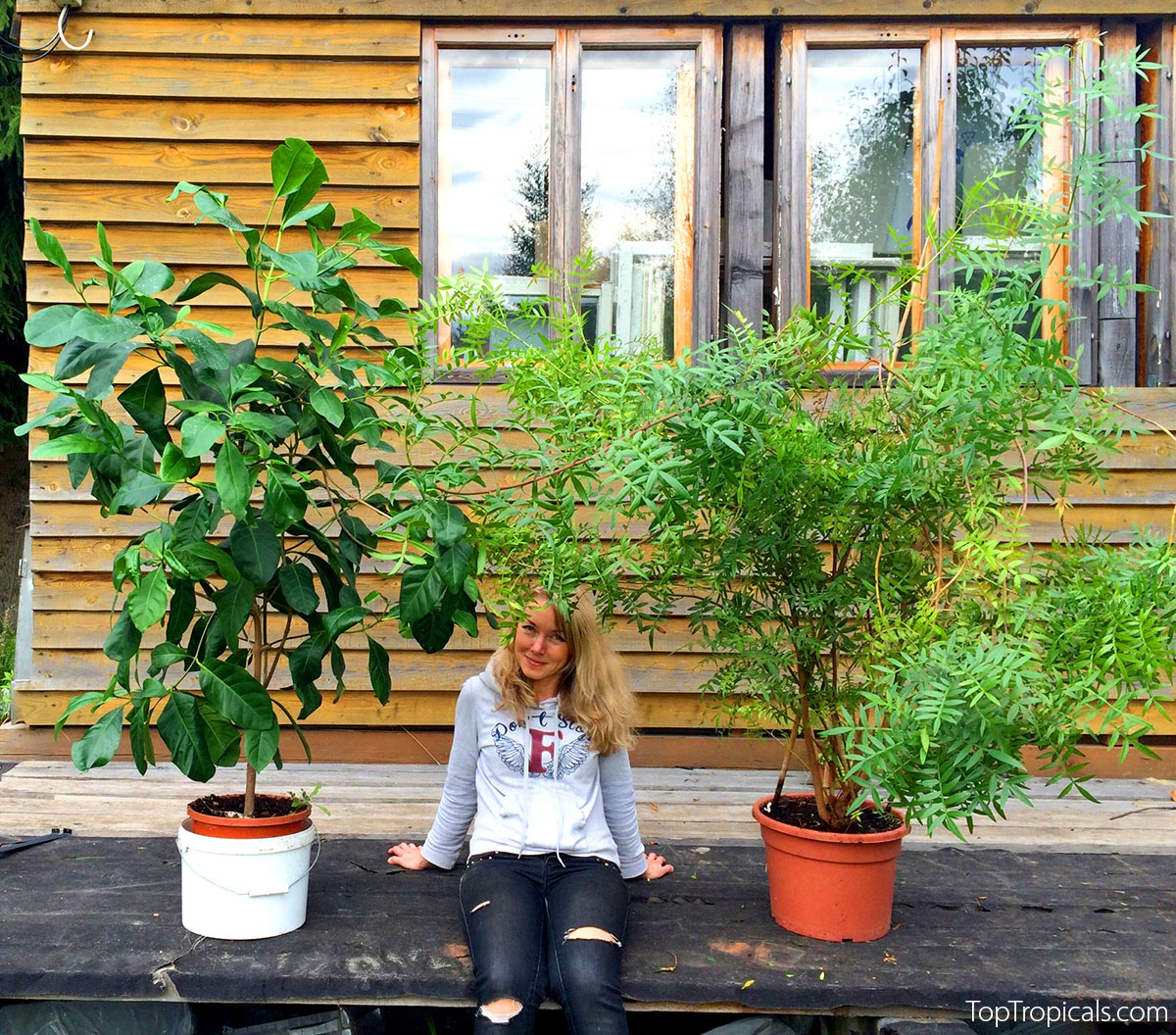
Woman  sitting  between  two  large  potted  tropical  plants  on  a  wooden  deck
    in  front  of  a  house,  preparing  to  move  them  indoors  for  the  winter.

Moving Tropical Plants Indoors for Winter Protection

  • Zone 10: You are lucky! This is mostly a maintenance season. Watch for root rot after heavy rain, trim lightly if needed, and protect tender young trees during surprise chills. Keep some frost cloth ready just in case.
  • Zone 9: This is the main action zone. Nights can dip into the 30s. Deep-water your trees once before cold nights to insulate the roots. Apply heavy mulch, and have frost protection ready to go. If you grow tropical fruit like mango or guava, consider wrapping young trunks in burlap or foam pipe insulation.
  • Zone 8: This is where tropical gardening becomes creative. Stick to cold-hardy tropicals such as loquat, guava, or cold-hardy avocado varieties. Use portable greenhouses, wrap trunks, and move smaller plants indoors or to a heated porch when frost threatens.

Now that the garden beds are set, let’s look at your pots and containers – your most mobile plants.

👉 Container and Patio Plants

Potted plants are the easiest to protect but also the quickest to freeze. Start reducing watering now so roots do not stay too wet in cooler weather. Before moving them, check for insects hiding under leaves or in the soil. Group your pots close to a wall for reflected heat and wind protection. If you plan to bring them indoors, do it gradually. Move them closer to the house for a few days before bringing them all the way inside to help them adjust to lower light and humidity.

When the chill starts, many gardeners rush to move everything inside at once – but a smooth transition works much better.

👉 Indoor Plants

When bringing plants inside, give them a good rinse to remove dust and bugs, and flush the soil to wash out salts from summer fertilizing. Keep them separate from your houseplants for a week to make sure no pests come along. Expect some leaf drop – it is normal as they adjust to lower light. Give them bright light near a window, and cut watering by about half until spring. Avoid misting too much; good airflow matters more than humidity during winter.

Many tropicals, like hibiscus, brugmansia, and crotons, may look tired for a while, but they will bounce back quickly once days get longer.

👉 Timing Is Everything

The key is to prepare before the first cold warning. Check your weather app regularly once nights start dropping into the 50s. Keep covers, mulch, and supplies ready so you are not running outside at midnight with a flashlight and a frozen hose. Have your frost cloths labeled by plant group and stored in an easy spot. A little organization now saves a lot of stress later.

Many tropicals, like hibiscus, brugmansia, and crotons, may look tired for a while, but they will bounce back quickly once days get longer.

Remember: the goal is to help your plants rest safely. Many gardeners prune or fertilize too late in the season – we will talk about why that can be risky next week."— says Tatiana Anderson, Top Tropicals Plant Expert

Coming next mail-list: The best gadgets for cold protection (lights, heaters, frost covers) and what NOT to do in winter.

📚 Learn more from Top Tropicals Blog:

Cold protection - winter action for your plant collection

What plants are good to order in Winter?

How to take care of house plants in Winter

How to protect tropical plants in Winter

How to take care of a mango tree in winter

How to protect Avocado from cold

Overwintering Adeniums outside of tropics

Rows  of  tropical  plants  in  black  pots  covered  with  frost  cloth  and 
 plastic  sheeting  for  winter  protection  at  Top  Tropicals  nursery.

Protecting Tropical Plants with Frost Covers at Top Tropicals Nursery
Date: 17 Nov 2023

Hedges with Benefits
Reference Chart

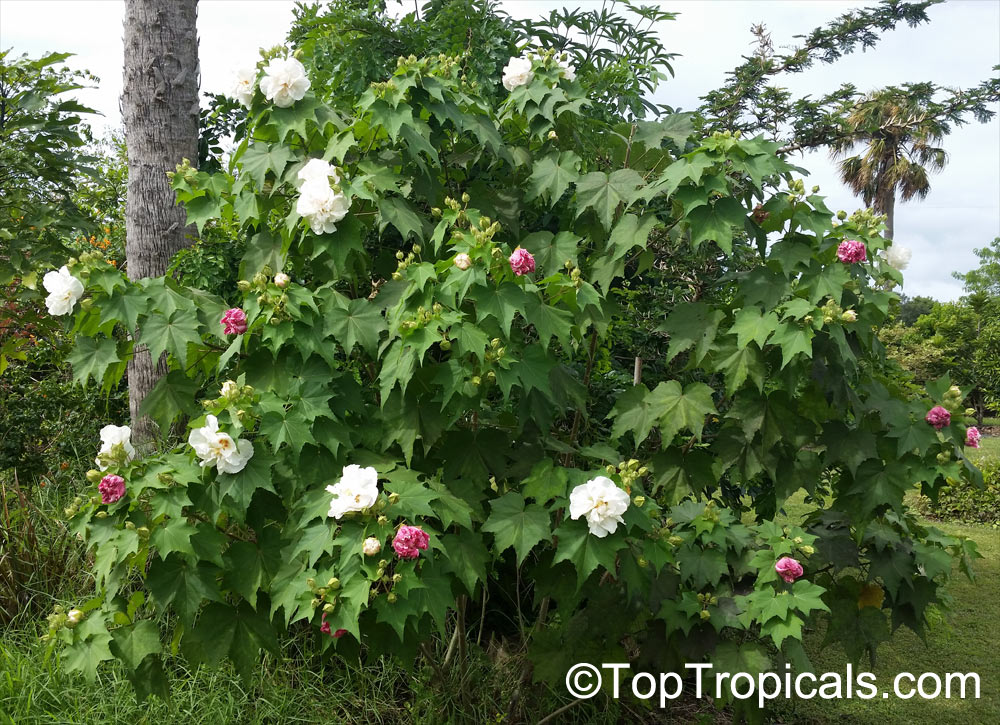
Hibiscus  mutabilis  flowering  hedge

Large and fast growing

Tithonia diversifolia - Sunflower tree
Acacia farnesiana - Sweet Mimosa
Calliandra surinamensis - Powderpuff
Aloysia virgata - Almond Bush
Dombeya x wallichii - Tropical Hydrangea
Cornutia grandifolia - African lilac
Gmelina philippensis - Parrots Beak
Hibiscus mutabilis Cotton Candy - Mallow Hibiscus
Senna alata - Empress Candle, Candelabra Plant

Medium or easy-trim

Acalypha hispida - Cat tail, Chenille plant
Bauhinia galpinii - Pride of De Kaap
Cestrum nocturnum - Night blooming jasmine
Dombeya seminole - Tropical Rose Hydrangea
Gardenia thunbergia - Forest gardenia
Hamelia patens - Fire Bush
Hibiscus variegated Snow Queen
Jasminum sambac Maid of Orleans
Ochna integerrima - Vietnamese Mickey Mouse, Hoa Mai
Odontonema callistachyum - Lavender Butterfly Bush
Odontonema cuspidatum - Firespike, Red
Rondeletia leucophylla - Panama Rose
Tecoma stans - Yellow Elder

Short or slow growing

Aglaia odorata - Chinese Perfume Plant
Allamanda schottii - Dwarf Allamanda Bush
Brunfelsia pauciflora Compacta - Dwarf Yesterday-Today-Tomorrow
Clerodendrum incisum - Musical Note
Calliandra schultzii - Dwarf calliandra
Gardenia vietnamensis - Vietnamese Gardenia
Leonotis leonurus - Lions Ears
Neea psychotrioides - Pigeon Plum, Hoja de Salat
Plumbago auriculata Imperial Blue

Garden Specimens

Combretum constrictum Thailand, Ball of Fire
Caesalpinia pulcherrima - Red Dwarf Poinciana, Bird of Paradise
Clerodendrum quadriloculare - Winter Starburst
Euphorbia leucocephala - Snows of Kilimanjaro, Pascuita
Gardenia nitida - Shooting Star Gardenia
Hibiscus schizopetalus - Coral Hibiscus
Jatropha integerrima compacta
Kopsia fruticosa - Pink Gardenia
Malvaviscus x penduliflorus Variegata - Summer Snow
Mussaenda philippica x flava - Calcutta Sunset (Marmelade)
Plumeria pudica - Bridal Bouquet

Semi-Shade to Shade

Clerodendrum bungei - Glory Bower
Clerodendrum paniculatum - Pagoda Flower
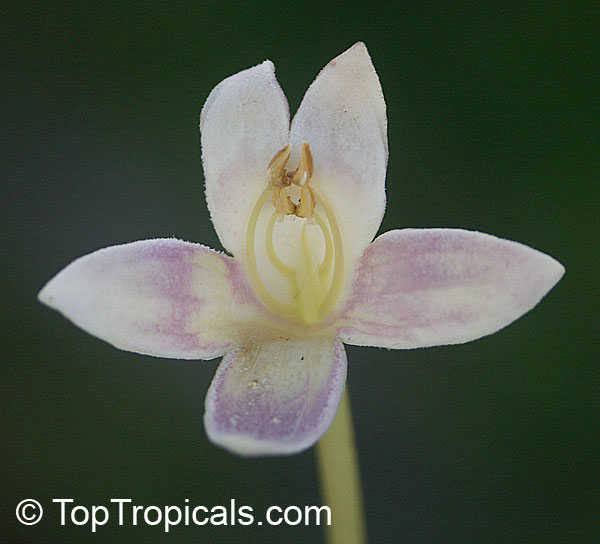
Eranthemum pulchellum - Blue Sage, Lead Flower
Clerodendrum speciosissimum - Java Glorybower Mary Jane
Justicia carnea - Pink Brazilian Plume, Jacobinia
Magnolia figo - Banana Magnolia
Megaskepasma erythrochlamys - Brazilian plume
Thunbergia erecta - Kings Mantle
Tibouchina lepidota - Ecuador Princess, Jules Dwarf

Edible Hedges

Eugenia uniflora - Black Surinam Cherry Lolita
Camellia sinensis - Tea Leaf
Hibiscus sabdariffa - Flor de Jamaica, Karkade Sorrel
Laurus nobilis - Bay Leaf
Manihot esculenta - Yuca Root
Nashia inaguensis - Moujean Tea, Bahamas Berry
Sauropus androgynus - Katuk, Tropical Asparagus
Sauropus Variegata - variegated Katuk

Date: 13 Jun 2019

Millingtonia hortensis - Tree Jasmine

By Onika Amell, tropical plant specialist

Q: Q: How fragrant is the Tree Jasmine (Millingtonia) and how tall does it grow?

A: Millingtonia hortensis, or Tree Jasmine, is such a beautiful flowering tree with long, white, slender and trumpet-shaped flowers with a perfume that wafts through the air. These trees are very sought after because they are so highly fragrant. They are fast-growing trees that in Nature (Burma) can easily reach a height of 40-50 feet, however here in SW Florida we have them growing about 20-25 ft. The tree flowers at night and then shed the flowers in the morning. The flowers are waxy and stay fresh for a long time. In India the flowers are picked up and braided for rituals. It flowers from October until the end of December. The tree is also known as the Cork Tree, as an inferior cork is processed from the corky bark. It is a fast growing, tall, straight tree with few branches and its popularity lies in its ornamental value and not in its shade-giving properties. Yet, once you've witnessed the profusion of white flowers, you will understand why. It is a sight to behold! Cork tree is very easy and can grow in a variety of soils. It requires full sunlight.

Date: 10 Jul 2024

What vine to plant over a big fence

Chonemorpha fragrans - Frangipani vine

❗️ What vine to plant over a big fence.

🔹 Chonemorpha fragrans, or Frangipani vine, that we mentioned before, is a large woody tropical liana with clusters of large, perfume-fragrant flowers and lush green foliage. It is close related to perfumed Plumeria - Frangipani.

🔹 The fragrance is very fresh and pleasant, similar to Plumeria, fills the air around.

🔹 Leaves reaching up to 12 (!) inches - very tropical, majestic look!

🔹 Requires sturdy support - it can grow pretty big and heavy!

🔹 Takes both sun or shade. Full sun and regular fertilizer is essential for profuse blooming.

🛒 Buy Frangipani Vine

#Perfume_Plants #Hedges_with_benefits

🏵 TopTropicals

Date: 4 Jul 2024

If we could see the miracle of a single flower clearly our whole life would change

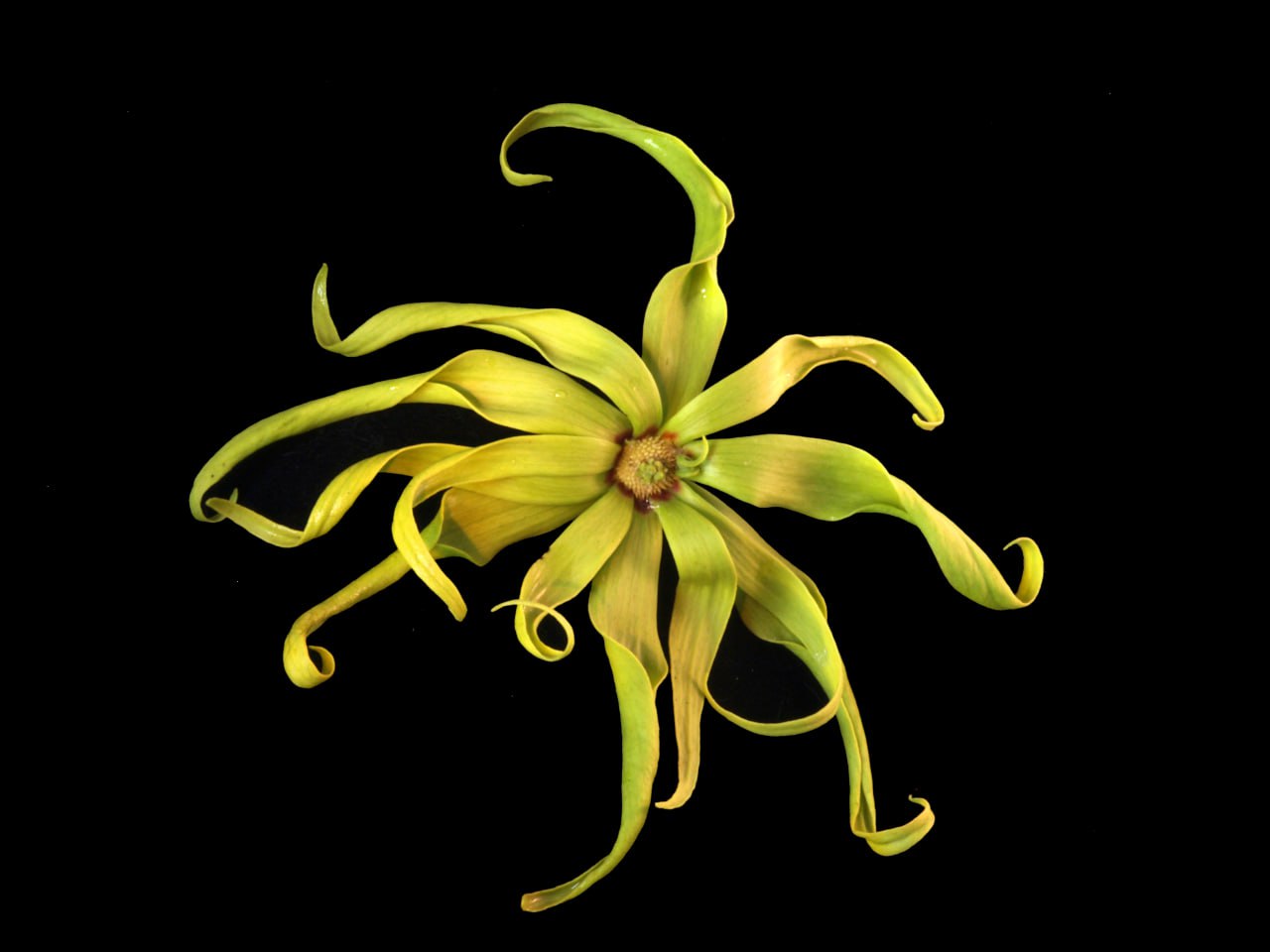
Cananga fruticosa - Dwarf Ylang-Ylang, Chanel No 5 Tree, flower

Cananga fruticosa - Dwarf Ylang-Ylang, Chanel No 5 Tree, flower

💻 "If we could see the miracle of a single flower clearly our whole life would change." - Buddha

📸 Cananga fruticosa - Dwarf Ylang-Ylang, Chanel No 5 Tree

📚 Learn more: The Ylang-Ylang, Queen of the Perfume World, the Bearer of an Ideal Fragrance.

🛒Grow your own Ylang Ylang Tree

#Perfume_Plants #Quotes

🏵 TopTropicals