Date: 6 Nov 2023
How to grow a happy Moringa Tree
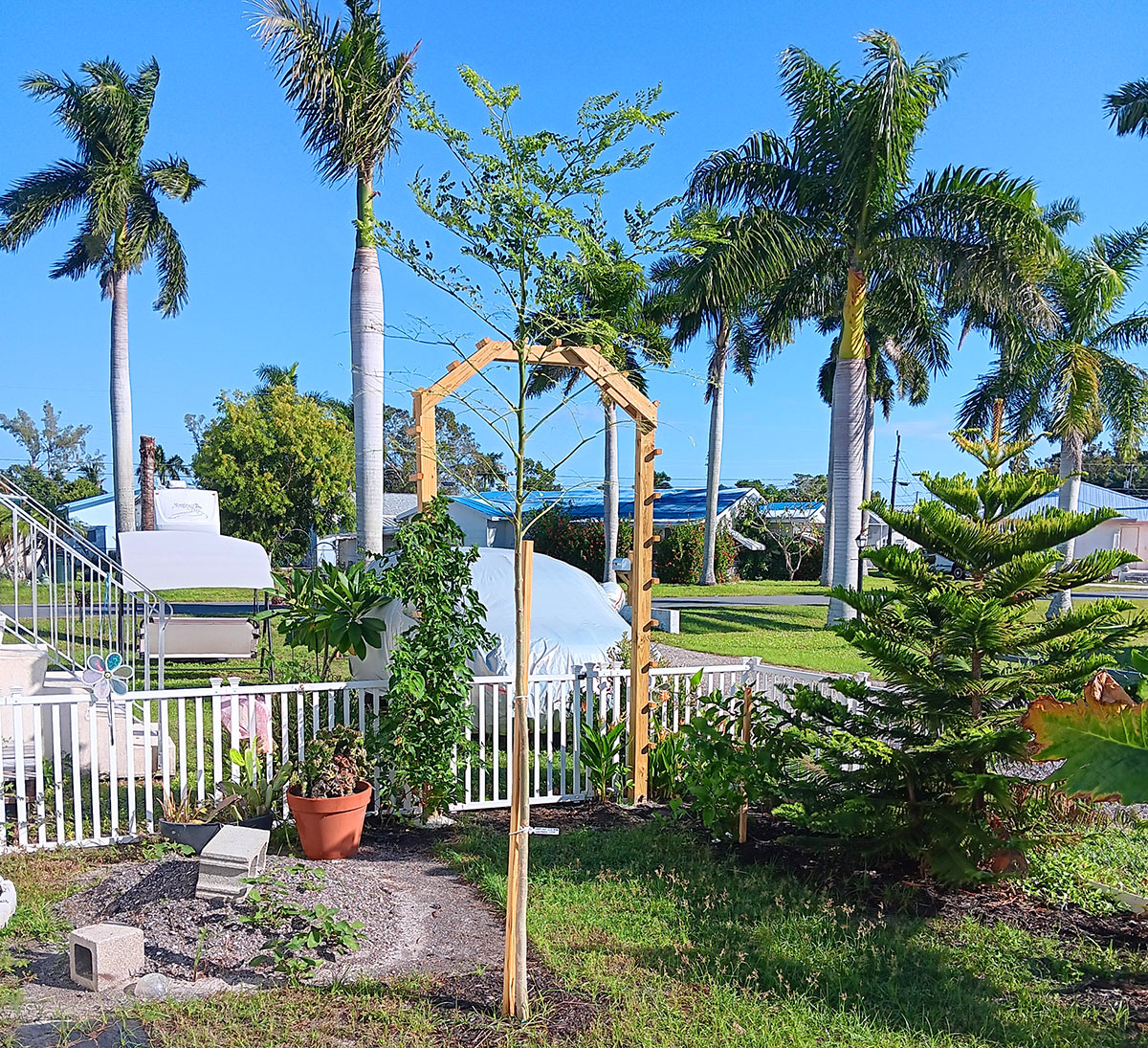
Q: We purchased some tropical edible and medicinal plants from you in August this year. I have a question pertaining to our Moringa tree. When we purchased it, it was about two foot tall. It has put on tremendous growth and is now a little under ten foot tall. My question is, should a Moringa be losing lower leaves at this point? The bare limbs are still green and the top looks to have healthy green leaves.
A: Thank you for choosing our Moringa tree, and sharing the picture. It's great to see that your tree appears healthy and happy - it's a resilient plant. Given the relatively dry Fall we've experienced this year, a little extra water can make a significant difference.
Here are some suggestions to ensure your Moringa thrives:
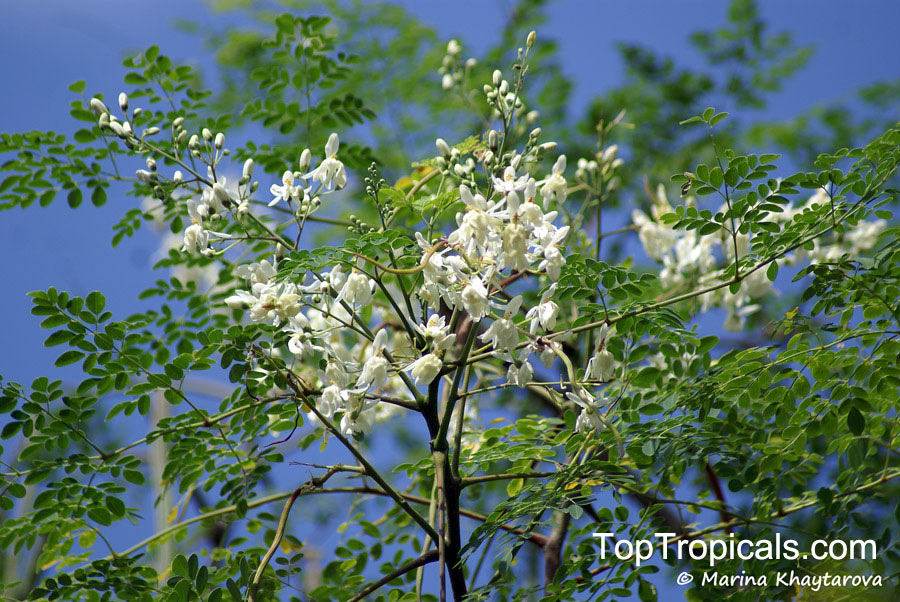
Watering: While Moringa is generally drought-tolerant, during dry periods, in addition to relying on your lawn sprinkler system, add some extra water with a hose. Adequate moisture is crucial for maintaining healthy foliage.
Pest Control: Moringa is not only a nutritious plant for humans but also attracts pests that appreciate its medicinal properties :) If you notice insect damage on the leaves, consider spraying with Neem oil or using an over-the-counter systemic insecticide containing imidacloprid or a similar ingredient.
Seasonal Behavior: Moringa trees are semi-deciduous to deciduous, and their leaf-shedding behavior can vary depending on the climate. In Florida, for instance, it's common for Moringa trees to shed leaves in the Fall. However, this is a natural process, and you can expect new growth in the Spring.
Fertilizing for Vigorous Growth: To promote the most vigorous growth of your Moringa tree and other plants in your garden, consider implementing a fertilizing program. If using dry, slow-release fertilizers, apply them only during the active growth season: from March through November. If you're looking for a year-round solution, liquid amino acid-based formulas like Sunshine Boosters can be a great option. You can easily add them to your watering routine or use injectors like The Robuster for convenient and consistent feeding. If you're planning to expand your garden with other medicinal plants or an edible forest, The Robuster smart fertilizing system is an excellent choice, offering the most efficient, care-free way to nourish your plants with natural nutrients throughout the year.
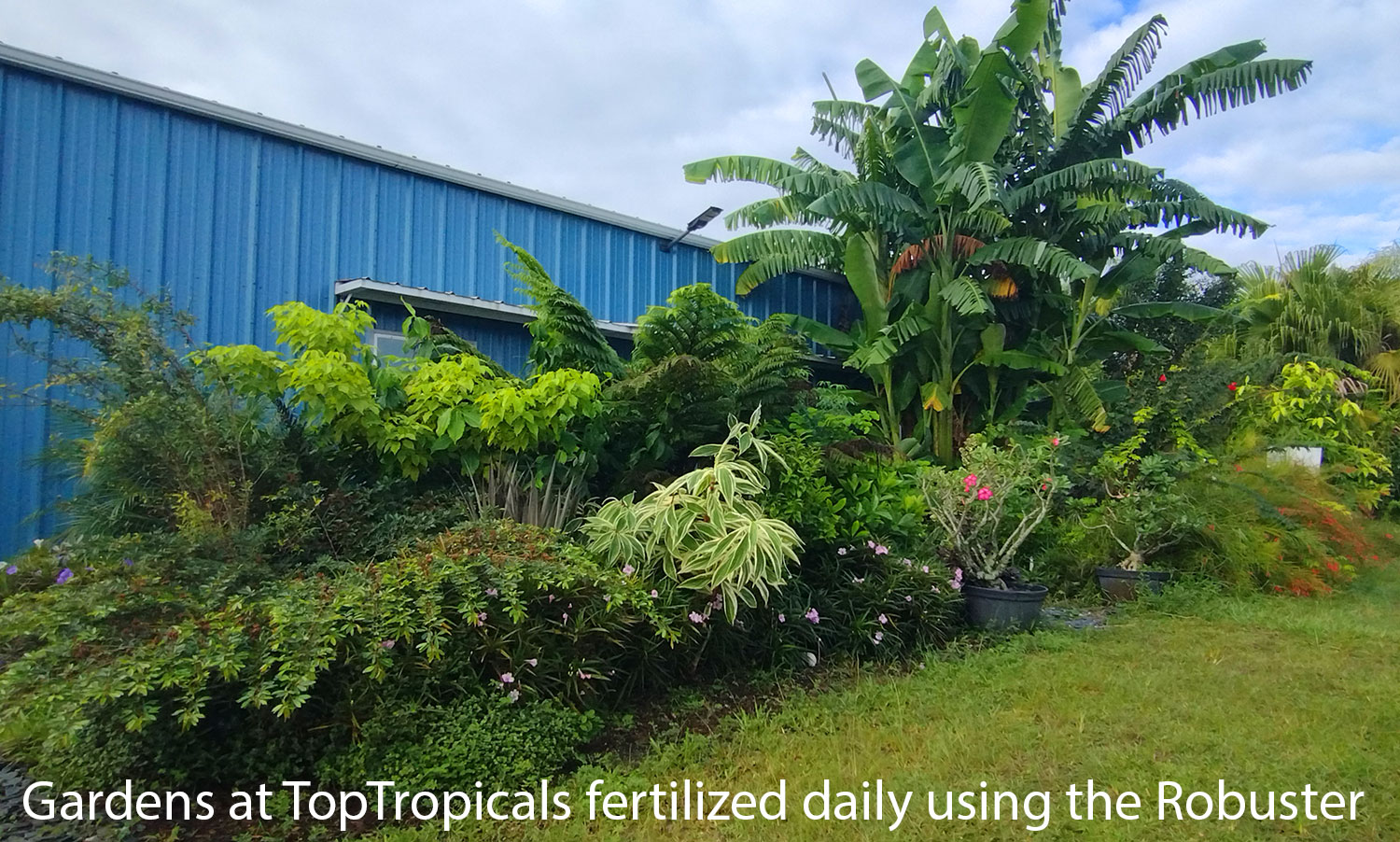
This garden doubled the size during just one season under the Robuster
Date: 13 Jul 2023
Fertilizing during rainy season
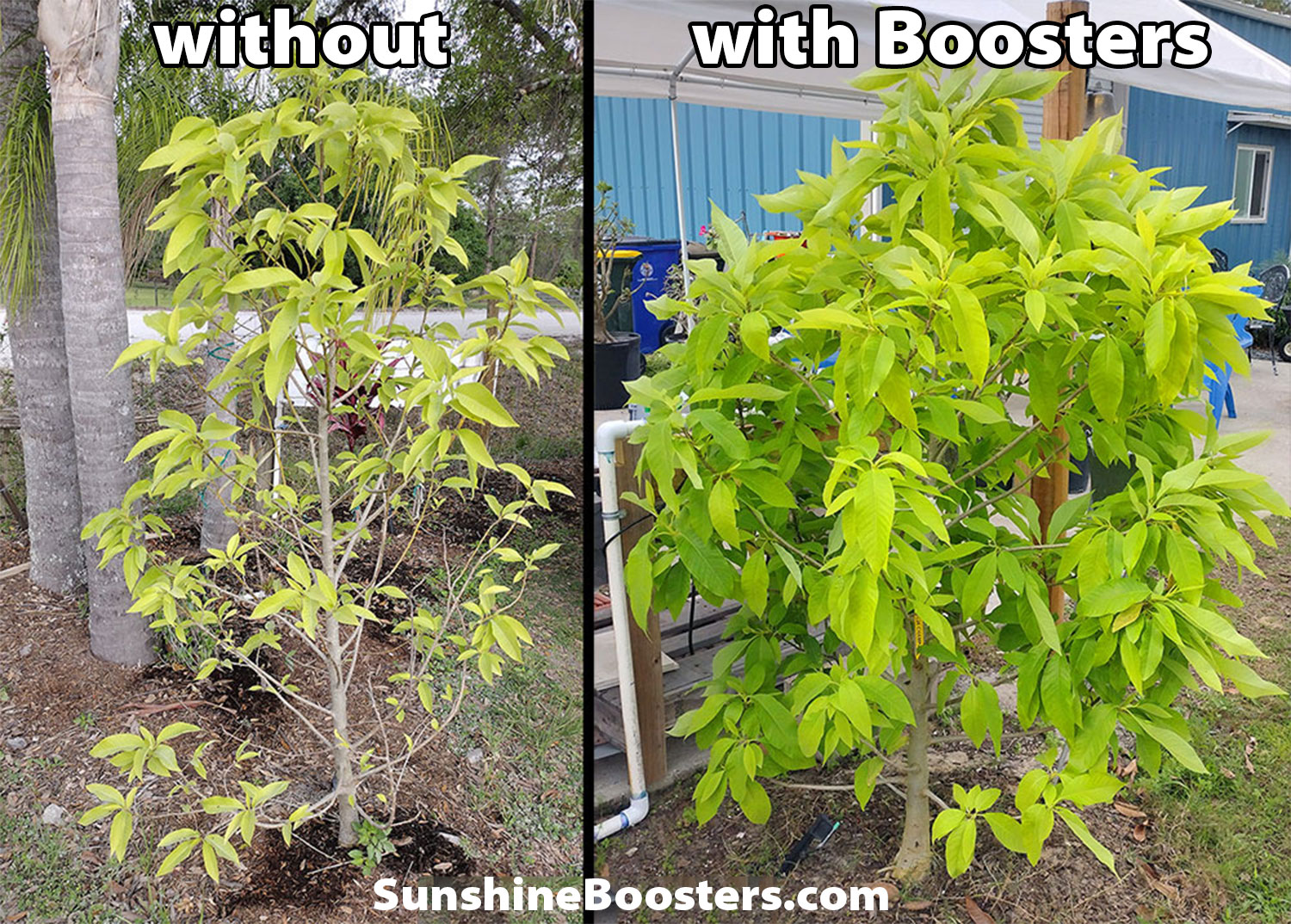
Q: I have installed your Robuster unit to fertilize my fruit trees, but here in Florida, it is the rainy season and most of the time I do not need to irrigate during the summer. What do you recommend to keep up with fertilizing program?
For in the ground plants
If there are frequent rains, it's not necessary to use any fertilizers except for slowly soluble ones. During rainy periods, use a slow release fertilizer. Simply scatter 3 oz per 100 square ft. You can adjust the amount based on your specific area and number of plants.
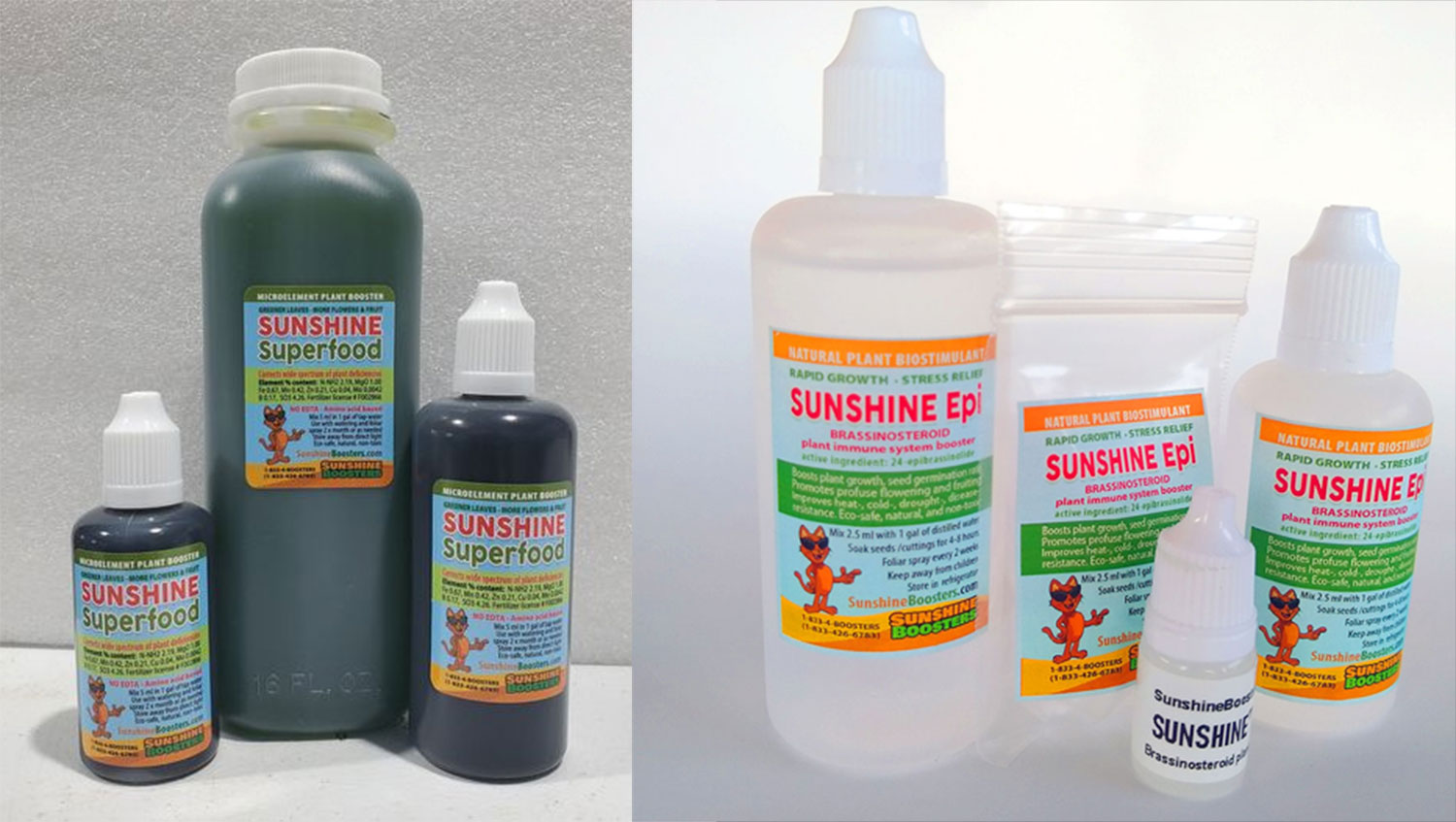
Additionally, for foliar treatments, use Sunshine SuperFood microelement supplement and Sunshine Epi biostimulator.
When you water next time, regardless of whether it rained or not, resume
using liquid Sunshine Boosters.
For potted plants
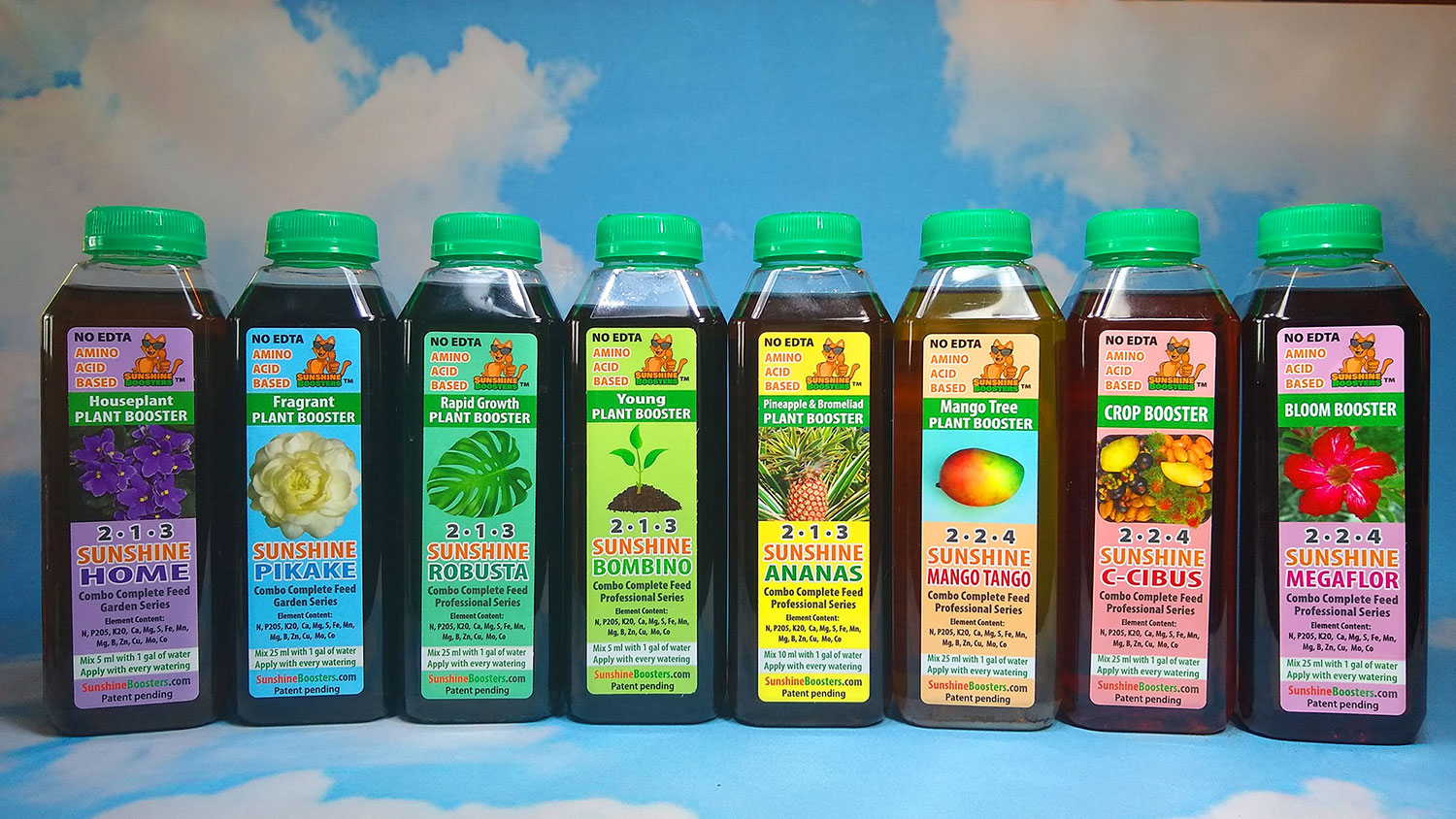
When you water your potted plants, use liquid Sunshine Boosters. Every 1 or 2 weeks (we recommend weekly), apply Sunshine Garden Series (the same type you are using when watering) for foliar treatment. Use the same dosage as you would for watering. By following these recommendations, you can ensure that your plants receive the appropriate nutrients during the rainy season.

Date: 28 May 2023
Benefits of Canistel tree and fruit
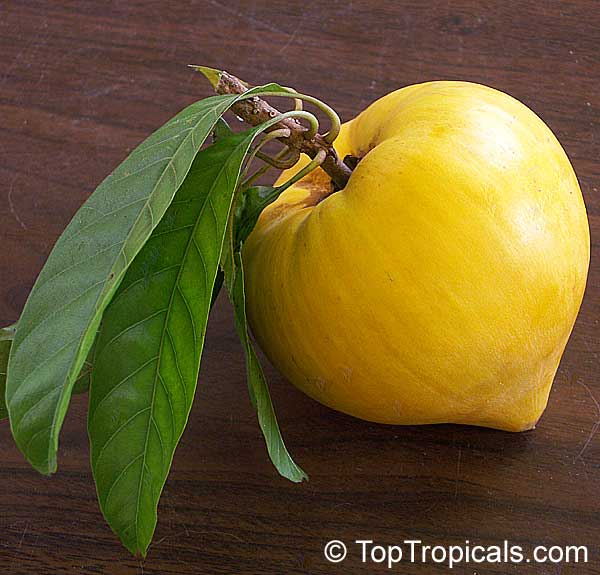
Q: What is so good about Canistel fruit? Should I plant a Canistel tree in my garden?
A: Canistel fruit, also known as Eggfruit, has several appealing qualities. It is highly regarded for its sweet, custard-like flavor and smooth, creamy texture. Additionally, canistel fruit is a good source of essential nutrients such as vitamin A, vitamin C, and dietary fiber, making it a nutritious choice for those seeking a unique and tasty fruit experience.
Planting a Canistel tree can be beneficial for a few reasons. Firstly, it allows you to enjoy the delectable fruit it produces right in your own backyard, providing a fresh and unique addition to your homegrown produce.
Secondly, Canistel trees are relatively low-maintenance and can thrive in warm climates, making them a suitable choice for tropical or subtropical regions.
Finally, by planting a Canistel tree, you contribute to the preservation and diversity of fruit-bearing trees, enriching the ecosystem and potentially attracting wildlife to your garden.
To learn more about Canistel tree, fruit, tasty recipes, and more - see this article:
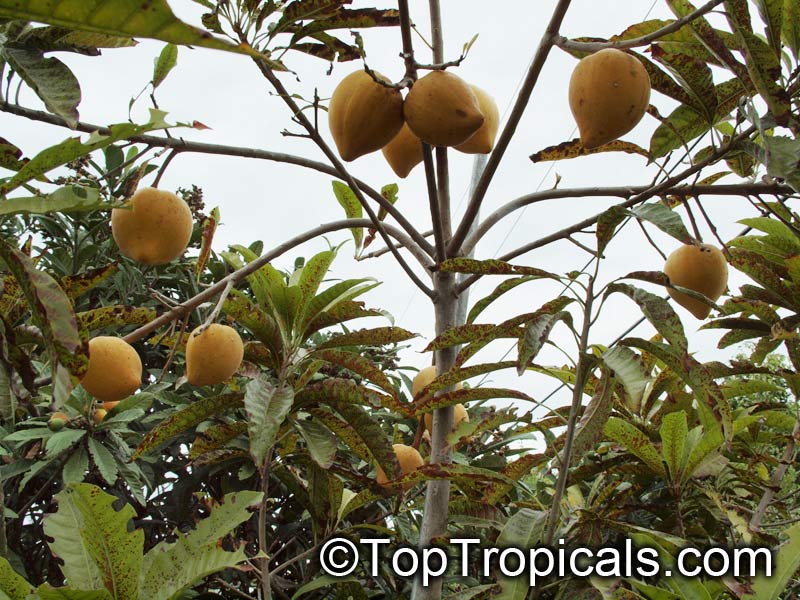
Pouteria campechiana - Canistel, the curious heart-shaped Egg Super-Fruit
Date: 13 Jan 2023
Secrets of Winter planting:
Tropical Planting Breaks the Rules
by Murray Corman, Garden of Delights
Wintertime does not just mean hard work for tropical gardeners. It is
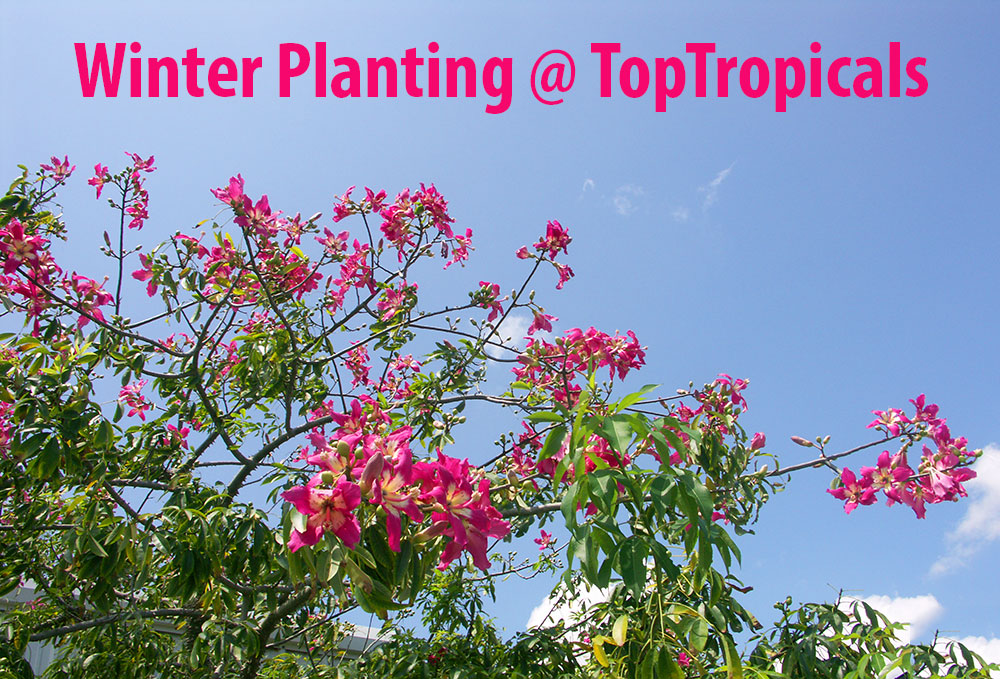
also a time to enjoy the fruits of our labor. Winter-blooming plants and the visitors they attract - birds, bats and
butterflies - make the garden as enjoyable in winter as any other time of
year.
What a welcome relief: January daytime temperatures in the 70s, dropping to
the 60s at night. This is why I came to live in the subtropics of southern
Florida. The balmy climate of South Florida represents one of the few places
on the mainland United States where tropical plants thrive unprotected
outdoors.
But just as I had to leave behind so many of my favorite northern trees, so
too did I have to put behind me many of the so-called "rules" of
horticulture. These had worked well for me up north and I thought they would hold true
anywhere in the world. Florida's subtropical climate posed new challenges and
I soon realized that gardening in the Sunshine State would not be business as
usual...
CONTINUE READING >>
See also: A Guide to Cold Hardy Tropical Fruit Trees and Avoicado Varieties (pdf download)
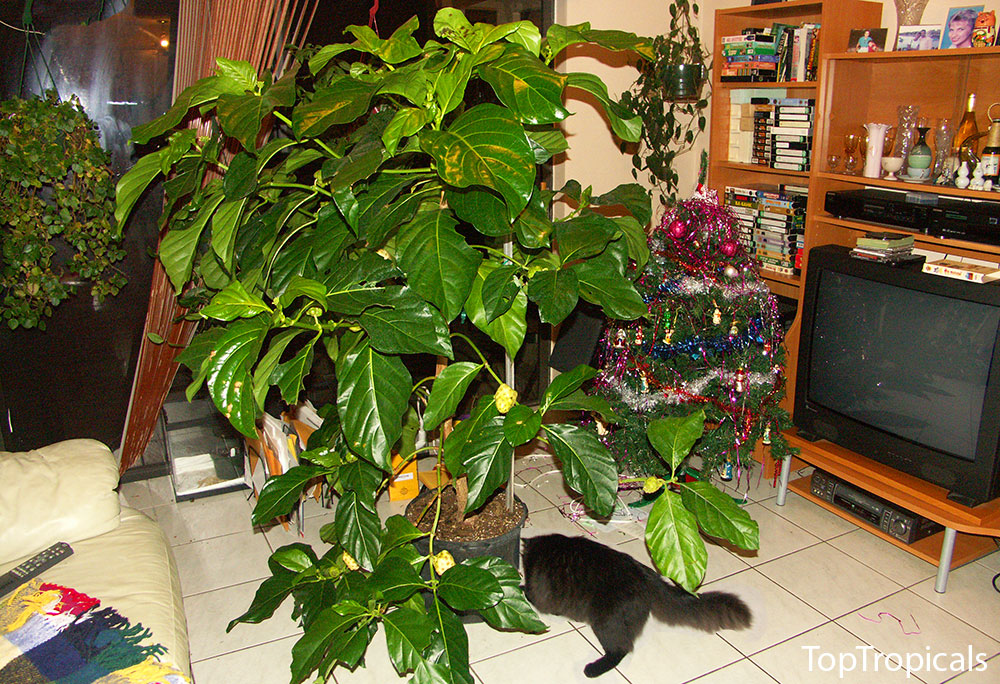
Photo above: Noni is not just a useful fruit tree, but also a great ornamental for
both sun or shade. It is also great for interior floral design or as an exotic
addition to your room decorations in Winter! It fruits year round even
indoors!
Order Noni
online.
Date: 22 Nov 2022
This Friday: Green Friday...
and every Friday and Saturday!
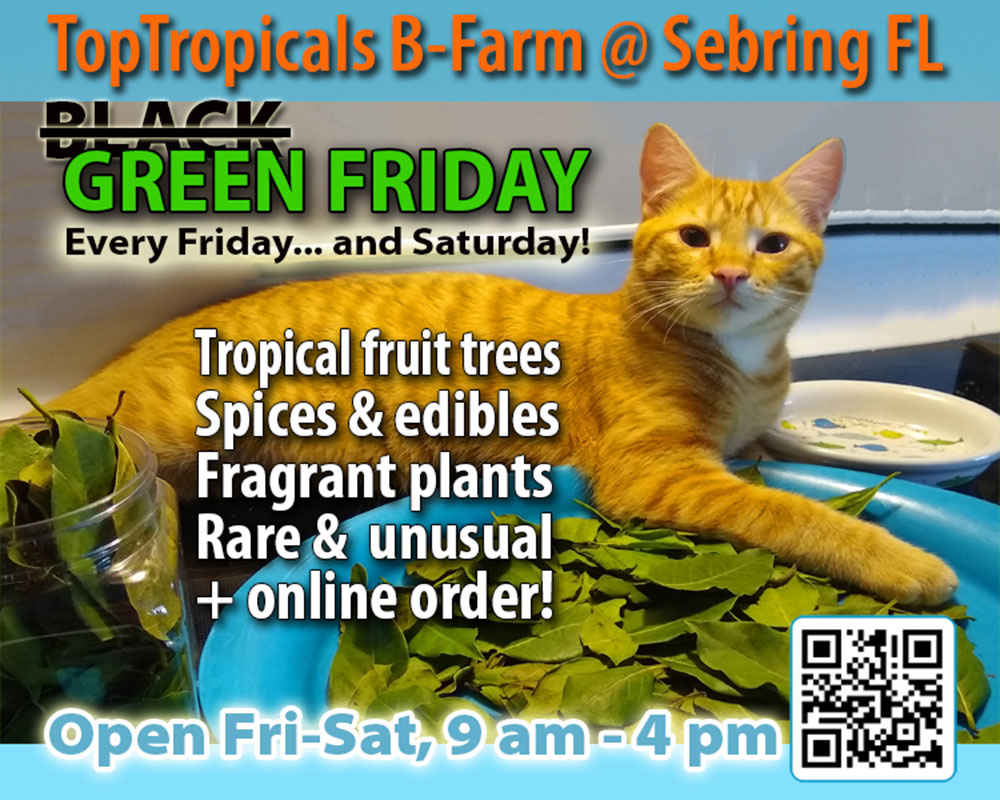
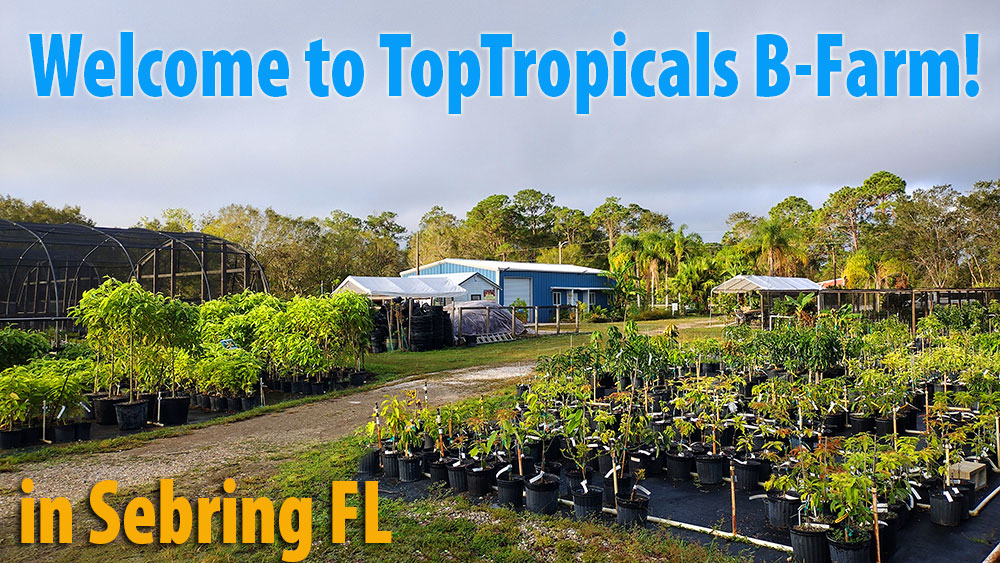
Welcome to TopTropicals B-Farm in Sebring FL
Starting this coming Friday, November 25, our farm in Sebring (B-Farm)
will be open to the public every Friday and Saturday.
B-Farm is a 10-acre growing facility with hundreds of varieties of rare and
much wanted tropical plants. Fruit trees, flowering trees, shrubs, vines,
fragrant plants and rare collectibles - we grow the biggest selection of
tropical plants known in cultivation.
Come over to select the best Mango, Avocado, any other fruit tree or rare
spice for your edible landscape. Shop our biggest in the world variety of
flowering and fragrant tropical plants - directly from our growing farm!
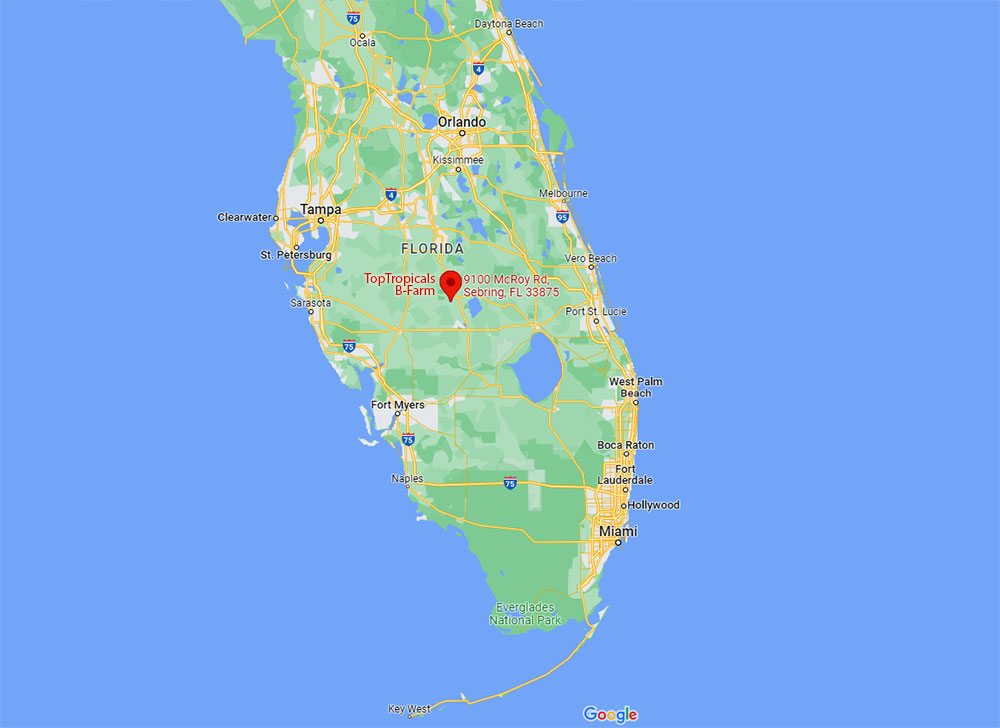
Conveniently located right in the heart of Florida, Highlands County, Top Tropicals B-Farm is within about an hour from most Florida destinations.