Garden Blog - Top Tropicals

Date: 27 Feb 2025

What Fertilizer to Use Now and How?
Five important keys to healthy plants
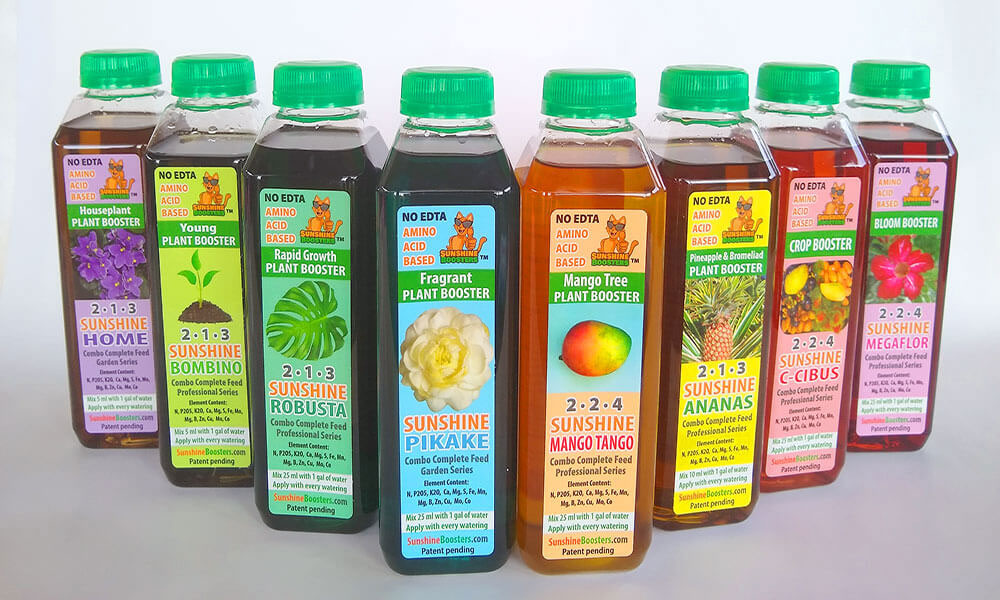
Sunshine  Boosters  Selection

Q: It's early Spring this year. Should I start fertilizing my plants sooner than usual?

A: Most fertilizer instructions recommend fertilizing tropical plants from March to November. This is because plants don't need as much food during the cooler months when many go dormant, and excess nutrients can burn the roots if not absorbed. However, for the most effective fertilizer program and healthy plants, consider these points:

1. Sunshine Boosters Year-Round

Liquid amino-acid-based fertilizers like Sunshine Boosters are safe to use year-round. Since watering is reduced in cooler weather, the intake of water-soluble fertilizer is also lower, providing plants with just the essential nutrients for their minimal needs.

2. Dry Fertilizer Schedule

Be cautious with dry fertilizers. Apply them only during active growth in the hot season.

3. Temperature Is Key

If March is still cold, delay dry fertilizer use. However, if nighttime temperatures in February stay above 65F, you can start a dry fertilizer program using slow-release, granulated plant food.

4. What Fertilizers to Use and How

Check out our Sunshine Boosters selection for different types of plants and choose the right type for your needs. These can be applied as often as with every watering:

For Rapid Growth
Sunshine Robusta - Rapid Growth Booster: general fertilizer for both foliage plants and small starters that need an extra boost.

For Flowers
Sunshine Megaflor - Bloom Booster: boosts flowers on established plants; and Sunshine Pikake - Fragrant Plant Booster: best for fragrant flowers.

For Fruit Trees
Sunshine C-Cibus - Crop Booster: contains all necessary elements for fruit trees and their production. Sunshine Mango Tango - specifically formulated for Mango and Avocado trees, and Sunshine Citron - ideal for citrus trees.

For Tender Perennials
Sunshine Orchidasm - Orchid Total Feed and Sunshine Ananas - Pineapple and Bromeliad Booster: mild formulas for these tender perennials.

5. Microelement Supplements Are a Must

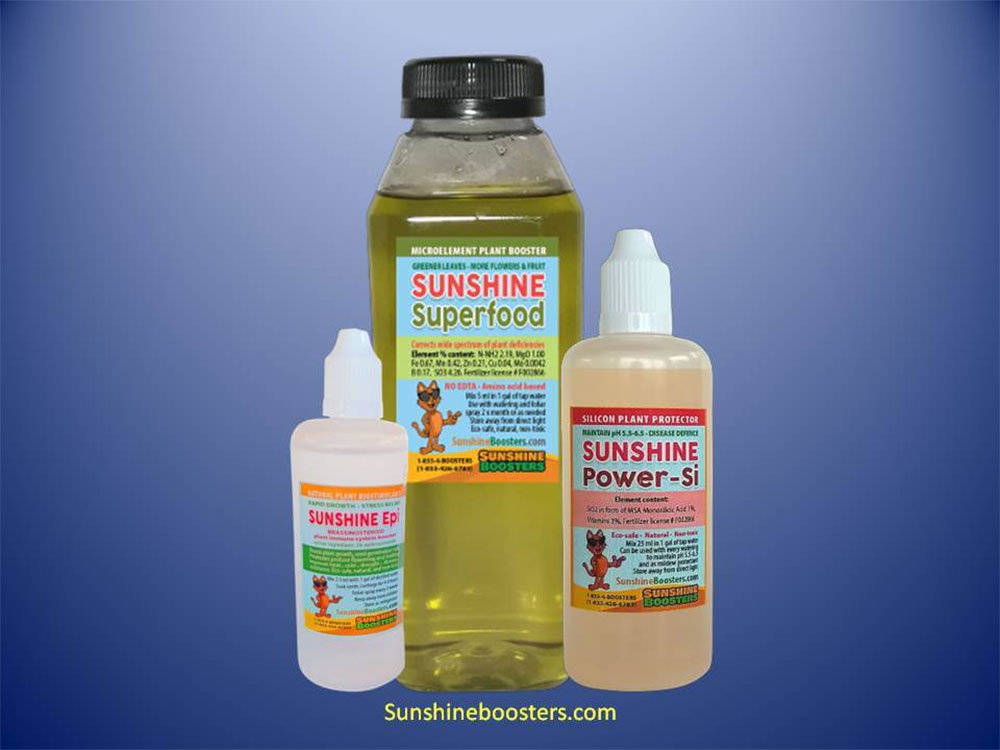
Besides macronutrients, plants need additional microelements, just like humans need vitamins. Be sure to apply these supplements along with your regular plant food:

For Green Leaves and Health
Sunshine SuperFood - Complex Microelement Supplement: a must for healthy plants. Apply once a month.

For Stress Relief
Sunshine-Epi - Brassinosteroid Plant Hormone: essential for plants recovering from stress (shipping, transplanting, drought, insect damage, cold stress, etc.). Apply as needed.

For Sweeter, Bigger Fruit
Sunshine Honey - Fruit Sugar Booster: application on fruit trees will make fruit bigger and sweeter by directing sugars to the fruit from other plant parts, and helps to prevent bud drop. Apply 4 times a year: at bud setting, flowering, fruit setting, and after harvesting.

For Better Resistance
Sunshine Power Si - Silicon Protector - enhances resistance to insects, diseases, drought, and frost, while boosting growth. Apply once a month, along with Sunshine SuperFood.

Need Help? Our Plant Experts Are Ready to Assist!
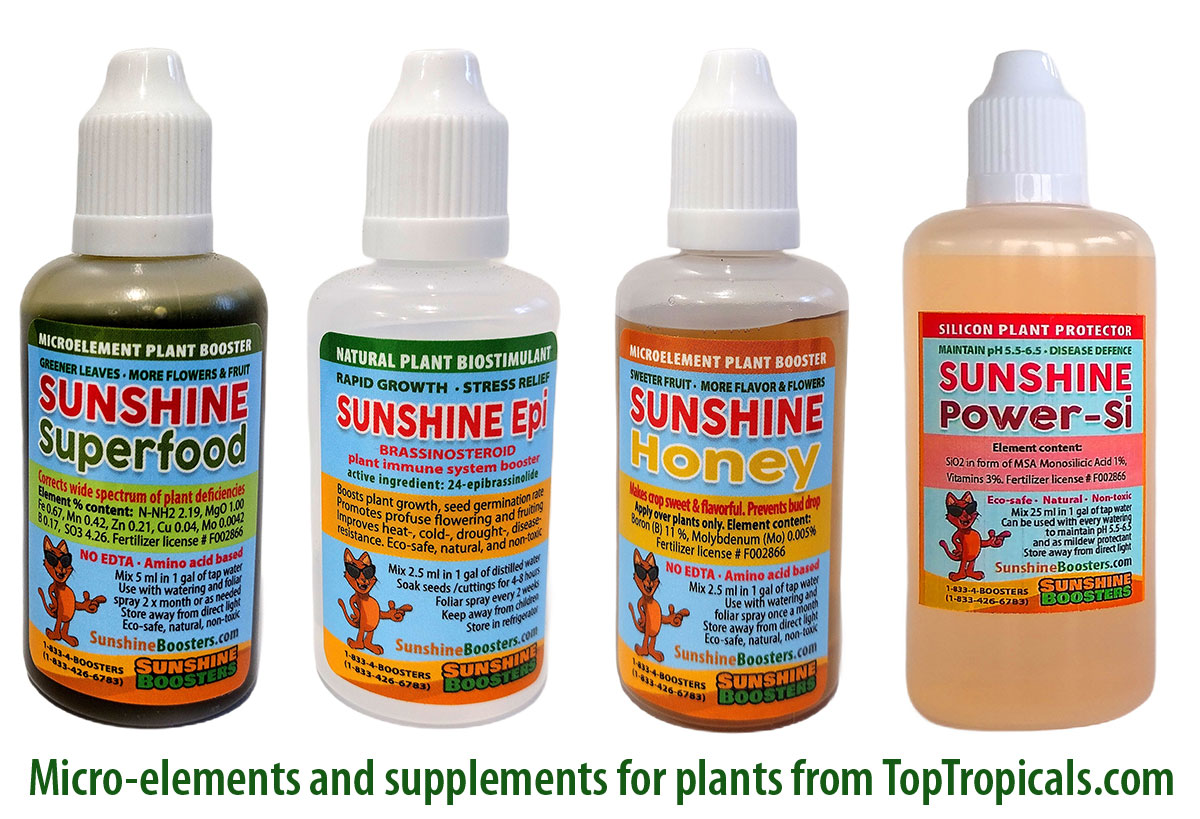
Microelements  and  supplements  for 
 plants

Date: 18 Oct 2019

Using SUNSHINE Complete Nutrition System

For hydroponics and potted plants

Q: I recently bought both the 5ml of the sunshine epi and the 100 ml advanced nutrition kit. I read on the paper for the Epi not to use any other strong fertilizers along with this but I was wondering if it'd be alright to use both this foliar spray and nutrition watering together?

A: All solutions in SUNSHINE Booster Nutrition System (NPK-macro and micro-boosters) are compatible.
The only exception is Sunshine-Epi - brassinosteroid bio-stimulant. Epi should be mixed with distilled water separately from other boosters. The reason is, it is very bio-active, and if mixed with other compounds, oxidizes quickly which may affect its performance.

Sunshine-Epi solution must be prepared using distilled water and applied as foliar spray only (it only works on contact with leaves and not through the root system). Epi shows extremely impressive results when you apply it before the application of other nutrients because it increases plant metabolism; so all boosters become even more effective if you spray Epi the day before.

When using Micro- and Macro-boosters, you may mix all components in one watering can/tank (except for Epi), using regular tap water. Besides watering root ball, the macro-micro solution can be also used for foliar spray. It is optional, as in some circumstances growers prefer to keep leaves dry at all times: to stay away from mold, fungus and other issues caused by the wet environment.

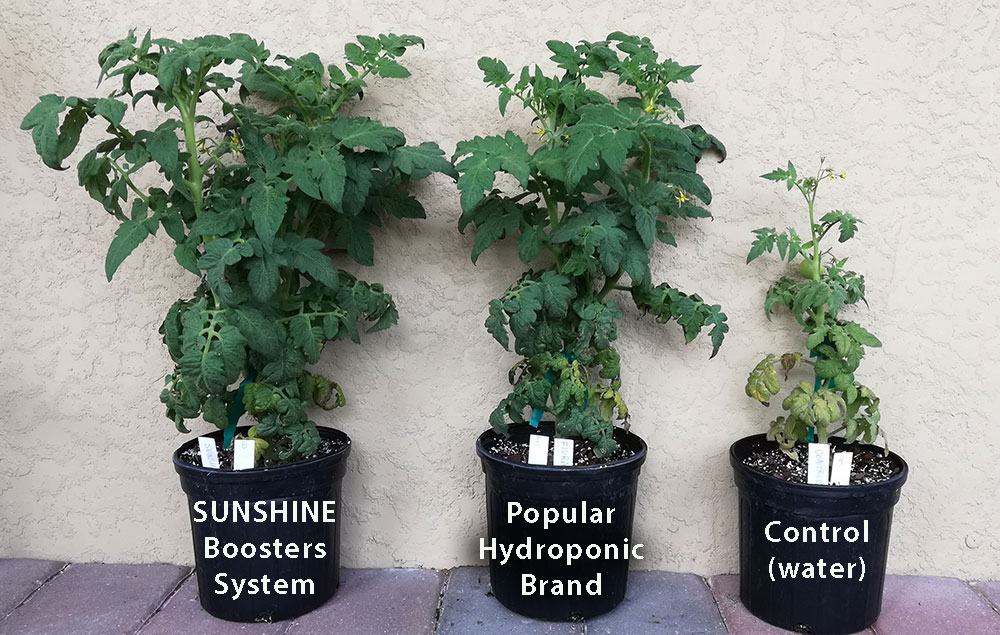
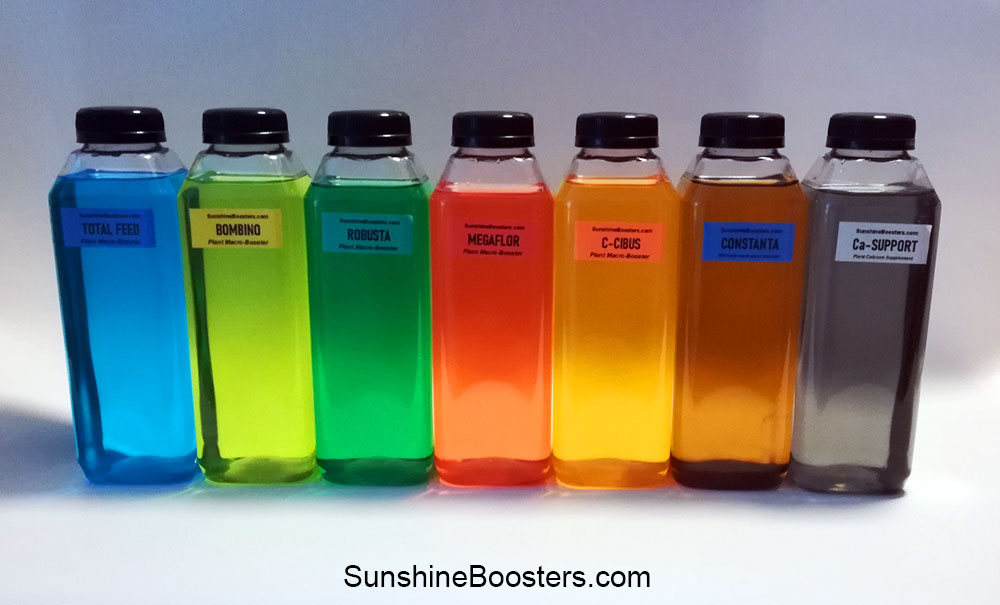
Here is an example of Sunshine Boosters Nutrition System application:
1. Daily watering in one can: NPK 25 ml/gal (one of 5, depending on growth stage) + Constanta 5 ml/gal + Ca-Support 5 ml/gal, mixed in tap water
2. Every 2 weeks: spray Sunshine-Epi 2.5 ml/gal - to boost the immune system and growth rate, mixed in distilled water
3. From daily to every 2 weeks: Sunshine-Power-Si 25 ml/gal to protect from diseases and keep pH at 5.5-6.5. Can be used as often as daily and mixed with a daily watering solution (1)
4. As needed: Sunshine SuperFood and GreenLeaf - for correcting deficiencies. Can be also mixed with the daily solution (1)

Make sure to prepare a solution right before use and do not store solution for more than 1 day. Keep concentrates and solutions protected from bright sunlight.

Here is also advanced information on Sunshine Boosters compatibility.

READ MORE >>>

Date: 7 Mar 2026

🌞 Spring Nutrition Strategy: How to Identify and Fix Plant Nutrient Starvation

Smokey  and  Sunshine  PeopleCats  diagnose  a  starving  coffee  plant  and 
 revive  it  using  Sunshine  Robusta  boosters,  turning  a  weak  yellow  plant  into 
 a  healthy  green  coffee  tree  after  one  month..
Sunshine: I'm trying to fight rising coffee prices. So I planted my own coffee plant. But it's dying.

Smokey: It's not dying. It's starving. Classic nutrient collapse. Imagine going two days without donuts.

Sunshine: Two days? That's a PeopleCats rights violation. Catstitution First Amendment: food, including donuts, must remain available.

Smokey: Exactly. Plants feel the same. Let's feed it. Sunshine Robusta. Robusta is coffee, you know.

Sunshine: Obviously they named Sunshine Boosters after my charm. And since it's coffee, it should work perfectly.

One month later

Sunshine: Holy whiskers! You're a magician.

Smokey: No magic. Just boosters.

Sunshine: Great. Coffee is on me when this tree starts producing. You bring the donuts.

Read more about Smokey & Sunshine

Fellow gardeners,

Spring has arrived, and plants are coming back to life. New shoots are appearing, fresh leaves are unfolding, and roots are beginning to grow actively again. As plants enter this important stage of the season, they need more than just water to support their growth. Proper nutrition is essential for strong development and healthy plants. SUNSHINE Boosters provide the balanced nutrition plants need to start the growing season strong.

A simple rule we follow in our nursery: new growth responds best to foliar feeding. When nutrients are sprayed directly on the leaves, plants can absorb them quickly and efficiently.

  • Immediate action – nutrients are absorbed through the leaves and start working right away.
  • No delay traveling through soil – plants do not need to wait for nutrients to move down to the roots.
  • Avoids soil lockout – micronutrients can become unavailable in high pH soils, but foliar feeding bypasses this problem.
  • Supports stressed plants – when roots are cold, damaged, or newly transplanted, foliar feeding helps plants recover faster.

However, sometimes plants begin to show visible nutrient deficiencies. Yellow leaves, slow growth, brown leaf edges, or distorted new leaves are often early signs that the plant is missing essential elements needed for healthy development.

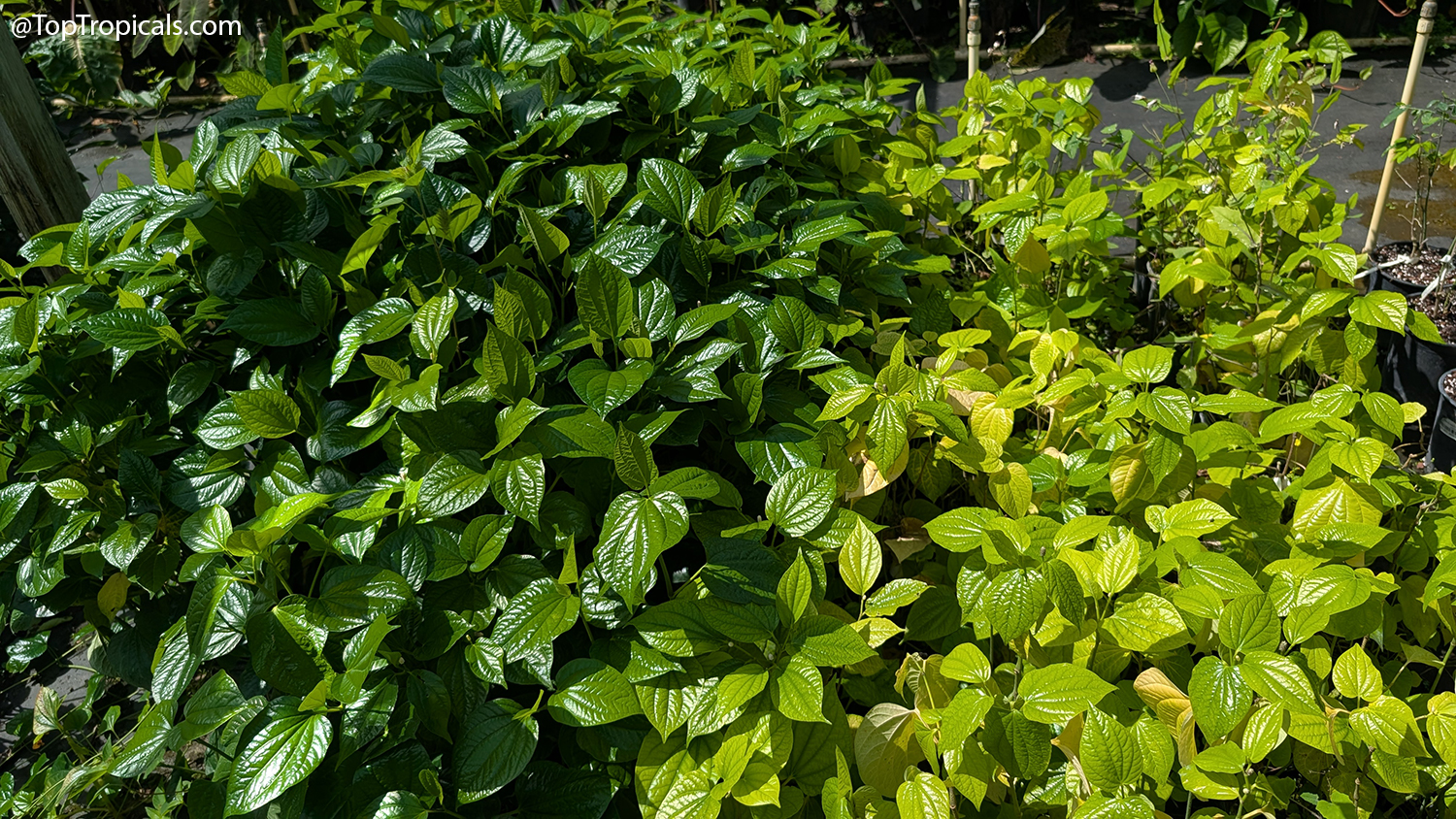
Piper  sarmentosum  Vietnamese  pepper  plants  comparison  with  fertilizer 
 on  the  left  and  without  fertilizer  on  the 
 right

Piper sarmentosum - Vietnamese Pepper - with fertilizer (left) and without (right)

Chaa-plu Plant Facts

Botanical name: Piper sarmentosum
Also known as: Chaa-plu, Vietnamese Pepper, Lalot, La Lot, Wild Betel Leaf
USDA Zone: 9 - 11
Highligths Vine or creeper plantSmall plant 2-5 ftSemi-shadeFull sunWatering: Moderate. Water when top soil feels dryWatering: Regular. Let topsoil dry slightlyOrnamental foliageSpice or herb plantEthnomedical plant.
Plants marked as ethnomedical and/or described as medicinal, are not offered as medicine but rather as ornamentals or plant collectibles.
Ethnomedical statements / products have not been evaluated by the FDA and are not intended to diagnose, treat, cure, or prevent any disease. We urge all customers to consult a physician before using any supplements, herbals or medicines advertised here or elsewhere.
Get personalized tips for your region

These symptoms are especially common in container plants, where nutrients can be quickly depleted or become unavailable due to soil pH and watering conditions.

Use the quick reference table below to identify common nutrient-related symptoms and the recommended SUNSHINE solution to correct them.

Symptom you see What to do
Pale leaves, slow growth, weak new shoots
(often nitrogen related)
Spray SUNSHINE Robusta to stimulate strong vegetative growth.
Brown leaf edges or weak plant vigor
(often potassium related)
Apply SUNSHINE Robusta to restore nutrient balance.
Yellow leaves with green veins
(iron or manganese deficiency)
Apply SUNSHINE Superfood to correct micronutrient deficiency.
Small distorted leaves or poor flowering
(zinc or boron deficiency)
Use SUNSHINE Superfood during active growth period.

🌿Foliar Feeding: How Much and How Often

For most plants, foliar feeding works best when applied lightly and regularly during active growth.

  • Regular feeding (maintenance): Mix with tap water according to the ratio on the label. For SUNSHINE Robusta use 25 ml (5 tsp)per gallon of water and spray leaves every 5-7 days during active growth.
  • Correction feeding ("medicine" dose): if plants show visible nutrient deficiencies, combine SUNSHINE Robusta with SUNSHINE Superfood and spray every 5–7 days until new growth appears healthy. All SUNSHINE Boosters products are compatible and can be mixed with water in the same sprayer.
  • Best time to spray: early morning or evening when temperatures are cooler and leaves can absorb nutrients efficiently.
  • Important: spray both the top and underside of leaves for maximum absorption.

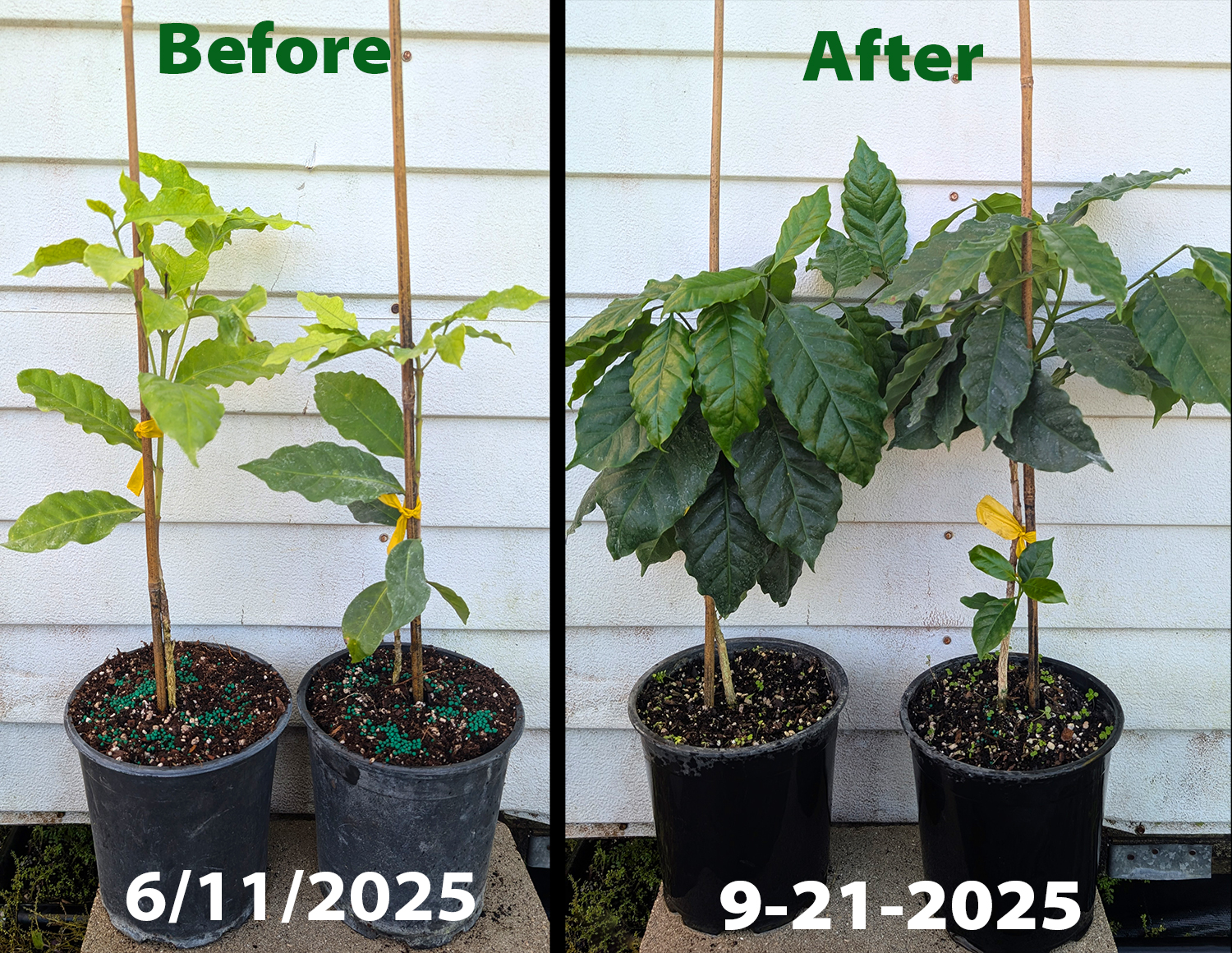
Coffee  plants  before  and  after  regular  Sunshine  Robusta  fertilizer 
 applications  showing  darker  leaves  and  stronger 
 growth

Coffee plants before and after regular Sunshine Robusta applications

🛒 Feed your plants

Date: 23 Feb 2026

Macadamia Tree Care

By Tatiana Anderson, Horticulture Expert at Top Tropicals with Smokey & Sunshine help

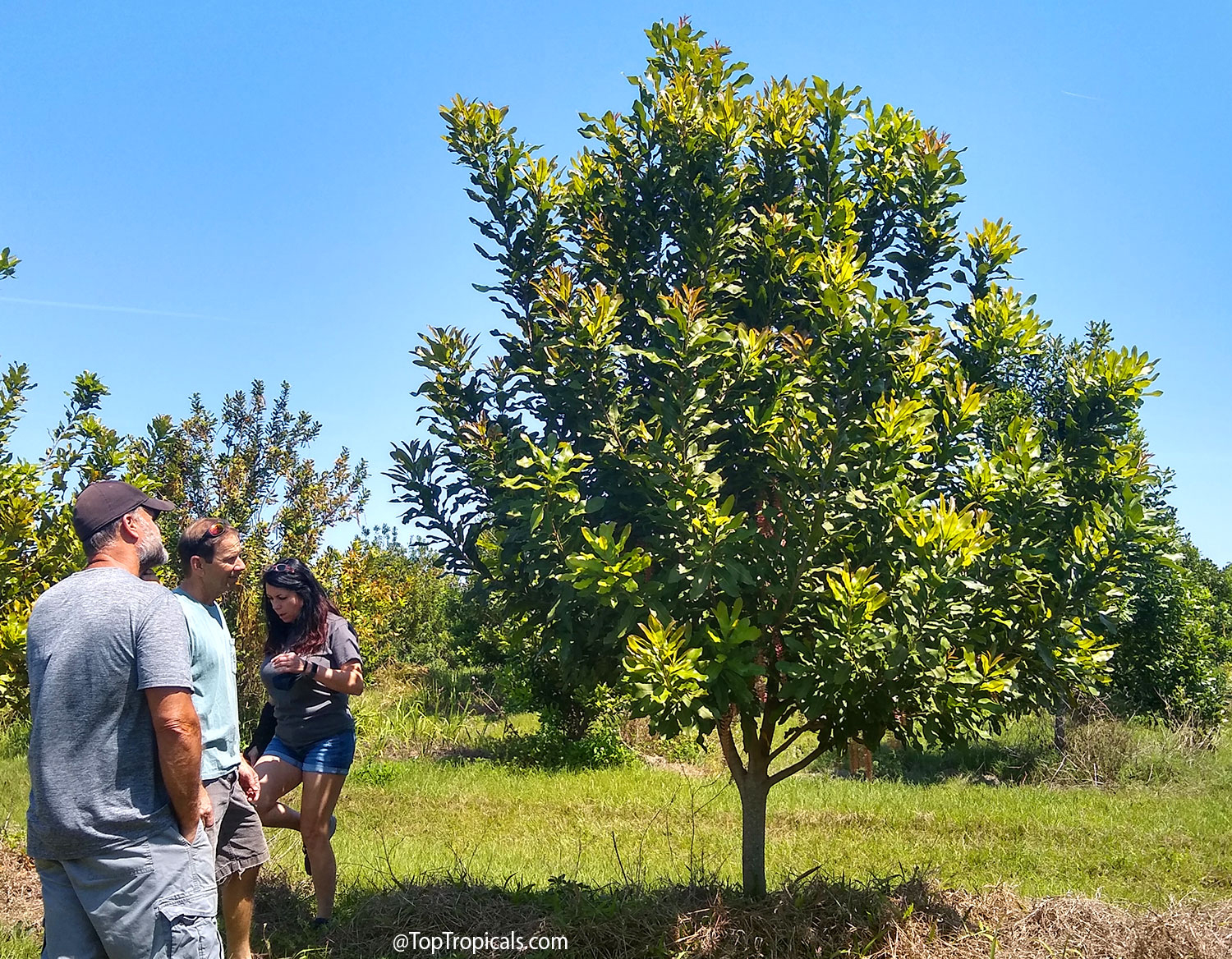
Mature  macadamia  tree  with  well-shaped  canopy  growing  in  Florida 
 orchard.

Macadamia tree maturing into a productive, manageable canopy.

🌳 Growing Macadamia Tree

Macadamia is not a fragile tree, but it does have preferences. If you respect them from the beginning, the tree rewards you for decades.

  • Start with the site. Drainage is everything. Macadamia will tolerate cool weather better if planted in a well-drained area. Avoid low spots where water sits after rain. If your soil is dense or clay-like, build a mound or improve drainage before planting.
  • Choose full sun whenever possible for the best nut production.
  • Planting location matters. A south or southeast exposure near a wall can create a warmer microclimate that buffers cold nights. Freeze plus wind is more damaging than temperature alone. Macadamia handles cold better when protected from winter wind.
  • Dig a hole about twice as wide as the container, but no deeper than the root ball. Set the tree level with the surrounding soil. Do not bury the trunk.
  • Water regularly during the first three months while the tree establishes roots.
  • Fertilize lightly. Macadamia does not respond well to over-fertilizing. Macadamias prefer mild liquid fertilizers, SUNSHINE Boosters Robusta is ideal for it. You may also use controlled release Green Magic every 6 months, it is especially formulated for hot climate. To keep leaves healthy deep green without yellowing, micro elements must be applied on regular basis, we recommend to always have handy Sunshine Superfood micro nutrients complex.
  • Young trees should be protected if temperatures drop below freezing. Once established, they become far more resilient.
  • Harvest timing: Nuts mature 6-7 months after flowering. Husk splits naturally when ready. Fallen nuts should be collected quickly.
  • Flower and Nut Drop: Many gardeners panic when they see flowers or small nuts drop, but Macadamia naturally sheds excess fruit. It does not mean failure; the tree simply keeps what it can afford to feed.
  • Macadamia is relatively low-maintenance, but watch for squirrels and rats. They love the rich nuts as much as humans do, so be sure to collect fallen nuts quickly.
  • Root Sensitivity: Macadamia roots dislike disturbance. Transplant carefully. Avoid root damage.
  • Macadamia is not a fast-return crop. It begins producing a few years and increases gradually. But once mature, it becomes a steady, reliable part of your garden.

Learn more: Macadamia - Hard Sweet Nut and Hardy Tree

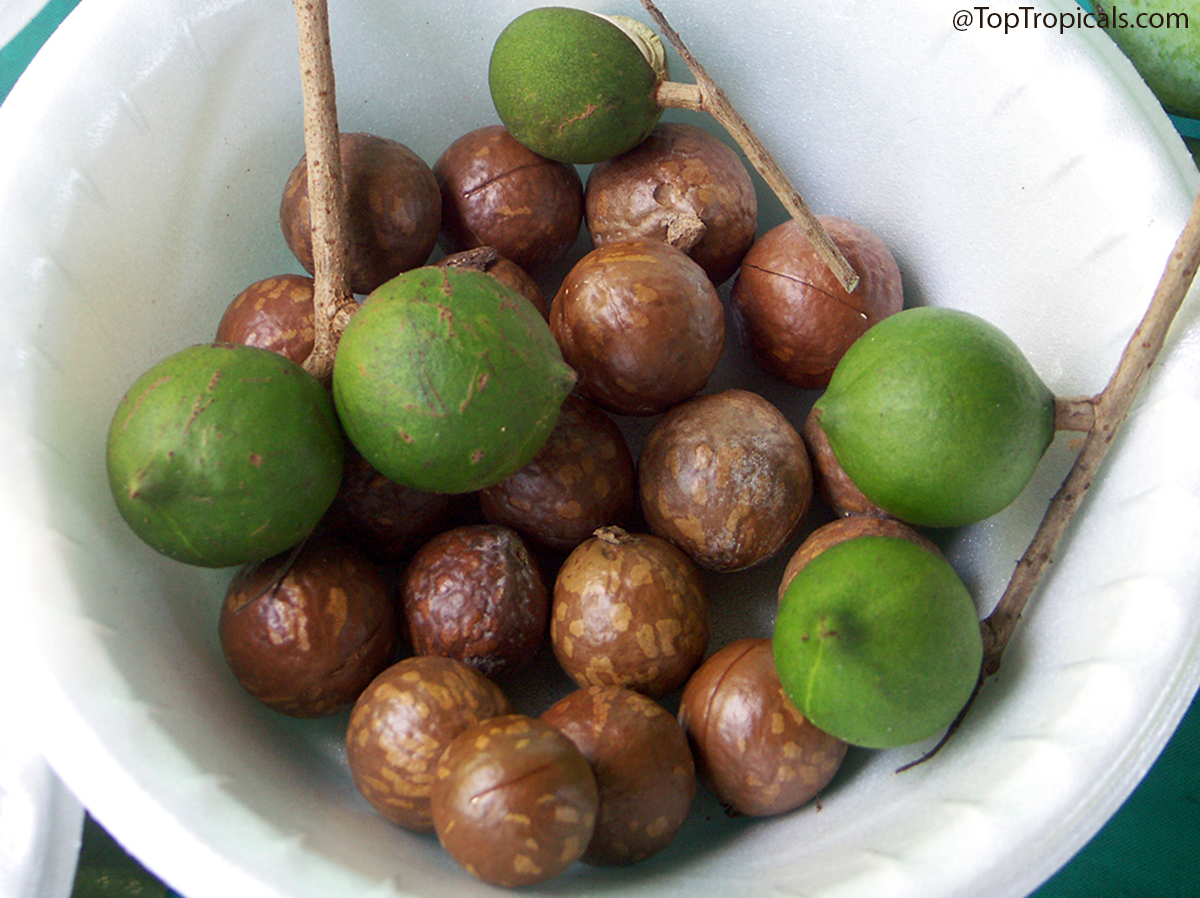
Fresh  green  macadamia  fruit  and  brown  hard-shelled  nuts  collected  in  a 
 bowl.

Macadamia fruit showing green outer husk and mature brown shell inside.

🌱 Growing Macadamia in a Pot

  • Container size: Start large. A 15-25 gallon pot is ideal for long-term growth.
  • Drainage: Critical. Use a container with multiple drainage holes.
  • Soil mix: Use a high-quality, well-draining container mix. Avoid heavy garden soil. Top Tropicals Abundance soil-less mix is specially formulated for pot growing
  • Light: Full sun is best. Strong light improves flowering and nut production.
  • Watering: Water deeply, then allow the top layer to dry slightly before watering again. Avoid constant saturation.
  • Feed lightly and consistenly. SUNSHINE Boosters Robusta liquid fertilizer is safe to use with with every watering. During hot season you may add controlled release Green Magic every 6 months. It is essential to apply micro elements on Macadamias: Sunshine Superfood micro nutrients complex.
  • Cold protection: If temperatures drop below freezing, move the container to a protected area such as a garage or greenhouse.
  • Pruning: Prune lightly to control size and maintain airflow within the canopy.
  • Expectations: Container trees may produce fewer nuts than in-ground trees, but they offer mobility and climate control.
  • Smokey says: Container trees offer mobility and climate control so you never have to worry about a freeze!

✍️ More About Macadamia from Garden Blog

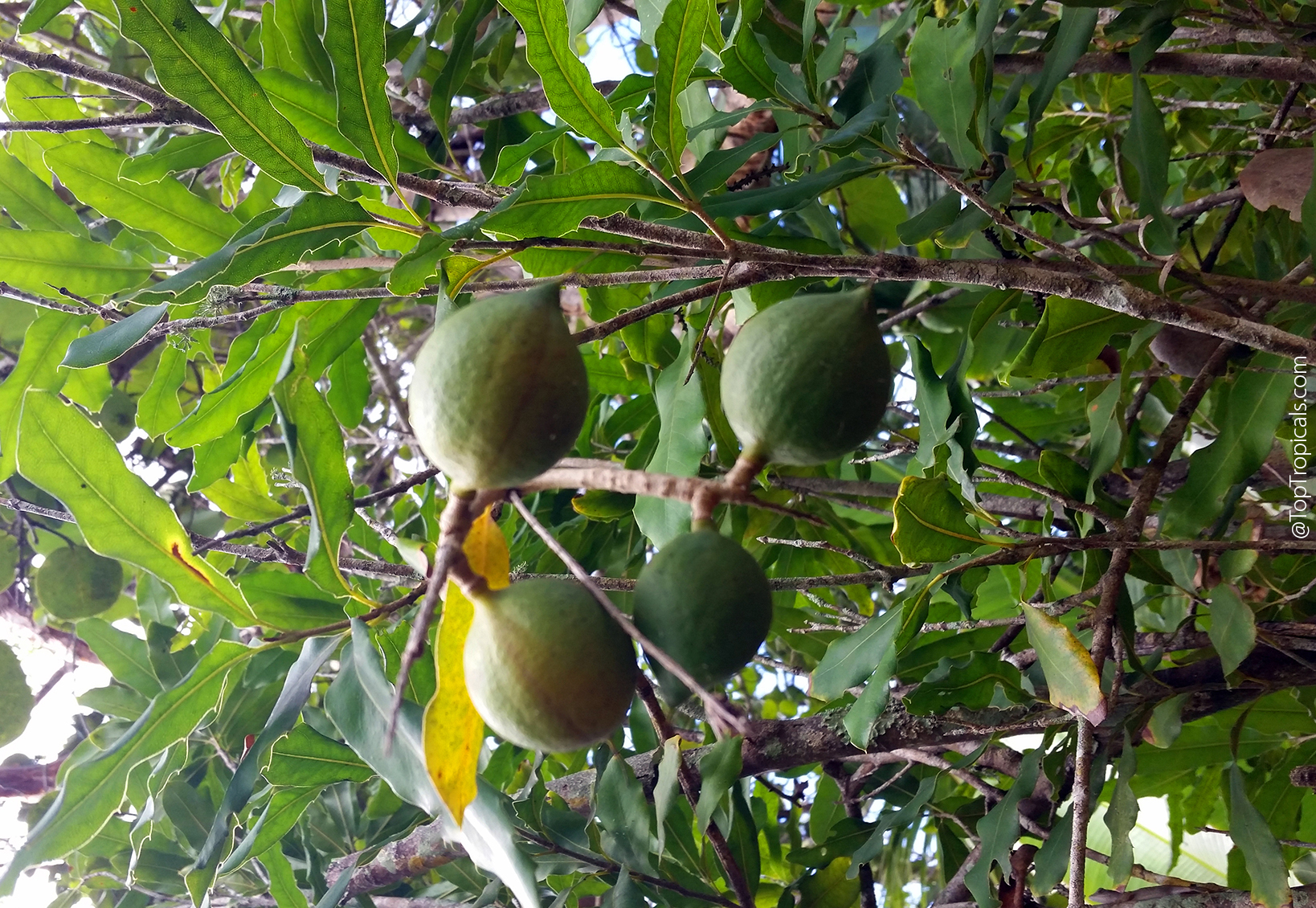
Green  macadamia  nuts  developing  on  tree  branch  among  glossy  leaves.

Macadamia nuts developing on the tree before the husk splits.

🚫 Common Mistakes When Growing Macadamia

  • Planting in poorly drained soil:
    The most common mistake. Macadamia will decline quickly in heavy, waterlogged ground. If drainage is questionable, plant on a mound.
  • Overwatering young trees:
    Newly planted trees need consistent moisture, not constant saturation. Wet roots lead to root problems.
  • Over-fertilizing:
    Too much fertilizer causes weak growth and nutrient imbalance. Feed lightly and avoid heavy nitrogen applications.
  • Planting too deep:
    The top of the root ball should sit level with or slightly above the surrounding soil. Do not bury the trunk.
  • Ignoring micronutrients:
    Macadamia is very prone to iron, zinc, and copper deficiencies. Yellowing leaves may signal a micronutrient issue. Applly Sunshine Superfood on regular basis.
  • Expecting instant production:
    Macadamia takes time. Early years build structure. Patience is part of success.
  • Skipping cold protection for young trees:
    Established trees are tougher, but young plants should be protected below freezing.

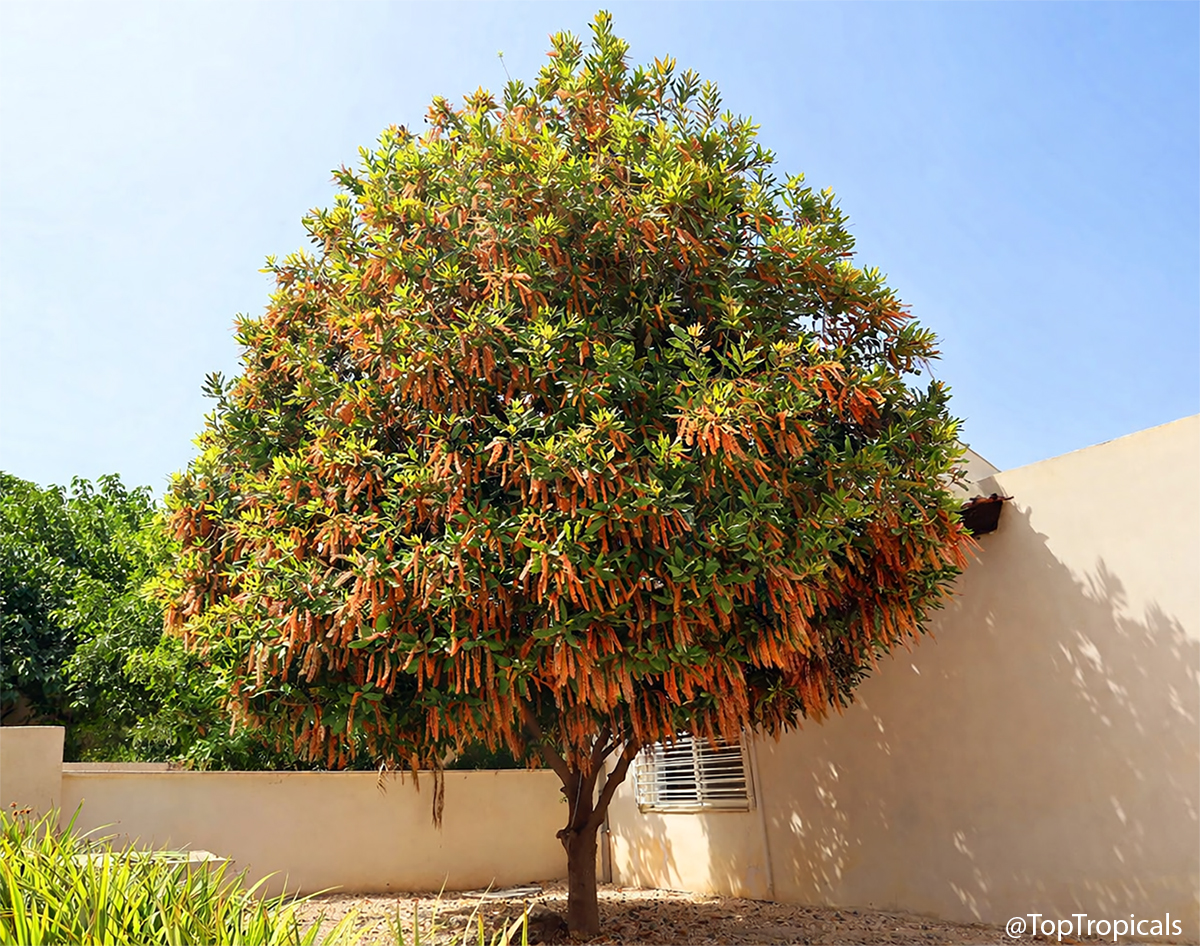
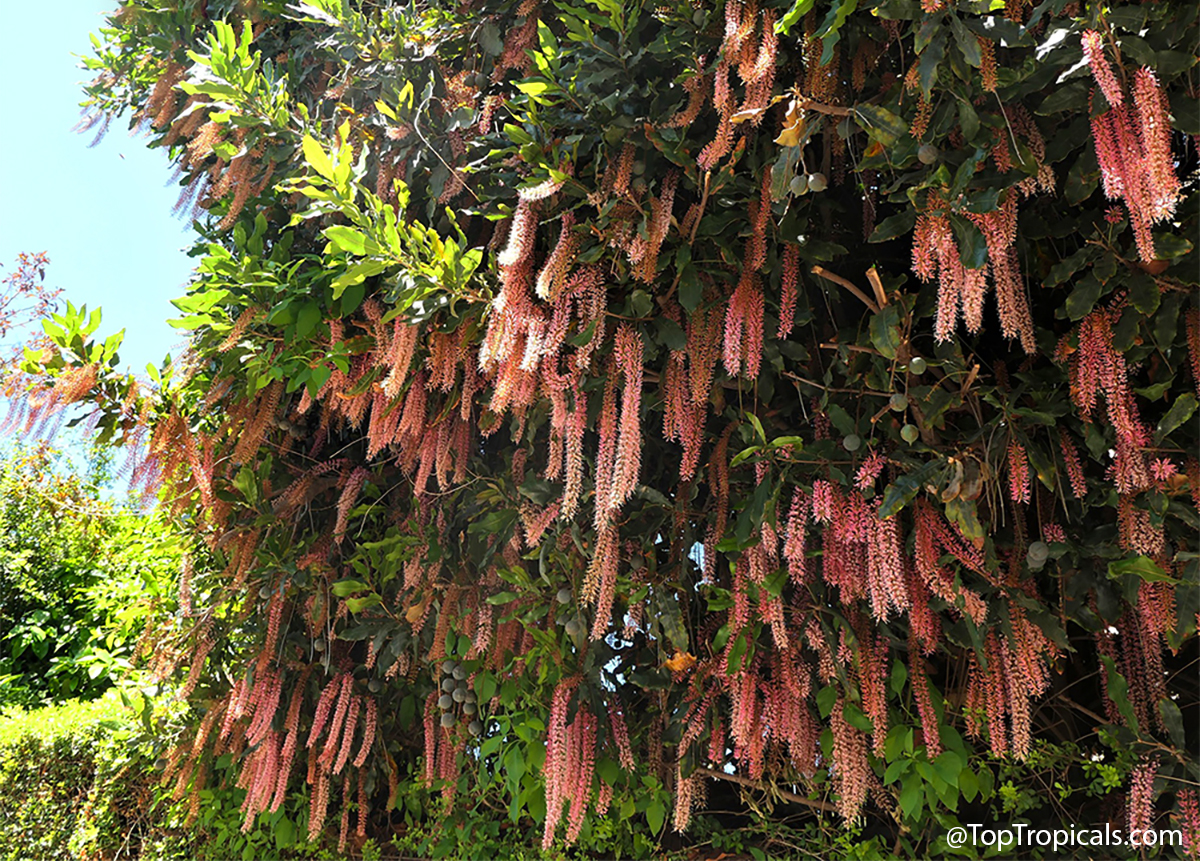
Macadamia  tree  in  full  bloom  covered  with  long  orange  flower  racemes.

Macadamia tree in full bloom with abundant flower clusters.

❓Frequently Asked Questions (FAQ)

  • Is Macadamia toxic to pets? While the nuts are a superfood for humans, they are toxic to dogs. If you have a dog that tends to forage in the garden, ensure you harvest fallen nuts promptly or fence the base of the tree during the drop season.
  • Which varieties are best for the "Survivor" garden? Look for Macadamia integrifolia (smooth-shell) or hybrids like 'Beaumont' (M. tetraphylla x M. integrifolia). Hybrids often show slightly better cold tolerance and more consistent "home garden" production.
  • How tall will my tree get? In the ground, an unpruned Macadamia can reach 20–30 feet. However, they respond very well to "heading back" (pruning the top) to keep them at a manageable 12–15 feet for easy harvesting.
  • Do I need two trees for cross-pollination? Macadamias are self-fertile, meaning one tree will produce nuts. However, planting two varieties near each other often results in a significantly heavier "nut set" due to cross-pollination.
  • Why are the leaves on my Macadamia prickly? Don't panic—this is normal! Some species, particularly M. tetraphylla, have serrated, holly-like leaves. This actually makes them a great "defensive" hedge against intruders or deer.
  • When exactly should I harvest? The tree tells you when it's ready. Don't shake the tree; wait for the nuts to fall naturally. In Florida, this usually happens between August and November. If the green outer husk hasn't split yet, let them sit in a shaded, dry spot until they do.
  • My tree has "clusters" of flowers but no nuts. What happened? Macadamias produce long racemes (flower spikes) with hundreds of tiny blooms. It is normal for 90% of these to fall off. The tree only keeps what it can afford to "feed." Boost your success by using a combination of Sunshine C-Cibus liquid fertilizer and SUNSHINE Superfood micro element supplement during the flowering stage to help the tree retain more fruit.
  • Can I grow them from a nut I bought at the store? Unlikely. Commercial nuts are usually roasted or dried at high heat, killing the embryo. Even if a raw nut sprouts, it may take 10–12 years to fruit and the quality is a gamble. Buying a grafted tree saves you a decade of waiting.

We don’t just sell plants; we test them. The data from this February freeze proves that with the right selection and proper drainage, 'tropical' doesn’t have to mean 'fragile.' Don’t wait for the next cold front to find out what in your garden is vulnerable. It is time to replace those empty spots with proven survivors that offer both beauty and a premium harvest. If it can stand up to 25F in our fields, it’s ready for your backyard.

Coming in Part 2...

Smokey is already crunching the numbers on our next survivor, and Sunshine found another tree that stayed perfectly green in the wind. Stay tuned to see which fruit tree made the cut!

Macadamia  tree  covered  in  long  pink  flower  racemes  during  peak  bloom.

Macadamia flowers forming long cascading racemes before nut set.

🎥 More Macadamia videos from our channel

🛒 Add Macadamia Tree to your garden

Date: 20 Oct 2023

Prepare your plants for Winter with Sunshine Boosters

Tropical  Plants  on  Winter  Windowsill

We usually stop using dry slow-release fertilizers from November to March. However, liquid Sunshine Boosters, which are natural plant food, can be used all year. They help your plants survive winter. When it gets colder, we water less, so the fertilizer decreases too. The plants only use what they need. To learn more about how Sunshine Boosters work and why they're safe and helpful, check out this blog: Using Sunshine Booster during Winter.

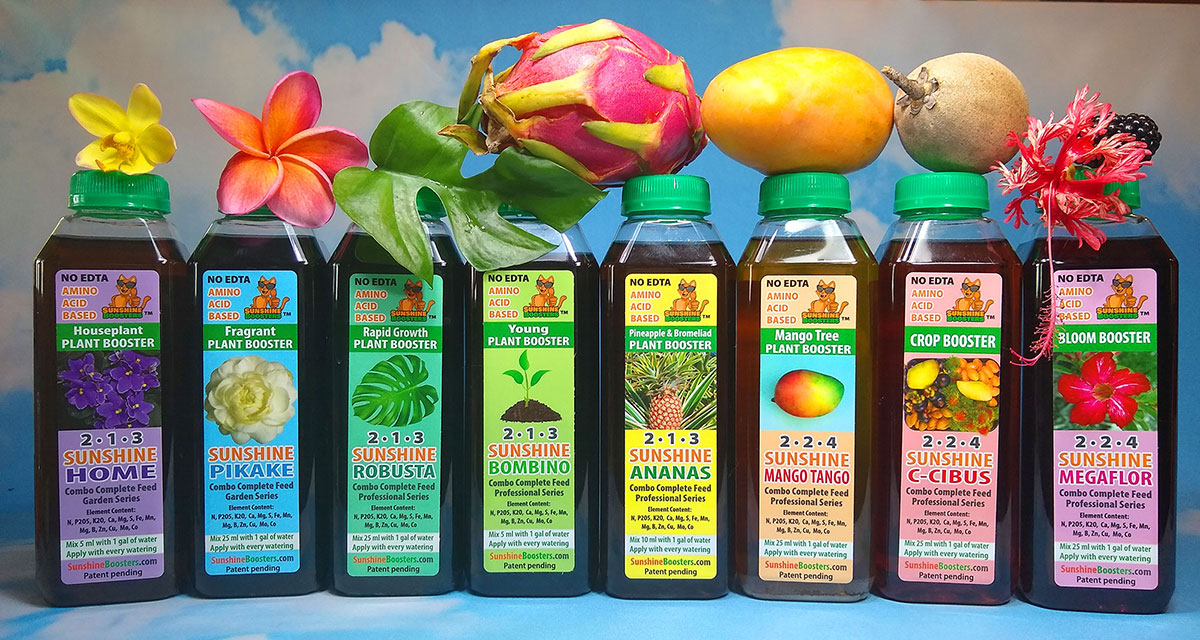
Sunshine  boosters  formulas

Apart from giving your plants nutrients during winter, you also can improve their ability to handle the cold. Try the Sunshine Boosters supplement kit for tropical plants. Follow the schedule and use three different supplements: SUNSHINE Superfood, SUNSHINE Epi, and SUNSHINE-Power-Si. Read more about treatment with Sunshine boosters supplement kit.

Sunshine  boosters  supplement  kit

Sunshine  boosters  supplement  kit