Garden Blog - Top Tropicals

Date: 21 Jun 2019

The Flower of Gold
By Onika Amell, tropical plant specialist

Q: I am concentrating on adding more fragrance to my garden. I've had great success growing gardenias and I have many different varieties, but their flowers are all white, and I would like to add some colors to my garden too. Are there any gardenias available in different colors? I live in Waipio Acres, Hawaii.

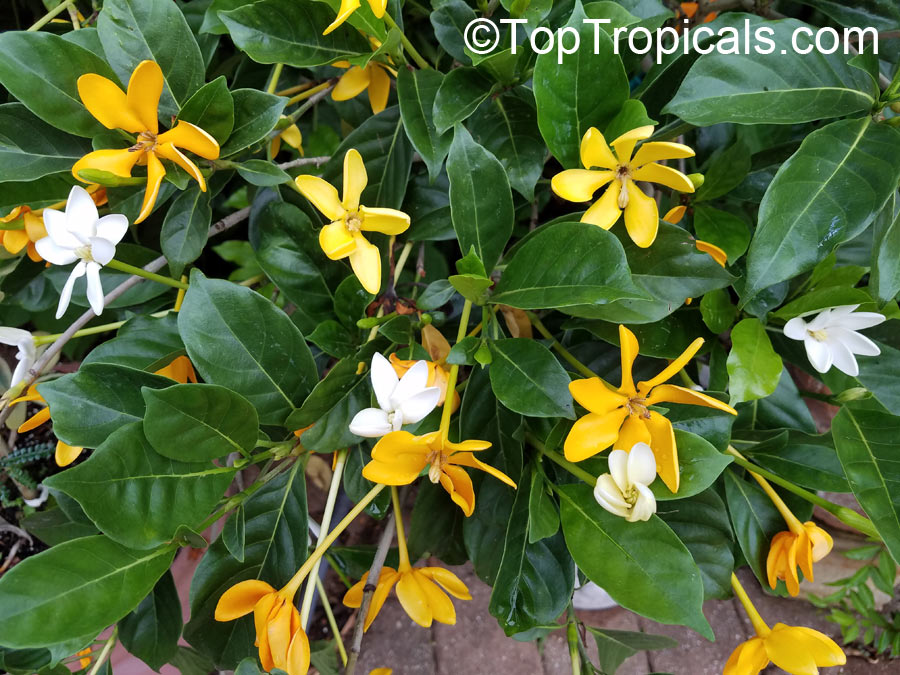
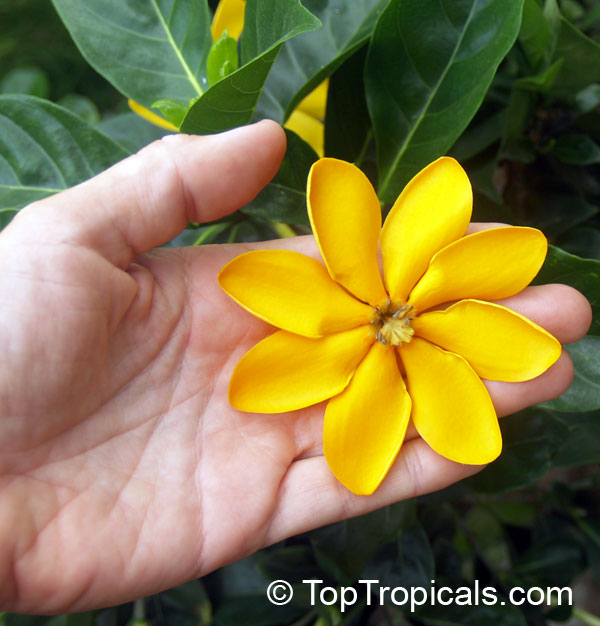
A: Meet the very rare and highly fragrant, tropical Gardenia tubifera Kula or Golden gardenia. Kula flowers change color as they mature, which is a unique feature! Kula flowers start out as cream, then change to yellow and finally to a beautiful gold. In addition to the spectacular flowers, this gardenia also has beautiful, leathery, deep green foliage.
This is a slow-growing and compact plant. Like all the other members in the Gardenia family, the Golden gardenia will do best in an acidic, well-drained, and fertile soil. It will appreciate a good deal of direct sunlight but will be very happy if provided with midday and afternoon shade. As with with gardenias, the more sunlight the more flowers.
It will eventually grow into a rounded shrub if left unpruned, but also can be trained into a small tree, maintainable to a height of under 7-8 feet. Blooms will appear from spring onward. Prune after flowering, this will encourage more flowers in a few months.
Gardeners living in colder areas, do not fret. Gardenias make perfect container plants and can be grown indoors in colder climates. Just be sure to provide high light when bringing them indoors.
The fragrance and changing colors of a Gardenia Kula is unforgettable. They are most fragrant near sunset and during early evening hours. Plant them near walks and patios where their lovely fragrance can be enjoyed.
This rare tropical Gardenia is sure to be a conversation piece in any garden. Great collector's plant!

Recommended fertilizers:
Pink N Good Daily Plant Food - Flower Booster
Tropical Allure - Smart-Release Booster

Limited time special offer:
Instant $5 OFF Golden Gardenia!

Date: 23 Apr 2019

Fruit tree size and production

TopTropicals.com

Q: I am interested in a Strawberry Tree... does this tree produce fruit while still small or do I have to wait until it is large before it produces? Should I fertilize it so it produces sooner? I ask because my garden is not large and I prefer to keep my fruit growing trees in a smaller size. Also, how big is the fruit and does it have a seed?

A: Strawberry Tree, Muntingia Calabura, is one of those fascinating fruit trees that starts flowering and fruiting in small size. We have plants growing in 1 gal containers that already have flowers. This tree is nearly year-round producer providing warm conditions. It is a fast grower, although a compact tree when mature, and can be trimmed to desirable size without affecting production.
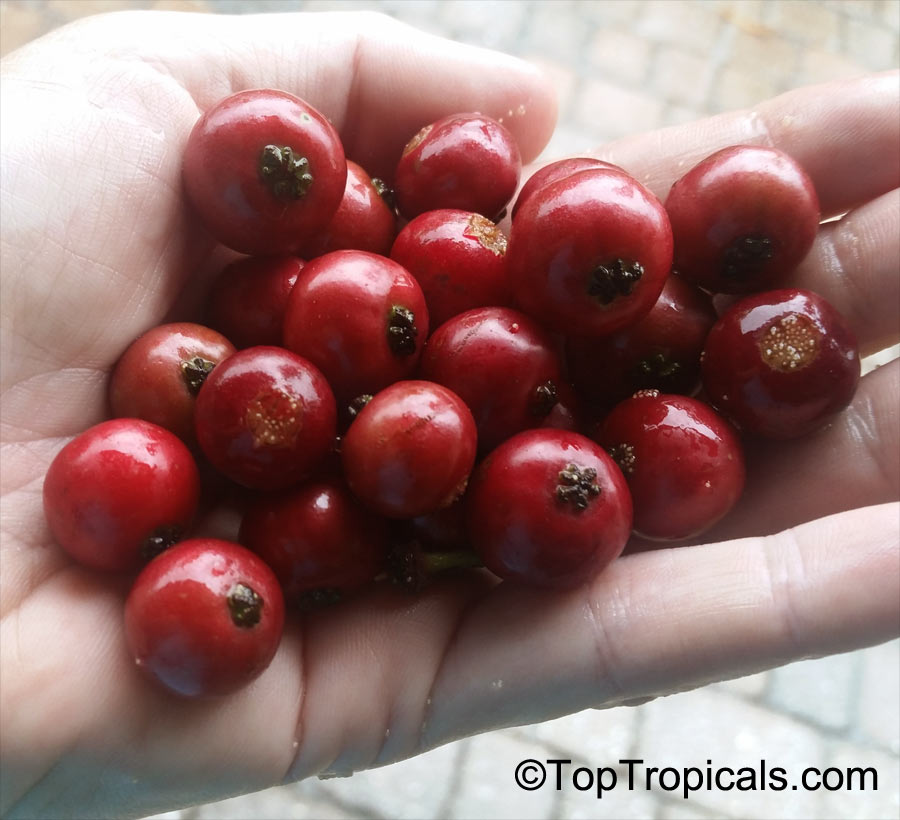
Muntingia fruit is one of our favorites. It is super sweet and juicy, and the seeds are tiny small, not bigger than the strawberry seeds, so you don't have to spit them out. The fruit size normally about 1/2 inch, but we have a tree in our garden that produces almost cherry-size fruit! See picture above. The secret is, good watering and using fruit booster - SUNSHINE honey micro-element supplement. We also fertilize our fruit trees using Fruit Festival and Mango-Food fertilizers.

Date: 3 Apr 2019

Featured plant. Acacia sphaerocephala - Bulls-Horn Acacia

TopTropicals.com

Acacia (Vachellia) sphaerocephala - Bulls-Horn

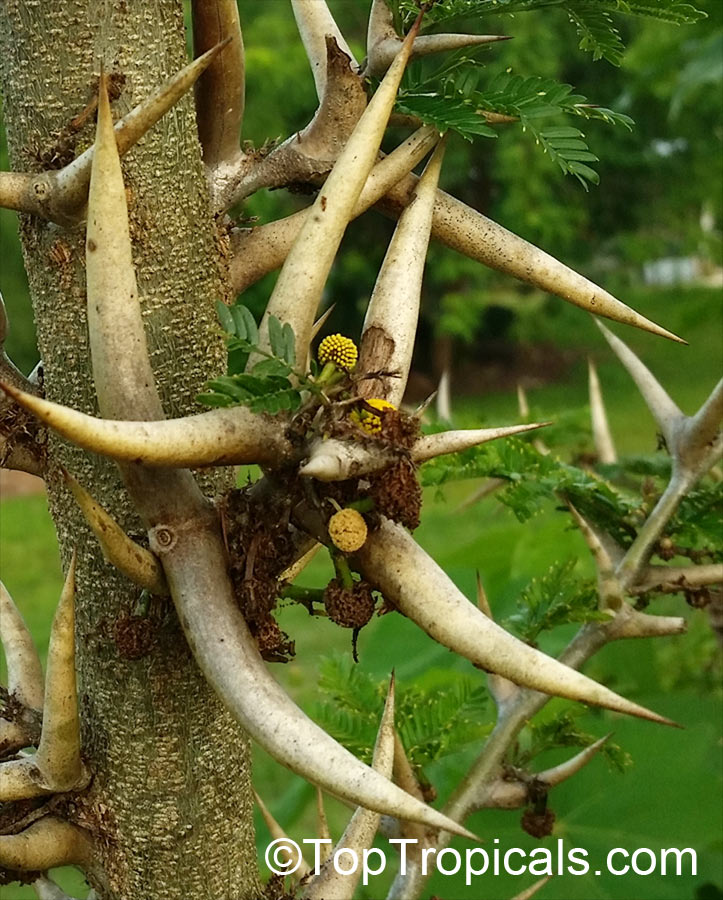
The name of this cool unusual tree comes from the shape of the thorns which do indeed resemble the horns of a bull! The tree has a strong, symbiotic relationship with a species of an ant, Pseudomyrmex sphaerocephala for which it is the obligate habitat. The ants act as caretakers for the tree, and clear the ground and keep it free of any other plants and even prune surrounding branches of other trees that threaten to outshade the acacia. Without the protection of the ant colony, the acacia tree would fall vulnerable to chewing insects such as beetles or caterpillars, and surrounding trees and shrubs would quickly outcompete the acacia without the maintenance work of the ants to keep the tree safe.

Check out this plant...

Date: 18 Mar 2019

Featured plant. Sauromatum (Typhonium) venosum - Voodoo Lily

TopTropicals.com

Sauromatum (Typhonium) venosum - Voodoo Lily

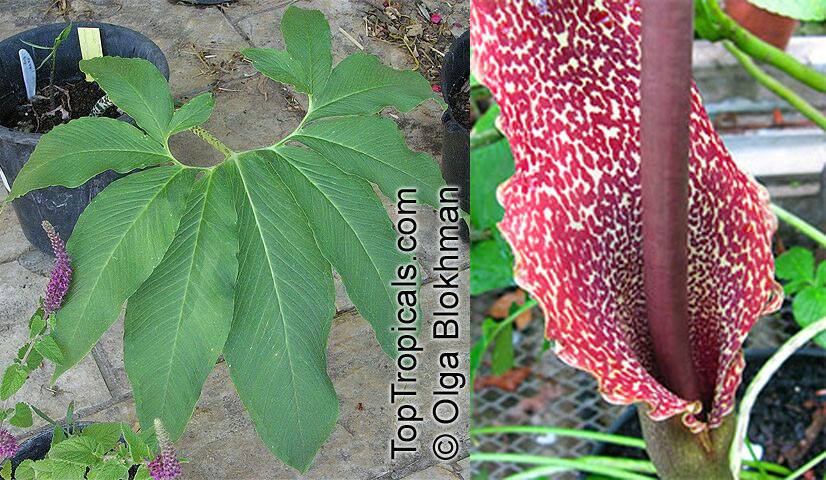
Rare Amorphophallus ralative, Typhonium venosum (Sauromatum venosum), is a common shade-loving house or garden plant from temperate and tropical Africa and Asia. This plant is also known as the Voodoo Bulb because of its ability to flower from a corm without soil and water. Tuberous perennial with solitary, segmented round leaf and strange, arum-like flower. Rare collectable, it is a showy exotic container plant.
Typhonium grows to around 20 inches tall from an underground corm. A large corm can spawn multiple new corms. Inflorescences emerge before the leaves. An inflorescence has a purplish-brown-spotted, yellowish spathe and a purplish-brown spadix which emit a strong odor perceived as similar to cow manure, rotting flesh, or a dirty wet dog, depending on who smells the inflorescence ;) The odor lasts only a day and attracts carrion-feeding insects which can pollinate this plant.
Plants we have in stock, have tubers 1-2"in diameter. The plant goes dormant in winter and starts sprouting in March-April. Keep soil slightly moist but not wet, and wait for the magic leaf to pop up... The plant should flower within a year or two.

Check out this plant...

Date: 8 Mar 2019

RARE Featured plant, finally in stock!

TopTropicals.com

Vanilla dilloniana - Leafless Vanilla Orchid

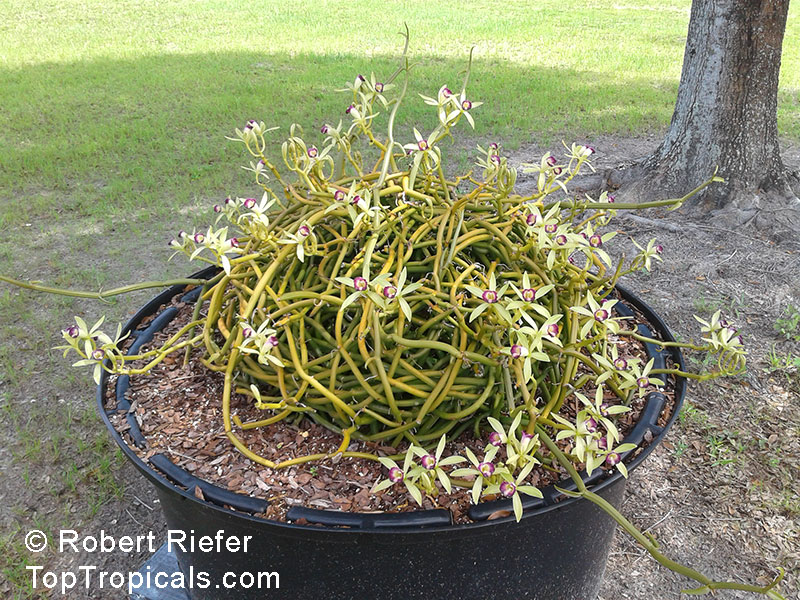
Very rare, collectible and extinct species! This plant propagated at TopTropicals nursery from Robert Riefer's unique specimen, the biggest potted specimen in the World, grown in 100 gal pot, originated in 1927, awarded in 2011 with CHM certificate of Horticultural Merit by American Orchid Society. Leafless Vanilla Orchid is amazing exotic vanilla that forms a multi-branched, leafless vine reaching lengths up to 15 ft. The light green flowers are similar to Vanilla barbellata but the petals and sepals are longer and the fluted lip is a deep reddish-purple with a yellow crest. Vanilla dilloniana is distributed throughout the West Indies and had been reported on the banks of the Miami River in South Florida. Vanilla dilloniana is a very rare species and considered vulnerable, endangered across its range. Pieces of plants from the original colony have been shared and may be found in local collections.

See the .

Check out this plant...