Garden Blog - Top Tropicals

Date: 8 Jun 2016

How to get Clerodendrum to bloom?
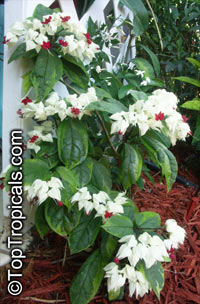
Q: My Clerodendrum thomsoniae is not blooming. Actually it is not doing much of anything except putting out weak growth and small leaves. I purchased this plant May 26. 2015. Over the winter it was in a heated sunroom, at night 60 degrees, where it received some direct sun from the skylights. I reduced the water to prevent excessive leggy growth. I don't see how this plant can take full sun or even part sun. Temps here in Raleigh NC are 80-85 degrees and 65-70 at night, at the moment. I figured I would gradually expose it to more direct sun after being in a sunroom but the leaves burn. I had this plant in San Jose many years ago where it did quite well, blooming with no special treatment. So thought I'd give it a try again. Any advice?

A: Clerodendrums are all time favorites, appreciated by both gardeners and house plant collectors, for their showy, fragrant flowers and very easy culture. When growing Bleeding Heart (Clerodendrum thomsoniae), a few things should be taken in consideration:

1) Temperature.Like most clerodendrums, this plant is semi-decidious outside of tropics and goes dormant in winter. It may lose some or all leaves if temperatures drop below 60-65F. It is not too cold sensitive, the plant can even take some light freeze. However when it is not hot and humid, it slows down metabolism. This means, water should be reduced during cooler months.

2) Light. This plant can grow in both sun and shade like most clerodendrums - this is the beauty of this genus. However like with all flowering plants, more sun promotes more bloom. In shade, it will grow beautiful dark green foliage (leaves will be bigger than in the sun) on the account of flowering; in full sun leaves turn lighter color and sometimes may even get unattractive "faded" look, but flowering will be profuse. Also remember that Arizona full sun is different than New York full sun. Here in Florida, Bleeding Heart can take some full sun, but if exposed to sun all day long, leaves often get sun burn.

3) Acclimation. Also called acclimatization - this is a process when a living organism adjusts to environment changes. Acclimation is always the case when growing plants indoors, even in a sun room. When Spring comes, and especially when we start taking outdoors those plants that have spent a few months indoors, light level increases dramatically, and this may cause leaf loss, and leaf burn. It is not necessarily a bad thing, it is just a mechanism of acclimation. Example: imagine yourself after living in a warm tropical climate, moving to a cold country. For a while your body will feel discomfort from "too much cold", while native residents may feel comfortable. We call it "My blood has thinned after living in Florida" - and this is a physiological fact. And vice versa, if you are a Northerner, moving to hot climate may be a challenge; it will take a while until you get used to hot and humid tropical summers. Same thing with plants: during cooler and darker period, their body (leaves and stems) becomes "winter type", with some serious chemical restructuring. Immediate environment change, like bright light and high temperature, causes a shock to those "winter cells", and as a defense mechanism, the plant gets rid of those useless "winter" leaves, replacing them with new "summer" leaves with completely new chemistry and metabolism.

From what you described, you know your plants, and you know what you are doing. You did everything right by reducing watering in winter and gradually moving the plant into brighter light. You still may see some stress, and this is normal. If you patiently keep changing environment slowly, eventually your plant will generate new healthy "summer" growth, it will also improve more vigorous root grown which will help the plant to establish better and to be stronger. You will see larger, thicker leaves, and definitely some flowers.
Date: 4 Jun 2016

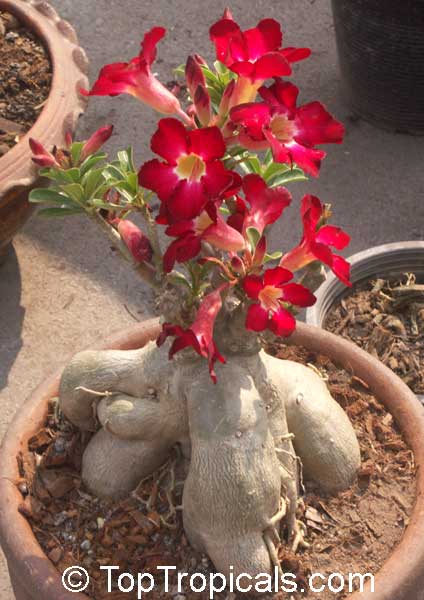
Desert rose winter care

Q: I purchased several packets of desert rose seeds last year. I now have 45 very healthy seedlings some of them in bud. Almost all of my seeds grew but I lost most of them when I rook them in during winter. I did not water them for a month , kept them in their pots and set them by the window. they either dried up and died or rotted and died. I noticed when you send me grafted specimens that you bareroot them. Is this a better way to keep them inside in winter, bareroot? I hate to lose these plants come winter time. Pls advise me. I live in Houston, Tx. where we get temps below 40 degrees and sometime a day or more of freezing temps.

A: Thank you for your question. Rot is pretty common problem with Desert Roses. We monitor our Adeniums closely and have a special set up of watering environment and schedule, in dedicated greenhouses just for them. Nevertheless - every now and then we see a rotten caudex and can't help it to say "oops! over-watered!" These plants are very sensitive to environment changes, especially when it comes to a combination of water and temperature. These are a few tips that should help you to reduce risk of plant loss to a minimum:

1) Use only well drained mix with much higher content of perlite than you would use for most tropical plants. For adeniums, we use mix with 30-40% of perlite in it, while regular mix has 10-15%.

2) Adeniums like alkaline soil, unlike most of tropical plants (hard to say what else likes alkaline... Ficus for sure!). This means, regular mix with high content of peat moss may cause root rot. To increase alkalinity, you may add dolomite. Here in Florida where we have natural supply of shell rock handy, it is easy to add some shell to a potting mix (shell sand, rather than quartz sand). We always add a few large shells on top of a pots with a big specimen. Besides increasing soil pH (making it more alkaline), shells look very decorative.

3) Water very carefully during cooler months. When it is hot (85-100F), excessive water usually won't harm adeniums: it will be partially used by a plant, and partially will evaporate. Especially be careful with water when temperatures drop below 65F - then tropical plants simply stop growing process and go dormant. Once adeniums start losing leaves, this is a sign to reduce watering to once a week to once a month, and in very small quantity (couple tablespoons per pot).

4) We do not bareroot adeniums for winter storage. They are not bulbs. Barerooting of this plant is recommended only during shipping. Adeniums can stay without soil for up to a week without hardly any stress, sometimes even longer.

5) We keep our big collection specimens on a roofed porch during winter, where level of light is very low. Last winter we haven't lost a single plant due to low light. They take shade pretty well considering minimum or no water. However bright light is always better - it creates healthier environment for a plant. We all know about space limitations for our large collections, especially in winter. So if you can afford a bright spot for adenium during winter - the plant will be lucky!

Adenium Summer Sale: 20% off plants and seeds!

Date: 20 Mar 2016

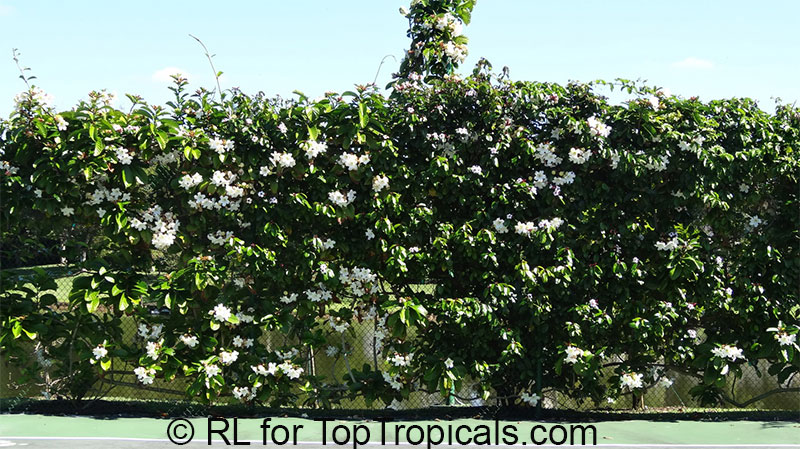
Easter Lily Vine creates a fragrant privacy fence of virtually unlimited size

By Ron, South Florida. Easter Lily Vine (Beaumontia grandiflora) is a magnificent woody evergreen climber of unlimited growth potential. A branch of this vine will grow simply until you cut it. I have branches of up to 30 ft. and longer.

I've used two plants to turn a chain-link fence into a privacy screen that is 40 ft. wide by 10 ft. tall, but even a single plant can cover a much wider space if trained properly.

Easter Lily Vine's growth rate is moderate, so it doesn't require constant pruning to keep under control like other vigorous vines. I bought mine in 7 gallon pots, and planted them in the ground immediately. It took about 2 years to completely cover the fence. Since then, I prune it 3-4 times a year.

Keep in mind that these plants are heavy and require a solid structure as support. They twine by nature, but only around items with 3” diameter or more. Mine twined around a near-by lighting pole!

The absolute key in training Easter Lily Vine is to force it to grow horizontally. I recommend planting a young 3 gallon size vine in the ground diagonally, so it grows horizontally. Tie it no more than a foot above ground and let it grow a single branch until the end of the space you want to cover. Then force it to make a U-turn and let it grow the other way. See the following diagram for illustration..

.

See step-by-step full size pictures and the rest of the article...

Date: 7 Mar 2016

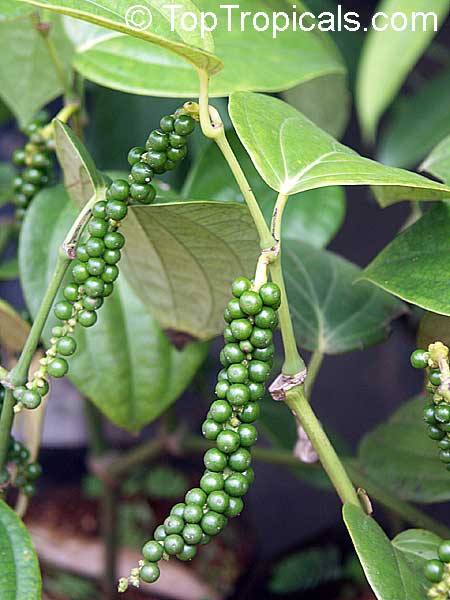
Black Pepper Vine - grow a real spice at home!

Q: What plants are used for commercial production of black pepper, red pepper, and green pepper? I started organic garden and would like to try growing pepper. I live in Georgia, will it survive here?

A: Pungent and aromatic Pepper is grown in Southern India since more than two thousand years, has always been much valued all over the world. Along with other spices from India and lands farther east, it changed the course of world history. Depending on harvest time and processing, peppercorns can be black, white, green and red (reddish-brown). So, the same fruit is also used to produce white pepper, red/pink pepper, and green pepper. The pungency is strongest in white pepper and weakest in green pepper, while black and green pepper are more aromatic than the white one.

The vine can be easily grown in a pot on a trellis, in mild (frost-free) climates it can be grown in the ground providing a tree support. Try growing this legendary plant and taste the real spice!

For more info, see article about Black Pepper.

See full list of spice and herbs

Date: 21 Mar 2026

How to start your dream collection: Adenium rainbow

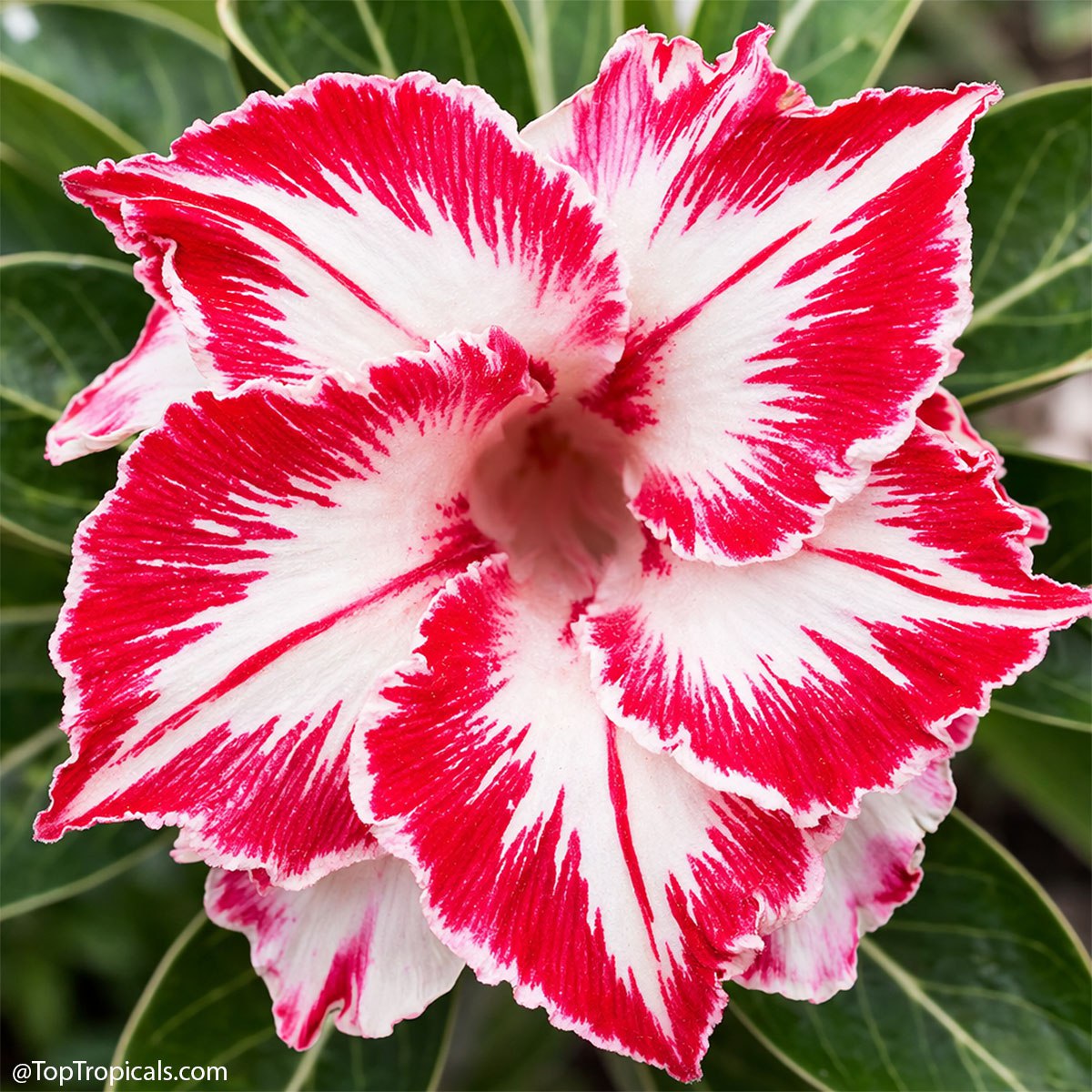
Adenium Amaryllis

Adenium Amaryllis

Adenium Win

Adenium Win

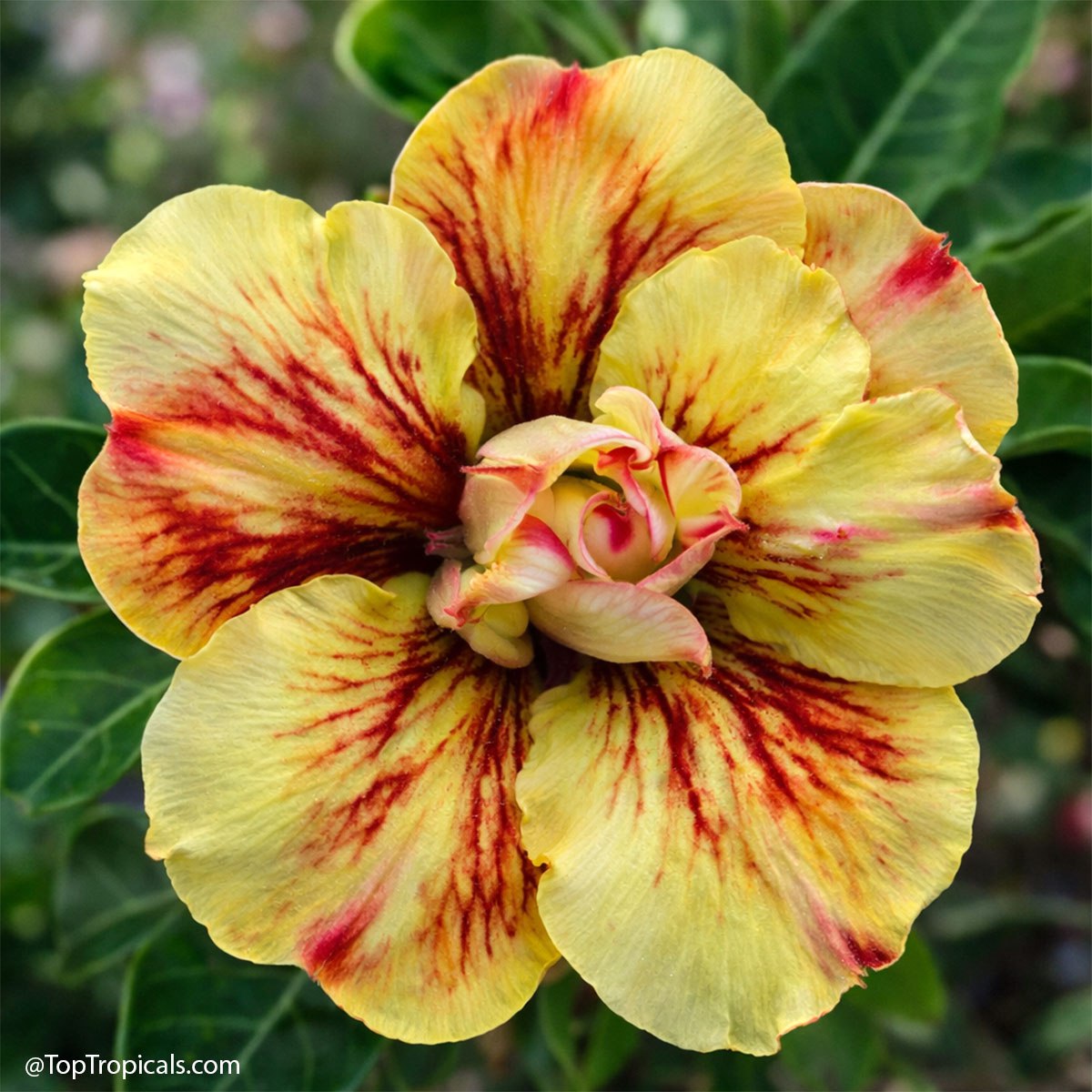
Adenium Butterfly Yellow

Adenium Butterfly Yellow

Adenium Black Butterfly

Adenium Black Butterfly

Adenium Good Morning

Adenium Good Morning

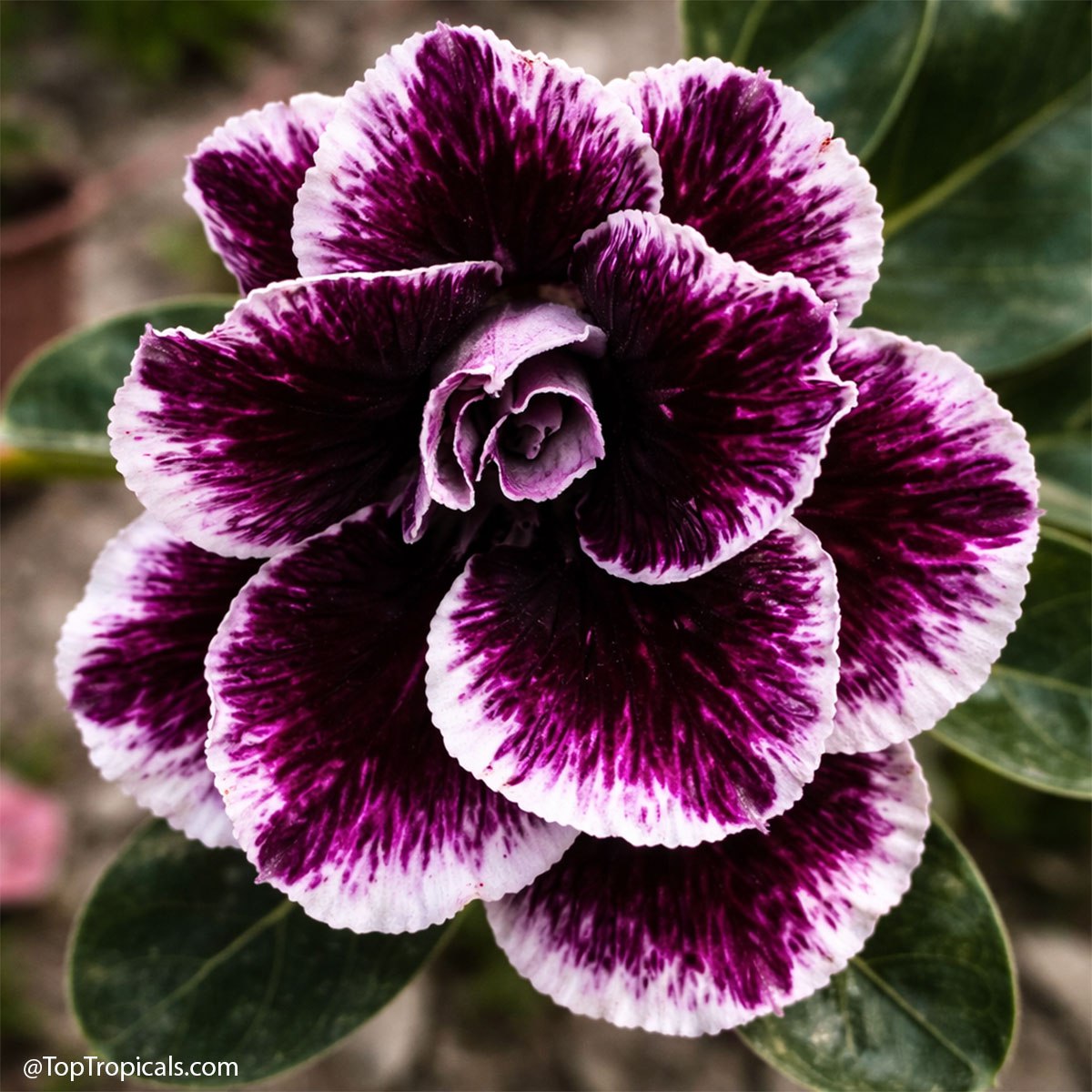
Adenium Good Night

Adenium Good Night

How to start your dream collection: Adenium rainbow 🌈
  • 👉 Thinking about adeniums? Read this before you buy one!
How to start an adenium collection without wasting money

If you’ve ever seen a tray of different blooming adeniums, you probably had the same thought: "I want them all." And honestly - we get it.

But with hundreds of varieties out there (and only so much space on your patio), the real trick isn’t collecting everything… it’s choosing the right ones and growing them well so they actually bloom like the photos.

Let’s make it simple.

💡 Before you start your adenium collection


A few basics that make all the difference:
  • 🔸 Light. Bright light is key. The more light, the better the blooms.
  • 🔸 Water. Water deeply, then let soil dry out. Adeniums hate sitting wet.
  • 🔸 Fertilizer. Adeniums prefer liquid food. Light, regular feeding with Sunshine Megaflor Bloom Booster during active growth = stronger growth, bigger caudex, and better flowering.
  • 🔸 Trimming. Prune after flowering to shape and encourage branching. More branches = more flowers.
  • 🔸 Soil. Fast-draining mix is a must. No heavy, soggy soil. Use Adenium Soilless Mix.

👉 How to grow a happy Adenium

🌸 Today's featured adeniums


A few standout varieties to start (or expand) your collection:
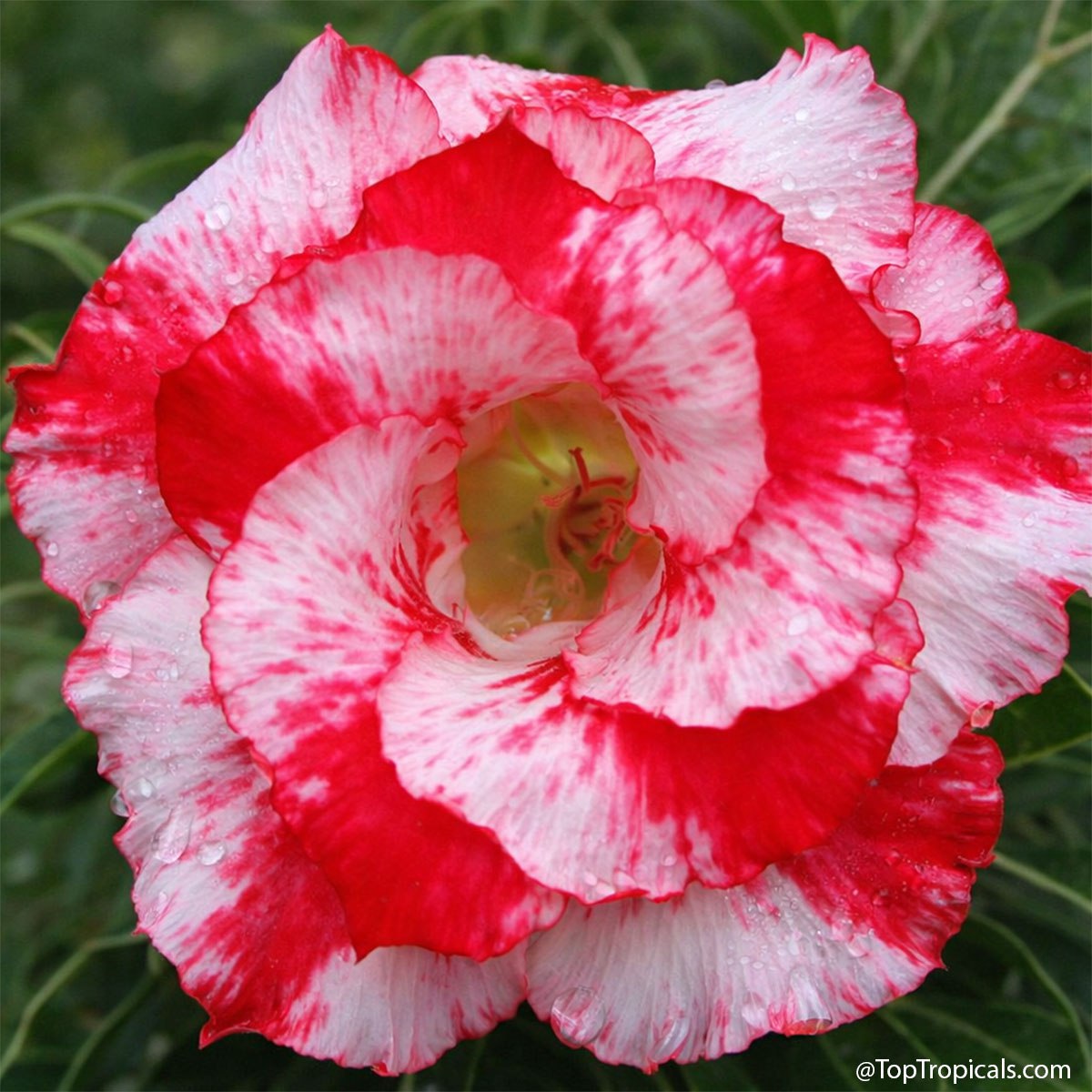
  •  ✦ Amaryllis: Large, bold blooms with a classic floral shape - one of those that always catches attention.
  •  ✦ Win: Clean, bright blooms with a balanced form - simple and very satisfying.
  •  ✦ Butterfly Yellow: Soft yellow tones with a delicate, airy look - light and cheerful.
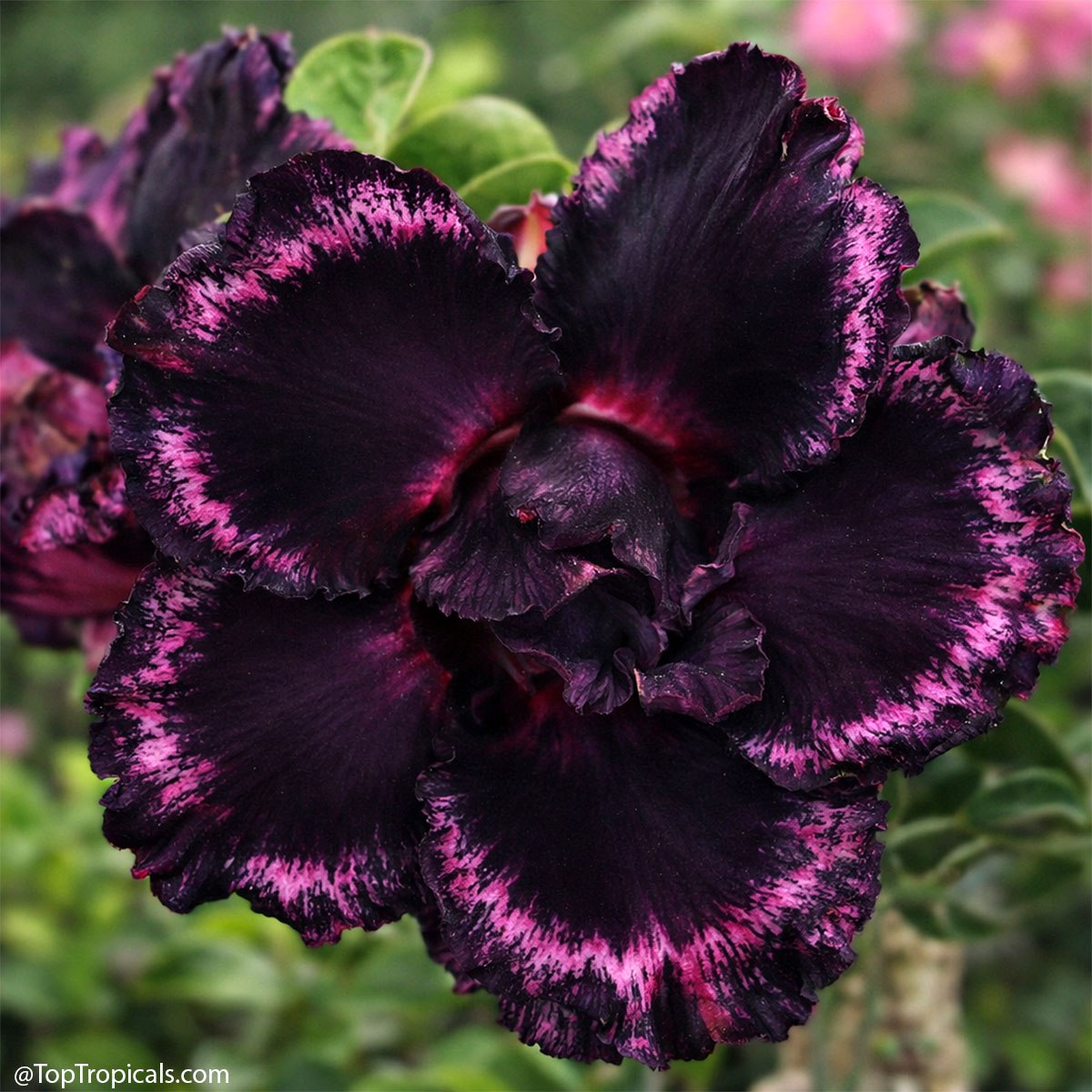
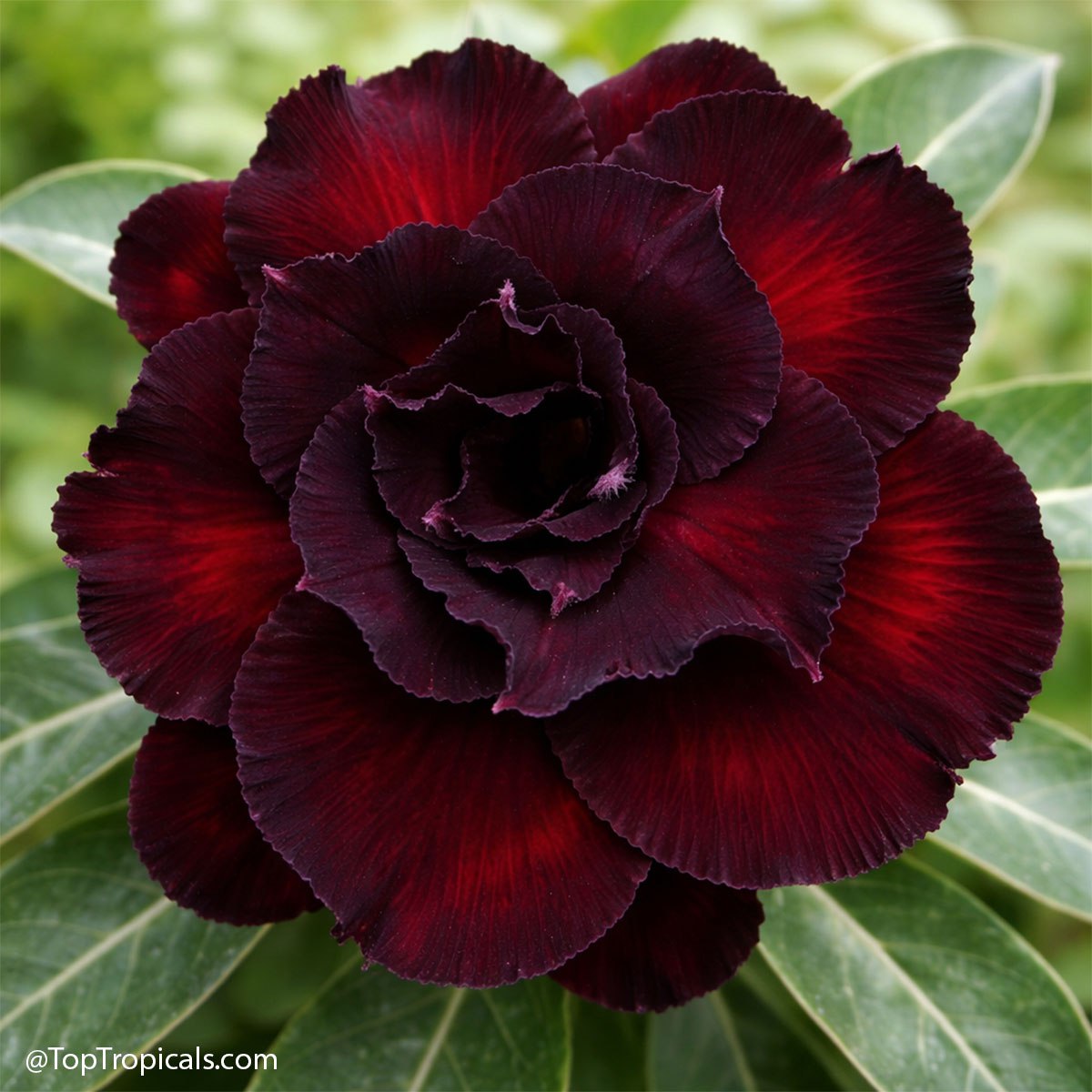
  •  ✦ Black Butterfly: Dark, velvety tones with a winged pattern feel - rich and dramatic.
  •  ✦ Good Morning: Bright, fresh tones that feel clean and uplifting - a nice contrast in any group.
  •  ✦ Good Night: Dark, moody tones - a completely different vibe from typical bright adeniums.

If you’re just starting, pick a few different styles - light, dark, bold, soft. That contrast is what makes a collection feel alive.

And fair warning… It rarely stops at six! 😀

🛒 Explore Exotic Thai Adeniums

📚 Learn more:

Plant Facts

Adenium sp.
Adenium, Desert Rose, Impala Lily
USDA Zone: 9-11
Plant with caudexLarge shrub 5-10 ft tallSmall tree 10-20 ftFull sunDry conditionsModerate waterYellow, orange flowersRed, crimson, vinous flowersUnusual colorBlue, lavender, purple flowersWhite, off-white flowersPink flowersToxic or Poisonous
  • · Adenium varieties in Plant Encyclopedia
  • · About #Adenium Rainbow - fantastic varieties
  • · How to grow a happy Adenium
  • #Container_Garden #Adeniums #How_to #Discover

    🟢 Join 👉 TopTropicals