Garden Blog - Top Tropicals

Date: 16 Mar 2026

🌱 💪 Green Magic + SUNSHINE Boosters: A Complete System for Strong Plant Growth

By Tatiana Anderson, Horticulture Expert at Top Tropicals with Smokey & Sunshine help
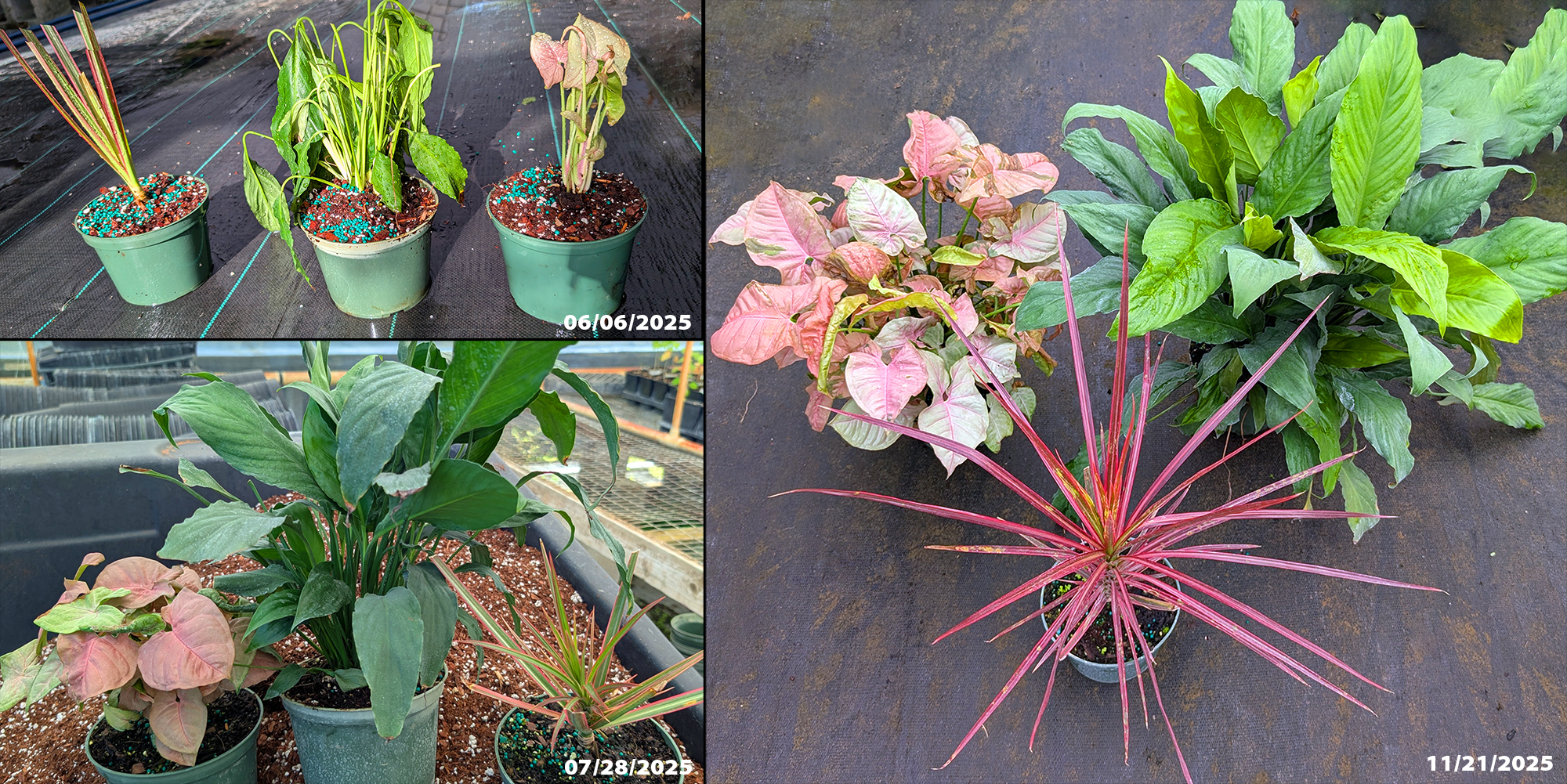
Nearly  dead  houseplants  (Dracaena,  Syngonium,  and  Spathiphyllum) 
 recovering  and  growing  vigorously  after  treatment  with  Green  Magic 
 fertilizer  and  Sunshine  Robusta  plant 
 booster.

Green Magic recovery test with SUNSHINE Robusta support: Dracaena, Syngonium, and Spathiphyllum revived from severe stress and growing vigorously.

☀️🌱 Sunshine Boosters: Complete Plant Nutrition

Sunshine Boosters provide complete plant nutrition, including Calcium and micronutrients that plants need for strong growth. Because nutrients are delivered in liquid form, plants can absorb them quickly and respond almost immediately.

The Practical Problem

Liquid feeding works well, but it requires frequent application. In real gardens, many growers simply do not have time to add liquid fertilizer with every watering.

Green Magic: The Foundation

Green Magic solves this problem by providing steady background nutrition through controlled-release fertilizer. It feeds plants gradually, so they continue receiving nutrients even between liquid feedings.

Why This Combination Works

Together, this system provides both complete nutrition and steady feeding. Sunshine Boosters supply fast nutrients and Calcium, while Green Magic maintains a stable nutrient supply between feedings.

✍️ How to Feed Your Plants

📅 Step 1 – Start of the Growing Season

  • Apply Green Magic around the root zone every 6 months.

    In ground:
    • Small Shrubs (1–3 feet): Use approximately 1/4 to 1/2 cup per plant
    • Established Trees: Use 1/2 lb to 1 lb of product per 1 inch of trunk diameter.
    • Small In-Ground Ornamentals: A common "spoon" rate is roughly 1 teaspoon per gallon of estimated root volume (or per sq. ft. of surface area).
    • Spread evenly around the dripline. Avoid piling the granules against the base or trunk of the plant. For best results, lightly rake the granules into the top 1–2 inches of soil.
    Container plants:
    • Apply 1 tea spoon per 1 gal of soil (mix in with soil) every 6 months during active growth period, or with every re-potting.
  • Water normally after application.
  • Adjustment for Temperature. Because Green Magic is temperature-controlled, adjust your rate if your local climate is extreme:
    • Cooler Climates (<60°F average): Increase the rate by 20% to ensure enough nutrients are released.
    • Hot Climates (> 80°F average): Decrease the rate by 20% to prevent over-releasing as the heat speeds up the process.

☀️🌿 Step 2 – Active Growing Season

  • Apply Sunshine Boosters during the growing season.
  • Regular feeding (maintenance): Mix with tap water according to the ratio on the label. For SUNSHINE Robusta use 25 ml (5 tsp)per gallon of water and spray leaves every 5-7 days during active growth.
  • Correction feeding ("medicine" dose): if plants show visible nutrient deficiencies, combine SUNSHINE Robusta with SUNSHINE Superfood and spray every 5–7 days until new growth appears healthy. All SUNSHINE Boosters products are compatible and can be mixed with water in the same sprayer.
  • Best time to spray: early morning or evening when temperatures are cooler and leaves can absorb nutrients efficiently.
  • Important: spray both the top and underside of leaves for maximum absorption.
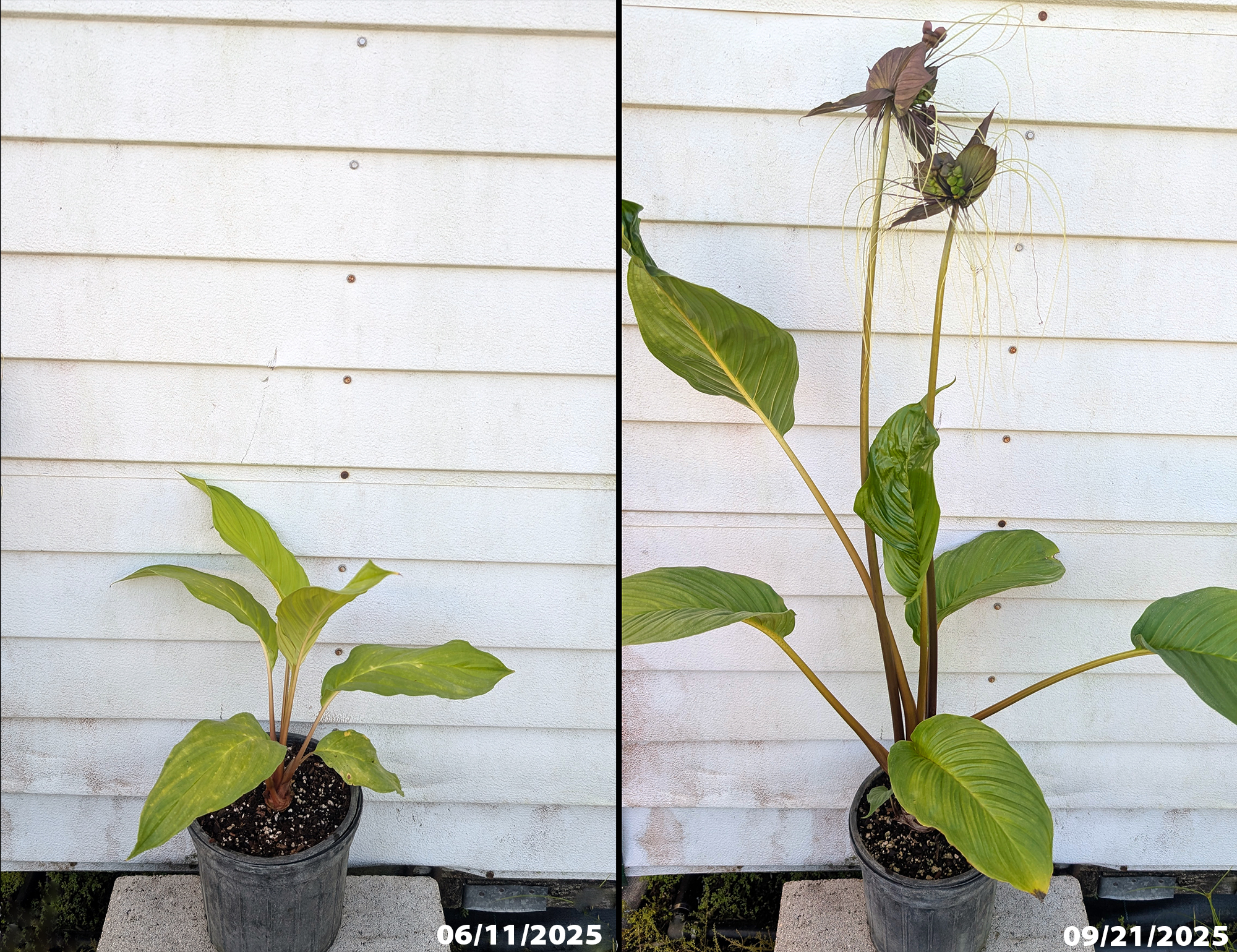
Tacca  plant  (bat  flower)  showing  strong  vegetative  growth  and  flower 
 bud  development  in  the  same  season  after  feeding  with  Green  Magic 
 fertilizer.

Tacca (bat flower) showing vigorous growth and producing flower buds in the same season after feeding with Green Magic.
Swipe left/right to see all data ↔️

📊 Seasonal feeding schedule with Green Magic and Sunshine Boosters.

Season Product Method Goal
Spring (March) Green Magic Soil Surface 6-month steady nutrient base.
Growing Season Sunshine Boosters Foliar (Every 5-7 days) Calcium & Bio-available growth power.
Late Summer Green Magic Soil Surface Replenish foundation for Fall.
Winter Sunshine Epi Foliar/Drench Cold tolerance and shipping recovery.

Quick Dose Reference

  • Green Magic: 1 teaspoon per 1 gallon of soil volume.
  • Sunshine Boosters: 25 ml (5 tsp) per 1 gallon of water.
  • Pro Tip: Always spray in the early morning or late evening to prevent leaf scorch and ensure maximum absorption through the stomata.

❓Frequently Asked Questions: Plant Nutrition & Fertilizer

General Fertilizer Concepts

Why is the "Spring Fertilizer Rush" a problem?
Most gardeners apply a large amount of traditional fertilizer once in March. This creates a "roller coaster" effect where plants get a sudden spike of nutrients followed by weeks of starvation. This leads to inconsistent growth and potential "fertilizer burn."

What is "fertilizer burn"?
Traditional fertilizers are made of soluble salts. When too many salts accumulate around the roots, they actually pull water out of the plant tissues (osmosis), dehydrating the plant and damaging sensitive root tips and leaf edges.

Is there a difference between "Slow-Release" and "Controlled-Release"?
Yes.

  • Slow-Release: Relies on natural factors like moisture and soil microbes to break down. It is often unpredictable.
  • Controlled-Release: Uses engineered polymer membranes (like Polyon) to release nutrients at a specific, predictable rate based primarily on temperature.

Green Magic & Temperature

How does temperature affect my fertilizer?
Most fertilizers are lab-tested at 75°F. In hot climates (90°F+), the nutrients release much faster. A "6-month" fertilizer might only last 3 months in the summer heat.

How should I adjust Green Magic for my local weather?

  • Cooler Climates (<60°F): Increase the application rate by 20%.
  • Hot Climates (> 80°F): Decrease the application rate by 20% to prevent over-releasing.

The Calcium Gap

Why doesn't Green Magic contain Calcium?
Calcium salts are highly soluble and can destabilize the polymer coating used in controlled-release granules. Therefore, most high-quality granules leave Calcium out. You can provide Calcium by using SUNSHINE Boosters

Why is Calcium so important for new growth?
Calcium is the "bone" of the plant, building strong cell walls. Unlike other nutrients, it is immobile—the plant cannot move it from old leaves to new ones. If you don't provide a constant supply, new leaves and fruit will emerge distorted or weak.

Advanced Science & Troubleshooting

What makes Sunshine Boosters "Bioavailable"?
Unlike most liquid fertilizers that use EDTA chelators, Sunshine Boosters are amino-acid based. They use organic acids and glycine to escort minerals into the plant, allowing it to incorporate nutrients into its proteins almost immediately.

Will these fertilizers affect the taste of my fruit?
No. Sunshine Boosters are made from pharmaceutical-grade components and contain no urea or harmful salts, ensuring your harvest (like Mangoes or Avocados) has a pure, natural flavor without a chemical aftertaste.

Avocado Plant Facts

Botanical name: Persea americana, Persea gratissima
Also known as: Avocado, Alligator Pear, Aguacate, Abacate
USDA Zone: 9 - 11
Highligths Large tree taller than 20 ftSmall tree 10-20 ftFull sunWatering: Regular. Let topsoil dry slightlyEdible plantSubtropical plant. Mature plant cold hardy at least to 30s F for a short time
Get personalized tips for your region

✨ Green Magic - 15% Off This Week

Give Your Plants a Strong Start This Spring
Green Magic - 15% OFF.

Build the foundation for the entire growing season with a steady, long-lasting nutrient base.

No coupon needed. The discount is automatically applied at checkout.
Offer valid through 03/21/2026. Discount applies to Green Magic products only. Not valid on previous purchases and cannot be combined with other promotions or discounts. Offer subject to change without notice.
Sunshine: So Green Magic feeds the plant for months. Does that mean I can forget about Sunshine Boosters?

Smokey: Not quite. Green Magic is the steady base diet. Sunshine Boosters are the weekly power drink during active growth.

Sunshine: Ah. Like my regular meals and donuts on top.

Smokey: Exactly. Plants eat slowly from Green Magic, and once a week they get a fresh boost.

Sunshine: Sprinkle once, then boosters every week. The plant grows, I drink coffee, and nobody forgets anything important.

Smokey: Except where you left the donuts.

Sunshine: Smokey... nobody forgets donuts. Ever

🛒 Feed your plants

✍️ Learn more about fertilizers

Date: 25 Apr 2026

♥️ Mother’s Day: More Than a Gift

Smokey  cat  with  glasses  showing  mango  tree  to  mother  cat  in  garden
Mom: You grew this… for me? You remembered my favorite…
Smokey: I did.
Mom: You never forget what matters. It’s beautiful.
Smokey: Not as much as you. Happy Mother’s Day.
Sunshine: You raised him right. It shows.

Some things stay with you from your mom.

A favorite fruit. A smell from the garden. The way she showed you how to care for something and stick with it.

At the time, it felt small. Later, you realize it wasn’t. It turns into something real - a tree, a habit, a way of doing things you still follow.

Mother’s Day is simply a reason to tell your mom you remember. To say thank you for what she taught you, and to show your love.

It does not have to be complicated. Just something that makes it clear you were paying attention.

If you are thinking what to give, start simple.

A fruit she loves. A plant she will enjoy watching grow. Something alive, not just something that sits on a shelf.

It does not have to be big. What matters is that it means something to her.

And maybe, years from now, it becomes one of those things that stays.

We put together a few plants that make good Mother’s Day gifts.

Fragrant flowers. Fruit trees she can enjoy year after year. Easy growers that do not require much effort.

If she has a favorite, start there. If not, pick something simple and reliable.

🛒 Shop Gift plants

Date: 10 May 2026

🍑 From the Garden: Why I Always Recommend Growing Your Own Peaches

by Tatiana Anderson, Top Tropicals Garden Expert

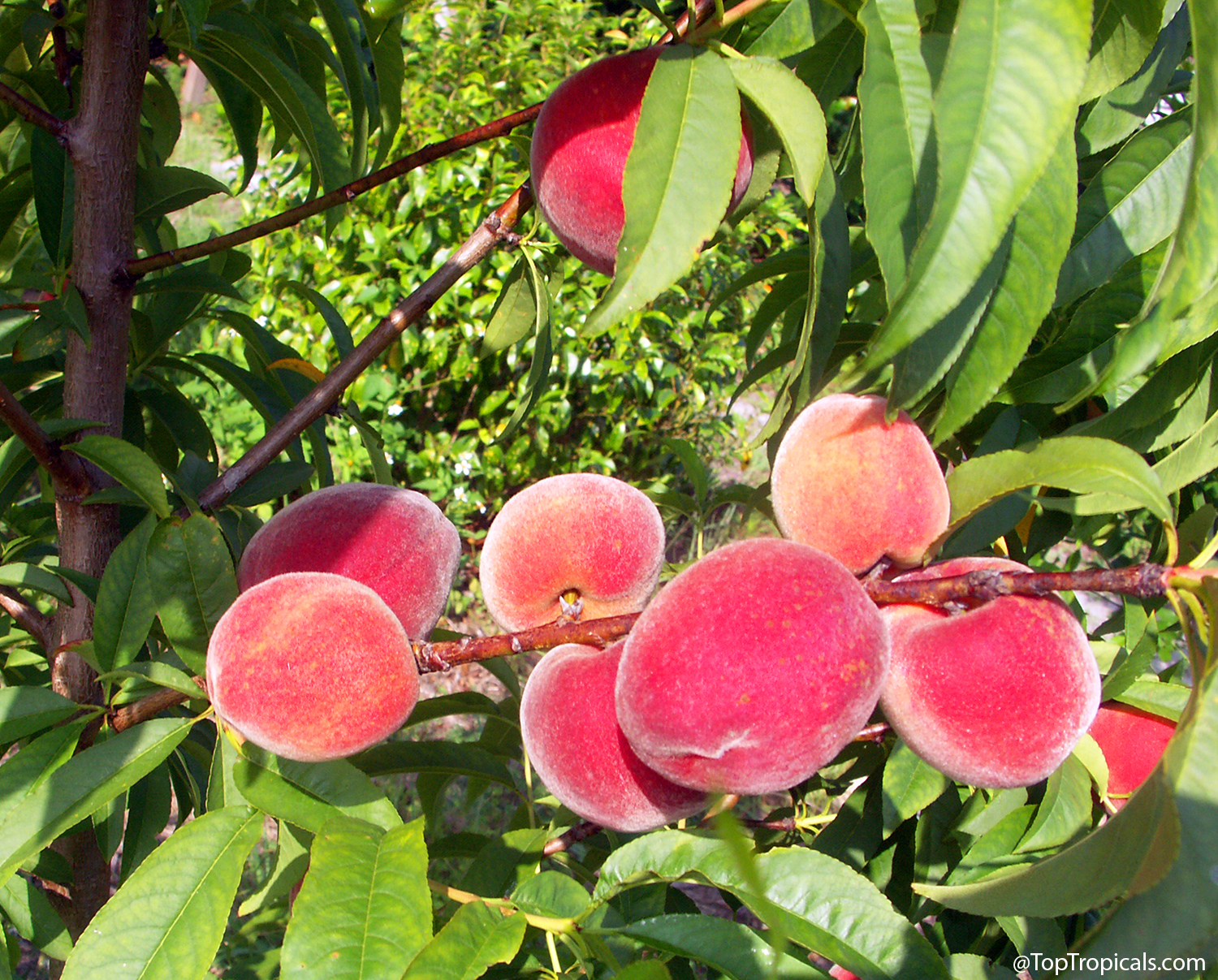
A  peach  tree  growing  outdoors  under  a  blue  sky  with  ripe  red-orange 
 peaches  hanging  among  long  green  leaves.  The  image  also  shows  a  close-up 
 view  of  several  fuzzy  peaches  ripening  on  a 
 branch.

Peach trees are beautiful long before harvest day - glossy green leaves, colorful fruit, and that classic fuzzy peach look straight from the branch.

I'll be honest with you. The first time I bit into a peach straight off the tree, still warm from the afternoon sun, I understood why people get obsessed with this fruit. There is no comparison to what you find in a grocery store. Store peaches are picked hard, shipped cold, and by the time they reach you, something important is already gone. A tree-ripened peach is soft, fragrant, juicy, and sweet in a way store peaches rarely are. Eat it fresh, slice it into a cobbler, throw it on the grill - it holds up beautifully either way.

Peach Plant Facts

Botanical name: Prunus persica, Amygdalus persica
Also known as: Peach
USDA Zone: 5 - 10
Highligths Small tree 10-20 ftFull sunWatering: Regular. Let topsoil dry slightlyWhite, off-white flowersPink flowersEdible plantDeciduous plantSubtropical plant. Mature plant cold hardy at least to 30s F for a short time
Get personalized tips for your region

So let's talk about how to actually get there.

Planting

Peaches are not difficult. Give them sun, drainage, and room for air movement, and they will usually tell you very quickly that they are happy.

  • Full sun is essential - 8 hours minimum, and more is better.
  • Drainage matters - peach roots do not like sitting wet.
  • If your soil stays wet, plant on a mound - simple fix, big difference.
  • Water deeply, then pause - let the soil partially dry before watering again.
  • Prune every year - it keeps the tree open, improves airflow, and helps the tree put energy into fruit instead of tangled growth.

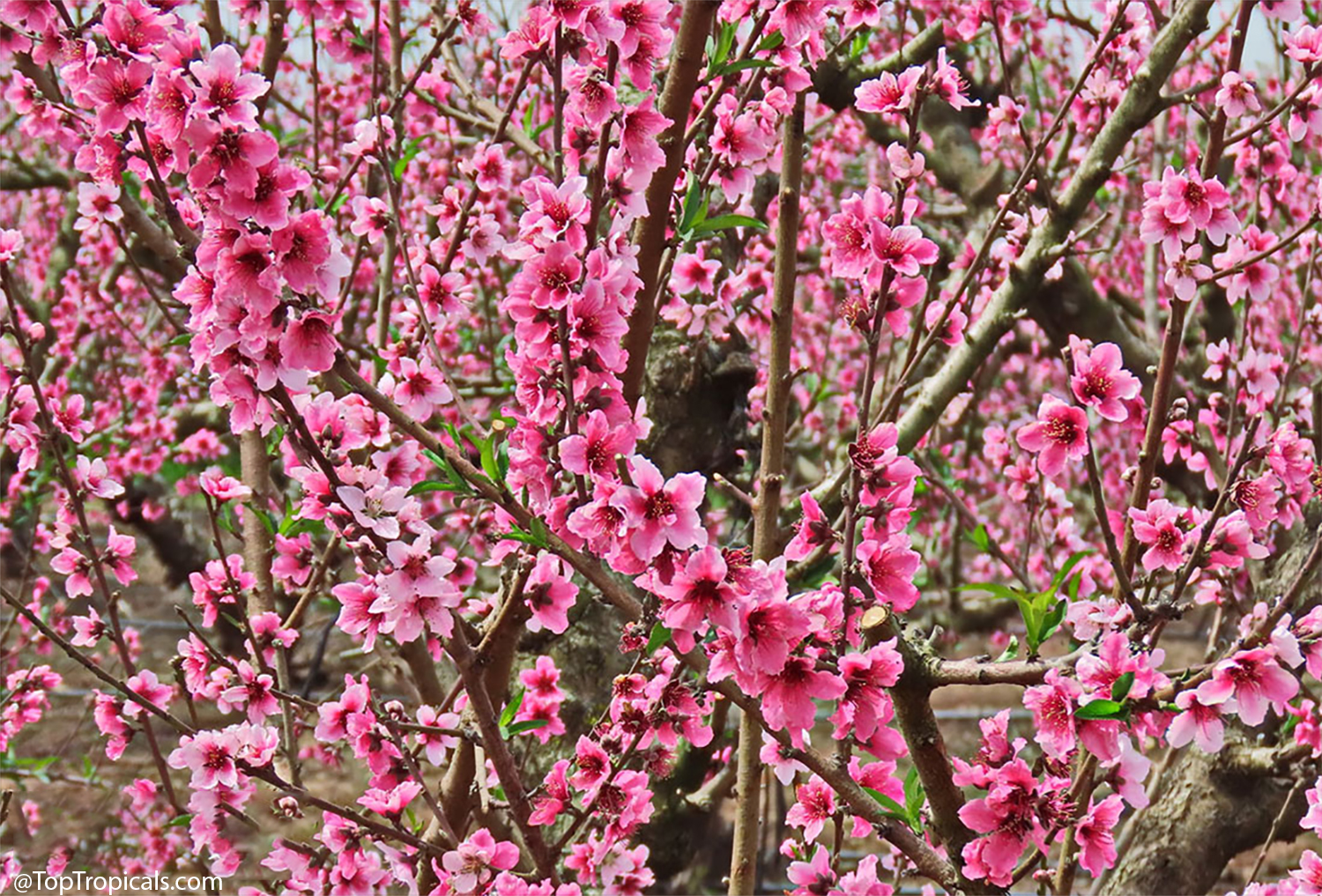
Branches  of  a  peach  tree  covered  in  masses  of  bright  pink  blossoms 
 during  spring  bloom.  The  flowers  densely  fill  the  tree,  creating  a  colorful 
 display  of  pink  petals  against  the  brown 
 branches.

Peach trees put on one of spring's prettiest shows - clouds of pink blossoms before the fruit season even begins.

What If You Do Not Have Room?

You can still grow peaches in a large container. This is a great option for patios, small yards, renters, or gardeners who want better control over soil and drainage.

  • Use a large pot with drainage holes.
  • Choose a fast-draining potting mix, not heavy garden soil. We recommend Sunshine Abundance potting mix.
  • Place the container in the sunniest spot you have.
  • Water more often than in-ground trees, but never let the pot stay soggy.
  • Prune to keep the tree compact and easy to manage.

Fertilizing

Peach trees are generous plants, but producing vigorous growth and a heavy crop of sweet fruit takes energy. Regular feeding makes a noticeable difference in tree health, flowering, and fruit quality.

I prefer a simple two-part approach that provides both steady background nutrition and quick, readily available nutrients when the tree is actively growing.

  • Green Magic controlled-release fertilizer provides a steady supply of nutrients for months and serves as the foundation of the feeding program.
  • Sunshine Boosters liquid fertilizers deliver amino acid-based nutrients that are quickly absorbed and especially useful during periods of active growth, flowering, and fruit development. Sunshine C-Cibus formula is the best for fruit trees.

During the growing season, this combination helps build stronger branches, healthier leaves, better flowering, and sweeter, higher-quality fruit.

If your tree shows yellowing leaves or weak growth, consistent feeding often makes a dramatic difference within a few weeks.

📚 More about low-chill peaches from our garden Blog

Clusters  of  ripe  fuzzy  peaches  growing  on  tree  branches  surrounded  by 
 long  green  leaves  in  bright  sunlight.  The  peaches  show  shades  of  pink,  red, 
 and  soft  yellow  as  they  ripen  on  the 
 tree.

Tree-ripened Tropic Beauty peaches warming in the sun - fuzzy, colorful, and almost ready to pick straight from the branch. Tropic Beauty variety is one of the most colorful and sweet.

📚 More about Tropic Beauty Peach

🛒 Shop Low-Chill Peach trees

Sunshine’s Philosophy: Lazy Peach Sundae 😺

Sunshine absolutely loves peach cobbler, especially when someone else does all the peeling, slicing, mixing, and baking. But when he is left to prepare dessert on his own, his standards become much more practical. Why turn on the oven when perfectly ripe peaches already taste amazing? His philosophy is simple: if a recipe takes less than five minutes and ends with peaches and vanilla ice cream in the same bowl, it is a masterpiece.

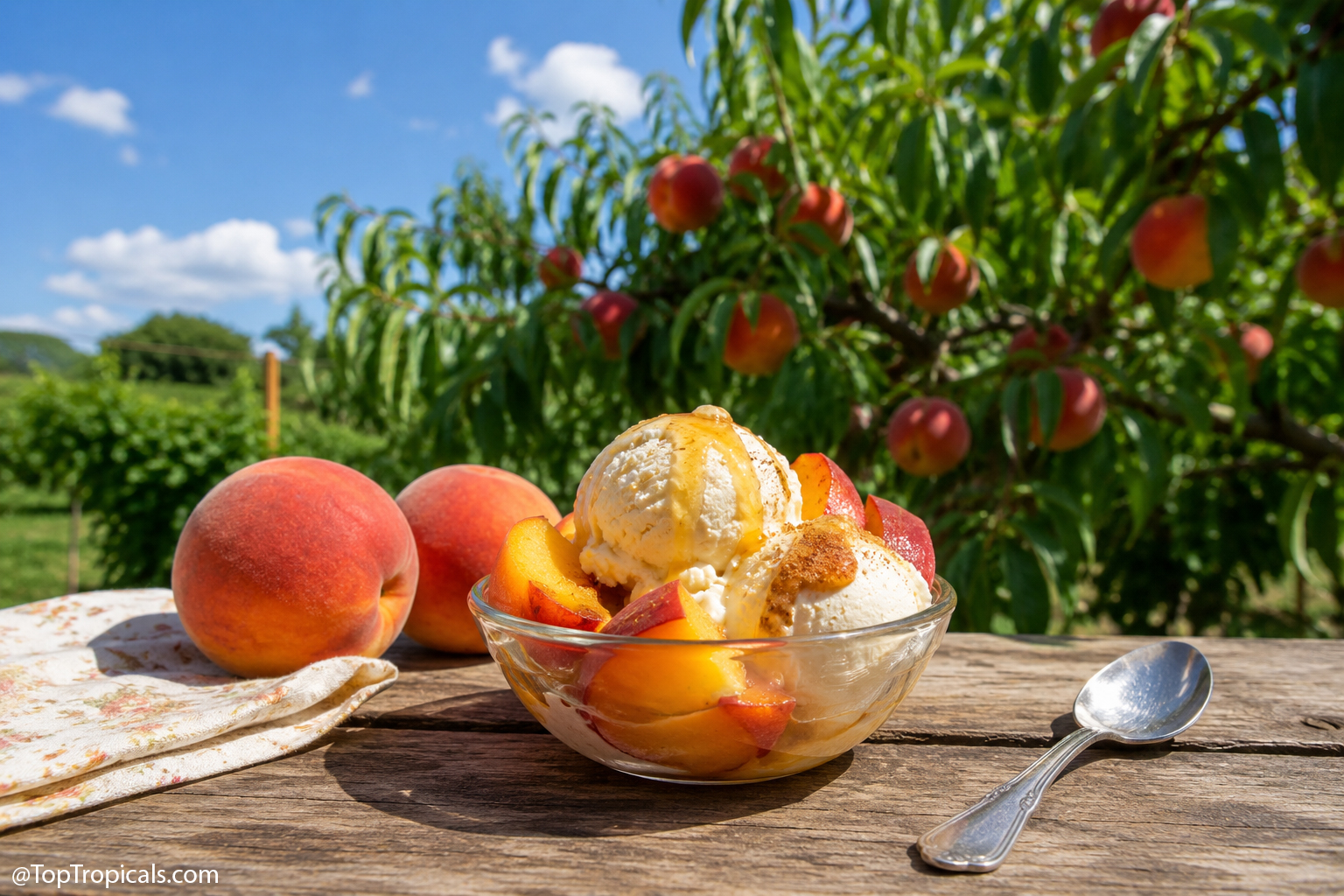
A  bowl  of  sliced  ripe  peaches  topped  with  two  scoops  of  vanilla  ice 
 cream,  drizzled  with  honey  and  lightly  sprinkled  with  cinnamon,  sits  on  a 
 rustic  wooden  table  outdoors.  Fresh  whole  peaches  rest  nearby,  with  a  sunny 
 peach  orchard  full  of  fruit  and  a  bright  blue  sky  in  the 
 background.

Sunshine's Lazy Peach Sundae - fresh peaches, cold ice cream, and zero effort on a perfect sunny day.

Sunshine's Lazy Peach Sundae

This is not cooking. This is assembly.

Ingredients

  • 2 ripe homegrown peaches
  • 2 big scoops of vanilla ice cream
  • A drizzle of honey (optional)
  • A pinch of cinnamon (optional)

Instructions

  1. Slice the peaches.
  2. Put them in a bowl.
  3. Add vanilla ice cream.
  4. Drizzle with honey and sprinkle with cinnamon if you feel ambitious.
  5. Eat immediately while smiling.

Sunshine's Review

"I peeled exactly nothing and still got dessert. This is my kind of gardening."

Want this?
Start with a low-chill peach tree. That is usually how it begins.

🛒 Plant your own Peach tree

Date: 12 Apr 2026

Easter morning with Smokey Sunshine

Easter morning with Smokey and Sunshine

Easter morning with Smokey and Sunshine

Easter morning with Smokey and Sunshine


Happy Easter to all who celebrate today - especially across Eastern Europe and Orthodox communities around the world.

Smokey and Sunshine are taking a well-earned break with coffee, sweet Easter bread, and a table full of spring color. Wishing you a day filled with peace, renewal, and quiet joy. And of course - the perfect time to plant flowers and fruit and bring new life into your garden.

🛒 Shop tropical flowers and plants

#PeopleCats

🟢 Join 👉 TopTropicals

Date: 16 Jun 2026

💜 The Tree Everyone Stops to Take Pictures Of

Sunshine,  an  orange  tabby  cat,  takes  a  selfie  beneath  a  blooming  purple
    jacaranda  tree  while  Smokey,  a  tuxedo  cat  wearing  glasses,  watches  nearby 
 at  Top 
 Tropicals.
Sunshine: Every angle looks good.
Smokey: That's because you're photographing a Jacaranda at peak bloom.
Sunshine: I think the purple brings out my orange.
Smokey:The Jacaranda makes everything look better.

There's a moment, if you've never seen a mature Jacaranda in full bloom, that stops you completely.

You're driving down a street, or walking through a neighborhood you've passed through a hundred times, and suddenly there it is — a tree that looks like someone painted it from memory rather than from life. The canopy spreads wide and low, covered so thoroughly in lavender-blue flower clusters that you can barely see the branches beneath. People are already stopped on the sidewalk. Someone has their phone out. A couple is standing beneath it, looking up.

You understand immediately why they stopped. You stop too.

That first encounter with a Jacaranda mimosifolia in bloom is the kind of thing gardeners remember for years. It's also, for many of them, the moment they decided they needed one.

👉Plant Your Purple Jacaranda

💜 The Tree That Turns Cities Purple

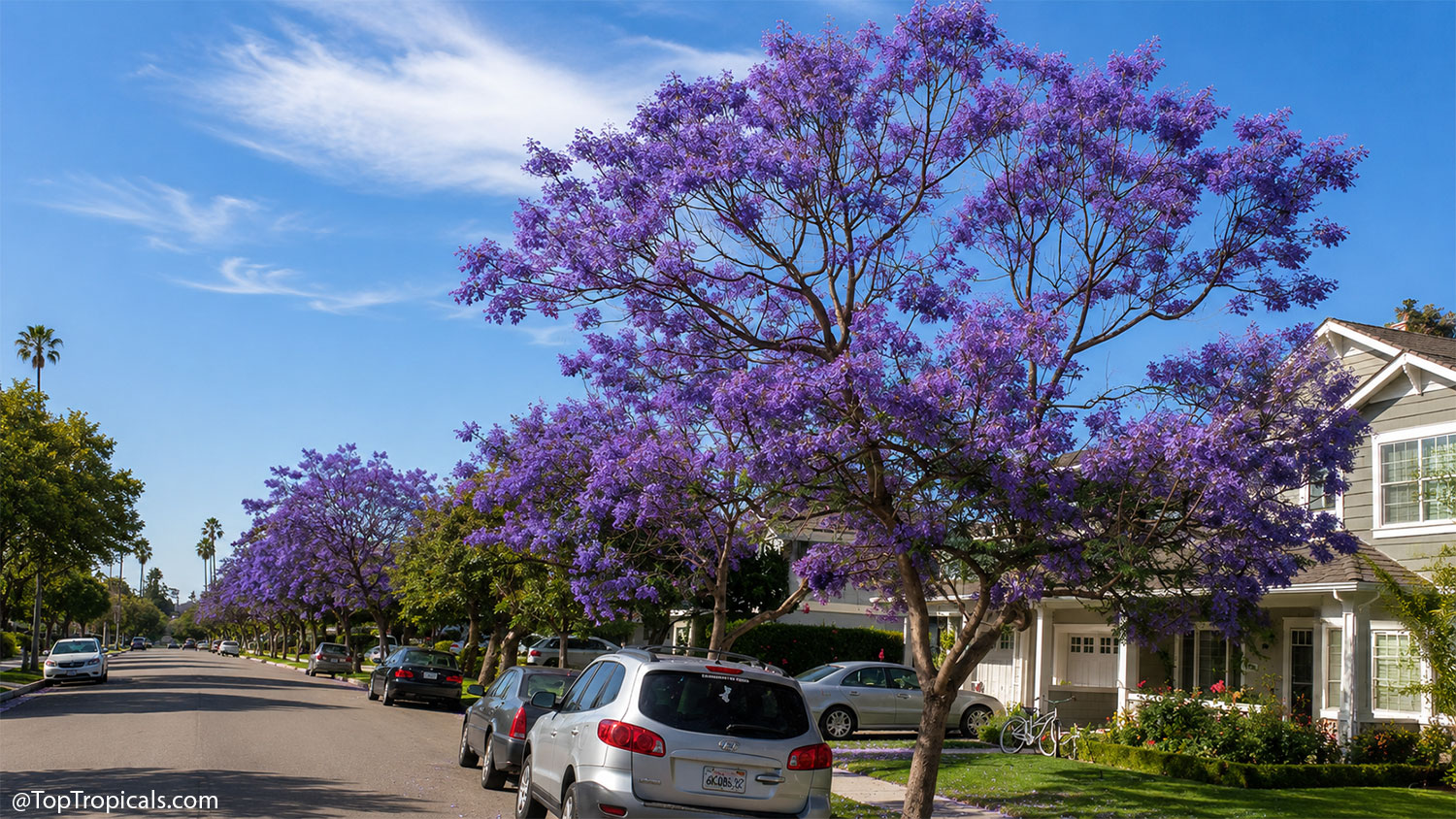
Residential  street  lined  with  blooming  jacaranda  trees  covered  in 
 vibrant  purple  flowers.  A  large  jacaranda  shades  parked  cars  and  front 
 yards,  while  additional  flowering  trees  create  a  stunning  purple  avenue 
 beneath  a  bright  blue 
 sky.

When jacarandas bloom, entire neighborhoods are transformed into rivers of purple. Their spectacular floral display turns ordinary streets into some of the most photographed landscapes of spring and early summer.

Most flowering trees get admired. Jacarandas become events.

Pretoria, South Africa is known worldwide as "Jacaranda City." During bloom season, entire neighborhoods seem to disappear beneath a haze of lavender-blue flowers.

Buenos Aires, Sydney and Brisbane have their own Jacaranda traditions. In Southern California, mature Jacarandas are so anticipated that bloom season regularly fills social media with photos of purple-lined streets and neighborhoods.

People don't merely grow Jacarandas. They wait for Jacaranda season. There's something unusual about a tree that generates that kind of anticipation. Most ornamental trees are appreciated in passing. Jacaranda creates a ritual.

💜 A Tree Surrounded by Legends


Mitu  mitu  bird  (Alagoas  Curassow)  -  adult  male.  Illustration  from 
 Nouveau  recueil  de  planches  coloriées 
 d'oiseaux,  1838

Mitu mitu — the bird of the Tupi-Guarani legend (Wikimedia Commons)

In Tupi-Guarani tradition, Mitu, a great forest bird, carried the Daughter of the Moon from the heavens and placed her in a flowering Jacaranda tree. She descended among the people, bringing wisdom and knowledge before returning to the sky.

Few trees become part of local folklore. Fewer still become part of everyday life across multiple continents.

💜 Beautiful Beyond Bloom

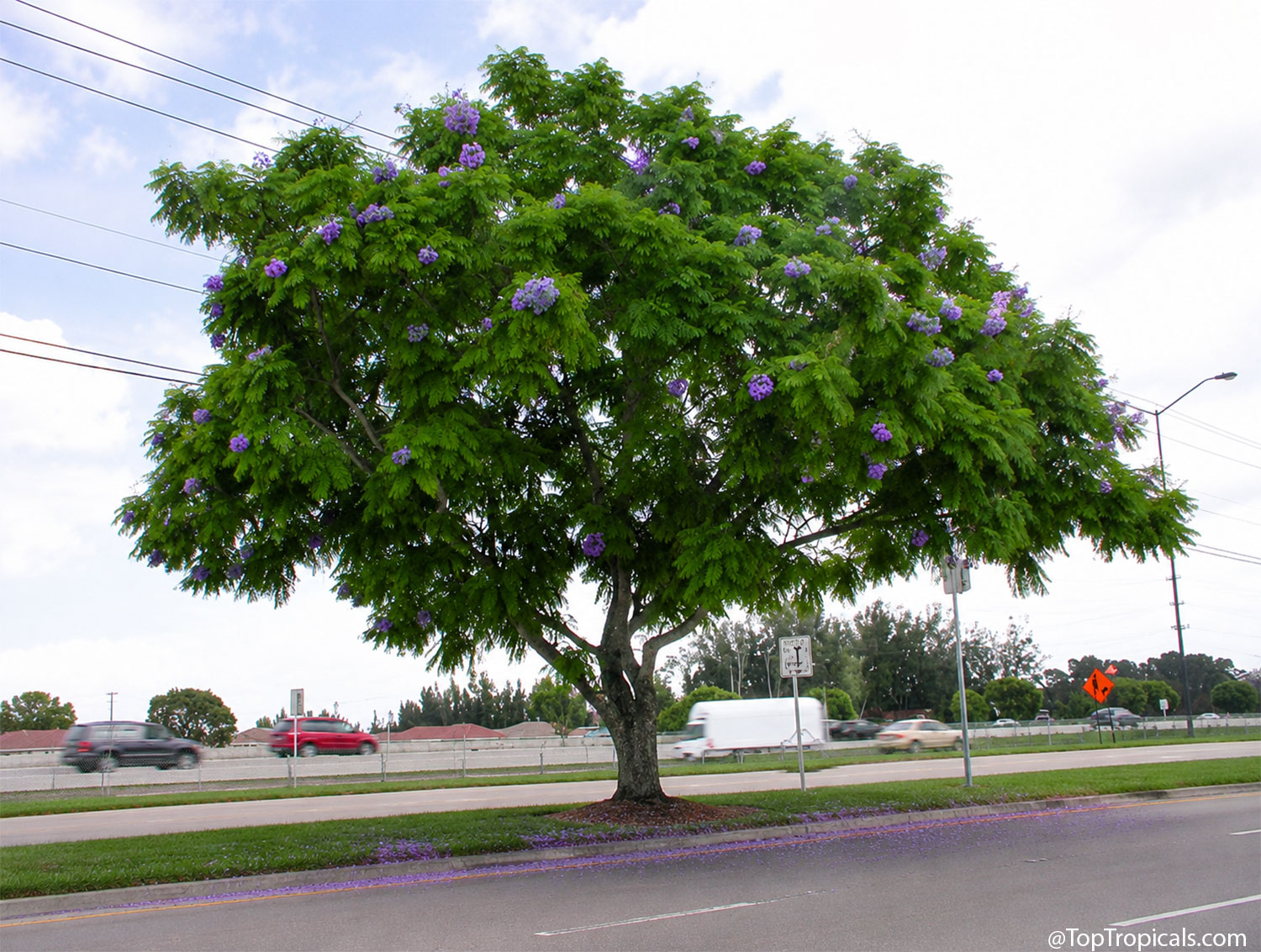
Young  jacaranda  tree  with  lush  fern-like  green  foliage  and  scattered 
 clusters  of  purple  flowers  growing  along  a  roadside.  The  broad  canopy  forms 
 a  graceful  umbrella  shape,  showing  the 
 tree's  attractive  structure  even  when  not  in  peak  bloom.

Jacaranda is beautiful even outside its main flowering season. Its finely divided, fern-like foliage creates a soft tropical canopy, while occasional clusters of purple blooms offer a preview of the spectacular display that transforms the tree into a cloud of lavender each year.

Here's what surprises people who plant their first Jacaranda: they love it even when it isn't flowering.

The foliage is finely divided and fern-like, giving the tree a delicate, airy texture that softens any landscape. The branching structure is naturally graceful, spreading wide with a canopy shape that looks considered rather than accidental. The light that comes through the leaves is gentle and dappled — the kind of shade that doesn't feel heavy, that lets enough brightness in to make the space beneath feel pleasant rather than dim.

💜 Mature Size

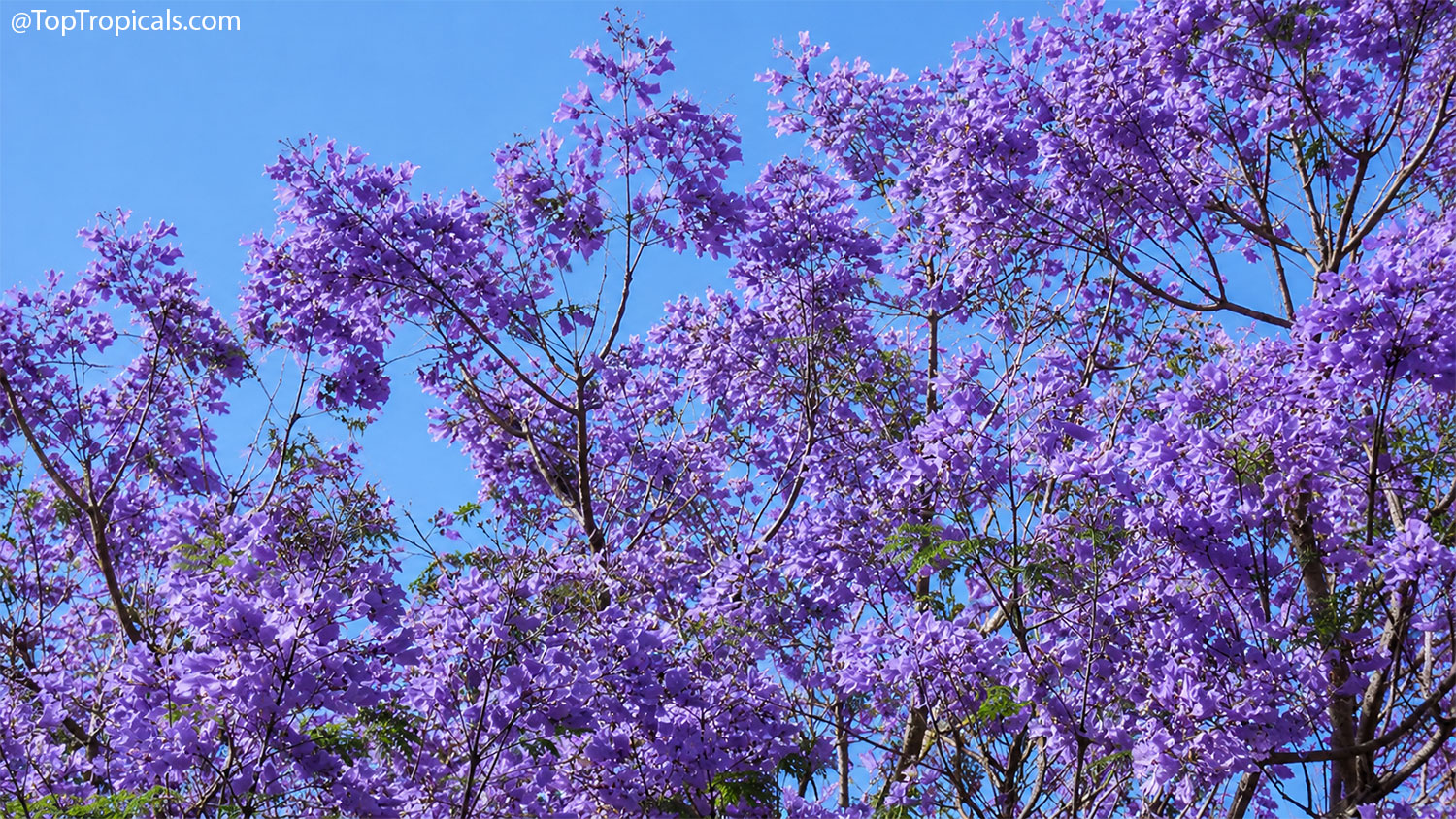
Upper  canopy  of  a  blooming  jacaranda  tree  filled  with  thousands  of 
 lavender-purple  flowers  against  a  clear  blue  sky.  The  delicate 
 trumpet-shaped  blossoms  create  a  soft,  cloud-like  effect  among  the 
 tree's  fine  branches  and  sparse  fern-like  foliage.

At peak bloom, jacaranda trees appear draped in purple clouds. The airy canopy of lavender blossoms creates a breathtaking display that has made this tree famous in gardens, parks, and city streets around the world.

A mature Jacaranda typically reaches 25 to 30 feet tall with a broad, spreading canopy of similar width. Given room to grow, it becomes a true focal point in the landscape.

That size is the point. A Jacaranda works beautifully as a specimen tree where you have room to let it express itself fully. It makes an excellent lawn tree, its canopy casting light shade over a wide area. Planted where it can be seen from a distance, it becomes a focal point in any season and a spectacle during bloom.

If you want a tree that will grow into something people notice — something that will still be there and still be blooming long after you've finished planting the rest of the garden — Jacaranda delivers.

How to Grow Jacaranda

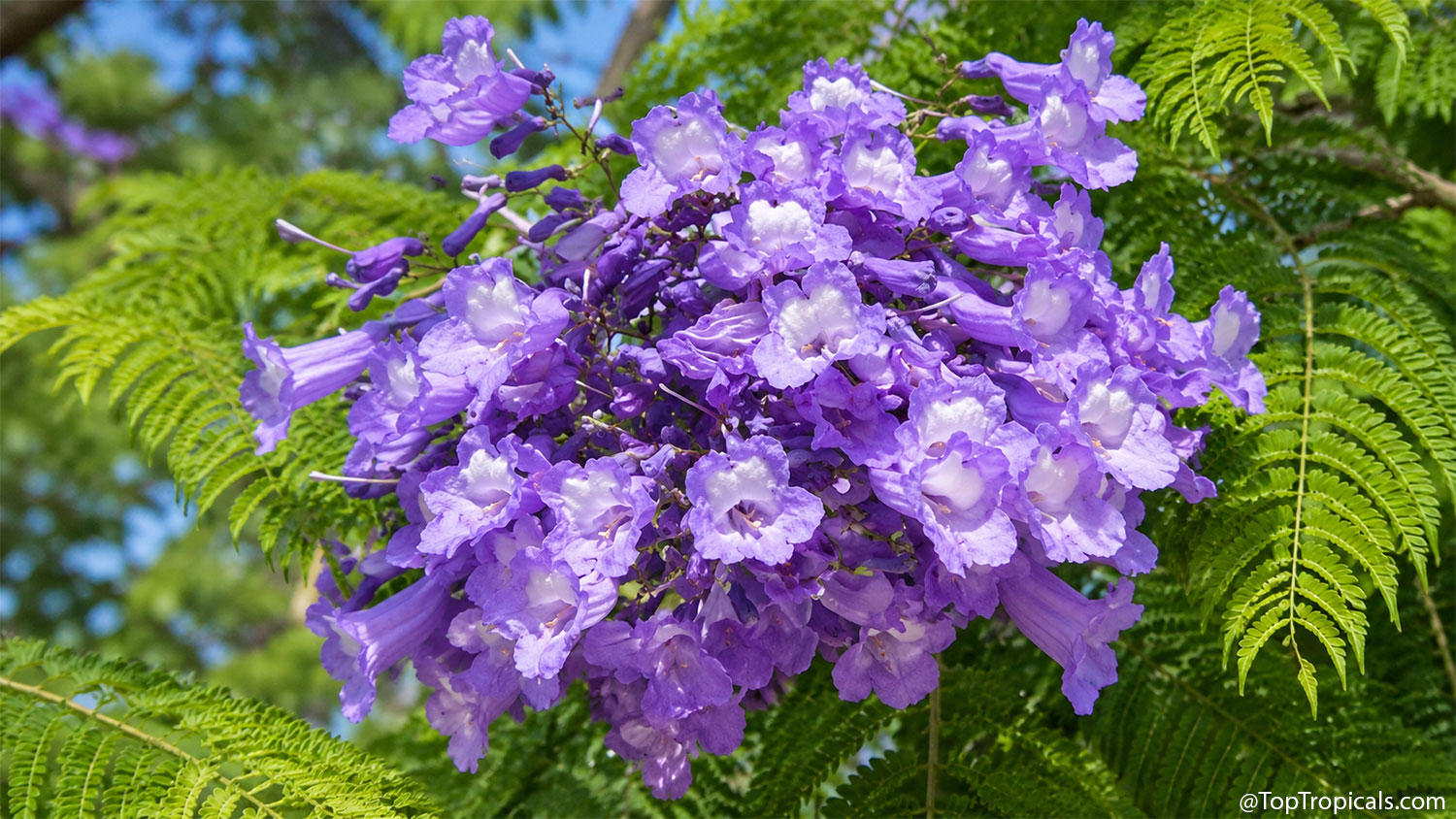
Dense  cluster  of  lavender-purple  jacaranda  flowers  surrounded  by 
 delicate  fern-like  green  foliage.  The  trumpet-shaped  blooms  are  packed 
 tightly  together,  with  pale  white  throats  creating  a  striking  contrast 
 against  the  vibrant  purple 
 petals.

The beauty of jacaranda is not only in its massive floral display but also in the individual flower clusters. Each bouquet combines dozens of delicate trumpet-shaped blooms framed by soft, fern-like foliage, creating a perfect balance of texture and color.

For best results, provide:

  • Full sun
  • Best planted away from sidewalks and driveways
  • Well-drained, sandy loam; highly sensitive to waterlogged or heavy clay soils
  • Regular watering while establishing
  • Moderate watering once mature
  • A balanced fertilizer during the growing season
  • USDA Zones: 9B – 11. Can tolerate brief, light frosts once mature. Protect from cold while young

Bloom season: Late Spring to Early Summer (Main flush), occasional light scattered bloom in Fall. As the flowers fall, they often create a colorful purple carpet beneath the canopy, extending the display from the branches to the ground below.

In warm climates such as South Florida, coastal Southern California, and Hawaii, Jacaranda can become a long-lived landscape tree that provides shade, beauty, and spectacular seasonal blooms for decades.

Top Tropicals Tip:
To help young trees get established quickly, consider using Sunshine Boosters Green Magic when planting or transplanting. During the growing season, regular feeding with Sunshine Boosters Megaflor can help support vigorous growth and a healthy canopy.
To maximize the bloom density for next season, ensure the tree receives consistent micronutrients during the late summer growth surge.

Read Top Tropicals Guide to Sunshine Boosters™

Jacaranda can also be grown in large containers, where its size may be managed through container culture and occasional pruning. This is a useful option for gardeners in colder climates or for those who wish to enjoy the tree on patios and terraces.

📚 More About Jacaranda on the Top Tropicals Garden Blog

💜 Why Gardeners Fall in Love With Jacaranda

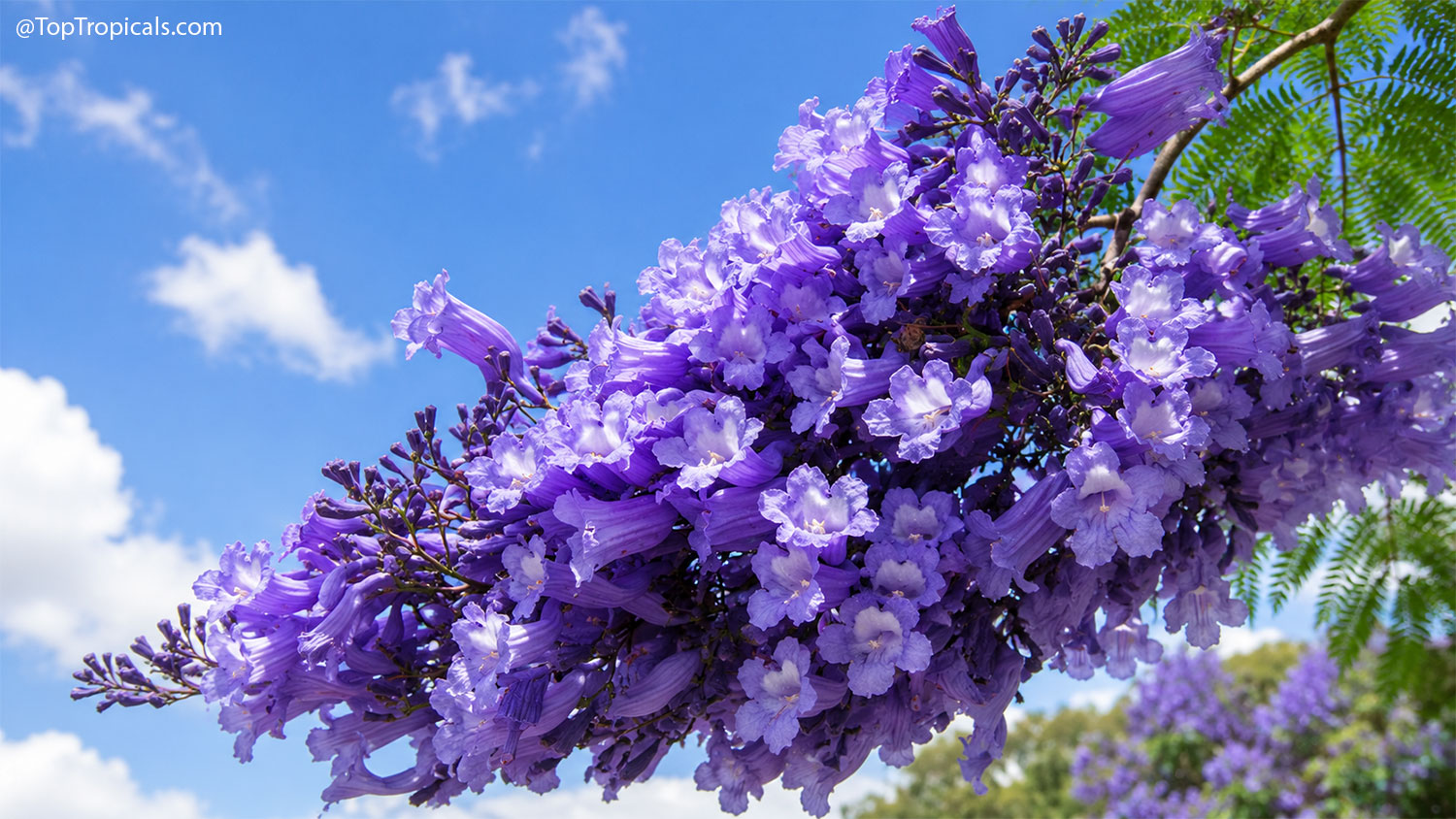
Large  cluster  of  lavender-purple  jacaranda  flowers  hanging  from  a 
 branch  against  a  bright  blue  sky  with  white  clouds.  The  trumpet-shaped 
 blooms  are  packed  tightly  together,  creating  a  spectacular  display  of  color,
    while  delicate  fern-like  foliage  frames  the 
 scene.

Jacaranda flowers bloom in dense clusters of lavender-purple trumpets, creating one of the most spectacular floral displays in the tree world. Against a clear blue sky, the blossoms seem to glow, giving the tree its famous "purple cloud" appearance.

Ask someone with a mature Jacaranda in their yard what it's like when it blooms, and they'll usually smile before they answer.

There's a particular pleasure in seasonal anticipation - in knowing that something beautiful is coming, in watching for the first flower clusters to appear, in the morning you walk outside and realize the tree has finally opened. Jacaranda delivers that pleasure reliably, year after year.

Mature trees become landmarks. "Turn left at the purple tree" is a surprisingly common way to find a house during Jacaranda season. They become the reason people slow down while driving past your house. They become the tree your kids remember.

Few landscape trees combine beauty, shade, elegance, and seasonal drama quite the way a Jacaranda does. Long after the flowers fade, the tree remains a graceful presence in the garden. And when bloom season returns, it reminds you exactly why you planted it.

Some trees provide shade. Others provide flowers. Jacaranda provides both.

That's a rare thing in a garden, and it's worth planting.

Sunshine: What happens when the flowers are gone?
Smokey: Then you enjoy the tree.
Sunshine: And when the flowers come back?
Smokey: Then you remember why you planted it.

👉Shop Jacaranda Trees

Close-up  of  pale  lavender  jacaranda  flowers  showing  the  distinctive 
 trumpet-shaped  blooms  with  soft,  velvety  petals  and  fuzzy  white  throats. 
 Sunlight  highlights  the  delicate  flower  texture  against  a  softly  blurred 
 background  of  green 
 foliage.

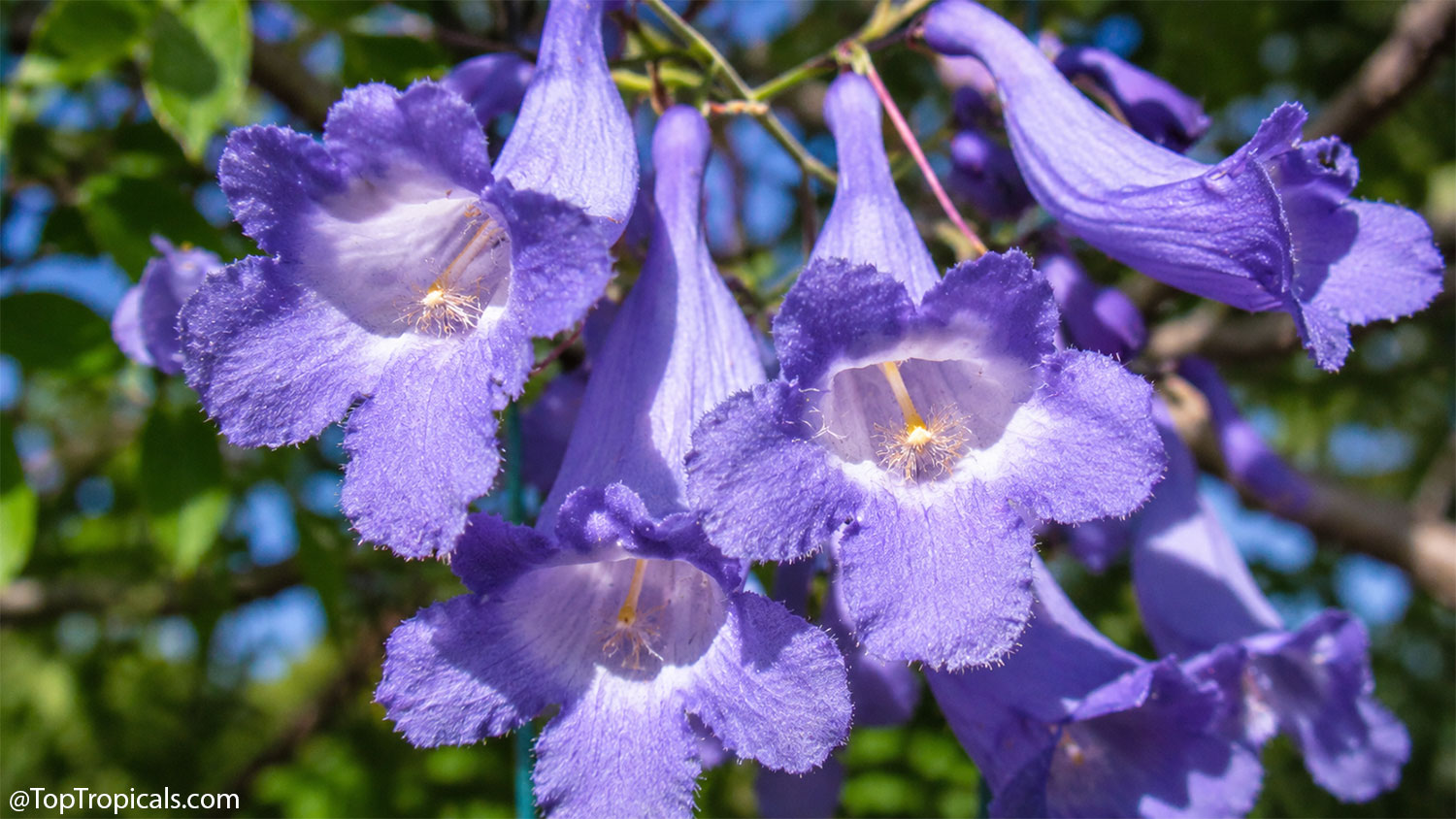
A close-up look at the intricate flowers of the Jacaranda tree (Jacaranda mimosifolia). Each velvety trumpet-shaped bloom combines soft lavender tones with delicate textures that make this tree one of the most recognizable flowering trees in the world.