Date: 23 Oct 2020
Cashew Nut tricks and challenges

Q: I bought a cashew plant in May of this year it has been slow-growing well then all of a sudden it started dying. I have cut it back halfway down. So a plant that was close to 3 ft tall is now 1 1/2 feet. I see new leaves trying to spring closer to the root. Help! It's in a huge 18"wide pot, I have not put it in the ground yet. I am in the Orlando area.
A: Generally speaking, Cashew is not the easiest plant to grow. Cutting it down added more stress to the plant. A few thoughts:
1) Chances are, the tree was over-watered (possibly summer rains, we had pretty wet summer this year in FL). Cashew trees are very sensitive to over-watering while young. Considering it sits in pretty large pot, this may have created soggy conditions. Don't bother repotting the plant now, just try to reduce watering. We have less rains now. If you have automatic sprinklers, move it away from sprinkler so you can control moisture manually. Even better - move it under roof (lanai, etc) where it still can get lots of bright light, but you can control water.
2) In Orlando, winters are too cold for this tree. Make sure to protect it from cold - bring inside when temperature drops below 65F, especially considering that the plant is still struggling.
3) Keep in mind that Cashew is semi-deciduous tree, meaning it looses leaves during cooler period. If all leaves are gone but the stem still green (after nail scratch) - just give it time, it may start growing vigorously in Spring.
4) You may apply Sunshine Boosters with every watering (which should be once a week, or even less frequent if the soil is still moist) - SUNSHINE C-Cibus - Crop Nutrition Booster
Keep the plant in full sun or at least very bright filtered light. It must be always warm. Bring inside if below 65F.

Date: 11 Jan 2025
Discovering the jungle


🌳 Discovering the jungle
Our Sushi was in the tree today. She gets herself up there and cries because she can't get down. She was on the roof the other day too. We showed her a tree to get down from. She just kept crying. Will she figured it out eventually?
🔠 PeopleCats.Garden
#PeopleCats #Quotes
🔴 Join 👉 TopTropicals
Date: 13 Aug 2025
Lilys guide to the good life
Cat Lily (Lilimon)
🌳 Lily’s guide to the good life
Lily (aka Lilimon) has officially settled into Bfarm life - and she's living it up!
She's claimed a fluffy blanket as her spot, where she purrs away while kneading it like she's making bread.
When she's not in her cozy corner, she's off exploring the indoor jungle, getting into shenanigans with the other #PeopleCats, or joining in on Catnip Parties and rolling around like the happiest cat in the world!
Life is definitely treating Lily well.
🐈📸 Cat Lily has a happy life at Top Tropicals PeopleCats.Garden.
#PeopleCats
🟢 Join 👉 TopTropicals
Date: 19 Apr 2024
New Complete Guide to Avocado Varieties
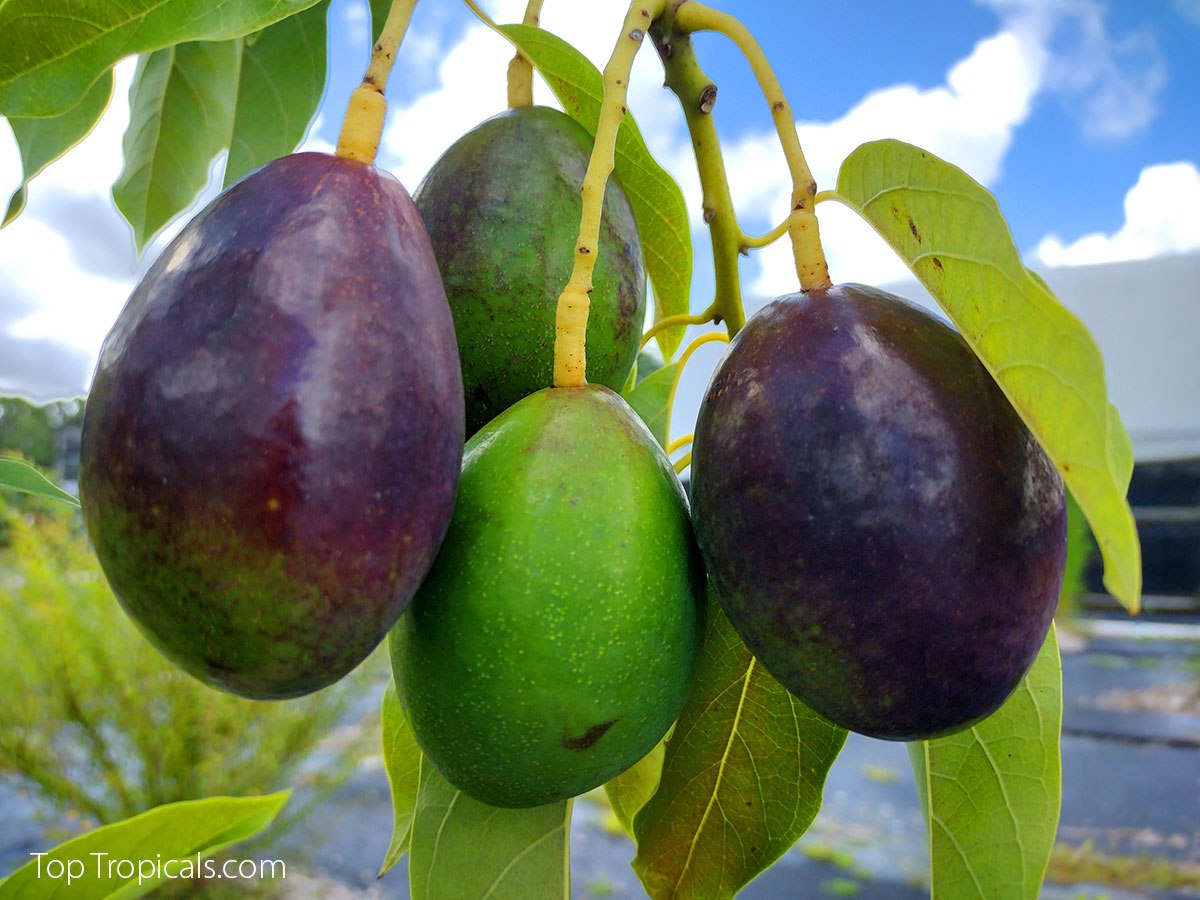
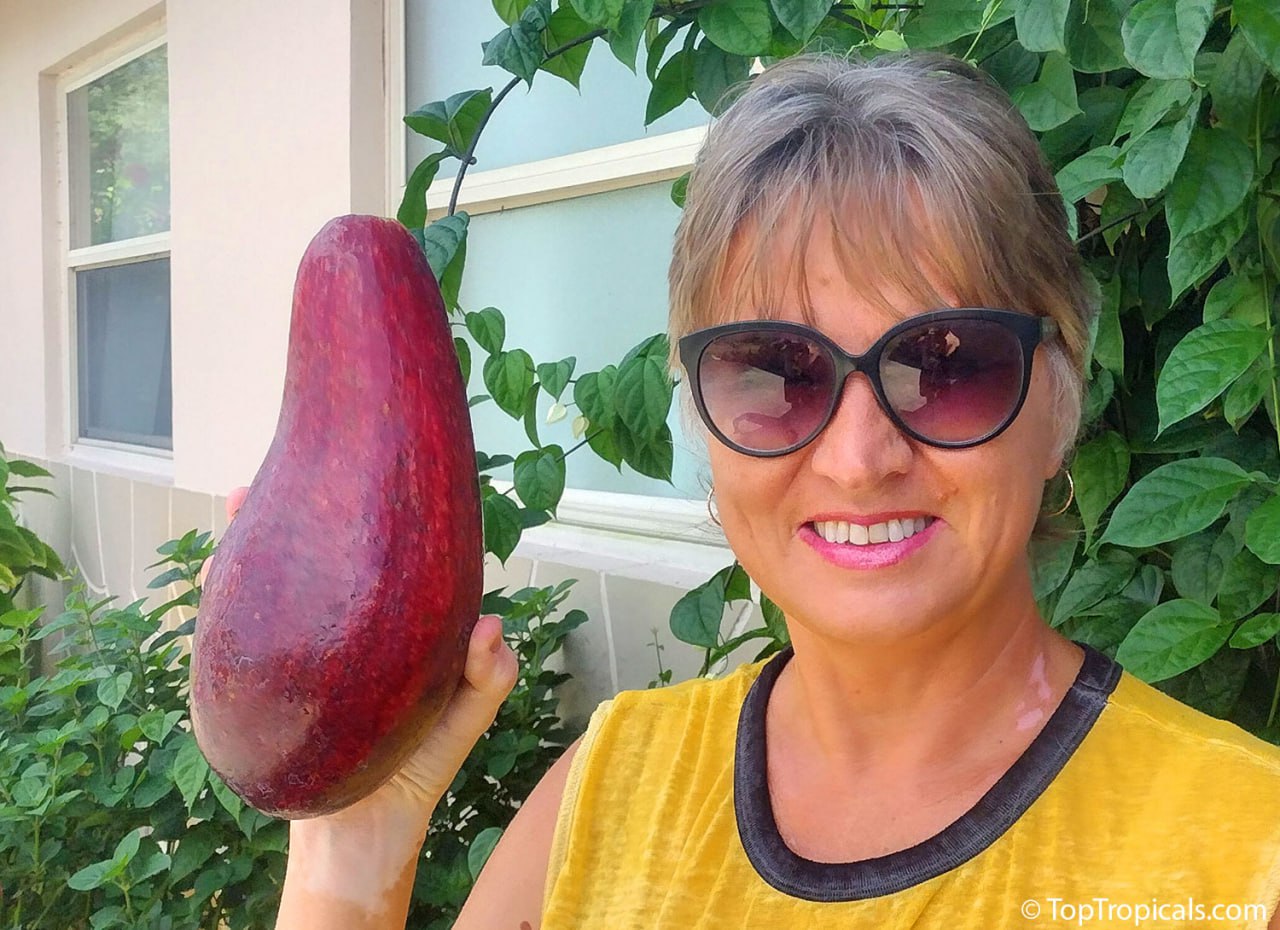
How many varieties of Avocado are there in cultivation? Did you know that there are hundreds of them? You probably thought there were only 2 kinds - black and green?
You may not realize is that this basic (but practical!) classification doesn't encompass all the wonderful qualities avocados have to offer.
There are numerous hybrids in cultivation, and once you plant your first tree and taste the REAL fruit (not from the grocery store), you'll be eager to explore other varieties. It's a guarantee! While it's true that avocado fruit can vary in "butter" content, most superior varieties are equally delicious.
This Avocado Variety Guide helps to choose the right variety for you. With its interactive tool, you can sort cultivars by fruit shape and quality, cold hardiness, origin, crop season, flower type A or B, tree habit and more.
🛒 Shop Avocado Varieties
#Food_Forest #Fun_Facts #How_to
🏵 TopTropicals
Date: 10 Jul 2025
🐉 New video:
Quick Guide - How to grow Dragon Fruit from a cutting
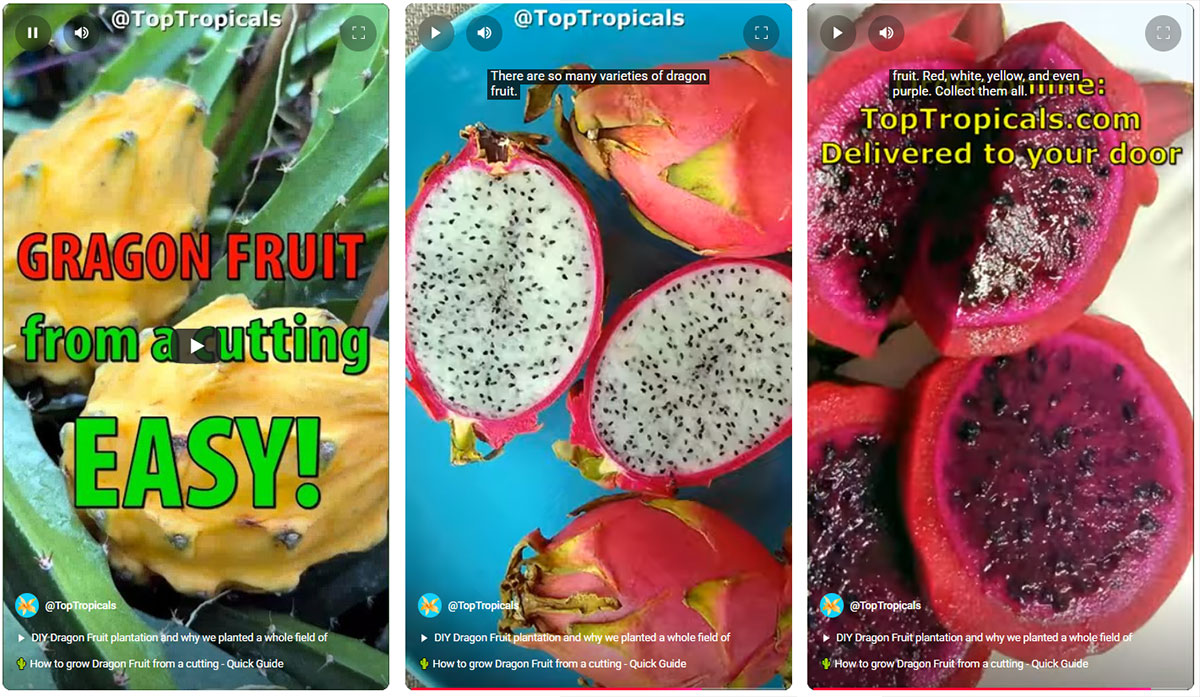
Step by step guide:
1. Use a 6-10 inch long stem cutting from a mature dragon fruit plant. Let the cut end dry in the shade for 2-5 days so it forms a callus. This also helps prevent rot and fungus.
2. Use well-draining soil - well drained potting mix, Adenium mix, or cactus mix. Dragon fruit hates wet feet!
3. Plant the cutting. Stick the callused end about 2-3 inches deep into the soil. Make sure it's planted upright (the way it grew on the parent plant).
4. Support it. Add a trellis or post. Dragon fruit is a climbing cactus and needs something to grow on.
5. Water lightly. Water once after planting, then wait until the soil dries before watering again. Overwatering can rot the cutting.
6. Give it light and warmth. Place in bright, indirect sunlight while it roots. Once established, it can handle full sun. Watch it grow! Roots usually form in 2-4 weeks. New growth means it's taking off! This is the time to Ferilize it!
Watch the 30-sec video Shop Dragon Fruits