Date: 18 Dec 2018
Christmas Special - Lolita Cherry
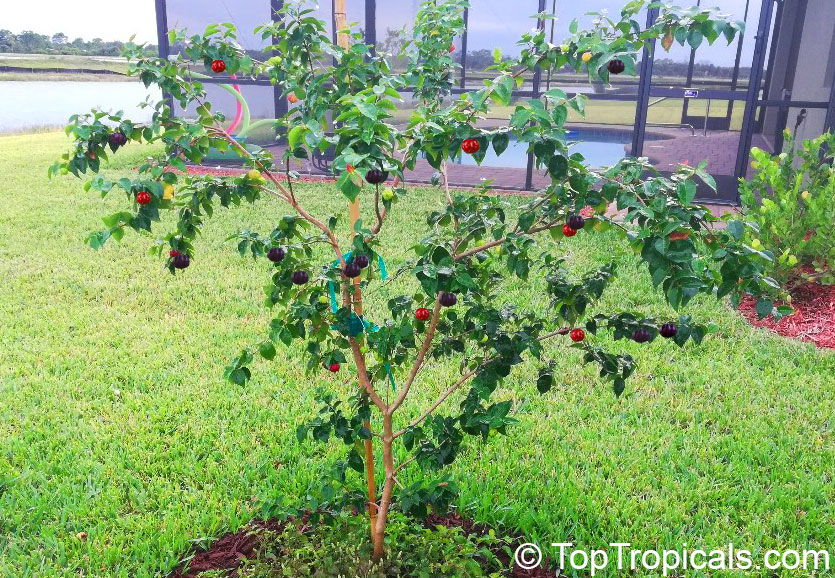
This amazing cherry is by far our favorite. Lolita is an exclusive
variety of Black fruited Surinam Cherry that starts as red and turns black as it
ripens. The fruit has exceptional flavor and has no aftertaste, unlike regular
Surinam cherries. It is large, 1-1.5"size, super sweet when fully ripe. The
tree is a dwarf statue, 5-6 ft or smaller if pruned. It is upright and
freely branching. Plants start flowering and fruiting in 1 gal container. The
plants we have in stock are ready to fruit in 2019.
These cherries are cold hardy and can take short periods of frost. Once
established, the plant can withstand upper 20's without damage.
Lolita is very hard-to-find, and we have limited quantities, hurry up!

To expedite your order for Christmas, request rush shipping in order notes, contact us
Date: 12 Dec 2018
Plants which are family members
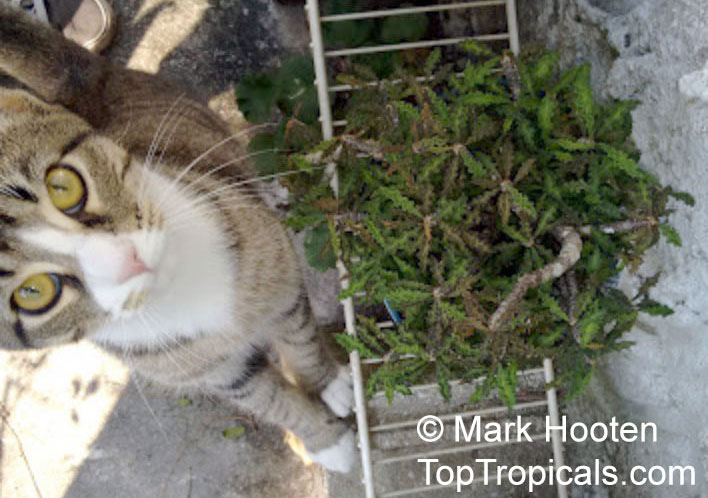

By Mark Hooten, the Garden Whiz
...Perhaps approaching the New Years Season makes me appreciate the plant people I've known. It also made me take stock of the great plants I've had for the longest time. Doing so, I've come to realize that I care for over a handful of potted plants which I have
owned for a number of decades. This Euphorbia decaryi is one of them... Read the story...
...I wonder about other folks' special plants which they have kept for so long they seem like family members. So I ask any of our online friends to send us images and the brief history of some special plant which they have cared for and loved for a LONG TIME! You know, heirloom type plants. We would love to share stories and pictures of these special plants with others!..
Check out our Euphorbias
Date: 29 Nov 2018
Featured Plant. Calathea x roseopicta Dottie - Prayer Plant
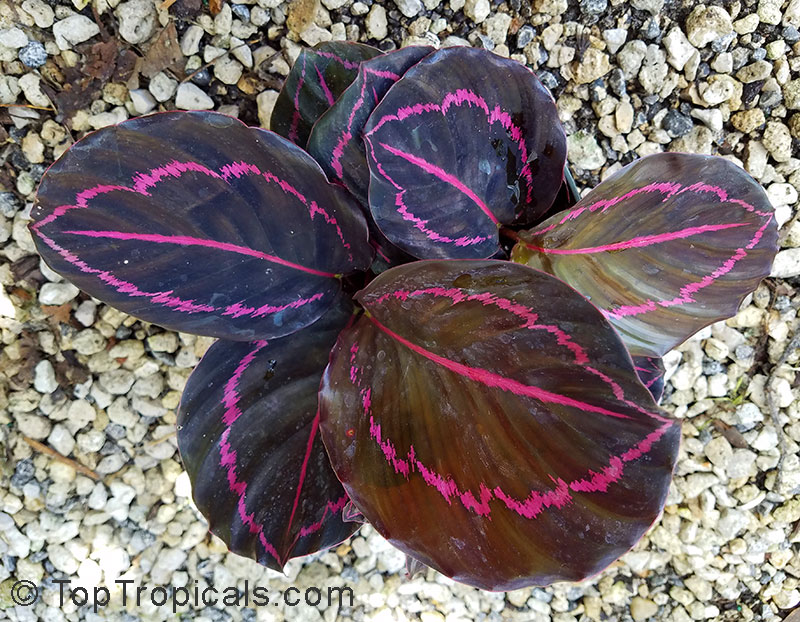
Calathea x roseopicta Dottie - Prayer Plant
Rare hybrid of Calathea - Dottie - is a wonderful, colorful small plant that will brighten your shade garden or indoor plant collection. It has vivid pink markings with an entire and wavy margin. The leaf surfaces are colored very dark black-green and its midrib beautifully marked with a distinctive bright pink that also encircles the leaf about 0.5-1" from the margin. These beautiful markings remain vivid pink even as the plant matures. Newly emerged leaves are slightly lighter in color. Leaves underside is purple. Dottie has the characteristic feature of folding up their leaves at dusk to dawn by means of the tiny geniculum, an angular knee-like joint connecting it to the petiole, resembling hands put together in prayer, hence the other common name, Prayer Plant. And, in the morning the leaves will return to normal position, that is, almost perpendicular to the petioles. The plant does occasionally produce purple and white flowers. Perfect small accent plant for shade tropical gardens or as a houseplant.
See all exotic varieties of Calatheas from our store...
Date: 2 Nov 2018
Happy Hobby: growing tropicals from seeds
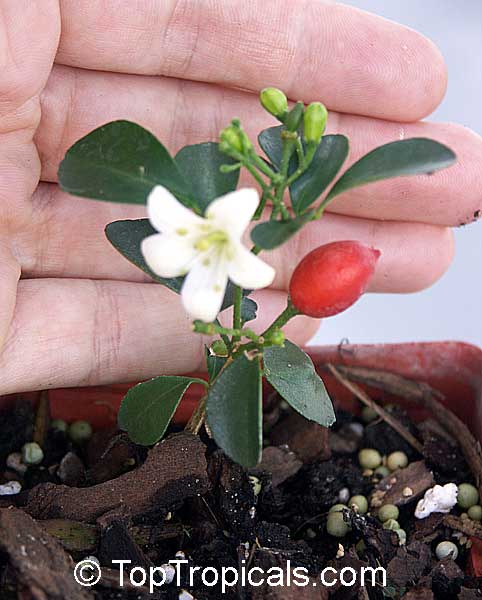
Q: What is the best time to start tropical plants from seeds? Should I wait till spring?
A: If you
want to feel happier, get into gardening. If you want to feel God, start
plants from seeds and watch New Life grow from a tiny grain. Fall is a perfect
time to start tropicals from seed.
Traditionally, people prefer sowing seeds in Spring, especially
temperate species for a vegetable garden: tomatoes, peppers, cucumbers... My
grandmother up North started them in early Spring in paper cups on a windowsill,
then once the temperatures went just above freezing, she planted them out in the
garden beds, and that early start always helped her to have the best early
crop in the neighborhood.
When we deal with tropical plants, "just above freezing" is not warm
enough. Which means you have to grow small babies indoors for quite a while,
providing additional heating when needed. Heating pads always work best. If you
keep your living space around 75F (ideal for many species), this is a
perfect temperature to get your seeds started. Tropical plants are not like annual
tomatoes that try to grow through the season as fast as possible. They take
time. So the sooner you start, the more chances to get small seedlings just in
time when Spring air outside is "warm enough" for those tropicals - at least
in 70's.
A great advantage of starting tropical seeds indoors is controlled
temperature and moisture. In the plant world, environment extremes are not good
for the germination process. Mild conditions of your home or a greenhouse
create better chances for successful growth. Seeds won't get overheated in the
hot Summer sun, and won't rot because of a sudden heavy rain. Just keep in mind
that some species require light for good germination.
For the best seed germination:
- Use only well-drained mix - we recommend special Seed Germination Mix #3, professional grade. Put seeds not too deep
(1/2 inch deep or less) to allow air circulation
- Soak large seeds for a few hours with Sunshine-S solution
- Keep warm (75-85F) and in bright light
- Keep soil slightly moist but not soggy
- Apply micro-element booster SuperFood
Date: 25 Sep 2018
How to get Passion Vine to flower?
From Mark Hooten, the Garden Whiz
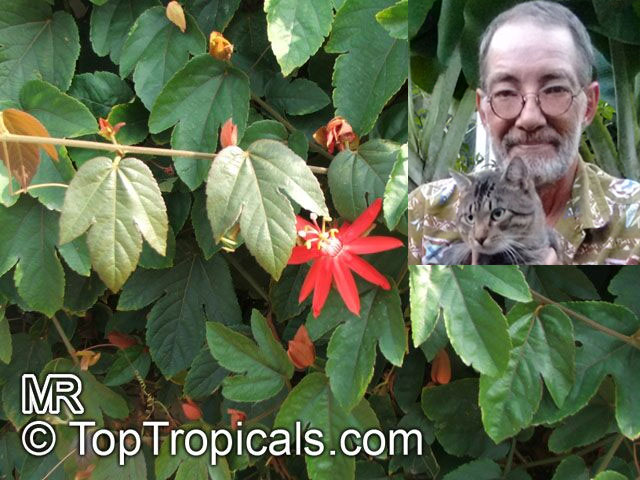
Q: Several months ago, I purchased a passionflower vine, a red one with lots of flowers. I ended up putting it in a much larger pot with a large trellis, using a popularly advertised bagged potting soil recommended at a big box store. I have given it a blue colored water-soluble fertilizer every couple of weeks as recommended. However, while the vine seems very happy, growing faster than i can keep winding it around the trellis, it has not flowered all summer. I there something I am doing wrong?
A:
Passionvines as a group (and there are some 500 different kinds!) are sort-of
unusual among popularly grown ornamentals because they have "nitrogen issues". This
is because, even though unrelated, they are much like most legumes, as they
maintain a symbiotic relationship with certain beneficial soil bacteria which
allows them to gather atmospheric nitrogen and store it in their roots. When
they have an overabundance of nitrogen, they simply stop flowering and
produce rampant leafy growth while never flowering. They only flower well after a
period of healthy vine growth, because the plant had finally used up all of
its stored nitrogen.
Since you had both used a bagged potting soil which likely already
contained fertilizer with nitrogen added, as well as bi-monthly doses of a liquid
fertilizer which also contains nitrogen, it has been receiving so much
nitrogen it only knows to grow more vineage until the nitrogen is used up. If and
when that happens, it will again begin to flower. This rule applies of course
not only to flowering but also to fruiting varieties of Passiflora: the more
flowers, the more fruit you get!
So the answer is - for the time being, just stop giving it supplemental
fertilizer and it will start flowering for you sooner than later!