Garden Blog - Top Tropicals

Date: 6 Nov 2018

Elephant Foot Yam seed production
TopTropicals.com

Q: Very interesting information about Amorphophallus in your recent newsletter! (which I always enjoy BTW). I would like to purchase those fresh seeds, and I have a couple of questions. Did you have to hand pollinate that flower? I've heard it is not easy to set a fruit. Also, is this an edible variety?

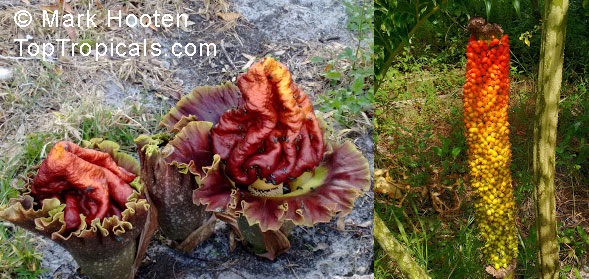
A: From Mark Hooten, the Garden Whiz. These Elephant Yam seeds were produced as a result of hand pollination between two different Amorphophallus paeoniifolius plants grown from entirely different sources. Both plants over ten years old. One corm originated from a traditional Chinese market here in Ft. Myers, while the other came from a Hindu market in Naples. As both were being sold for eating (the prepared corms of the sweet types are a popular Asian vegetable), we know they are of the "sweet" type, not the acrid type which is the commonest in cultivation. The flowering occurred this last April, with the fruit spike maturing in October which is very fast considering it may take up to a year to mature this fruit!
The flowering image shows three different flowers all emerging from a single clump of the Chinese plant which has developed over the years, each flower being a couple of days apart. This is the plant which made the fruit-spike, one of its flowers having been hand pollinated by the Hindu store plant on the other side of the property. Notice all of the large blue flies swarming the fully mature and very stinky flower!

Check out Fresh seeds of Amorphophallus paeoniifolius. Only a few packs left!

Date: 17 Oct 2018

October Tropical Garden: to do list

TopTropicals.com

1. Prune. Last pruning before winter. Check the trees and shrubs one more time. Cut away dead wood and remove crossing limbs and branches.

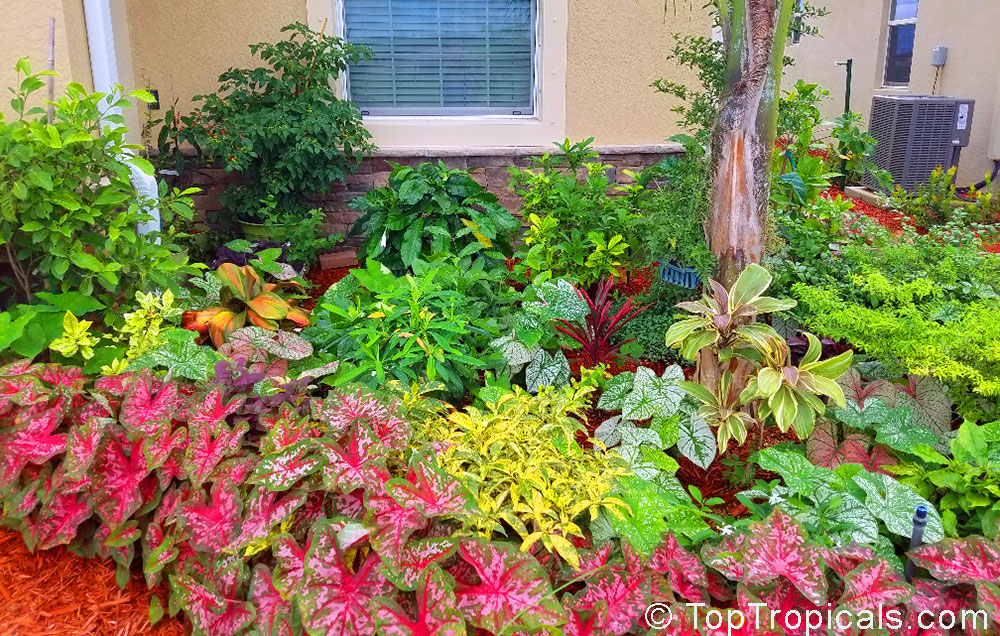
2. Mulch. Continue to mulch to stop weeds and get ready for winter. Keep mulch 1-2 inches away from the stems. Evenings are starting to cool, so it is more comfortable working in the garden.

3. Pest control. Check for mealy bugs and scales. Remember that a garden with many kinds of plants has fewer pests than gardens with lots of mass plantings. So keep up with variety! Avoid pest magnets like Oleander, Oak, Hibiscus which require constant spraying.

4. Propagation. You still can take cuttings but do it as soon as possible. Days are getting shorter and less sunlight signals thу plants to slow down their growth. Cuttings will not root as quickly.

5. Seeds. Consider growing vegetables and perennials from seeds. In mild cooler conditions, seedlings have less stress and get a good start.

Date: 1 Oct 2018

Information on new exotic fruit variety:
Artocarpus x integer (Jackfruit x Chempedak), Cheena cv. TopTropicals

TopTropicals.com

FRESH SEEDS! Grow exotic Chempedak from seeds and you will have the trees for only $1 each!

Check out a short video of the opened fruit.

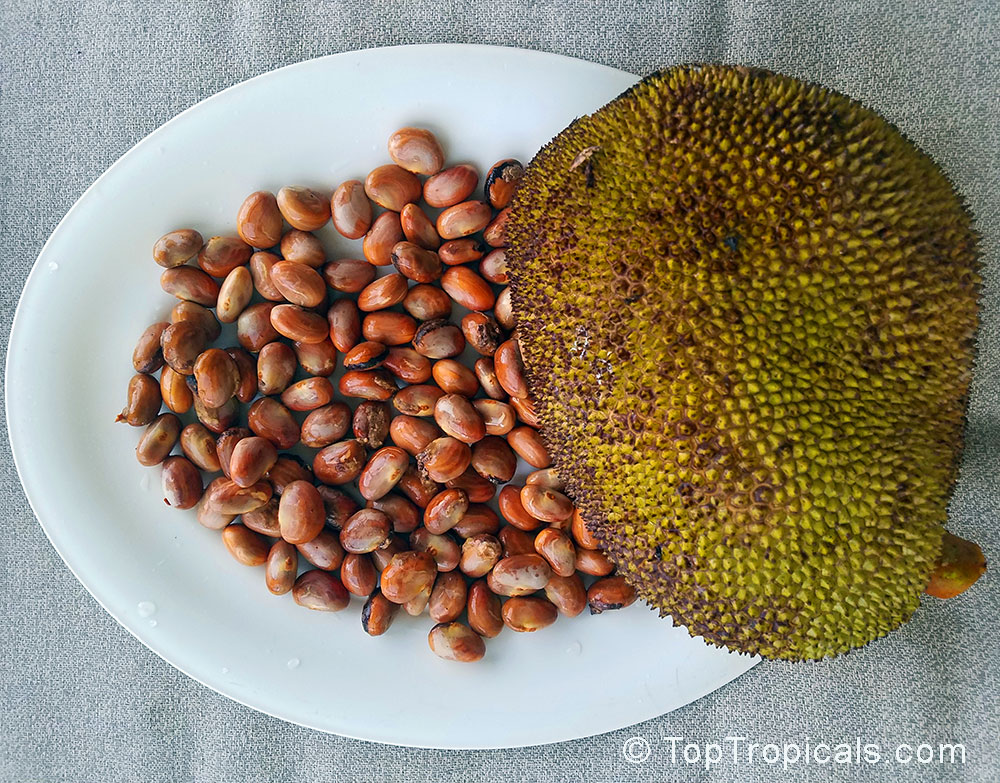
Cheena is a natural hybrid between jackfruit and chempedak. Comes true from seed. This highly recommended variety has grown in TopTropicals garden from a seedling of Cheena (Jackfruit x Chempedak) that fruited within 3 years from planting. The fruit (20-25"size) is probably the best we ever tasted! It is super sweet, crunchy and has a rich, pleasant, excellent flavor. It has very little latex which makes it easy to handle when cutting up. The tree produces at the very base of the trunk, so you can prune it as short as you want. Our tree survived light frosts as well as 48 hours of 3ft flooding, with no damage!
The tree has an open, low and spreading growth habit and can be maintained at a height and spread of 8 ft with annual pruning. It is very easy to grow and is not as cold hardy as we thought for a Jackfruit x Chempedak types of plants. The only two recommendations are - good fertilу soil with a high content of compost and regular watering.
Cheena is a consistent producer. The fruit is up to 5 lbs, long, narrow and uniform in size and shape. The skin is green, with blunt spines that yellow and open slightly upon maturity.

Check out Chempedak Cheena seeds - FRESH - FRESH - FRESH
Check out Chempedak Cheena plants - special offer $30 OFF!

Date: 4 Sep 2018

Checklist - Preparing for winter in subtropical areas

TopTropicals

Watering. Start reducing the amount you water your plants in early fall, once the temperature drops below 65F. Avoid watering your plants during cool nights, as this may cause serious root rot.

Mulch. When a plant is protected by a thick layer of mulch, the root system stays healthy.

No Pruning. Avoid pruning, trimming, or pinching branch tips altogether during the fall and winter which encourages new shoots that are soft, tender, and very cold sensitive. Last trimming should be done no later than September - early October.

No Fertilizer. Avoid fertilizers during the winter. The main reason being the same as above for pruning: fertilizing promotes growth of the upper plant parts which should be avoided during the winter months. The last time for fertilizer should be no later than October.

Date: 20 Aug 2018

6 things NOT to do in Summer planting

TopTropicals

Q: What a hot summer we have... everything I plant in the ground seem to be unhappy and doesn't seem to grow. I water a lot but it seems not enough? leaves stay droopy or get burned. Are there any secrets for summer planting?

A: End of Summer is still a good time for planting in the South, because there are a few more warm months until winter and your plants need enough time to establish before cold season. However because of high temperatures, a few things should be avoid to reduce stress on the plant:

1. Do not plant mail-ordered plant directly from a box into the ground. Keep it in a pot for a week or two and gradually move the pot from shade into permanent location in full sun.

2. Do not expose to full time direct sun even if potted plant was adjusted to sun. Cover newly planted tree with a shade cloth or simply a bed sheet for a few days. Use bamboo stakes to support the cloth. Even tough, sun-loving plants may get a leaf burn if not established.

3. Do not put mulch too close to the stem/trunk. Keep it 1-1.5 inches away from the plant for air circulation.

4. Do not keep wet. Combination of extreme heat and wet is not good for roots (as well as cold and wet). If you notice that soil dries too quickly - water more frequently but lightly, without creating soggy hot swamp.

5. Do not overfertilize. A handful of slow-release fertilizer is good at time of planting, however do not try to push your plant to grow and do not apply more chemicals or manure until you see a new growth.

6. Do not get discouraged and give the plant some time to establish. In most cases, a new growth starts with roots which you can't see. Sometimes it takes a few months until you see the upper part of the tree suddenly starts growing rapidly.