Date: 7 Oct 2019
Fertilizing in Winter?
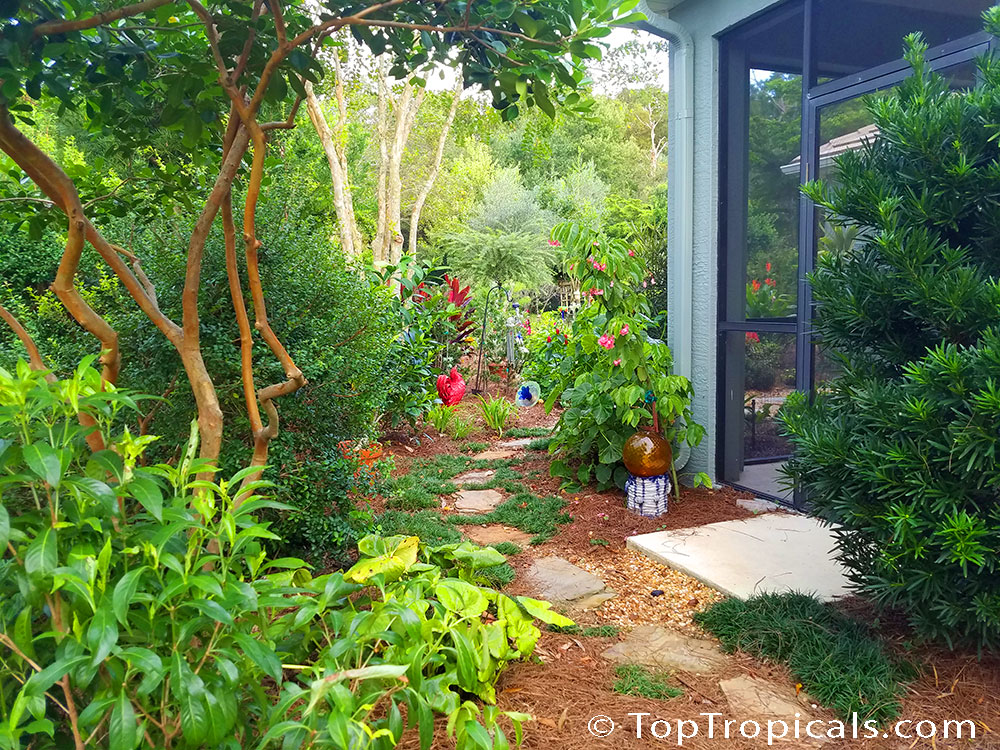
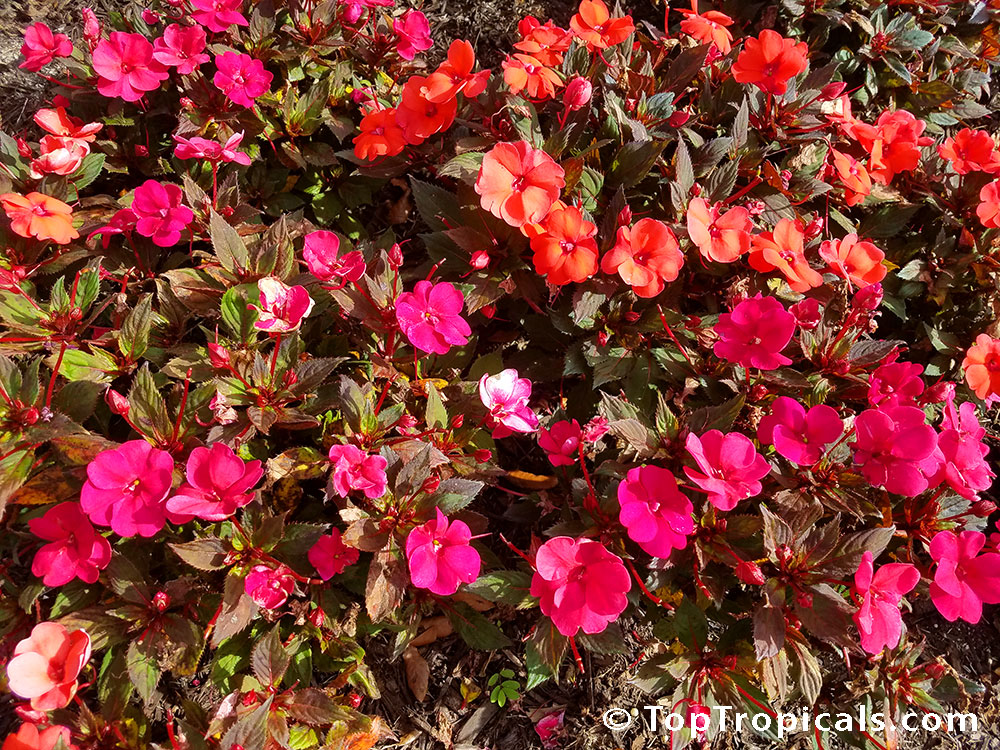
Q: I'm a bit confused about what winter fertilization schedule I should follow in South Florida. For blooming plants, usually, I use a monthly granular bloom booster fertilizer as well as a liquid fertilizer every 10 days or so. Should I continue that schedule in the winter as well? Should I stop fertilizing altogether in the winter? How about fruit trees? What fertilization schedule should I follow in the winter?
A: Here is a general fertilizing schedule for established plants that we follow here
in SW Florida.
The rule of thumb is, do not fertilize (with macro- NPK elements) when
minimum temperatures drop below 65F and stay at that level for more than 7
days. At this temperature point, most of the tropical and subtropical plants
slow down their metabolism and some of them going into dormancy. This means,
nutrients are not consumed as much as during active growth period, and built-up
nutrient supply within a plant plus whatever is available in the soil is
just enough to get by through the winter. So additional fertilizing is not
necessary. You may continue micro-element supplements and bio-stimulants
throughout the year. In fact, it is highly recommended to do so, to help the plant
survive cold spells. These are very effective tropical plant protectors:
SUNSHINE-Epi - Brassinosteroid plant hormone
SUNSHINE-Power-Si - Advanced plant protector with Silicon
SUNSHINE SuperFood - Complex microelement supplement
This rule is applied to both flowering and fruiting plants, in general. However, some species are winter-flowering and winter-fruiting. For those, you can make an exception and provide extra nutrients for flowering and fruiting, as long as the weather stays warm. During cold spells, avoid any NPK fertilizers and use only bio-stimulants and micro-elements. If you apply NPK during cold, it won't be consumed by a plant, build up in the soil, and may create a root burn situation.
In simple words, fertilize from March to October. Give plants some rest from November to February.

Date: 5 Sep 2019
Bahamas Dorsett Golden Low Chill Apple
Q: We recently moved to Florida and we miss our Apple trees we had back up North and the Golden Delicious apples. I was told they won't grow in Florida, it is true?
A: There is a solution for apple lovers even in Tropics! Low
chill apples bear as far south as South Florida, and may be a unique addition to
your tropical garden.
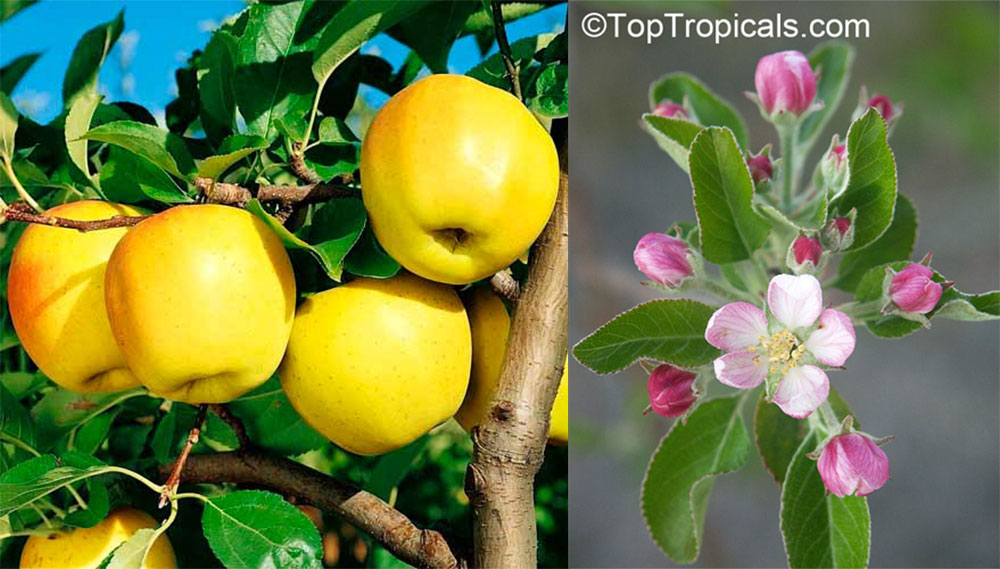
Variety Dorsett Golden looks like Golden Delicious with golden skin and
sometimes a red blush. This cultivar was discovered in the Bahamas and is
crisp and juicy with excellent flavor.
Attractive and fragrant pinkish-white apple blossoms will appear during
Feb-March and give way to fruit (smaller than standard apples) in June. They
remain a small tree, growing to about 15 feet.
For best results of cross-pollination and heavy production, we
recommend a pair of low chill apples - the perfect couple Dorsett Golden and Anna.

Date: 24 Aug 2019
How to keep iguanas away?
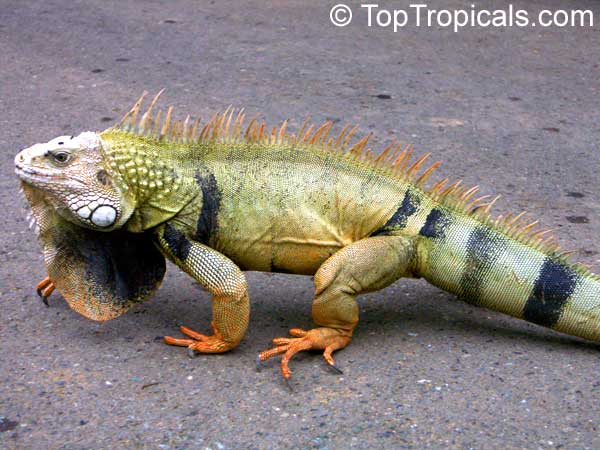
Q: Really enjoy all the plants that I have got from you, but having a hard time keeping iguanas eating everything! We are not on the water, any solution to keep them out?
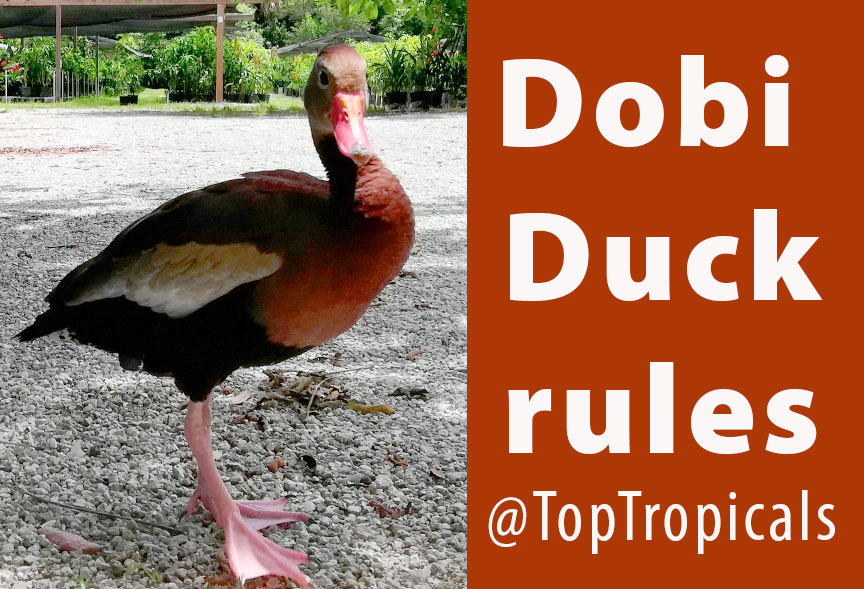
A: Iguanas may become quite a problem in the garden. Our first suggestion would be - get a Duck as we have (Duck Dobi), she is so dominant and keeps any wild animals away from the property, including gators... and cats! They are scared of her! Dobi thinks she owns the place.
Here are a few other ways to control iguana problem in your backyard:
1. Rid your lawn of dropped fruits. Iguanas love fruit. And they love
low-hanging fruit or fruit that's easy to get to. If you have fruit trees, take
the time to pick up your yard and dispose of any dropped fruit.
2. Keep a lid on a garbage can. Put your garbage cans in a place they
can't get to, or put a cinder block on your can lid.
3. Do not leave pet food out. If you're putting a bowl of dog food or a
plate of cat food out for your pets, you're inviting iguanas into your yard.
4. Fill iguana holes. Iguanas like to dig. Wherever you see a hole,
fill it. Stuff rocks into the hole first, then fill it with dirt and top it with
sod. The iguana may return to dig again, but he won't dig through large
rocks.
5 Do NOT feed the iguanas. Don't be friendly with them, so they won't
come back.
6. Wire netting around plants. You can use wire netting or screens to
prevent iguanas from entering plants and shrubs.
7. Spray them with a hose. When you see an iguana in the yard, spray
them with the hose. They also hate loud noises. Constant harassment can keep
them from returning.
8. Keep your yard clean. Excessive overgrowth or yard storage are great
places for iguanas to hide.
9. Do not leave food out, unattended. Iguanas are mainly herbivores but
that doesn't mean they won't smell something good and want to eat it. They
will TRY anything.
Hopefully these tips help keep your iguana problems to a minimum.
Date: 25 Jun 2019
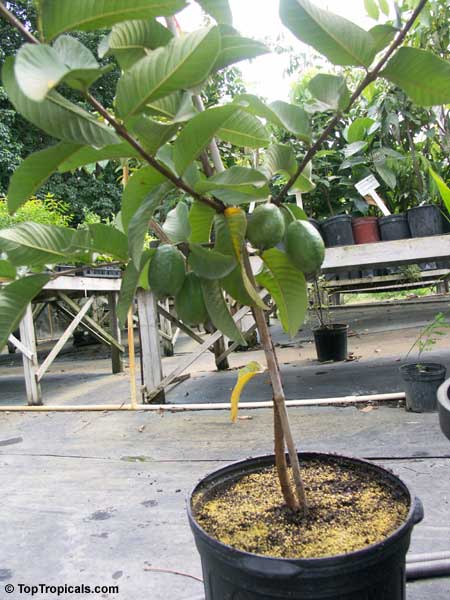
How soon will Guava tree fruit?
Q: Can you tell me how your Guava trees are propagated? Grown from seed vs. air grafted, etc.? I'm interested especially in the Barbie variety. In particular, I'd like to know how long it takes them to bear fruit - I live in Southern California zone 10b, with good sunlight.
A: Guavas can be propagated by seed, air layers, or grafting.
Propagation method depends on the species.
Cattley guavas - Psidium littorale - are usually grown from seeds and start flowering
and producing as early as in 2-3 years from seed. Tropical guavas, Psidium guajava - especially named varieties, are propagated usually by
air layers, and the rarest varieties like Variegated Honey Moon are often grafted, although they will come true
from seed (it's just takes them longer to fruit). Both air-layered and grafted
plants start producing right away, usually on the same year of planting or
next year, depending on growing conditions.
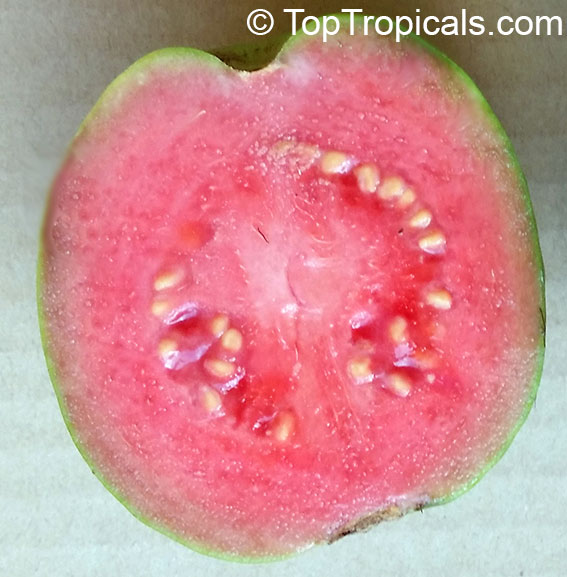
Barbie Pink is a superior variety, very popular among fruit lovers. It
produces large aromatic fruit with a bright pink pulp and very few seeds. This
variety is air-layered; in our nursery, these plants start flowering and
setting fruit in 3 gal containers.
Plant this tree in full sun and provide regular watering, guavas don't
like to dry out. Use fertile soil, with at least 50% of compost, and add some
soil conditioning components for better drainage: bark, sand, perlite, etc.
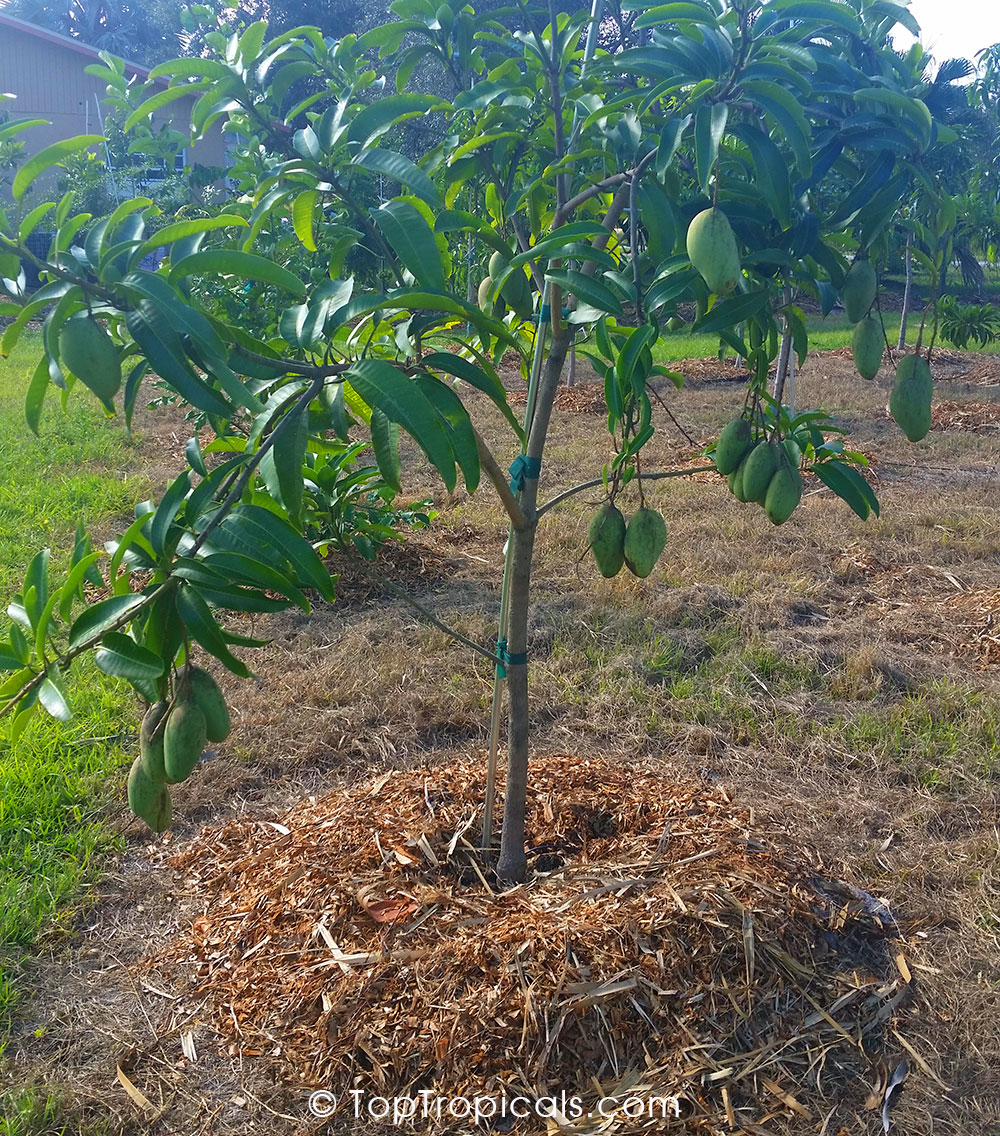
Mulch well, just make sure to keep mulch 2-3"away from the trunk. Follow our
detailed planting instructions that come with every plant, and you are good
to go!
Recommended fertilizers:
Fruit Festival Plant Food - Super Crop Booster
Mango-Food - Smart Release Fruit Tree Booster