Date: 24 Aug 2019
How to keep iguanas away?
Q: Really enjoy all the plants that I have got from you, but having a hard time keeping iguanas eating everything! We are not on the water, any solution to keep them out?
A: Iguanas may become quite a problem in the garden. Our first suggestion would be - get a Duck as we have (Duck Dobi), she is so dominant and keeps any wild animals away from the property, including gators... and cats! They are scared of her! Dobi thinks she owns the place.
Here are a few other ways to control iguana problem in your backyard:
1. Rid your lawn of dropped fruits. Iguanas love fruit. And they love
low-hanging fruit or fruit that's easy to get to. If you have fruit trees, take
the time to pick up your yard and dispose of any dropped fruit.
2. Keep a lid on a garbage can. Put your garbage cans in a place they
can't get to, or put a cinder block on your can lid.
3. Do not leave pet food out. If you're putting a bowl of dog food or a
plate of cat food out for your pets, you're inviting iguanas into your yard.
4. Fill iguana holes. Iguanas like to dig. Wherever you see a hole,
fill it. Stuff rocks into the hole first, then fill it with dirt and top it with
sod. The iguana may return to dig again, but he won't dig through large
rocks.
5 Do NOT feed the iguanas. Don't be friendly with them, so they won't
come back.
6. Wire netting around plants. You can use wire netting or screens to
prevent iguanas from entering plants and shrubs.
7. Spray them with a hose. When you see an iguana in the yard, spray
them with the hose. They also hate loud noises. Constant harassment can keep
them from returning.
8. Keep your yard clean. Excessive overgrowth or yard storage are great
places for iguanas to hide.
9. Do not leave food out, unattended. Iguanas are mainly herbivores but
that doesn't mean they won't smell something good and want to eat it. They
will TRY anything.
Hopefully these tips help keep your iguana problems to a minimum.
Date: 25 Jun 2019
How soon will Guava tree fruit?
Q: Can you tell me how your Guava trees are propagated? Grown from seed vs. air grafted, etc.? I'm interested especially in the Barbie variety. In particular, I'd like to know how long it takes them to bear fruit - I live in Southern California zone 10b, with good sunlight.
A: Guavas can be propagated by seed, air layers, or grafting.
Propagation method depends on the species.
Cattley guavas - Psidium littorale - are usually grown from seeds and start flowering
and producing as early as in 2-3 years from seed. Tropical guavas, Psidium guajava - especially named varieties, are propagated usually by
air layers, and the rarest varieties like Variegated Honey Moon are often grafted, although they will come true
from seed (it's just takes them longer to fruit). Both air-layered and grafted
plants start producing right away, usually on the same year of planting or
next year, depending on growing conditions.
Barbie Pink is a superior variety, very popular among fruit lovers. It
produces large aromatic fruit with a bright pink pulp and very few seeds. This
variety is air-layered; in our nursery, these plants start flowering and
setting fruit in 3 gal containers.
Plant this tree in full sun and provide regular watering, guavas don't
like to dry out. Use fertile soil, with at least 50% of compost, and add some
soil conditioning components for better drainage: bark, sand, perlite, etc.
Mulch well, just make sure to keep mulch 2-3"away from the trunk. Follow our
detailed planting instructions that come with every plant, and you are good
to go!
Recommended fertilizers:
Fruit Festival Plant Food - Super Crop Booster
Mango-Food - Smart Release Fruit Tree Booster
Date: 21 Jun 2019
Growing Jackfruit in a pot
Q: I have a young jackfruit tree, and I wanted to know, is a 25 pot enough for an adult tree?
A: 25 to 50 gal should be eventually a good size pot for growing
a Jackfruit tree. Keep in mind the following:
1. Start with a smaller container, only slightly bigger than the root
system. Do not plant directly into a large container, this may create a risk
for root rot.
2. Step up the tree in a bigger container every year as it grows
bigger. With every repotting, trim both branches and roots to compact the plant and
to encourage branching out.
3. Jackfruit trees should be kept pruned under 6-7 ft in pots and 10-12
ft in the ground. This makes healthy fruit production more efficient and
keeps fruit at the base of the tree.
Date: 4 Jun 2019
Plants for South Texas and other hot states
Q: Pretty much adore last newsletter. Haven't been buying because our weather here in deep south Texas is so bad it is stunting and killing even the Tamaulipan Scrub! Do you have a cure for that? :) I have every expectation the new grafted Plumeria I purchased from you last year will bloom soon. One of my favorite plants. Thanks again and keep up the good works.
A: Yes, there is a "cure" - using biostimulants that improve drought- and heat- resistance (SUNSHINE
boosters), plus the right plant selection. In fact, there is a large number of
tropical rare plants that can be successfully grown in hot climates like yours.
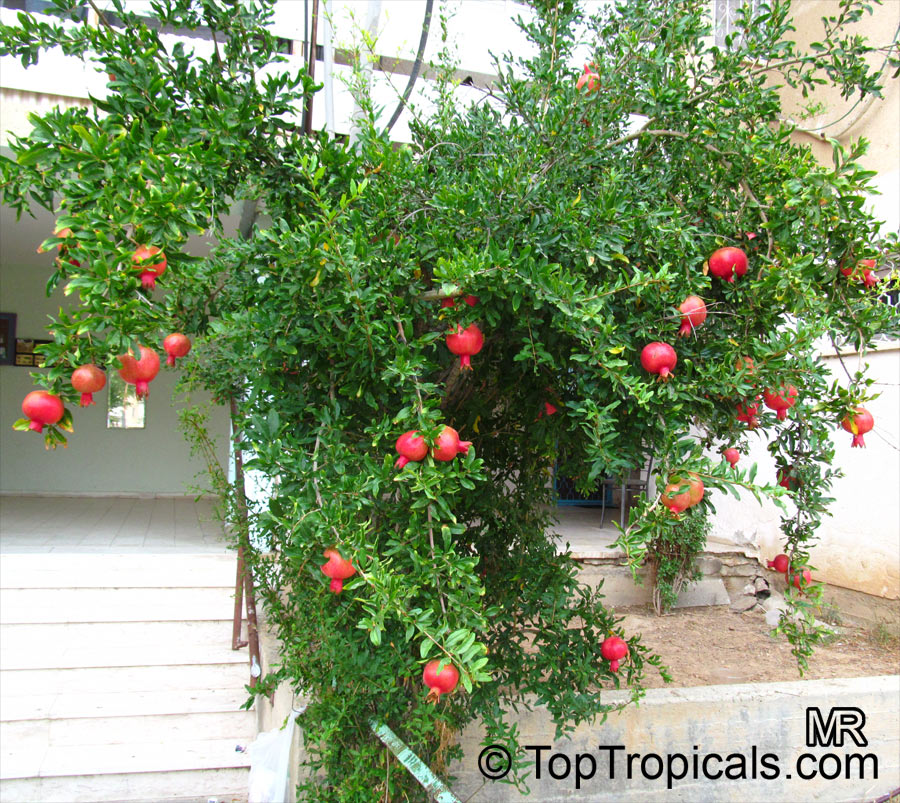
One of our partners lives in hot and dry Arizona area and has an amazing
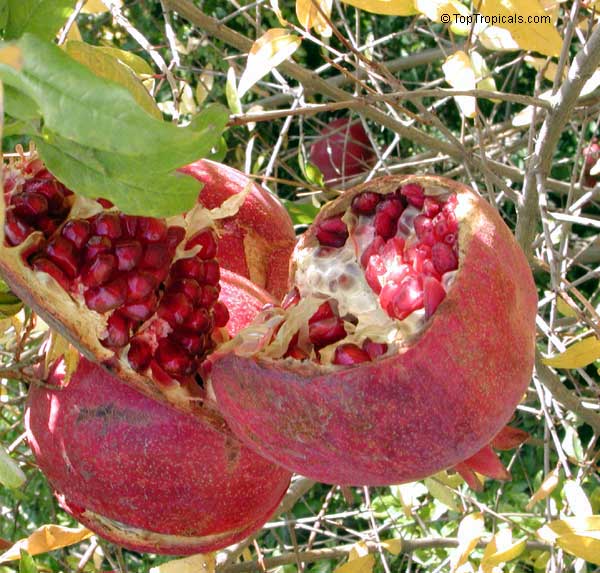
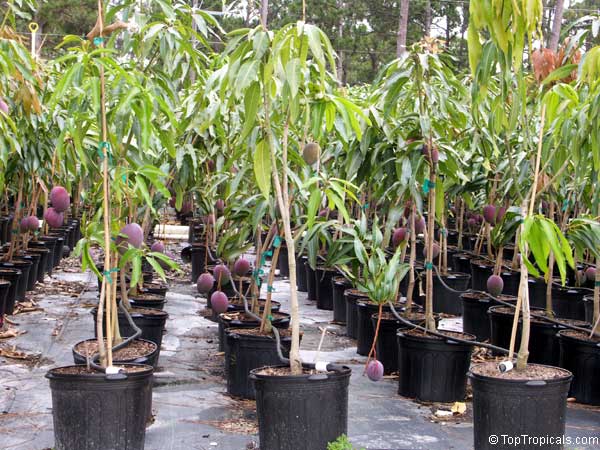
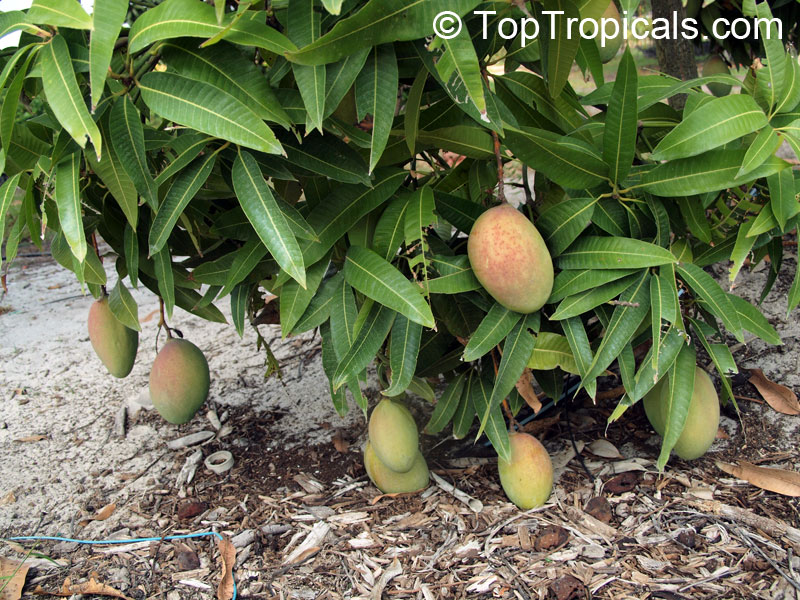
tropical garden that includes many fruit trees (Mango, Persimmons, Pomegranates, Loquats, etc). Here you can see a few pics from his garden.
Your choice is absolutely right about plumerias. Other easy plants would be Desert roses - Adeniums, and Fancy Euphorbia millii - all these come in so many varieties of colors
and bloom throughout most of the year. Our special recommendations for you
would be also:
Bougainvillea Dwarf Pixie
Jasmine sambac
Calliandra selloi Pink Lilian
Dracaena marginata Tricolor - Colorama, Money Tree
Hamelia patens Lime Sizzler - Variegated Fire Bush
Jatropha berlandieri - Buddah Belly
Pedilanthus tithymaloides - Devils Backbone
Trachelospermum asiaticum Mandaianum - Dwarf Confederate Jasmine
See full list of more plants that are suitable for hot and dry landscapes.