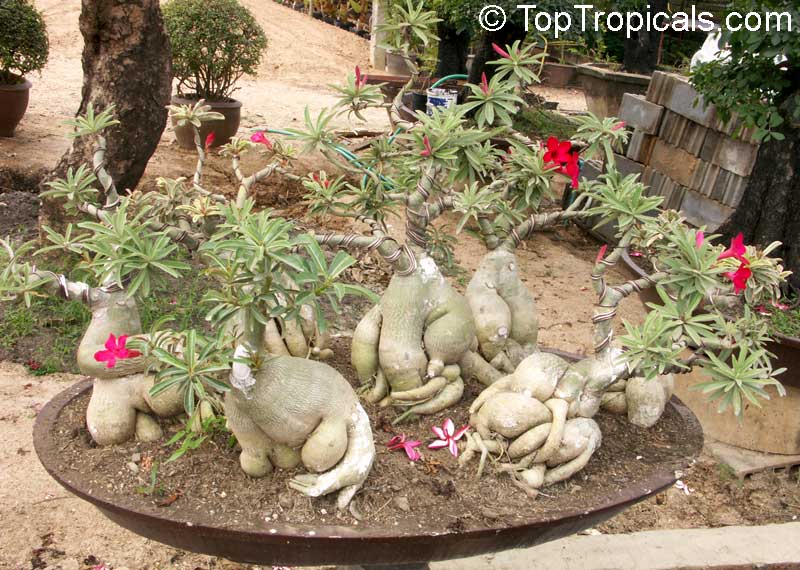
Garden Blog - Top Tropicals

Date: 2 Jan 2020

The most fragrant flowers
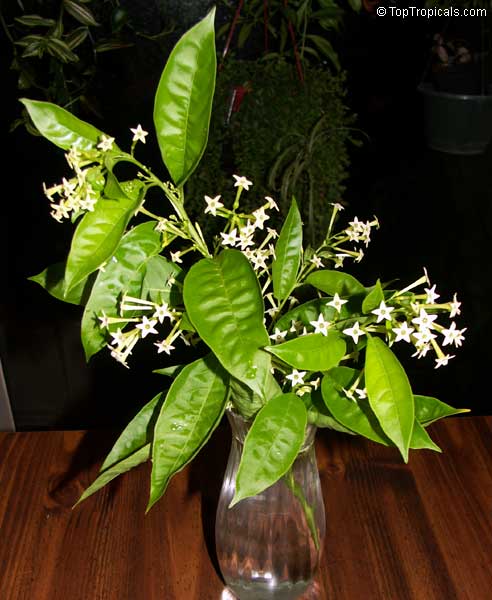
Q: Hope you can help me with the following question with an upcoming newsletter. Would you please let us know of the strongest (pleasant) fragrant plants you currently have in stock? Fragrance that fills the space.

A: The most fragrant flower that "fills the air around" in definitely Chanel #5 - Cananga odorata a.k.a. Ylang Ylang. Just one tree when in bloom can fill the air with fine perfume for yards away.
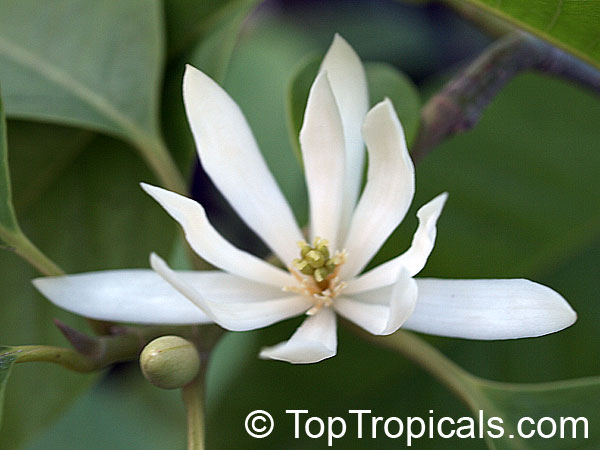
Another strongly scented perfume tree is Joy Perfume - Magnolia champaca (both orange and white flowers are sweetly fragrant).
If you are looking for a smaller size plant, then the most fragrant are -
- Jasmine sambac
- Night-fragrant white-flowered Brunfelsias - B. americana, B. nitida, B. Gigantea, B. lactea and others.
- Night blooming Jasmine - Cestrum nocturnum is another favorite shrub with night-fragrant flowers, the scent is super strong and super sweet.
- Artabotrys hexapetalus - Ylang Ylang vine with wonderful lemony fragrance that fills the air.

See Full list of fragrant plants.
Date: 20 Dec 2019

Plumeria cold protection

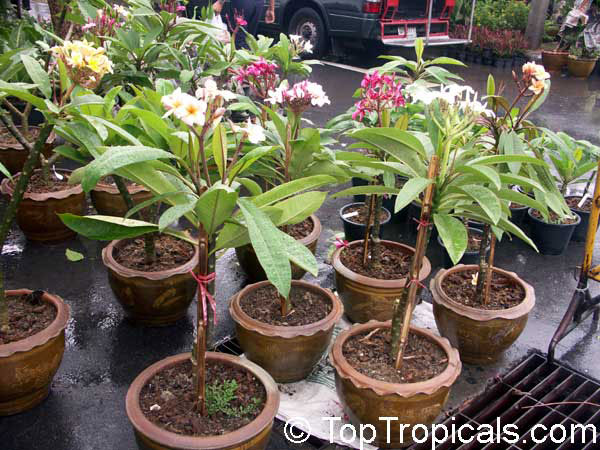
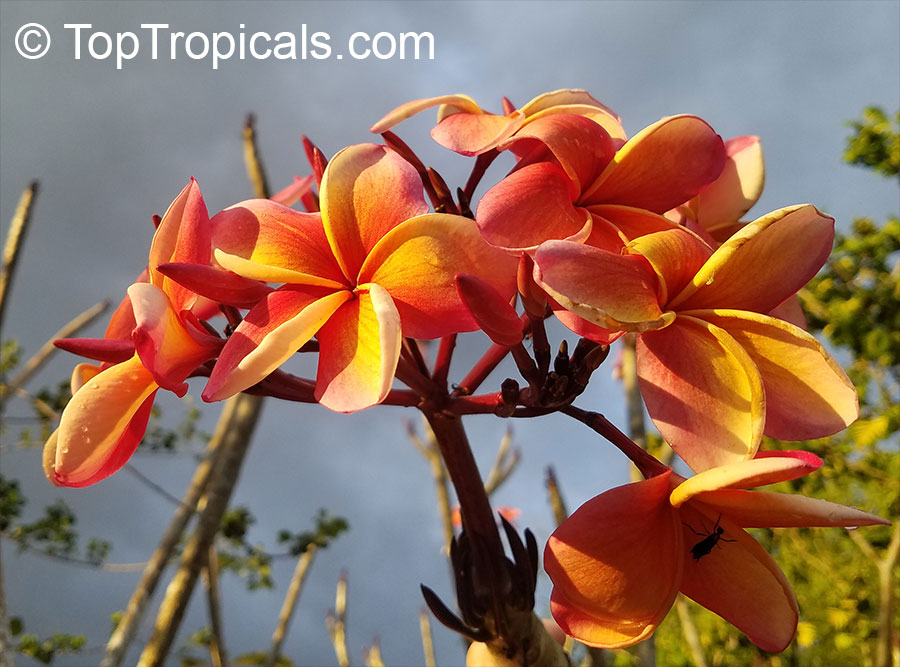
Q: We have a purple-flowering plumeria which resides on our sunny deck during the warm months and then Winter vacations on our back porch where we can close the plastic film windows and where it stays above 50 degrees (overnite) until it can get moved outside again. We live in zone 8+ in South Carolina and I would love to plant it outside. Do you think if we ghost-covered it when alerted that we would have an overnite freeze, that it would survive being planted in the ground and recover to flower when warm? I don't believe the soil in our yard has ever frozen below the top 1/2 inch or so, and never for more than a few hours at a time. What do you think?

A: Plumerias are tropical plants, which means, they need frost-free environment. Even if the ground is frozen only on "the top ½" or so"- this may be enough to kill the plant. From our experience, plumerias can withstand a few hours of windchill frost (not frozen soil), but even if they survive, they may get some branches damage, and recovery may take so long that the plant may not even bloom the next year. So I wouldn't take that risk even with a ghost-cover cold protection. We have customers who grow tropical plants in the ground in colder areas, but they have greenhouse protection: this means, the soil is warm and the air temperature is maintained above 45-50F. For example, this Greenhouse in Virginia.

We recommend to continue growing your rare plumeria in container and move it inside when temperatures drop below 50F (recommended) and for sure when they drop below freezing. Plumeria can take a cold night (a few hours of upper 30's) as long as it is followed by a nice warm sunny afternoon with at least upper 50s. Otherwise, keep it indoors. The good news is, since plumerias are deciduous and have no leaves in winter, low light level won't affect the plant.
Just make sure to minimize watering and keep the plant on a dry side until it starts growing new leaves in Spring. You may continue fertilizing once a week with half-doze of Sunshine boosters - Sunshine TotalFeed. This will maintain the plant healthy and prepare for the blooming season in Spring.

Date: 3 Dec 2019

Ghost Cold Protection

Q: Has anyone ever tried using heat packs under frost blankets to protect tropical plants from frost?

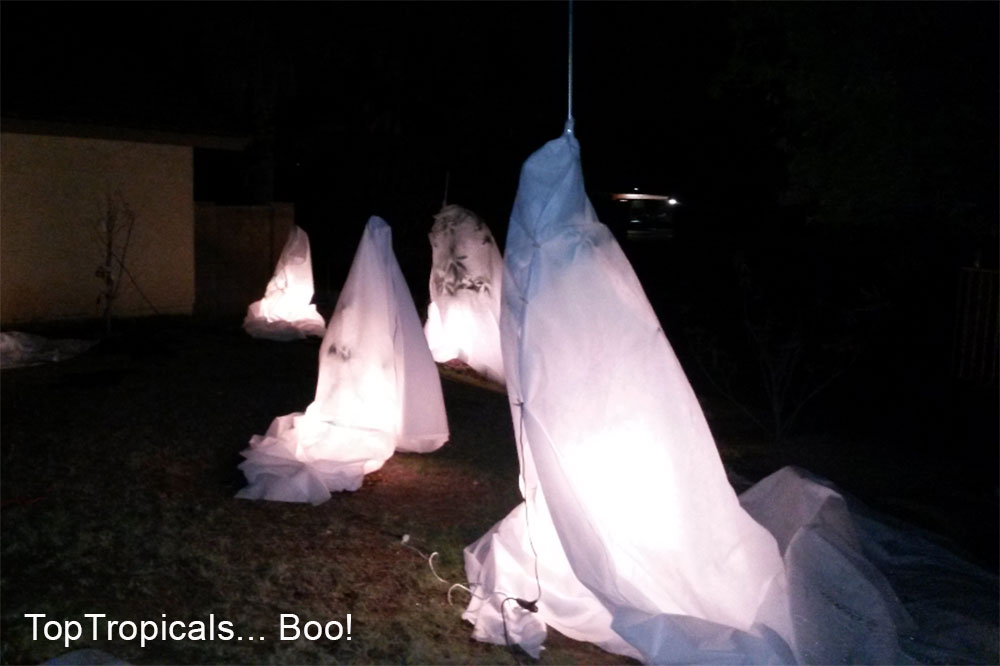
A: The reality is, the heat packs used for shipping do not have enough heat capacity to create efficient warming effect. From our own experience, the best way is to use small 25W incandescent bulbs which produce lots of heat (considering observing all safety precautions and fire safety). Some gardeners use Christmas lights. See picture of our plants in the ground during a cold night. We called them Ghost Cold Protection! ;)

See more columns on cold protection:
Seven rules of cold protection for tropicals
About Cold Protection
Cold protection - winter action for your plant collection
Tropical Treasures articles

Date: 30 Oct 2019

Fragrant Gold Leaf Orchid Vine

By Onika Amell, tropical plant specialist

Q: I am absolutely thrilled to see you have this vine. I've tried for years to get this plant! It is so, so rare. It just seemed impossible to find in this country. How do I make it thrive? I am ordering two.

A: We are happy to confirm that indeed we do have this rare vine!
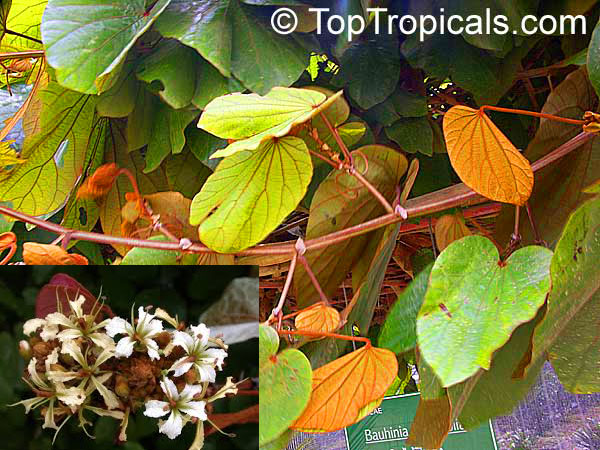
Bauhinia aureifolia - Gold Leaf Orchid Vine - was discovered in Thailand in 1983. It is endemic to Pattani, Narathiwat, and Yala in Southern Thailand. Danish botanist Kai Larsen named this plant and hailed it as one of the rarest plant species of the world when it was discovered in the eighties.
The Thai people call this vine Bai Mai Si Thong. It is a beautiful climber with large, bi-loped leaves (7 inches or more!) and good branching.
Young leaves are a stunning burnt orange to terracotta color for about a week and as they reach full size, they turn green over a couple of days. This is a very rare color for Bauhinia. It produces leaves all the time and this means this vine is always full of beautiful color. With its golden leaves, it sure is reminiscent of Autumn.
This vine blooms from May to November. It bears bunches of small flowers that are delicately fragrant in the evenings. The cultivated plants range flower color from pure white to purple and pink, while the wild ones have often white petals with pinkish patches.
Bauhinia aureifolia needs well-drained soil, full light and good humidity to thrive. It will tolerate a light freeze once established and it is very important to protect young plants.
Gold Leaf Orchid Vine also makes a wonderful container plant with staking or support. It is a must for every rare plant collection!

RECOMMENDED FERTILIZERS:
Pink N Good Daily Plant Food - Flower Booster
Tropical Allure - Smart-Release Booster

Date: 9 Jul 2019

Growing desert roses

Q: I purchased a Desert Rose and planted it in Adenium mix. I keep it in full sun with once a week watering assuming this is a desert plant that likes lots of sun. Some leaves turned yellow and now I am not sure should I move it into shade or need to water more? Or maybe fertilize with something?

A: Desert Rose - Adenium, unlike cacti and other succulents, prefers filtered light. It can grow in full sun but leaves look healthier in light shade. Watering must be very moderate, however don't let soil harden like a rock: water again right after the soil gets dry. We suggest to use special Adenium Mix. Cactus mix may work well, as well as regular potting mix, in which case it is recommended to add a bit of limestone (we simply put sea shells on top of the pot - it looks very pretty!) - because adeniums prefer slightly alkaline soil (while most of tropical plants like acidic soils). If leaves turn yellow, this may be a sign of underwatering. Use water soluable fertilizer with high phosphate as foliage spray, and only on healthy plants, according to label dosage. It helps both caudex growth and flowering. Make sure to avoid fertilizer contact with a caudex.

RECOMMENDED SUPPLIES:
Adenium Plant Food - Flower and Caudex Booster
SUNSHINE-BC - Caudex booster
Adenium Soilless Mix

Read more about growing Adeniums:
What you need for successful growing Adeniums
Growing Exotic Adeniums