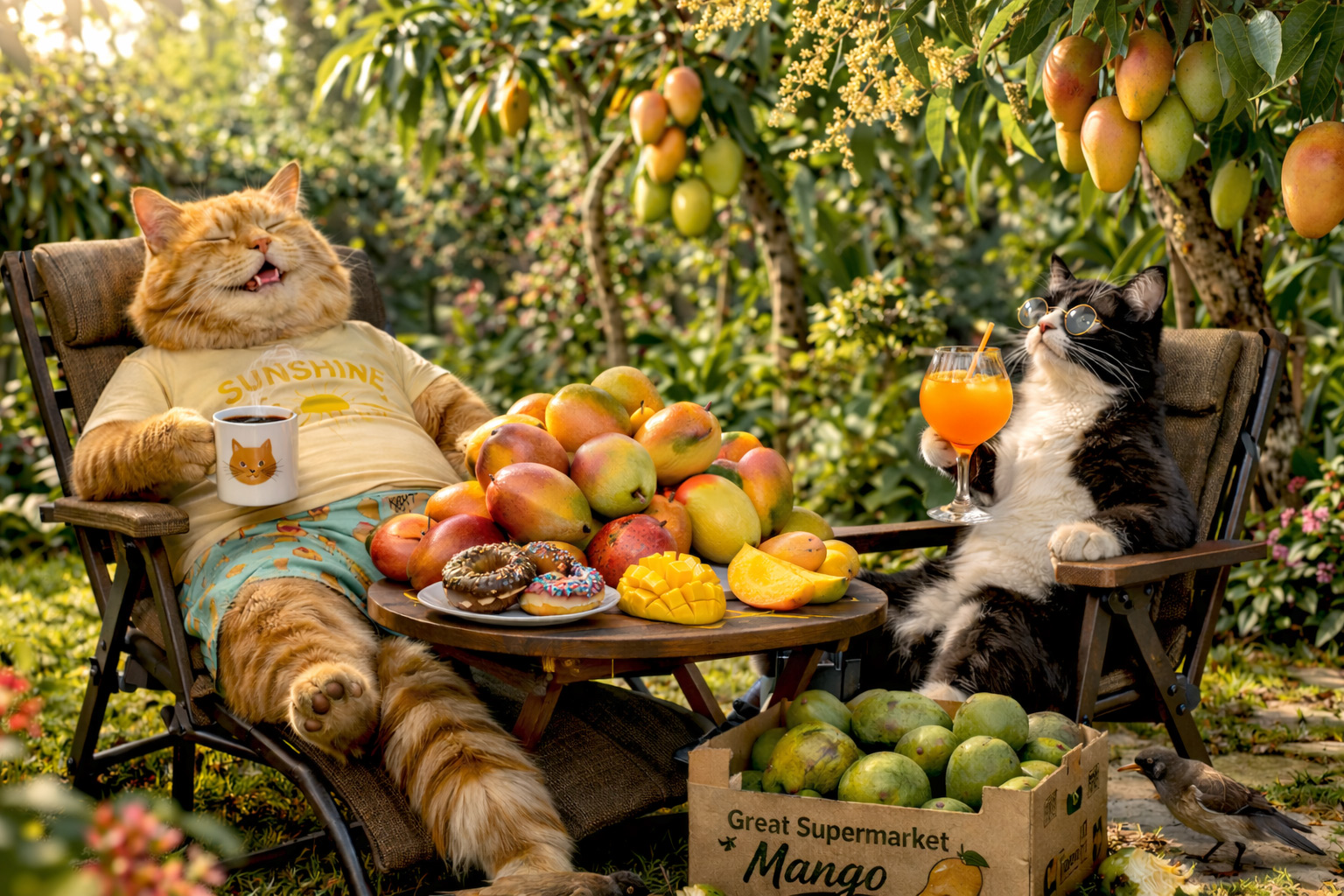
Sunshine: Never understood the passion for Mango. I tried
store Mangoes. I really tried. Just disappointment. So this is what real
Mango is supposed to taste like?
Smokey: Now you know.
There is a moment when a Mango is perfectly ripe — soft to the touch,
warm from the sun, fragrant before you even cut it open. The skin gives way,
and suddenly there is color, juice, and a sweetness that feels almost
unreal. Not sugary, but deep and layered, like something that took its time
to
become what it is. In that moment, it feels less like fruit and more like
something truly given, exactly as it should be.
Mango Plant Facts
Botanical name: Mangifera indica Also known as: Mango
USDA Zone: 9 - 11
Highligths
What you find in most supermarkets is something else entirely. Picked early
so it can survive shipping, it never gets the chance to finish ripening
process. It softens, it turns yellow, but the depth never comes. The flavor
stays
thin, and the texture often turns fibrous — strings in the flesh that
get stuck in your teeth instead of melting away. That fiber is not an
accident. It helps the fruit stay firm enough to handle transport without
damage. It
looks like a Mango, but it never becomes one.
The only way to close that gap is simple — let the fruit ripe where
it belongs. On the tree. When you grow your own Mango, you control that
moment. You pick it when it is actually ready, not when it has to survive a
truck
ride across the country. And that one difference is everything you taste.
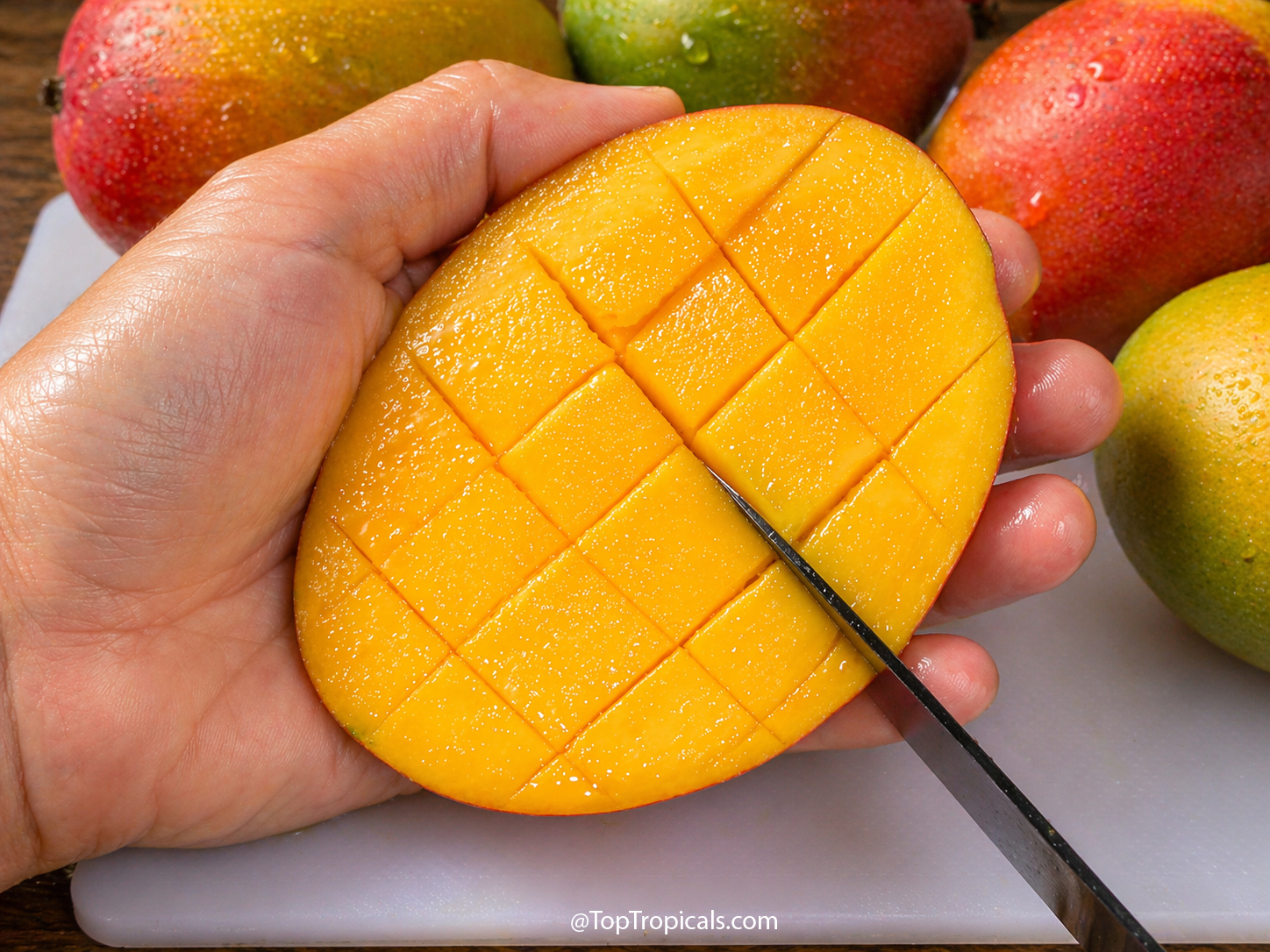
Scoring a Mango cheek into cubes - the easiest way to prepare clean,
ready-to-eat pieces.
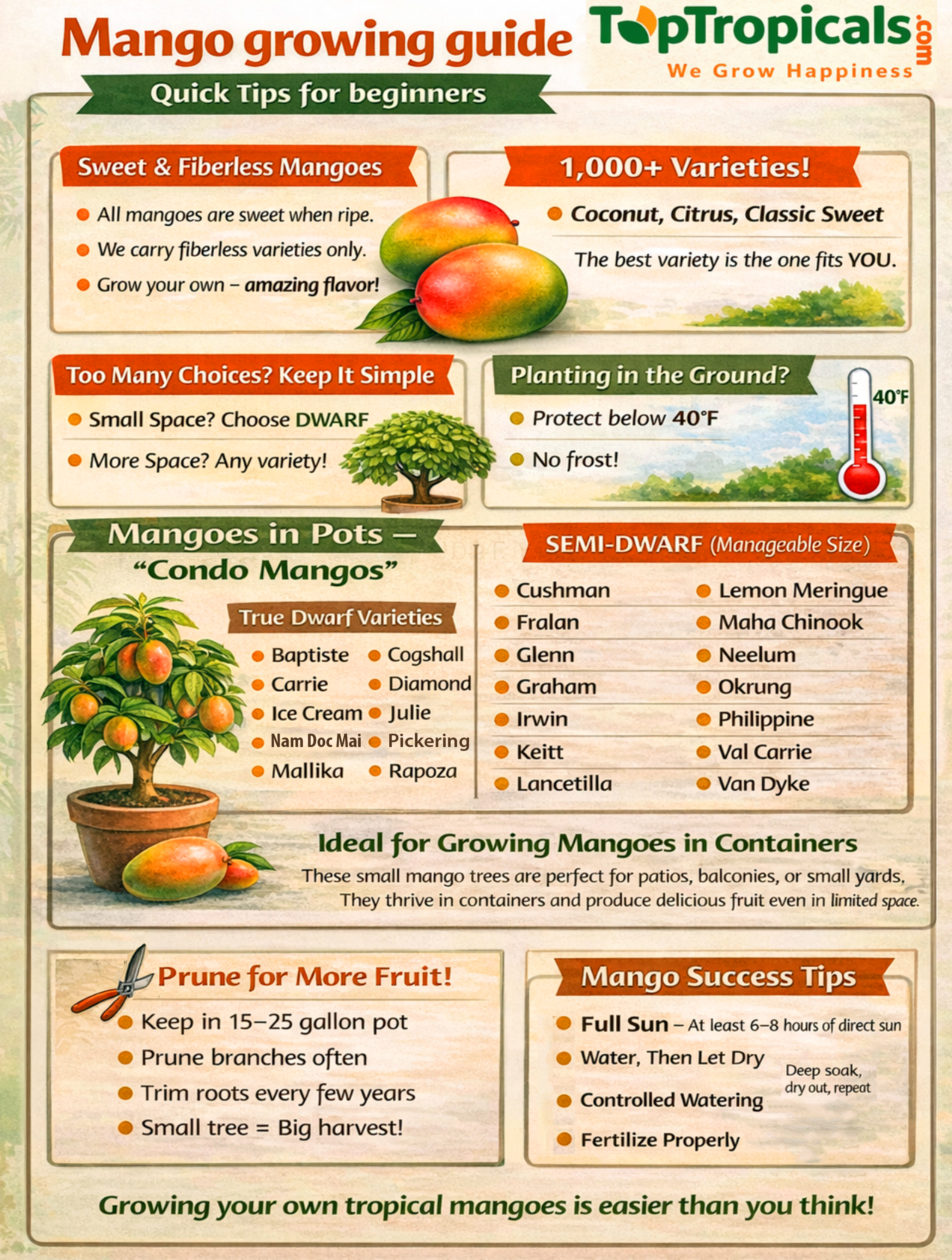
Quick beginner guide to growing Mango trees - from choosing the right
variety to pruning, watering, and container growing tips.
Date: 29 Jan 2026
How to make Sapodilla fruit profusely?
Sapodilla - Manilkara or Achras zapota, the Brown Sugar Fruit
🍊 How to make Sapodilla fruit profusely?
Sapodilla - Manilkara or Achras zapota), the Brown Sugar Fruit is a warm-climate evergreen fruit tree that can produce a lot of fruit once conditions are right. So why do so many sapodilla trees grow beautifully, flower heavily, and still refuse to set fruit?
Sapodilla Fruit Production - What Really Matters
1. 🌳 Choose the Right Tree
Grafted or air-layered trees fruit much sooner - typically in 1-2 years - and more reliably than seedlings, which may take 6–8+ years.
Some varieties are more profuse producers than others. For example, Silas Woods is virtually everbearing, Hasya is commercial prolific producer, Oxkutzcab (or Ox) -is also heavily productive (learn more about varieties).
2. ☀️ Environment: Heat, Sun & Water Balance
Temperature and Humidity
Excessive heat above 90F and low humidity can cause flowers to dry up and fall before setting fruit.
Solution: Provide filtered light or shade during the hottest part of the day to reduce heat stress on blossoms.
Water
Sapodillas are drought tolerant, but consistent moisture during flowering and fruit set improves fruit retention.
Avoid waterlogged conditions - soggy soil can stress roots and reduce yield.
Sun Exposure
Full sun is best for growth and flowering - but for hot climates, protection during peak afternoon heat helps reduce flower drop.
Young trees can also suffer sunburn.
3. Fertilization: Feed for Fruit, Not Just Foliage
Good nutrition is critical for flowers to turn into fruit. Apply a routine feed through the growing/flowering season - contolled-release (Green Magic) or liquid (Sunshine C-Cibus) both work.
Balanced fertilizer with trace elements like Boron (B), Molybdenum (Mo), Iron (Fe), and Copper (Cu) is essential for fruit set and development. Boron & Molybdenum deficiency as a frequent cause of flower/fruit drop in container-grown trees (nutrients get depleted quickly in pots).
Micro-nutrient sprays 2-3 times per year help improve fruit retention and quality. Some growers use sugar boosters (Sunshine Honey) or micronutrient blends that include Mo & B to help fruit set (Sunshine Superfood).
4. 🐝 Pollination - Often Overlooked
Sapodilla flowers are small and often require pollinators for best fruit set.
In some regions, small insects like thrips are key pollinators.
In places with low insect activity, hand pollination dramatically increases fruit set - brushing pollen from one flower to another with a small paintbrush during peak bloom times can help.
Placing fruit scraps (apple peels/banana peels) under the tree to attract beetles is an inexpensive way to boost insect activity.
5. ✂️ Pruning and Tree Structure
Moderate pruning can help open the canopy for better light penetration and air circulation, which supports flowering and reduces stress. Training young trees promotes a strong branch structure that can carry more fruit later. Sapodilla flowers on young growth (tips of the branches).
6. Pot vs Ground: Size Matters
If your sapodilla is in a container, root bound trees struggle with fruit set because roots run out of space and nutrients - stepping up to a larger container or planting in the ground can help.
Root-bound trees often bloom but fail to develop fruit.
7.
📅 Patience & Timing
Even healthy trees can take years to start fruiting well.
Trees often flower repeatedly but only set fruit when environmental conditions and pollination align - especially important for young or newly planted trees.
📌 Summary Checklist for Better Sapodilla Fruiting
✔️ Choose a grafted variety (faster, more reliable fruit). ✔️ Manage heat & humidity - shade during hot hours. ✔️ Water consistently but avoid waterlogging. ✔️ Fertilize balanced NPK + micronutrients (include B & Mo). ✔️ Encourage pollination
What is the best fertilizer for
indoor plants?
Can I fertilize house plants in Winter?
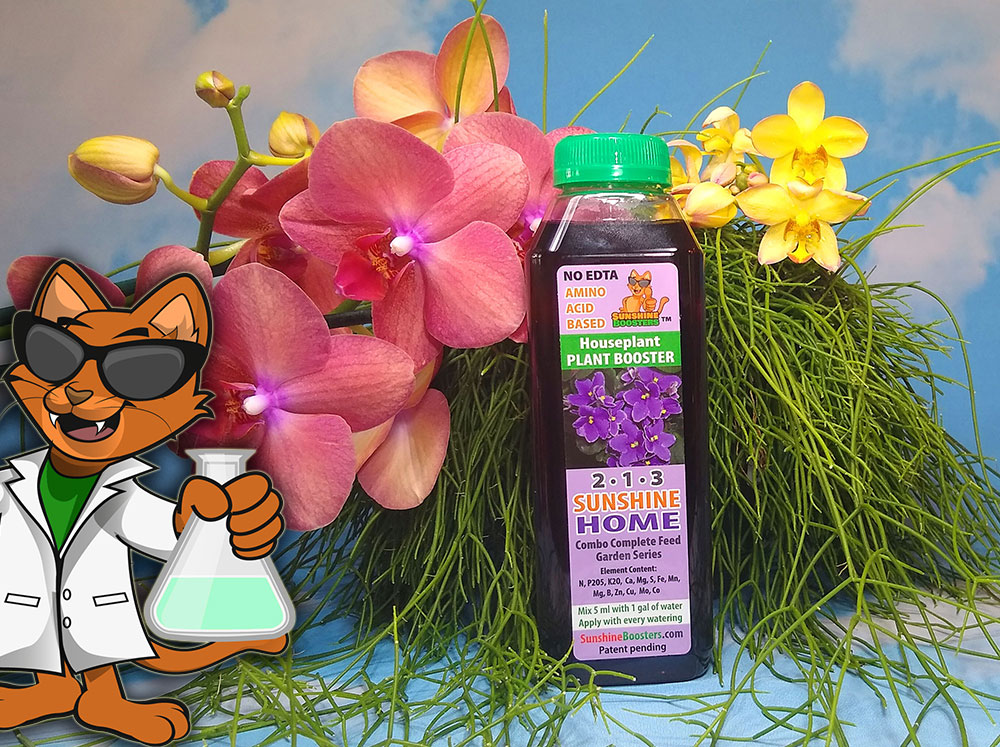
The best fertilizer for indoor plants is liquid fertilizer Sunshine Boosters
(TM). It is amino-acid based, natural, and is safe to use with every watering and year around. Unlike dry fertilizers that are not recommended to use during Winter, Sunshine Boosters formula is mild and scientifically balanced. Your houseplants will consume exactly as much nutrients as they need even during cooler months of less active growth. Sunshine boosters will not burn roots and won't create nutrient lockup (excessive salts that often caused by dry fertilizers). Sunshine Boosters is a perfect food for all kinds of plants, and different boosters available for different plant types (flowering, fruiting, even for orchids). Check out Sunshine Boosters selection.
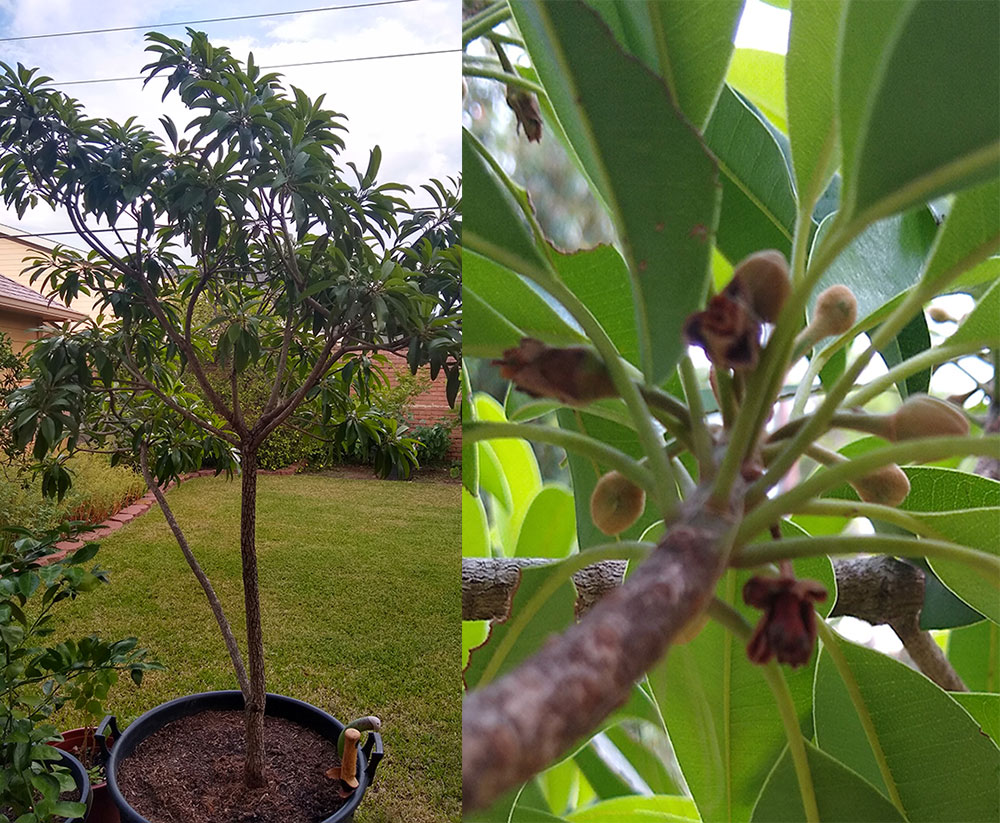
Q: I bought a Sapodilla tree from you several years ago, Silas
Woods. I live in Houston area. The tree grows and produces blossoms for fruits,
but then they just dry up and fall off. To-date, I have not gotten any
fruits off the tree. Is there a reason for this? I really want a fruiting tree
because Sapodilla is one of my favorite fruits. I have attached pictures of the
tree. Please help.
A: Silas Woods is a free-flowering variety and in favorable conditions it
should produce fruit almost year round, considering warm temperatures. The
fact that the tree is producing flowers indicates that it is strong, overall
healthy and ready for production, but for some reason these flowers don't set
fruit. There may be several reasons for such behavior.
1) Too high temperature and too low humidity
In Houston area, humidity should be good in summer. However, if
temperatures stay above 90F for a long time, this may cause flower dry-n-drop. Solution: try to move the potted tree into filtered light, or in a
spot where it does not get direct burning sun during the hottest hours of the
day (morning sun is the best)
2) Root bound. Solution: check if the tree needs stepping up into a larger
container.
3) Lack of certain nutrients that are responsible for proper fruit
formation.
In particular, elements B (Boron), Mo (Molybdenum), and a few other
micro-elements (Fe - iron, Cu - Copper, etc.). This is most likely the cause of a
flower drop. This is very common reason for undeveloped fruit or lack of fruit
in container-grown fruit trees. When grown in the ground, plants can reach
out to all necessary elements in surrounding soil (considering soils are not
too poor on necessary elements). In a pot, a supply of nutrients can be
exhausted very quickly, so a quality fertilizer program is very important.
Fertilizer must include all necessary nutrients in easy accessible form, and a plant
must have their constant supply for proper development. Solution: prescribe to your Sapodilla tree the following combination
of plant food:
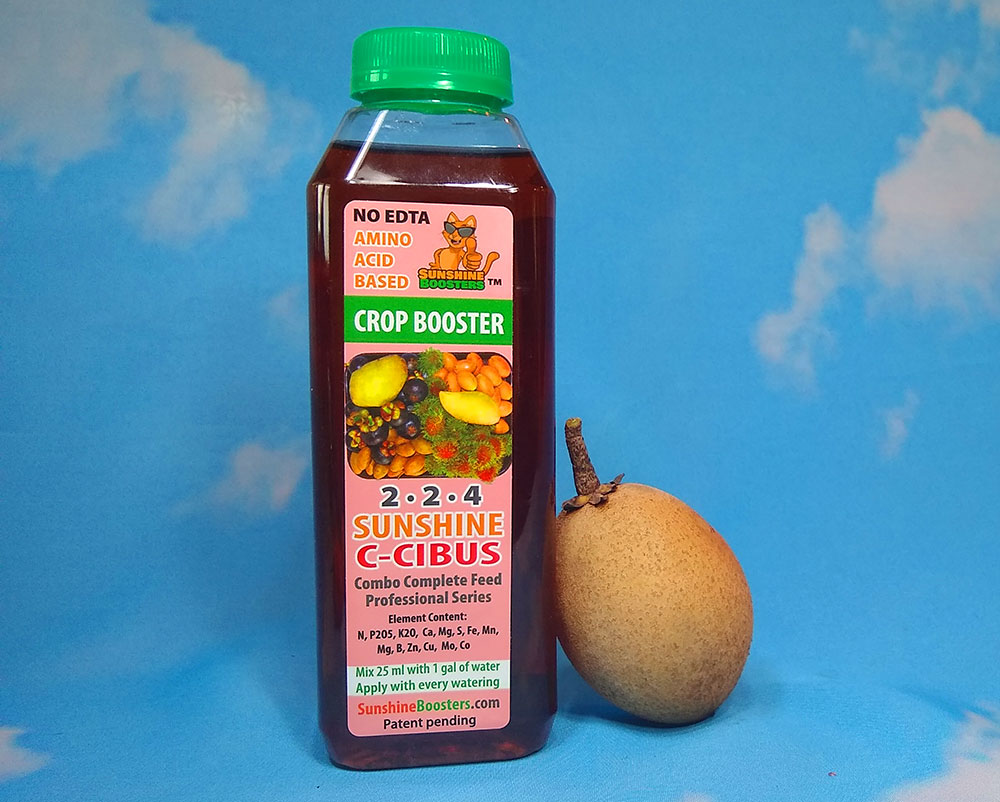
- SUNSHINE C-Cibus - Crop Nutrition Booster. It will provide
well-balanced amounts of high absorption Nitrogen, as well as other macro-elements - to
provide enough energy to the tree, plus a combination of all necessary
micro-elements. It is safe to apply this fertilizer as frequent as with every
watering, including winter time.
- SUNSHINE-Honey - sugar booster. This supplement has a high content of
elements Mo and B - once the tree starts getting them on regular basis (a few
times a year, according to the label), it will change its habit dropping
flowers and/or premature fruit drop. As extra bonus, Sunshine Honey makes fruit
sweeter by bringing sugars from all over the plant and concentrating them into
fruit.
4) Lack of pollinating insects. Solution: For most effective pollination, we always recommend to put
some pieces of fruit under the tree, apple peels, or even banana peel. Those
attract tiny beetles that are responsible for small flower pollination.
With winter time approaching, fruiting season is about to end, however,
do not get discouraged and start the fertilizing program right away: this
will bring up the plant into a healthy stage within a few months, and by next
season it should be covered with fruit you like so much! Remember, Sunshine
liquid fertilizers can be used year round, including winter, without a risk to
burn roots or overdose, as long as you follow label instructions.
SUNSHINE C-Cibus - Crop Nutrition Booster from Garden Series, or Combo
Total Feed Collection - all nutrients in just one bottle, for fruit trees and
edibles.
Date: 8 Mar 2025
Why do you need Sunshine Boosters?
Why do you need Sunshine Boosters?
👍 Why do you need Sunshine Boosters?
👍Ever wanted to grow plants that reward you with lush foliage, cheerful flowers, or abundant fruit without the hassle? Sunshine Boosters is your answer. These are natural liquid fertilizers for all kinds of plants and edibles.
And they are super easy to use!
All you need is a watering can, water, and a measuring cup.
👍 Sunshine Boosters are pet-safe and eco-friendly because they're made with organic amino acids - and you can use them year-round.
👍 Sunshine Boosters come in different formulas, or "flavors," to match your plant’s needs:
- For lush, green foliage
- For fruit trees, including mango and citrus
- For boosting blooms - from fragrant flowers to orchids and bromeliads
👍 Sunshine Boosters offer both essential plant food and supplements - micro-elements and growth stimulants - just like vitamins for people!