Garden Blog - Top Tropicals

Date: 6 Oct 2024

Eight most spectacular gingers
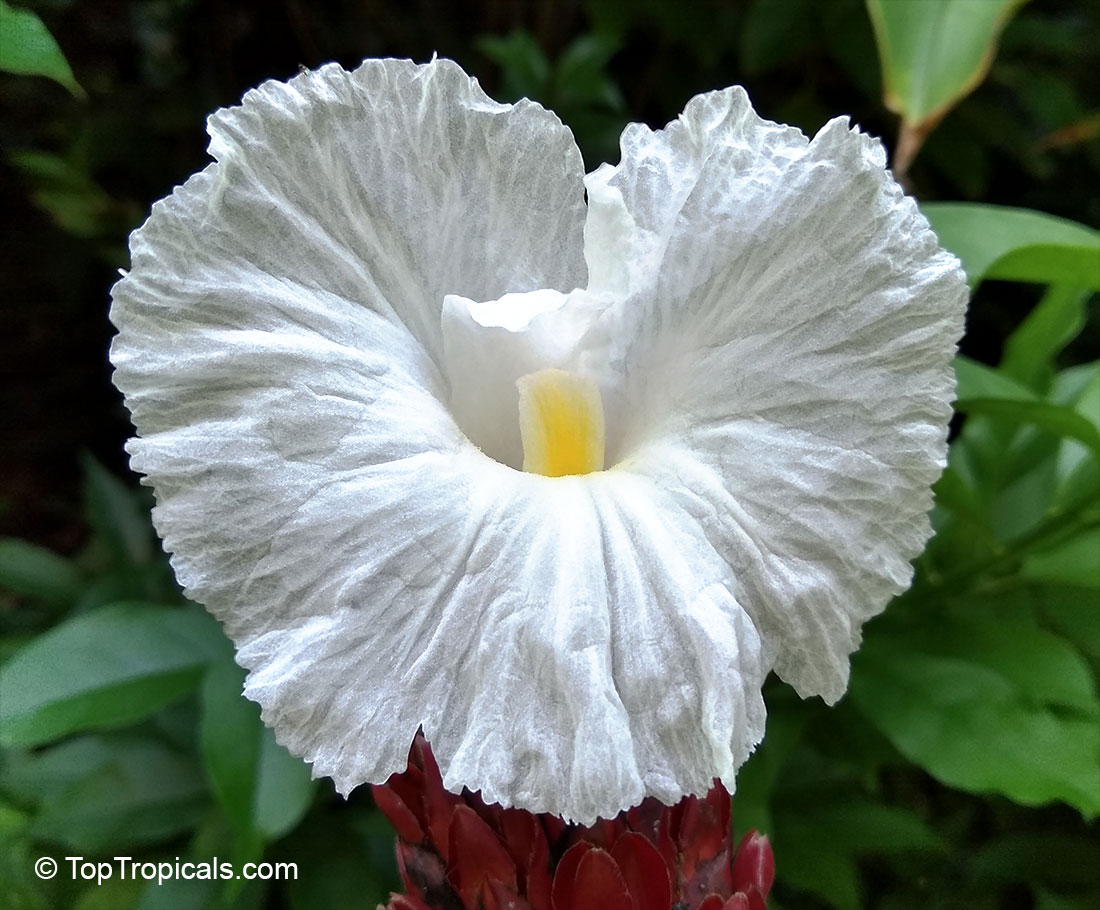
White  ginger  flower

Photo above: Costus arabicus - Spiral Ginger

Q: I grow ginger for cooking, but I know that some varieties have showy flowers. What gingers can you recommend as ornamentals?

A: Ginger is famous for its culinary and medicinal uses, and many species are also strikingly beautiful, making them perfect centerpieces for tropical gardens or potted plant collections, especially in shaded spots. Here are a few of our favorite cultivars.

1. Yellow Butterfly Ginger
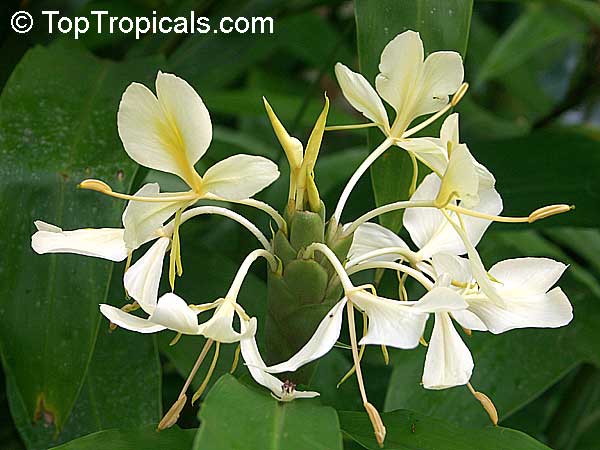
Hedychium  flavum  x  coronarium  -  Yellow  Butterfly  Ginger,  Nardo  Ginger 
 Lily

Hedychium flavum x coronarium - Yellow Butterfly Ginger, Nardo Ginger Lily - rare hybrid of White Butterfly ginger we mentioned earlier (https://t.me/TopTropicals/710), it is more vigorous and tall than its parent. With attractive long green leaves with a slight fuzziness, this ginger has open long spikes of pastel yellow flowers with a beautiful heady aroma. Exquisitely fragrant!

2. Variegated Spiral Ginger
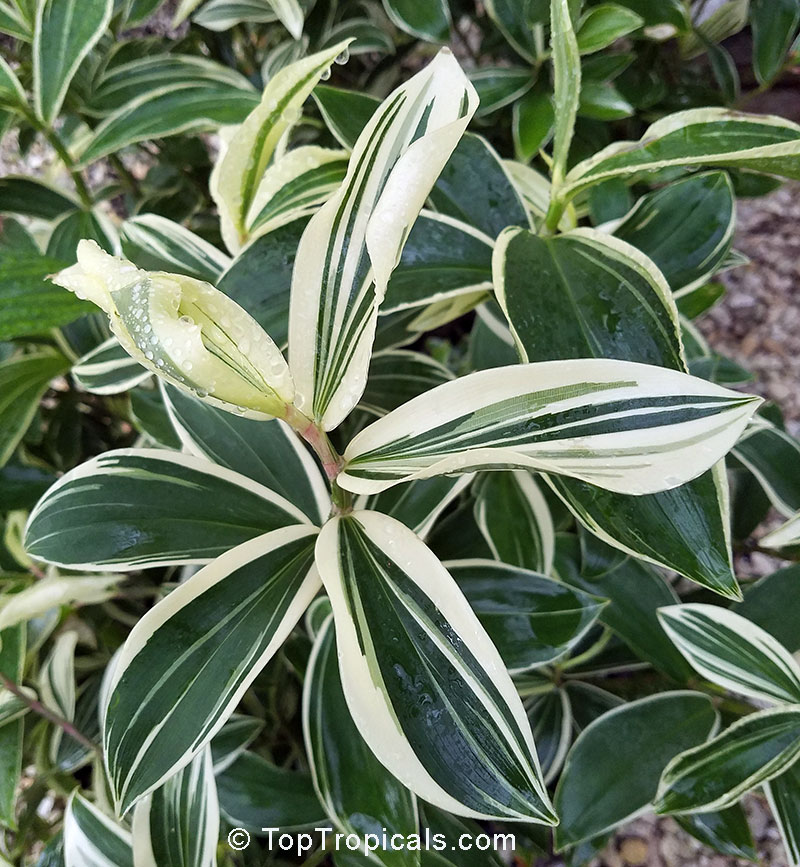
Costus  arabicus  (amazonicus)  variegata  -  Variegated  Spiral  Ginger

Costus arabicus (amazonicus) variegata - Variegated Spiral Ginger - is a tropical stunner originally from South America but adored in Hawaii and Florida. This ginger's eye-catching, spiraling stems are streaked with striking white variegation, topped with elegant pure white flowers with yellow centers. The pure white blooms are truly a piece of art! Perfect for shade gardens, this plant thrives in moist soil and loves plenty of water. If you're looking to add a bit of drama and elegance to your garden, this beauty is a must-have!

3. Pine Cone (Shampoo) Ginger
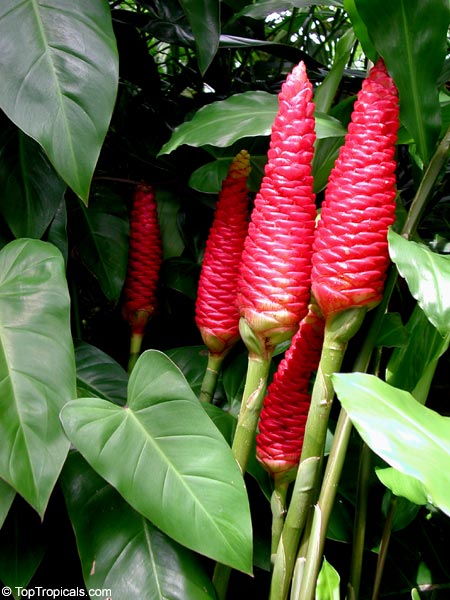
Zingiber  Zerumbet  -  Pine  Cone  Ginger,  Shampoo  Ginger

Zingiber Zerumbet - Pine Cone Ginger, Shampoo Ginger - is probably the most popular one. All parts of this ginger are spicy fragrant. The cone shaped flowers are long lasting and useful for cut flower arrangements. It is in fact used as a shampoo in Asia and Hawaii, and as an ingredient in several commercial shampoos! Pinecone ginger is considered a "canoe plant", that is, a plant introduced throughout the Pacific by the ancient Polynesian settlers.

4. Spiral Raspberry Ginger
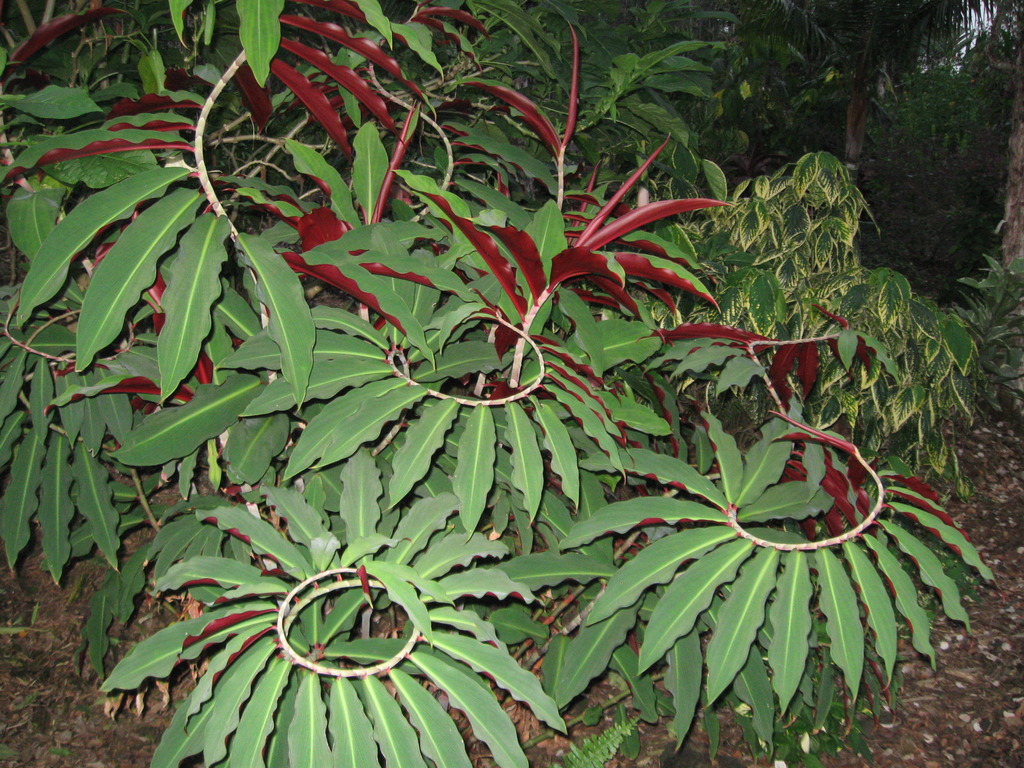
Costus  vargasii  -  Spiral  Ginger  Raspberry  Yogurt

Costus vargasii - Spiral Ginger Raspberry Yogurt - The name refers to the colorful raspberry colored stem, but that's not the only colorful thing about it: the leaves are dark green, long and glossy with velvety deep purple undersides. The inflorescence is a vivid red with tight bracts and bold yellow flowers. The butterflies love to drink the nectar from the flowers. Large vigorous ginger, growing up to 5-6 ft tall.

5. Cameroon Costus African Princess
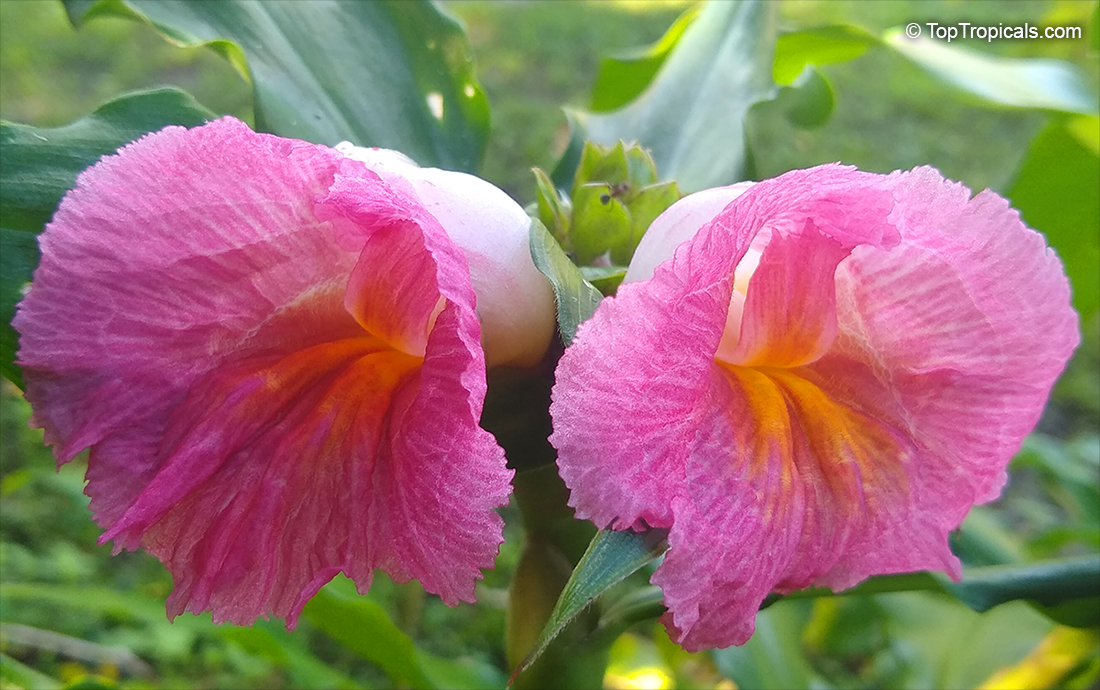
Costus  fissiligulatus  -  African  Princess,  Cameroon  Costus

Costus fissiligulatus - African Princess, Cameroon Costus - from Gabon in West Africa. It has a dazzling pink trumpet flower with a yellow throat. It is very floriferous with an inflorescence of numerous flower buds on a shortish plant of 3-4 ft that stands very erect. It is an easy grower.

6. Red Button Ginger (French Kiss)
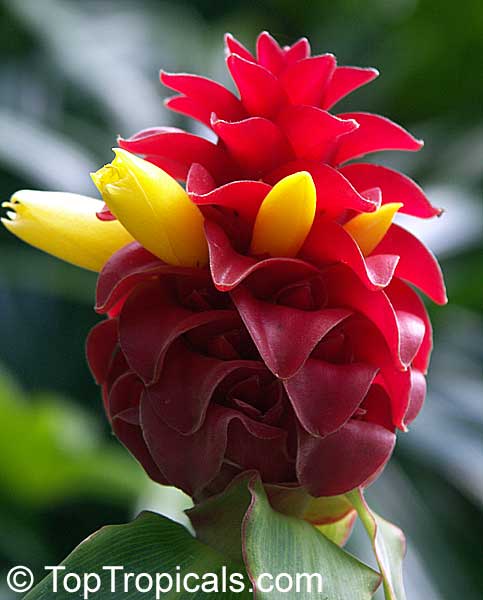
Costus  spicatus  x  woodsonii  -  Red  Button  Ginger,  French  Kiss

Costus spicatus x woodsonii - Red Button Ginger, French Kiss: this ginger's inflorescence resembles a cluster of bright red buttons, making it a standout in tropical gardens.

7. White Butterfly Ginger
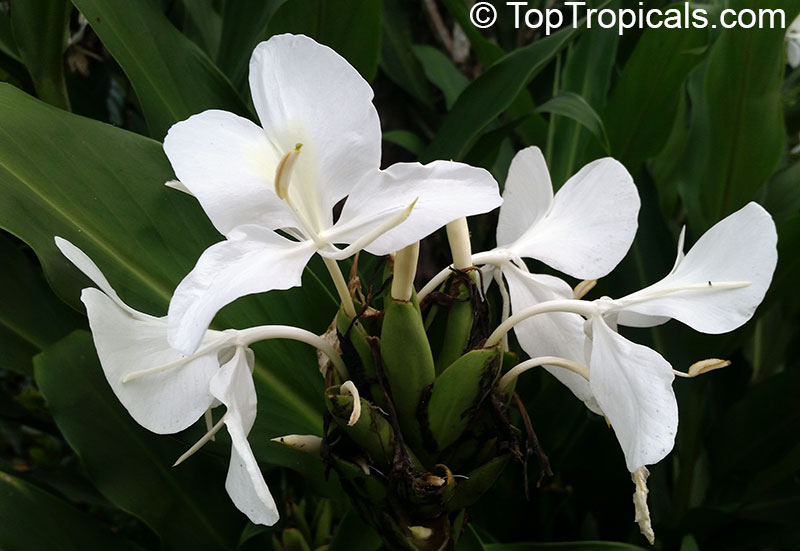
Hedychium  coronarium  -  White  Butterfly  Ginger

Hedychium coronarium - White Butterfly Ginger is a must for every Southern garden. It is famous for its intense, sweet scent. Symbol of Hawaiian Paradise along with Plumeria and Jasmine. It is popular in Hawaii and the Pacific Islands for leis and hair adornments and bears fragrant, butterfly-resembling flowers in summer. It has long lasting cut flowers, ideal for scenting the home. Can survive light freezes, with tops regrowing in the spring. Takes sun or shade.

8. Laos Silver Stripe Peacock Ginger
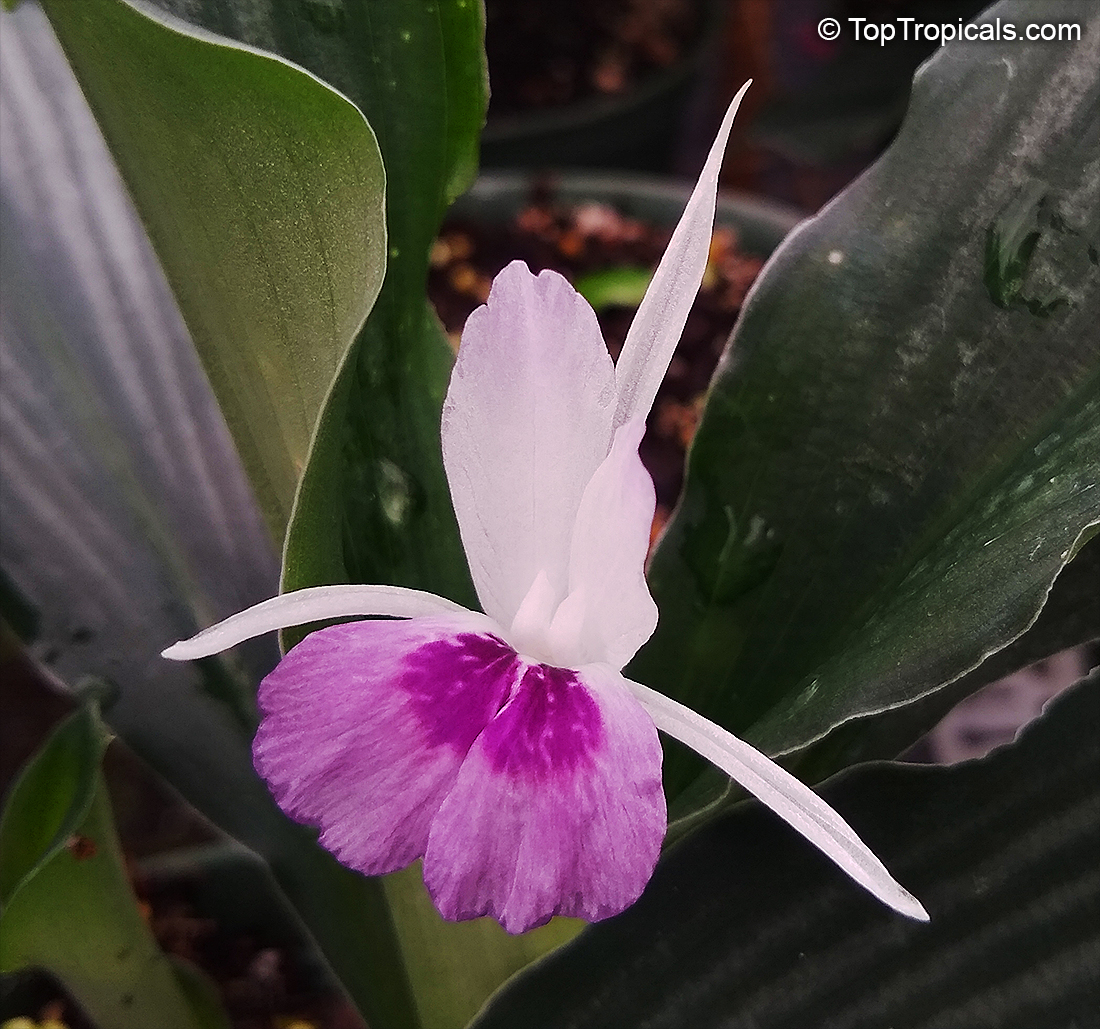
Kaempferia  angustifolia  -  Laos  Silver  Stripe

Kaempferia angustifolia - Laos Silver Stripe is one of the most beautiful of all the Kaempferia Peacock Ginger cultivars. It is one of the large types. The plant has boldly striped leaves of green and silver. The flowers are orchid shaped white and purple. Small, compact perennial, great for container culture. This hard to find variety is a must for every Ginger collector.
Date: 9 Apr 2024

How to start a tropical garden?

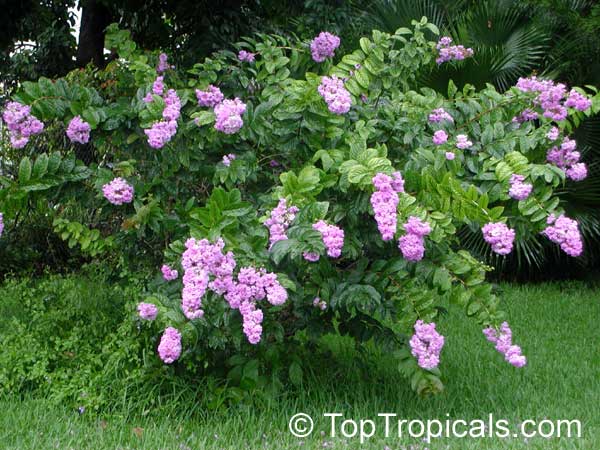
Lagerstroemia

Photo above: Lagerstroemia speciosa - Queen Crape Myrtle. Gorgeous flowering tree with cascades of lilac flowers. One of the most popular trees in Southern gardens.

Q: It's spring, finally! I can't wait to plant my paradise garden with lots of tropical flowers. We moved into a nice new house but the yard has nothing but grass. Where do I start?

A: When you start your garden from scratch, you need to plant your trees first. It's a perfect timing!
Getting tropical flowering trees now is really important for making your garden strong and beautiful. Trees are like the bones of your garden, giving it shape and shade. If you plant them in spring, they have enough time to grow strong roots before winter. This helps them survive better.
Trees also give shade to other plants so they can grow well too. It's like building a house - you need to start with the frame before adding other parts. So, it's a good idea to get those trees now before moving on to shrubs and vines.
Remember to provide regular fertilizing program which is the most important during season of active growth. The more food your tree gets, the stronger and faster it grows! For flowering trees, we recommend Sunshine Boosters Megaflor formula.

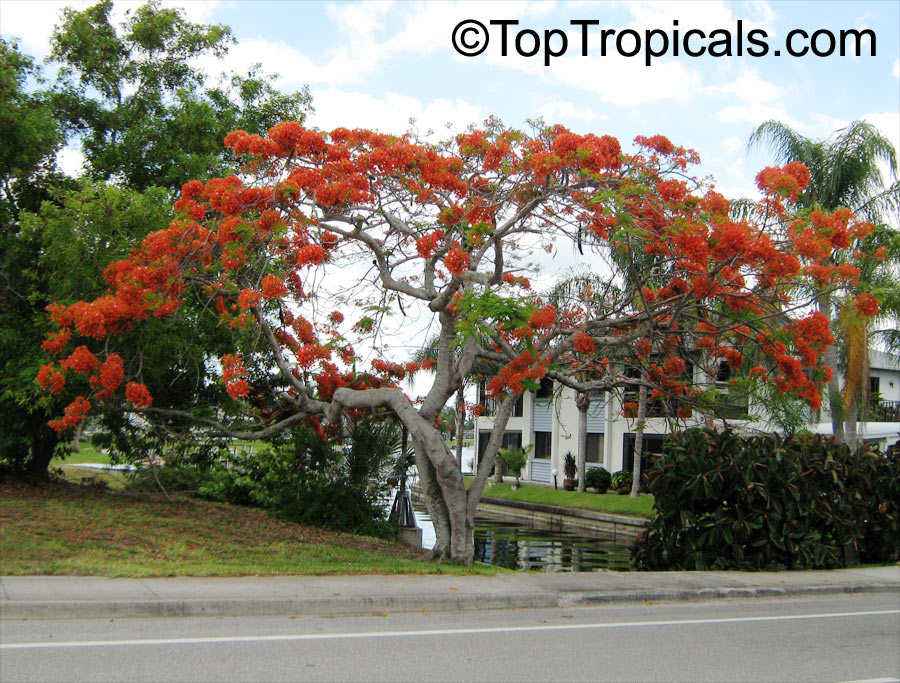
Royal  poinciana,  Flamboyant  tree,  Delonix  regia

Photo above: Royal poinciana, Flamboyant tree - Delonix regia."The Royal Poinciana is one of the most spectacular flowering trees in the USA, and probably among the top 10 on this planet. In full bloom, it is like a regal elephant caparisoned in red and yellow brilliance."(Larry M. Schokman, The Kampong, National Tropical Botanic Garden)

Date: 6 Jan 2024

Ten New Year Resolutions:
Diversity in Tropical Garden

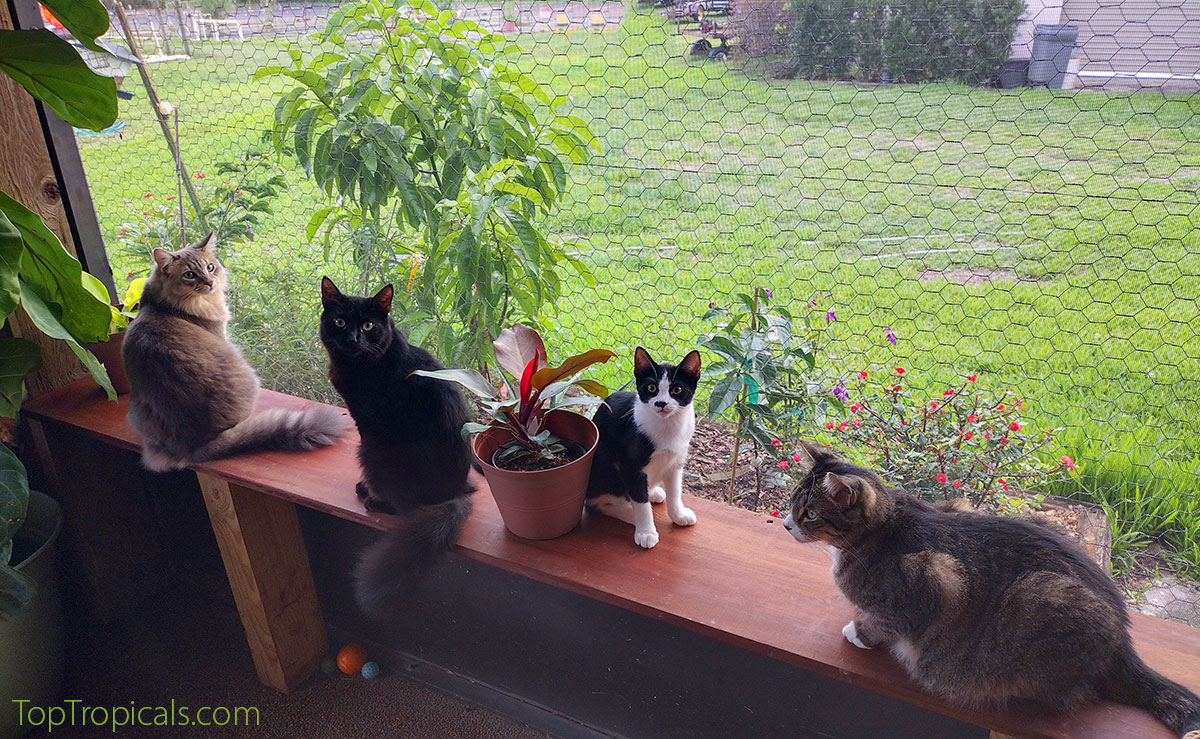
Cat  diversity  in  the  garden

1. Diversity. Grow different plants. Add more types of tropical plants to your garden for a colorful and diverse look.

2. Save Water. Use water wisely by installing drip systems, collecting rainwater, and using mulch to keep the soil moist.

3. Improve Soil. Make your soil healthier by adding compost or manure regularly. Healthy soil promotes robust plant growth and enhances overall garden resilience.

4. Deal with Pests Smartly. Keep pests in check with a plan - use natural solutions and check your plants often. Preventing program is easier than dealing with infestations.

5. Right Fertilizing. Feed your plants with Eco-frintdly fertilizer such as Sunshine Boosters (safe to use year around). If you use slow-release fertilizers - apply in right amounts, from March to November.

6. Trim Regularly. Keep your garden tidy and healthy by pruning and removing dead or sick parts of the plants.

7. Companion Planting. Explore which plants work well together to enhance nutrient uptake, fight pests and provide shade for those species that need it.

8. Right Climate and Zone Pushing. Pick plants that love your climate, considering sunlight, temperature, and humidity. For more sensitive tropical plants, work on a plan for cold protection: grow them in pots or set up temporary covers.

9. Teach Others. Share your gardening knowledge with the community. Propagate your plants from seeds, cuttings, divisions - and share them with friends and neighbors. Remember: live plant is the best gift, and love is sharing!

10. Make a Relaxation Spot. Create a cozy corner in your garden with comfy seating or hammock, shade, and maybe a water feature for a peaceful retreat.

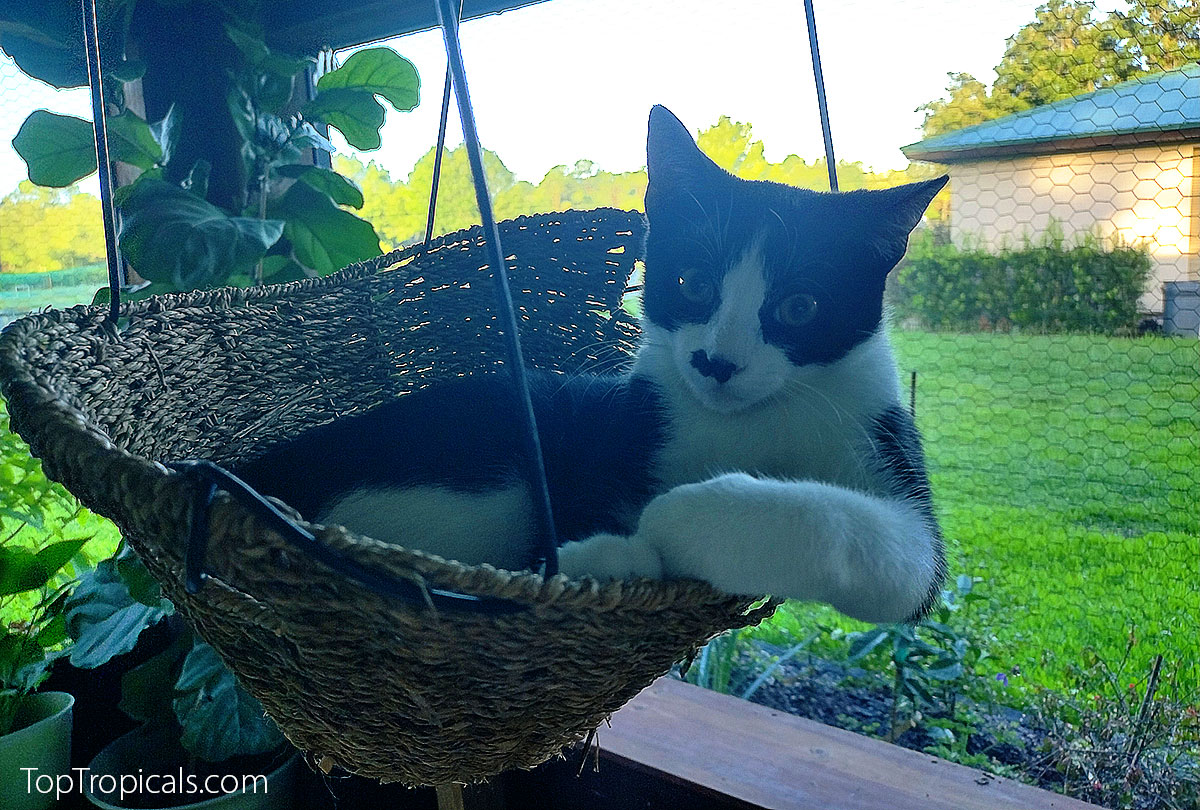
Cat  in  hammock

Date: 2 Mar 2026

Beyond fruit: how this African tree supports wildlife and garden health

Vangueria infausta - Spanish Tamarind

Vangueria infausta - Spanish Tamarind

Beyond fruit: how this African tree supports wildlife and garden health: Wild Medlar in the ecological food forest 🍊

Vangueria infausta (Spanish Tamarind, Wild Medlar) might win your heart for its sweet-tart fruit and folk medicine magic - but did you know it’s also a quiet hero in the ecosystem? Whether you’re planting a full-blown food forest or just a mixed backyard garden, Vangueria infausta brings more than fruit to the table. It brings balance, beauty, and biodiversity.

Wild Medlar Plant Facts

Botanical name: Vangueria infausta
Also known as: Wild Medlar, Spanish Tamarind
USDA Zone: 9 - 11
Highligths Small tree 10-20 ftFull sunWatering: Moderate. Water when top soil feels dryEdible plantDeciduous plantEthnomedical plant.
Plants marked as ethnomedical and/or described as medicinal, are not offered as medicine but rather as ornamentals or plant collectibles.
Ethnomedical statements / products have not been evaluated by the FDA and are not intended to diagnose, treat, cure, or prevent any disease. We urge all customers to consult a physician before using any supplements, herbals or medicines advertised here or elsewhere.Subtropical plant. Mature plant cold hardy at least to 30s F for a short time
Get personalized tips for your region


🐝 Pollinator power


When in bloom, this tree produces nectar-rich flowers that attract bees, butterflies, and other pollinators. These beneficial insects don’t just help the Wild Medlar fruit - they boost productivity in your entire garden.
If you grow mangos, citrus, guava, or veggies nearby, Spanish Tamarind helps keep the pollinator traffic moving.

🐦 Bird magnet


Birds are big fans of this tree. They nest in its dense branching, snack on overripe fruit, and help spread seeds. In return, they’ll help keep down pests like caterpillars and beetles.
Even in a small garden, one Wild Medlar can be a micro-habitat for birds, insects, and other helpful wildlife.

🌱 Soil stabilizer


With its deep roots and drought-hardy nature, Wild Medlar helps hold soil in place, especially on slopes or rocky patches. It improves drainage and reduces erosion, which makes it a great addition to food forests in challenging spots.

🍂 Natural mulch & green cleanup


The tree drops a modest amount of leaf litter, which breaks down into soft, rich mulch. In a diverse planting, that means fewer weeds, better soil structure, and less watering needed.

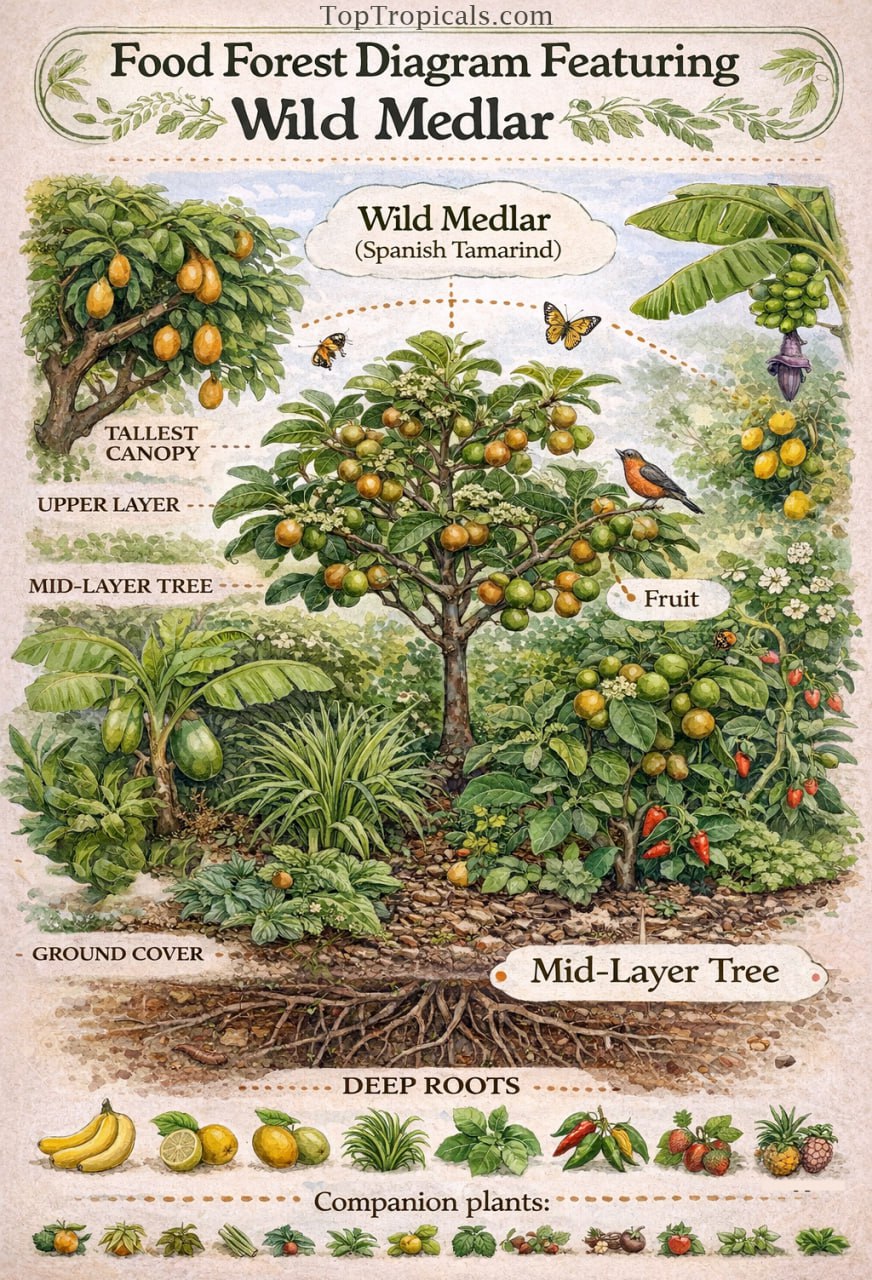
🌿 Companion planting & food forest stacking
· Works great as a mid-layer tree in multi-tiered systems
· Provides light shade for herbs or smaller fruiting plants
· Plays well with bananas, papaya, guava, lemongrass, and ground covers
In zones 9-11, it can live happily in a mixed border or permaculture guild. In colder zones, just keep it potted and move it around as needed - it still offers many of the same benefits.

🛡 Pest and disease resistant


One more bonus: Spanish Tamarind is incredibly low-maintenance. It resists most common pests and doesn’t suffer from fungal issues like many tropical fruit trees do. That means fewer chemicals and more harmony in your garden ecosystem.

✍️ Ready to plant something that gives back?


Think you need more than just another fruit tree? More life. More movement. More meaning in your garden?
Grow Wild Medlar for the fruit - but keep it for everything else it brings. The pollinators. The shade. The quiet medicine. The steady presence that makes your space feel alive.
If you’re building a food forest - or simply want a tree that earns its place every single season - this one doesn’t just sit there. It contributes.

🛒 Plant Spanish Tamarind in your Food Forest for a happy wildlife

📚 Learn more:


Vangueria infausta - Spanish Tamarind in Plant Encyclopedia
10 ways to enjoy Wild Medlar - Spanish Tamarind
7 steps for a care-free Spanish Tamarind - the easiest rare fruit to grow
The wild fruit with a secret: health benefits of rare Spanish Tamarind - the exotic fruit you've never heard of

#Food_Forest #Discover

🟢 Join 👉 TopTropicals

Date: 5 May 2025

🎀 Five plant gifts she'll love this Mother's Day

Q: My mother loves gardening and I am thinking to buy her a live plant to make her happy. What plant do you recommend?

A: At Top Tropicals, we have a big selection of wonderful gift plants . Below are a few suggestions for you, these plants are large, developed and ready to bloom or fruit!

1. Joy Perfume Tree

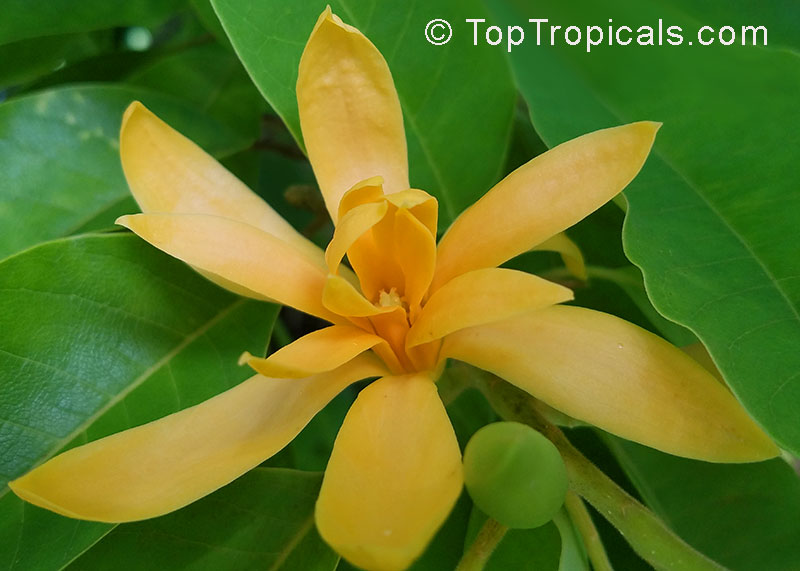
Magnolia  (Michelia)  champaca,  Joy  Perfume  Tree,  Champaka

The Champaka or Joy Perfume Tree (Magnolia champaca) - is a top choice for Southern landscapes, prized for its striking columnar shape and fragrant, fruity bubble gum-scented blooms - you won't be able to stop sticking your nose in this flower! A signature plant at Top Tropicals, it's known for producing the world's most expensive perfume, Joy. The Joy Perfume Tree blooms on and off year-round and is currently in full bloom at our farm in Sebring, FL, filling the air around with fantastic sweet scent. This tree thrives in both pots and the ground, growing bushy and full as it matures. At Top Tropicals, we have beautiful Champaka trees in all sizes, from 3-4 ft tall (ready to bloom in a year) to 6-10 ft tall (already bloomed) for local pick up or delivery.
Learn more, with a short video.

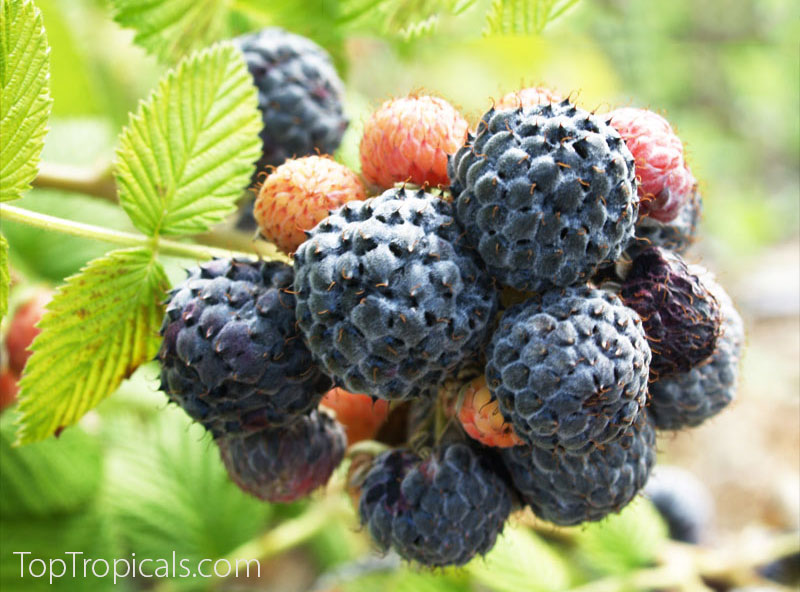
2. Tropical Raspberry Mysore

Raspberry  Mysore  Tropical,  Rubus  albescens  (niveus)

Tropical Raspberry Mysore (Rubus albescens) - is the perfect solution for those missing Northern fruit in hot climates. Unlike traditional raspberries that can't handle the heat, this fast-growing Raspberry from India thrives in humid, hot conditions and produces juicy, sweet fruit almost year-round! The clusters of purple-black fruit are packed with flavor, and the plant is perfect for large containers, producing plenty of fruit in no time. Cold-hardy to the upper 20s F, it's an easy-to-grow, fast producer. We have beautiful, fruit-ready 3 gal Raspberry bushes, ready to add a burst of sweetness to your garden!
Learn more, with a short video.

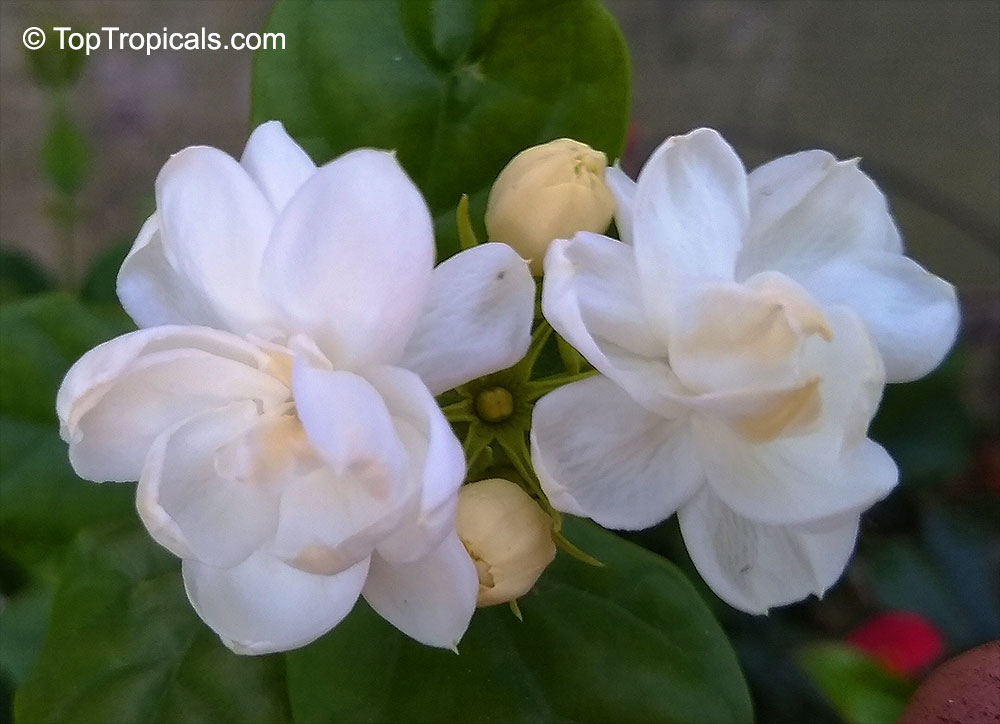
3. Fragrant Jasmine Sambac

Jasminum 
 sambac

Jasminum Sambac is widely regarded as the most fragrant jasmine, cherished by tropical gardeners and plant collectors alike. Native to India, this jasmine is the source of jasmine perfume oil and the signature ingredient in jasmine tea. With various varieties offering unique flower sizes, shapes, and growth habits, it’' perfect for both sun and shade, thriving as a container plant or indoor favorite. Its delightful fragrance fills the air, and with the help of Sunshine Pikake plant booster, you can enjoy even more blooms. Jasmine Sambac, along with Champaka, is another signature plant of Top Tropicals. Through the decades, we've collected all the available varieties in cultivation - check them out!
Learn more about Jasmine Sambac varieties, with a short video.

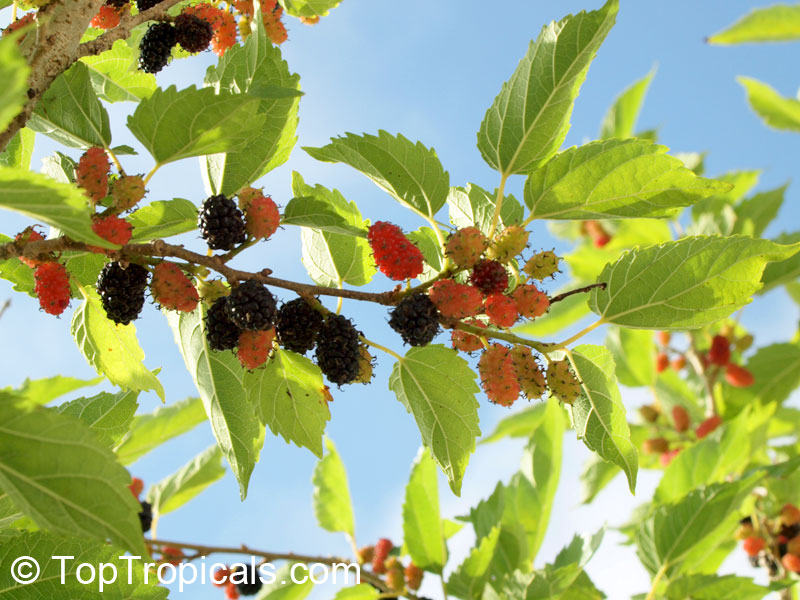
4. Everbearing mulberry

Mulberry  tree  Dwarf  Everbearing  (Morus 
 sp.)

The Dwarf Everbearing Mulberry (Morus sp.) - is the perfect way to enjoy fruit year-round! This beautiful, cold hardy bush produces sweet, juicy mulberries starting from the very first year - often the same season you plant it. With its dwarf habit (easily maintained at 4-6 ft), it's perfect for containers and small spaces. Cold-hardy and drought-resistant, this productive plant thrives in various climates, from USDA zones 5 to 10! The fast-growing Mulberry will provide fruit year-round, and with minimal care, it will flourish in almost any soil. Our Everbearing Mulberry bushes produce enough fruit for both birds and breakfast - we pick a handful every day!
Learn more, with a short video.

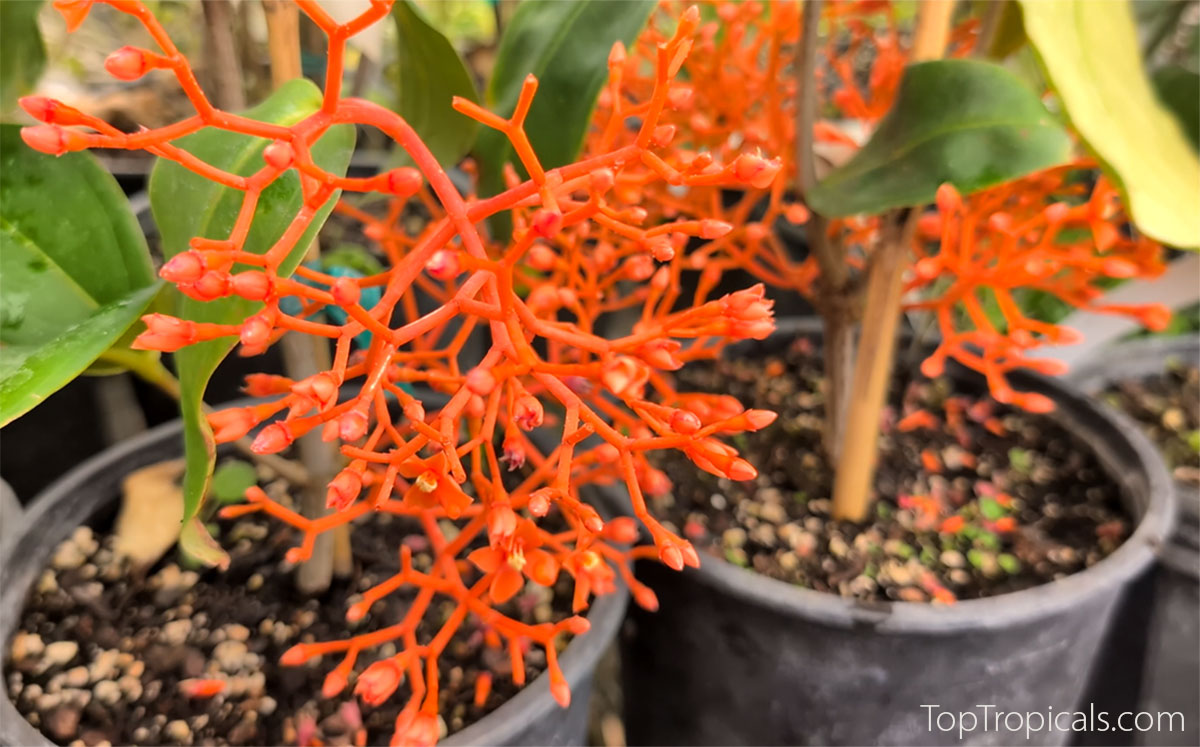
5. Medinilla Coral Spike

Medinilla  scortechinii  -  Orange  Coral  Spike

Rare Medinilla scortechinii - Orange Coral Spike - is a rare gem that brings a touch of the ocean to your garden! With bright orange stems bursting into star-shaped blooms, it looks like something straight from a coral reef. Compact and easy to grow, this plant stays under 2-3 ft tall, making it perfect for pots, hanging baskets, or as an epiphytic accent. The glossy dark leaves contrast beautifully with the vibrant orange panicles, and it thrives in bright shade. A must-have for collectors of unusual tropical plants, this coral spike adds a bold pop of orange wherever it grows - but hurry, it doesn't stay in stock for long!
Learn more, with a short video.