Date: 17 Nov 2025
❄️Cold Night Survival Guide
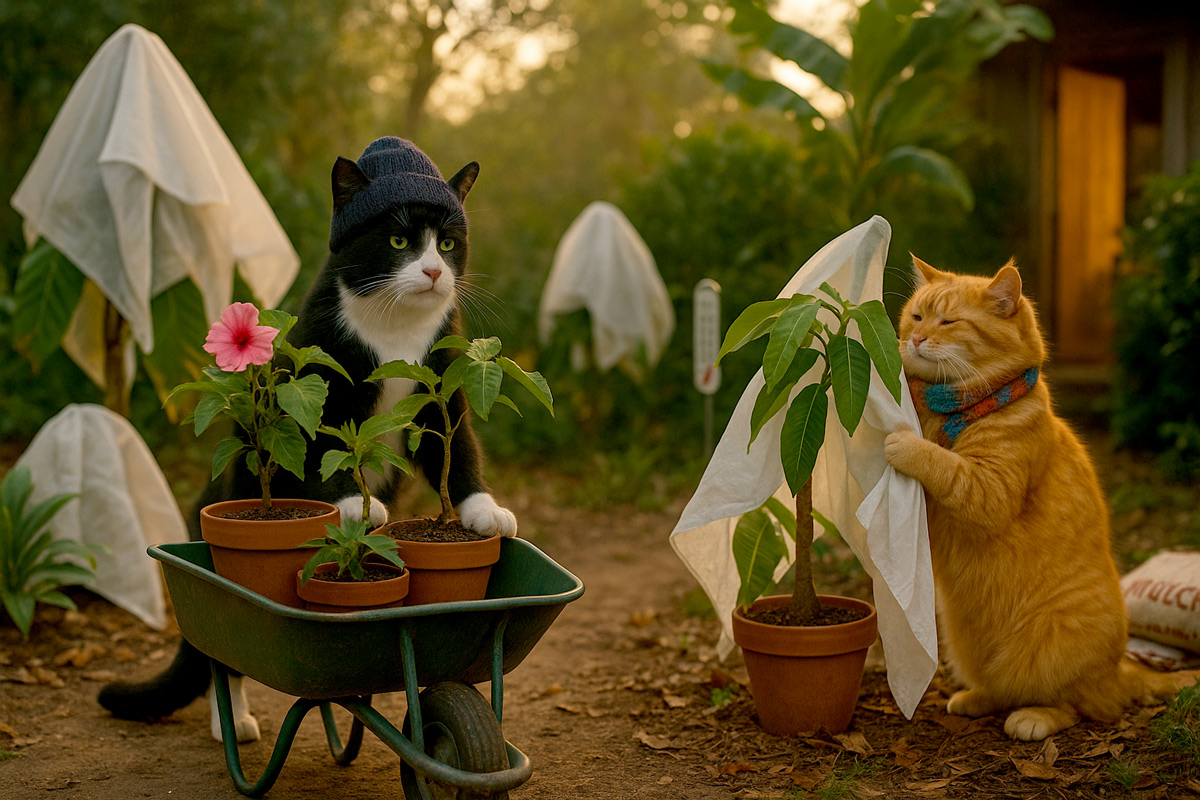
Smokey and Sunshine Prepare Plants for the Cold Night.
Smokey: Come on, Sunshine, help me move these plants inside before it gets
dark!
Sunshine: I am helping... see? I’m supervising the mango
tree.
Smokey: You call that supervising? The frost cloth’s upside down!
When the forecast drops into the 30s, panic is not a plan. This is your simple, clear checklist to protect every tropical in your garden. Think of it as the quick emergency manual that goes hand in hand with the previous cold-weather newsletter.
"We all love our tropical flowers, mangoes, bananas, and rare fruit trees. A single cold night does not have to be a disaster. The key is knowing what to do, when to do it, and what mistakes to avoid." - Tatiana Anderson, Top Tropicals Plant Expert
🌡️ FROST AND FREEZE
A frost and a freeze are not the same. A frost is when you see ice crystals on leaves or grass, while a freeze is when the air temperature drops below 32 F. The tricky part is that you can get frost even when the air is above freezing, and you can have a freeze with no frost at all. It all depends on humidity and the dew point. If the dew point is below freezing, the ground can cool faster than the air, letting frost form even when your thermometer reads 35 or 36 F. And once the air itself drops below 32 F, even for an hour, tender tropicals can be damaged. For plants, a freeze is far more dangerous, because freezing air pulls heat out of stems, branches, and roots. Frost usually burns leaves, but a true freeze can injure wood, kill buds, and damage the entire plant.
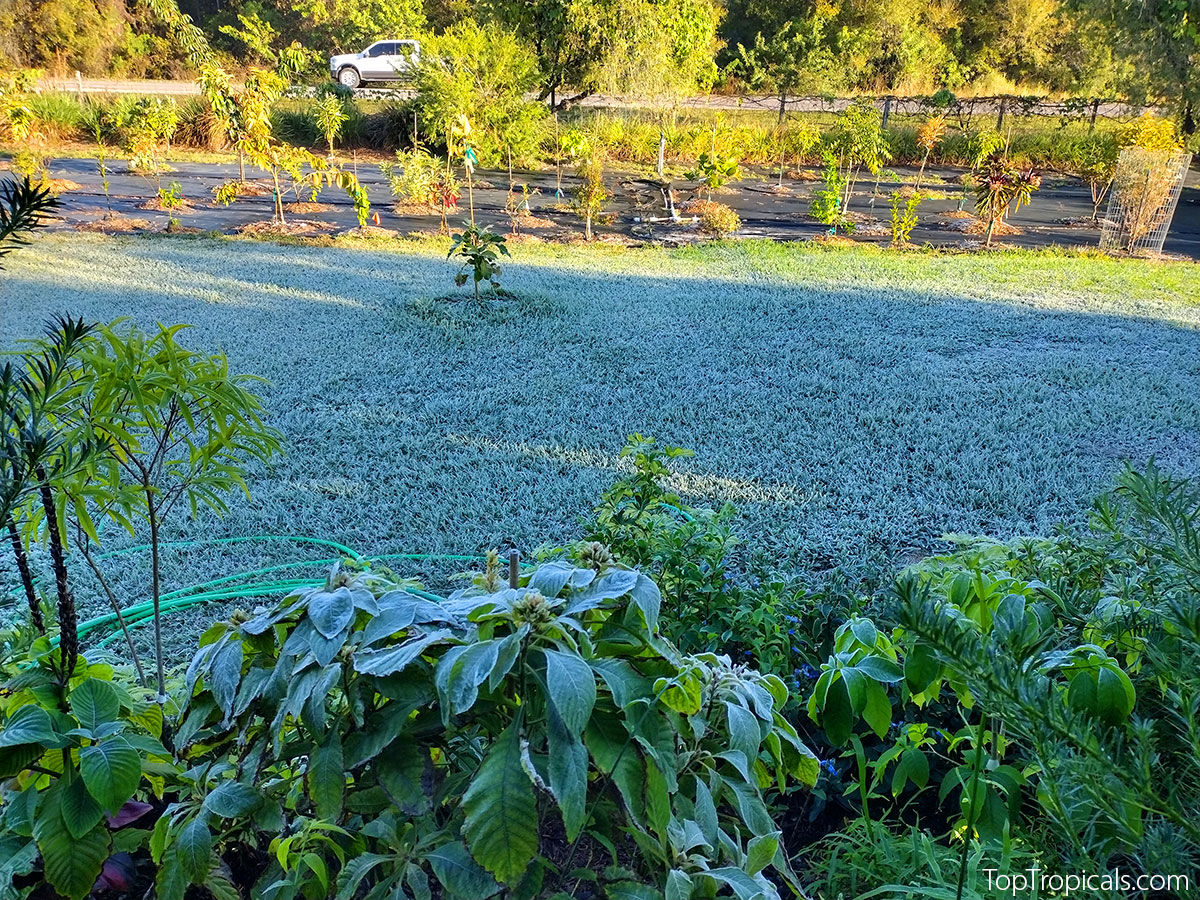
Frost on the grass and leaves on Winter morning in Central Florida
WHAT TO DO AND NOT TO DO BEFORE A COLD SNAP
✔️ 5 THINGS TO DO:
- Water well. Hydrated plants tolerate cold better than dry, stressed ones.
- Add mulch. A thick layer around the base keeps roots warm.
- Block the wind. Move pots to a sheltered corner or patio.
- Cover at night, uncover in the morning. Let plants breathe and get light.
- Add gentle heat if needed. Non-LED Christmas lights or a small old style 15-20W light can raise temps a few degrees.
❌ 5 THINGS NOT TO DO:
- Do not prune or trim. Fresh cuts freeze first.
- Do not overwater. Wet, cold soil invites root rot.
- Do not let plants dry out either. Wilted plants freeze more easily.
- Do not use dry fertilizer. Gentle liquid feeds like Sunshine Boosters are safe to use with every watering: its intake naturally slows down as watering decreases.
- Do not look only at the thermometer. A long, windy night can be worse than a short freeze.
TEMPERATURE ACTION GUIDE (40 to 25 F)
- 40 to 38 F: Move potted plants to shelter, water soil, and cover tender tropicals.
- 37 to 33 F: Use frost cloth and anchor it down so the wind does not lift it.
- 32 to 30 F: Add a heat source like non-LED lights.
- 29 to 25 F: Double-cover sensitive plants, wrap trunks, and protect roots heavily.
COLD TOLERANCE BY PLANT TYPE
Before a cold night, it really helps to know your plant’s exact cold limits. Every species is different, and young plants are always more sensitive than mature ones. Take a few minutes to look up your varieties in our Tropical Plants Encyclopedia — it will tell you the safe temperature range, how much protection each plant needs, and which ones must be covered or moved before the next cold snap hits.
- Bananas: leaf burn below 37 F
- Mango, Annona: hurt around 32 F
- Cold hardy avocados: Mature tree can take about 25 F. Young trees must be protected
- Olives, Citrus, Guava, Jaboticaba: usually OK outside with mulch
QUICK-ACTION TABLE
Before the cold arrives, make yourself a quick list of every plant and what action each one needs. It saves time when temperatures start dropping and keeps you from scrambling in the dark. Check that you have enough frost cloth, blankets, and supplies on hand so you can cover everything without rushing. Planning ahead makes cold nights much less stressful.
- Bring Indoors: Cacao, Bilimbi, Coffee. They need warm, bright light.
- Cover Outdoors: Mango, Jackfruit, Banana, Annona. Use frost cloth, not plastic on leaves.
- Leave Outside: Eugenias, Peaches, Persimmons, Longan, Lychee, Papaya, Citrus, Loquat, Hardy Avocado. Add mulch and monitor overnight lows.
🛒 Check out cold tolerant tropicals
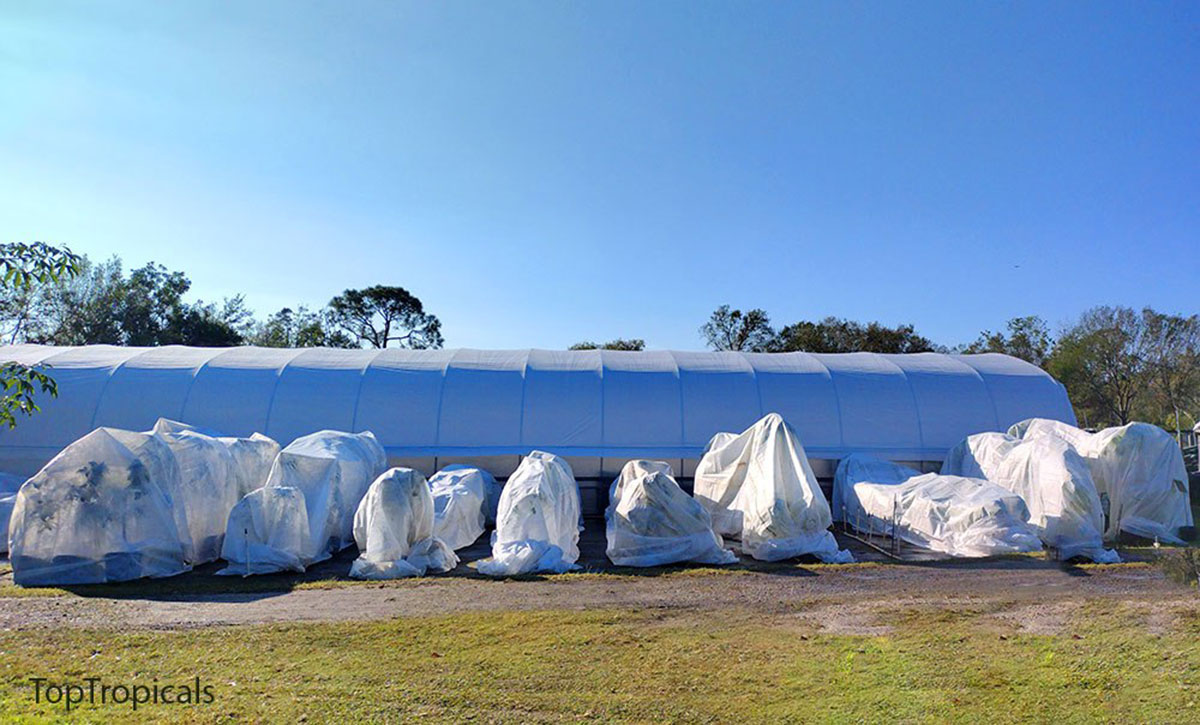
Covering large mango and avocado trees in pots at TopTropicals during cold nights
GADGETS AND TOOLS THAT HELP
- Indoor helpers: LED lights, small heaters, bottom-heat mats, timers.
- Outdoor helpers: frost cloth rolls, mini greenhouses, non-LED Christmas lights or small incandescent lights, smart thermometers.
Always keep electrical safety in mind, especially if you are using extension cords outdoors. Use only weather-rated cords, keep all connections off the ground, and protect plugs from moisture. Make sure heaters and lights are stable, secured, and never touching fabric covers. A few minutes of safety check can prevent a dangerous situation on a cold, wet night.
And if you want to keep plants strong through winter, add Sunshine Boosters to your watering routine. It is gentle, safe in cold weather, and gives plants an extra edge.
AFTER THE COLD PASSES
In the morning, uncover plants. Leaving covers on during the day can trap heat and cook the tender new growth, especially under the sun. The only exception is true frost cloth designed for all-day use, which allows air, light, and moisture to pass through. Regular blankets, sheets, and plastic must come off as soon as the sun rises.
Do not cut anything yet. A plant can look completely dead after a freeze, but many branches are still alive under the bark. Cutting too soon removes wood that would recover on its own. Wait until new growth begins in spring. That is when you can see exactly which branches are truly dead.
Use the scratch test. Gently scratch the bark with your nail or a small knife. If the layer underneath is green, the branch is alive. If it is brown and dry, it is likely dead. But even then, wait until warm weather to be sure, because sometimes only the tips die back while the lower part of the branch survives.
Once the weather stabilizes, resume light feeding. Plants coming out of cold stress need gentle support, not heavy fertilizer. A mild liquid feed like Sunshine Boosters helps them rebuild roots and push new growth without burning tender tissue.
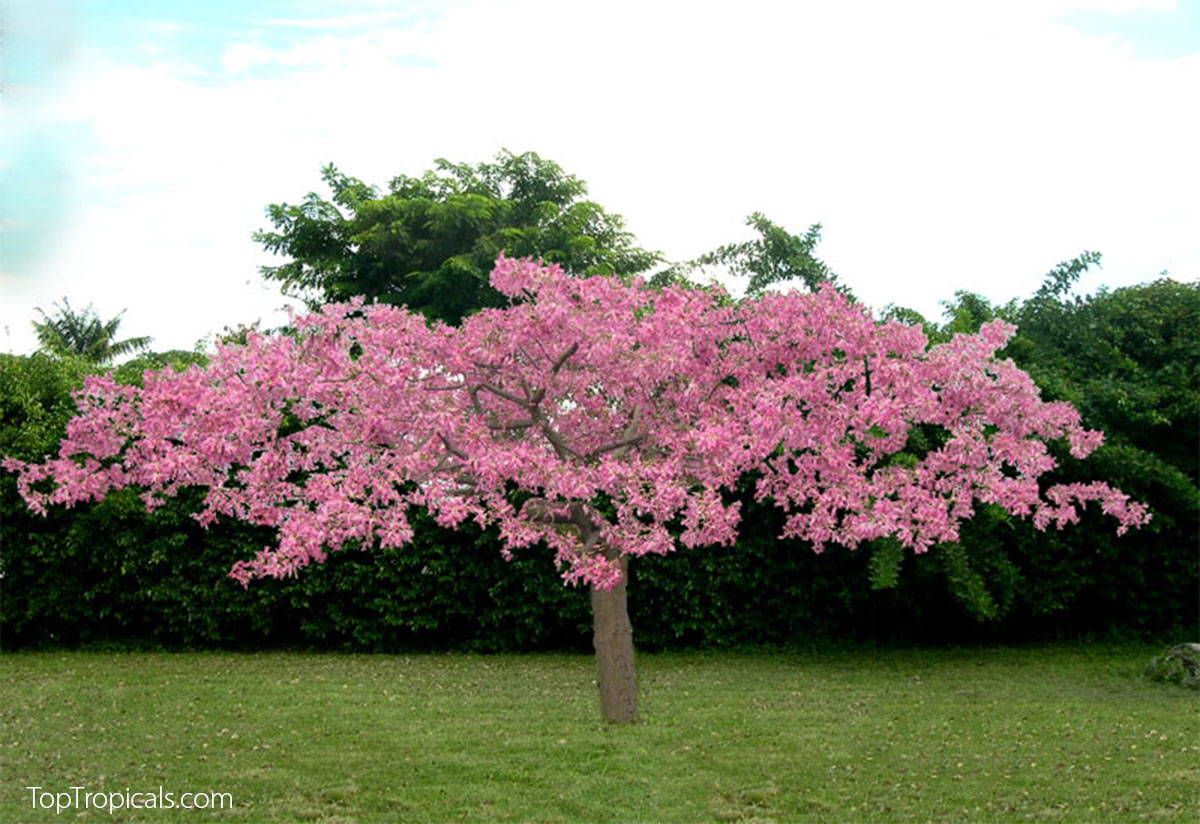
Dwarf Ceiba Pink Princess (Grafted) - a unique compact cultivar covered with pink flowers in Winter. Watch short video: How this breath-taking flowering tree stays so compact.
WHAT NOT TO DO
- Do not prune right after a freeze.
- Do not overwater cold soil.
- Do not fertilize heavily until spring.
- Do not leave covers on in full sun.
CLOSING THOUGHT
Your tropical garden can survive any cold night if you prepare right. Cold snaps always feel stressful in the moment, but once you know your plants, have the right supplies, and follow a simple plan, it becomes routine. A few minutes of preparation before dark can save months of growth and keep your collection healthy all winter.
Frost cloth is the true workhorse of cold protection: it keeps heat in, keeps frost off, and will not suffocate plants the way plastic or blankets can. Having a few rolls ready means you never have to scramble at the last minute. Sunshine Boosters give your plants gentle support during the colder months so they stay strong enough to bounce back quickly when warm weather returns.
A little planning now will pay off in spring, when your mango, banana, citrus, and all your favorite tropicals come back happy and ready to grow.
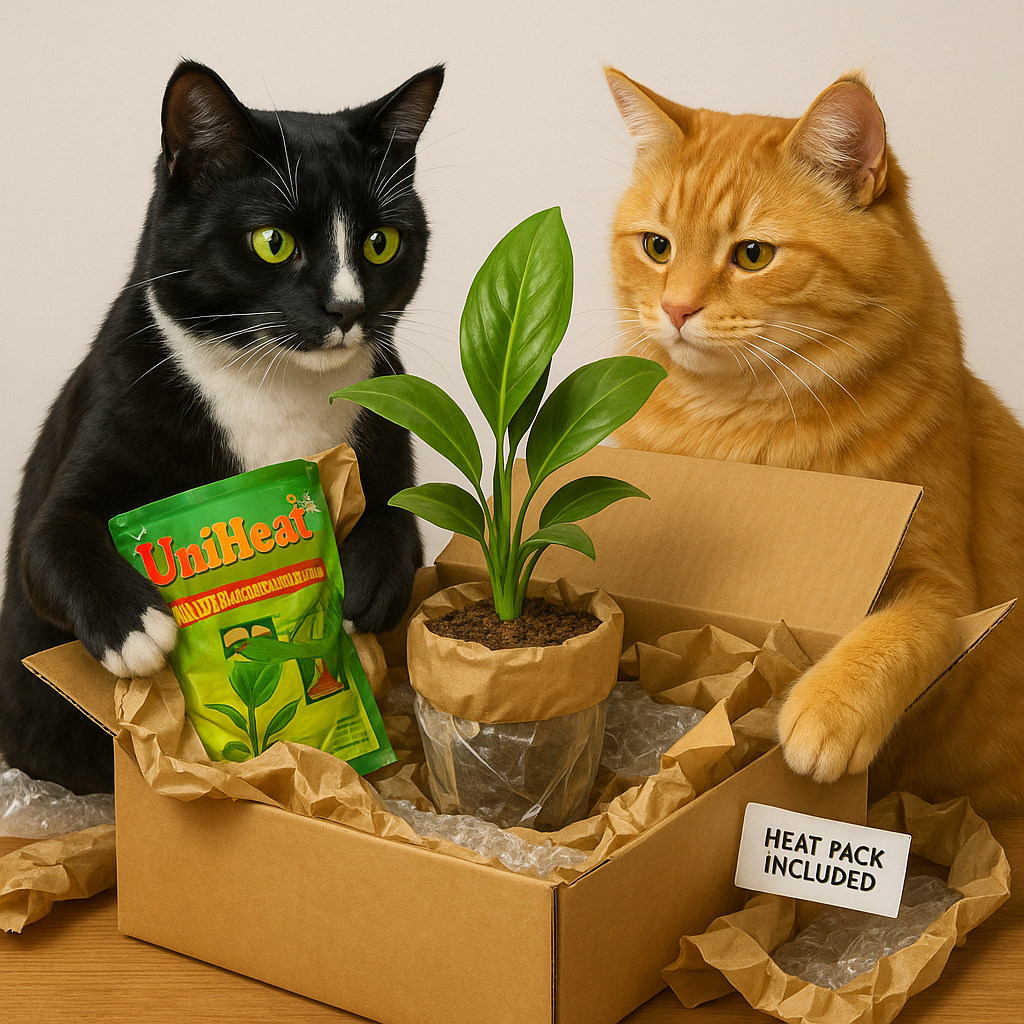
Add Heat Pack to your plant order
Date: 10 Apr 2016
Growing by the sea
Q: Please recommend me some interesting plants that can grow on my waterfront property and can withstand some salt wind. All my neighbors have Sea Grape trees and bougainvilleas, and I want something different and special. I would love to have some colorful or fragrant flowers, or fruit around my paradise home.
Q: Considering your neighbors successfully grow Sea Grape (Coccoloba), and Bougainvilleas, you have a mild, frost free climate. There is a number of spectacular and useful tropical plants that are salt tolerant. Orchid Trees - Bauhinias, Poincettia - Delonix, and Geiger trees - Cordias, are very showy flowering trees. For large size bushes, try Dwarf Poincianas - Caesalpinias, and Scarlet-Coral Erythrinas. Frangipani - Plumeria, come in different colors and bring you perfume fragrance from Hawaii. And of course, Desert Roses - Adeniums, can be grown and showy specimens anywhere in your yard, both in the ground or as potted bonsai.
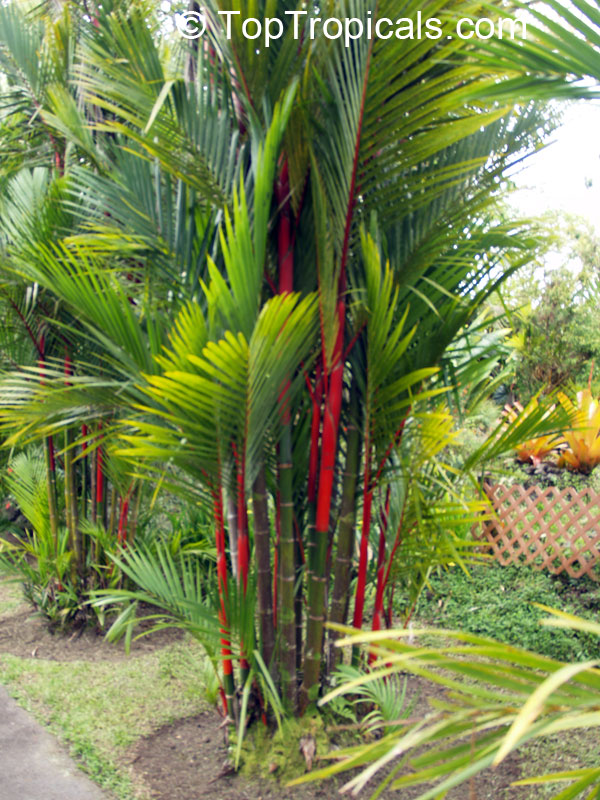
Most palms, especially popular Coconut Palm, source of tasty fruit and drink, are highly tolerant to salt breeze. If you are looking for something that nobody has, Lipstick palm, or Sealing wax palm - Cyrtostachys lakka, is definitely the most spectacular palm you can find. It is a stunning feather palm that develops a brilliantly red trunk. Palm is originally from Malaysia, but has been introduced to Costa Rica and other tropical areas of the world. Sealing Wax Palm seeds are very slow to germinate, up to a year, and large specimens are very rare and hard to find even in rare tropical plant nurseries. This palm will require a good overhead light, and constant warmth (above temperature 55F). It is definitely worth an effort to grow this beauty.
You may add more tropical accents to your landscape by the sea with many varieties of showy heliconias.
Date: 24 Jun 2018
Our honest advise on Holiday Gift Plants
Q: Any suggestions on gift plants? With Holidays around the corner, I've been thinking of getting a present for my grandma, she lives in FL and is an experienced gardener. I also have a friend that lives in CA, also warm climate, but she doesn't have a green thumb. Any "easy" plants I can try for her?
A:
Live plant is a perfect gift, as we all know. However when
ordering a plant online as a present, for a happy
experience, you should have three things to consider:
1) Gardener's experience. Planting instructions are
included with every order, and usually success is there if
you follow them. But all plants go through shipping stress
(some more, others less) and need time, patience and love
to recover. Also, a plant will need a new home after
shipping: a pot and a good soil mix. It would be wise if
you add potting mix with a gift
order; the plant should be planted in a permanent pot as
soon as possible, but normally can wait a day in a packing
bag until its new owner gets a pot, if it is not ready
yet.
2) How easy the plant is? If buying a plant for a
beginner, chose something easy, as well as showy. Adeniums - Desert Roses, Jasmines, Clerodendrums, Cordylines are always a good
choice. Calatheas, Gingers and
Heliconias are always showy, even when not in bloom.
Spice trees and herbs are
fun, easy to grow and one can enjoy their aroma right away
without waiting on them growing bigger. Miracle Fruit is an awesome
present, it comes with detailed instructions how to grow
the Miracle!
3) How easy the plant ships? Some plants can be
easy in cultivation, but they don't take shipping well.
After being in a dark box for a few days, most plants
usually recover well in experienced hands. When making a
present, you want something showy, not just a stick to
arrive. Besides Adeniums and Jasmines, many fruit trees
usually take shipping without a problem - such as Mango or Sapote trees. You may not
want to start with Avocado, Papaya, Carambola, or Cacao - unless they go to
an experienced grower - these may take some time and skill
to etanblish. Fig trees are super easy in
shipping, but figs may drop leaves in Winter - for this
same reason, you may think twice about deciduous plants
like Sugar Apples, Grapes, Mulberries or Persimmons to be sent as
gifts. On the other hand, if you are sending a deciduous
tree to a gardener who can appreciate the variety, this
may be a good choice - dormant plants take shipping with
less stress!
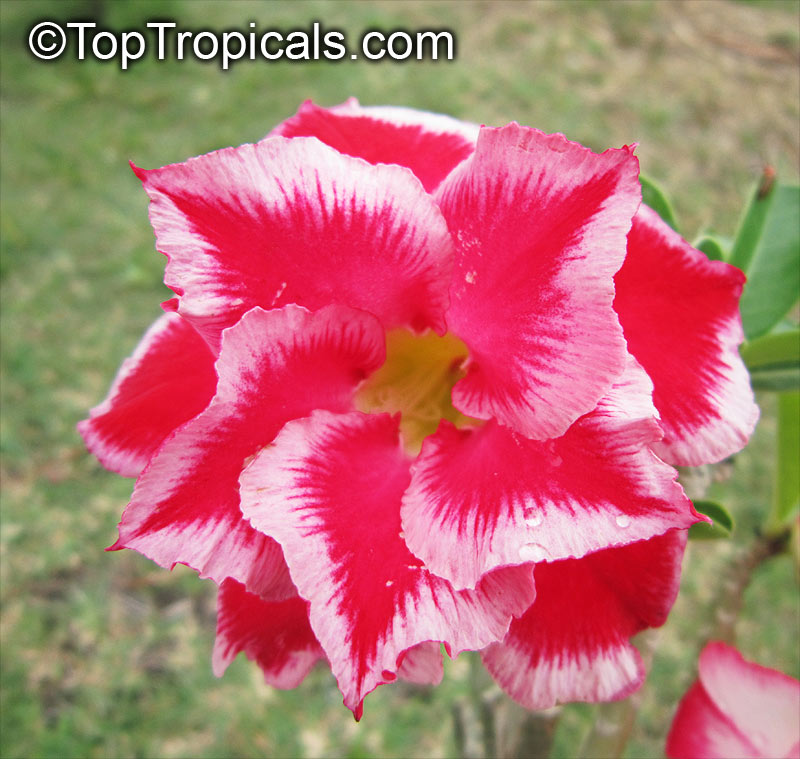
Holiday special: On the picture: Adenium Xmas Santa. A Holiday Special Desert Rose with Christmas-colored flowers - deep-red and white.
Still not sure which plant to choose? You may buy a Top Tropicals Gift Certificate
Date: 31 Jan 2017
Plants of Love. TopTropicals Webinars
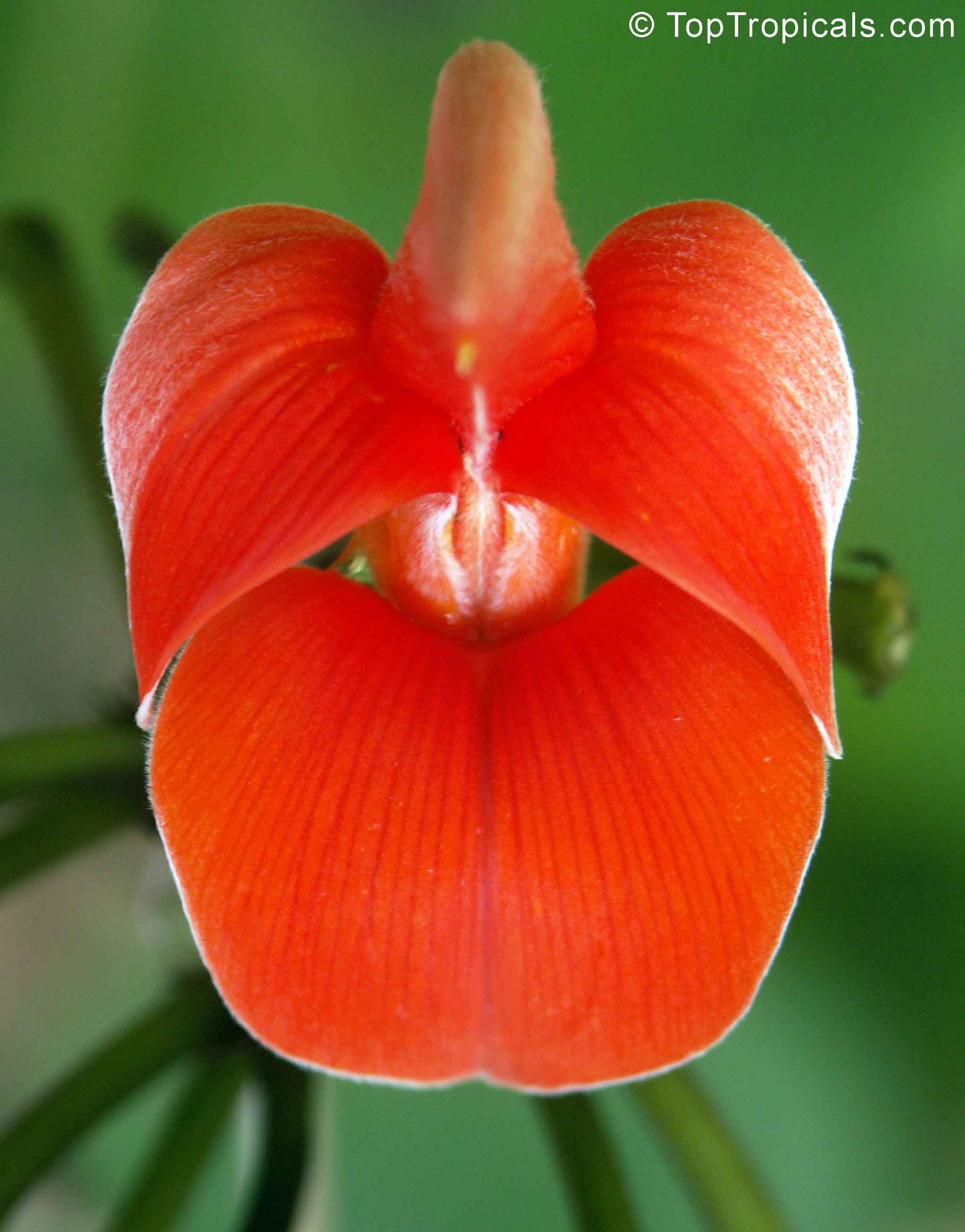
Plants of Love - Valentines Day Sale. For Valentines day, look beyond roses for a plant that will last a lifetime! It is not a surprise that the most popular plants that has been ordered from TopTropicals for Valentines day for the past 3 years, are: Vanilla, Chocolate, Grape, Strawberry tree, Rose apple - all things you get for your Valentines!
This year we are celebrating Valentines day with our special local event - "Aphrodisiacs, or Plants of Love".
When: Saturday, February 11, 2017, from 10 am to 2 pm
Where: Toptropicals Garden Center, 13890 Orange River Blvd, Ft Myers, FL 33905
Agenda:
10:00 am - Explore the grounds: Customers can come in to look through the nursery and guided tours through gardens.
12:00 pm - Aphrodisiac plants. Class on plants used for aphrodisiacs throughout history.
1:00 pm - Plant giveaway. Must be present to win one of the aphrodisiac plants in lecture.
2:00 pm - sale ends.
Special Love Discounts for local visitors! Snacks and drinks.
Just a few examples of the most famous plants of love that we will be talking about -
Coffea arabica - in East Africa and Arabia it was a sacred beverage to African sufis. For aphrodisiac results mix in cardamom and honey.
Banisteriopsis caapi, Ayahuasca - giant liana from tropical Amazon forests psychedelic, ritual inebriant that promotes potency. Drink is made from the bark and is taken in love rituals to revive the mythical past of the tribe.
Areca catechu, Betel Nut - seeds have stimulating effect on the entire body and eros. It's a traditional aphrodosiac in Ayurvedic medicine and is counted among the eight types of pleasure in the Brahmanic tradition. It has magical and religious properties and used as an offering to the Gods.
Theobroma cacao, Chocolate - mild stimulant, beans contain aphrodisiac. Antient Indian "recipe of chocolati" will be shared at the event! Cocoa was considered the "food of gods".
Cinnamon - in Southern Asia used as stimulant, in food or massage oil for erotic stimulation.
Cola nitida, Cola nut - used in love magic, was used as currency in W Africa.
Cananga odorata, Ylang-Ylang - increases eroticism with oil inhaled. Prescribed to treat impotency and frigidity.
Butea monosperma, Flame of The Forest - is traditionally used to manage male sexual disorders.
Mimosa pudica, Sensitive Plant - significantly increases the libido and hormonal levels of testosterone.
Satureja Viminea, Kama Sutra Mint Tree - used for love gel...
- and much more!
TopTropicals Webinars. Welcome to Top Tropicals Webinar!
Date: 24 Jun 2018
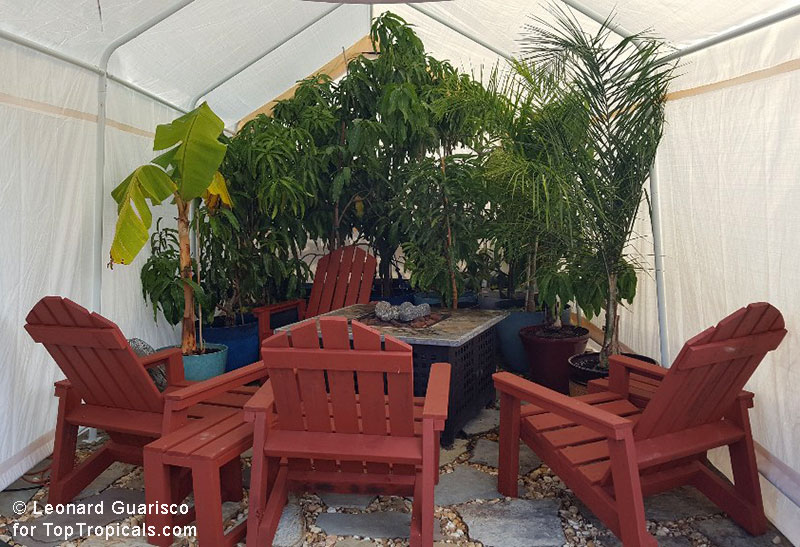
Mangos in portable garage
A
word from our customer: I wanted to let you know
how happy I was with my latest order, Mesk Mango. It
arrived this past Saturday in EXCELLENT condition only
losing 3 leaves while in transit to Morgan City, LA. I
like the idea of the root ball dry, loosely packed and no
Styrofoam peanuts compared to the old wet tightly packed
root ball.
The attached pictures show where my container Mango
collection (list below) will spend this winter so I don't
lose any of my prized possessions! Again, thanks for
supplying a great product and happy you survived the
storm! 2 Nam Doc Mai, 2 Jakarta, 2 Valencia Pride, 2 Keitt, Pina Colada, Orange Sherbet, Cat Hoaloc, Spirit of 76, Carrie, Glenn, Coconut Cream, Mesk