Date: 15 Oct 2020
Healthy Plants. Q&A from Mr Booster: Fertilizing Mango trees in Winter
Q: I'm living in Maryland growing zone 7A and would like some info on when to fertilize my potted mango trees. I ordered your Sunshine Mango Tango 2-2-4. All your mango trees are in pots.
A: You can start using this fertilizer right away, any time of
the year, and every time you water your plants.
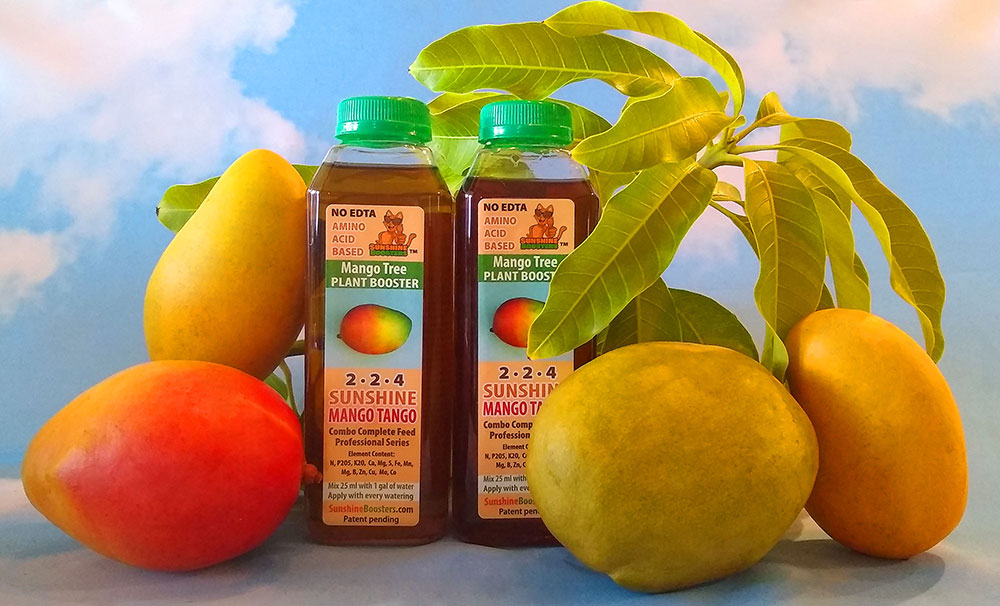
Sunshine Mango Tango, as well as other Sunshine boosters, is an amino-acid
based liquid fertilizer that is scientifically developed for daily plant
needs in all necessary nutrients. This means, you may use this fertilizer with
every watering, including winter period.
Traditional fertilizers (both granulated and soluble, EDTA-chelated) can
only be used during hot months while plants grow actively, and must be limited
or not used at all during cooler months, to avoid nutrient lock up in soil
(which basically means "building up unused elements"). With Liquid Sunshine Boosters, it is safe to add them every time you water
your tree.
During cooler weather and when plant metabolism slows down, a tree will
consume less water (as well as food), and you will automatically reduce
watering, to keep over-wintering plants on a dry side. This means, less fertilizer
too. This allows you to control elements intake naturally, like you control
water amount just as much as the plant needs.
Date: 29 Sep 2020
Healthy Plant Food: Q&A from Mr Booster
Why my Sapodilla is not fruiting?
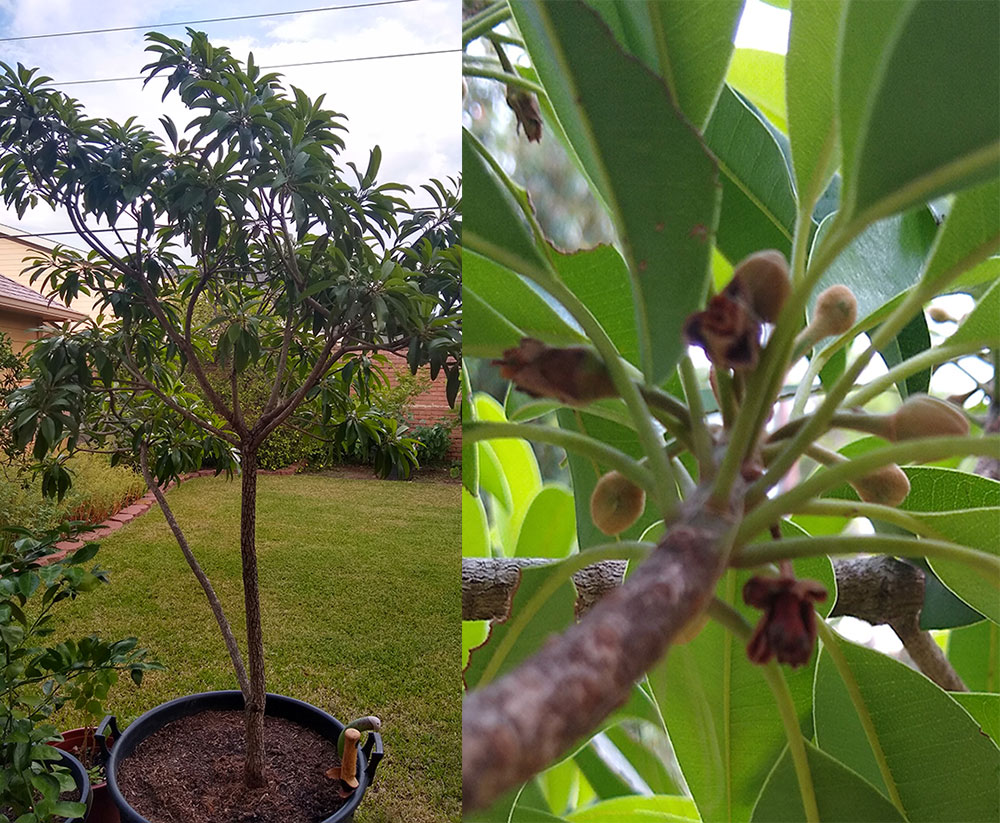
Q: I bought a Sapodilla tree from you several years ago, Silas Woods. I live in Houston area. The tree grows and produces blossoms for fruits, but then they just dry up and fall off. To-date, I have not gotten any fruits off the tree. Is there a reason for this? I really want a fruiting tree because Sapodilla is one of my favorite fruits. I have attached pictures of the tree. Please help.
A: Silas Woods is a free-flowering variety and in favorable conditions it should produce fruit almost year round, considering warm temperatures. The fact that the tree is producing flowers indicates that it is strong, overall healthy and ready for production, but for some reason these flowers don't set fruit. There may be several reasons for such behavior.
1) Too high temperature and too low humidity
In Houston area, humidity should be good in summer. However, if
temperatures stay above 90F for a long time, this may cause flower dry-n-drop.
Solution: try to move the potted tree into filtered light, or in a
spot where it does not get direct burning sun during the hottest hours of the
day (morning sun is the best)
2) Root bound.
Solution: check if the tree needs stepping up into a larger
container.
3) Lack of certain nutrients that are responsible for proper fruit
formation.
In particular, elements B (Boron), Mo (Molybdenum), and a few other
micro-elements (Fe - iron, Cu - Copper, etc.). This is most likely the cause of a
flower drop. This is very common reason for undeveloped fruit or lack of fruit
in container-grown fruit trees. When grown in the ground, plants can reach
out to all necessary elements in surrounding soil (considering soils are not
too poor on necessary elements). In a pot, a supply of nutrients can be
exhausted very quickly, so a quality fertilizer program is very important.
Fertilizer must include all necessary nutrients in easy accessible form, and a plant
must have their constant supply for proper development.
Solution: prescribe to your Sapodilla tree the following combination
of plant food:
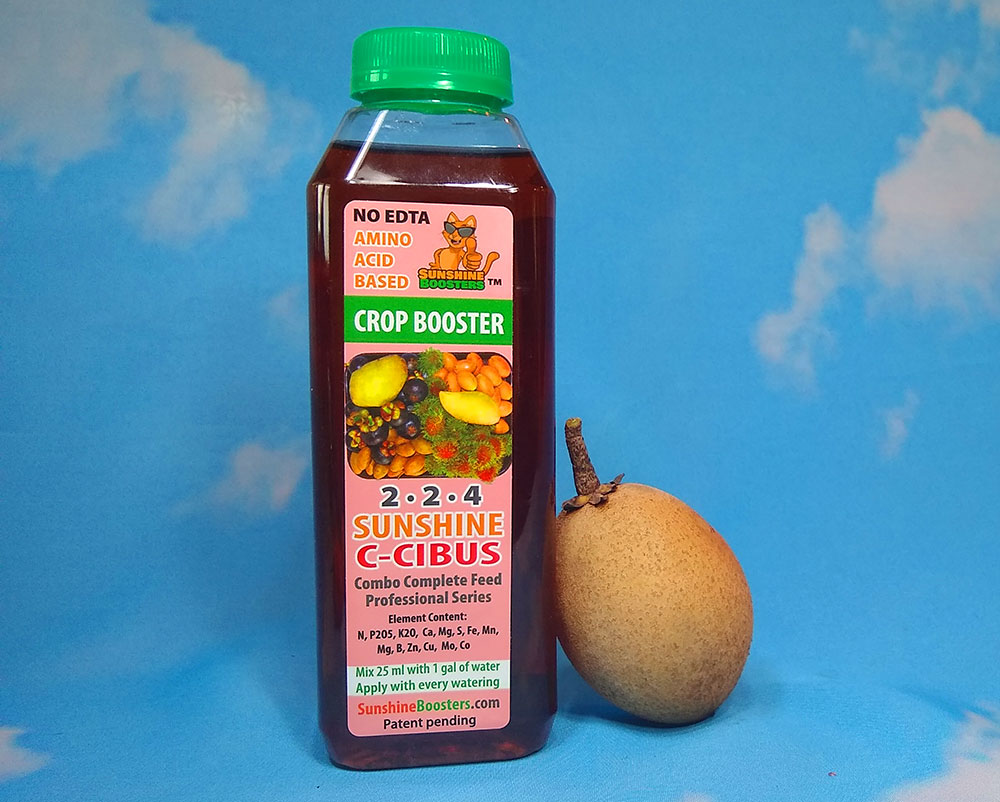
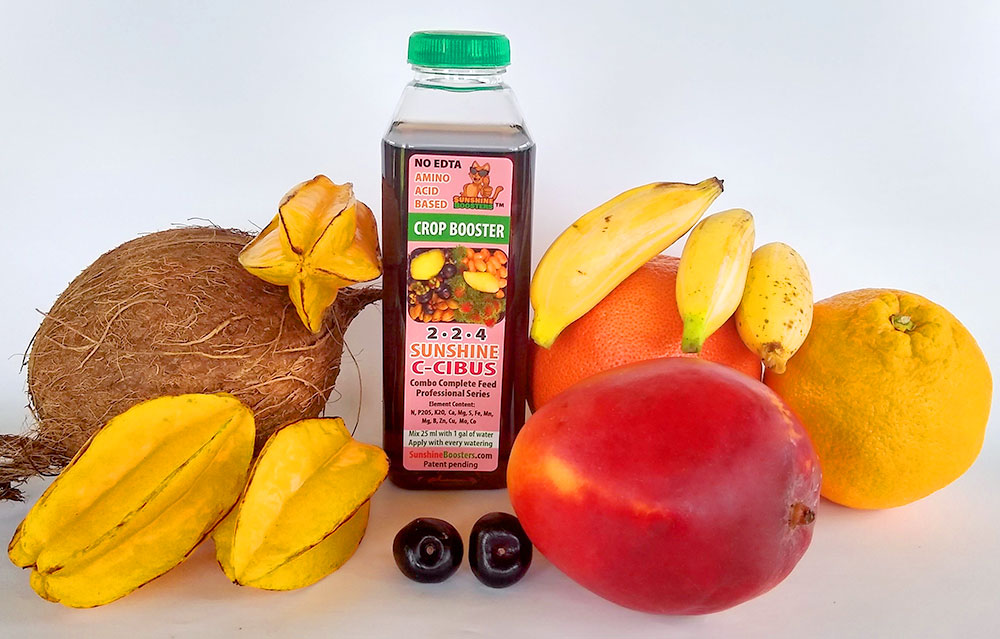
- SUNSHINE C-Cibus - Crop Nutrition Booster. It will provide
well-balanced amounts of high absorption Nitrogen, as well as other macro-elements - to
provide enough energy to the tree, plus a combination of all necessary
micro-elements. It is safe to apply this fertilizer as frequent as with every
watering, including winter time.
- SUNSHINE-Honey - sugar booster. This supplement has a high content of
elements Mo and B - once the tree starts getting them on regular basis (a few
times a year, according to the label), it will change its habit dropping
flowers and/or premature fruit drop. As extra bonus, Sunshine Honey makes fruit
sweeter by bringing sugars from all over the plant and concentrating them into
fruit.
4) Lack of pollinating insects.
Solution: For most effective pollination, we always recommend to put
some pieces of fruit under the tree, apple peels, or even banana peel. Those
attract tiny beetles that are responsible for small flower pollination.
With winter time approaching, fruiting season is about to end, however, do not get discouraged and start the fertilizing program right away: this will bring up the plant into a healthy stage within a few months, and by next season it should be covered with fruit you like so much! Remember, Sunshine liquid fertilizers can be used year round, including winter, without a risk to burn roots or overdose, as long as you follow label instructions.
SUNSHINE C-Cibus - Crop Nutrition Booster from Garden Series, or Combo Total Feed Collection - all nutrients in just one bottle, for fruit trees and edibles.
Date: 17 Sep 2020
Healthy Plant Food: Q&A from Mr Booster
How to make pineapples fruit?
Q: I have purchased a Sugar Loaf Pineapple from you a few months ago, it is growing well and producing little babies around the main plant! I am so excited to have my own Pineapple plantation! How soon will they fruit and is there anything I can do to make them fruit faster? Can I give extra fertilizer just like I do for other garden plants?
A: It takes a year or two until a pineapple plant gains enough
energy to be ready to fruit. However the total time depends on growing
conditions and availability of all necessary nutrients.
Pineapples, like all other plants from Bromeliaceae family require very
delicate fertilizer; traditional fertilizers, if overdosed, can harm Bromeliads
and even kill them. At the same time, Pineapples require extra Magnesium for
good production, and not every fertilizer has it, or contains it in
well-accessible compounds / proper proportions.
Sunshine Ananas Booster is a scientifically formulated, mild fertilizer,
designed especially for tender Bromeliads, containing Magnesium just in perfect
concentration. Its amino-acid based ingredients are natural and work perfectly
for edibles and organic gardens. Just follow the label instructions and speed
up the fruit production 3-4 times!
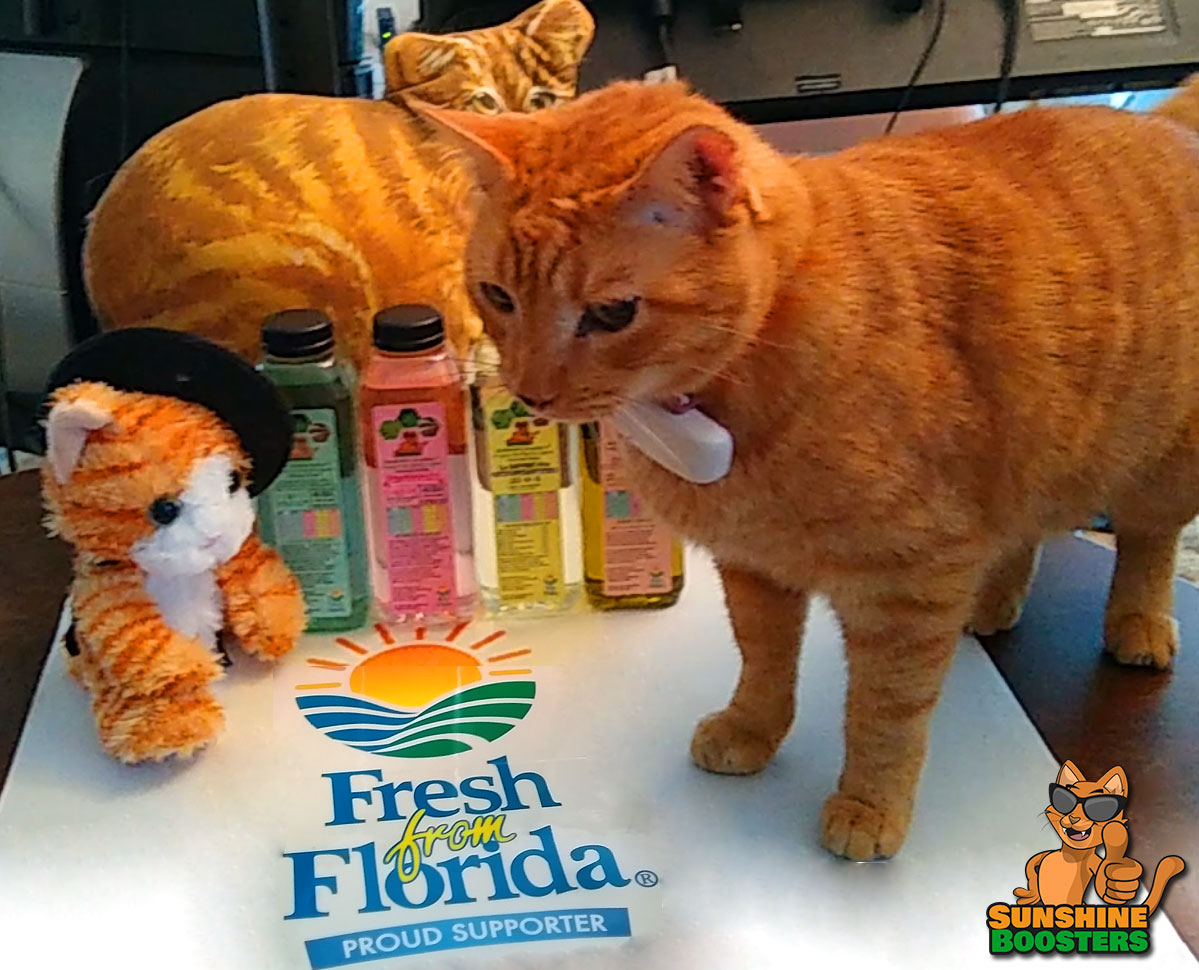
In the photo: Mr B checking his Sunshine Boosters
Date: 7 Aug 2020
Healthy Plant Food
Q&A from Mr Booster
Plant food for a Star Fruit
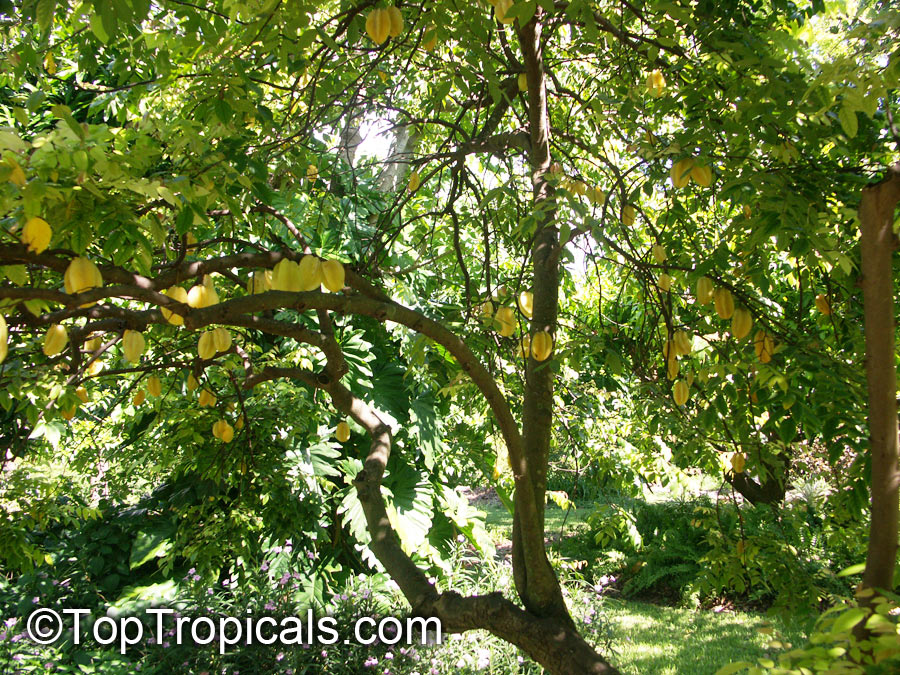
Q: I have 2 Starfruit plants from you. One on the left is B10 has a lot of flowers but no fruit is developing. On the rite is Kenjeng. This one has no flowers at all. Both plants are growing very well. Plenty of sun and water. I am located in Boynton Beach Florida. So what to do?
A: Your trees on the pictures look very healthy, congratulations
with a great care!
Starfruit, as well as other grafted fruit trees (like mango, avocado, etc)
usually flower/fruit easily and readily while in pots in the nursery.
Sometimes, once planted in the ground, they may reduce flowering or even stop
flowering. What happened?
The answer is simple. In pots, we fertilize them on regular basis. In our
nursery, we have fertilizer injector inline with irrigation system that dozes
plant food with EVERY watering. In other nurseries, they may also use
slow-release fertilizers, but it is still a regular routine to provide plant food to
potted plants.
In the ground, especially in Florida poor soils, fruit trees may stop
flowering or delay fruiting due to lack of nutrients, or dis-balance of elements
in the ground. Without fertilizer, a tree may take extra time to develop
bigger root system to reach out for necessary elements, and eventually will start
fruiting anyway.
But we want it to fruit soon! The only way to fix the problem is to provide
fertilizer on regular basis for a young tree. It is especially important
during hot summer months when plant metabolism is fast due to high temperatures,
plus nutrients may get washed away with frequent summer rains (like we have
in Florida) even if you've added some fertilizer at time of planting.
You can use smart release fertilizer once a month during hot season,
this one or similar:
Mango-Food - Smart Release Fruit Tree Booster.
But the most effective way to get a tropical tree to flowering and
fruiting, is frequent applications of liquid fertilizer. We use Sunshine Boosters
with every watering on our plants. They work great even on hard cases and
weak plants, and you see the difference in a matter of weeks, sometimes even
days.
We recommend the following fertilizer that contains all necessary elements
for young fruit trees:
SUNSHINE C-Cibus - Crop Nutrition Booster
SUNSHINE C-Cibus - Crop Nutrition Booster from Garden Series, or Combo Total Feed Collection - all nutrients in just one bottle, for fruit trees and edibles.
Date: 19 Jul 2019
How to grow Soursop in a pot
Q: Is it possible to grow soursop in a large pot for life?
A: Soursop, or Guanabana - Annona muricata - is actually one of those tropicals fruit trees that
can be easily cultivated in a container. Most plants of genus Annona have compact nature, and these fruit trees usually start
production at a young age, as early as 3 years from seed. Annona muricata
seedlings take a little longer to fruit, this is why we offer grafted trees, which can start producing right away.
We have a very interesting article about growing Soursop in an
apartment. The article was written by an indoor gardener who lives in a very small
apartment in Moscow, Russia. He grew this tree from seed and after years of
cultivation fun, he finally got several large delicious fruit! It is an amazing
story. We have it published in our Tropical Treasures magazine, download the whole issue #7, get a hard copy, or you may download PDF file of the single article.
Recommended fertilizers and supplements:
Fruit Festival Plant Food - Super Crop Booster
Mango-Food - Smart Release Fruit Tree Booster
SUNSHINE-Honey - sugar booster