Date: 11 Oct 2022
Fertilizing in Fall:
Plants need food too!
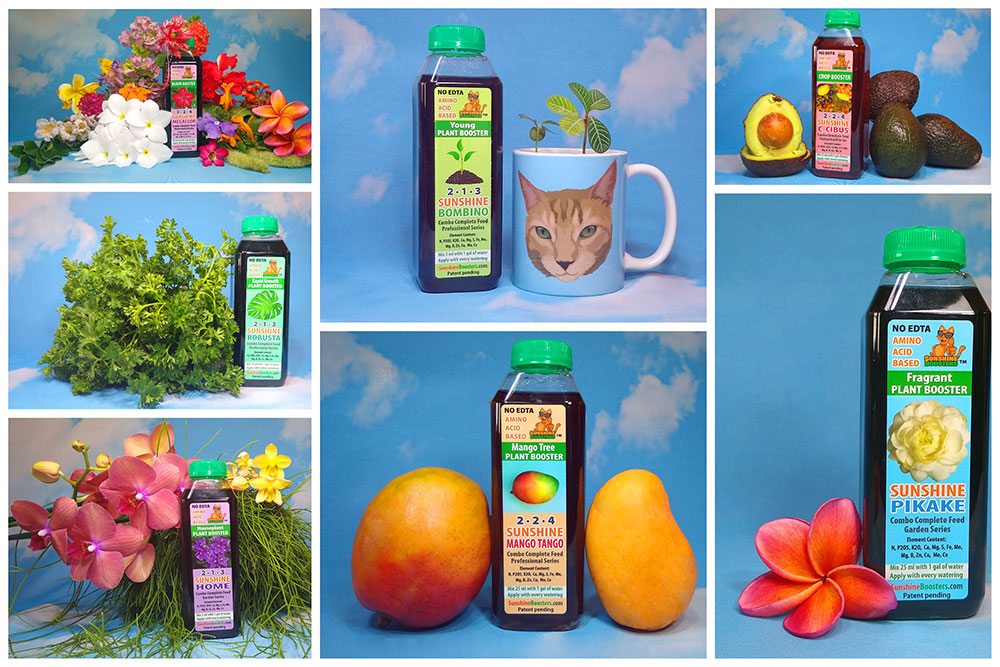
Q: I know that I am not supposed to fertilize plants in winter. But I just bought several ground orchids from you, they are blooming now and I wonder if I can give them some food to support their bloom energy? When should I do the last application of fertilizer? I will keep them in a sun room during Winter until Spring.
A: Traditionally, end of October to November is the time when we
give the last dose of fertilizer to our tropical plants. Liquid fertilizers,
and especially amino-acid based Sunshine Boosters, are safe to apply year around. This means, you can
continue feeding your plants with Sunshine Boosters through the Winter without
risk of over-feeding or burning roots. Why?
The answer is very simple: even with their metabolism slowed down in
Winter, plants will use all that food.
Sunshine Boosters have special mild formulas that are scientifically
designed and based on Amino Acids. Plants will use all essential elements from the
solution as needed.
Liquid fertilizer is diluted in water, and will be applied only when you
water the plant. During Winter, water needs are lowered = watering times are
less frequent, with less amount of water = the plants will get less water and
less fertilizer accordingly.
Importance of micro elements
in combination with plant food during winter
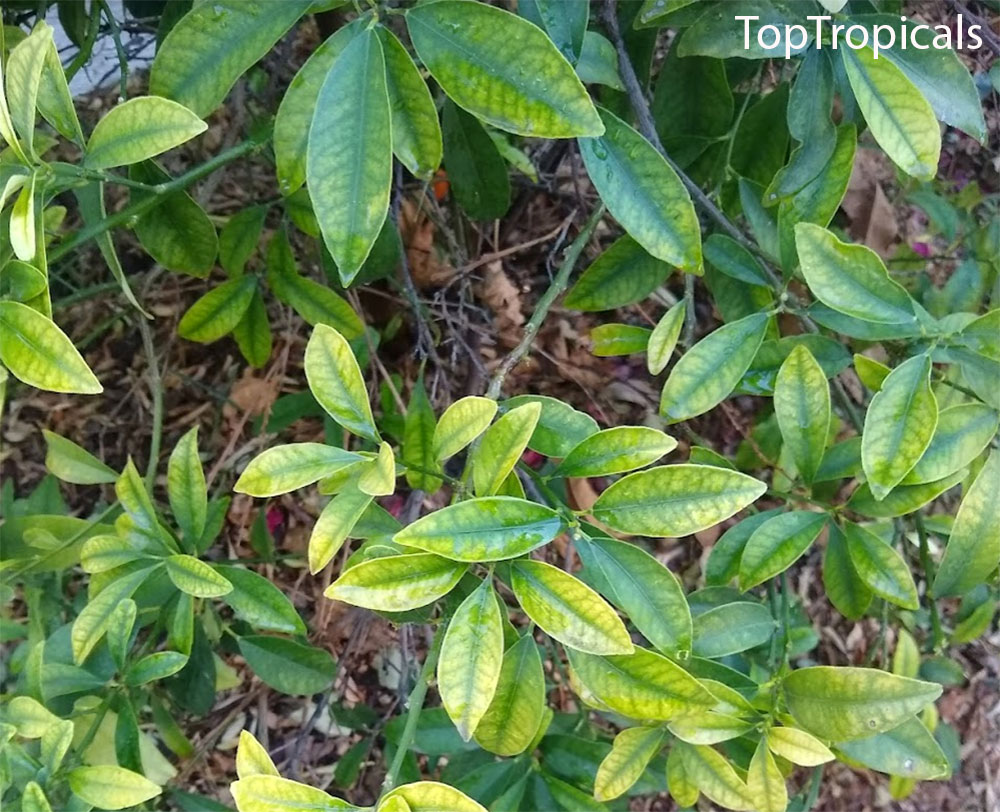
In the photo: winter chlorosis on Kumquat leaves that is very hard to treat and should be prevented instead
Keep in mind that feeding your plants regularly during Winter will help to avoid "winter chlorosis" and other deficiency problems. So called "cool-temperature-induced chlorosis" (CTIC) is especially common in Spring on young, actively growing leaves. Unless chlorosis is prevented by micro-element applications, affected leaves may remain in this condition for the rest of the growing season.
Make sure to select proper type of fertilizer for your over-wintering plants. We have special formulas for foliage, flowering plants, fruit trees, young seedlings, even for for orchids and bromeliads. Check out our selection!
Date: 25 Sep 2022
Guava, the easiest container fruit tree
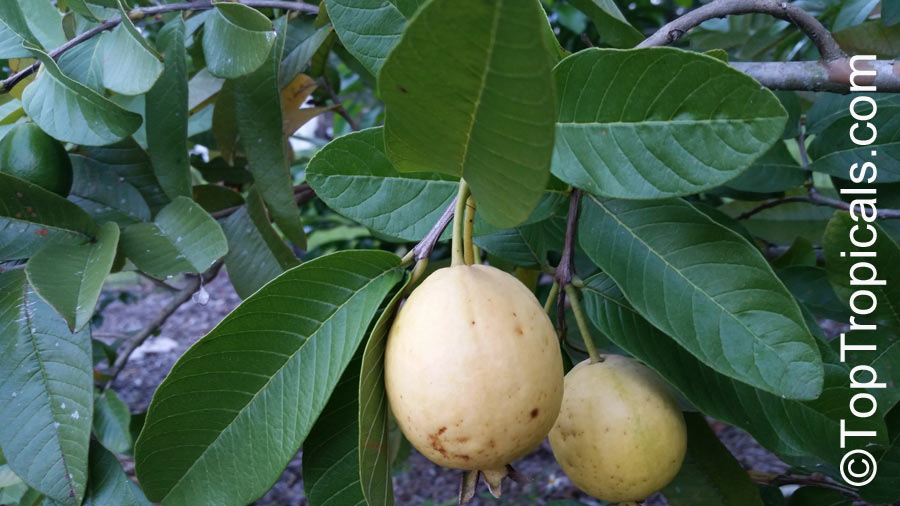
Grow Your Own Food
Guava is one of the most popular and well-known tropical fruit because
it is so tasty, sweet, juicy and flavorful! Many people are familiar with it
because of the large number of products made from this aromatic fruit. But
very few people know that Guava tree culture is very easy and this plant can
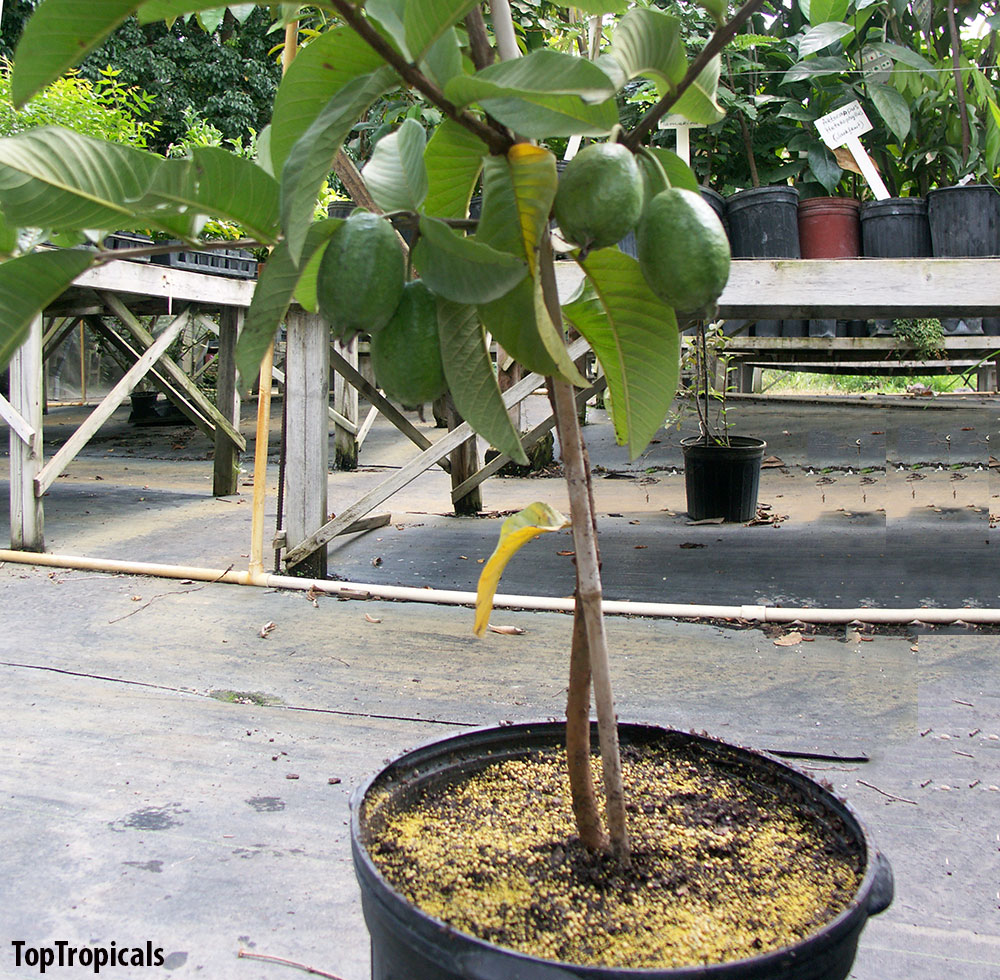
fruit in a pot right away. Guava tree start blooming and producing fruit as
small as 1 gal pot size. It can be kept in compact shape, responds well to pruning, stays bushy and grows very fast. It
is a perfect container fruit tree or a specimen for a tropical garden of any
size.
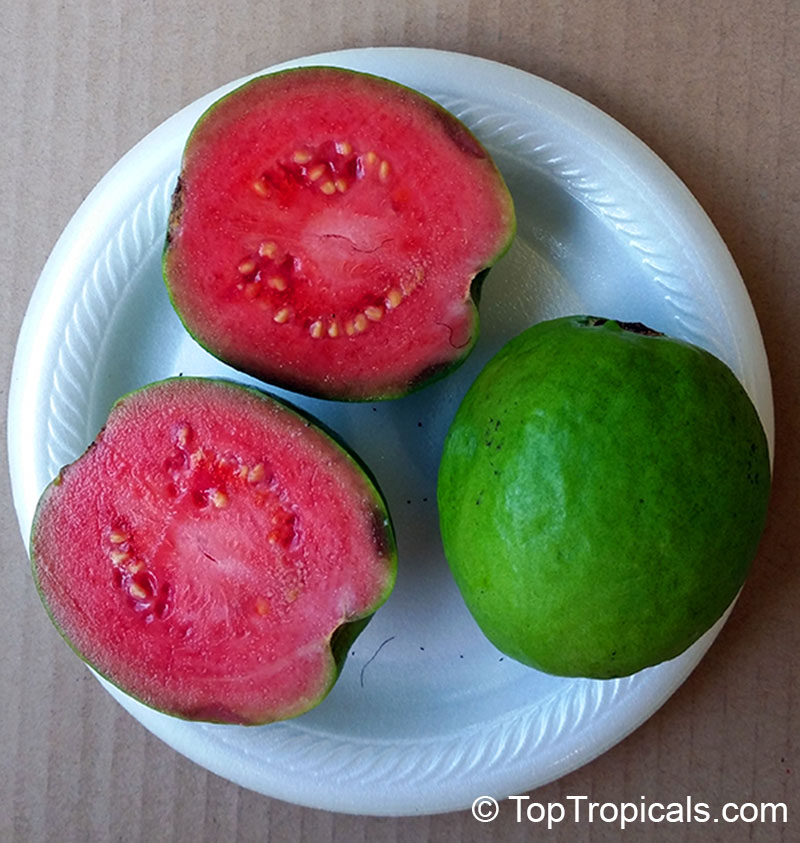
Upon ripening, the fruit becomes soft and juicy. It may be eaten fresh,
made into a juice or nectar contain fruit pulp, or made into preserves, jam,
jelly, or paste. A distinctive, savory-fresh aroma of fruit is thermo-stable,
thus survives processing. The guava is an excellent source of vitamins C and
A.
The plant is relatively cold hardy. Our young trees, 3 months after being
planted in the ground were exposed to a short period of freeze last winter
(mid-20's) but they grew back without significant damage. Try to keep Guava
cold-protected for the first winter, then it will be much hardier once
established.
Guavas are fast growers and heavy feeders, and benefit from regular
applications of fertilizer. Make sure to get some Sunshine Boosters fertilizer: Sunshine
C-Cibus - Crop Booster, and feed them your round.
Date: 18 Sep 2022
The fruit of Heaven:
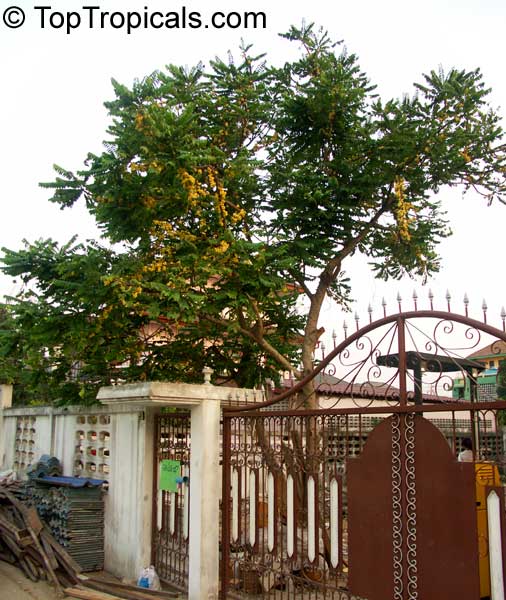
Phyllanthus acidus - Amlak, Otaheite Gooseberry
Grow Your Own Food
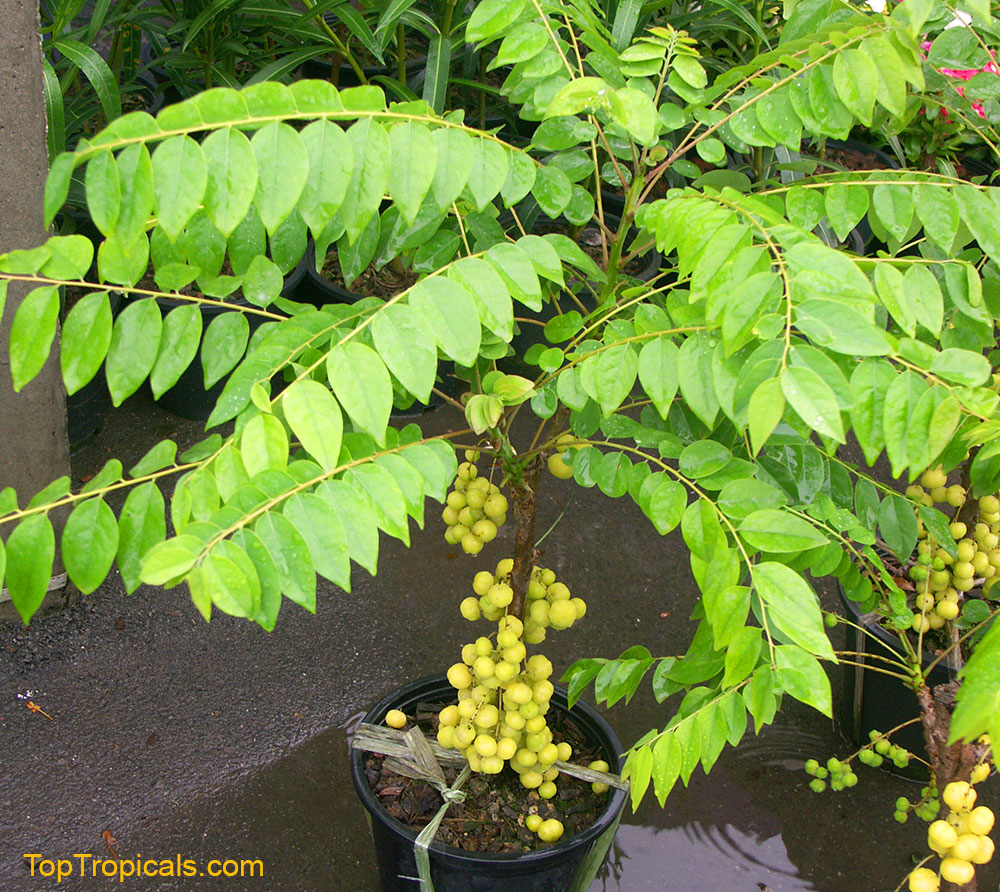
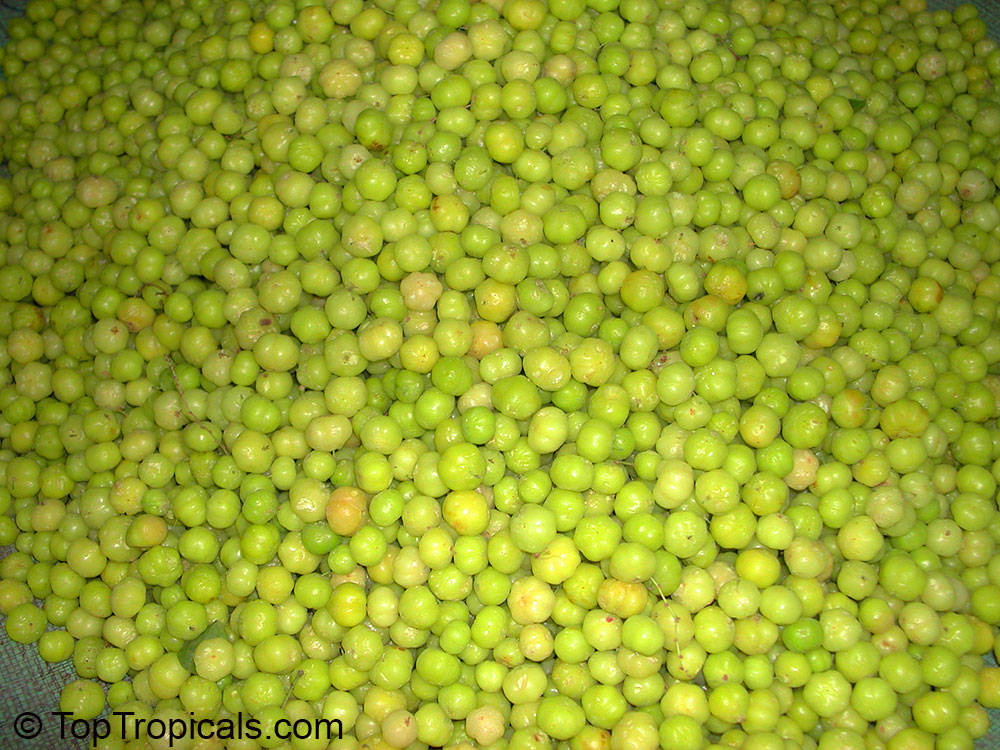
This is a fun rare fruit tree to have if you like lemonade and believe in Vitamin C benefits! The tree is super easy to grow, relatively cold hardy and doesn't require any special care. It is a fast growing plant, however the mature tree is only about 20 ft so it will be well suited for any size garden, even container garden. As you can see, it happily fruits in a pot. Bright yellow fruit are beautiful and curious, they always make a conversation piece!
About Otaheite Gooseberry
Otaheite Gooseberry, or Amlak, is a rare tropical fruit tree from SE Asia and India, very
close related to Phyllanthus emblica (Amla, Amlaki), however it is much cold
hardy than Amla. Known as Amritphala in Sanskrit, which literally means "the
fruit of heaven" or "nectar fruit". It is so called because it has many
helth benefits. Amlak is one of the favorite fruit of Indian people who definitely know what is good for
you! Fruit paste is a major ingredient of Chavyanprash, a popular Ayurvedic tonic. It is the
richest source of vitamin C.
Fruits are borne in loose clusters, which hang from the tree trunk and main branches. Fruits are esteemed for jellies,
preserves and pastries, and are great for making a delicious lemonade rich in vitamin C. There are no commercial plantings; trees grow only in
home gardens.
You need to have one! Or two. We have only limited quantities.
Date: 14 Sep 2022
PeopleCats Botanical Garden Grand Opening
Guided tour with Mark Hooten

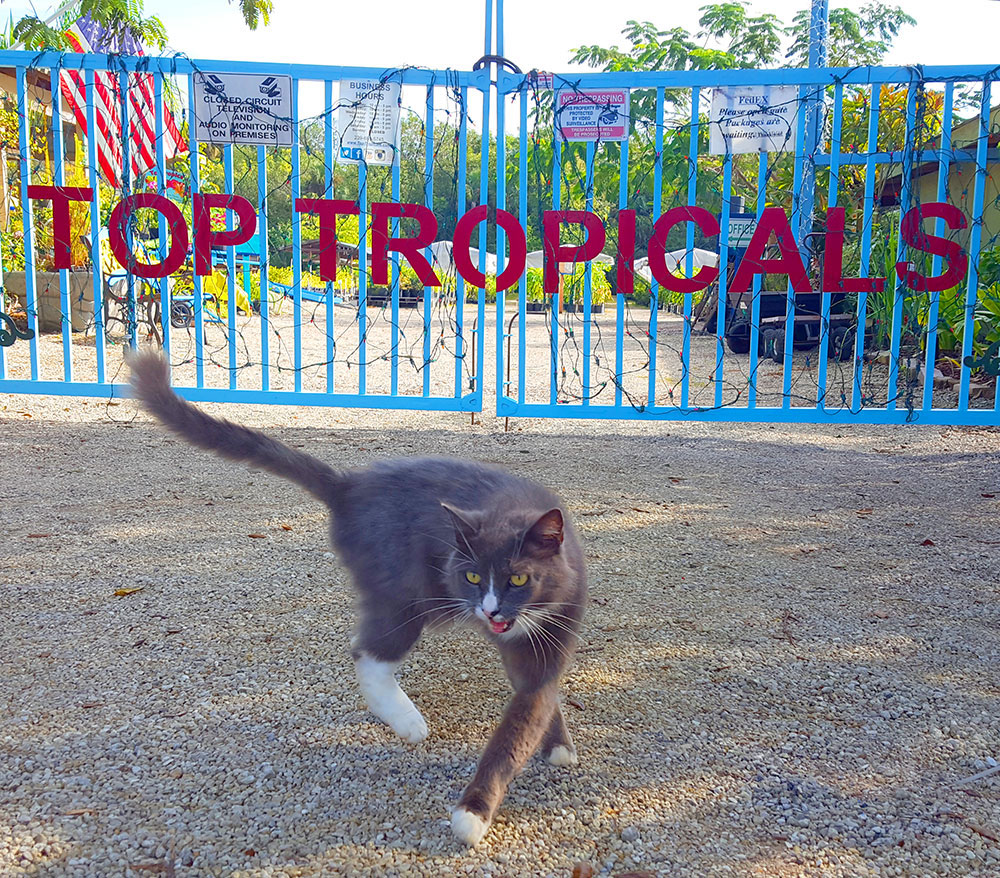
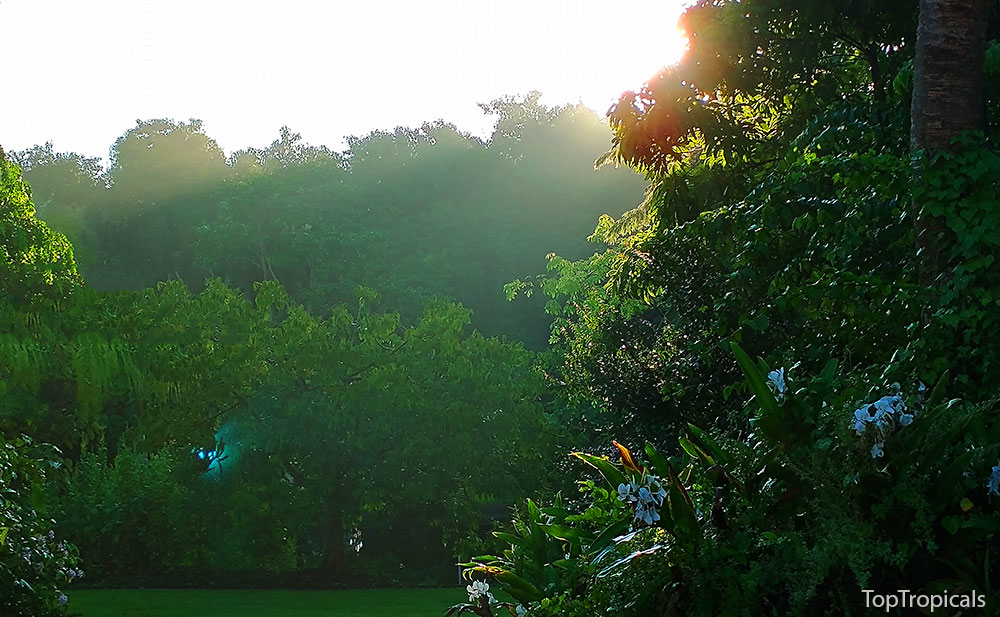
Top Tropicals Garden Center is pleased to invite you to visit our new PeopleCats Botanical Garden on the grounds of Top Tropicals in Ft
Myers. It is named in honor of the relationship with our beloved Cats, who we treat like People. You'll see our Garden PeopleCats roaming the property. As a matter of fact, they rule
the garden!
The Garden has many mature trees and plants so you can see what they look like before your purchase them in our Garden Center. And of course, our
PeopleCats will be guiding you in the Gardens!
Date: 14 Aug 2022
Grow your own food:
Avocado Q & A
from Ed Jones, the Avocado Guy
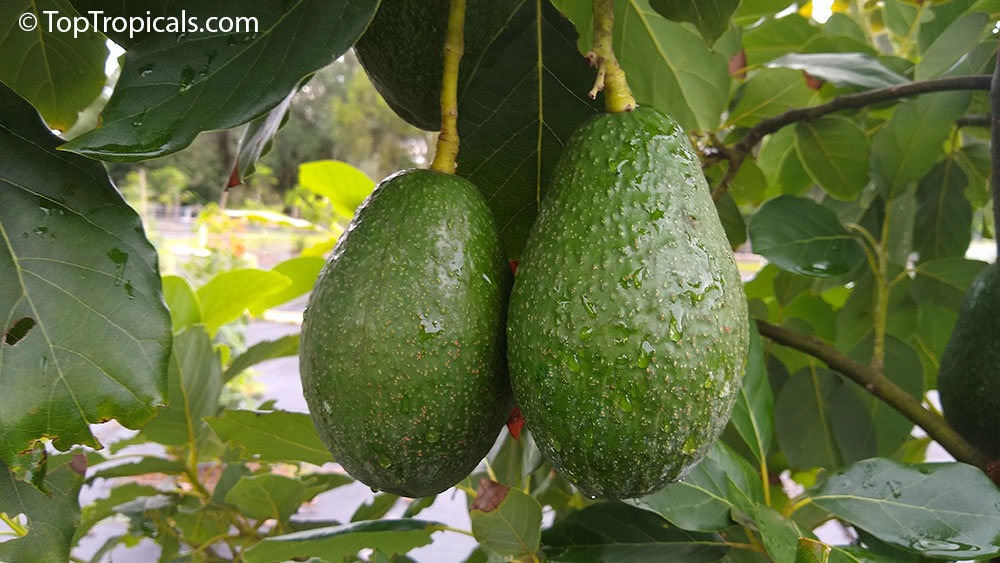
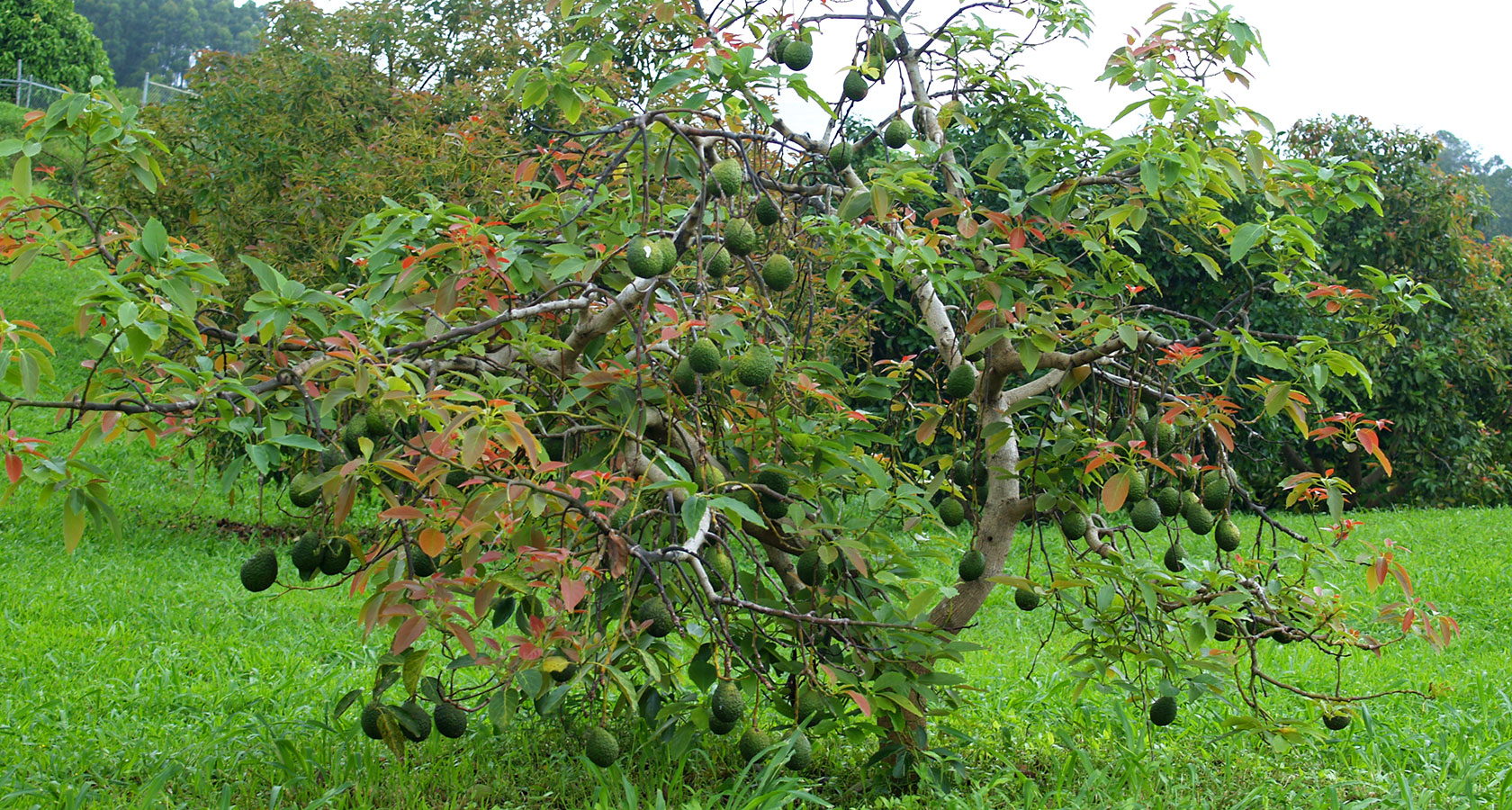
Q: Do I need to have more than one avocado tree in order to produce fruit?
A: While a single avocado tree will normally produce enough fruit for most people, it never hurts to have more than one tree and even more than one variety to increase the chances for good pollination. Be sure to look at our catalog for the many different varieties available from our store.