Garden Blog - Top Tropicals

Date: 17 Nov 2025

❄️Cold Night Survival Guide
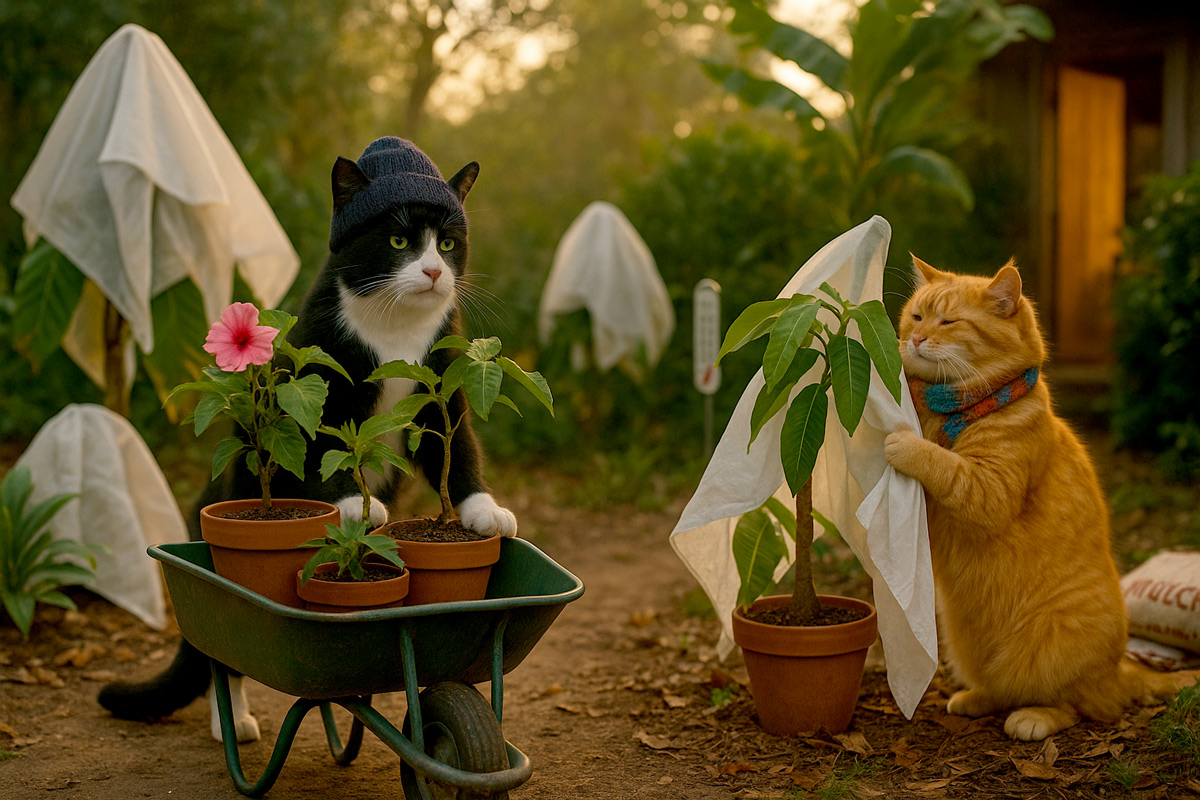
Smokey,  a  black-and-white  tuxedo  cat,  loads  a  wheelbarrow  with  potted 
 tropical  plants  while  Sunshine,  a  fluffy  orange  tabby,  pretends  to  cover  a 
 mango  tree  with  frost  cloth  as  evening  light  warms  the  tropical  garden.

Smokey and Sunshine Prepare Plants for the Cold Night.

Smokey: Come on, Sunshine, help me move these plants inside before it gets dark!
Sunshine: I am helping... see? I’m supervising the mango tree.
Smokey: You call that supervising? The frost cloth’s upside down!

When the forecast drops into the 30s, panic is not a plan. This is your simple, clear checklist to protect every tropical in your garden. Think of it as the quick emergency manual that goes hand in hand with the previous cold-weather newsletter.

"We all love our tropical flowers, mangoes, bananas, and rare fruit trees. A single cold night does not have to be a disaster. The key is knowing what to do, when to do it, and what mistakes to avoid." - Tatiana Anderson, Top Tropicals Plant Expert

🌡️ FROST AND FREEZE

A frost and a freeze are not the same. A frost is when you see ice crystals on leaves or grass, while a freeze is when the air temperature drops below 32 F. The tricky part is that you can get frost even when the air is above freezing, and you can have a freeze with no frost at all. It all depends on humidity and the dew point. If the dew point is below freezing, the ground can cool faster than the air, letting frost form even when your thermometer reads 35 or 36 F. And once the air itself drops below 32 F, even for an hour, tender tropicals can be damaged. For plants, a freeze is far more dangerous, because freezing air pulls heat out of stems, branches, and roots. Frost usually burns leaves, but a true freeze can injure wood, kill buds, and damage the entire plant.
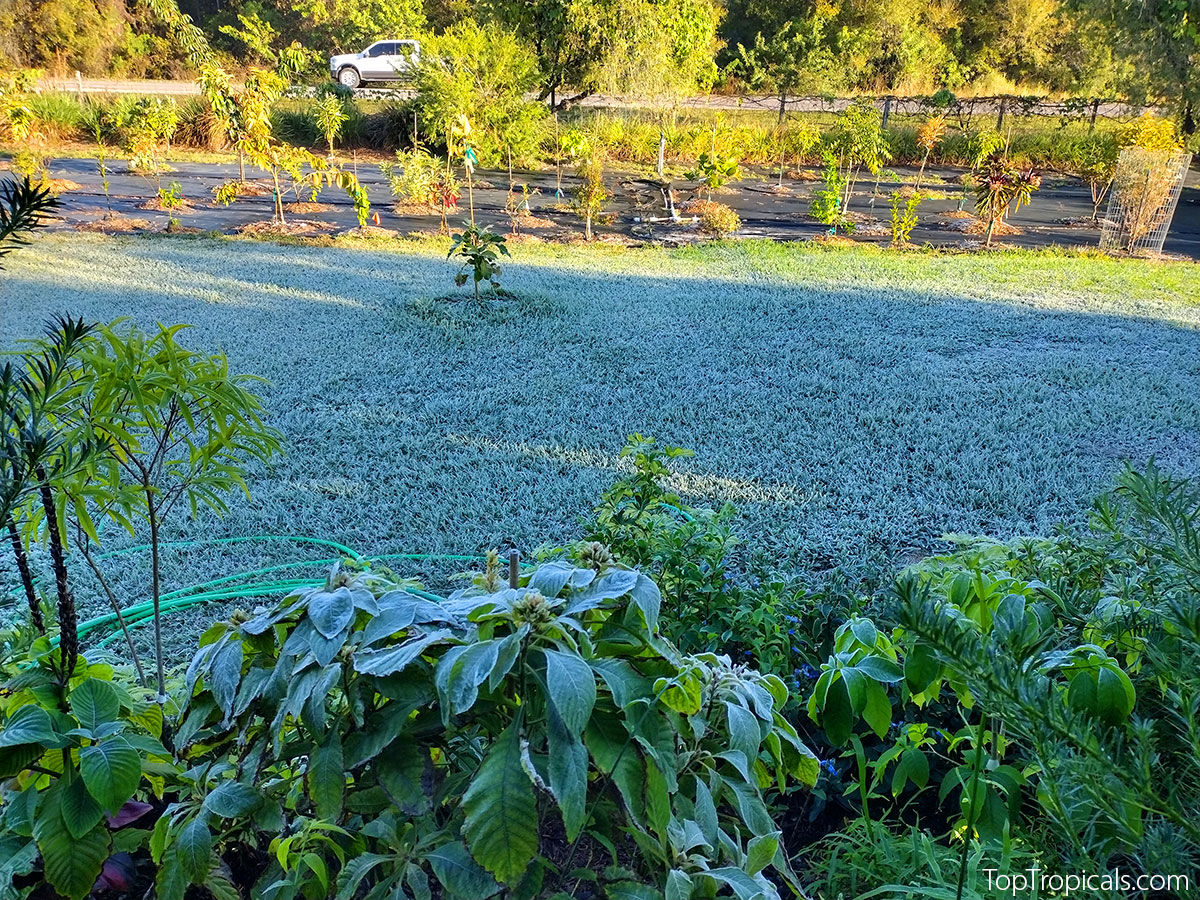
Frost  on  grass  and  leaves

Frost on the grass and leaves on Winter morning in Central Florida

WHAT TO DO AND NOT TO DO BEFORE A COLD SNAP

✔️ 5 THINGS TO DO:

  1. Water well. Hydrated plants tolerate cold better than dry, stressed ones.
  2. Add mulch. A thick layer around the base keeps roots warm.
  3. Block the wind. Move pots to a sheltered corner or patio.
  4. Cover at night, uncover in the morning. Let plants breathe and get light.
  5. Add gentle heat if needed. Non-LED Christmas lights or a small old style 15-20W light can raise temps a few degrees.

❌ 5 THINGS NOT TO DO:

  1. Do not prune or trim. Fresh cuts freeze first.
  2. Do not overwater. Wet, cold soil invites root rot.
  3. Do not let plants dry out either. Wilted plants freeze more easily.
  4. Do not use dry fertilizer. Gentle liquid feeds like Sunshine Boosters are safe to use with every watering: its intake naturally slows down as watering decreases.
  5. Do not look only at the thermometer. A long, windy night can be worse than a short freeze.

TEMPERATURE ACTION GUIDE (40 to 25 F)

  • 40 to 38 F: Move potted plants to shelter, water soil, and cover tender tropicals.
  • 37 to 33 F: Use frost cloth and anchor it down so the wind does not lift it.
  • 32 to 30 F: Add a heat source like non-LED lights.
  • 29 to 25 F: Double-cover sensitive plants, wrap trunks, and protect roots heavily.

COLD TOLERANCE BY PLANT TYPE

Before a cold night, it really helps to know your plant’s exact cold limits. Every species is different, and young plants are always more sensitive than mature ones. Take a few minutes to look up your varieties in our Tropical Plants Encyclopedia — it will tell you the safe temperature range, how much protection each plant needs, and which ones must be covered or moved before the next cold snap hits.

  • Bananas: leaf burn below 37 F
  • Mango, Annona: hurt around 32 F
  • Cold hardy avocados: Mature tree can take about 25 F. Young trees must be protected
  • Olives, Citrus, Guava, Jaboticaba: usually OK outside with mulch

QUICK-ACTION TABLE

Before the cold arrives, make yourself a quick list of every plant and what action each one needs. It saves time when temperatures start dropping and keeps you from scrambling in the dark. Check that you have enough frost cloth, blankets, and supplies on hand so you can cover everything without rushing. Planning ahead makes cold nights much less stressful.

  • Bring Indoors: Cacao, Bilimbi, Coffee. They need warm, bright light.
  • Cover Outdoors: Mango, Jackfruit, Banana, Annona. Use frost cloth, not plastic on leaves.
  • Leave Outside: Eugenias, Peaches, Persimmons, Longan, Lychee, Papaya, Citrus, Loquat, Hardy Avocado. Add mulch and monitor overnight lows.

🛒 Check out cold tolerant tropicals
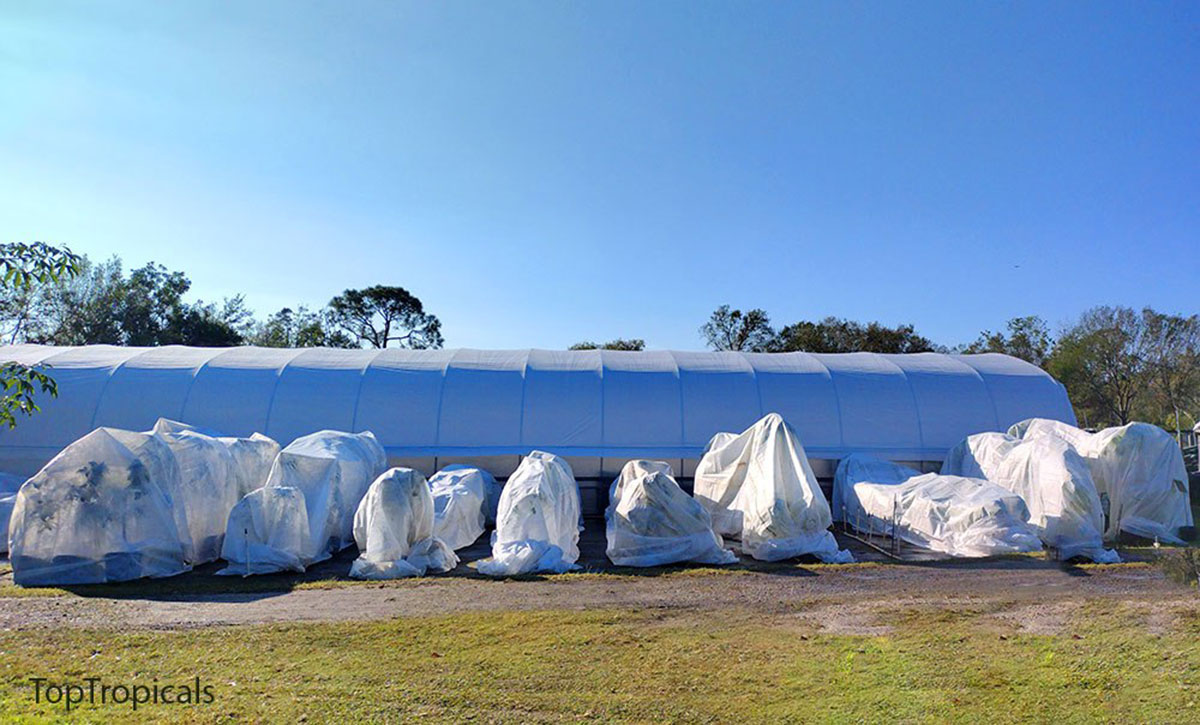
Covering  large  mango  and  avocado  trees  in  pots

Covering large mango and avocado trees in pots at TopTropicals during cold nights

GADGETS AND TOOLS THAT HELP

  • Indoor helpers: LED lights, small heaters, bottom-heat mats, timers.
  • Outdoor helpers: frost cloth rolls, mini greenhouses, non-LED Christmas lights or small incandescent lights, smart thermometers.

Always keep electrical safety in mind, especially if you are using extension cords outdoors. Use only weather-rated cords, keep all connections off the ground, and protect plugs from moisture. Make sure heaters and lights are stable, secured, and never touching fabric covers. A few minutes of safety check can prevent a dangerous situation on a cold, wet night.

And if you want to keep plants strong through winter, add Sunshine Boosters to your watering routine. It is gentle, safe in cold weather, and gives plants an extra edge.

AFTER THE COLD PASSES

In the morning, uncover plants. Leaving covers on during the day can trap heat and cook the tender new growth, especially under the sun. The only exception is true frost cloth designed for all-day use, which allows air, light, and moisture to pass through. Regular blankets, sheets, and plastic must come off as soon as the sun rises.

Do not cut anything yet. A plant can look completely dead after a freeze, but many branches are still alive under the bark. Cutting too soon removes wood that would recover on its own. Wait until new growth begins in spring. That is when you can see exactly which branches are truly dead.

Use the scratch test. Gently scratch the bark with your nail or a small knife. If the layer underneath is green, the branch is alive. If it is brown and dry, it is likely dead. But even then, wait until warm weather to be sure, because sometimes only the tips die back while the lower part of the branch survives.

Once the weather stabilizes, resume light feeding. Plants coming out of cold stress need gentle support, not heavy fertilizer. A mild liquid feed like Sunshine Boosters helps them rebuild roots and push new growth without burning tender tissue.
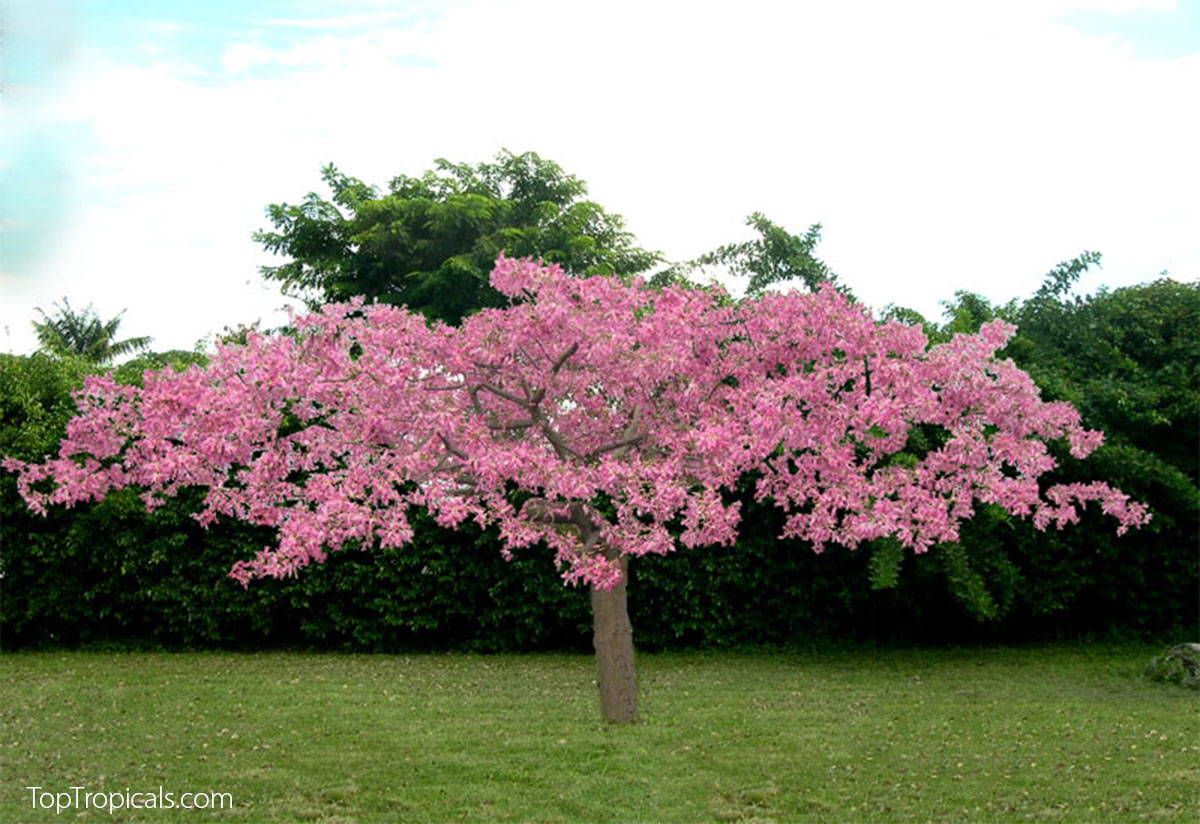
Dwarf  Ceiba  Pink  Princess  in  full  bloom

Dwarf Ceiba Pink Princess (Grafted) - a unique compact cultivar covered with pink flowers in Winter. Watch short video: How this breath-taking flowering tree stays so compact.

WHAT NOT TO DO

  • Do not prune right after a freeze.
  • Do not overwater cold soil.
  • Do not fertilize heavily until spring.
  • Do not leave covers on in full sun.

CLOSING THOUGHT

Your tropical garden can survive any cold night if you prepare right. Cold snaps always feel stressful in the moment, but once you know your plants, have the right supplies, and follow a simple plan, it becomes routine. A few minutes of preparation before dark can save months of growth and keep your collection healthy all winter.

Frost cloth is the true workhorse of cold protection: it keeps heat in, keeps frost off, and will not suffocate plants the way plastic or blankets can. Having a few rolls ready means you never have to scramble at the last minute. Sunshine Boosters give your plants gentle support during the colder months so they stay strong enough to bounce back quickly when warm weather returns.

A little planning now will pay off in spring, when your mango, banana, citrus, and all your favorite tropicals come back happy and ready to grow.

🛒 Shop Garden Supplies

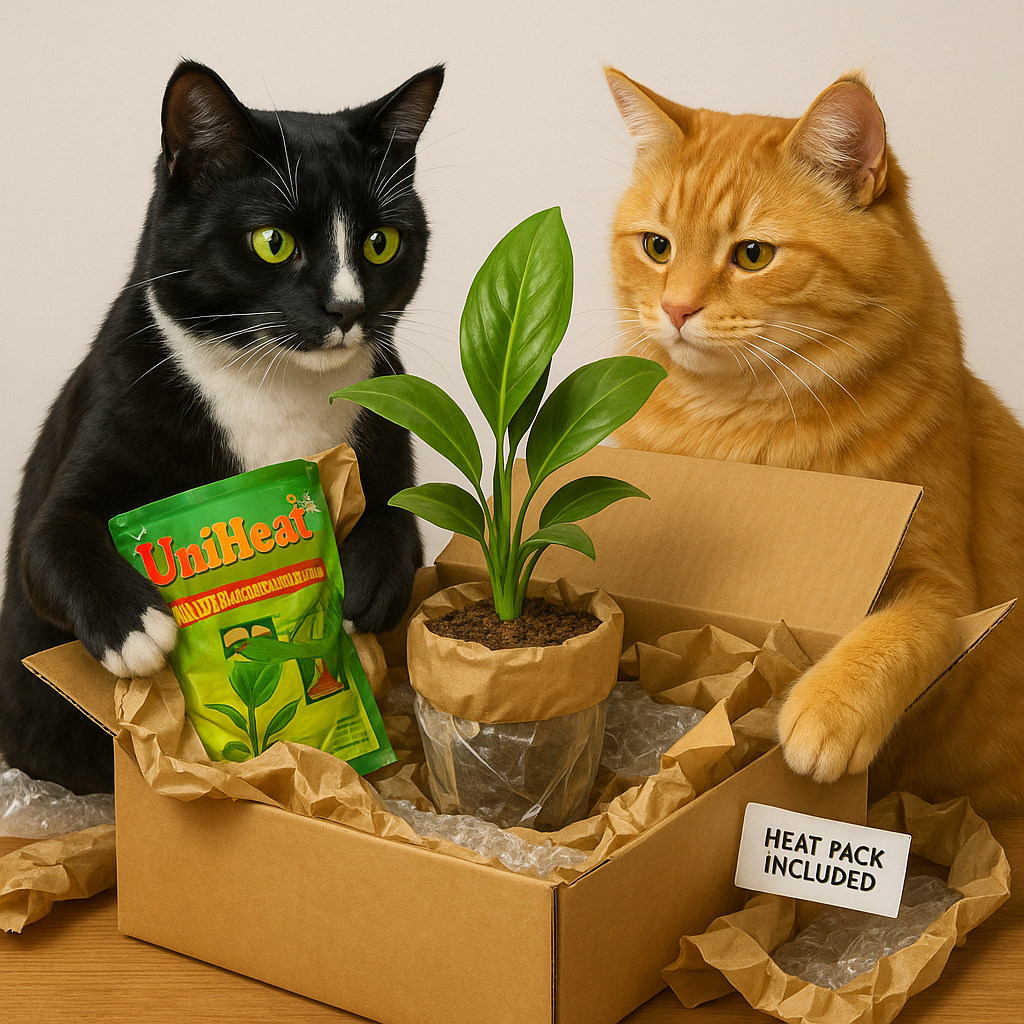
Add Heat Pack to your plant order
Cats  adding  heat  pack  to  plant  shipment

Date: 6 Nov 2023

Cat Horoscope
Scorpio Zodiac Cats 10/24-11/21

By Alex Butova, the Witch of Herbs and Cats

Scorpio  Zodiac  cat  with  indoor  plants

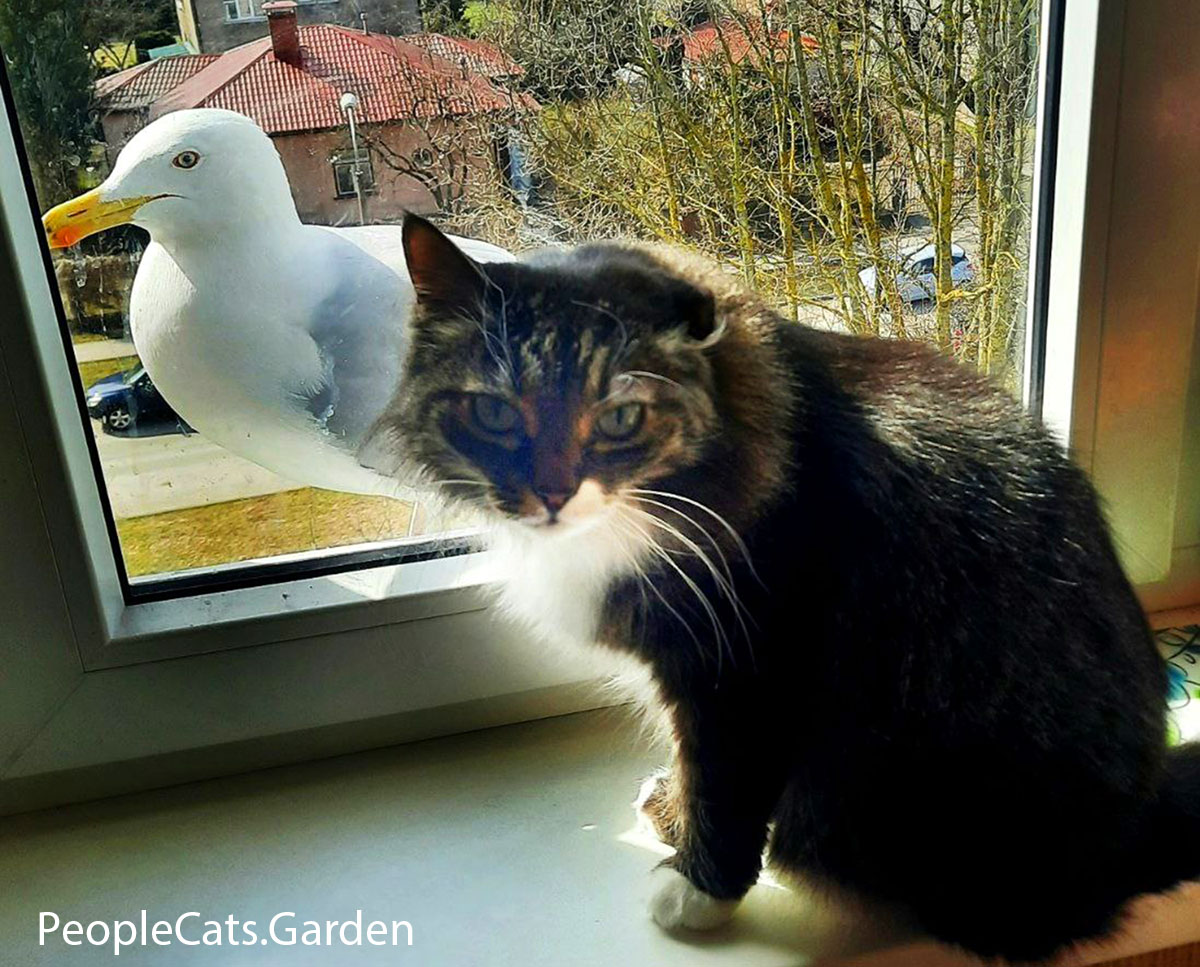
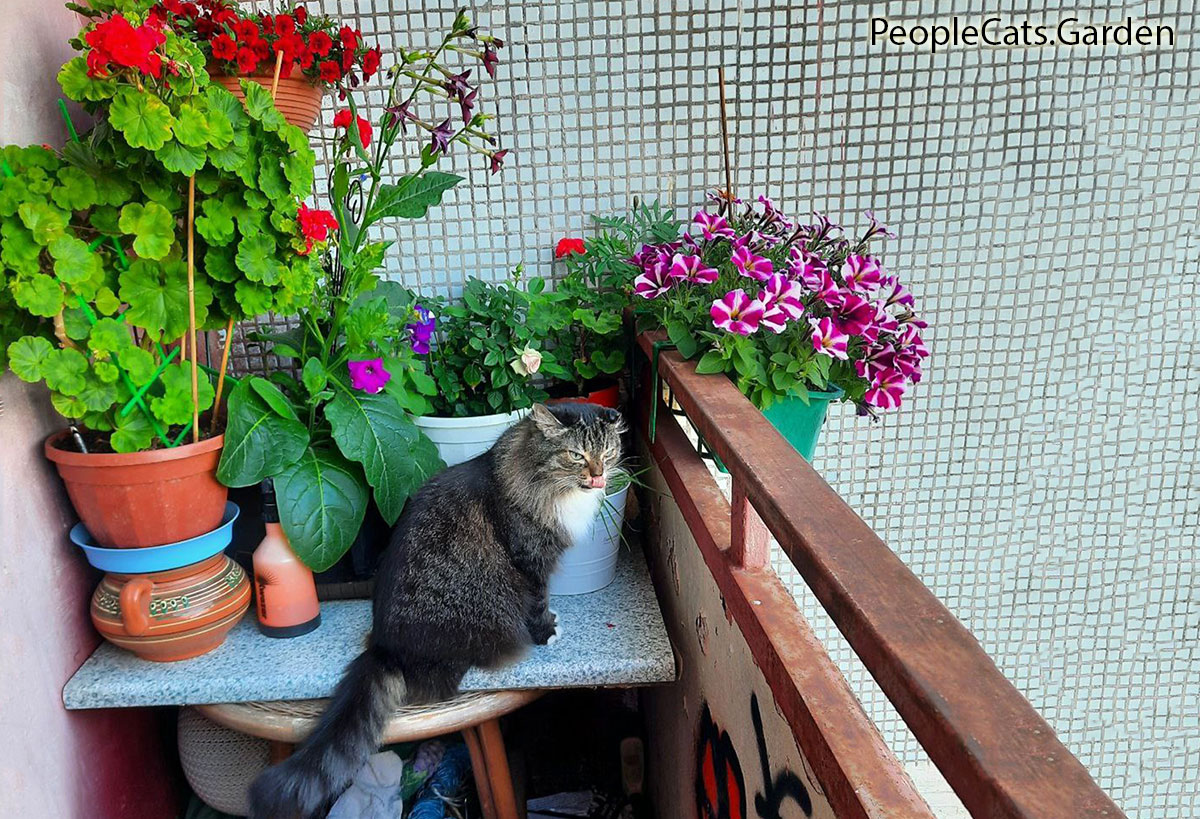
In the photos: Typical Scorpio cat Sonya, born 11-4-2010.

How to know the astrological sign of your cat?
The astrological sign of a cat can be determined by either their date of birth or adoption, as adoption is often considered a second birth for cats...
More >>

Scorpio  Zodiac  cat  with  seagull

Love all around them, be they cats, other animals, or humans...

Scorpio Cats exhibit a profound passion for life and love, extending not only to their own romantic affairs but also to the relationships of those around them, be they cats, other animals, or humans. These feline individuals thrive on being intricately involved in everything...

Scorpio Cats are inclined to assert dominance in any situation...

Scorpio Cats are known for their intense focus. Once they set their sights on something, they pursue it relentlessly, demonstrating fearlessness and a confrontational spirit...

One of the most distinctive traits of Scorpio Cats is their unwavering fidelity and loyalty. You've heard stories of cats separated from their families who travel miles to get back to them? They were probably all Scorpios!..

Scorpio Cats harbor a fondness for tall flowering shrubs and fragrant creepers with large blossoms. They possess a unique connection to scents, and while ordinary cats may recoil from potent odors, Scorpio Cats exhibit a particular affinity for select aromatic plants. For instance, while most cats are drawn to Catnip (Nepeta cataria) and Valerian root (Valeriana officinalis), Scorpio Cats go wild for the fragrances of Patchouli and Chinese Perfume Plant (Aglaia odorata). Even female perfumes containing oils from these plants bring the Scorpio Cat bliss, as they savor the scent and affectionately attend to the "mistress" of this aroma...

Scorpio  Zodiac  cat  with  flowers  on  a  balcony

Date: 27 Apr 2024

Top Tropicals is now in Telegram!

Top Tropicals is now in Telegram!
🌴 Top Tropicals is now in Telegram!

TopTropicals.com - the World's leading authority on tropical plants - is now in Telegram. If you grow a tropical garden or indoor collection of rare plants, this is your channel!

Join to get exclusive updates on tropical gardening:

Fun Facts and Nature Wonders
🌺 How to make your plants flower and stay happy
🥭 How to get the biggest fruit crop
🏆 Sweepstakes and Contests
Butterfly and Container Garden
Food Forest
⚜️ Perfume Plants
🍲 Exotic Recipes and Remedies
...and of course, your favorite -
🐾 PeopleCats in the Garden!

JOIN and share with friends! 👇

🏵 TopTropicals
We Grow Happiness

Date: 24 Jun 2018

Growing Bougainvillea and Plumeria in Florida

Q: I have recently moved from New Jersey to Florida (Orlando area) and I am so excited to start my own Tropical Paradise Garden! A few years ago I visited Hawaii and saw many beautiful colorful Bougainvilleas as well as fragrant Frangipani. Do they grow well in Florida? These are flowers of my dream!

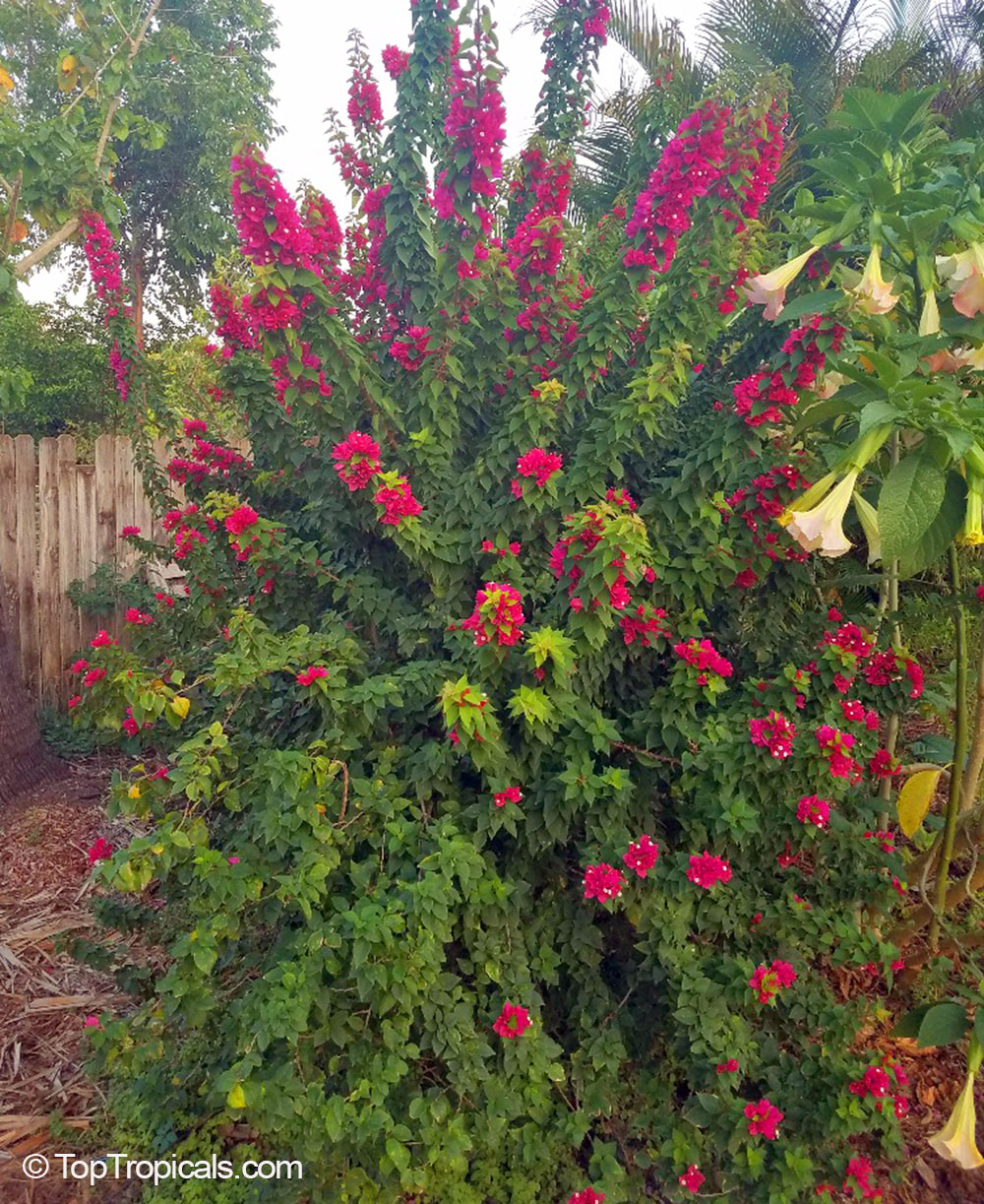
A: Both Bougainvillea and Plumeria grow well in most parts of Florida, especially South and Southwest. Bougainvillea can tolerate some light freeze and can be seen in the streets of Central Florida (young plants require some cold protection for the first year), so it is a very good candidate for your new garden. Keep in mind that unlike in Hawaii, where they bloom year around, Bougainvilleas tend to have a distinctive flowering season which in Florida is winter time - these plants enjoy dry weather that triggers their bloom. To enjoy Bright bougainvillea flowers for a long time, apply balanced fertilizer, prune regularly (this promotes flowering on new growth) and keep established plants on a dry side. Dwarf cultivar Pixie is super compact and can be grown in pots or in a small garden without any pruning! See photo of Pixie on the left.
Plumerias, all-time perfume favorites and symbols of Hawaii, are also residents of many gardens and collections throughout state of Florida. Their cold hardiness is close to the one of Bougainvillea, however keep young plants protected from frost. There are also many new exciting cultivars including multiple "rainbow" colors, and several dwarf varieties, some of them are evergreen - Plumeria obtusa. Plumerias are very undemanding and can stay happy and blooming in a pot and without regular watering. Give them as much sun as possible, and enjoy the fragrance for many months!

Date: 31 Dec 2025

Year of the Fire Horse - what should you grow in 2026?

Year of the Fire Horse

Year of the Fire Horse

🐎 Year of the Fire Horse - what should you grow in 2026?


✔️ Here are the top lucky plants to grow, gift, or decorate with during the Year of the Fire Horse - each one chosen for its symbolism, element balance, and ability to channel that galloping energy in a positive direction:

🌿Anthuriums

Symbolizes: Elegance, passion, transformation
Why it's lucky: Its bold, vigorous leaves and exotic flowers are perfect for 2026.
Where to use it: Place in the southeast corner of your home, office, or garden to draw prosperity and charisma.
  • 🛒 What to plant: Exotic Anthuriums - Anthurium Black Dragon, Anthurium hookeri - Giant Birds Nest, Anthurium veitchii - King Anthurium, Anthurium vittariifolium - Long Leaf Anthurium


💮 Jasmines and Gardenias


Symbolizes: Love, luck, beauty
Why it's lucky: Horses are social and affectionate - jasmine’s sweet scent supports romance and good vibes.
Where to use it: Grow near entrances or windows; use jasmine oil in bedrooms to boost relaxation and harmony.
  • 🛒 What to plant: Fragrant Jasmines - Sambac, French Perfume, Night Blooming, and many varieties of Gardenias.


🌻 Sunflowers and sunny-yellow flowers


Symbolizes: Optimism, vitality, success
Why it's lucky: Bright yellow blooms reflect Fire energy and attract recognition.
Where to use it: Display in the east or south part of your home; great for creative spaces or work areas.

🎋 Lucky Bamboo, Money Trees and Bonsai


Symbolizes: Growth, flexibility, fortune
Why it's lucky: Combines Wood (growth) with Fire (motivation) - a perfect combo for 2026.
Where to use it: Place arrangements with 3 or 9 in the southeast to promote health and wealth.

Edible Greens with Fire-Friendly Energy


Symbolizes: Nourishment, healing, grounded action
Why they're lucky: Green leafy herbs support Wood energy, which fuels Fire. Think fresh, healthy, juicy, and nourishing.
🛒 What to plant: Tropical herbs, spices and edibles, including -
  • · Chaya (Maya spinach tree)
  • · Gynura (Longevity spinach)
  • · Lippia dulcis (Aztec sweet herb)
  • · Lemongrass and Citronella
  • · Alspice and Baurum
  • · Pepper Vines (Pipers) and Chili Peppers (Capsicums)
Grow them near the kitchen, patio, or sunny balcony for both beauty and bite.

❌ What to avoid?


Poisonous or sharp plants. The Horse is a plant lover - but not a fan of painful surprises. Keep the Fire Horse energy smooth, not spiky.

✍️ Final tip: Let the Fire Horse run wild - but not out of control


2026 is your chance to charge ahead - but keep your hooves on the ground. Plants can help you stay focused, bring balance, and add a little luck along the way. So get planting, stay bold, and let the good energy gallop in!

📚 Learn more:

  • More #Horoscope info for plants and cats
  • 2026: Year of the Fire Horse - time to grow bold, live free, and plant lucky

#Horoscope

🟢 Join 👉 TopTropicals