Garden Blog - Top Tropicals

Date: 25 Apr 2026

🎁 Mothers Day plant gift guide: something for every kind of mom

Skip the bouquet, give her something that grows
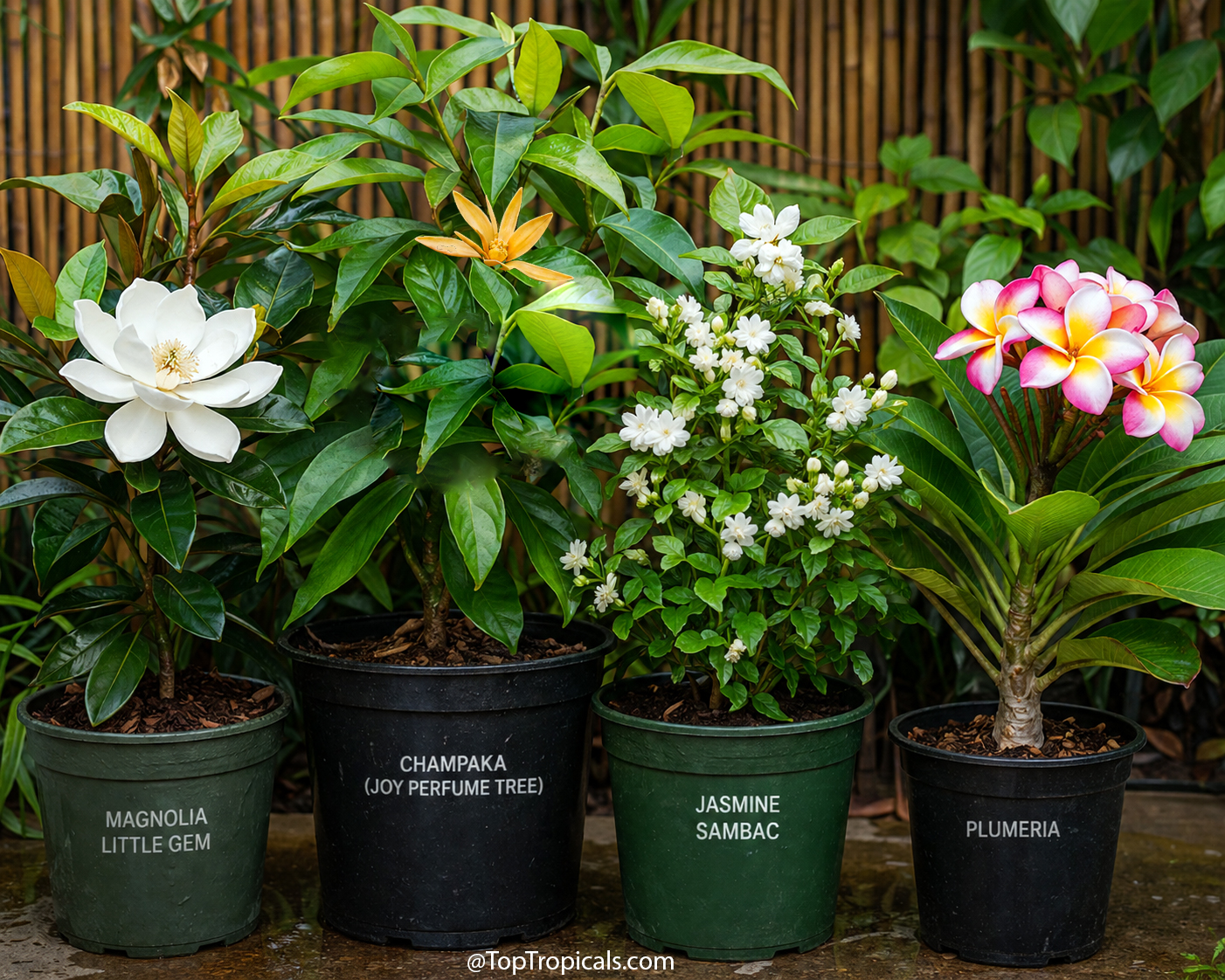
Four  potted  tropical  plants  in  bloom  -  Magnolia  Little  Gem,  Champaka, 
 Jasmine  Sambac,  and  Plumeria  -  arranged  on  gravel  in  a  garden  setting 
 against  a  light 
 fence.

Magnolia Little Gem, Champaka, Jasmine Sambac, and Plumeria

Some gifts last a few days. These don't. Right now, these plants are at their best in our nursery - full, established, and ready to impress the moment she sees them. This year, give her something that doesn’t fade. Pick a plant that will keep growing, blooming, and reminding her of you long after Mother's Day is over. Here are a few easy ways to choose the right one.

All of these grow well in containers and are beginner-friendly.

1. For moms who love fragrance - give her living perfume ✨

These are the plants people remember. Soft, rich scent that fills the garden, patio, or even a warm evening indoors.

- Champaka Joy Perfume Tree - the legendary Joy perfume flower - rich, sweet, and unmistakably bubble gum-like.
- Magnolia Little Gem - the classic Southern magnolia in a smaller form - big, creamy, fragrant blooms that never go out of style.
- Wrightia religiosa - a sacred Buddhist tree - delicate white flowers with a soft jasmine fragrance that feels calm and refined.
- Jasmine Sambac - intensely fragrant and impossible to ignore - once you have it, you won’t want a garden without it
- Plumeria - the iconic Aloha flower - bold color, rich perfume, and pure tropical feeling in bloom.
- Parijat Tree Jasmine (Nyctanthes arbor-tristis) - blooms at night and fills the air with a gentle, unforgettable fragrance.

  • 🛒 Shop Perfume plants

    2. For easy care and everyday enjoyment - beautiful, low maintenance choices 🌸

    No fuss. No overthinking. Just strong, reliable plants that look good and keep going

    - Jatropha podagrica - Buddha Belly - a quirky caudex plant with a swollen trunk and bright red flowers that shows character without needing much care.

- Dorstenia bahiensis - Mattress Button Plant - a strange, sculptural plant with flat, button-like blooms that always gets people curious.
- Columnea - Flying Goldfish Plant - trailing stems covered in bright orange flowers that look just like little goldfish in motion.
- Adeniums - collectible forms in many colors - bold caudex shapes and striking blooms, easy to grow and hard to stop collecting.

🛒 Shop Indoor Garden

3. For the plant collector - rare, unusual, unforgettable 🔮

For moms who already have a garden... and still want something different.

- Rainbow Eucalyptus - a one-of-a-kind tree with peeling bark that reveals streaks of green, orange, red, and purple like living artwork.
- Tacca Bat Head Lily - an unforgettable plant with dark, bat-shaped flowers and long whiskers that look almost unreal.
- Dwarf Ceiba Princess - a rare, compact silk floss tree with a sculptural trunk and soft, showy blooms that feel truly special.

🛒 Shop Rare Plants

4. For the fruit lover - grow something she can enjoy and taste 🍒

A gift that turns into harvest. Fresh fruit, right from her own garden.

- Jaboticaba - a truly unique fruit tree that produces sweet, grape-like fruit right on the trunk, turning it into a conversation piece.
- Rose Apple - crisp, refreshing fruit with a light floral taste and a beautiful ornamental tree to match.
- Java Plum (Jambolan) - deep purple fruit with a sweet-tart flavor, loved for both its taste and its shade tree presence.
- Mango - the king of tropical fruit - rich, sweet, and incredibly rewarding to grow in your own garden.
- Avocado - creamy, nutrient-rich fruit from a tree that becomes a long-term staple in the garden.
- Eugenia cherries - Surinam Cherry, Rio Grande and Grumichama - compact trees with glossy foliage and delicious, dark cherries that are easy to grow and quick to fruit.

🛒 Shop Fruit trees and edibles
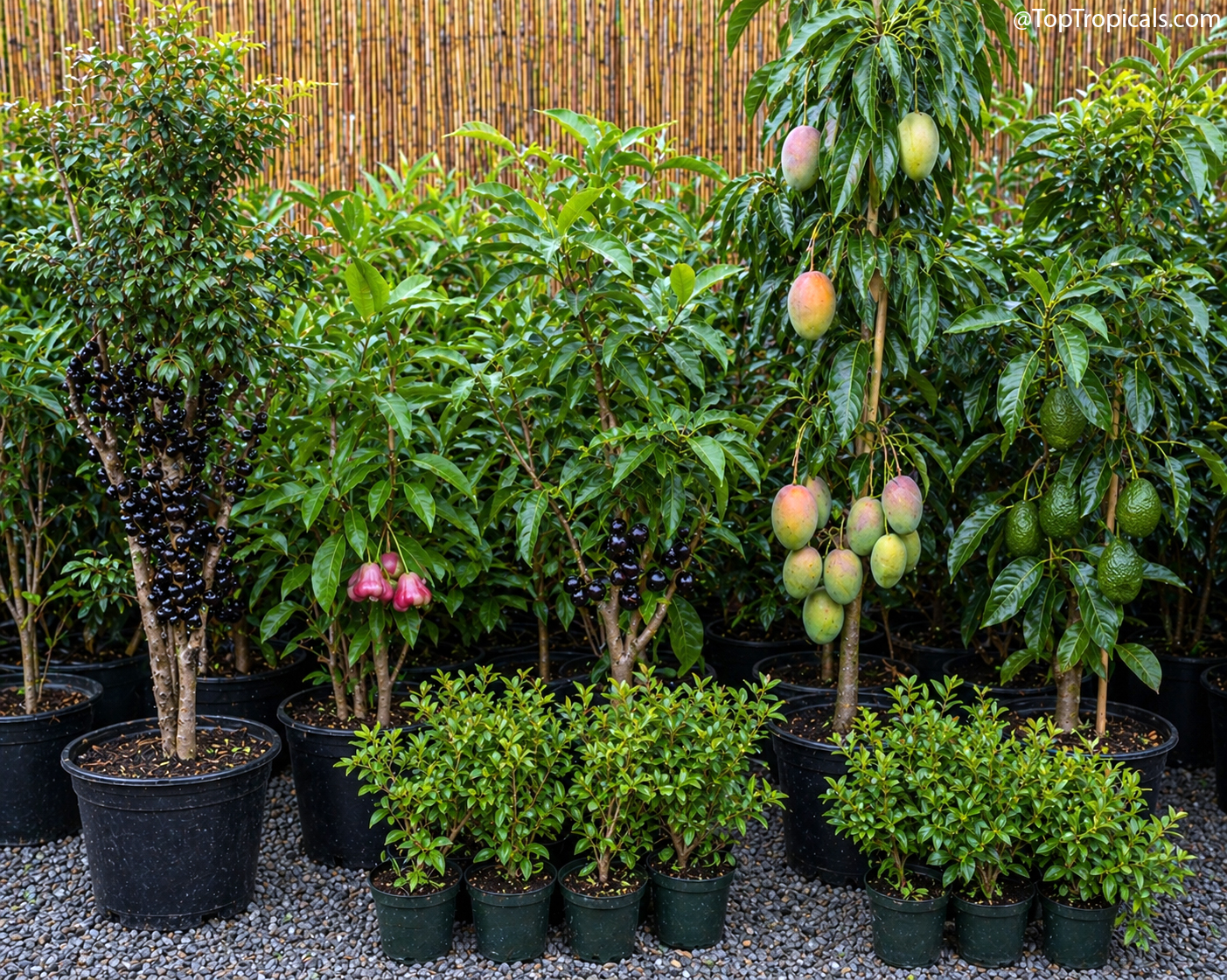
Potted  tropical  fruit  trees  including  jaboticaba,  Wax  jambu,  Java  plum,
    mango,  avocado,  and  Eugenia  cherries  arranged  in  a  nursery  setting  on 
 gravel.

Tropical fruit trees selection - from Jaboticaba fruiting on the trunk to Mango, Avocado, and rare Eugenia cherries - a great mix for building a productive food forest.

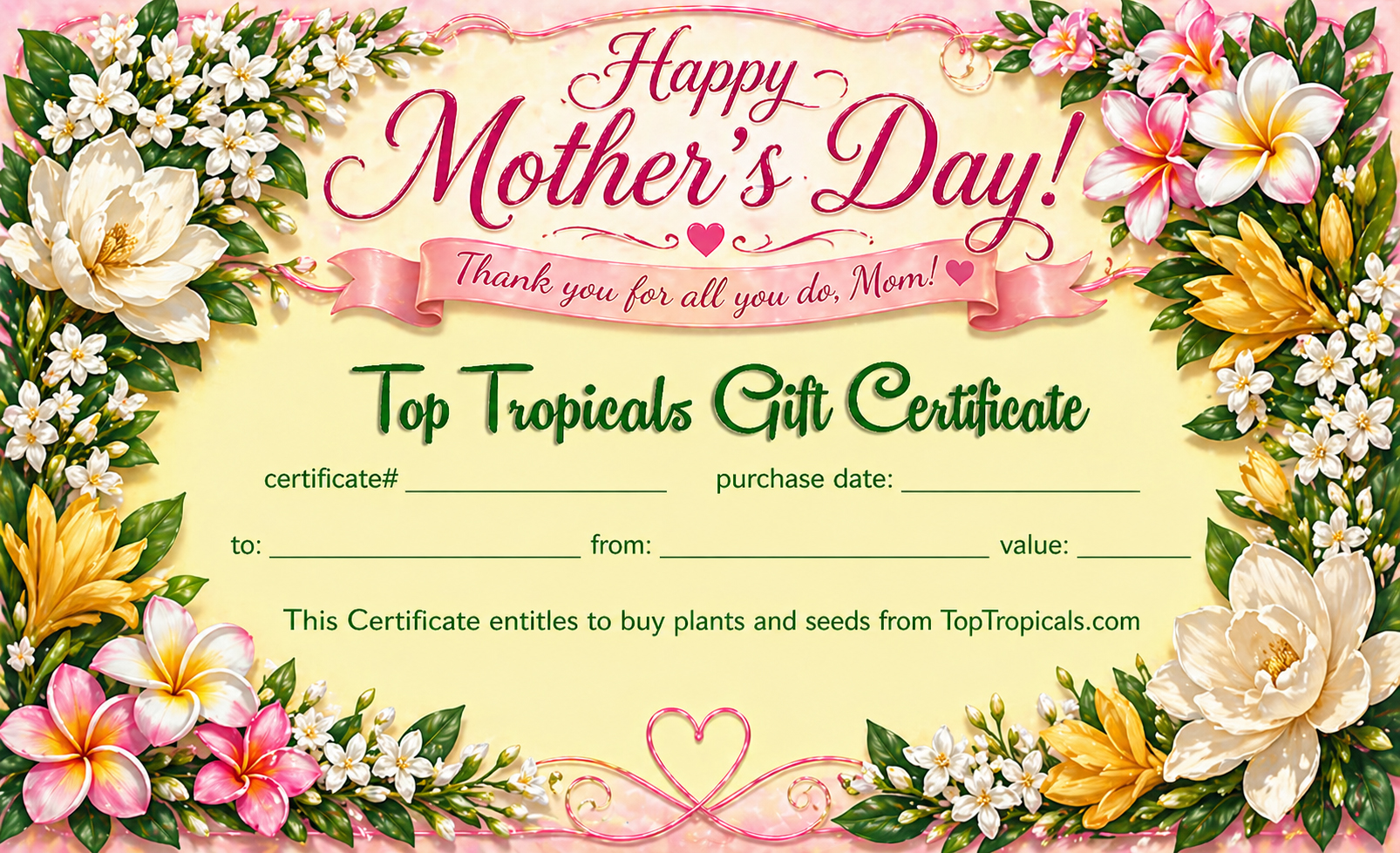
Mothers Day Gift Card 💌

Mother’s  Day  themed  Top  Tropicals  gift  certificate  with  a  pink 
 decorative  frame  filled  with  jasmine,  plumeria,  magnolia,  and  champaka 
 flowers,  tropical  fruits  across  the  center,  and  a  Happy  Mothers  Day  banner 
 at  the  top,  with  space  for  certificate  details  and 
 message.

Mother’s Day Top Tropicals gift certificate

Still not sure what to choose? A gift card keeps it simple. She can pick exactly what she wants, when she is ready for it. No guessing, no pressure - just something she will actually enjoy.

Get 15% extra value on gift certificates. Just mention Mother’s Day in the message field. For example, a $100 certificate becomes $115. A $50 certificate becomes $57.50.
Offer valid through 05/12/2026.
Bonus value applies to gift certificates only. Must include “Mother's Day” in the message field at checkout. Not valid on previous purchases and cannot be combined with other promotions or discounts. Offer subject to change without notice.

Date: 21 Apr 2021

Healthy Plants: Q&A from Mr Booster

Mango leaves and fertilizing

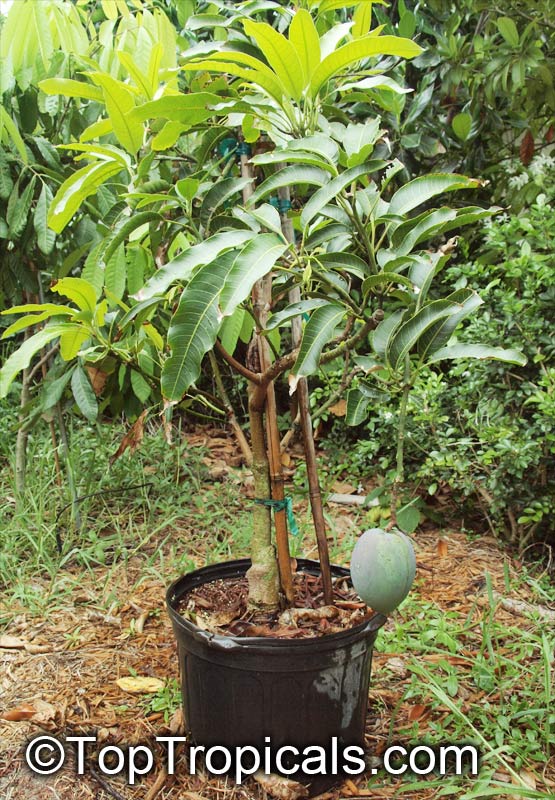
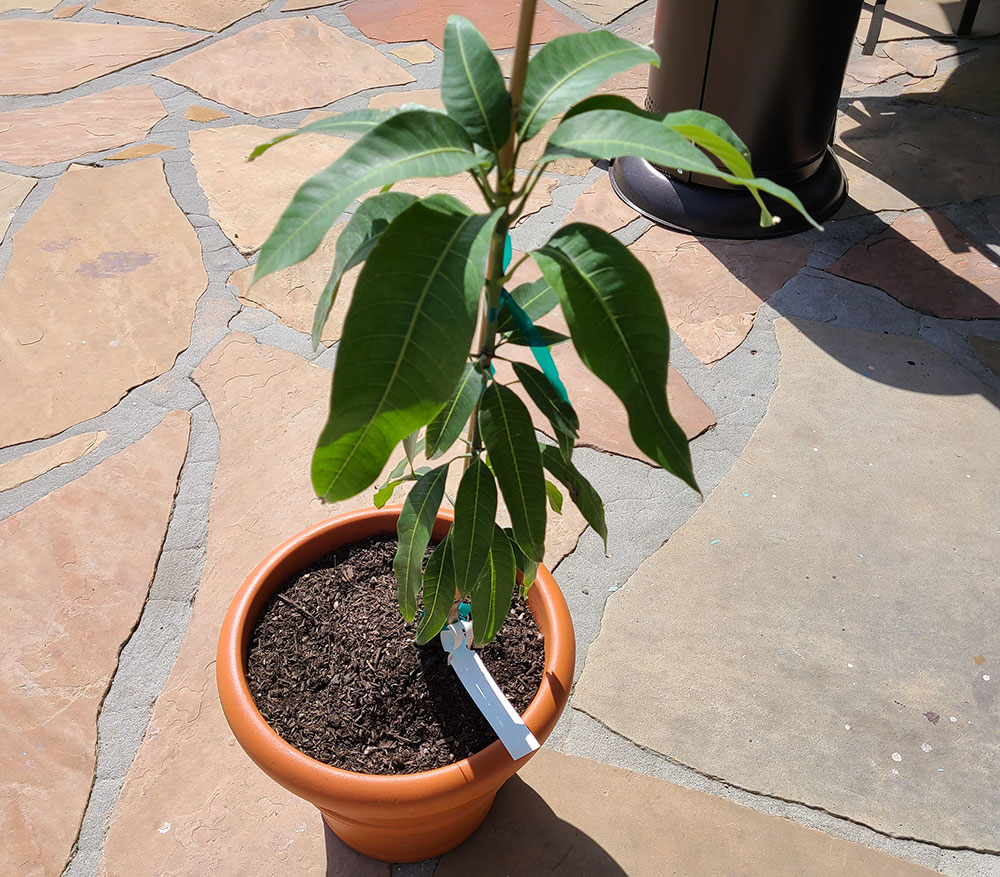
Q: I received a mango tree we ordered last week (I am in California) and am trying to make sure we take care of it properly. I noticed the corners of some leaves have began drying out. I wanted to see if there was anything else we should be doing or if it is something normal. Overall the tree looks good and the leaves have perked up, but I noticed the dry tips on a handful of leaves. Any help is appreciated! I have not fertilized in the pot yet or applied the mango sunshine booster.

A:Your mango tree looks pretty healthy, and these dry leaf tips may be caused by overall shipping stress. You have dry air in California, and temperatures may be getting up, this may cause additional drying effect. You may start fertilizing with a liquid fertilizer, it will help the plant to get stronger and grow faster - then heat and dry air won't be a problem as soon as the plant becomes better established and hopefully go into a bigger pot soon, or in the ground. Make sure to provide regular water if you have hot dry summers.

Date: 15 Oct 2020

Healthy Plants. Q&A from Mr Booster: Fertilizing Mango trees in Winter

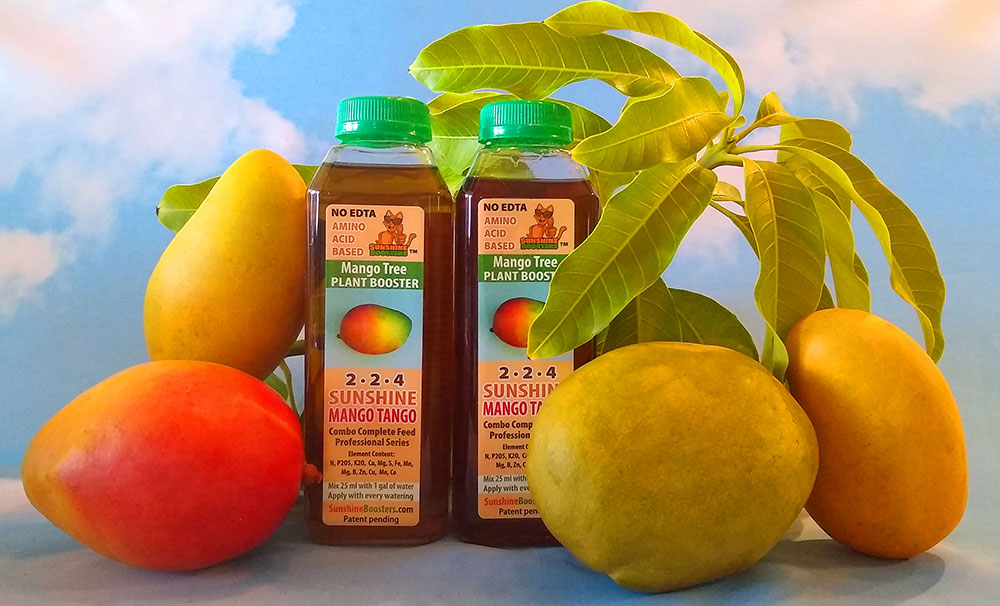
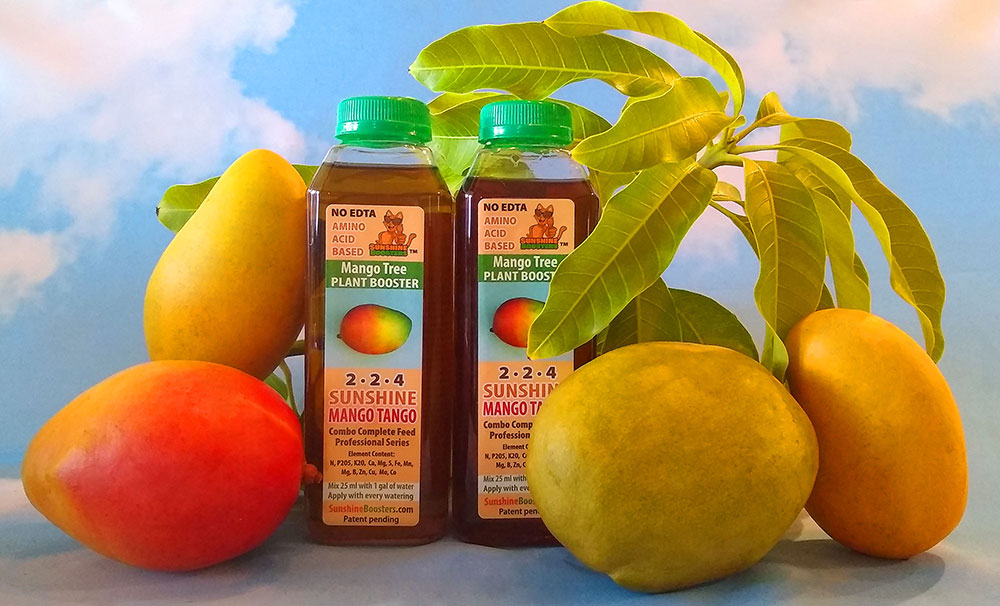
Q: I'm living in Maryland growing zone 7A and would like some info on when to fertilize my potted mango trees. I ordered your Sunshine Mango Tango 2-2-4. All your mango trees are in pots.

A: You can start using this fertilizer right away, any time of the year, and every time you water your plants.
Sunshine Mango Tango, as well as other Sunshine boosters, is an amino-acid based liquid fertilizer that is scientifically developed for daily plant needs in all necessary nutrients. This means, you may use this fertilizer with every watering, including winter period.
Traditional fertilizers (both granulated and soluble, EDTA-chelated) can only be used during hot months while plants grow actively, and must be limited or not used at all during cooler months, to avoid nutrient lock up in soil (which basically means "building up unused elements"). With Liquid Sunshine Boosters, it is safe to add them every time you water your tree.
During cooler weather and when plant metabolism slows down, a tree will consume less water (as well as food), and you will automatically reduce watering, to keep over-wintering plants on a dry side. This means, less fertilizer too. This allows you to control elements intake naturally, like you control water amount just as much as the plant needs.

Date: 30 May 2019

Triple Sec Mango

TopTropicals.com

By Onika Amell, tropical plant specialist

Q: I live in Mesa, Arizona. I am considering purchasing two of you Triple Sec Mango trees. Can you please give me some information on this variety and how to grow it successfully here in hot and arid Arizona, if at all?

A: Triple Sec Mango is a new name for the superior variety Seacrest. The aroma of this fruit resembles Triple Sec - an orange liqueur. It's a juicy, mid-season variety that has good disease resistance.
Mango has pretty good heat and drought tolerance. It loves sun, but there are a lot of factors to consider when growing Mango in your area.
Check your soil. Soil quality is always first and foremost: when you live in an area of Arizona with hardpan (extremely compacted desert soil) or caliche (layers of soil cemented by calcium carbonate) you will have to learn how to deal with such soil types. Amend the soil as needed.
The best time to plant is spring or fall to give your Mango a chance to get established before the really intense Summer heat starts. Alternatively, protect the tree with a shade cloth. Tender, new growth will not stand a chance unprotected, especially newly planted and/or young trees.
Mangoes are tropical and sensitive to frost and freeze damage. Young trees especially will also need winter protection when temperatures go near or below freezing. Always plant trees in a location where they will be protected from cold wind. Consider staking your newly planted Mango trees for the first year. It's never a bad idea to even stake during periods of high winds.
Make sure your planting site has very good drainage. Always use a good quality mulch around your tree as it helps to trap moisture, keeping the ground and the roots beneath it cool. Keep mulch a couple of inches from the trunk of the tree. Avoid a location that gets full day sun. Morning sun, afternoon shade is ideal. Give regular watering until the tree is established. Once established, water only when the soil feels dry.
Fertilizer with a Mango-Food. A foliar spray of micronutrient solution is always recommended during the active growing period. Use plant stimulants and microelements to improve cold hardiness and vigor.

See more info on growing mango in hot climate and container grown mangoes in Arizona.

Date: 20 Apr 2019

Growing mango tree in California

TopTropicals.com

Q: I just ordered a mango tree. I live in Southern California and was wondering if you have any tips on how to acclimate the mango to our climate. I know it is coming from hot and humid Florida to hot and dry Southern California and don't want to kill it because of the differences in climate.

A: Mangos in fact prefer dry conditions rather then humid. It may be perfect conditions for a mango tree at your place. Plant your tree in a pot size of the root ball; give it ample water and then let the soil surface slightly dry before watering again. Keep the plant in bright shade and gradually move into full sun. Once the tree is recovered from shipping stress, you may plant it in the ground and make sure to protect from freezing temperatures in winter. Use Mango Food for quick establishing and better fruit production. More to read:
Mango boosters
How to grow Mango in hot climates
Growing Mango in Arizona.