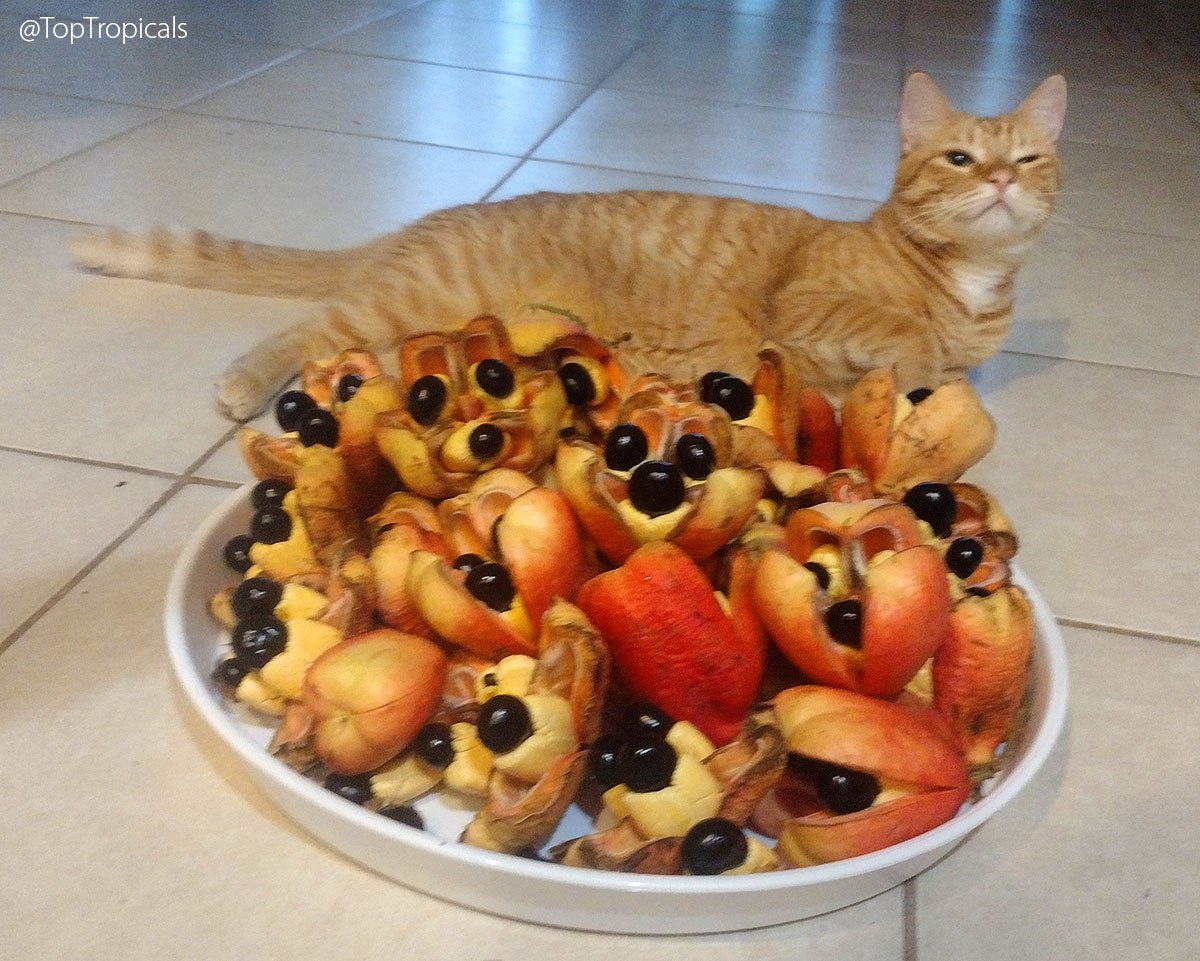
🍸Guess what is this fruit that tastes like Gin - it's Gin Berry, Glycosmis pentaphylla. It's also called Orangeberry, or Limonia, and is one of those plants that surprises people the moment they touch it. Crush a leaf or rub one of the ripe berries, and the scent is unmistakable - fresh, citrusy, pure gin! Just add tonic.
🍸 Why the berries smell like gin?
The leaves and berries are packed with aromatic oils rich in citrus terpenes, similar to compounds found in juniper and citrus peel. That shared chemistry is what creates the gin-like fragrance. It smells clean, sharp, and refreshing - more aroma than sweetness.
🍸 A lesser-known citrus cousin
Gin Berry belongs to the Rutaceae family, the same plant family as oranges, lemons, limes, and Curry leaf. You can see it in the glossy leaves and smell it in the oils, but the growth habit is different. Instead of becoming a tree, Gin Berry stays a compact, evergreen shrub.
🍸 Edible, but fragrance-forward
The small berries are edible and lightly sweet-tart, though most people notice the aroma before the flavor. In parts of South and Southeast Asia, the fruit is eaten fresh, added to chutneys, or used to scent drinks and infusions. It is subtle and aromatic rather than juicy.
🍸 Traditional uses and health benefits
🔸Gin Berry has a long history in folk medicine, especially in in Hindu medicine. 🔸Leaves used in teas for digestion and fevers 🔸Roots traditionally used for inflammation and pain 🔸Modern studies note antimicrobial and antioxidant activity
🍸 Easy garden and container plant
🔸Evergreen shrub with shiny leaves 🔸Naturally compact and easy to prune 🔸Small white flowers with a light fragrance 🔸Clusters of decorative berries 🔸Excellent for pots, patios, and warm climates 🔸Attracts pollinators, and birds enjoy the berries.
🍸 Why Gin Berry stands out
Gin Berry sits right between ornamental and edible. It has the citrus-family fragrance people love, stays manageable in size, and offers a unique sensory experience that most gardeners have never seen - or smelled - before.
Class @ 11:00am by Robert Riefer. How to keep pests off of maturing fruit.
Class @12:00pm Super foods by Zoe Merring. Benefits of Soursop, barbados cherry, goji, moringa. Benefits and recipes.
Discounts on all edibles
Prize giveaways at 12:00pm and 2:00pm (must be present to win)
20% off After-Cyber-Monday sale! Now that everybody is done with shopping for monitors and speakers, it is time to get some happy stuff! 20% off on all fruit trees, 1 day only! Enjoy your shopping and get the plants you always wanted at a low price!
Date: 31 Aug 2016
Hardy avocados
Q: I intend to gift three avocados, at least one type A and one type B, to a friend who lives in an area where the temperature never goes below 25F. The idea is to give them a ripening season as long as possible. Which combinations do you suggest, and which are the A and B?
A: When talking about "A" type and "B" type in Avocados, it is referring to the flowers. An avocado will produce both male and female flowers on the same plant. "A" type means that the flowers are female in the morning and male at afternoon. "B" type means that the flowers are male in the morning and female in the afternoon. If you plant to start a commercial growth, then it's important to create a proper mix of both types. However, in hot and humid climate a single tree produces flowers of both types, so it is not necessary to have both A- and B- types planted together in backyard. Even a single tree produces enough fruits for home gardener.
It is also important to know that while there are more cold hardy avocados, it refers to a full grown established tree. They will still need protection from the cold until they are bigger and more established. One can not expect a small tree, which was planted in June, to survive the first winter. It'll take few years until the tree is "harden" enough.
Wurtz Avocado: Fruits from May to Sept.
Dwarf hybrid. It is very compact and slow growing, reaching only about 8-12 feet at maturity. Distinctive weeping growth habit. Suited for planters, containers, patios, greenhouse use. Great for dooryard or container growing. The tree can handle temperatures to 25(F) degrees. Production is good and it is a consistent bearer.
Day Avocado: Fruits July to Sept.
Day avocado is green, smooth skin and is shaped like a club. The fruit is of very good quality and has a nice buttery consistency. The slender tree is relatively cold tolerant and produces July through September.
Fuerte Avocado: Fruits Nov to June.
Relatively cold hardy variety. Green fruit, elongated,flavor excellent, buttery. Vigorous compact tree with decidedly alternate year bearing habit. Ripens November to June.
These three will provide you with fruit ripening during the whole warm season.
For the most cold hardy avocado varieties, see this info sheet.
Date: 8 Aug 2016
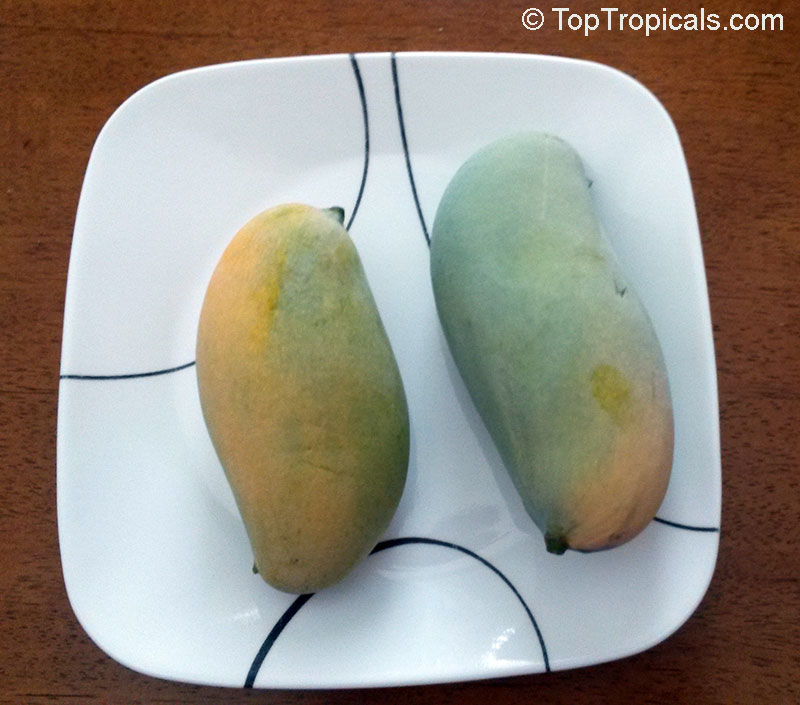
Growing mango in hot Arizona
By Mike D, Mesa, AZ. Despite to what you may think, mango can be successfully grown in desert Arizona climate. It has good heat and drought tolerance. It's possible providing the following:
1) Winter protection of a young plant when temperature goes around or below freezing. Try to plant trees in locations where they're protected from cold wind. Minimal temperatures vary widely. Areas which are closer to downtown are few degrees warmer, while outskirts can be very cold.
2) Some people are lucky enough to live in areas with good soil. However, most of us will have a so-called hardpan (extremely compacted desert) or caliche (layers of soil cemented together by calcium carbonate). Check with your local county extension office to determine how to deal with such conditions. Gypsum is usually used to loosen compacted soil.
3) When planting, dig a large hole making sure it has good drainage. Plant tree as usual, add mulch around it. It helps to conserve moisture.
4) Best time to plant is late Fall or early Spring, so mango can get established before Summer heat.
5) Plant where tree gets few hours of sun.
5) Water a lot until established. Once established, water when soil is dry.
6) Small plant may need protection from summer heat. Use shade cloth.
7) Mango requires very little nitrogen fertilizer. In hot climate, overdosing nitrogen may result in quick plant decline. Use balanced low nitrogen slow release fertilizer or avoid nitrogen completely. If you use mulch, then decomposing mulch provides enough nitrogen. Foliar spray of micronutrient solution is recommended during active growing period. Read more...