Date: 29 Jul 2019
Monster hybrids of Monstera: juvenile and mature
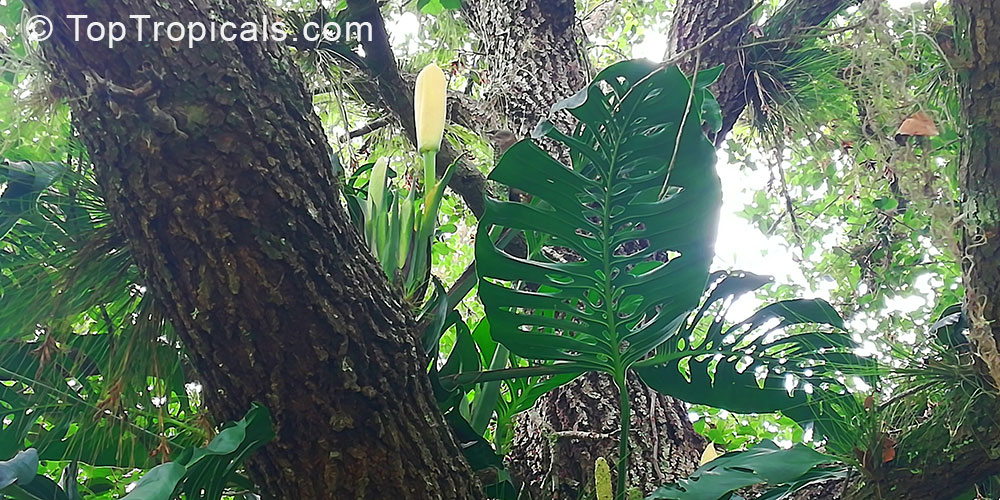
by Mark Hooten, the Garden Doc
Q: I am a rare plant collector and obtained a very interesing cultivar of Monstera from you that says it's a hybrid Monstera adansonii x obliqua. Is there a named hybrid? The leaves on this specimen that came in 1 gal pot are much larger than the plant I have grown in a 3 gal pot for a few years, under name of Monstera friedrichsthalii.
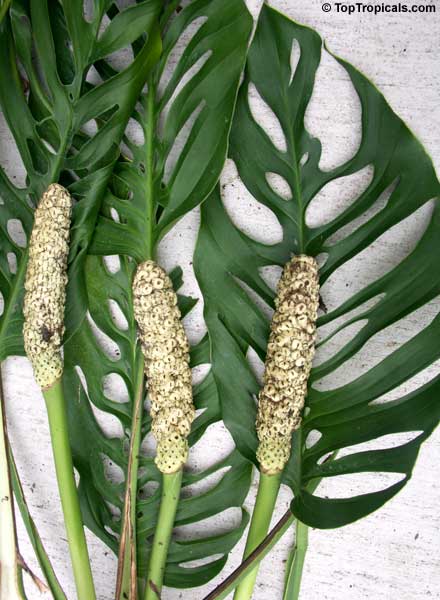
A: Due to their diversity, it is hard to find verified hybrids in the genus Monstera. M. friedrichsthalii is apparently an old Florida name for what is actually technically M. adansonii. The "primitive" juvenile growth is very different from the much larger more robust form that only occurs when it is allowed time to climb a tree, in which case the foliage becomes very different and much larger with many many more fenestrations (holes) of various sizes. If you visit our Garden Center, you can see the mature form climbing the oak tree in our Shade Garden in front of our office - we use this mature plant for propagation. If you take a cutting and don't let it attach to a bark/trunk and climb upwards, it will quickly revert to the wimpy juvenile form. Seems that even climbing a pole indoors, it never actually develops into the truly mature more complex adult stage. Some juvenile forms growing on a tree if given too much shade, do not develop into the larger mature form. Move it in more light and allow it to climb, and it will look very different, but still is the same plant under different conditions.

Date: 25 Jun 2019
True love of Night Blooming Jasmine
By Onika Amell, tropical plant specialist
Q: I live in New Cumberland, West Virginia. I love the smell of Night-Blooming jasmine. Is it possible to grow it in the northern panhandle of West Virginia? Do I have to plant it every year or do I keep it in a pot and take it inside during the winter months?
A: Technically, Night Blooming Jasmine is not a true jasmine
(those plants belong to Oleaceae, or Olive family). Night Blooming Jasmine
belongs to the Solanaceae family, also known as the Nightshade or "Potato" family
of plants. Yes, this sweet fragrant flower called Jasmine for its perfume is
related to potatoes and tomatoes!
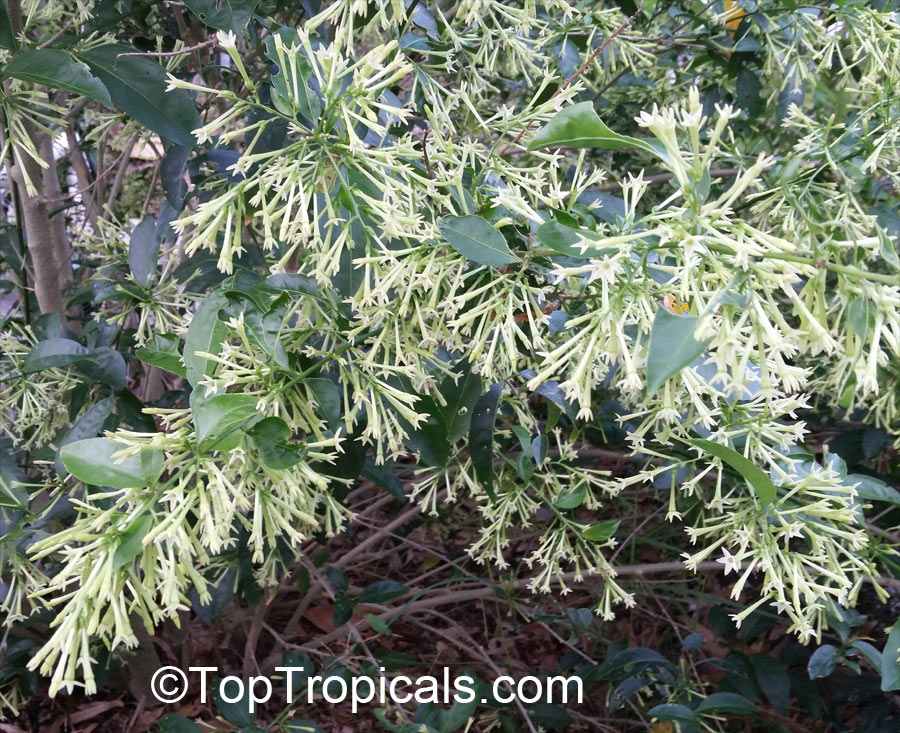
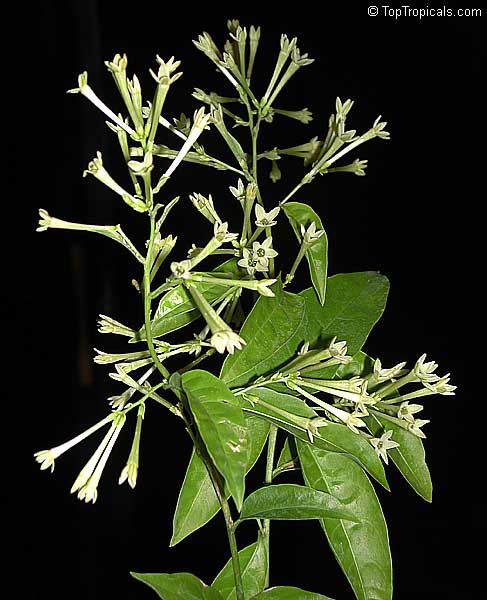
Night Blooming Jasmine - Cestrum nocturnum - is loved by many gardeners for its beautiful
fragrance at night. It is one of the most fragrant tropical evergreen shrubs
available. Cascading clusters of tiny, tubular pale yellow to white flowers open at
night and release a heavenly fragrance throughout the garden, especially on
warm summer evenings. The fragrance is much lighter during the day.
Night Blooming Jasmine is grown year-round in zones 9-11. It is at its
happiest in a sunny to a partially sunny spot in your garden in well-drained soil
but can be grown in cooler climates as a container or greenhouse plant.
You would absolutely be able to enjoy this plant during the warm months
in West Virginia, but it will most certainly not survive outside during the
winter. You will have to bring it inside. Take it outside again only once you
are confident there is no more possibility of frost. When grown indoors, be
sure to give it the sunniest, South facing window in your home. When grown in
a container, you will need to re-pot it every two to three years so it
doesn't become root-bound.
For those who are lucky to live in frost-free areas, in ideal growing
conditions outside, it can easily reach 8 feet with a spread of 5 feet. It has
a lovely informal look that can soften a more manicured garden. Add organic
matter to the planting hole when you plant to enrich the soil around the root
ball. Water well in the summer, but allow them to dry out a bit between
watering in the winter. Plant this Jasmine near pools, porches, doors, windows,
and walkways where its lovely fragrance can be enjoyed. The shrub is also an
excellent plant for privacy hedges and screens. When grown as a hedge, plant 3
feet apart.
Trim lightly after a bloom cycle to shape and then do a hard pruning in
fall or spring to control the size of this plant. Fertilize 3 times a year -
in spring, summer, and autumn - with a good quality granular fertilizer.
Recommended fertilizers:
Pink N Good Daily Plant Food - Flower Booster
Tropical Allure - Smart-Release Booster
Interesting facts:
Night-blooming jasmine is an excellent mosquito repellent. The powerful
scent of the flowers attracts moths and bats that feed on mosquitoes and
other small insects.
The flowers of the Night Blooming jasmine are widely used in India and
other countries of South Asia for perfumery, medicinal applications and in
religious ceremonies.
Limited time special offer:
Instant $5 off Night Blooming Jasmine
Date: 2 May 2019
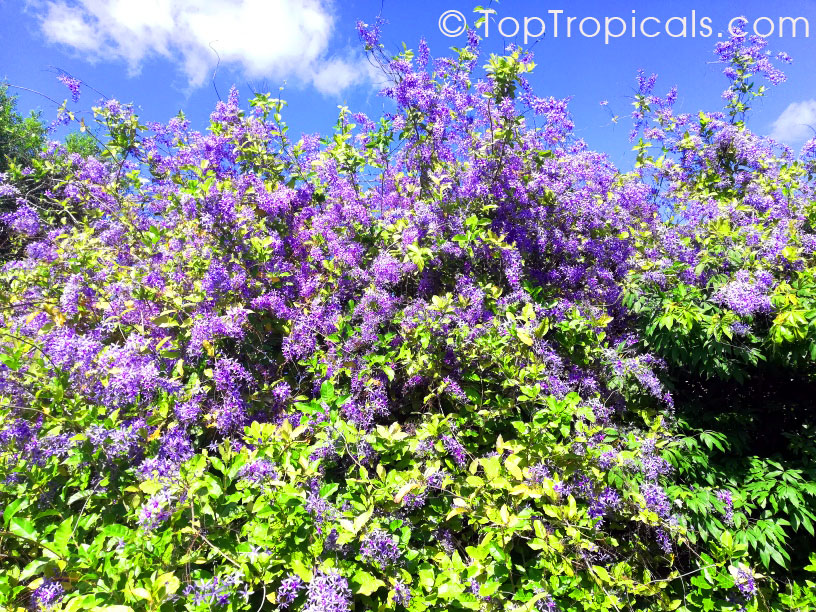
Breathtaking Queen's Wreath
By Onika Amell, tropical flower specialist
Q: I've just moved from Virginia to Sarasota, Florida. I'm looking for a vine similar to Wisteria to grow in my new garden. I've so enjoyed my Wisteria vine and I'm hoping to find something equally spectacular for my FL garden. Truth is, I'm getting older and won't be able to keep up with the hard-core maintenance Wisteria needs to keep it in under control. Is there a similar vine you can recommend that is just as showstopping as Wisteria?
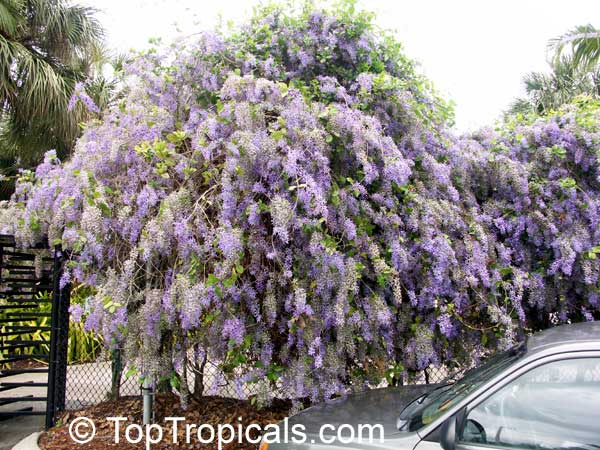
A: The vine that immediately comes to mind is Petrea Volubilis or Queens wreath. It looks similar to Wisteria, and though a fast and strong climber, it's not invasive or
destructive at all. An occasional pruning is all it will need to maintain it.
Much like Wisteria it gives a glorious show of flowers when spring arrives.
Masses of long, mauve flowers will continue to appear on and off in summer with
another burst of flowers in the fall. Flowers are up to a foot in length!
Hummingbirds, bees, and butterflies will all be impressed with you for
growing this charmer.
Snip off the gorgeous flowers, put them in shallow bowls of water
around your home and be the envy of all your friends and house guests!
This vine prefers the warmth of Zone 10 to thrive, but it will survive
in areas of Zone 9B when it borders zone 10A, especially if it's placed in a
protected area. It grows best in full sun but will tolerate part shade. It's
great for coastal gardens and once established, it has good drought
tolerance, medium salt tolerance, and good wind tolerance. It has no major pest
problems, which is always a bonus.
Grow and shape it as you like: a large bush, a small tree or a
breathtaking espalier. Some people plant Petrea vine by a tree to create that much
sought-after ethereal wisteria effect. This is no doubt a very charming vine
and a must-have for those who are in love with Wisteria but scared of its
vigorous growth and ongoing maintenance.
For Wisteria lovers we also recommend its spectacular tropical relative
Millettia reticulata - Evergreen Wisteria.
Date: 17 Apr 2019
Secrets of Happy Bougainvilleas
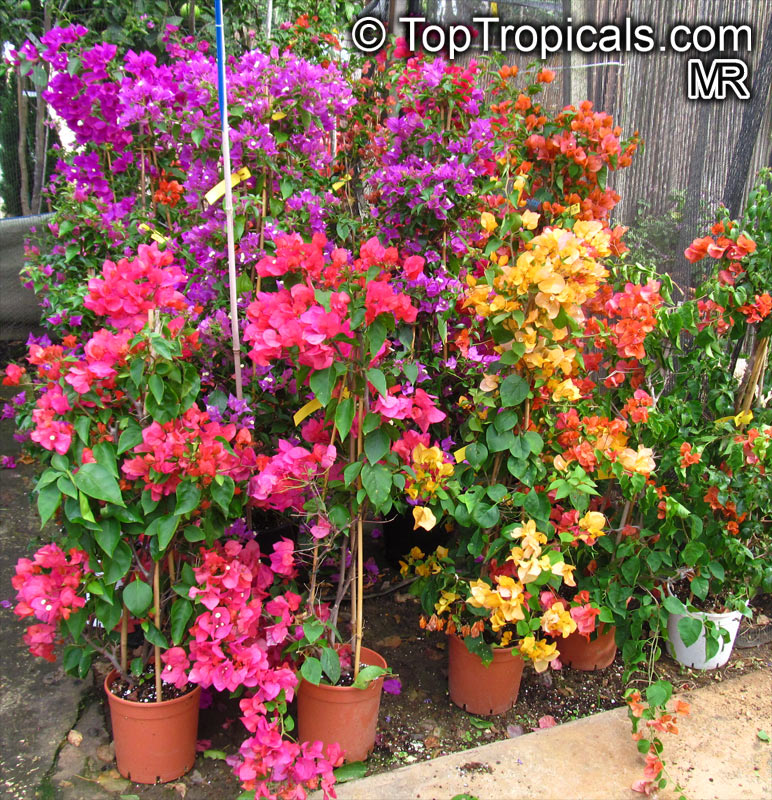
Q: When I visited Hawaii I saw their everblooming bougainvilles, flowering non-stop! How come our bougainvilles in Florida are not flowering as much? Is there any special secret to make them bloom?
A: Bougainvilleas prefer drier climate and especially drier summers. Florida summers are rainy and humid. The steaming greenhouse conditions are favorable for most tropical plants (except desert plants like most cacti). Bougainvilleas also grow vigorously in Florida heat and frequent rains, but most cultivars prefer dryer conditions for profuse flowering. These are a few tips that can help you grow happy Bougainvilleas and enjoy their showy flowers even in humid climates:
- In Florida, Bougainvilleas bloom mostly in Winter. If you are a
snowbird, this plant is definitely for you!
- Choose sunny, dry, and elevated location for Bougainvilleas, never a
low spot and never a shade spot. Give it as many hours of sun as possible.
- Use only well-draining soil. Usually, sandy soils work well when
mixed with some compost. If your soil is too heavy, add soil conditioners like
perlite, bark, sand.
- Take advantage of cultivars that are well adapted to humid climates:
Dwarf
Everblooming Pixie, Thornless B. arborea.
- Remember Bougainvilleas are the easiest and the most rewarding potted
plants.
- Use bloom boosters along with well-balanced slow release plant food.
We recommend these: Pink-N-Good flower booster and smart-release granulated Tropical Allure.
- Do not overwater and keep the plant on a dry side.
Date: 3 May 2024
Best picks of the Season
Special SALE deals - from our horticulturist
These plants are large, developed and beautiful NOW!
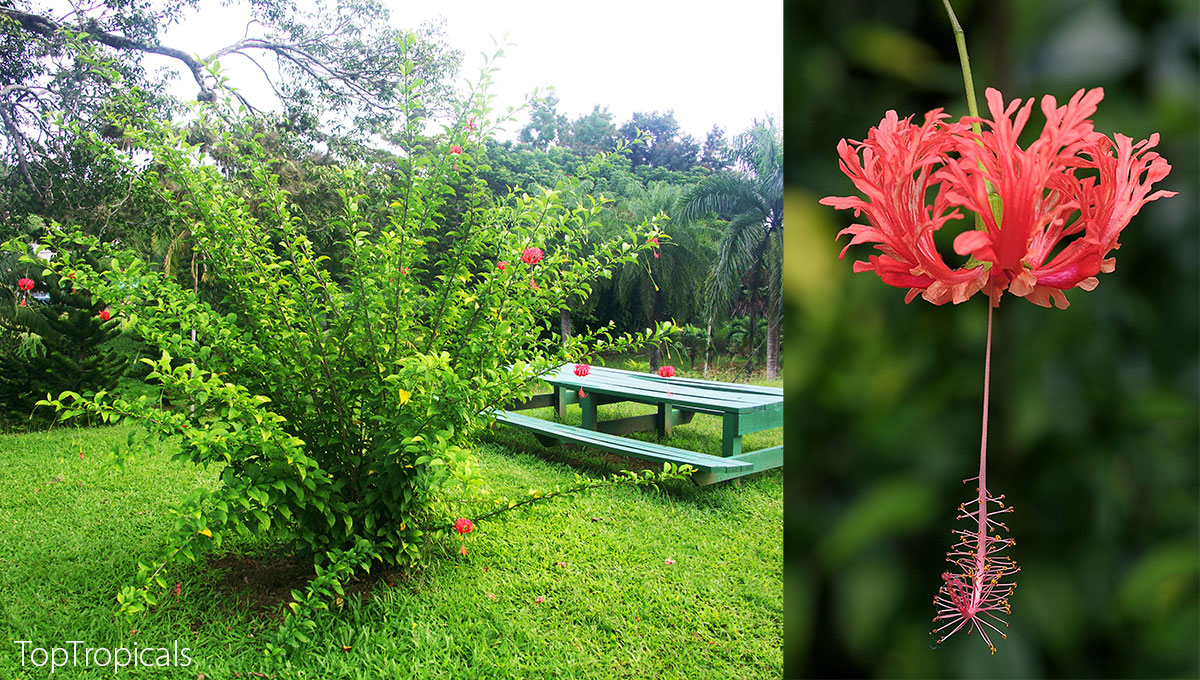
Hibiscus schizopetalus - Coral Hibiscus. Spectacular weeping tree hibiscus, rare and hard to find. Grows rapidly and blooms freely. Flowers look like parachutes and can be recognized by the fringed and lacy petals which are bent backward. It has slender and gracefully curved stems. Can be trained into a showy standard.
Cestrum nocturnum - Night blooming jasmine. Garden favorite - the sweetest fragrance at night is intoxicating. One of the most famous and desirable fragrant plants. Flowers are pale yellow to white, open at night and stay extremely fragrant until sunrise. These flowers are widely used in India and other countries of South Asia for perfumery, medicinal applications and in religious ceremonies. Best location will be near driveway, window or entrance, where the magic fragrance can be appreciated.
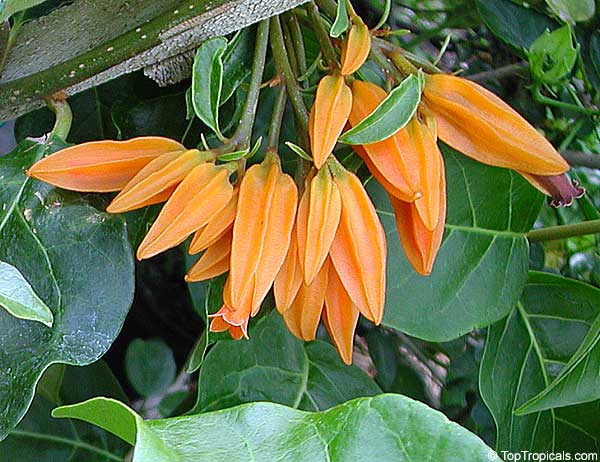
Juanulloa aurantiaca - Gold Finger plant, Mexican Spoon Flower - this one is soooo pretty! Unusual looking vine or shrub with yellow-orange fleshy flowers, everblooming and a VERY fast growing. Rare, collectible plant.
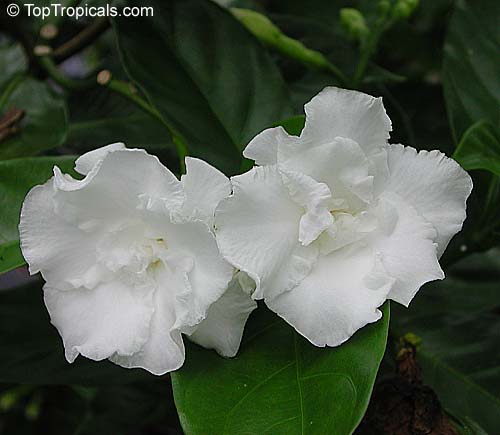
Tabernaemontana Flore Pleno - Crape Jasmine, Carnation of India, Florida Gardenia - this fast growing bush with waxy leaves and beautiful fragrant flowers is a must in tropical garden. Easy to grow and free flowering, dense bush.
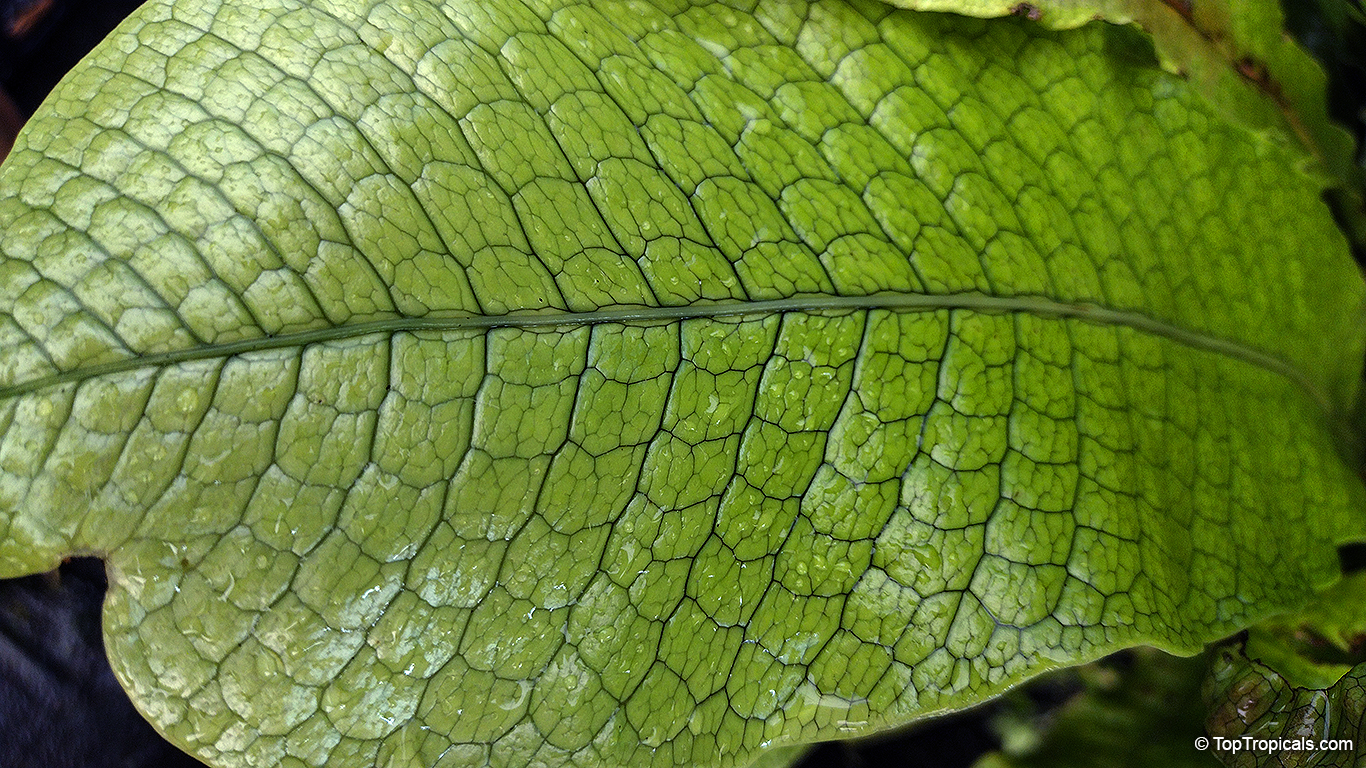
Microsorum musifolium - Alligator Fern, Crocodile Fern from Australasia. Perfect for shade! An epiphytic fern with cool alligator-skin looking leaves. The strikingly shaped, light green fronds of the fern form a lovely backdrop to its stunning stiff, leathery, dark green alligator-skin foliage. Perfect as a houseplant, or planted under a tree. Grows to 2-3 ft in height and likes a sheltered, semi-shaded location, no direct sunlight.