Garden Blog - Top Tropicals

Date: 7 Jan 2026

How to grow papaya from seed without killing it, Part 3: containers, sunlight, and 11 common mistakes
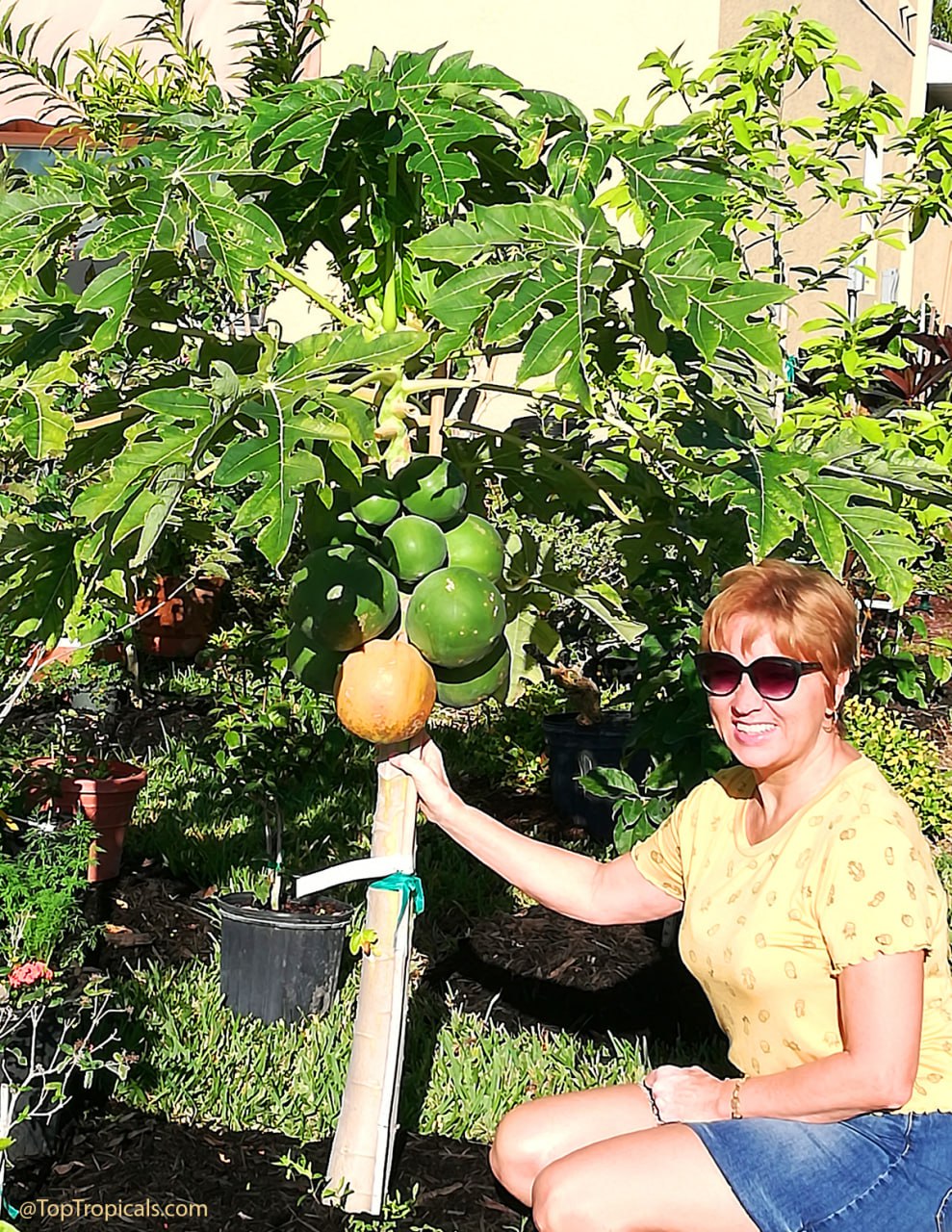
Dwarf Papaya tree

Dwarf Papaya tree

🍊 How to grow papaya from seed without killing it, Part 3: containers, sunlight, and 11 common mistakes


Getting papaya to sprout (see part 1 and part 2) is only half the battle. How you handle containers, sun, water, and root disturbance determines whether your plant reaches fruiting size or slowly declines. In this final part, we cover practical container growing, light requirements, and the mistakes that stop papaya from ever producing fruit.
  • 🍊 Transplanting papaya - what most people get wrong


    The one thing papaya roots hate (and most growers ignore)

    Choosing the right container is critical.
    Rule of thumb: papayas hate transplanting. Their roots do not like to be disturbed.

    Because of this:

🟡Reduce transplanting as much as possible
  • 🟡Choose a container that will last longer once seedlings leave starter pots
  • 🟡Avoid stepping up pot sizes too frequently

  • Watering matters just as much:
  • 🟡Larger pots stay wet longer
  • 🟡Papaya roots dislike constant moisture
  • 🟡Always reduce watering when moving into a bigger container


🍊 Container growing guide for papaya


Grow papaya anywhere - but only if you do this right
  • 🟡Start seeds in small cells (1–2 seeds per cell) or small pots (4–8 seeds per pot, spaced far apart)
  • 🟡Transplant carefully when seedlings reach about 2 inches
  • 🟡Once a 4-inch pot is outgrown, move directly to 1-gallon or even 3-gallon containers
  • 🟡Reduce watering when containers are much larger than the root system
  • 🟡Protect young plants from heavy rain until roots fill the pot
  • 🟡Stake plants with bamboo
  • 🟡Papayas grow fast, and the stem often outpaces root development. Even light wind can knock them over


🍊 Sunlight requirements for papaya


Papaya grows fast, but one mistake stops it cold

Papayas need full sun and prefer to stay on the drier side once established.

In shade:
  • 🟡Plants become leggy and overly tall
  • 🟡Flowering may stop completely
  • 🟡Fruit production may be reduced or zero

  • Shade also keeps soil wet longer:
  • 🟡Soil dries slowly
  • 🟡Excess moisture can kill roots, even on mature plants


🍊 11 most common mistakes when growing papaya from seed


From seed to fruit in under a year - if you avoid these papaya mistakes
  • · 1. Leaving pulp or slime on seeds - prevents germination and causes rot
  • · 2. Soil too wet during germination - keep damp, not soggy
  • · 3. Overwatering seedlings - young plants rot easily
  • · 4. Disturbing roots during transplanting - papayas hate it
  • · 5. Not enough sun - papaya hates shade and will not produce in low light
  • · 6. Too much water once established - prefers drier conditions
  • · 7. Planting in low spots in the ground - poor drainage leads to root rot
  • · 8. Using heavy soil - waterlogging kills roots
  • · 9. Giving up too early - seeds can take weeks to sprout
  • · 10. Not fertilizing - papaya is a heavy feeder. Poor soil means no fruit. Remember, it is a giant grass.
  • · 11. Do not trim papaya. Trimming may cause side shoots, but it ruins the natural tropical form. If you need a ladder to harvest fruit, the solution is not pruning - it is growing a dwarf variety.

Papaya rewards growers who understand its quirks. Treat it like the fast-growing, shallow-rooted plant it is, and it will produce quickly and generously. Ignore those basics, and it will struggle no matter how much care you give it.

If you found this helpful, bookmark all 3 parts - papaya grows fast, and timing matters
:

How to grow papaya from seed without killing it:
Part 1: Papaya basics
Part 2: Seeds germination
Part 3: Containers, sunlight, and common mistakes

🛒 Explore Papaya varieties

📚 Learn more:

Papaya Plant Facts

Carica papaya
Papaya
USDA Zone: 9-11
Small tree 10-20 ftFull sunDry conditionsModerate waterYellow, orange flowersWhite, off-white flowersEdible plantEthnomedical plant.
Plants marked as ethnomedical and/or described as medicinal, are not offered as medicine but rather as ornamentals or plant collectibles.
Ethnomedical statements / products have not been evaluated by the FDA and are not intended to diagnose, treat, cure, or prevent any disease. We urge all customers to consult a physician before using any supplements, herbals or medicines advertised here or elsewhere.Subtropical plant. Mature plant cold hardy at least to 30s F for a short time

· Carica papaya in Plant Encyclopedia

#Food_Forest #How_to #Papaya

🟢 Join 👉 TopTropicals

Date: 15 Jan 2026

Smokey  and  Sunshine  the  cats  in  a  cozy  greenhouse  admiring  a  blooming 
 Black  Bat  Lily  with  dark  whiskered  flowers  on  a  winter 
 day
Smokey: I finally got these Taccas. I wanted them for a long time. I think I got a little attached already. They look like something from a Tim Burton movie. And look at that flower. It even has whiskers like me.
Sunshine: I understand. I get emotionally attached very fast too. Mostly to coffee.

Date: 15 Jan 2026

Why collectors go crazy for this ginger

Burbidgea schizocheila - Voodoo Flame Ginger

🔥 Why collectors go crazy for this ginger

  • 🔥 Burbidgea schizocheila - Voodoo Flame Ginger is one of those gingers that quietly surprises you. This ginger looks fake - but it blooms like this in real life! Compact, upright, and rarely seen in cultivation, it sends up glowing golden-orange flower cones that look almost unreal against its dark green leaves and deep maroon stems. Blooms appear on and off throughout the year, and each cone slowly opens individual flowers that can last up to two weeks, giving you a long-lasting show instead of a one-day flash.
  • 🔥 What makes this plant especially intriguing is how different it is from typical gingers. It grows more like a sculptural accent than a spreading clump, staying neat and vertical. Even more unusual - it behaves partly like an epiphyte. The rhizome prefers to sit above the soil surface, with only the roots buried, much like orchids or staghorn ferns. Bury the rhizome and the plant will sulk.
  • 🔥 Voodoo Flame Ginger thrives in bright shade, warm temperatures, and high humidity, making it a natural choice for indoor growing or protected patios. Direct sun will scorch the leaves, and cold temperatures are not tolerated, so it is best kept in containers and brought inside when nights cool down. Slow-growing, tidy, and dramatic without being flashy, this is a true collector ginger - strange, elegant, and quietly mesmerizing.


📚 Learn more about gingers:

🛒 Get collectible Coral Ginger Borneo Pink

#Shade_Garden #Container_Garden

Golden Brush Plant Facts

Burbidgea schizocheila
Golden Brush, Dwarf Orange Ginger, Voodoo Flame Ginger
USDA Zone: 9-11
Small plant 2-5 ftSemi-shadeModerate waterRegular waterEpiphyte plantYellow, orange flowersSubtropical plant. Mature plant cold hardy at least to 30s F for a short time
🟢 Join 👉 TopTropicals

Date: 13 Feb 2026

To trim or not to trim? When and how to trim damaged plants after winter

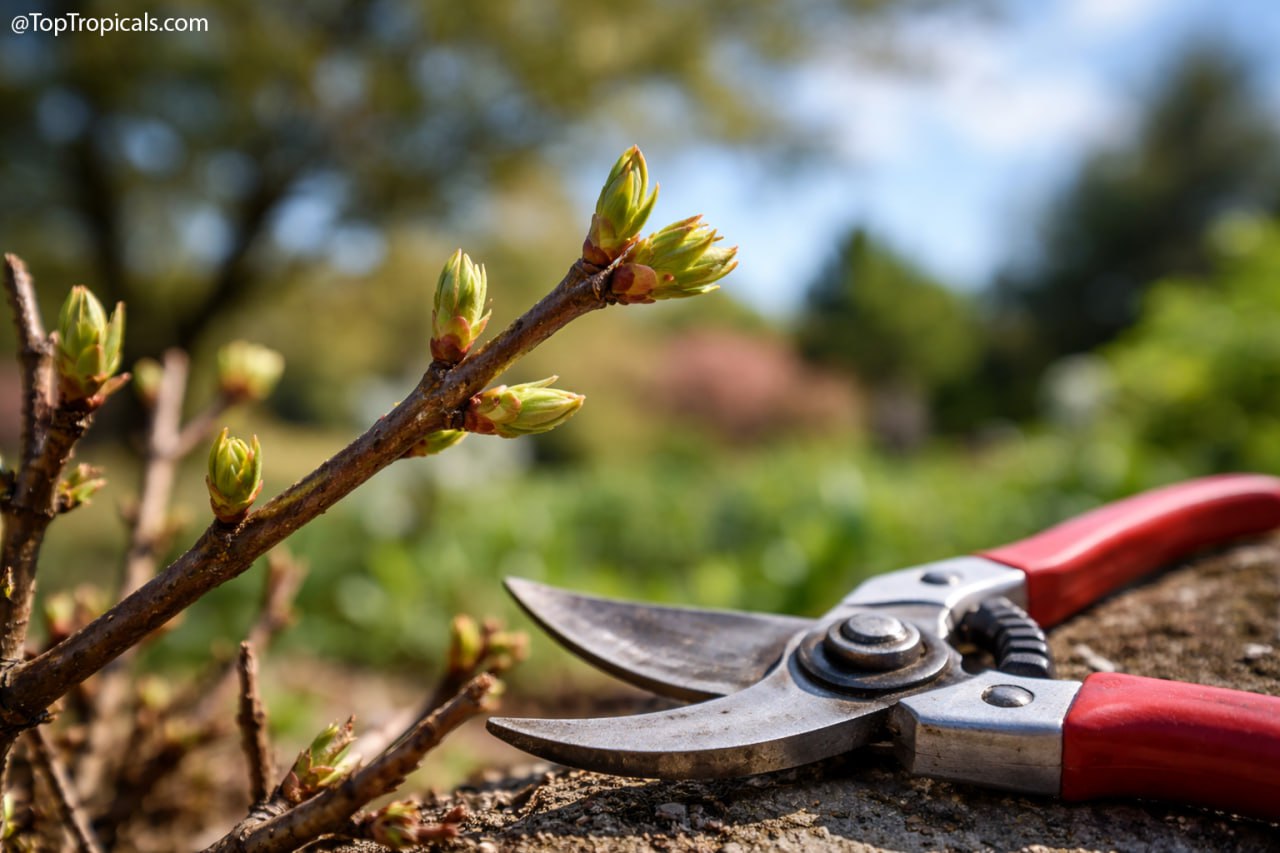
Sprounting buds on a dormant branch and pruners

Sprounting buds on a dormant branch and pruners

✂️ To trim or not to trim? When and how to trim damaged plants after winter


Florida just went through a record freeze (Feb 2026). Now gardens look rough - brown leaves, blackened tips, mushy stems. The big question: do you cut now or wait?
Here is the simple rule.
  • ✂️ When is the right time to trim?


    Do not rush.
    Wait until the danger of more freezes has passed and you start seeing new growth. In most of Florida, that means late winter to early spring.
    Why wait?
    Dead foliage actually protects living tissue underneath. If you cut too early and another cold snap hits, you can cause more damage.
    If a plant is completely collapsed and clearly mushy, you can remove that material. But for woody shrubs and trees - patience pays.
  • ✂️ How far should you trim?


    Trim back to healthy, green wood. Start by removing:

· Black, mushy, or obviously rotted stems
  • · Broken branches
  • · Completely dried leaves
Then cut slowly and test as you go. Do not cut everything to the ground unless you are sure it is dead.
Many tropicals look terrible after freeze but recover beautifully in warm weather. Te rule of thumb is: once minimum temperatures stay above 65F for over a week, the active growth starts.
  • ✂️ How to tell if a branch is dead or alive


    Use the scratch test. Lightly scrape the bark with your fingernail.

· Green underneath - it is alive
  • · Brown and dry - likely dead
Move down the branch toward the base. Often only the top portion is dead.
Also check flexibility. Live branches bend slightly. Dead ones snap.
  • ✂️ Important - do not give up too soon


    This is where many gardeners make a mistake.
    After a few weeks - sometimes even months - plants can push new growth through what looks like a dead branch. Buds may appear higher than expected, not just from the roots.
  • ✂️ You may see growth:


  • · Along the stem
  • · From lower nodes
  • · From the trunk
  • · From the base

Some plants look gone - then suddenly leaf out again.

✂️ Final thought


After a hard freeze, the best tools are patience and a careful eye.
Wait for warmth. Trim slowly. Check for green. And give your plants time to surprise you.
Tropical gardens are tougher than they look.

🛒 Need to replace a damaged plant? Explore the best options

#Discover #How_to

🟢 Join 👉 TopTropicals

Date: 22 Feb 2026

Watch Cat Oscar Win 5 Feet of Snow

Watch Cat Oscar Win 5 Feet of Snow

🏆 Watch Cat Oscar Win 5 Feet of Snow


You think it's cold, Floridians?

Meet Oscar. Street-fight champion. One ear bent from "previous negotiations". Confidence level - untouchable.
Five feet of snow? Minor inconvenience.
He did not train all winter to be defeated by fluffy water.

Yes, the snow is deep.
Yes, it is hard to walk.
Yes, his voice is loud.

But retreat? Never.

His blood is thick.
His fur is thicker.
His territory will be inspected and properly marked.

Some heroes wear capes.
Oscar wears winter coat - and attitude.

Maybe your tropical winter is not so bad after all? ⛄️

🐈📸 Cat Oscar, a non-tropical friend of TopTropicals and PeopleCats.Garden.

#PeopleCats

🟢 Join 👉 TopTropicals