Garden Blog - Top Tropicals

Date: 17 Mar 2026

Move Over, Paddy: Why March 17th is Actually the International Day of the Cat Lady

March 17th - International Day of the Cat Lady, Gertrude with cats

March 17th - International Day of the Cat Lady, Gertrude with cats

Move Over, Paddy: Why March 17th is Actually the "International Day of the Cat Lady" ☘️ 🐈

When you think of March 17th, you probably think of green beer, shamrocks, and parades. But while everyone else is toasted to St. Patrick, a subset of gardeners and feline enthusiasts are celebrating a different icon: St. Gertrude of Nivelles. She 's the 7th-century abbess who skipped the noble marriage proposals to become the unofficial Patron Saint of Cats, Gardeners, and anyone who really, really hates mice.

🐾 From Noblewoman to Monastery Boss


Born in 626 AD (modern-day Belgium), Gertrude wasn't your average medieval teenager. When her family tried to marry her off to a rich duke, she famously told them she’d rather be a bride of Christ than any man on Earth.
She eventually ran the Nivelles monastery like a pro, turning it into a 5-star medieval hub for travelers, scholars, and pilgrims. But it isn't her hospitality that made her an internet icon 1,300 years later - it’s her "pest control" skills.

🐾 The Mouse-Hater’s Hero


Look at any medieval painting of Gertrude, and you’ll notice something weird: mice are literally climbing up her staff. In the Middle Ages, mice weren't "cute Disney sidekicks." They were grain-destroying, plague-spreading menaces. Gertrude became the go-to saint for:

Protecting the harvest from rodents.
Keeping the pantry mouse-free.
Calming the nerves of people with a serious case of musophobia (fear of mice).
The Logic: If you’re the saint of mice, you’re naturally the BFF of the creature that eats them.

🐾 How She Became the "Cat Lady Saint"


Interestingly, Gertrude wasn't "officially" the saint of cats for most of history. That title actually went viral in the late 20th century.

A 1981 Metropolitan Museum of Art catalog highlighted her rodent-fighting reputation, and the world’s cat lovers basically said, "Hold my catnip". The association stuck instantly. Today, she’s the patron saint of the "Original Cat Lady" aesthetic, celebrated by anyone who knows that a home isn't a home without a feline supervisor.

🐾 A Big Day for Green Thumbs


If you’re a gardener, March 17th is your "Green Flag" day. In European folklore, St. Gertrude’s feast day is the traditional start of the planting season.

👉 Pro-Tip from the Middle Ages: If the sun is out on March 17th, it’s a sign that your garden will thrive all year. If it’s raining? Well, maybe stay inside and pet the cat.

🐾 The Perfect Trio: Cats, Gardens, and Gertrude


There’s a reason plant people and cat people are often the same people. Cats love a good garden patrol - they nap in the mulch, stalk the butterflies, and ensure no chipmunk dares to touch your tomatoes.

At TopTropicals, we take this tradition seriously. Our PeopleCats are more than just pets; they are the furry CEOs of the nursery, supervising every seed we plant and every leaf we prune.

🐾 Meet the PeopleCats:


The furry supervisors of the garden world!

🐾 This March 17th, Wear a Little Extra Fur


Whether you’re Irish or not, take a moment this March 17th to raise a glass (or a bag of treats) to St. Gertrude.

This year, let’s celebrate:
🐾 The Feline Patrol: For keeping our gardens mouse-free.
🐾 The Gardeners: For braving the dirt to grow something beautiful.
🐾 The Abbess: For being the coolest historical figure you'd never heard of.

📚 Learn more:
St. Gertrude of Nivelles: Patron Saint of Cats, Gardeners, and Those Who Fear Mice!

#PeopleCats #Horoscope #Fun_Facts

🟢 Join 👉 TopTropicals and 🐈PeopleCats.Garden

Date: 16 Mar 2026

🌞 Spring Nutrition Strategy: How to Identify and Fix Plant Nutrient Starvation

Smokey  the  tuxedo  cat  holding  a  golden  mango  trophy  next  to  a  giant  mango  while  Sunshine  the  ginger  cat  relaxes  with  coffee  and  donuts  in  a  tropical  garden  contest  scene
Sunshine: Smokey, I knew from the start you would win. You used Sunshine Boosters and Green Magic. They are named after me, so I had insider knowledge. But my organic program is still good.

Smokey: Yes, it is good. However, it managed to grow your waistline, not the mango. Starting tomorrow, you begin exercising.

Sunshine: Exercising? Like running?

Smokey: No. Pulling weeds.

Read more about Smokey & Sunshine

🌱 The Spring Fertilizer Rush

It's the middle of March. The weather warms up, plants wake up, and gardeners rush to Home Depot to buy fertilizer. We see this every spring: one big feeding, then weeks or months of nothing.

Tatiana Anderson, horticultural expert from Top Tropicals, reminds gardeners that plants do not eat that way. They grow best when nutrients arrive little by little, not in one giant spring dump. That idea is the science behind Green Magic controlled-release fertilizer usage.

🎢 The Fertilizer Roller Coaster

After that big spring feeding, plants usually respond quickly. Leaves turn greener, growth speeds up, everything looks great. But a few weeks later something strange happens. Growth slows down. Leaves lose color. The plant looks hungry again. So gardeners fertilize again.

This cycle of nutrient spikes followed by starvation is very common with traditional fertilizers. Plants do not like roller coasters. They grow best with steady nutrition.

🚽 Where Traditional Fertilizers Go

Traditional fertilizers are usually made from soluble nutrient salts. When you water the soil or when it rains, part of those nutrients dissolve and become available to plants.

But plants cannot absorb everything at once. The unused portion continues moving with water through the soil. In gardens and container plantings, that excess often travels through drainage and eventually reaches nearby canals, lakes, or rivers causing algae growth.

These dissolved salts are also the reason gardeners sometimes see what is called "fertilizer burn". When too many salts accumulate around the roots, they can pull water out of plant tissues and damage sensitive roots and leaf edges.

It is also important to understand that traditional fertilizers are not the same as slow-release fertilizers. Traditional fertilizers dissolve quickly, while slow or controlled-release fertilizers are designed to release nutrients gradually over time.

This is why large fertilizer applications often lead to two problems: a short nutrient spike for plants and nutrient pollution.

⏳ The Idea Behind Slow Release

Gardeners and scientists recognized this problem a long time ago. If nutrients dissolve too quickly, plants receive a spike and the rest is washed away before roots can use it. The obvious solution was to slow things down. Instead of dumping nutrients all at once, slow-release fertilizers were developed to feed plants gradually over time.

The goal is simple: keep nutrients in the soil longer and deliver them to plants little by little, closer to the way plants actually grow.

⚖️ Slow Release vs Controlled Release

Not all gradual fertilizers work the same way. There is an important difference between slow-release and controlled-release fertilizers.

Slow-release fertilizers rely on natural processes such as moisture, temperature changes, soil microbes, or simple coatings that slowly break down. The release rate can vary depending on weather, soil conditions, and watering.

Controlled-release fertilizers use engineered coatings that regulate how nutrients leave the fertilizer granule. The coating acts like a membrane, allowing nutrients to move out gradually in a more predictable way.

In simple terms, slow-release fertilizers slow things down, while controlled-release fertilizers are designed to control how nutrients are delivered over time.

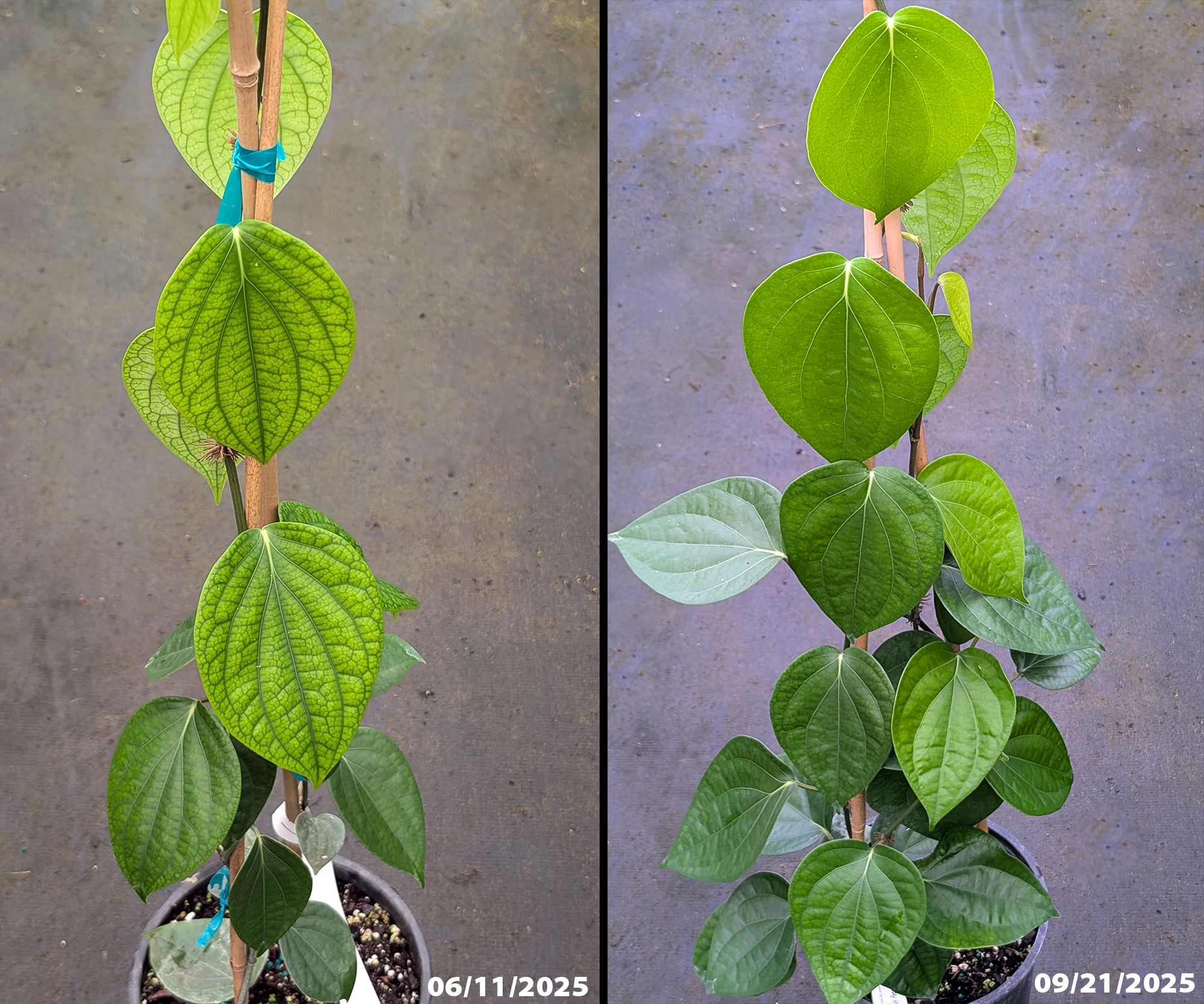
Black  Pepper  plant  (Piper  nigrum)  showing  nutrient  deficiency  before 
 treatment  and  healthy  green  leaves  after  correction  using  Green  Magic 
 fertilizer.

Black Pepper (Piper nigrum): nutrient deficiency corrected with Green Magic fertilizer.

🌡️ The 75°F Trap

Most controlled or slow-release fertilizers are tested under laboratory conditions where soil temperature is around 75°F. But in real gardens, especially in warm climates, soil temperatures can be much higher. Container soil in full sun can easily reach 90°F or more. Higher temperature speeds up chemical and biological processes, including nutrient release from fertilizer coatings.

As a result, a fertilizer labeled 6-month release at 75°F may actually finish releasing nutrients in about 3 months in hot soil. That means plants receive nutrients too quickly early in the season and then may run short of food later, right when growth is strongest.

At 90°F and above, the issue is not only faster feeding. The fertilizer coating can release nutrients so quickly that the soil solution becomes highly concentrated with dissolved salts. In containers especially, this sudden surge of salts can pull water away from the roots through osmotic pressure, effectively dehydrating the roots at the exact moment when the plant needs water most. Instead of steady nutrition, the plant experiences a brief nutrient spike followed by stress.

⚙️ Why Release Mechanisms Matter

Different fertilizers use different coating technologies. Some rely on simple coatings that release nutrients mainly in response to moisture. When it rains or the soil stays wet, nutrients are released faster. When the soil dries, release slows down. This moisture-driven mechanism can be unpredictable because it depends heavily on rainfall and watering patterns.

More advanced fertilizers use membranes designed to regulate nutrient movement based primarily on temperature. Because plant metabolism is closely tied to temperature, this creates a much more scientific and predictable feeding process. As temperatures rise and plants grow faster, nutrients are released more actively. When temperatures drop and plant activity slows, the release rate also slows.

This scientific, temperature-based mechanism helps deliver nutrients gradually and predictably, reducing the large spikes and sudden shortages that often occur with simpler fertilizer coatings.

Controlled Release Technology

Modern controlled-release fertilizers use polymer coatings that act like a thin membrane around each granule. Water enters the granule, nutrients dissolve inside, and then slowly move through the coating into the soil.

The speed of this process is influenced mainly by soil temperature, which generally follows the plant's natural growth rate.

Polyon coating technology is known for its very consistent polymer layer, which helps deliver nutrients more evenly from granule to granule. This consistency is one reason controlled-release fertilizers are widely used in professional nurseries and container plant production.

Green Magic fertilizer uses advanced Polyon controlled-release technology to provide steady background nutrition for plants without the large nutrient spikes common with traditional fertilizers.

⚠️ The Calcium Gap

One nutrient that is often missing from many controlled-release fertilizers is Calcium. Calcium is essential for plant cell structure. It strengthens cell walls and supports healthy development of new leaves, roots, and fruit. In many ways, its role is similar to how calcium supports bone structure in the human body.

Unlike many other nutrients, Calcium is not mobile inside plants. The plant cannot move it from older leaves to support new growth. This is why calcium deficiency usually appears first in the newest leaves and growing tips. When plants lack calcium, new growth may become distorted, weak, or fail to develop properly because the cells cannot form strong walls.

Another important detail is that Calcium is not mobile inside plants. Once it becomes part of plant tissue it cannot move to new growth, which is why fresh leaves are the first to show deficiency symptoms.

No matter how much NPK fertilizer is added, plants cannot grow properly without enough Calcium because new cells simply cannot build their structure.

Calcium is difficult to include inside polymer-coated fertilizer granules because many calcium salts are highly soluble and can interfere with the stability of the coating.

For this reason most controlled-release fertilizers focus on delivering nitrogen, phosphorus, and potassium, while assuming that Calcium will come from irrigation water or soil amendments such as gypsum.

Garden advice often recommends bone meal as a Calcium source. While bone meal does contain Calcium, it releases very slowly and depends on soil biology and acidity, so it may take months before plants can actually use it. A more reliable Calcium source for many growers is gypsum, which supplies Calcium. However, adding it to container mixes is risky because the correct amount is difficult to control.

The most reliable way to supply Calcium is simple: use Sunshine Boosters. These liquid fertilizers deliver readily available Calcium directly to plants in soil and in containers, supporting strong new growth and preventing the hidden deficiencies that often limit plant development. We explained this approach in detail in our previous newsletter.

The Two-Layer Feeding System

Professional growers rarely rely on a single fertilizer. The most stable approach is combining controlled-release nutrition with targeted liquid feeding.

Green Magic provides steady background nutrition through Polyon controlled-release technology, supplying nitrogen, phosphorus, potassium, and essential microelements gradually over time.

Sunshine Boosters complement this base feeding by delivering Calcium and additional micronutrients in a form plants can absorb quickly when growth is most active.

Together they create a balanced system: Green Magic feeds plants continuously, while Sunshine Boosters provide the nutrients that controlled-release fertilizers cannot easily deliver.

Green Magic builds the foundation, Sunshine Boosters power the growth.

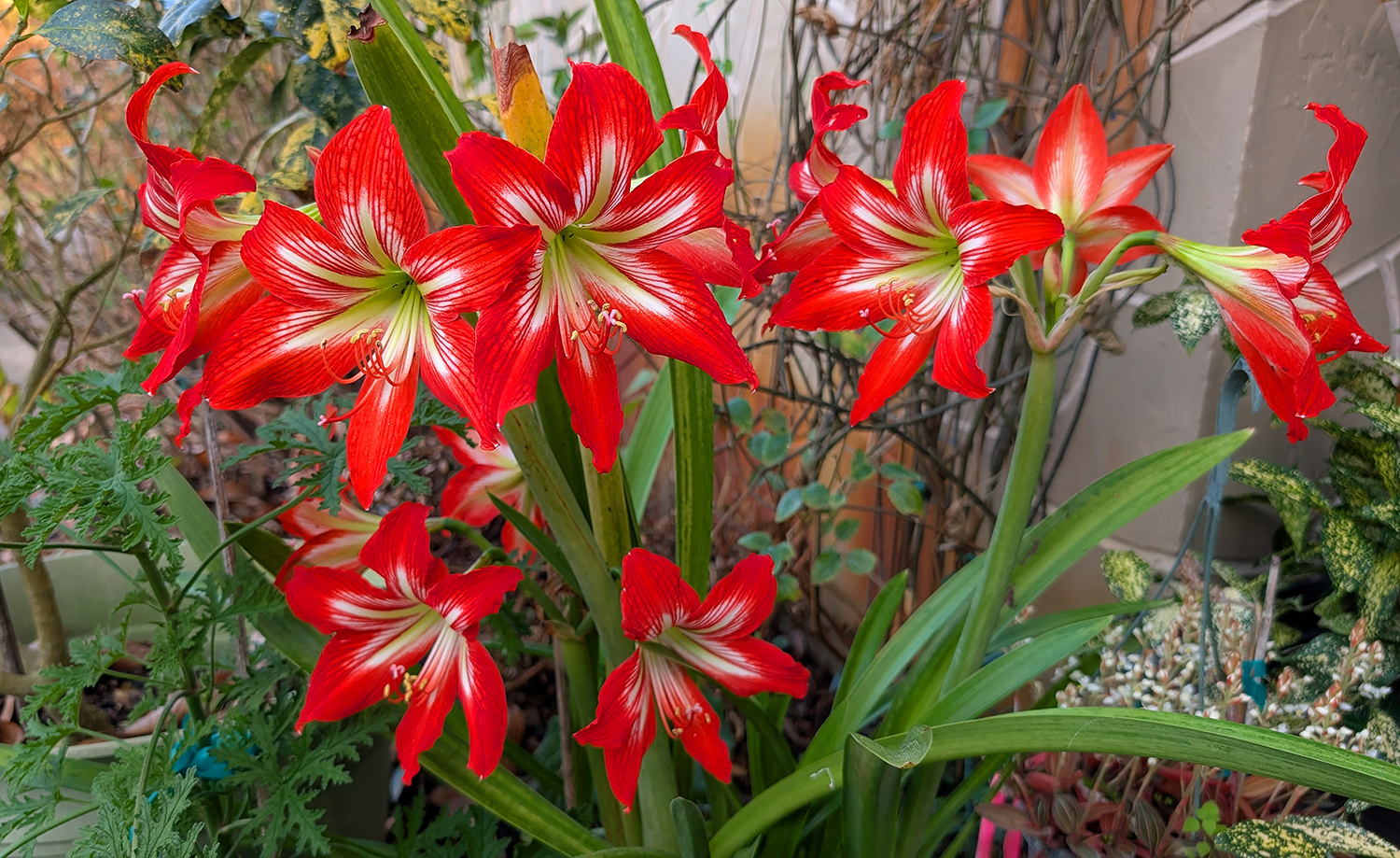
Amaryllis  'Minerva'  producing  multiple  bright  red  and  white  striped 
 flowers  after  feeding  with  Green  Magic  and  Sunshine  Megaflor  bloom  booster.

Amaryllis 'Minerva' flowering profusely after feeding with Green Magic and SUNSHINE Megaflor bloom booster.

🛒 Feed your plants

Date: 25 Feb 2026

A Miracle in the Garden: Watching a Tiger Swallowtail Rebuild Itself on a Magnolia Champaka - Joy Perfume Tree

Tiger Swallowtail Butterfly

A Miracle in the Garden: Watching a Tiger Swallowtail Rebuild Itself on a Magnolia Champaka - Joy Perfume Tree 🐯

Tiger Swallowtail Metamorphosis: From Cocoon to Joy

🏼 Nature’s most mind-blowing magic trick happened right here on a branch of our Magnolia champaka - the Joy Perfume Tree. Did you know that when a caterpillar enters its chrysalis (cocoon), it literally dissolves its body and rebuilds it from scratch?

🏼 This Tiger Swallowtail chose the legendary Joy Perfume Tree as its nursery. It’s a match made in heaven—the "flying tiger" of North America born on a tree famous for the world’s most expensive perfume scent. While most people know the Champaka for its intensely fragrant flowers, few realize that even the leaves release a soft, sweet aroma when brushed against.

🏼 In this video, you’ll see the rare moment of eclosion - where the butterfly emerges with soft, wrinkled wings and begins the slow process of pumping life into them before its first flight.

🏼 It is a real gem in your garden - not just for fragrance lovers, but for wildlife that clearly loves it too.
Watch this Tiger Swallowtail butterfly being born on a Champaka - Joy Perfume tree!

🛒 Bring the miracle Joy to your garden - the perfume Champaka tree

📚
Everything You Need to Know About the Joy Perfume Tree:
🟡Magnolia (Michelia) champaca - Joy Perfume Tree, Champaka in Plant Encyclopedia

🟡 Growing Guide:


· How to grow Magnolia champaca and get some Joy
· What does a mature Champaka Tree look like? Practical Growing Guide
🟡The Fragrance: What does Joy Perfume flower smell like?
🟡Troubleshooting: Why is my Champaka Tree dropping leaves?

🟡 Comparison:


· Which Champaka tree is better - White or Golden?
· Golden and White Champaka side-by-side
· White Champaka
🟡More:
· When does Champaka tree start blooming?
· Why Champaka is such a popular perfume tree
· Flower of the most expensive perfume
· Article about Champaka

🎥

#Perfume_Plants #Container_Garden #Trees #Discover

Joy Perfume Tree Plant Facts

Botanical name: Magnolia champaca, Michelia champaca
Also known as: Joy Perfume Tree, Huang Yu Lan, Safa
USDA Zone: 9 - 11
Highligths Small tree 10-20 ftFull sunWatering: Regular. Let topsoil dry slightlyYellow, orange flowersPlant attracts butterflies, hummingbirdsFragrant plantSubtropical plant. Mature plant cold hardy at least to 30s F for a short time
Get personalized tips for your region
🟢 Join 👉 TopTropicals

Date: 10 Apr 2026

Spring boss Chocolate Paws

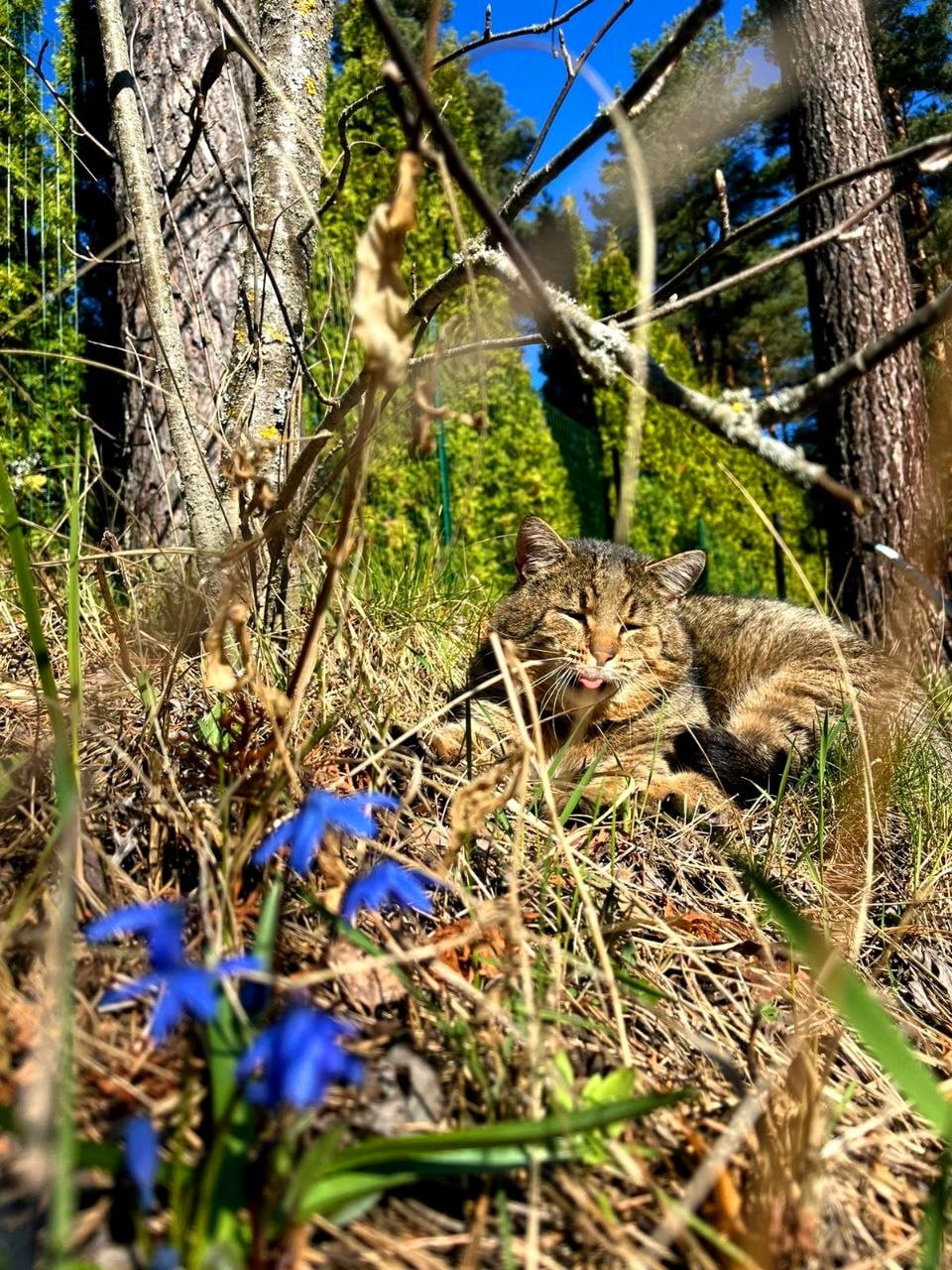
Thyme the cat officially declared the garden open for spring

Thyme the cat officially declared the garden open for spring

🍫 Spring boss Chocolate Paws


A Moveable Feast:

"You expected to be sad in the fall. Part of you died each year when the leaves fell… but you knew there would always be the spring." - Ernest Hemingway

Thyme the cat - "Chocolate Paws" to those who know him well - has officially declared the gardens open for spring even up North!

He found the warmest patch of sun, right between last year’s dry leaves and the first brave blue flowers, and settled in like he owns the season. Eyes half-closed, tiny tongue out, completely unbothered.

Why "Chocolate Paws"? Back when he was a tiny kitten, his little paw pads looked like soft pieces of chocolate. These days he’s an eight-year-old bruiser - worn paws, a battle-tested face, and stories you can only guess at.

The flowers are blooming, the air smells fresh, and Thyme?
Still enjoying life like it’s his full-time job.

And for us? Time to plant some flowers!

🛒 Shop tropical flowers and plants

🐈📸 Thyme the cat officially declared the garden open for spring - PeopleCats.Garden.

#PeopleCats #Quotes

🟢 Join 👉 TopTropicals

Date: 20 Sep 2025

How to make lots of Insulin Ginger plants quickly and get more health benefits

Costus igneus (Chamaecostus cuspidatus) - Fiery Costus or Spiral Flag

💚 How to make lots of Insulin Ginger plants quickly and get more health benefits


Costus igneus (Chamaecostus cuspidatus) - Fiery Costus or Spiral Flag is believed to help lower blood glucose levels naturally and managing diabetes.

Have you heard of Insulin Ginger? Everyone wants to have it in the garden!

Gardeners in India grow it not just for its pretty spiral leaves, but for what those leaves do. People with diabetes often chew them fresh or brew them into tea, saying it helps keep their blood sugar under control.

Researchers have found something interesting: the leaves contain an insulin-like compound, along with antioxidants and anti-inflammatory properties. In animal studies, extracts from the plant lowered blood sugar, protected the liver and kidneys, and even made the body more sensitive to insulin.

The way folks use it is simple. You can chew a leaf right off the plant, steep dried leaves for tea, or find it in powders and capsules. It's one of those plants that shows how tradition and science sometimes meet in the garden.

Its lush, turmeric-like leaves spiral around upright stems, with a glossy dark green top and a striking light purple underside. In warm months, it produces bright orange, cone-like flowers that stand out beautifully in the garden.

Beyond its beauty and natural insulin effects, the insulin plant is credited with aiding digestion, reducing cholesterol, boosting energy, improving skin health, supporting weight loss, relieving stress, and promoting heart wellness. A real botanical multitasker!

🎥 In this video, we’ll show you how to multiply Insulin Ginger fast, so you’ll have plenty of plants for yourself and even extras to share with friends and family.

✅ Don’t forget to use Green Magic fertilizer for the best results. Gingers absolutely love this plant food - they thrive on it and respond better than any other plant, with vigorous growth, lush foliage and loads of leaves you’ll need for all the benefits.

🛒 Grow your own sugar-fighter - the Insulin Ginger

📚 Learn more:


🟡The fiery plant that fights sugar: Nature secret insulin?
🟡Most interesting edible gingers

#Food_Forest #Remedies #Shade_Garden #Discover

🟢 Join 👉 TopTropicals