EXCLUSIVE INTERVIEW: Behind the scenes with Smokey and Sunshine - after years of rumors they speak out!
🎙 EXCLUSIVE INTERVIEW: Behind the scenes with Smokey and Sunshine - after years of rumors they speak out!
Many people loved our mascots - Smokey and Sunshine - and kept asking the same questions over and over. So we finally decided to sit them down for an interview and ask everything at once.
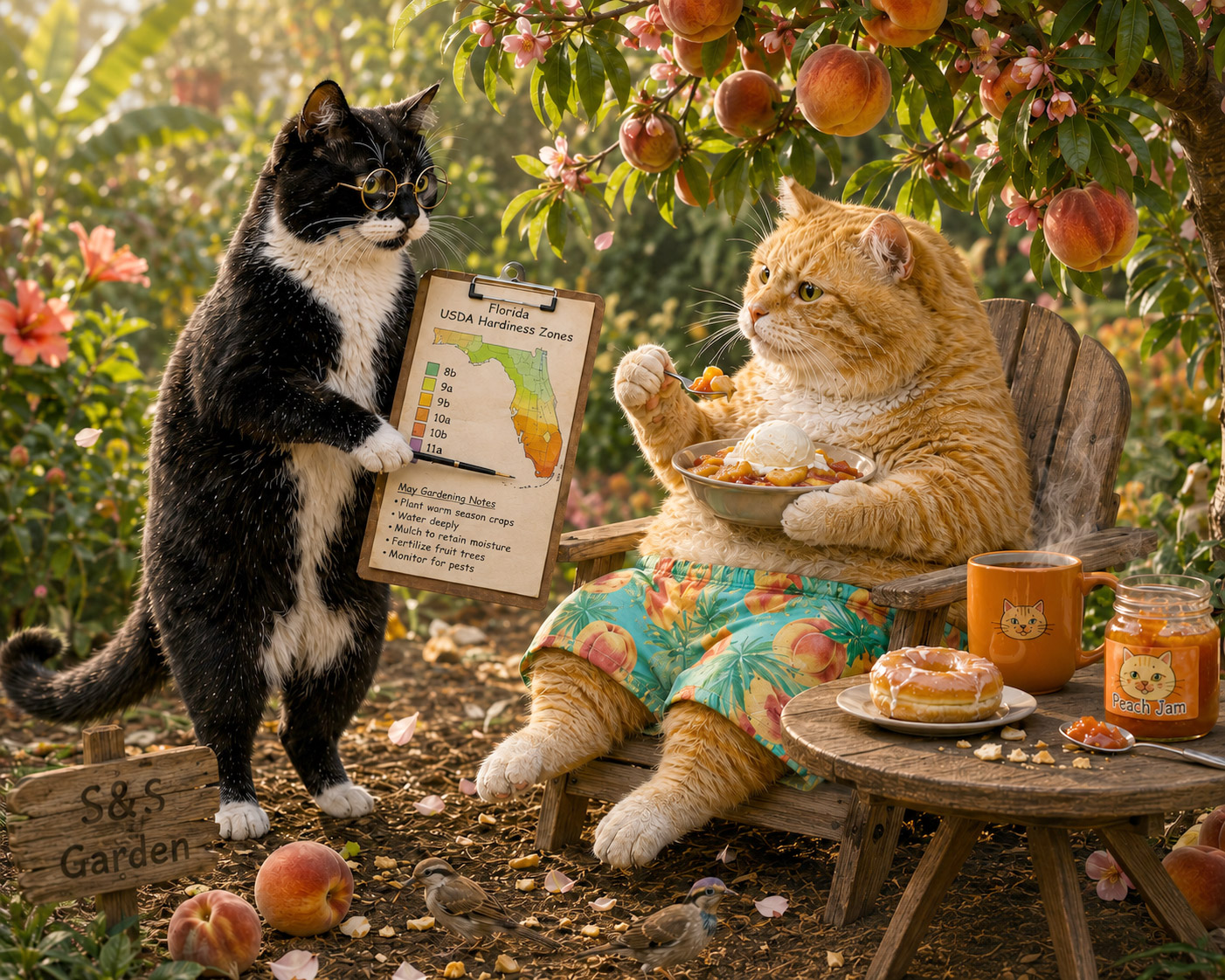
Smokey is the tuxedo "engineering cat" with professor glasses, serious plant advice, and strong opinions about fertilizer and soil pH.
Sunshine is the fluffy orange Aloha guy of the group - chubby, relaxed, permanently snack-oriented, and somehow never in a hurry about anything. He approaches life with the confidence of a cat who believes coffee breaks, warm sunshine, and donuts are all basic human rights. He is also the one asking the questions normal people are actually thinking.
Together, they somehow turned gardening into conversations about plants, coffee, cats, donuts, and the meaning of life in a greenhouse.
In this interview, you will find out:
🐾 Are Smokey's glasses fake? 🐾 Are Sunshine's donuts real? 🐾 Are these cats based on real rescued Top Tropicals cats? 🐾 How many cats have been adopted by Top Tropicals over the years and how many are currently living in the gardens? 🐾 Why does Smokey take gardening so seriously? 🐾 Why does Sunshine think every problem can be solved with snacks?
Some answers may surprise you. Some may explain a lot.
Sapodilla - Manilkara or Achras zapota, the Brown Sugar Fruit
🍊 How to make Sapodilla fruit profusely?
Sapodilla - Manilkara or Achras zapota), the Brown Sugar Fruit is a warm-climate evergreen fruit tree that can produce a lot of fruit once conditions are right. So why do so many sapodilla trees grow beautifully, flower heavily, and still refuse to set fruit?
Sapodilla Fruit Production - What Really Matters
1. 🌳 Choose the Right Tree
Grafted or air-layered trees fruit much sooner - typically in 1-2 years - and more reliably than seedlings, which may take 6–8+ years.
Some varieties are more profuse producers than others. For example, Silas Woods is virtually everbearing, Hasya is commercial prolific producer, Oxkutzcab (or Ox) -is also heavily productive (learn more about varieties).
2. ☀️ Environment: Heat, Sun & Water Balance
Temperature and Humidity
Excessive heat above 90F and low humidity can cause flowers to dry up and fall before setting fruit.
Solution: Provide filtered light or shade during the hottest part of the day to reduce heat stress on blossoms.
Water
Sapodillas are drought tolerant, but consistent moisture during flowering and fruit set improves fruit retention.
Avoid waterlogged conditions - soggy soil can stress roots and reduce yield.
Sun Exposure
Full sun is best for growth and flowering - but for hot climates, protection during peak afternoon heat helps reduce flower drop.
Young trees can also suffer sunburn.
3. Fertilization: Feed for Fruit, Not Just Foliage
Good nutrition is critical for flowers to turn into fruit. Apply a routine feed through the growing/flowering season - contolled-release (Green Magic) or liquid (Sunshine C-Cibus) both work.
Balanced fertilizer with trace elements like Boron (B), Molybdenum (Mo), Iron (Fe), and Copper (Cu) is essential for fruit set and development. Boron & Molybdenum deficiency as a frequent cause of flower/fruit drop in container-grown trees (nutrients get depleted quickly in pots).
Micro-nutrient sprays 2-3 times per year help improve fruit retention and quality. Some growers use sugar boosters (Sunshine Honey) or micronutrient blends that include Mo & B to help fruit set (Sunshine Superfood).
4. 🐝 Pollination - Often Overlooked
Sapodilla flowers are small and often require pollinators for best fruit set.
In some regions, small insects like thrips are key pollinators.
In places with low insect activity, hand pollination dramatically increases fruit set - brushing pollen from one flower to another with a small paintbrush during peak bloom times can help.
Placing fruit scraps (apple peels/banana peels) under the tree to attract beetles is an inexpensive way to boost insect activity.
5. ✂️ Pruning and Tree Structure
Moderate pruning can help open the canopy for better light penetration and air circulation, which supports flowering and reduces stress. Training young trees promotes a strong branch structure that can carry more fruit later. Sapodilla flowers on young growth (tips of the branches).
6. Pot vs Ground: Size Matters
If your sapodilla is in a container, root bound trees struggle with fruit set because roots run out of space and nutrients - stepping up to a larger container or planting in the ground can help.
Root-bound trees often bloom but fail to develop fruit.
7.
📅 Patience & Timing
Even healthy trees can take years to start fruiting well.
Trees often flower repeatedly but only set fruit when environmental conditions and pollination align - especially important for young or newly planted trees.
📌 Summary Checklist for Better Sapodilla Fruiting
✔️ Choose a grafted variety (faster, more reliable fruit). ✔️ Manage heat & humidity - shade during hot hours. ✔️ Water consistently but avoid waterlogging. ✔️ Fertilize balanced NPK + micronutrients (include B & Mo). ✔️ Encourage pollination
Smokey: The best Father's Day gift is a plant. Sunshine: Because it grows? Smokey: Because every garden is a promise to the
future.
Sunshine: Then we'd better choose carefully. We brought our future
with us.
Father's Day Belongs in the Garden
Some gifts are forgotten by next month.
A plant is different.
A fruit tree planted today may provide fruit for decades. A flowering
tree may bloom every spring long after the holiday is over. The best gardens
aren't built in a single afternoon - they're built one season at a time, one
generation at a time.
This Father's Day weekend, come spend the day the way it was meant to be
spent: outdoors, unhurried, surrounded by growing things.
Top Tropicals is hosting our Summer Solstice Plant Market, and
this is one of the best times of the year to visit the nursery. The longest
days of summer bring out the flowers, the fragrance, and the fruit.
Thousands
of plants at their peak, in the kind of Florida light that makes everything
look like it belongs on a postcard.
You'll find rare fruit trees, flowering trees, fragrant plants, and
collector varieties rarely available elsewhere. There will be event
specials,
raffle prizes, free plants with qualifying purchases, tropical music, and
cold
drinks. And somewhere in the shade, King, Snitch, and the rest of the PeopleCats will be doing what they
always do - making themselves at home and pretending to supervise.
But the real reason to come isn't the event. It's the reminder.
Whether you're planting your first fruit tree or adding one more chapter
to a garden that's been growing for years, Father's Day is a good day to
remember what we're really building. Not just a yard. Something that keeps
giving long after the I love you, Dad card is forgotten.
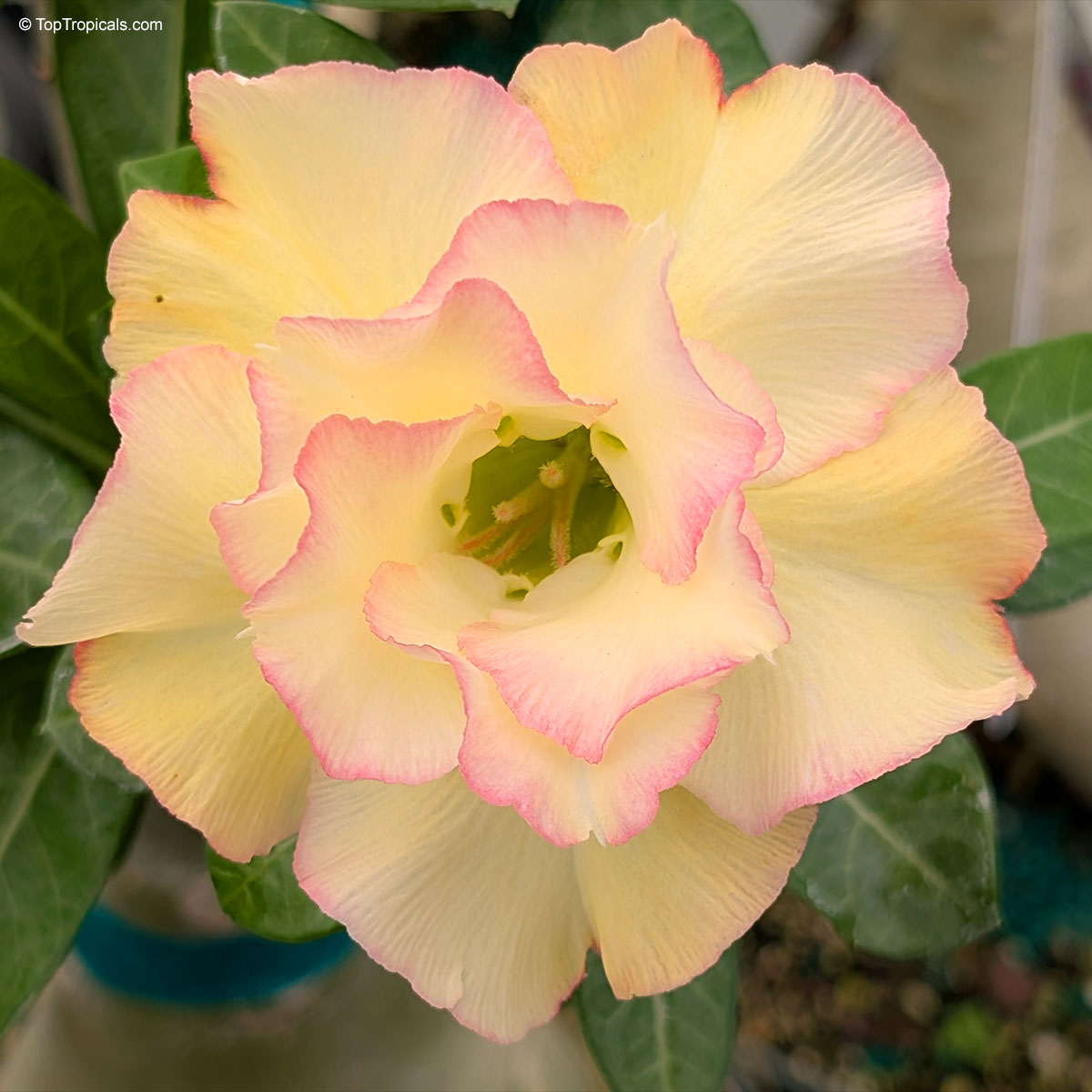
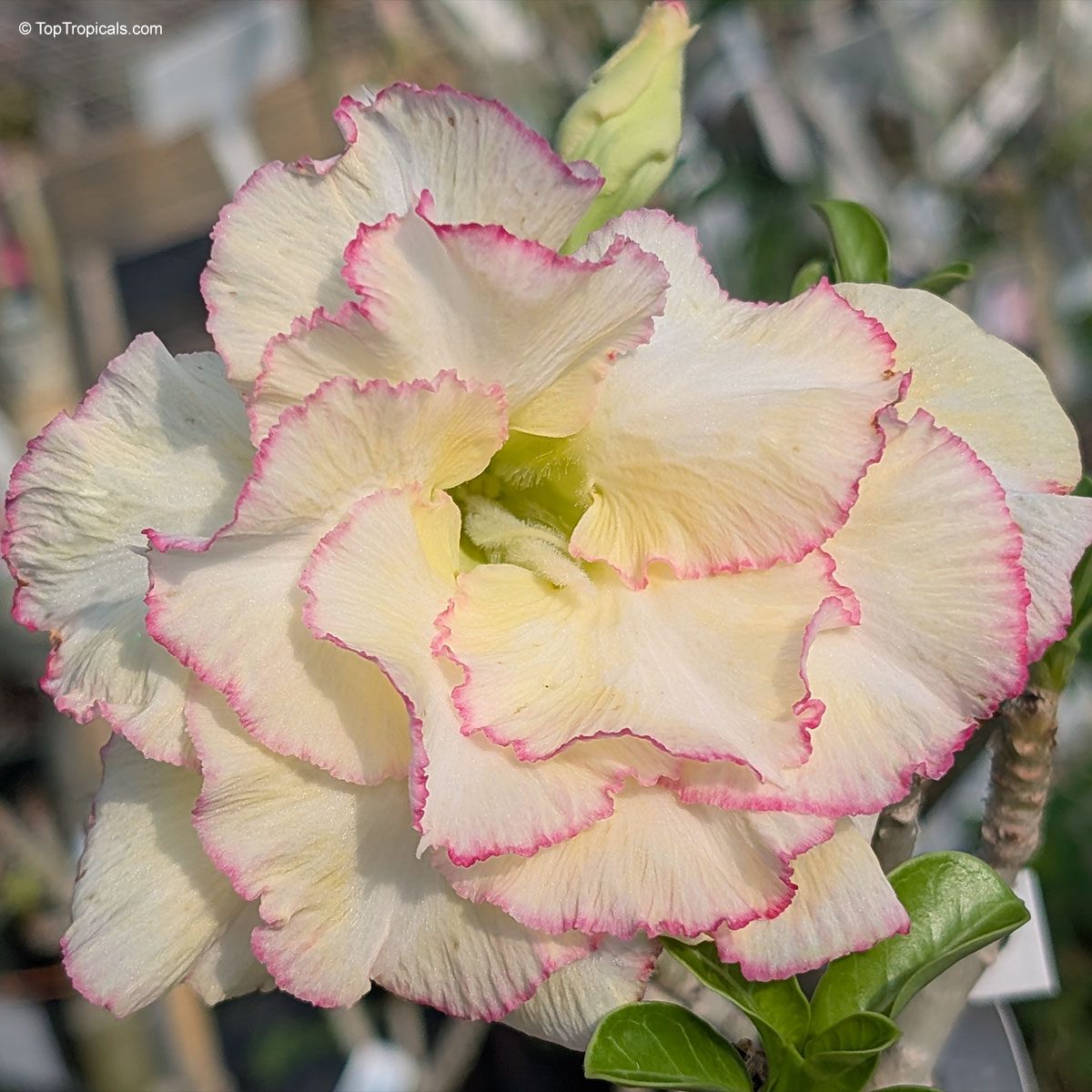
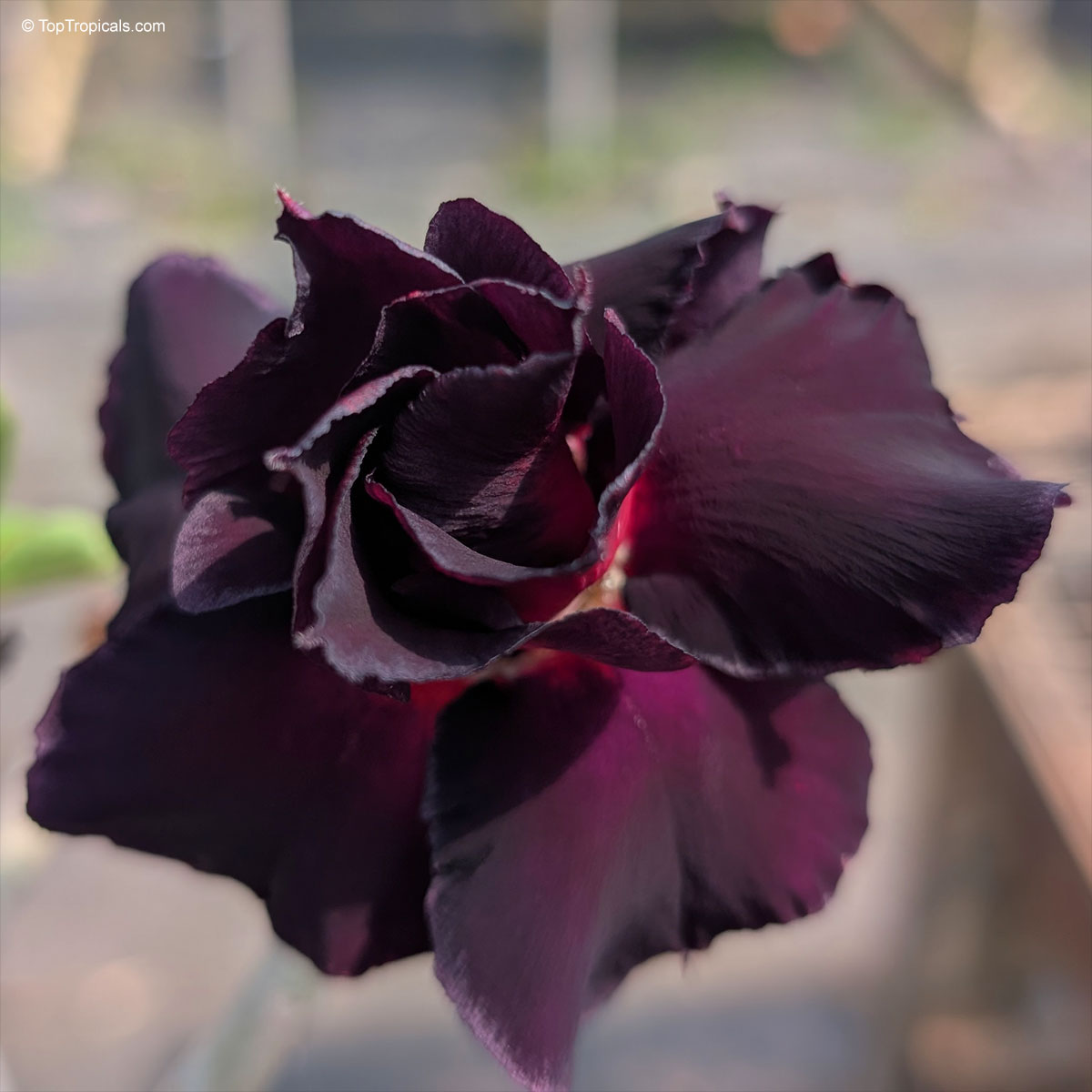
Smokey: Desert rose. One caudex. Multiple grafts. Different flowers. Sunshine: So it is a team plant. Everyone blooms, nobody agrees. Smokey: Yet it grows just fine. Sunshine: That is the secret. Coffee and donuts.
Adenium Plant Facts
Botanical name: Adenium sp. Also known as: Adenium, Desert Rose, Impala Lily
USDA Zone: 9 - 10
Highligths
🌸Featured Adeniums
Recommended by our Horticulturist, Tatiana Anderson
Moung Kusuma
Deep magenta flowers with a velvety look and a darker, almost black edge. A bold, elegant adenium that stands out immediately.
Sunshine
Bright yellow and mauve swirls across layered petals create a warm, cheerful bloom that lives up to its name.
White RabbitClean white petals brushed with playful pink streaks. A reliable bloomer with soft ruffled flowers.
Thong Samsee
Known for its three-color effect, shifting from yellow to pink to nearly white on the same plant.
Candy
Cheerful yellow petals dipped in cherry red with bold ruffled layers. Bright, playful, and impossible to miss.
Black Sheep
Nearly black petals with a glowing red center. Dark, dramatic, and different.
Free Adenium (Desert Rose) Shipping
Plant now, bloom soon. Get select Adenium (Desert Rose) varieties shipped to you with FREE S&H.
Offer valid through 02/06/2026. Limited quantities. While supplies last.
Free shipping applies to qualifying Adenium items only. Excludes other items and prior orders.
Sunshine: I love peach cobbler. Smokey, why are peaches on
the tree so early? Smokey: Low-chill peach varieties for Florida. They ripen
much sooner. Sunshine: I thought peaches were for Georgia. Smokey: Not if you plant low-chill peaches. And speaking
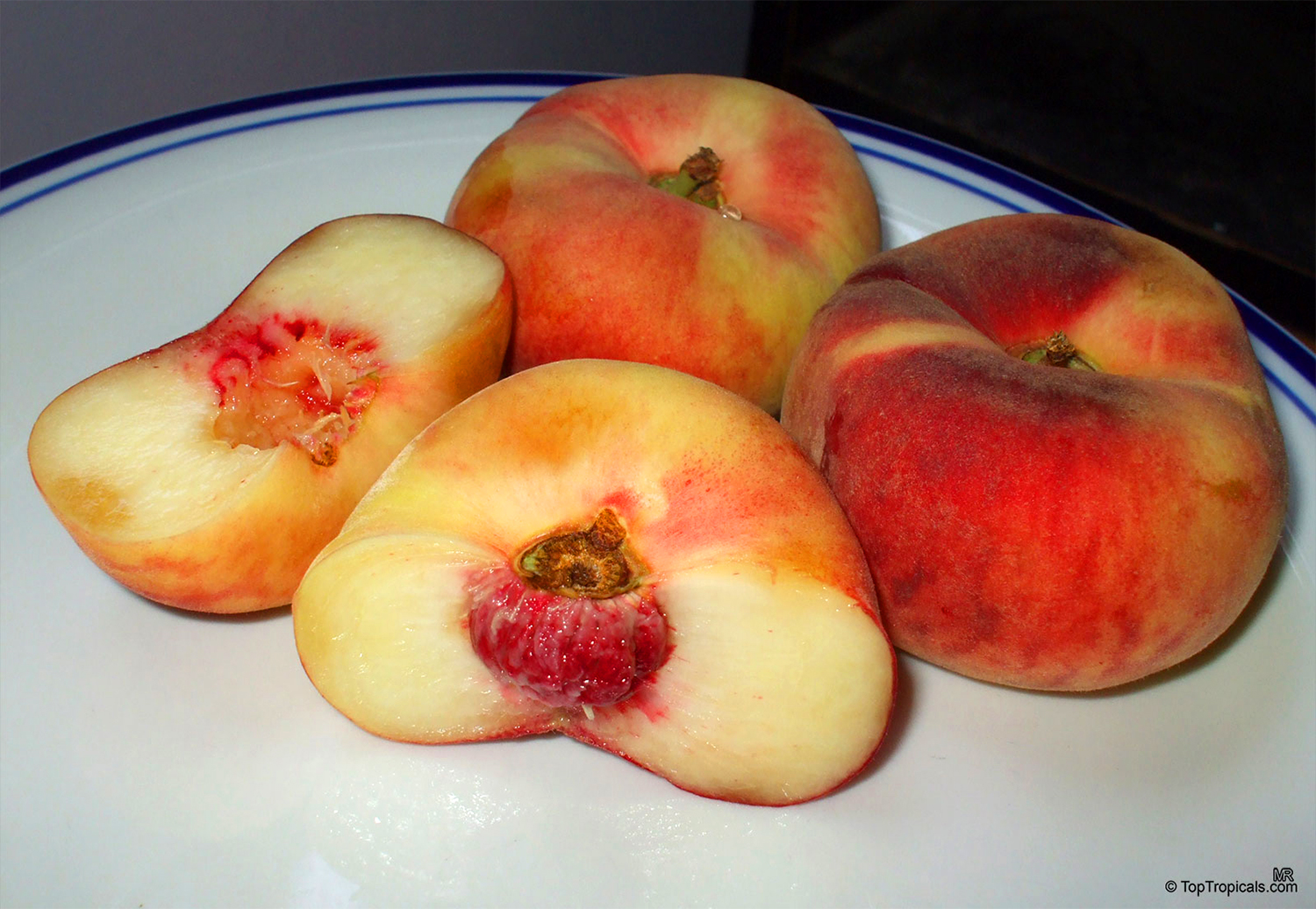
of peaches, do you know about donut peaches? Sunshine: Donut peaches? Finally, horticulture I can
understand.
Some fruits carry memories before you've even tasted them.
There's something about a peach still warm from the tree - the way it
gives a little when you pick it, the smell that hits you before you even
take a
bite. It makes you slow down. It makes summer feel like it actually meant to
show up.
Peach Plant Facts
Botanical name: Prunus persica, Amygdalus persica Also known as: Peach
USDA Zone: 5 - 10
Highligths
For Florida gardeners, that moment used to feel borrowed. Peaches were a
Georgia thing, a Carolina thing. You'd admire someone else's harvest and
quietly file it under not for us.
Low-chill peaches rewrote that story.
Here's the thing about regular peaches - they need cold. Not just a cool
night or two, but a real winter. We're talking 600 to 1,000 hours below 45F.
That's how they know to wake up in spring and actually fruit. South Florida
just doesn't deliver that. The trees will grow fine, look healthy even, and
then give you almost nothing come harvest time. Frustrating doesn't cover
it.
Low-chill varieties are different. They were bred specifically for
places like ours - warm winters, mild springs. Some only need 100 hours of
chill.
A hundred. That's a few cold fronts, not a season. And because they're
working with our climate instead of against it, they fruit reliably. Every
year.
They're not just a Florida trick either. Gardeners in coastal Texas,
southern Louisiana, southern California - anywhere in that Zone 8b to 10
range -
have been growing these successfully. If you've got warm winters and thought
peaches weren't for you, they probably just weren't the right peaches.