Garden Blog - Top Tropicals

Date: 2 May 2019

How to propagate plants from cuttings. Top (Tropicals) secrets.
TopTropicals.com

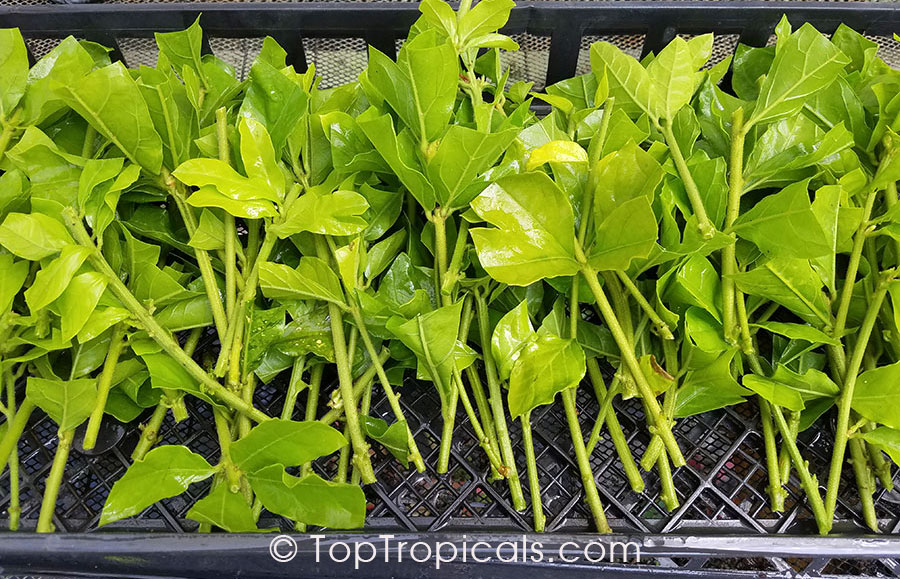
Q: After pruning my jasmine, I have so many branches and I don't have a heart to through them away, can I use them to make more plants? Please tell me what size cuttings and do I need to remove leaves? Should I just stick them in the ground? Will they root? I don't know if you will be willing to share your secrets?

A: We are always happy to know that you grow more plants, and make our World better! These are some useful tips for the propagation of tropical plants using cuttings:

- Cuttings and leaves. Use cuttings 2-5"long. Strip leaves from the bottom. Cut larger leaves in half to reduce evaporation.
- Soak cuttings for 15-30 min in SUNSHINE solution.
- Mix. Use special well-drained mix with lots of soil conditioner: we have a special professional propagation mix for cuttings.
- Mist. Put community pots or trays with cuttings in mist, or if you don't have mist - cover the pot with a clear plastic bag to create a mini-greenhouse.
- Shade. Keep propagation pots in bright shade and never allow direct sun rays.
- Rooting hormone: yes, use it if you have it. Not only it promotes root formation but also prevents from fungus so the cuttings won't rot. We use Dip-N-Grow.
- Rooting and food. Check in 2-3 weeks for roots. Once you see the little roots, begin fertilizing with a special Baby-Plant Food and make sure never exceed recommended doze otherwise you may kill the cuttings.
- Establishing. Once roots start growing, plant in 4" pots in a well-drained potting mix and watch the beauty grow! Gradually move to the full sun only when little plants establish and start new growth.

If you are lucky to make more rare plants than you can use, contact us, we will buy them from you or trade for your dream plants! In fact, one of our customers from many years ago started selling us baby plants that he propagated from our plants, and now has a successful business (Karma Nursery); we buy a lot of plants from him every month!

For more ideas on tropical plant propagation, see also:
- Secrets of turtle tank propagation
- 5 secrets of propagation

Date: 28 Dec 2020

Healthy Plants: Q&A from Mr Booster

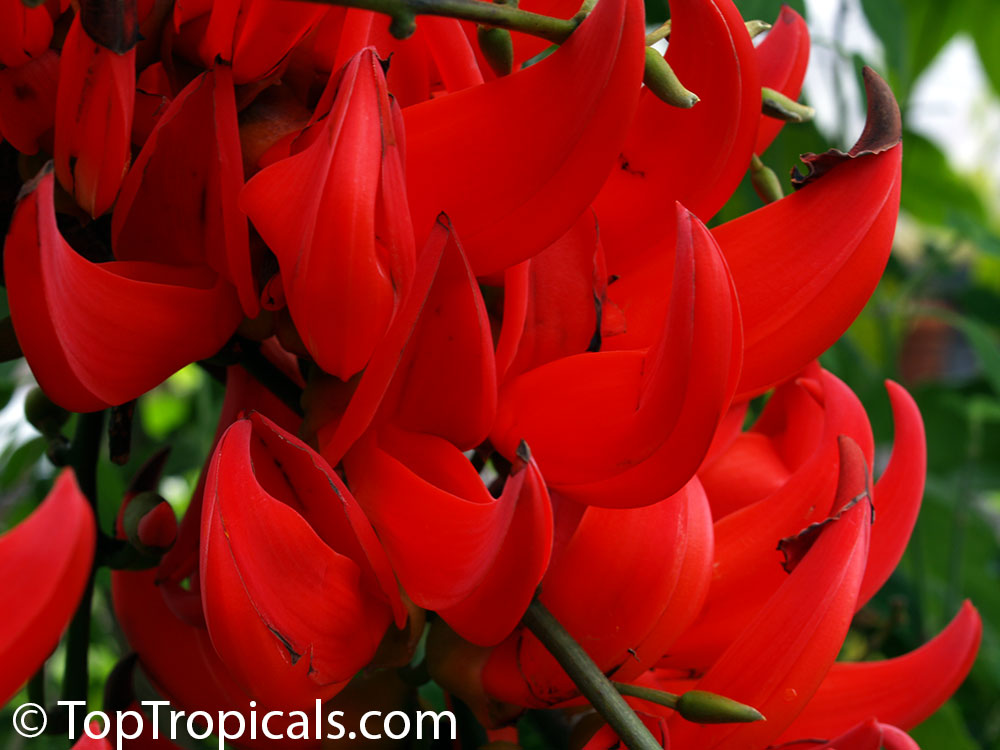
How to grow a happy Red Jade Vine?

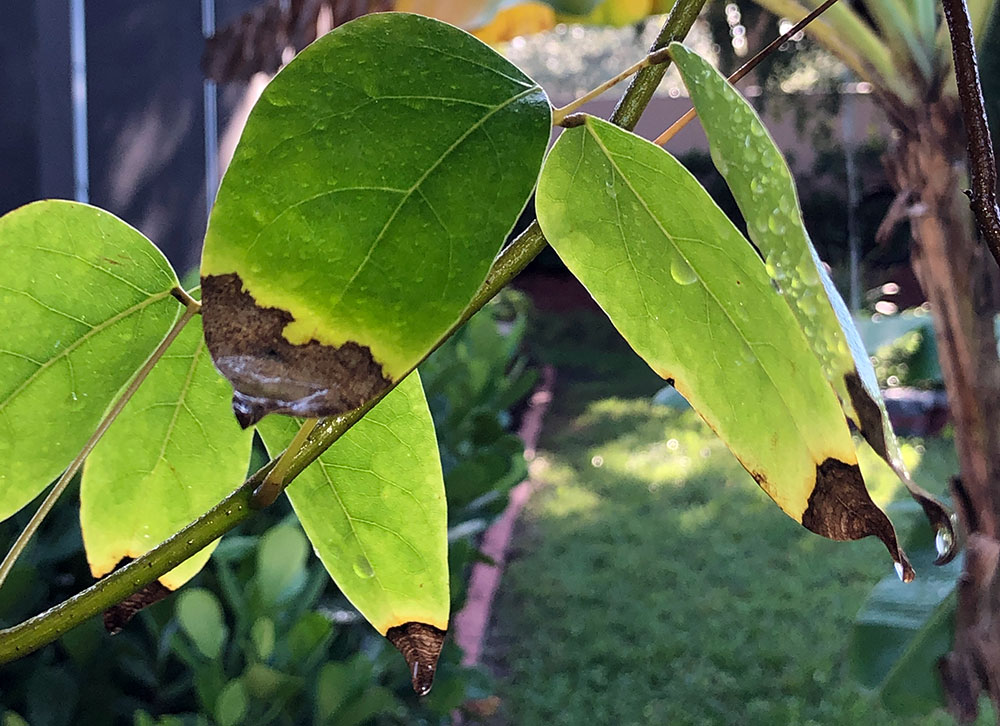
Q: My Red Jade Vine has the leaf tips turning brown. I water this plant four times a week and I am using a half a teaspoon of miracle grow bloom booster 15-30-15 per 2 gallons, every two weeks. In the beginning I had to water this plant off city water in South Fort Myers. Over the last two months I picked up a dechlorinator buggy plus threw that on my hose and I've been watering it with that but it didn't seem to make a difference. I put this plant in the ground last September. It has three shoots that run into the top of the tree, so it is growing but leaves seem to drop off down low at the base of the vine and the brown tipping running into the top of the plant. But not the newest shoot its leaves are solid green all the way at the top. Thanks for any advice.

A: Mucuna benettii - Red Jade vine - is not the easiest plant to grow, and we are glad your vine is growing well. For those who love this plant but not ready to face all challenges, we recommend its cousin - Camptosema grandiflora - Dwarf Red Jade Vine, which is much hardier and easier plant.
We looked at the photos and these are our thoughts.

1) The top of the plant with green fresh leaves definitely indicates that the plant is generally healthy and vigorous.
2) Dry tips of the old leaves may indicate excess salts in soil, in combination with the summer heat that it went through. Based on your feeding program description, that fertilizer may create a problem. Water soluble traditional fertilizers are EDTA-chelated which often causes nutrients lock up in soil and leaf drop. Try to stay away from that fertilizer for a month and let the rains and/or irrigation water flush the soil for a couple of weeks.
3) Red Jade vine is a very sensitive species. Normally, during hot season it is safe to use traditional fertilizers, especially slow-release granulated. However, with this plant we recommend you to switch to more delicate formula and use only liquid fertilizer.
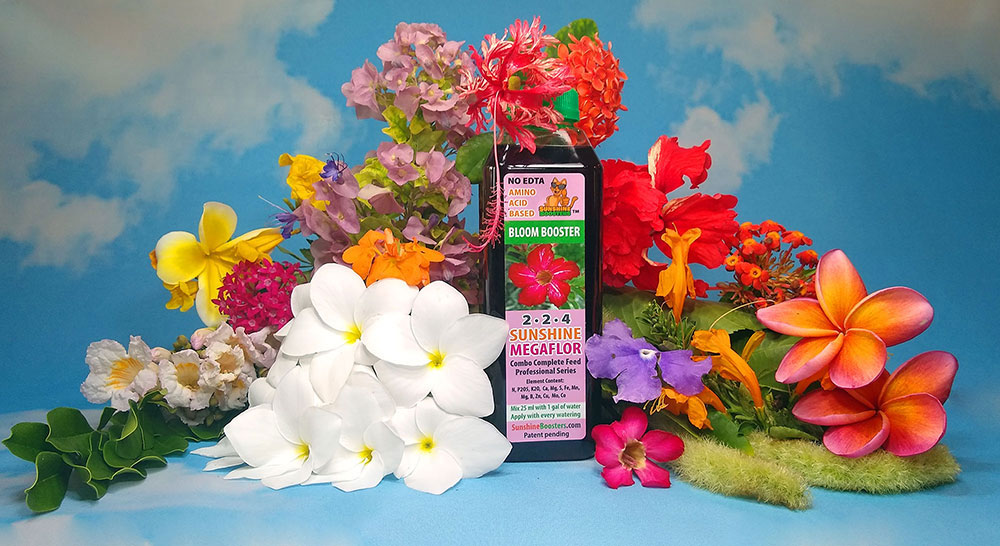
SUNSHINE Megaflor - Bloom Nutrition Booster will be the best. It is safe to use it as frequent as with every watering! It is amino-acid based, and will be totally consumed by the plant without nutrient lockup.
4) Another cause of dry leaf tips may be micro-element deficiency.
Megaflor booster already has all necessary micro-nutrients in it, plus you may apply some extra: SUNSHINE Superfood.
5) You may continue using regular water for watering (including city water) as long as you use amino-acid based plant food and supplements: they improve soil acidity (what tropical plants like is acidic soil, and Florida soils are alkaline). Additionally, to improve soil acidity which can be critical for this Mucuna species, you may add 1"layer of pure peat moss on top of the soil around the plant. Please keep us in loop how the plant is doing. It is pretty rare species in cultivation and we will be happy to help you to keep it thriving.

Date: 5 Jan 2021

Growing Loquat in container

Q: I purchased a Sherry Loquat tree from you in April of 2020. It got off to a slow start initially, but now is five feet tall with healthy leaf growth! It is in a 15-gallon pot and was brought into the house by October 15th. I live in Zone 6 and kept the plant outside from end of May to October 15th. I have given the tree artificial lights in addition to slow release fertilizer. Can you please advise me on what steps I need to take to get the Sherry Loquat tree to fruit? E.g., lighting requirements, soil pH, soil type, etc.

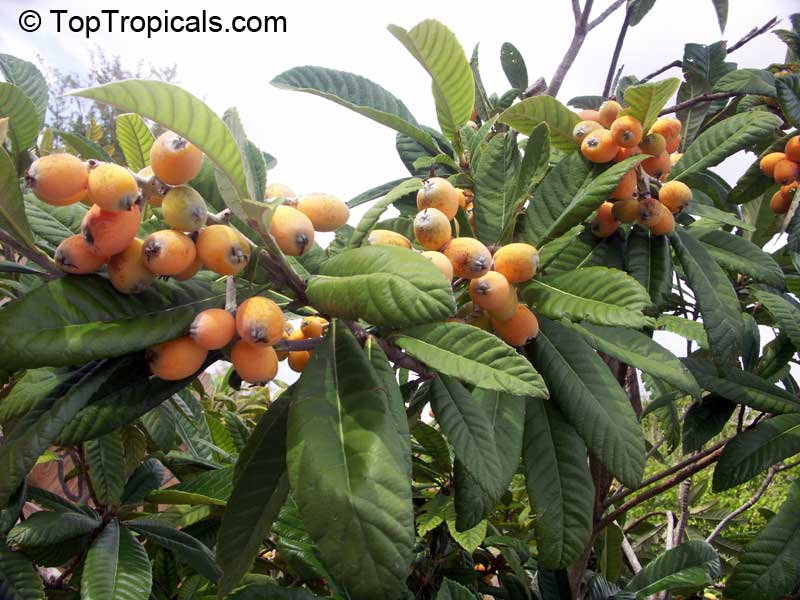
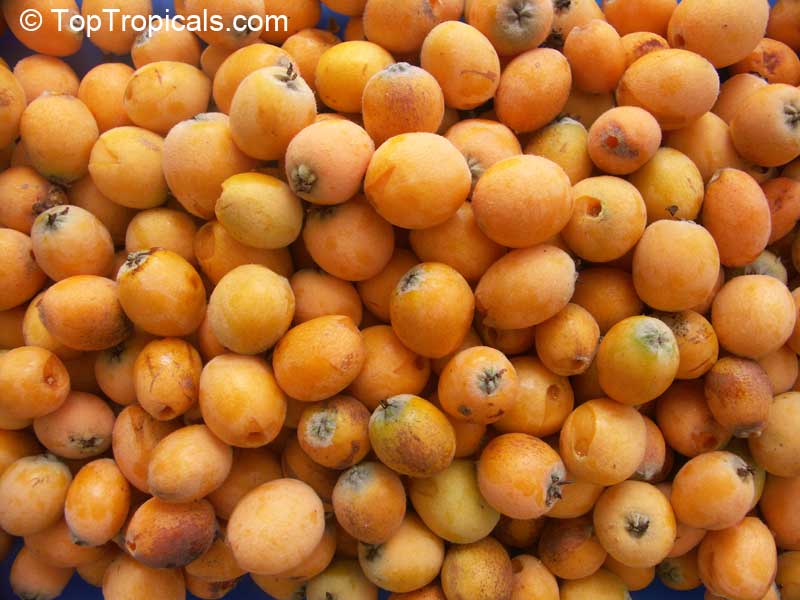
A: Loquat is normally winter flowering and spring fruiting tree, here in Florida it is usually heavily covered with fruit by April. With a proper care, you may see flowers throughout the winter and they may set some fruit for you. Considering that during this time you have to keep the plant indoors, here are some recommendations:

1. Soil. Well-drained, porous potting mix. Do not use any heavy garden soils. For our plants we use the following mix which is excellent for containers: Abundance

2. Light. The brighter the better. Sunroom would be great, or at least put the tree next to a large window. Extra lighting with grow lights is beneficial. Any type of light will work, you can even use a simple clip-on light, the brighter the better. 8-10 hours a day.

3. Water. Loquat is drought tolerant but for fruiting it will need regular watering; just don't keep soil soggy, let is slightly dry before waterings.

4. Fertilizer program. Use liquid fertilizer. We recommend Sunshine Boosters that are safe to use with every watering and year around - SUNSHINE C-Cibus - Crop Nutrition Booster.
We recommend to switch plants from traditional"slow-release"fertilizer to the liquid one because it makes a huge difference in plant growth and flower/fruit quality and quantity. Sunshine Boosters are scientifically balanced fertilizers that supply all necessary elements for daily plant needs. They are natural and eco-safe, great for any edibles.

5. Micro-elements. These are essential for potted plants, because in containers roots can't reach out to elements that are usually present in soil when trees grown in the ground.

Apply micro-element remedies that are very effective for improving fruit production, especially when flower or fruit drop occurs:
SUNSHINE Honey - promotes more efficient blossoming and pollination, makes flowers bigger and reduces bud drop.
SUNSHINE SuperFood - improves plant vigor and quality and size of flowers
These are all natural, eco-friendly supplements that work great for fruit trees and other edibles.

Read more about Loquat trees: The best grafted Loquat varieties.

Date: 24 Jun 2018

Our honest advise on Holiday Gift Plants

Q: Any suggestions on gift plants? With Holidays around the corner, I've been thinking of getting a present for my grandma, she lives in FL and is an experienced gardener. I also have a friend that lives in CA, also warm climate, but she doesn't have a green thumb. Any "easy" plants I can try for her?

A: Live plant is a perfect gift, as we all know. However when ordering a plant online as a present, for a happy experience, you should have three things to consider:
1) Gardener's experience. Planting instructions are included with every order, and usually success is there if you follow them. But all plants go through shipping stress (some more, others less) and need time, patience and love to recover. Also, a plant will need a new home after shipping: a pot and a good soil mix. It would be wise if you add potting mix with a gift order; the plant should be planted in a permanent pot as soon as possible, but normally can wait a day in a packing bag until its new owner gets a pot, if it is not ready yet.
2) How easy the plant is? If buying a plant for a beginner, chose something easy, as well as showy. Adeniums - Desert Roses, Jasmines, Clerodendrums, Cordylines are always a good choice. Calatheas, Gingers and Heliconias are always showy, even when not in bloom. Spice trees and herbs are fun, easy to grow and one can enjoy their aroma right away without waiting on them growing bigger. Miracle Fruit is an awesome present, it comes with detailed instructions how to grow the Miracle!
3) How easy the plant ships? Some plants can be easy in cultivation, but they don't take shipping well. After being in a dark box for a few days, most plants usually recover well in experienced hands. When making a present, you want something showy, not just a stick to arrive. Besides Adeniums and Jasmines, many fruit trees usually take shipping without a problem - such as Mango or Sapote trees. You may not want to start with Avocado, Papaya, Carambola, or Cacao - unless they go to an experienced grower - these may take some time and skill to etanblish. Fig trees are super easy in shipping, but figs may drop leaves in Winter - for this same reason, you may think twice about deciduous plants like Sugar Apples, Grapes, Mulberries or Persimmons to be sent as gifts. On the other hand, if you are sending a deciduous tree to a gardener who can appreciate the variety, this may be a good choice - dormant plants take shipping with less stress!

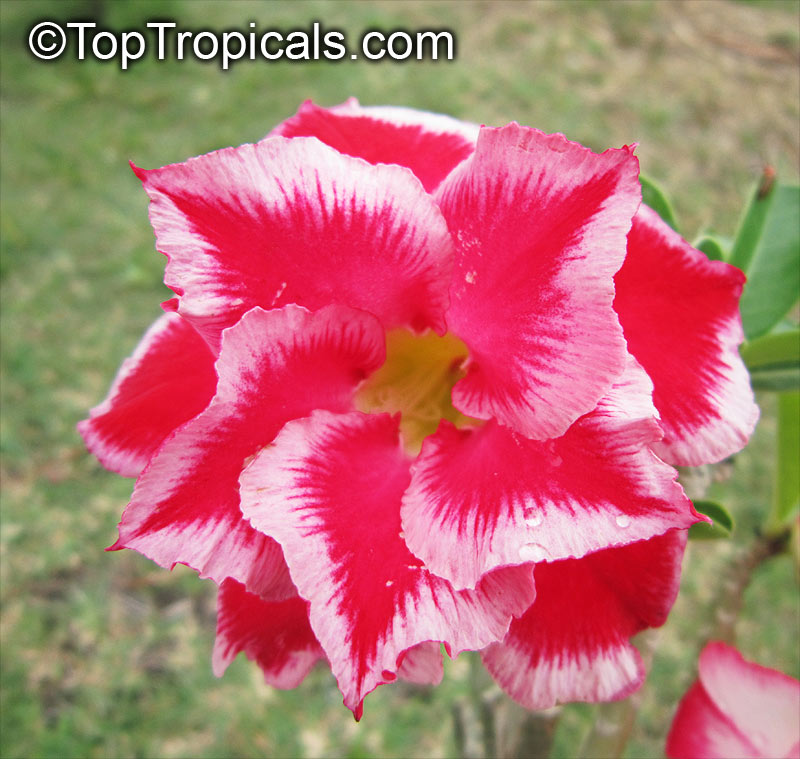
Holiday special: On the picture: Adenium Xmas Santa. A Holiday Special Desert Rose with Christmas-colored flowers - deep-red and white.

Still not sure which plant to choose? You may buy a Top Tropicals Gift Certificate, it ships well and has no expiration date!

Date: 10 Apr 2016

Growing by the sea

Q: Please recommend me some interesting plants that can grow on my waterfront property and can withstand some salt wind. All my neighbors have Sea Grape trees and bougainvilleas, and I want something different and special. I would love to have some colorful or fragrant flowers, or fruit around my paradise home.

Q: Considering your neighbors successfully grow Sea Grape (Coccoloba), and Bougainvilleas, you have a mild, frost free climate. There is a number of spectacular and useful tropical plants that are salt tolerant. Orchid Trees - Bauhinias, Poincettia - Delonix, and Geiger trees - Cordias, are very showy flowering trees. For large size bushes, try Dwarf Poincianas - Caesalpinias, and Scarlet-Coral Erythrinas. Frangipani - Plumeria, come in different colors and bring you perfume fragrance from Hawaii. And of course, Desert Roses - Adeniums, can be grown and showy specimens anywhere in your yard, both in the ground or as potted bonsai.

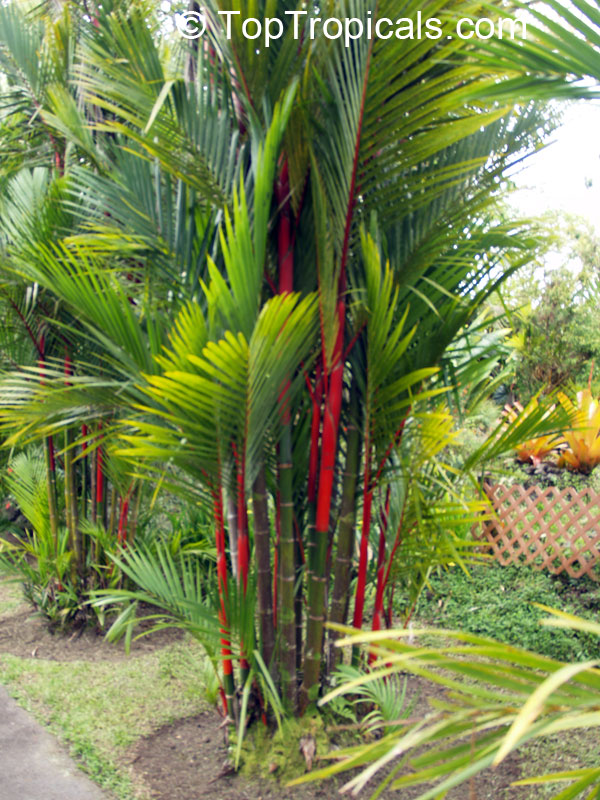
Most palms, especially popular Coconut Palm, source of tasty fruit and drink, are highly tolerant to salt breeze. If you are looking for something that nobody has, Lipstick palm, or Sealing wax palm - Cyrtostachys lakka, is definitely the most spectacular palm you can find. It is a stunning feather palm that develops a brilliantly red trunk. Palm is originally from Malaysia, but has been introduced to Costa Rica and other tropical areas of the world. Sealing Wax Palm seeds are very slow to germinate, up to a year, and large specimens are very rare and hard to find even in rare tropical plant nurseries. This palm will require a good overhead light, and constant warmth (above temperature 55F). It is definitely worth an effort to grow this beauty.

You may add more tropical accents to your landscape by the sea with many varieties of showy heliconias.

See full list of salt tolerant trees.