Q: Please recommend me some interesting plants that can grow on my waterfront property and can withstand some salt wind. All my neighbors have Sea Grape trees and bougainvilleas, and I want something different and special. I would love to have some colorful or fragrant flowers, or fruit around my paradise home.
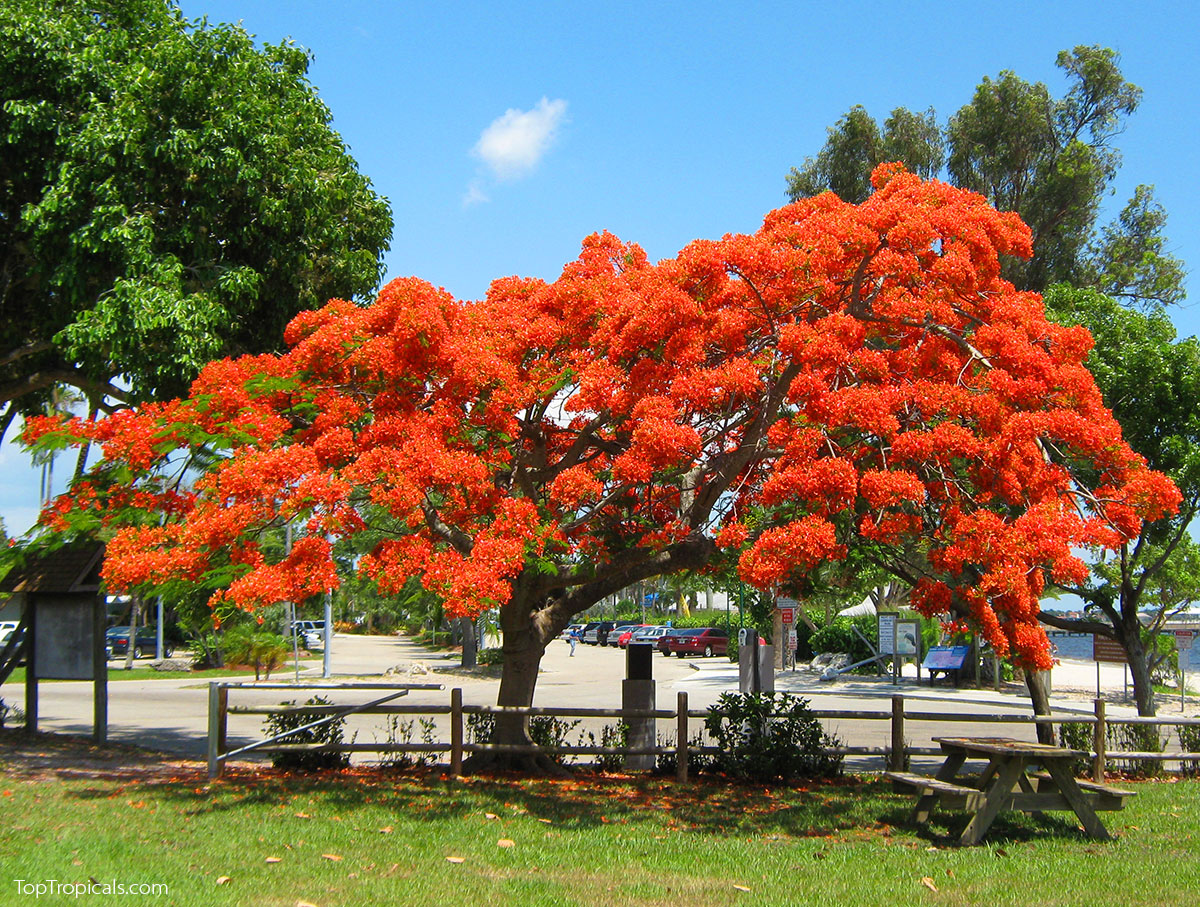
Q: Considering your neighbors successfully grow Sea Grape (Coccoloba), and Bougainvilleas, you have a mild, frost free climate. There is a number of spectacular and useful tropical plants that are salt tolerant. Orchid Trees - Bauhinias, Poincettia - Delonix, and Geiger trees - Cordias, are very showy flowering trees. For large size bushes, try Dwarf Poincianas - Caesalpinias, and Scarlet-Coral Erythrinas. Frangipani - Plumeria, come in different colors and bring you perfume fragrance from Hawaii. And of course, Desert Roses - Adeniums, can be grown and showy specimens anywhere in your yard, both in the ground or as potted bonsai.
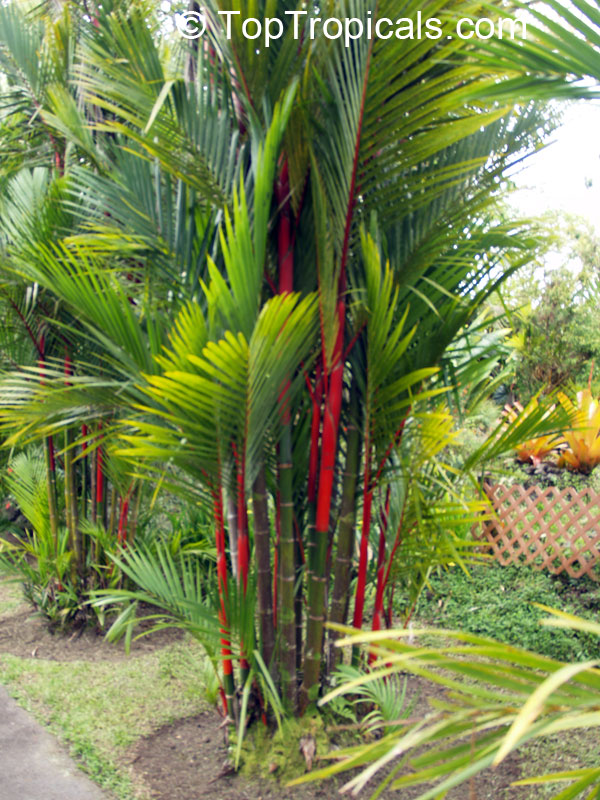
Most palms, especially popular Coconut Palm, source of tasty fruit and drink, are highly tolerant to salt breeze. If you are looking for something that nobody has, Lipstick palm, or Sealing wax palm - Cyrtostachys lakka, is definitely the most spectacular palm you can find. It is a stunning feather palm that develops a brilliantly red trunk. Palm is originally from Malaysia, but has been introduced to Costa Rica and other tropical areas of the world. Sealing Wax Palm seeds are very slow to germinate, up to a year, and large specimens are very rare and hard to find even in rare tropical plant nurseries. This palm will require a good overhead light, and constant warmth (above temperature 55F). It is definitely worth an effort to grow this beauty.
You may add more tropical accents to your landscape by the sea with many varieties of showy heliconias.
13 tropical flowers to plant in spring to attract pollinators year around
13 tropical flowers to plant in spring to attract pollinators year around
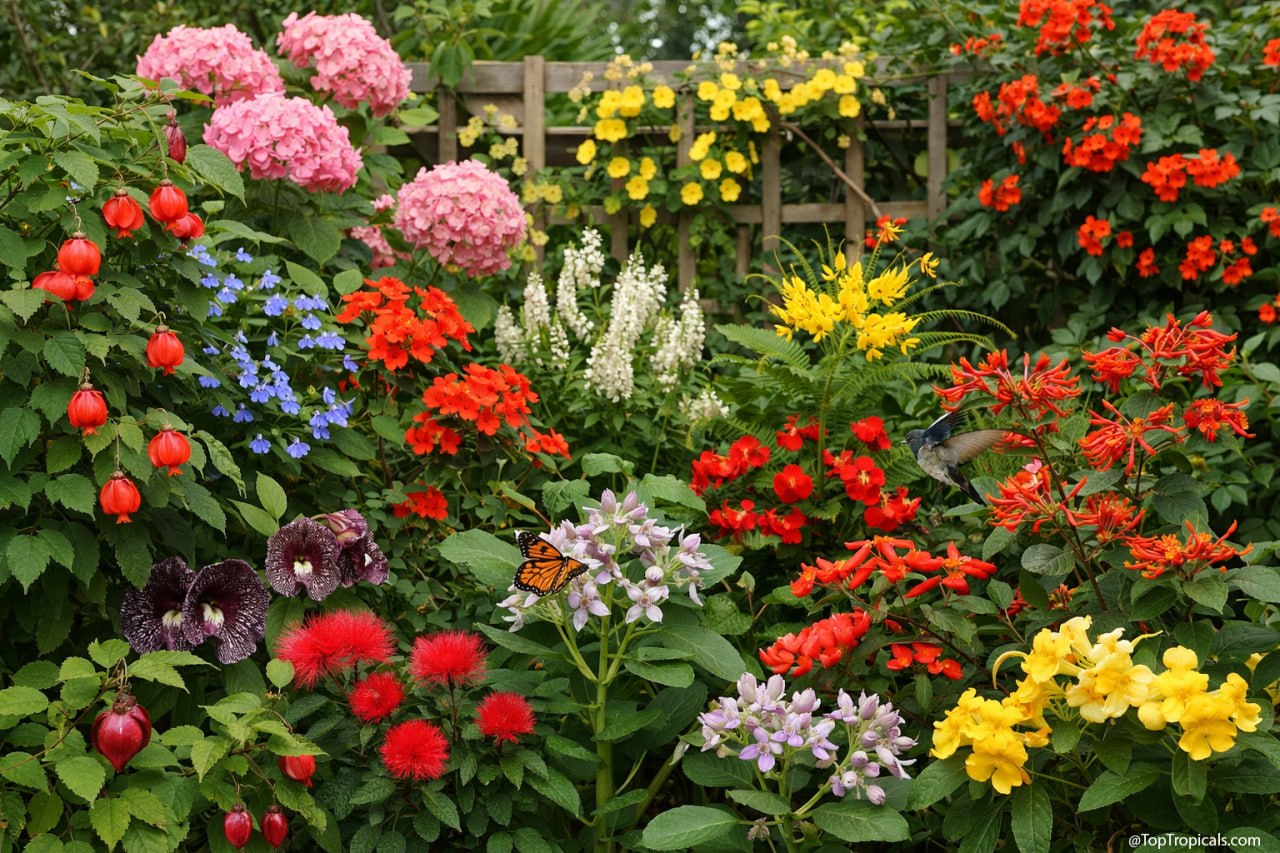
Spring is when everything wakes up - and if you plant smart now, your garden can stay alive with butterflies, bees, and hummingbirds all year long. The key is mixing tropical bloomers that flower in waves, not all at once. These plants don’t just look good - they keep pollinators coming back season after season, turning your yard into a living, moving ecosystem.
1. Abutilon Fireball (Abutilon darwinii x striatum)
Bell-shaped flowers in warm red and orange tones hang like little lanterns. Very cold hardy, blooms on and off through the year, especially in mild climates. A steady nectar source for hummingbirds. More 👉
2. Almond Bush (Aloysia virgata)
Light, airy clusters of tiny white flowers with a strong almond scent. Bees absolutely cover this plant when it’s in bloom. Flowers repeatedly through warm months. More 👉
3. Calico Flower (Aristolochia littoralis)
One of the most unusual flowers you can grow - patterned like fabric. More importantly, it’s a host plant for butterflies, giving them a place to lay eggs. More 👉
4. Pride of De Kaap (Bauhinia galpinii)
Bright orange-red blooms cover this shrub for months. Tough, fast-growing, and constantly visited by butterflies and bees. More 👉
5. Mexican Bird of Paradise (Caesalpinia mexicana)
Sunny yellow flowers with a light fragrance. Handles heat, freeze, and poor soil easily. A reliable nectar plant for bees and butterflies. More 👉
6. Red Tassel Flower (Calliandra tweedii With Love)
Very showy red-flowered powderpuff, fast-growing and spacey shrub. Cold tolerant to hard freeze, making it a strong choice for subtropical gardens. Forms a dense, many-stemmed plant with fine, feathery foliage that folds at night or by touch. Large scarlet tassel flowers bloom from spring to autumn and attract pollinators nonstop. More 👉
7. Giant Milkweed (Calotropis gigantea)
A bold plant with thick leaves and waxy flowers. Important host plant for butterflies, especially monarchs. Handles heat and drought well. More 👉
8. Blue Butterfly (Clerodendrum ugandense)
Flowers really do look like little blue butterflies. Blooms frequently and attracts actual butterflies along with bees. More 👉
9. Tropical Hydrangea (Dombeya wallichii)
Large clusters of soft pink flowers appear in cooler months when little else is blooming. A major nectar source in winter. More 👉
10. Fire Bush (Hamelia patens)
One of the best all-around pollinator plants and a tough bush - takes both cold and heat. Tubular orange-red flowers attract hummingbirds nonstop, plus butterflies and bees. More 👉
11. Butterfly Orchid Vine (Mascagnia macroptera)
A climbing, cold hardy vine covered in bright yellow flowers and butterfly-like seeds. Great for fences or trellises, adding vertical color and feeding pollinators. More 👉
12. Mexican Flame Vine (Senecio confusus)
Fast-growing, hardy vine with intense red blooms. Flowers heavily and brings in butterflies quickly. More 👉
13. Yellow Elder (Tecoma stans)
Bright yellow trumpet flowers that bloom over a long season. A dependable plant for both bees and hummingbirds. More 👉
✔️ Planting a mix of these gives you something in bloom almost every month. That’s the real trick - not just planting for spring, but building a rotation of flowers that keeps pollinators fed all year long.
When northern gardens fade into gray, our tropicals wake up. Winter is
color season here - and even if you live up north, you can still enjoy these
same flowering trees indoors or on a sunny patio.
From the fiery Royal
Poinciana to the golden Tabebuia and
violet Jacaranda,
these eight trees prove that winter can bloom anywhere
How to Care for Winter-Flowering Trees
We're often asked, at Top Tropicals, “Can I really grow tropical
trees in winter?”
Yes — with the right light and care, you can.
Here’s what works best both outdoors and indoors, according to our
expert, Tatiana Anderson.
🌡️ Fall Planting Guide
Let’s talk about timing, because that’s the part most people
get nervous about.
Everyone asks: “Isn’t it too cool to plant now?” —
and the answer is no!
Fall and early winter are actually the best months for tropicals in Zones 9
to 11.
Here’s why: the air has cooled off, but the soil is still warm.
Roots love that combination. They quietly spread underground while the rest
of
the plant takes a break.
By spring, those roots are ready to feed a burst of new growth — and
that’s when you’ll see the first big flush of flowers.
Pick a sunny spot that gets plenty of light — six to eight hours
if you can.
Loosen the soil and mix in compost or pine bark so it drains well.
Dig a hole about twice as wide as the pot and just as deep.
Set the plant level with the ground, backfill, and water it deeply to
settle everything in.
Then add mulch — two or three inches is plenty — but keep it
away from the trunk so it can breathe.
Tatiana’s tip: “Fall planting builds roots while everyone
else is resting. By spring, your tree wakes up ready to grow.”
🌳 Outdoor Care (Warm Climates Zones 9–11)
Now, let’s talk about what happens after planting — because
real gardening starts once the plant is yours. Tropical trees thrive on
routine: steady sunlight, deep watering, and just a bit of attention.
Water them about once a week when the weather is mild, more often if
it’s dry or windy.
Always check the soil first — if it feels dry two inches down, go
ahead and water.
Mulch helps more than most people realize — it keeps roots cool in
summer and warm in winter, and it saves you from watering as often.
Now, for those of you in Zone 9, here’s the truth: your trees can
take a chill, but they don’t love surprises.
A quick night in the upper 20s F won’t hurt mature plants, but young
ones appreciate a little help — a frost cloth or being planted at the
south side.
And don’t underestimate the wind. Cold, dry gusts can burn leaves
faster than frost.
Use fences, hedges, or taller shrubs as windbreaks, and take advantage of
microclimates — those warm pockets next to the house, brick patios, or
corners that get extra afternoon sun.
Tatiana’s tip: “A tropical garden in Zone 9 isn’t
about fighting nature — it’s about cooperating with it. Find the
warm corners, protect from the cold wind, and your trees will thank you with
flowers all winter.”
🏚️ Indoor & Patio Care (Cooler Climates)
For our northern friends — yes, you can grow tropicals indoors!
You just need good light, warm air, and a little attention.
Pick a large pot, with drainage holes and a light tropical soil mix.
Place it in a bright window — south or southwest if you can —
or under grow lights for about 12–14 hours a day.
Keep temperatures between 65 and 85 F, and water when the top inch of soil
dries out.
Misting helps keep leaves clean and adds humidity.
Rotate the pot every couple of weeks so all sides get sun. In summer, move
your plant outdoors gradually so it can enjoy real sunlight — then
bring it back in before nights drop below 40 F.
Tatiana’s tip: “Don’t be afraid of growing trees in
pots. They adapt beautifully — just select the right trees and pay
attention to their needs.”

 How to Care for Winter-Flowering Trees